London Employment and Skills
       Policy Network

       Steve Kerr, Policy Officer
About LESPN

Funded by Trust for London, run by LVSC
Currently 200+ groups, 500+ people on mailing list
Est. Jan 2010, funding secure to Dec 2013
Quarterly meetings, monthly ebulletin
Representation on LEP Skills and Employment Working
Group (and before that, London Skills and Employment
Board)
LESPN Objectives

To influence employment and skills policy and
provision to serve disadvantaged communities in London


To provide a forum for VCS to share information and
good practice on employment and skills issues


To raise profile of the work of the London VCS in
employment and skills
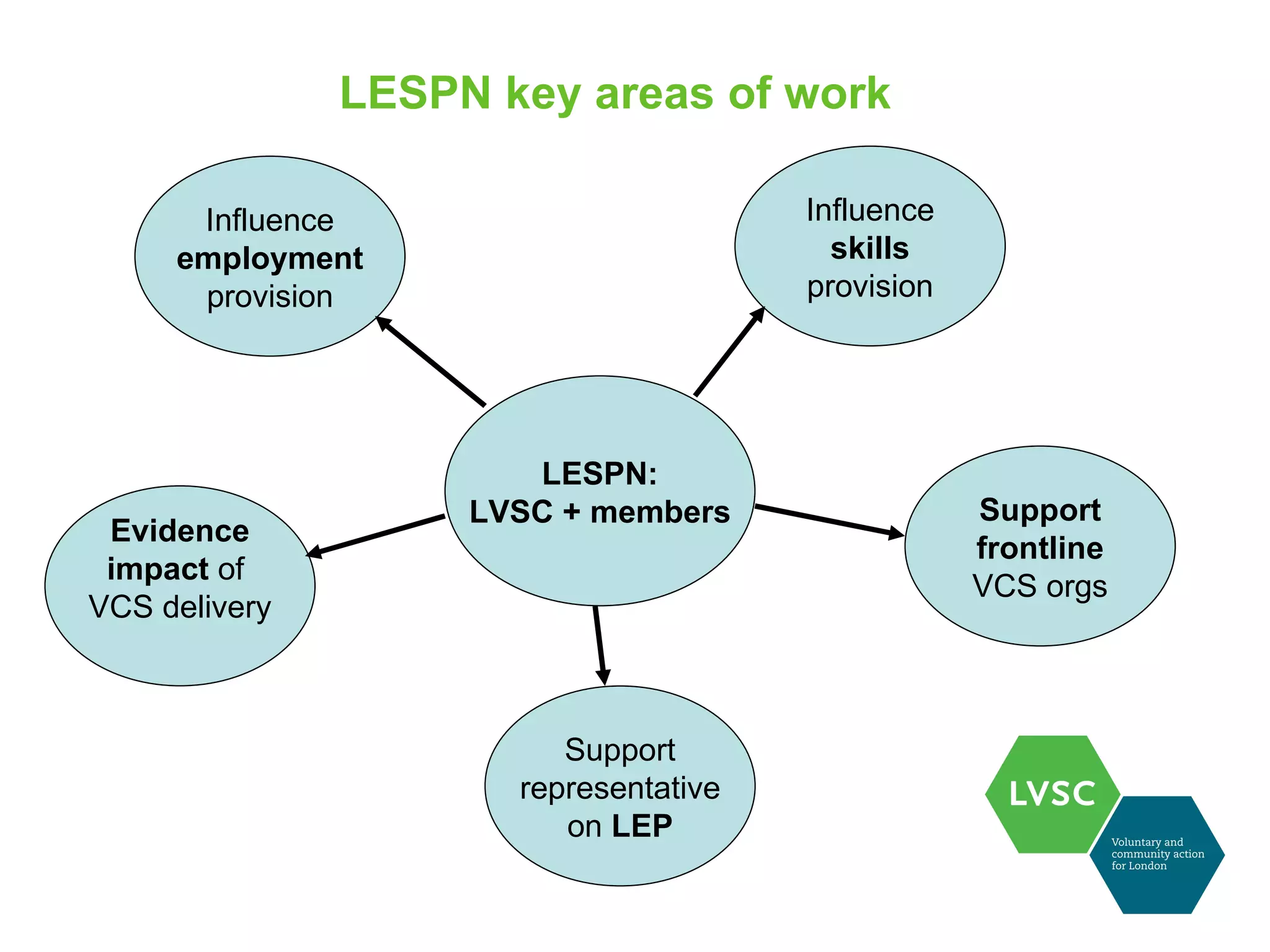
LESPN key areas of work

      Influence                        Influence
     employment                          skills
      provision                        provision


                       LESPN:
                    LVSC + members                 Support
 Evidence
                                                   frontline
 impact of
                                                   VCS orgs
VCS delivery


                         Support
                      representative
                         on LEP
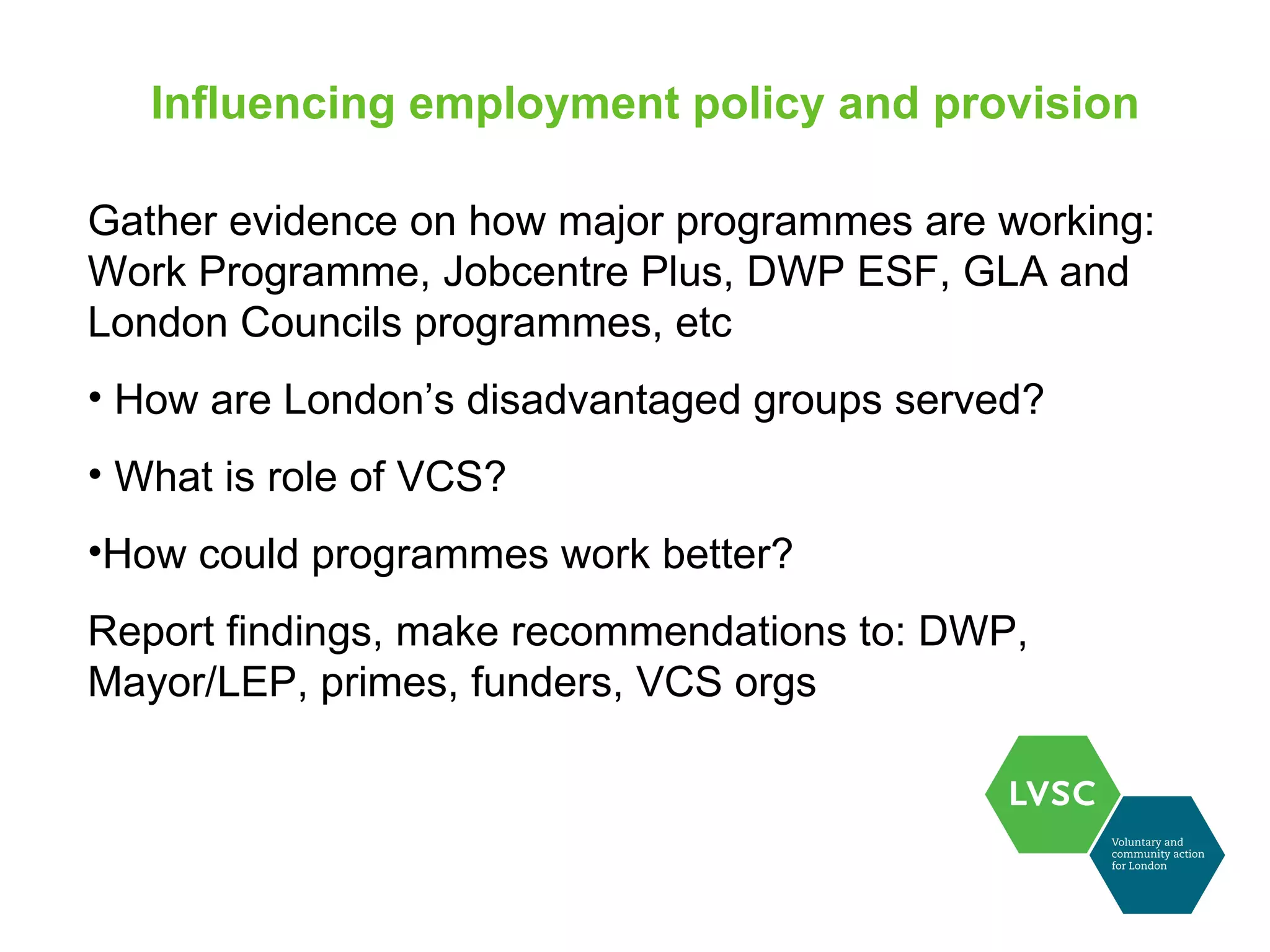
Influencing employment policy and provision

Gather evidence on how major programmes are working:
Work Programme, Jobcentre Plus, DWP ESF, GLA and
London Councils programmes, etc
• How are London’s disadvantaged groups served?
• What is role of VCS?
•How could programmes work better?
Report findings, make recommendations to: DWP,
Mayor/LEP, primes, funders, VCS orgs
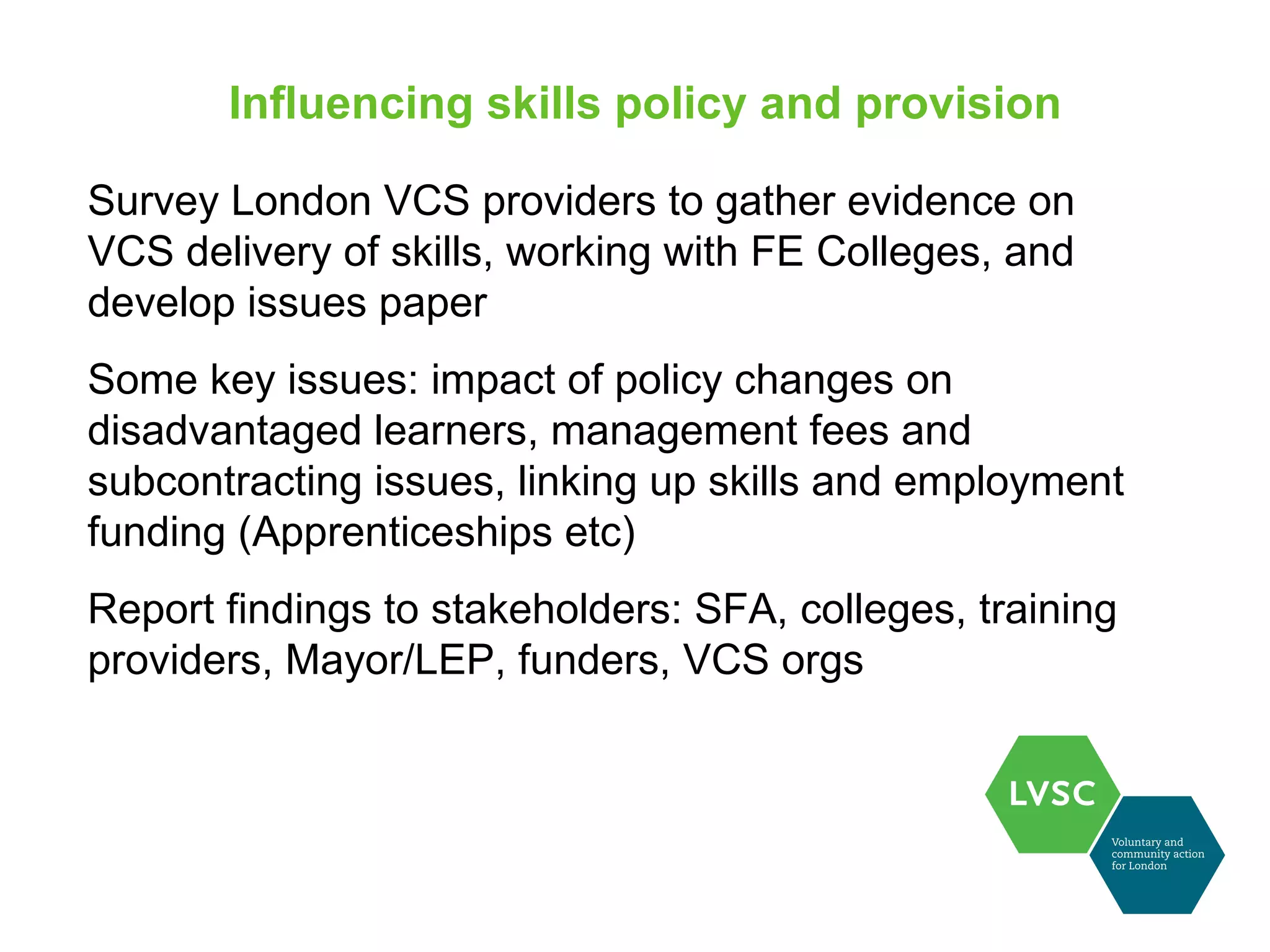
Influencing skills policy and provision

Survey London VCS providers to gather evidence on
VCS delivery of skills, working with FE Colleges, and
develop issues paper
Some key issues: impact of policy changes on
disadvantaged learners, management fees and
subcontracting issues, linking up skills and employment
funding (Apprenticeships etc)
Report findings to stakeholders: SFA, colleges, training
providers, Mayor/LEP, funders, VCS orgs
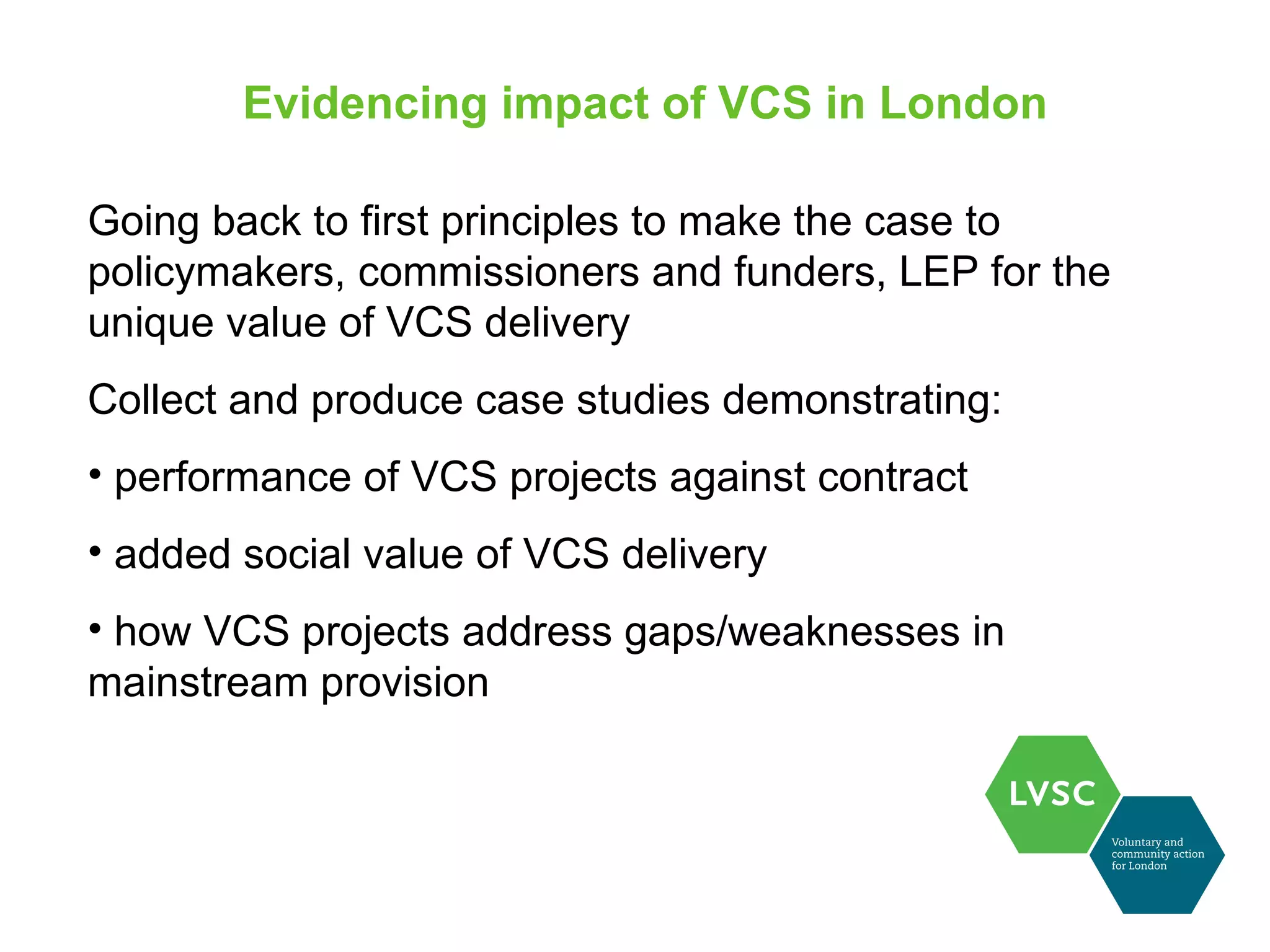
Evidencing impact of VCS in London

Going back to first principles to make the case to
policymakers, commissioners and funders, LEP for the
unique value of VCS delivery
Collect and produce case studies demonstrating:
• performance of VCS projects against contract
• added social value of VCS delivery
• how VCS projects address gaps/weaknesses in
mainstream provision
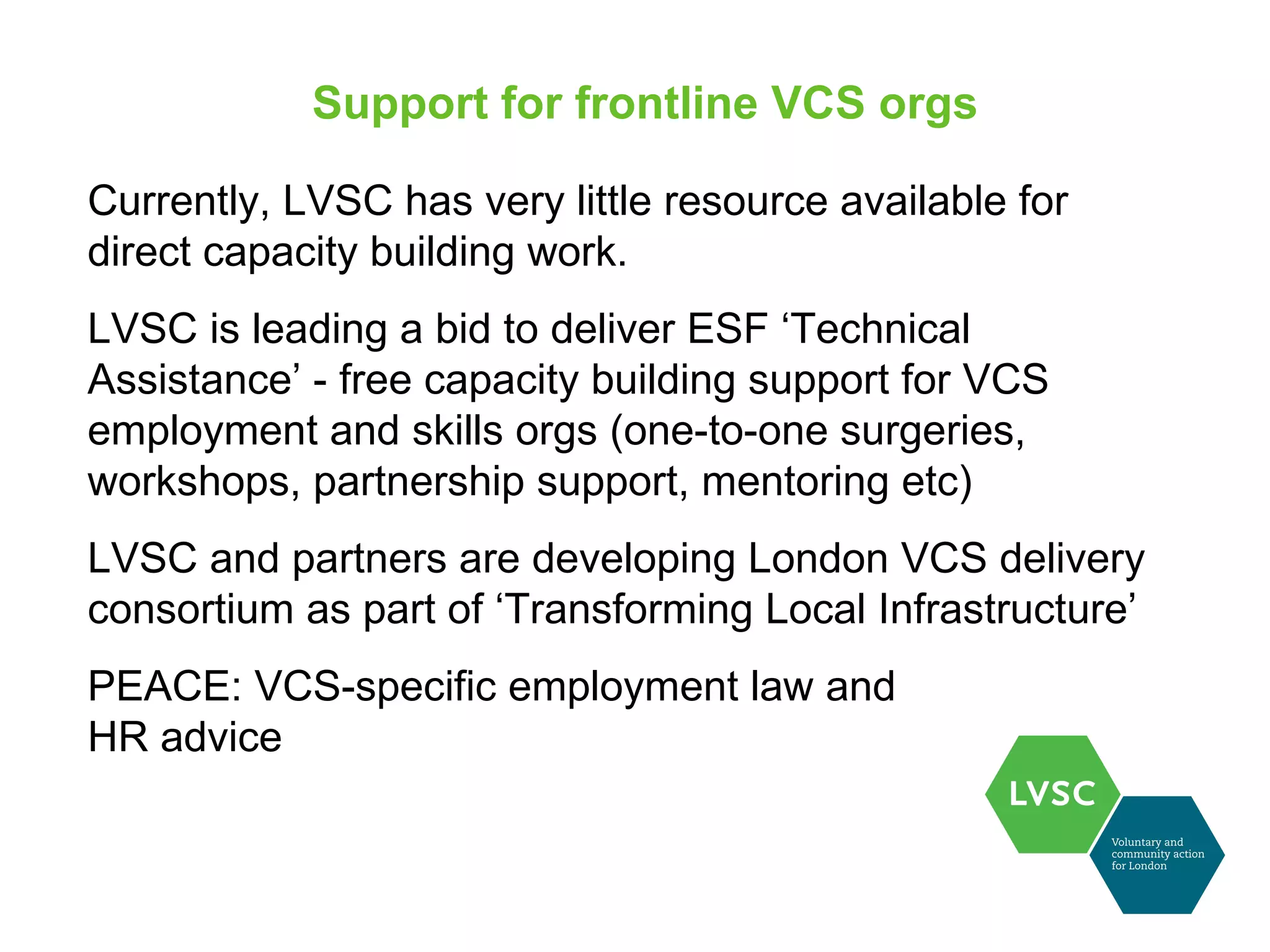
Support for frontline VCS orgs

Currently, LVSC has very little resource available for
direct capacity building work.
LVSC is leading a bid to deliver ESF ‘Technical
Assistance’ - free capacity building support for VCS
employment and skills orgs (one-to-one surgeries,
workshops, partnership support, mentoring etc)
LVSC and partners are developing London VCS delivery
consortium as part of ‘Transforming Local Infrastructure’
PEACE: VCS-specific employment law and
HR advice
Supporting representative on LEP

Emma Stewart (Women Like Us) sits on Skills and
Employment Working group of London Enterprise Panel
Disseminate information on LEP’s work out to network
LESPN is a conduit to inform Emma’s position with
evidence of VCS delivery, making the case for the LEP
to focus on addressing disadvantage, provide intelligence
on what’s working well (and not)
Challenges for VCS
New commissioning: few VCS groups have the scale
and cash to bid directly for mainstream programmes
(large CPAs, outcome-based contracts). Big SFA, DWP,
ESF contracts hard to access; LDA, WNF, etc gone
Subcontracting: VCS groups negotiating roles in supply
chains, requiring new kinds of skills. New problems – ‘bid
candy’, management fees, TUPE, etc
Delivery challenges: employer engagement, sustained
employment outcomes, tight labour market, risk/cashflow
Political: little appetite for specialist interventions
targeting disadvantaged groups, inequalities
What other challenges are you facing?
Opportunities
Some new local employment initiatives appearing, e.g.
Haringey Jobs Fund
BIG Lottery ‘Talent Match’ announcement
Chance to shape London’s ESF programme for
2014-2020
Big political drive to tackle youth unemployment (Youth
Contract, GLA NEET programme), and increase
Apprenticeships
Partnership working including cross-sector
Localism, Social Value Act, Big Society Capital/
social investment social enterprise
steve@lvsc.org.uk

LESPN Presentation Steve Kerr 26 June 2012

  • 1.
    London Employment andSkills Policy Network Steve Kerr, Policy Officer
  • 2.
    About LESPN Funded byTrust for London, run by LVSC Currently 200+ groups, 500+ people on mailing list Est. Jan 2010, funding secure to Dec 2013 Quarterly meetings, monthly ebulletin Representation on LEP Skills and Employment Working Group (and before that, London Skills and Employment Board)
  • 3.
    LESPN Objectives To influenceemployment and skills policy and provision to serve disadvantaged communities in London To provide a forum for VCS to share information and good practice on employment and skills issues To raise profile of the work of the London VCS in employment and skills
  • 4.
    LESPN key areasof work Influence Influence employment skills provision provision LESPN: LVSC + members Support Evidence frontline impact of VCS orgs VCS delivery Support representative on LEP
  • 5.
    Influencing employment policyand provision Gather evidence on how major programmes are working: Work Programme, Jobcentre Plus, DWP ESF, GLA and London Councils programmes, etc • How are London’s disadvantaged groups served? • What is role of VCS? •How could programmes work better? Report findings, make recommendations to: DWP, Mayor/LEP, primes, funders, VCS orgs
  • 6.
    Influencing skills policyand provision Survey London VCS providers to gather evidence on VCS delivery of skills, working with FE Colleges, and develop issues paper Some key issues: impact of policy changes on disadvantaged learners, management fees and subcontracting issues, linking up skills and employment funding (Apprenticeships etc) Report findings to stakeholders: SFA, colleges, training providers, Mayor/LEP, funders, VCS orgs
  • 7.
    Evidencing impact ofVCS in London Going back to first principles to make the case to policymakers, commissioners and funders, LEP for the unique value of VCS delivery Collect and produce case studies demonstrating: • performance of VCS projects against contract • added social value of VCS delivery • how VCS projects address gaps/weaknesses in mainstream provision
  • 8.
    Support for frontlineVCS orgs Currently, LVSC has very little resource available for direct capacity building work. LVSC is leading a bid to deliver ESF ‘Technical Assistance’ - free capacity building support for VCS employment and skills orgs (one-to-one surgeries, workshops, partnership support, mentoring etc) LVSC and partners are developing London VCS delivery consortium as part of ‘Transforming Local Infrastructure’ PEACE: VCS-specific employment law and HR advice
  • 9.
    Supporting representative onLEP Emma Stewart (Women Like Us) sits on Skills and Employment Working group of London Enterprise Panel Disseminate information on LEP’s work out to network LESPN is a conduit to inform Emma’s position with evidence of VCS delivery, making the case for the LEP to focus on addressing disadvantage, provide intelligence on what’s working well (and not)
  • 10.
    Challenges for VCS Newcommissioning: few VCS groups have the scale and cash to bid directly for mainstream programmes (large CPAs, outcome-based contracts). Big SFA, DWP, ESF contracts hard to access; LDA, WNF, etc gone Subcontracting: VCS groups negotiating roles in supply chains, requiring new kinds of skills. New problems – ‘bid candy’, management fees, TUPE, etc Delivery challenges: employer engagement, sustained employment outcomes, tight labour market, risk/cashflow Political: little appetite for specialist interventions targeting disadvantaged groups, inequalities What other challenges are you facing?
  • 11.
    Opportunities Some new localemployment initiatives appearing, e.g. Haringey Jobs Fund BIG Lottery ‘Talent Match’ announcement Chance to shape London’s ESF programme for 2014-2020 Big political drive to tackle youth unemployment (Youth Contract, GLA NEET programme), and increase Apprenticeships Partnership working including cross-sector Localism, Social Value Act, Big Society Capital/ social investment social enterprise
  • 12.