Draft London Housing Strategy
& Funding Prospectus 2015-18
Alan Benson
GREATER LONDON AUTHORITY
Homes for London - overview
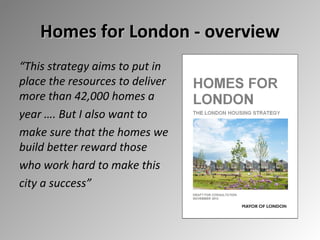
“This strategy aims to put in
place the resources to deliver
more than 42,000 homes a
year …. But I also want to
make sure that the homes we
build better reward those
who work hard to make this
city a success”
Identifying the challenge
• A population boom
− 9m by 2020 and 10m by 2030

• A changing tenure pattern
• An affordability crisis
• A growth in acute housing need
− Homelessness, rough sleeping & overcrowding all growing

• Housing is essential infrastructure
− Building homes creates jobs
− Supports London’s skilled workforce
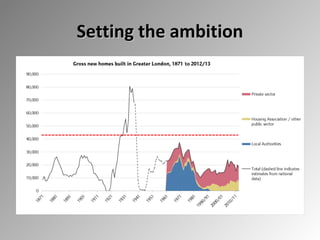
Setting the ambition
Setting the ambition –
increasing supply, improving quality
• At least 42,000 new homes a year

– With 15,000 affordable & 5,000 long-term PRS
– Double intermediate by 2020 and double again by 2025

• The 2015-18 programme
– 40 per cent low cost home ownership
– 30 per cent at “capped” rents
– 30 per cent at “discounted” rents

• Improved design & stock improvement
– All homes to meet LHDG standards & bespoke PRS design
– Retrofit every poorly insulated home by 2030
– All council homes to meet decent homes standard by 2018
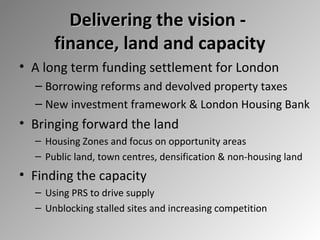
Delivering the vision
Delivering the vision finance, land and capacity
• A long term funding settlement for London
– Borrowing reforms and devolved property taxes
– New investment framework & London Housing Bank

• Bringing forward the land
– Housing Zones and focus on opportunity areas
– Public land, town centres, densification & non-housing land

• Finding the capacity
– Using PRS to drive supply
– Unblocking stalled sites and increasing competition
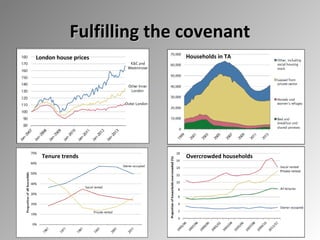
Fulfilling the covenant
London house prices

Tenure trends

Households in TA

Overcrowded households
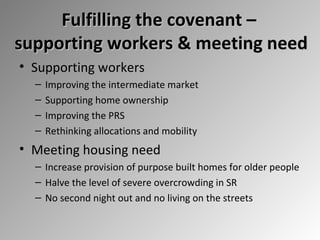
Fulfilling the covenant –
supporting workers & meeting need
• Supporting workers
–
–
–
–

Improving the intermediate market
Supporting home ownership
Improving the PRS
Rethinking allocations and mobility

• Meeting housing need
– Increase provision of purpose built homes for older people
– Halve the level of severe overcrowding in SR
– No second night out and no living on the streets
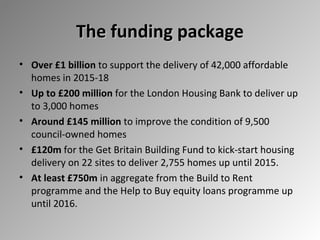
The funding package
• Over £1 billion to support the delivery of 42,000 affordable
homes in 2015-18
• Up to £200 million for the London Housing Bank to deliver up
to 3,000 homes
• Around £145 million to improve the condition of 9,500
council-owned homes
• £120m for the Get Britain Building Fund to kick-start housing
delivery on 22 sites to deliver 2,755 homes up until 2015.
• At least £750m in aggregate from the Build to Rent
programme and the Help to Buy equity loans programme up
until 2016.
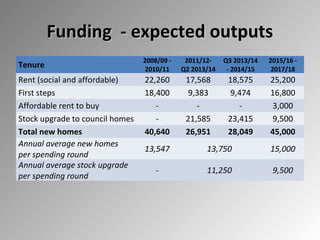
Funding - expected outputs
Tenure

2008/09 2010/11

2011/12Q2 2013/14

Q3 2013/14
- 2014/15

2015/16 2017/18

Rent (social and affordable)
First steps
Affordable rent to buy
Stock upgrade to council homes
Total new homes
Annual average new homes
per spending round
Annual average stock upgrade
per spending round

22,260
18,400
40,640

17,568
9,383
21,585
26,951

18,575
9,474
23,415
28,049

25,200
16,800
3,000
9,500
45,000

13,547

13,750

15,000

-

11,250

9,500
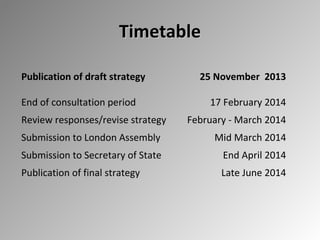
Timetable
Publication of draft strategy
End of consultation period
Review responses/revise strategy

25 November 2013
17 February 2014
February - March 2014

Submission to London Assembly

Mid March 2014

Submission to Secretary of State

End April 2014

Publication of final strategy

Late June 2014
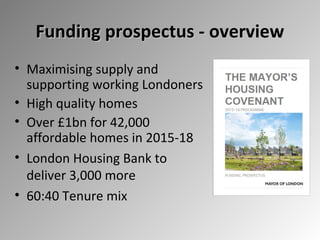
Funding prospectus - overview
• Maximising supply and
supporting working Londoners
• High quality homes
• Over £1bn for 42,000
affordable homes in 2015-18
• London Housing Bank to
deliver 3,000 more
• 60:40 Tenure mix
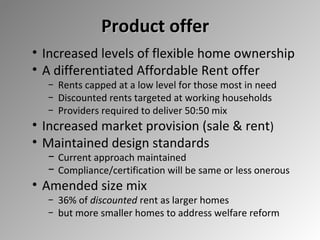
Product offer
• Increased levels of flexible home ownership
• A differentiated Affordable Rent offer
− Rents capped at a low level for those most in need
− Discounted rents targeted at working households
− Providers required to deliver 50:50 mix

• Increased market provision (sale & rent)
• Maintained design standards

− Current approach maintained
− Compliance/certification will be same or less onerous

• Amended size mix

− 36% of discounted rent as larger homes
− but more smaller homes to address welfare reform
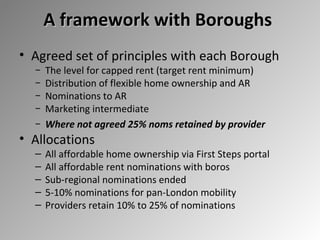
A framework with Boroughs
• Agreed set of principles with each Borough
−
−
−
−
−

The level for capped rent (target rent minimum)
Distribution of flexible home ownership and AR
Nominations to AR
Marketing intermediate
Where not agreed 25% noms retained by provider

• Allocations
–
–
–
–
–

All affordable home ownership via First Steps portal
All affordable rent nominations with boros
Sub-regional nominations ended
5-10% nominations for pan-London mobility
Providers retain 10% to 25% of nominations
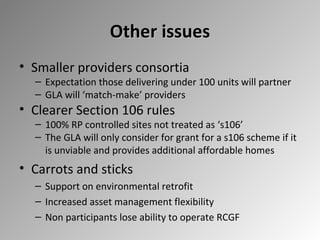
Other issues
• Smaller providers consortia

– Expectation those delivering under 100 units will partner
– GLA will ‘match-make’ providers

• Clearer Section 106 rules

– 100% RP controlled sites not treated as ‘s106’
– The GLA will only consider for grant for a s106 scheme if it
is unviable and provides additional affordable homes

• Carrots and sticks
– Support on environmental retrofit
– Increased asset management flexibility
– Non participants lose ability to operate RCGF
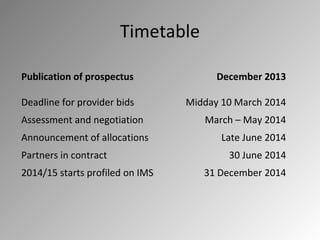
Timetable
Publication of prospectus

December 2013

Deadline for provider bids

Midday 10 March 2014

Assessment and negotiation
Announcement of allocations
Partners in contract
2014/15 starts profiled on IMS

March – May 2014
Late June 2014
30 June 2014
31 December 2014
Questions?

Alan Benson GLA Presentation on London Housing Strategy (15 Jan 2013)

  • 1.
    Draft London HousingStrategy & Funding Prospectus 2015-18 Alan Benson GREATER LONDON AUTHORITY
  • 2.
    Homes for London- overview “This strategy aims to put in place the resources to deliver more than 42,000 homes a year …. But I also want to make sure that the homes we build better reward those who work hard to make this city a success”
  • 3.
    Identifying the challenge •A population boom − 9m by 2020 and 10m by 2030 • A changing tenure pattern • An affordability crisis • A growth in acute housing need − Homelessness, rough sleeping & overcrowding all growing • Housing is essential infrastructure − Building homes creates jobs − Supports London’s skilled workforce
  • 4.
  • 5.
    Setting the ambition– increasing supply, improving quality • At least 42,000 new homes a year – With 15,000 affordable & 5,000 long-term PRS – Double intermediate by 2020 and double again by 2025 • The 2015-18 programme – 40 per cent low cost home ownership – 30 per cent at “capped” rents – 30 per cent at “discounted” rents • Improved design & stock improvement – All homes to meet LHDG standards & bespoke PRS design – Retrofit every poorly insulated home by 2030 – All council homes to meet decent homes standard by 2018
  • 6.
  • 7.
    Delivering the visionfinance, land and capacity • A long term funding settlement for London – Borrowing reforms and devolved property taxes – New investment framework & London Housing Bank • Bringing forward the land – Housing Zones and focus on opportunity areas – Public land, town centres, densification & non-housing land • Finding the capacity – Using PRS to drive supply – Unblocking stalled sites and increasing competition
  • 8.
    Fulfilling the covenant Londonhouse prices Tenure trends Households in TA Overcrowded households
  • 9.
    Fulfilling the covenant– supporting workers & meeting need • Supporting workers – – – – Improving the intermediate market Supporting home ownership Improving the PRS Rethinking allocations and mobility • Meeting housing need – Increase provision of purpose built homes for older people – Halve the level of severe overcrowding in SR – No second night out and no living on the streets
  • 10.
    The funding package •Over £1 billion to support the delivery of 42,000 affordable homes in 2015-18 • Up to £200 million for the London Housing Bank to deliver up to 3,000 homes • Around £145 million to improve the condition of 9,500 council-owned homes • £120m for the Get Britain Building Fund to kick-start housing delivery on 22 sites to deliver 2,755 homes up until 2015. • At least £750m in aggregate from the Build to Rent programme and the Help to Buy equity loans programme up until 2016.
  • 11.
    Funding - expectedoutputs Tenure 2008/09 2010/11 2011/12Q2 2013/14 Q3 2013/14 - 2014/15 2015/16 2017/18 Rent (social and affordable) First steps Affordable rent to buy Stock upgrade to council homes Total new homes Annual average new homes per spending round Annual average stock upgrade per spending round 22,260 18,400 40,640 17,568 9,383 21,585 26,951 18,575 9,474 23,415 28,049 25,200 16,800 3,000 9,500 45,000 13,547 13,750 15,000 - 11,250 9,500
  • 12.
    Timetable Publication of draftstrategy End of consultation period Review responses/revise strategy 25 November 2013 17 February 2014 February - March 2014 Submission to London Assembly Mid March 2014 Submission to Secretary of State End April 2014 Publication of final strategy Late June 2014
  • 13.
    Funding prospectus -overview • Maximising supply and supporting working Londoners • High quality homes • Over £1bn for 42,000 affordable homes in 2015-18 • London Housing Bank to deliver 3,000 more • 60:40 Tenure mix
  • 14.
    Product offer • Increasedlevels of flexible home ownership • A differentiated Affordable Rent offer − Rents capped at a low level for those most in need − Discounted rents targeted at working households − Providers required to deliver 50:50 mix • Increased market provision (sale & rent) • Maintained design standards − Current approach maintained − Compliance/certification will be same or less onerous • Amended size mix − 36% of discounted rent as larger homes − but more smaller homes to address welfare reform
  • 15.
    A framework withBoroughs • Agreed set of principles with each Borough − − − − − The level for capped rent (target rent minimum) Distribution of flexible home ownership and AR Nominations to AR Marketing intermediate Where not agreed 25% noms retained by provider • Allocations – – – – – All affordable home ownership via First Steps portal All affordable rent nominations with boros Sub-regional nominations ended 5-10% nominations for pan-London mobility Providers retain 10% to 25% of nominations
  • 16.
    Other issues • Smallerproviders consortia – Expectation those delivering under 100 units will partner – GLA will ‘match-make’ providers • Clearer Section 106 rules – 100% RP controlled sites not treated as ‘s106’ – The GLA will only consider for grant for a s106 scheme if it is unviable and provides additional affordable homes • Carrots and sticks – Support on environmental retrofit – Increased asset management flexibility – Non participants lose ability to operate RCGF
  • 17.
    Timetable Publication of prospectus December2013 Deadline for provider bids Midday 10 March 2014 Assessment and negotiation Announcement of allocations Partners in contract 2014/15 starts profiled on IMS March – May 2014 Late June 2014 30 June 2014 31 December 2014
  • 18.