Kitchen Elevation
2 elevation drawings
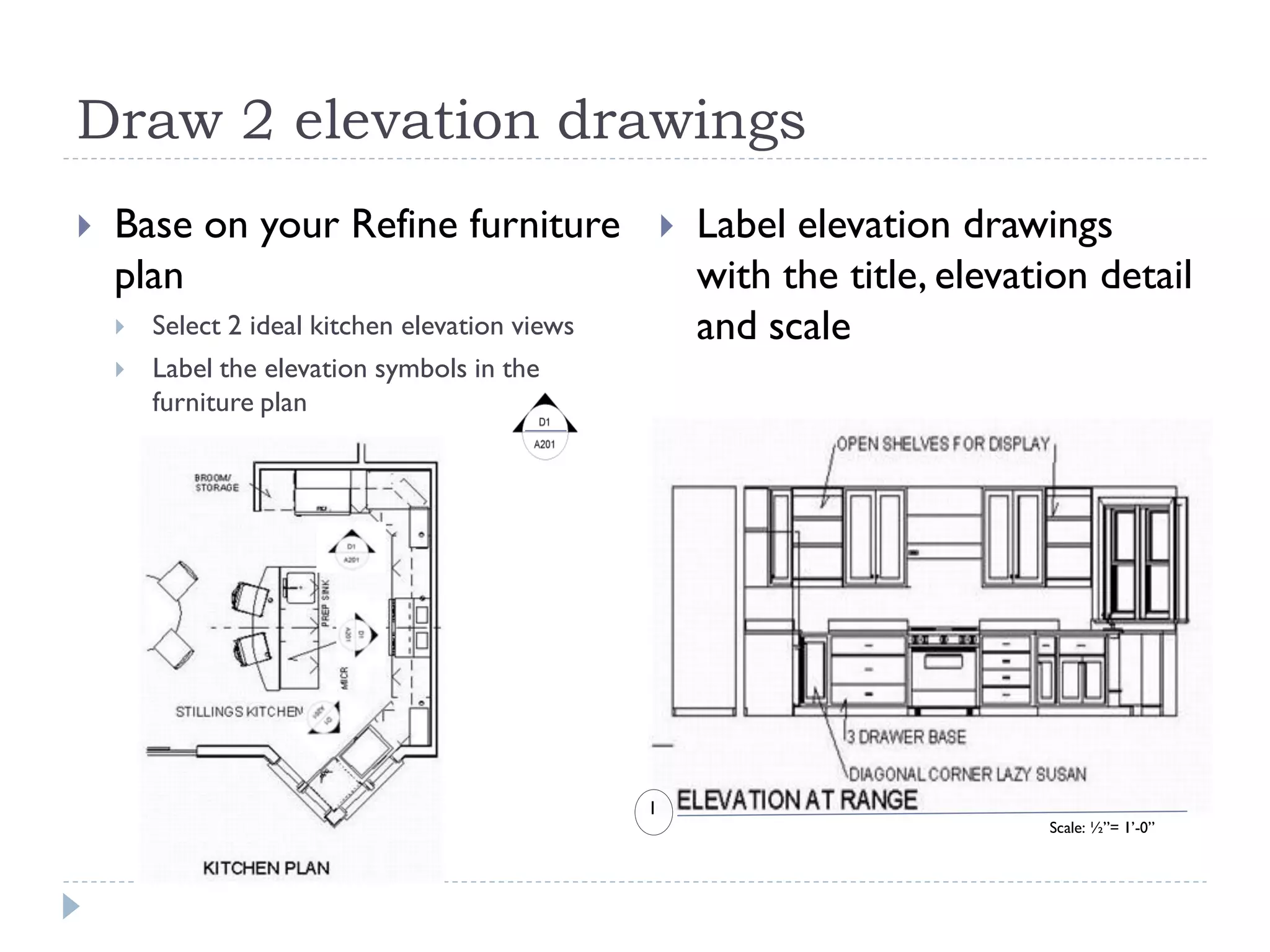
Draw 2 elevation drawings
 Base on your Refine furniture
plan
 Select 2 ideal kitchen elevation views
 Label the elevation symbols in the
furniture plan
 Label elevation drawings
with the title, elevation detail
and scale
1
1
Scale: ½”= 1’-0”
Kitchen elevation construction
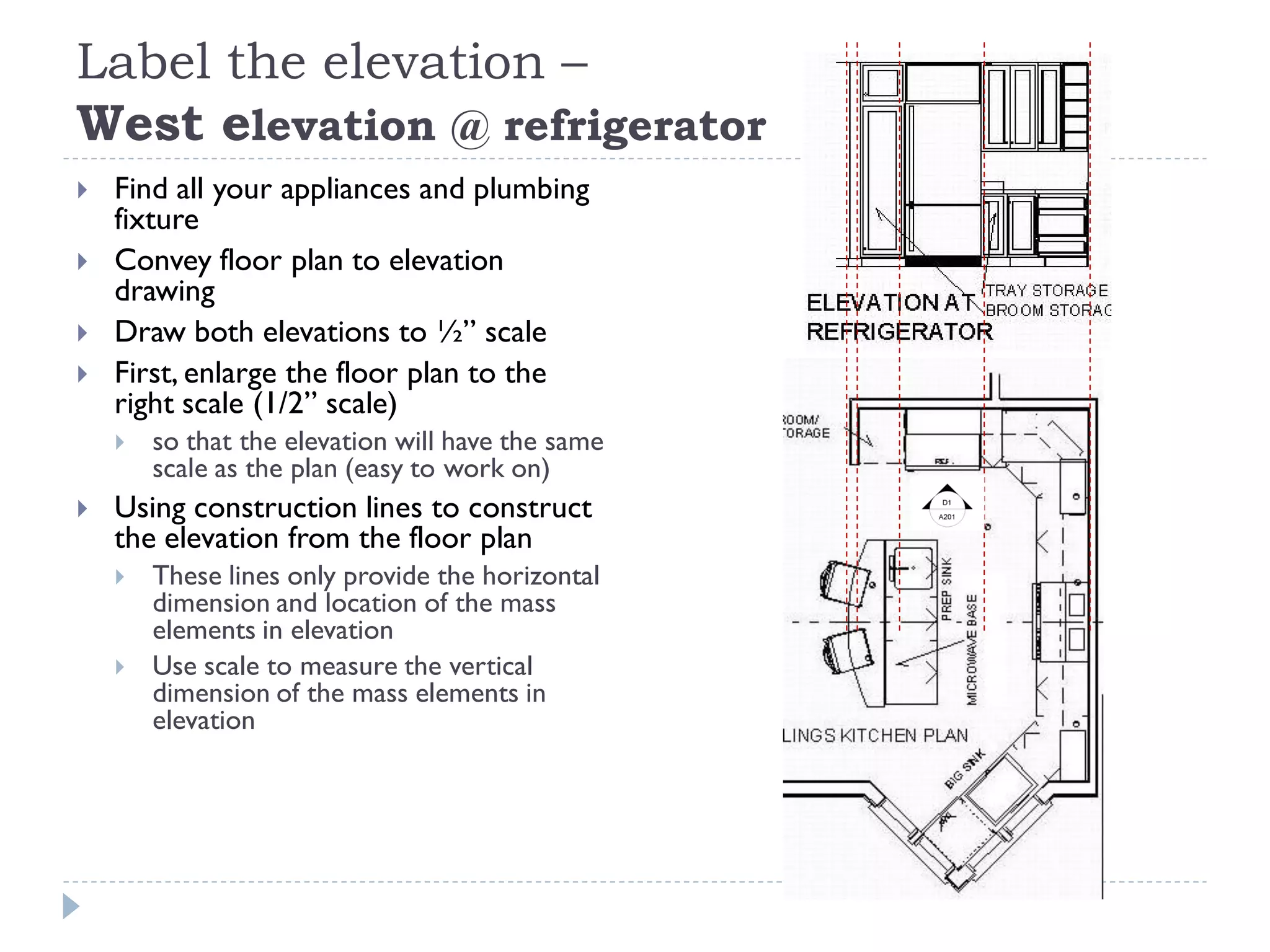
Label the elevation –
West elevation @ refrigerator
 Find all your appliances and plumbing
fixture
 Convey floor plan to elevation
drawing
 Draw both elevations to ½” scale
 First, enlarge the floor plan to the
right scale (1/2” scale)
 so that the elevation will have the same
scale as the plan (easy to work on)
 Using construction lines to construct
the elevation from the floor plan
 These lines only provide the horizontal
dimension and location of the mass
elements in elevation
 Use scale to measure the vertical
dimension of the mass elements in
elevation
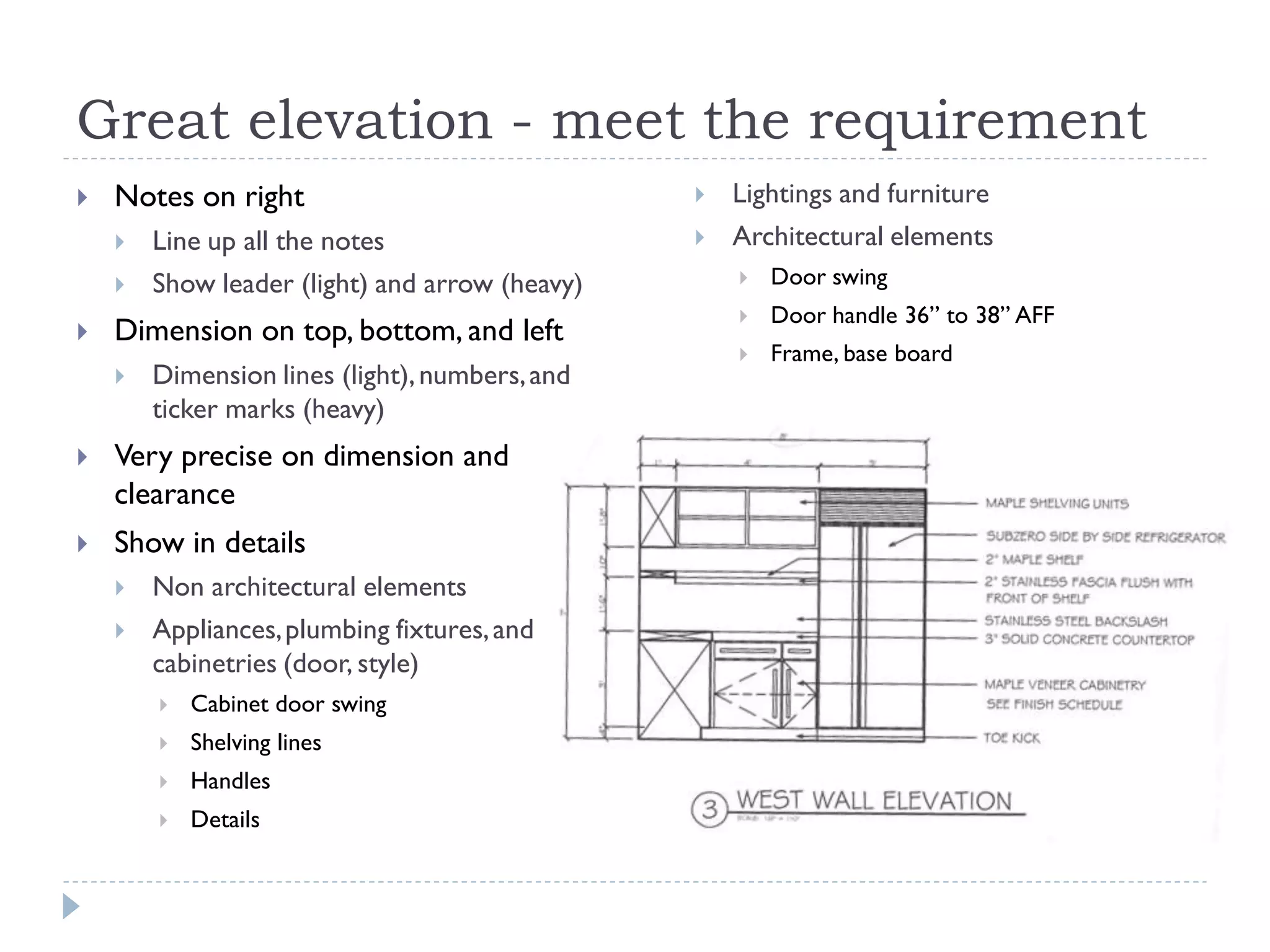
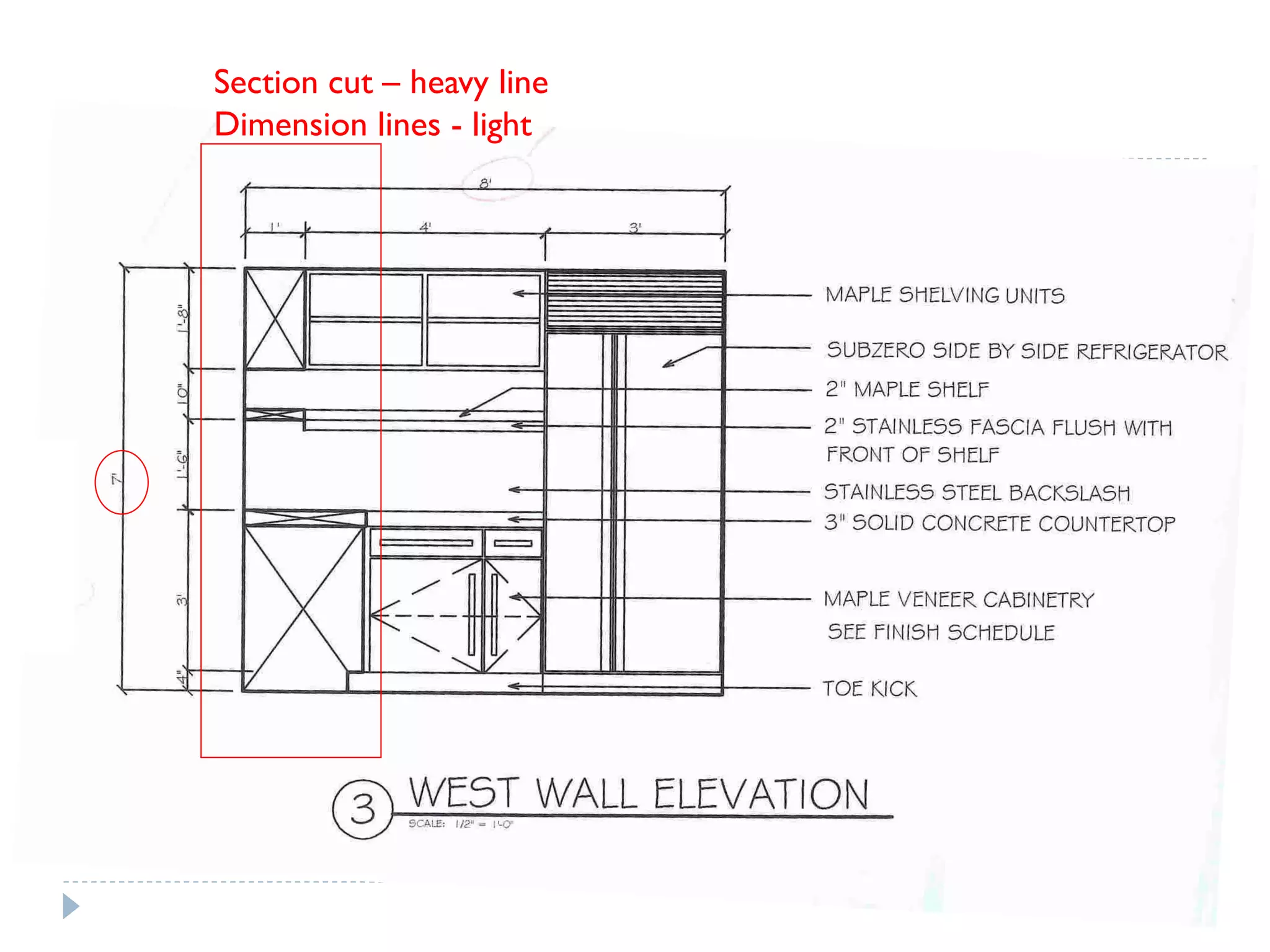
Great elevation - meet the requirement
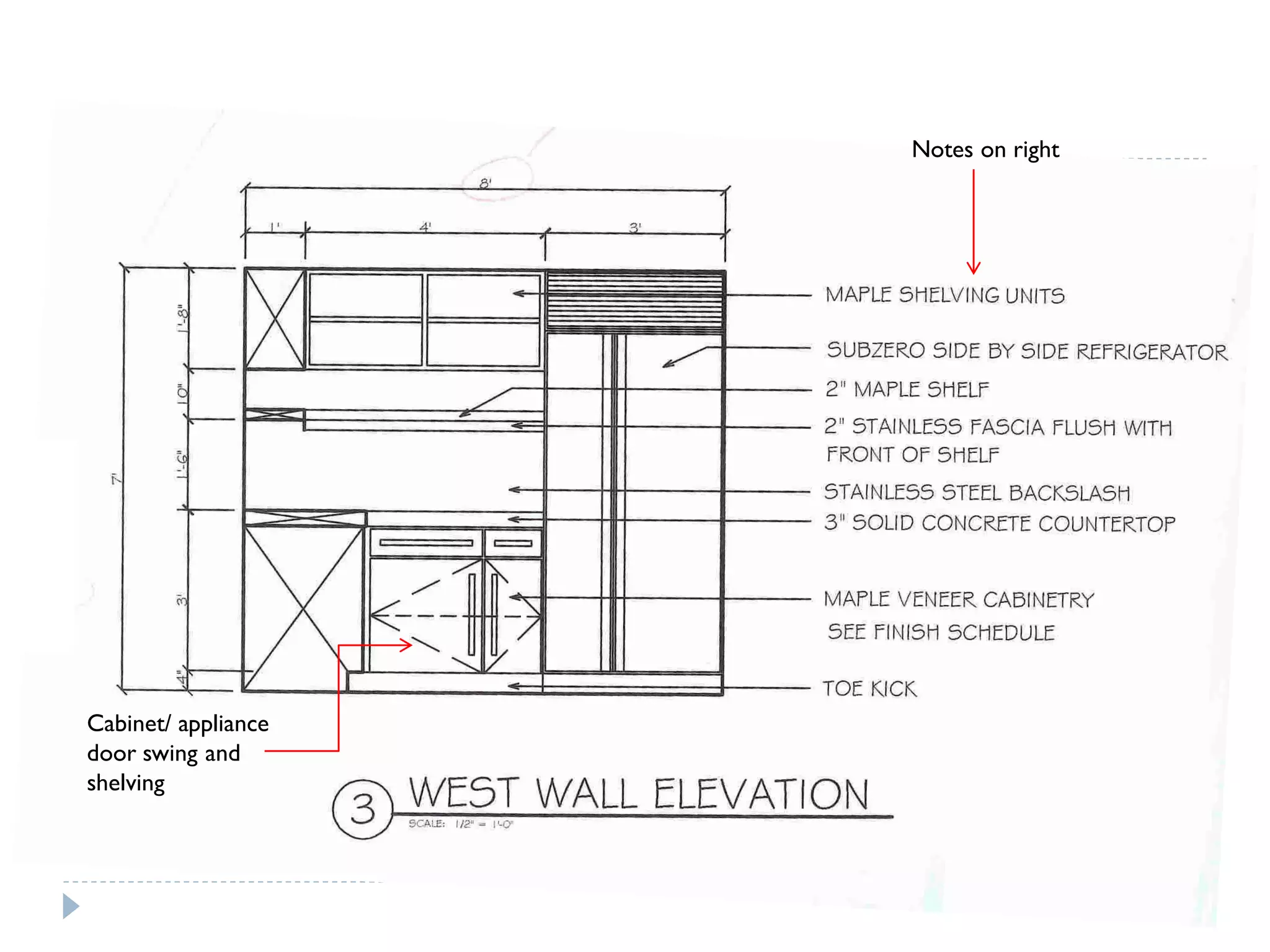
 Notes on right
 Line up all the notes
 Show leader (light) and arrow (heavy)
 Dimension on top, bottom, and left
 Dimension lines (light),numbers,and
ticker marks (heavy)
 Very precise on dimension and
clearance
 Show in details
 Non architectural elements
 Appliances,plumbing fixtures,and
cabinetries (door, style)
 Cabinet door swing
 Shelving lines
 Handles
 Details
 Lightings and furniture
 Architectural elements
 Door swing
 Door handle 36” to 38” AFF
 Frame, base board
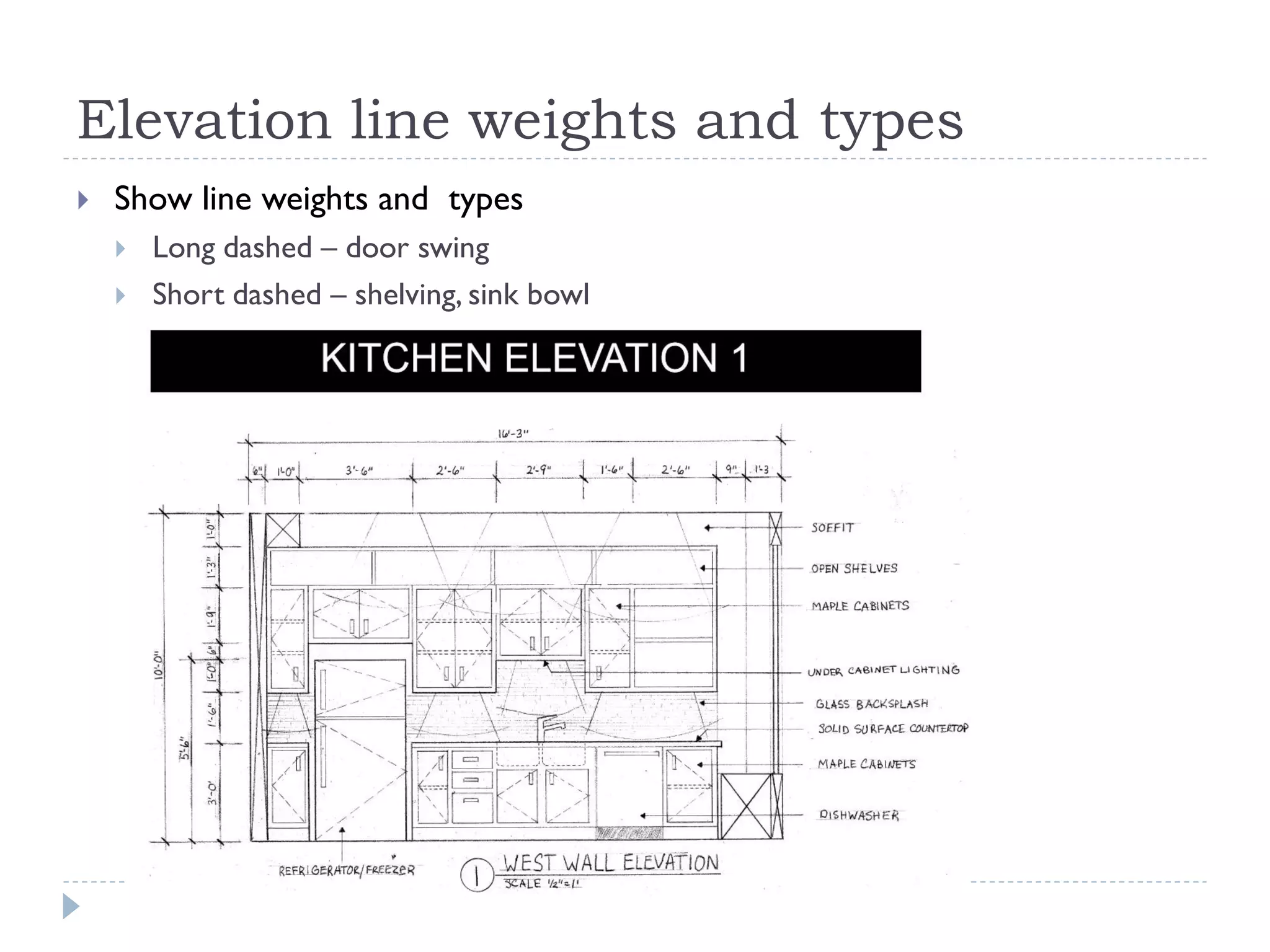
Elevation line weights and types
 Show line weights and types
 Long dashed – door swing
 Short dashed – shelving, sink bowl
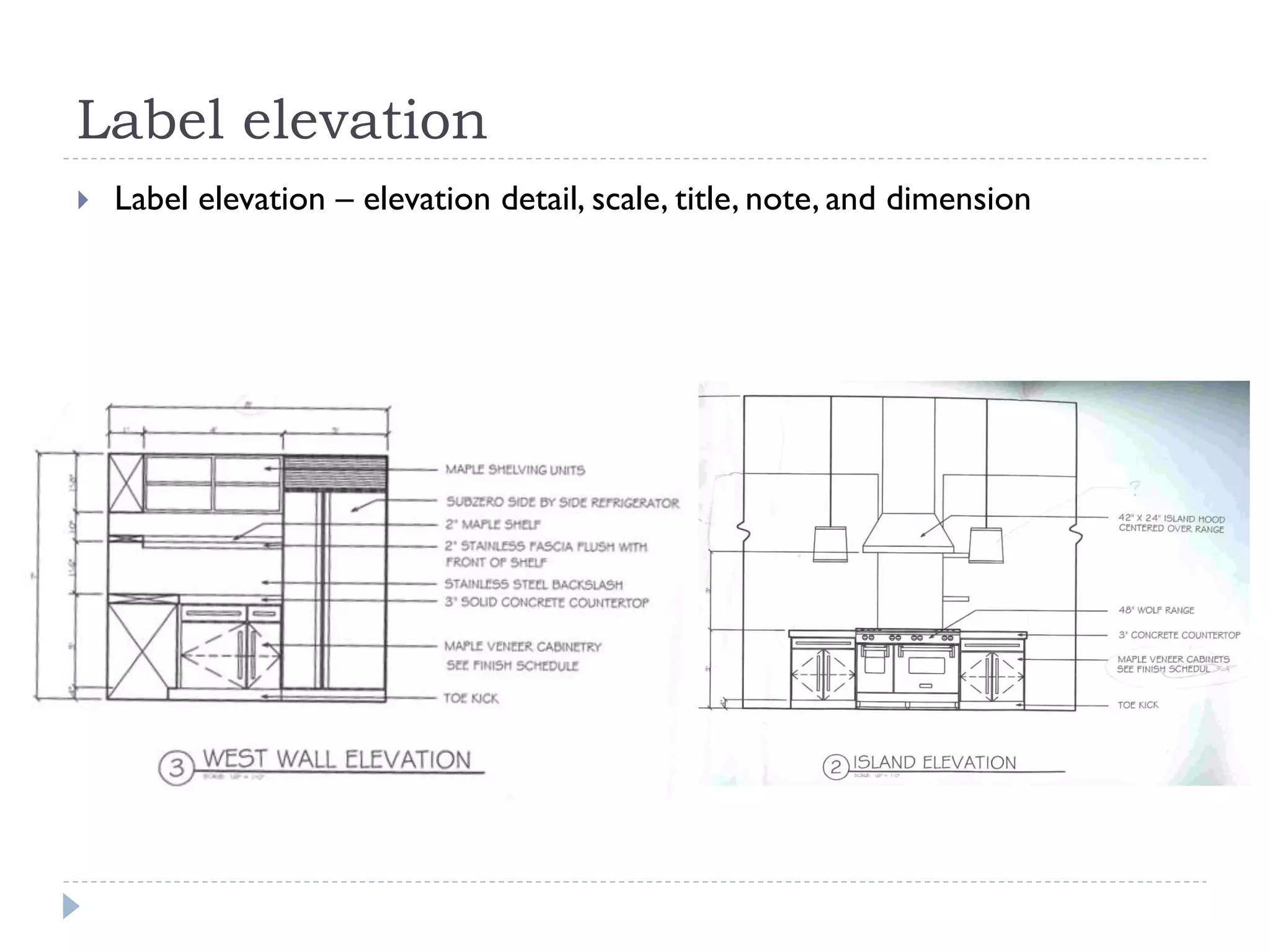
Label elevation
 Label elevation – elevation detail, scale, title, note, and dimension
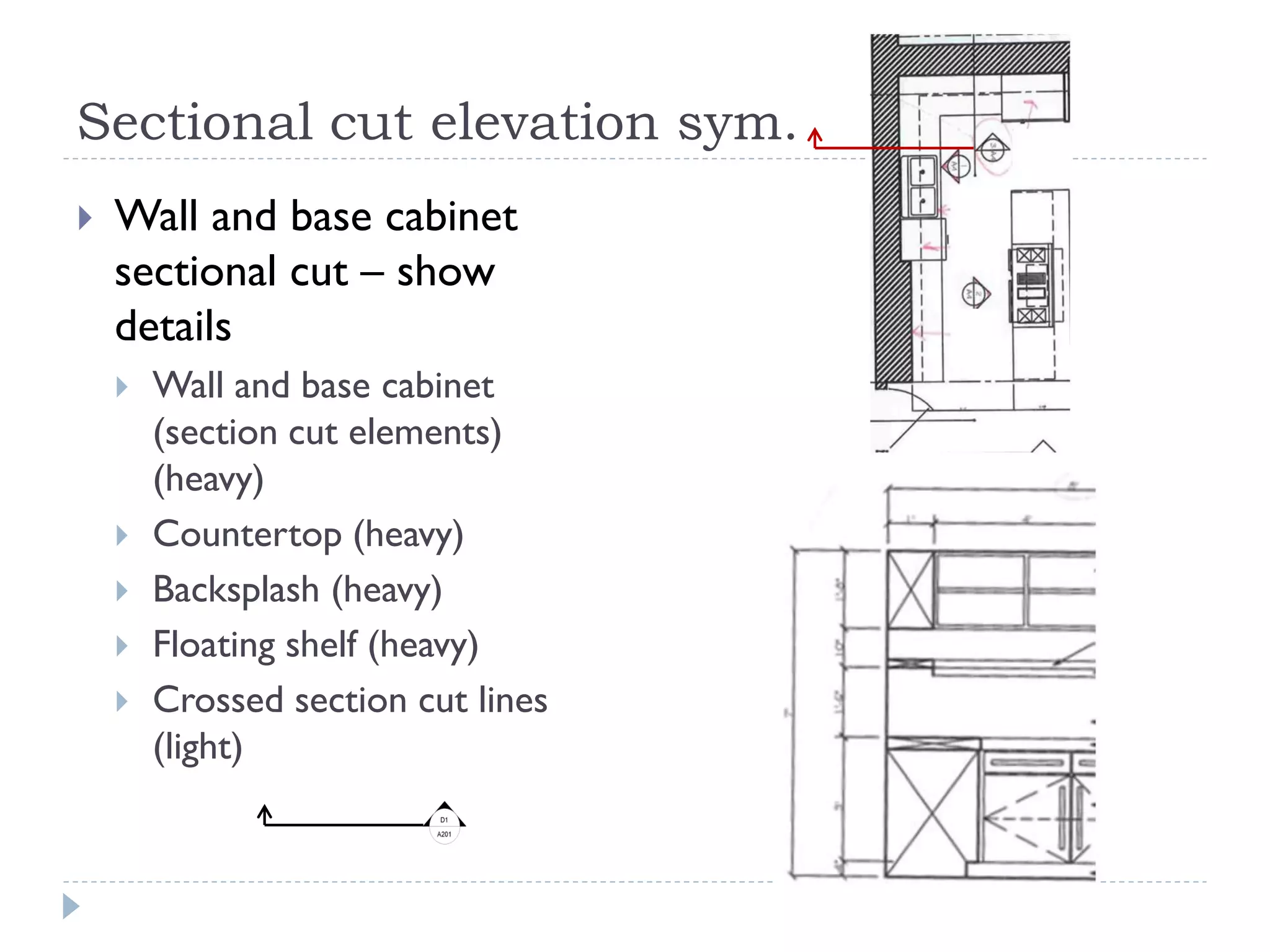
Sectional cut elevation sym.
 Wall and base cabinet
sectional cut – show
details
 Wall and base cabinet
(section cut elements)
(heavy)
 Countertop (heavy)
 Backsplash (heavy)
 Floating shelf (heavy)
 Crossed section cut lines
(light)
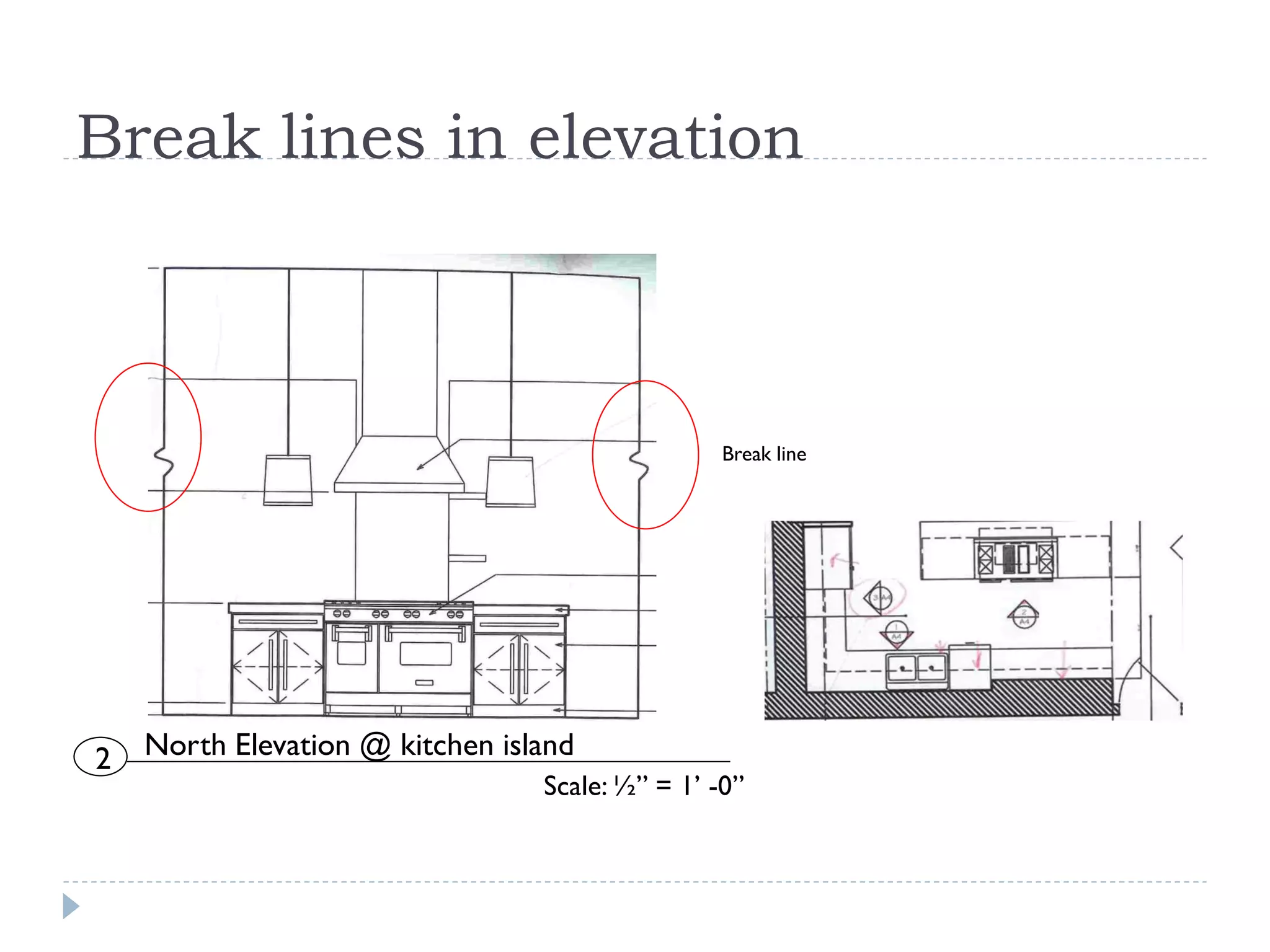
Break lines in elevation
Break line
North Elevation @ kitchen island
Scale: ½” = 1’ -0”
2
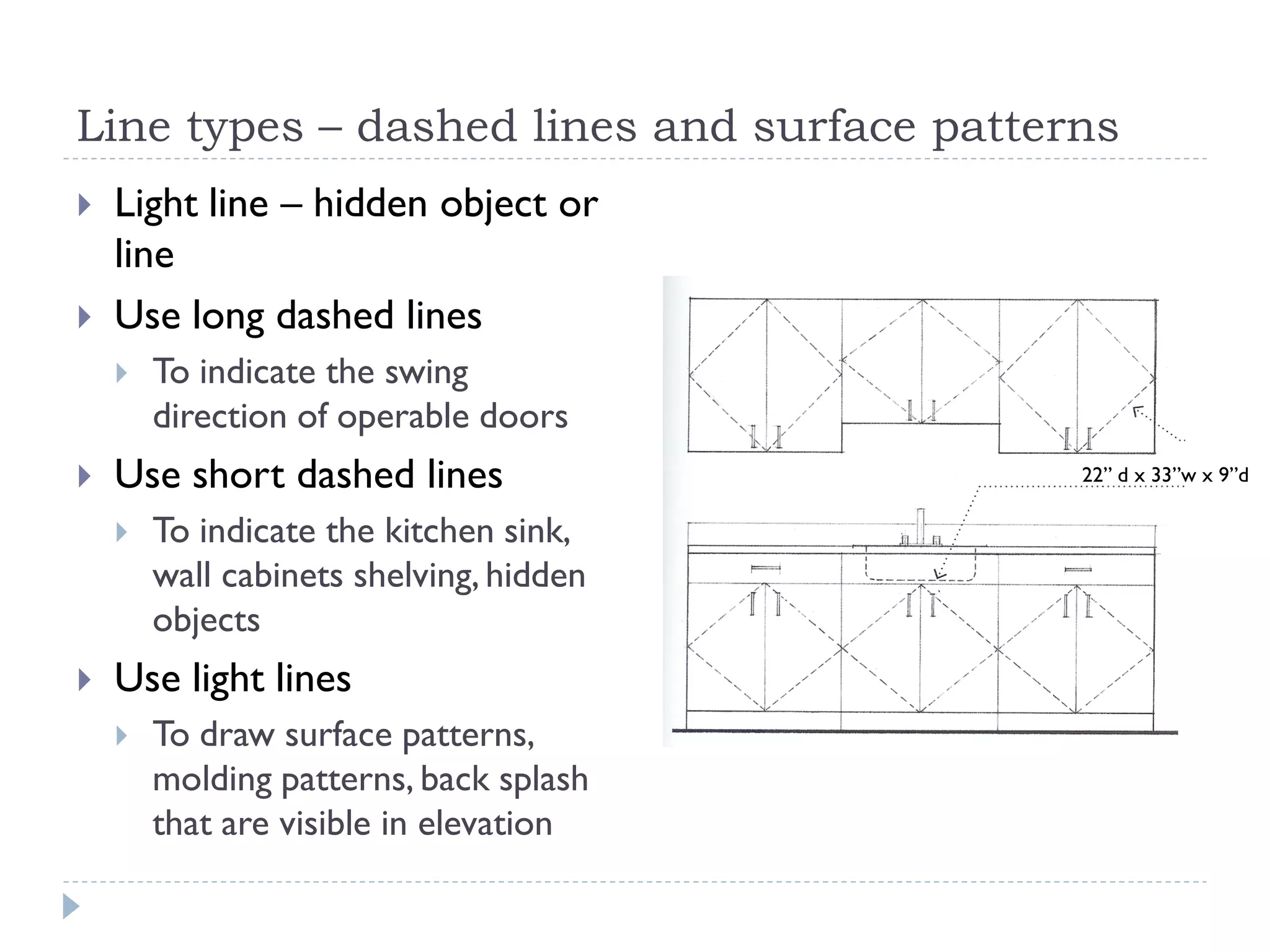
Line types – dashed lines and surface patterns
 Light line – hidden object or
line
 Use long dashed lines
 To indicate the swing
direction of operable doors
 Use short dashed lines
 To indicate the kitchen sink,
wall cabinets shelving, hidden
objects
 Use light lines
 To draw surface patterns,
molding patterns, back splash
that are visible in elevation
22” d x 33”w x 9”d
Interior doors
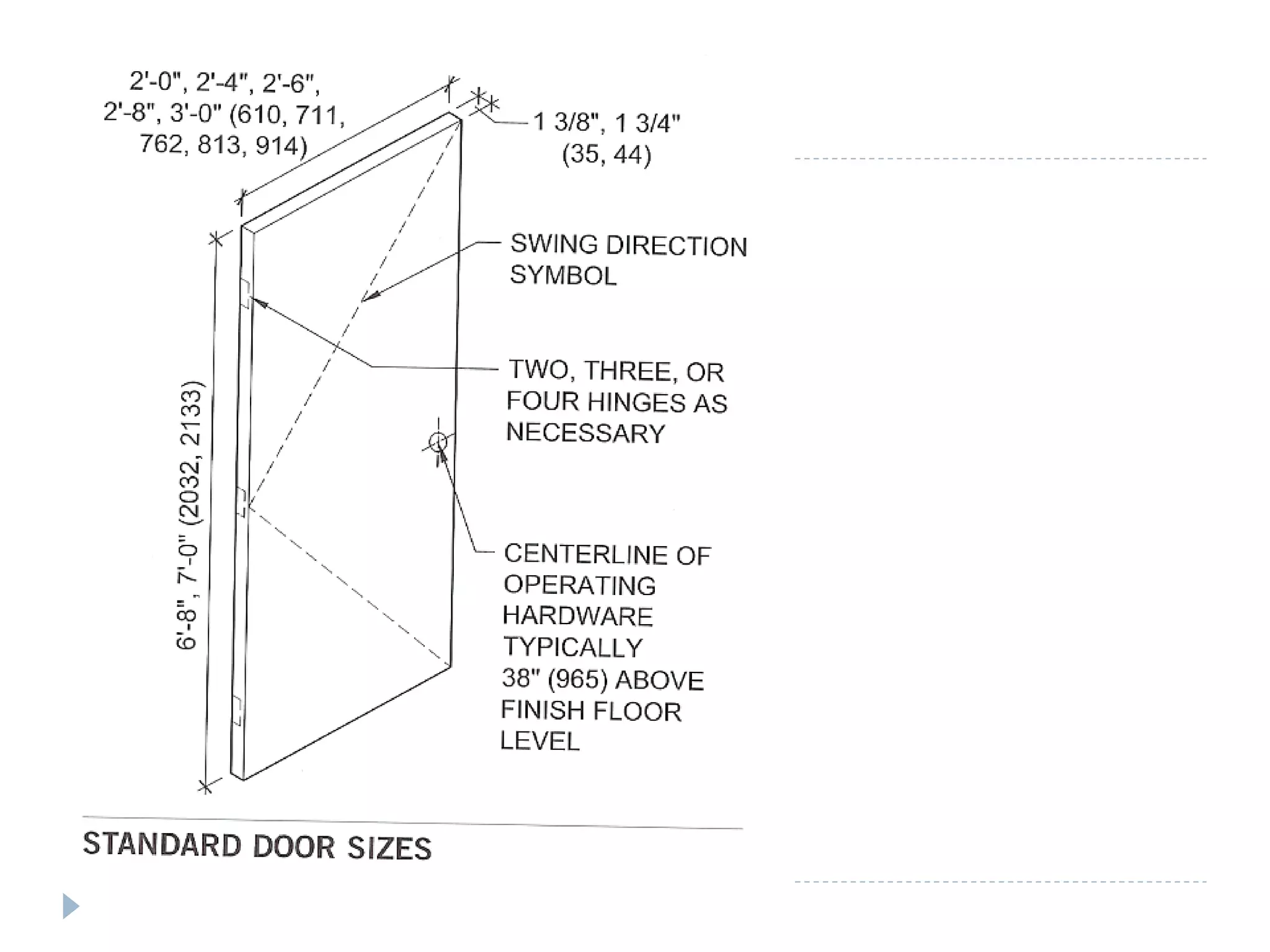
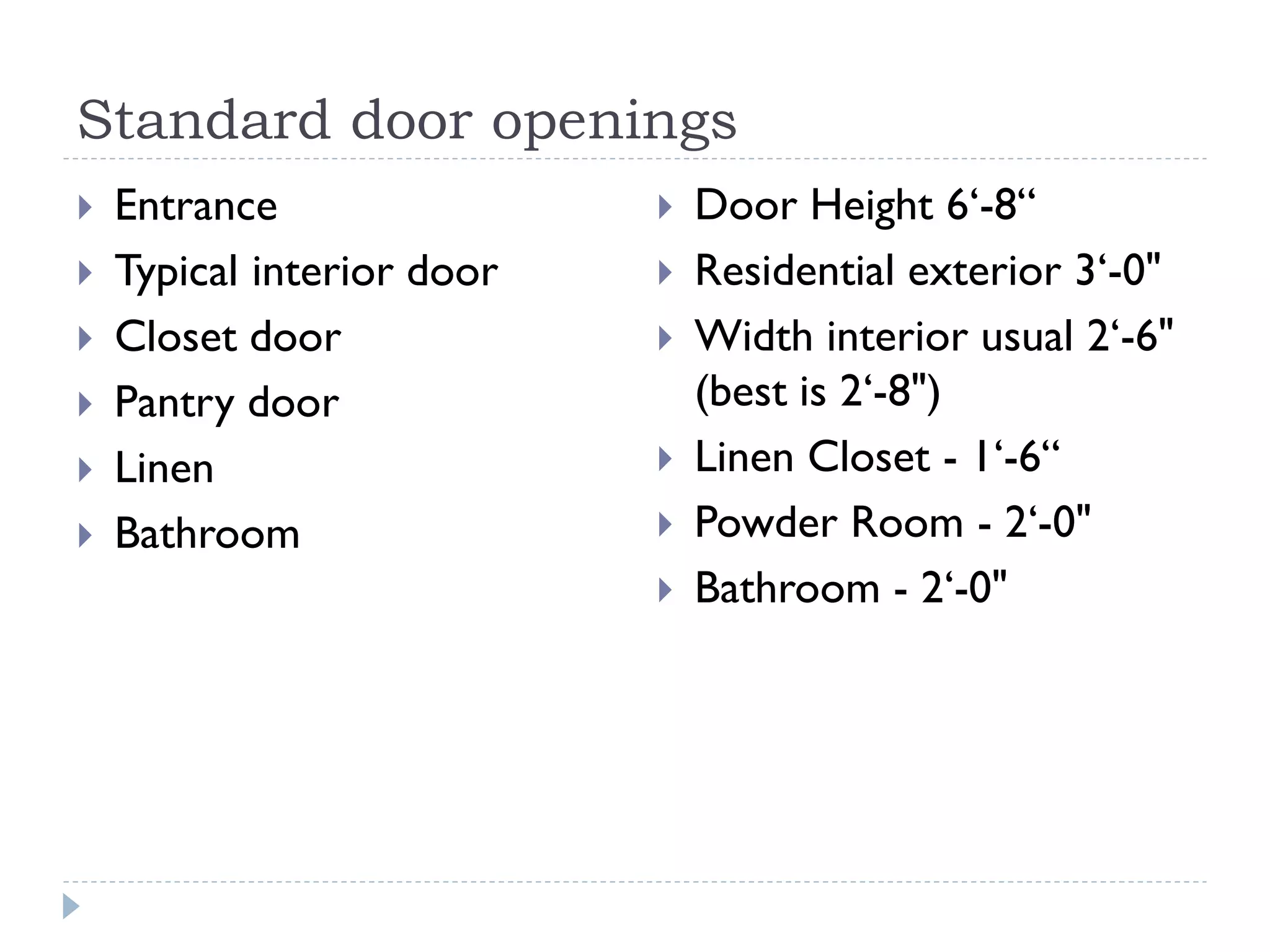
Standard door openings
 Entrance
 Typical interior door
 Closet door
 Pantry door
 Linen
 Bathroom
 Door Height 6‘-8“
 Residential exterior 3‘-0"
 Width interior usual 2‘-6"
(best is 2‘-8")
 Linen Closet - 1‘-6“
 Powder Room - 2‘-0"
 Bathroom - 2‘-0"
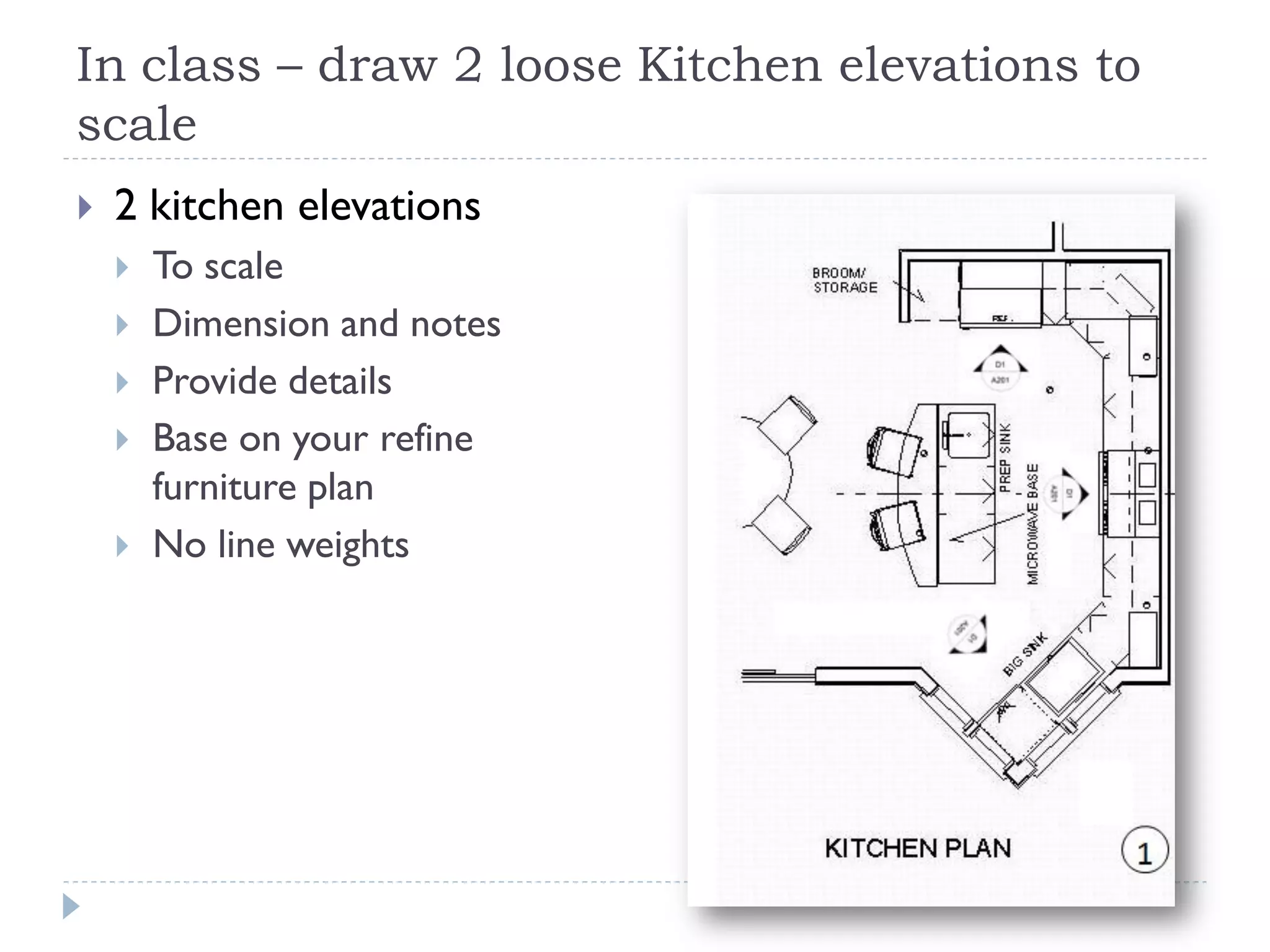
In class – draw 2 loose Kitchen elevations to
scale
 2 kitchen elevations
 To scale
 Dimension and notes
 Provide details
 Base on your refine
furniture plan
 No line weights
Notes on right
Cabinet/ appliance
door swing and
shelving
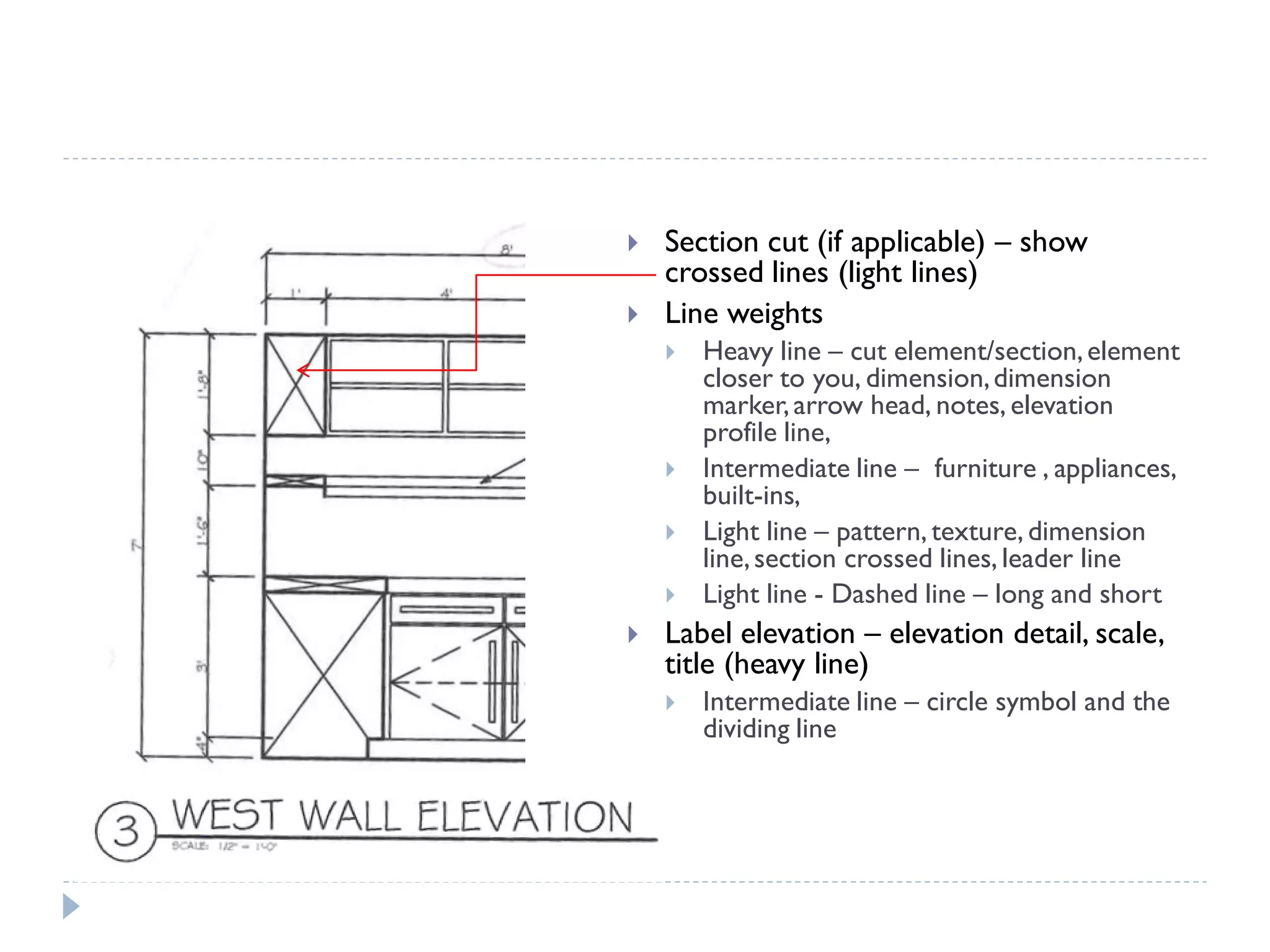
 Section cut (if applicable) – show
crossed lines (light lines)
 Line weights
 Heavy line – cut element/section,element
closer to you, dimension,dimension
marker,arrow head, notes, elevation
profile line,
 Intermediate line – furniture , appliances,
built-ins,
 Light line – pattern, texture, dimension
line,section crossed lines, leader line
 Light line - Dashed line – long and short
 Label elevation – elevation detail, scale,
title (heavy line)
 Intermediate line – circle symbol and the
dividing line
Section cut – heavy line
Dimension lines - light
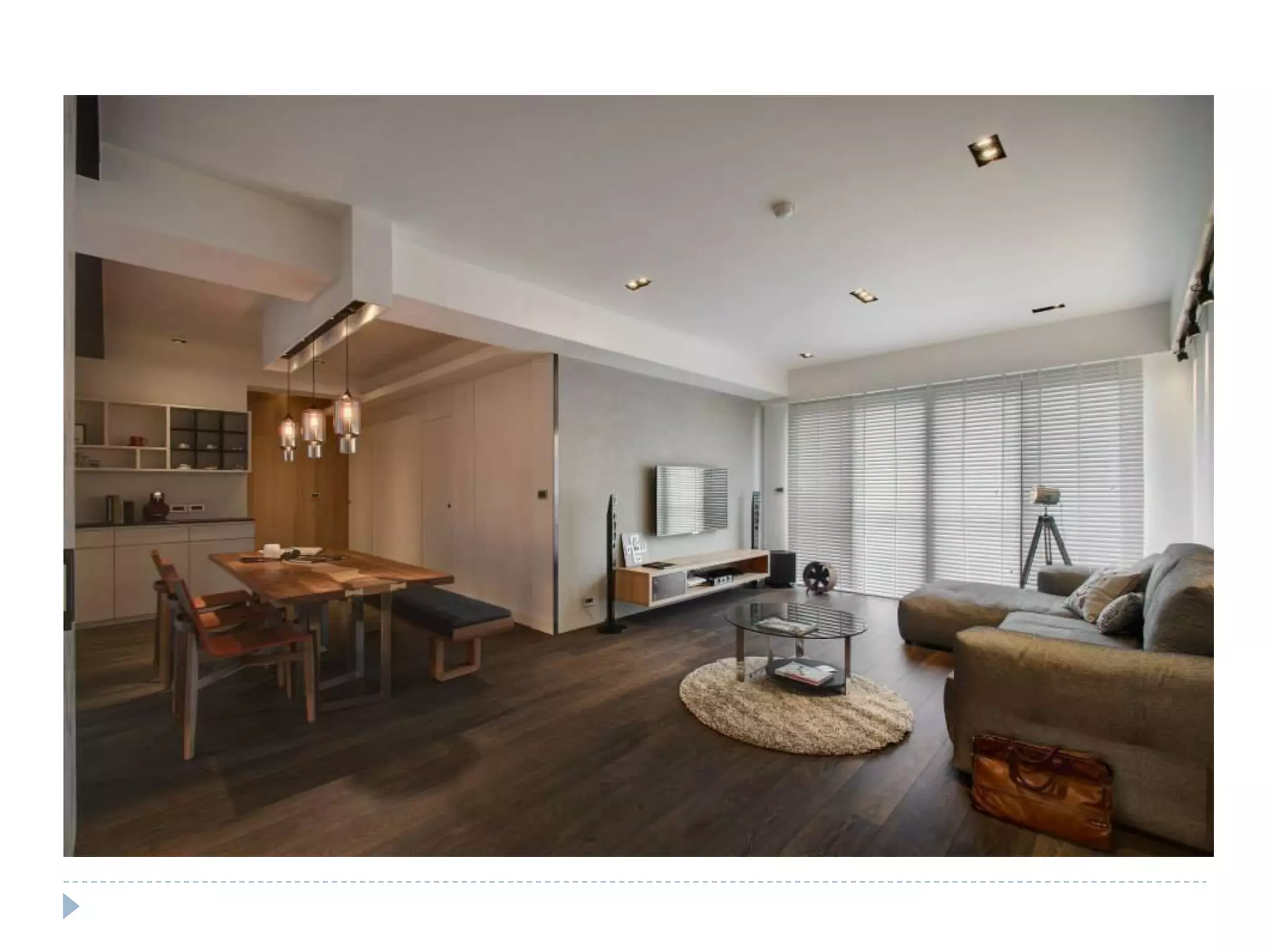
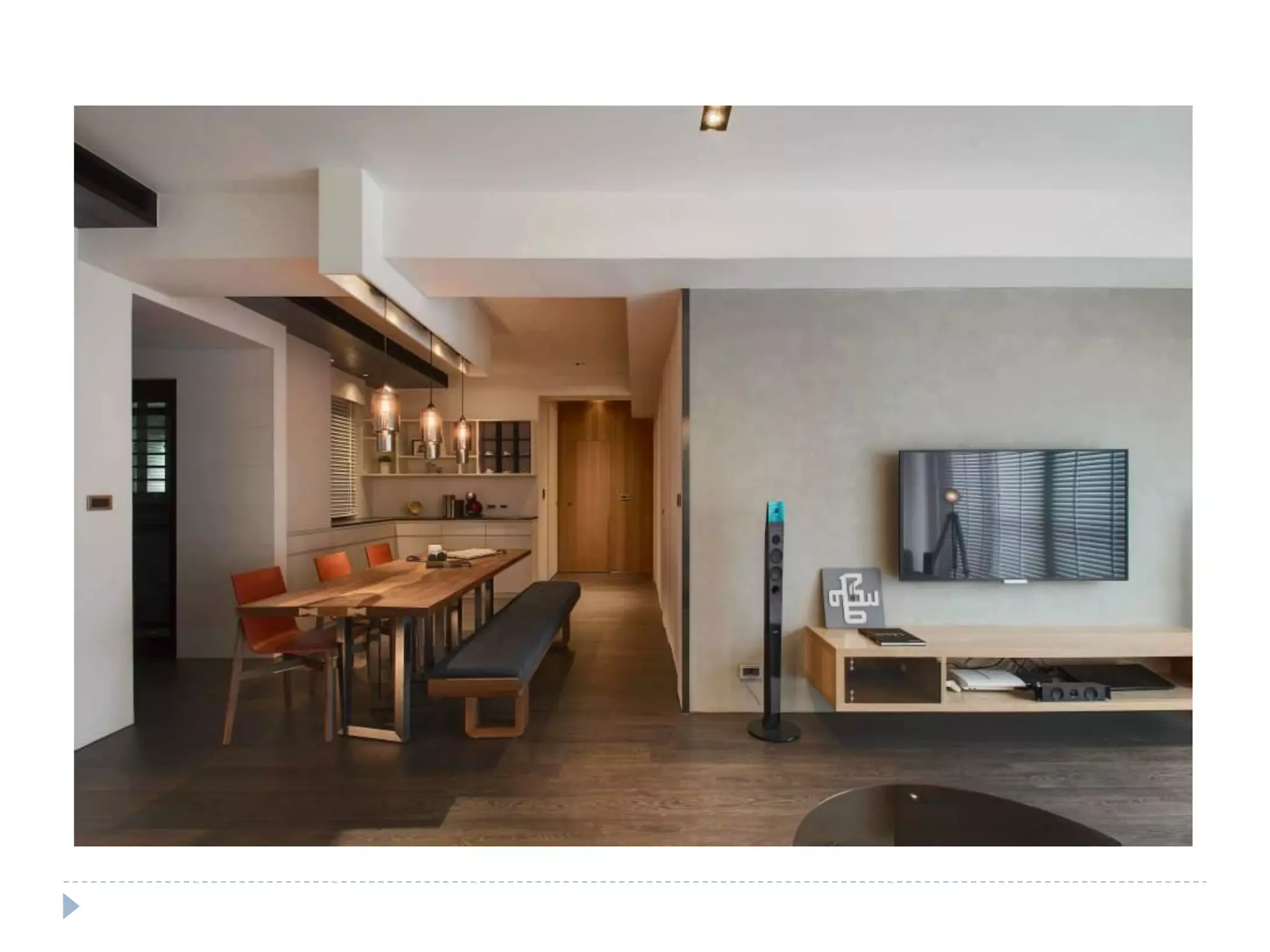
Creative beams, soffit and ceiling
design
lecture_notes_9.18_kitchen_elevation (1).pdf

lecture_notes_9.18_kitchen_elevation (1).pdf

  • 1.
  • 2.
    Draw 2 elevationdrawings  Base on your Refine furniture plan  Select 2 ideal kitchen elevation views  Label the elevation symbols in the furniture plan  Label elevation drawings with the title, elevation detail and scale 1 1 Scale: ½”= 1’-0”
  • 3.
  • 4.
    Label the elevation– West elevation @ refrigerator  Find all your appliances and plumbing fixture  Convey floor plan to elevation drawing  Draw both elevations to ½” scale  First, enlarge the floor plan to the right scale (1/2” scale)  so that the elevation will have the same scale as the plan (easy to work on)  Using construction lines to construct the elevation from the floor plan  These lines only provide the horizontal dimension and location of the mass elements in elevation  Use scale to measure the vertical dimension of the mass elements in elevation
  • 5.
    Great elevation -meet the requirement  Notes on right  Line up all the notes  Show leader (light) and arrow (heavy)  Dimension on top, bottom, and left  Dimension lines (light),numbers,and ticker marks (heavy)  Very precise on dimension and clearance  Show in details  Non architectural elements  Appliances,plumbing fixtures,and cabinetries (door, style)  Cabinet door swing  Shelving lines  Handles  Details  Lightings and furniture  Architectural elements  Door swing  Door handle 36” to 38” AFF  Frame, base board
  • 6.
    Elevation line weightsand types  Show line weights and types  Long dashed – door swing  Short dashed – shelving, sink bowl
  • 7.
    Label elevation  Labelelevation – elevation detail, scale, title, note, and dimension
  • 8.
    Sectional cut elevationsym.  Wall and base cabinet sectional cut – show details  Wall and base cabinet (section cut elements) (heavy)  Countertop (heavy)  Backsplash (heavy)  Floating shelf (heavy)  Crossed section cut lines (light)
  • 9.
    Break lines inelevation Break line North Elevation @ kitchen island Scale: ½” = 1’ -0” 2
  • 10.
    Line types –dashed lines and surface patterns  Light line – hidden object or line  Use long dashed lines  To indicate the swing direction of operable doors  Use short dashed lines  To indicate the kitchen sink, wall cabinets shelving, hidden objects  Use light lines  To draw surface patterns, molding patterns, back splash that are visible in elevation 22” d x 33”w x 9”d
  • 11.
  • 13.
    Standard door openings Entrance  Typical interior door  Closet door  Pantry door  Linen  Bathroom  Door Height 6‘-8“  Residential exterior 3‘-0"  Width interior usual 2‘-6" (best is 2‘-8")  Linen Closet - 1‘-6“  Powder Room - 2‘-0"  Bathroom - 2‘-0"
  • 14.
    In class –draw 2 loose Kitchen elevations to scale  2 kitchen elevations  To scale  Dimension and notes  Provide details  Base on your refine furniture plan  No line weights
  • 15.
    Notes on right Cabinet/appliance door swing and shelving
  • 16.
     Section cut(if applicable) – show crossed lines (light lines)  Line weights  Heavy line – cut element/section,element closer to you, dimension,dimension marker,arrow head, notes, elevation profile line,  Intermediate line – furniture , appliances, built-ins,  Light line – pattern, texture, dimension line,section crossed lines, leader line  Light line - Dashed line – long and short  Label elevation – elevation detail, scale, title (heavy line)  Intermediate line – circle symbol and the dividing line
  • 17.
    Section cut –heavy line Dimension lines - light
  • 18.
    Creative beams, soffitand ceiling design