FABRICATE CABINETS
FOR THE BUILT IN
ENVIRONMENT
Unit One: plan cabinet construction
What are the three basic methods of cabinet
construction?
There are three types of cabinets: partial overlay, full
overlay, and inset. Each term is used to describe how the
cabinet door or drawer sits on or in the cabinet frame.
The three types of cabinets also represent different
budgets and styles
A fabricated cabinet built-in environment refers to a setting
where cabinets are custom-made and installed as integral parts
of a space typically within a home or commercial property.
This process involves measuring the space designing the
cabinets to meet aesthetic and functional requirements and then
constructing and installing them on-site or pre-fabricating them
off-site for installation.
Built-in cabinets often serve as permanent fixtures providing
storage and contributing to the overall design of the room.
A built-in cabinet refers to a storage unit or piece of
furniture that is custom-made and designed to fit
seamlessly into a specific space within a room.
Types of Cabinets
There are three basic types of cabinetry: stock, semi-
custom and custom cabinets.
Each type provides different advantages depending on
your needs and budget.
.
 Stock cabinets are at an entry level price point with
limited options.
 Semi-custom cabinets offer more styles finishes
and features than stock cabinets.
 Custom cabinets offer the widest breadth of wood
types finishing options construction platforms and
modifications.
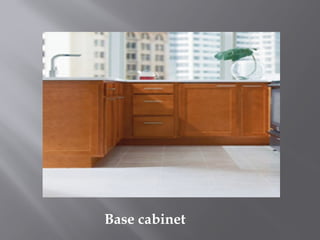
Base Cabinets
Base Cabinets are sometimes called lower cabinets.
They are strong and sturdy providing a base for heavy
countertops or used to create the perfect kitchen island
or window seating.
In a bathroom base cabinets provide the foundation for
a vanity or can be used for storage and organization of
everyday essentials.
Base cabinet
Wall Cabinets
Wall cabinets sometimes called wall-mounted or upper
cabinets refer to cabinets that are hung on a wall as
opposed to resting on the floor.
A mainstay for remodeling with cabinetry they add
beauty and functionality to the kitchen, bath, laundry or
family room.
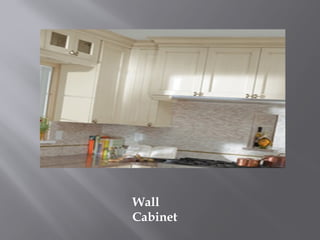
Wall
Cabinet
Tall cabinets
Tall cabinet also called pantry cabinets or utility
cabinets create bountiful storage and a dramatic vertical
look in a space. Typical tall cabinets will rang in height
from 84 inches to 96 inches as one unit.
Tall cabinets can house shelves pull-out drawers and
other storage solutions making them ideal for storing
large items bulk goods, cleaning supplies or small
appliances.
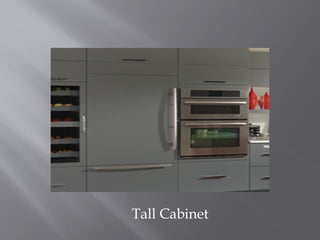
Tall Cabinet
Various types of cabinets commonly used in
different location.
Here are a few examples
Kitchen Cabinets
Bathroom Cabinets
Office Cabinets
Wardrobes
Entertainment Centers cabinets
1. Kitchen Cabinets
These are specifically designed for storing kitchen
utensils cookware and food items.
They come in different styles such as base cabinets,
wall cabinets and tall cabinets.
2. Bathroom Cabinets
These cabinets are designed to fit in bathrooms and
provide storage space for toiletries, towels, and other
bathroom essentials.
They can be wall-mounted, freestanding, or integrated
into a vanity.
Office Cabinets
These cabinets are designed to organize and store
office supplies, files, and paperwork.
They often include drawers, shelves, and compartments
to keep things neatly organized.
Wardrobes
Wardrobes are large cabinets used for storing clothing,
shoes, and accessories.
They typically have hanging rods, shelves and drawers
to accommodate various items.
Entertainment Centers cabinets
These cabinets are designed to house electronic devices
like televisions, gaming consoles, and speakers.
They often include shelves, drawers, and compartments
for organizing media equipment and accessories.
Drawings interpretation specifications and
customer instruction
 Interpretive drawing The interpretive drawing may
showcase the cabinet from different angles,
highlighting specific design features proportions
and materials.
It can also incorporate artistic elements such as color,
finishes and decorative details to provide a visual
representation of the intended look and feel of the
finished cabinet.
The interpretive drawing can be used to discuss and
refine design concepts make decisions regarding
materials, finishes and estimate the overall cost and
feasibility of the project.
Interpretive drawing helps viewers visualize what the
finished project will look like.
Interpretive drawings are used as an explanatory
means of understanding the floor plans.
The most common interpretive drawings are interior
elevations and perspectives.
Design principles
When it comes to cabinet design several principles can
help guide the process and ensure the creation of
functional, aesthetically pleasing and well-constructed
cabinets.
Here are some key cabinet design principles to consider:
 Functionality
 Proportions and
Scale
Cabinets should be designed with their intended
purpose in mind. Consider the specific needs
and requirements of the space and users. Think
about storage needs, accessibility organization
and any special features or functionalities
required.
Pay attention to the overall proportions and
scale of the cabinets in relation to the room or
space they will occupy. Cabinets should be
appropriately sized to fit harmoniously within
the environment.
 Ergonomics
 Balance and
Symmetry
Design cabinets with ergonomics in mind to ensure
ease of use and accessibility. Consider factors such
as the height and depth of shelves the placement of
handles or pulls, and the arrangement of drawers
and doors to optimize user comfort and
convenience.
Create a sense of balance and symmetry in cabinet
design to achieve visual harmony. Symmetrical
arrangements can be pleasing to the eye, but
asymmetry can also be used deliberately to create
interest and focal points.
 Material
Selection:
 Unity and
Cohesion
Choose materials that are suitable for the intended
use and style of the cabinets. Consider factors such
as durability, maintenance requirements, and
aesthetics. Common cabinet materials include wood,
plywood, MDF, and laminate, each with its own
characteristics and visual appeal.
Ensure that the cabinet design aligns with the overall
style and theme of the space. Cabinets should
contribute to a cohesive and unified look, whether
it's a contemporary, traditional, or transitional design.
Consistency in materials, finishes, colors, and
hardware choices can help achieve this unity
 Attention to
Detail
 Lighting
Considerations
Pay attention to the finer details of cabinet
design, such as edge treatments, moldings,
hardware, and finishes. These elements can
significantly impact the overall aesthetic and
perceived quality of the cabinets.
Incorporate appropriate lighting solutions
within or around the cabinets to enhance
visibility and functionality. Lighting can also
create ambiance and highlight specific
features or objects within the cabinets
 Sustainability
 Budget and
Practicality
Consider environmentally friendly and sustainable
design practices when selecting materials and
finishes for cabinets. Opt for materials with low
environmental impact and explore options for
recycling or repurposing cabinets in the future.
Keep practicality and budget constraints in mind
during the design process. Strive for a balance
between aesthetics and functionality while staying
within the allocated budget.
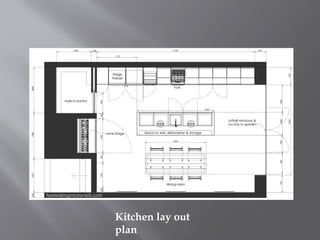
The two main principles in kitchen design are the work
sequence and the kitchen triangle.
These are not building regulations that you absolutely must
follow just think of them as design guidelines to help you design
a more efficient kitchen.
Kitchen lay out
plan
1. Work sequence
The work sequence is the order of activities involved in preparing
food.
This means all the steps from walking in with the groceries,
storing the produce to prepping, cooking, eating, and to
eventually cleaning it all away.
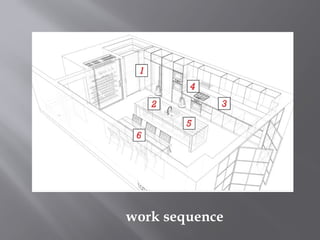
work sequence
The distance between the preparation area number 3 and the wet
zone number 2 should be minimal.
This is because nobody wants to carry around heavy pans from
sink to the hob longer than they have to. The recommended
distance between the two is no longer than 1.8 meters.
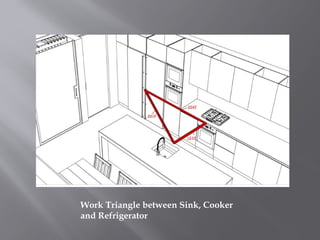
Work triangle
The work triangle is the relationship between three of the main
appliances used in the kitchen. the refrigerator, sink, and the
cooker.
As a rule of thumb when we add the lengths together the sum
should not be less than 3.5 meters and no more than 6.5 meters.
Shorter distance means that we don’t have enough work surface
space.
Work Triangle between Sink, Cooker
and Refrigerator
Fixtures & fittings
Cabinet fixtures and fittings are essential components that
contribute to the functionality, convenience and overall aesthetic
of cabinets.
They include a wide range of hardware, accessories and
mechanisms that enhance the usability and organization of the
cabinet space.
Here are some common fixtures and fittings used in cabinet
design.
 Cabinet Handles and
Knobs
 Hinges
These are decorative and functional elements
used to open and close cabinet doors and
drawers. They come in various styles, materials,
and finishes, allowing for customization to
match the overall design theme.
Hinges are crucial for attaching cabinet doors to
the cabinet frame and enabling smooth opening
and closing. They come in different types, such

as concealed hinges, overlay hinges, and
European hinges, each with its own installation
method and functionality
 Drawer Slides
 Shelf Supports
Drawer slides, also known as drawer glides, facilitate
the smooth movement and extension of drawers.
They come in various configurations, including side-
mounted slides, under-mounted slides, and center-
mounted slides, providing options based on space
and design requirements.
Shelf supports are used to hold adjustable shelves in
place within the cabinet. They can be pegs, clips, or
brackets that allow for easy customization and
repositioning of shelves to accommodate different
storage needs
 Cabinet Locks and
Latches:
These hardware components provide
security and prevent unauthorized
access to cabinets. They can include
various types of locks
Elements of a cabinet specification
 Dimensions: Provide accurate measurements of the cabinet
including height, width, depth and any other relevant
dimensions.
Specify if it's a standalone or built-in cabinet.
 Materials: Specify the materials to be used for different
components of the cabinet such as the cabinet box, doors,
drawers, hinges, and handles. Common materials include
wood, plywood, MDF.
 Style and Design: Describe the desired style and design
features of the cabinet.
Whether it's a traditional, modern or custom design include
any specific details like paneling, molding or decorative
elements.
 Layout and Configuration: Outline the layout and
internal configuration of the cabinet. Specify the number and
size of shelves, drawers, compartments or any other
organizational features required.
 Finish: Indicate the desired finish for the cabinet such as
paint color, stain, varnish, or any other surface treatment.
Specify if there are any specific design elements like
distressing, glazing, or wood grain patterns.
 Hardware and Accessories: Specify the type of
hardware and accessories needed such as door handles,
knobs, hinges, and drawer slides.
Include any specific requirements regarding the style, finish,
or functionality of these components.
 Functional Considerations: Describe any specific
functional requirements such as integrated lighting wire
management or special features like pull-out trays or soft-
close mechanisms.
 Quantity and Timeline: Specify the desired quantity of
cabinets to be produced as well as any specific deadlines or
timelines for production and delivery.
Cabinet making Procedures
 In building good cabinet the following steps are important:
 Select a good cabinet that fits gone needs.
 Select the right kind of materials
 Have the correct equipment
 Make the join an accurate layout
 Cut the parts to the correct shape
 Make the joints accurately
 Assemble carefully
 Apply the proper kind of finish
Types of cabinet construction

Cabinet BUILT IN CABINATE ENVIROMENT pptx

  • 1.
    FABRICATE CABINETS FOR THEBUILT IN ENVIRONMENT
  • 3.
    Unit One: plancabinet construction What are the three basic methods of cabinet construction? There are three types of cabinets: partial overlay, full overlay, and inset. Each term is used to describe how the cabinet door or drawer sits on or in the cabinet frame. The three types of cabinets also represent different budgets and styles
  • 4.
    A fabricated cabinetbuilt-in environment refers to a setting where cabinets are custom-made and installed as integral parts of a space typically within a home or commercial property. This process involves measuring the space designing the cabinets to meet aesthetic and functional requirements and then constructing and installing them on-site or pre-fabricating them off-site for installation. Built-in cabinets often serve as permanent fixtures providing storage and contributing to the overall design of the room.
  • 5.
    A built-in cabinetrefers to a storage unit or piece of furniture that is custom-made and designed to fit seamlessly into a specific space within a room. Types of Cabinets There are three basic types of cabinetry: stock, semi- custom and custom cabinets. Each type provides different advantages depending on your needs and budget.
  • 6.
    .  Stock cabinetsare at an entry level price point with limited options.  Semi-custom cabinets offer more styles finishes and features than stock cabinets.  Custom cabinets offer the widest breadth of wood types finishing options construction platforms and modifications.
  • 7.
    Base Cabinets Base Cabinetsare sometimes called lower cabinets. They are strong and sturdy providing a base for heavy countertops or used to create the perfect kitchen island or window seating. In a bathroom base cabinets provide the foundation for a vanity or can be used for storage and organization of everyday essentials.

  • 8.
  • 9.
    Wall Cabinets Wall cabinetssometimes called wall-mounted or upper cabinets refer to cabinets that are hung on a wall as opposed to resting on the floor. A mainstay for remodeling with cabinetry they add beauty and functionality to the kitchen, bath, laundry or family room.
  • 10.
  • 11.
    Tall cabinets Tall cabinetalso called pantry cabinets or utility cabinets create bountiful storage and a dramatic vertical look in a space. Typical tall cabinets will rang in height from 84 inches to 96 inches as one unit. Tall cabinets can house shelves pull-out drawers and other storage solutions making them ideal for storing large items bulk goods, cleaning supplies or small appliances.
  • 12.
  • 13.
    Various types ofcabinets commonly used in different location. Here are a few examples Kitchen Cabinets Bathroom Cabinets Office Cabinets Wardrobes Entertainment Centers cabinets
  • 14.
    1. Kitchen Cabinets Theseare specifically designed for storing kitchen utensils cookware and food items. They come in different styles such as base cabinets, wall cabinets and tall cabinets.
  • 15.
    2. Bathroom Cabinets Thesecabinets are designed to fit in bathrooms and provide storage space for toiletries, towels, and other bathroom essentials. They can be wall-mounted, freestanding, or integrated into a vanity.
  • 16.
    Office Cabinets These cabinetsare designed to organize and store office supplies, files, and paperwork. They often include drawers, shelves, and compartments to keep things neatly organized.
  • 17.
    Wardrobes Wardrobes are largecabinets used for storing clothing, shoes, and accessories. They typically have hanging rods, shelves and drawers to accommodate various items.
  • 18.
    Entertainment Centers cabinets Thesecabinets are designed to house electronic devices like televisions, gaming consoles, and speakers. They often include shelves, drawers, and compartments for organizing media equipment and accessories.
  • 19.
    Drawings interpretation specificationsand customer instruction  Interpretive drawing The interpretive drawing may showcase the cabinet from different angles, highlighting specific design features proportions and materials.
  • 20.
    It can alsoincorporate artistic elements such as color, finishes and decorative details to provide a visual representation of the intended look and feel of the finished cabinet. The interpretive drawing can be used to discuss and refine design concepts make decisions regarding materials, finishes and estimate the overall cost and feasibility of the project.
  • 21.
    Interpretive drawing helpsviewers visualize what the finished project will look like. Interpretive drawings are used as an explanatory means of understanding the floor plans. The most common interpretive drawings are interior elevations and perspectives.
  • 22.
    Design principles When itcomes to cabinet design several principles can help guide the process and ensure the creation of functional, aesthetically pleasing and well-constructed cabinets. Here are some key cabinet design principles to consider:
  • 23.
     Functionality  Proportionsand Scale Cabinets should be designed with their intended purpose in mind. Consider the specific needs and requirements of the space and users. Think about storage needs, accessibility organization and any special features or functionalities required. Pay attention to the overall proportions and scale of the cabinets in relation to the room or space they will occupy. Cabinets should be appropriately sized to fit harmoniously within the environment.
  • 24.
     Ergonomics  Balanceand Symmetry Design cabinets with ergonomics in mind to ensure ease of use and accessibility. Consider factors such as the height and depth of shelves the placement of handles or pulls, and the arrangement of drawers and doors to optimize user comfort and convenience. Create a sense of balance and symmetry in cabinet design to achieve visual harmony. Symmetrical arrangements can be pleasing to the eye, but asymmetry can also be used deliberately to create interest and focal points.
  • 25.
     Material Selection:  Unityand Cohesion Choose materials that are suitable for the intended use and style of the cabinets. Consider factors such as durability, maintenance requirements, and aesthetics. Common cabinet materials include wood, plywood, MDF, and laminate, each with its own characteristics and visual appeal. Ensure that the cabinet design aligns with the overall style and theme of the space. Cabinets should contribute to a cohesive and unified look, whether it's a contemporary, traditional, or transitional design. Consistency in materials, finishes, colors, and hardware choices can help achieve this unity
  • 26.
     Attention to Detail Lighting Considerations Pay attention to the finer details of cabinet design, such as edge treatments, moldings, hardware, and finishes. These elements can significantly impact the overall aesthetic and perceived quality of the cabinets. Incorporate appropriate lighting solutions within or around the cabinets to enhance visibility and functionality. Lighting can also create ambiance and highlight specific features or objects within the cabinets
  • 27.
     Sustainability  Budgetand Practicality Consider environmentally friendly and sustainable design practices when selecting materials and finishes for cabinets. Opt for materials with low environmental impact and explore options for recycling or repurposing cabinets in the future. Keep practicality and budget constraints in mind during the design process. Strive for a balance between aesthetics and functionality while staying within the allocated budget.
  • 28.
    The two mainprinciples in kitchen design are the work sequence and the kitchen triangle. These are not building regulations that you absolutely must follow just think of them as design guidelines to help you design a more efficient kitchen.
  • 29.
  • 30.
    1. Work sequence Thework sequence is the order of activities involved in preparing food. This means all the steps from walking in with the groceries, storing the produce to prepping, cooking, eating, and to eventually cleaning it all away.
  • 31.
  • 32.
    The distance betweenthe preparation area number 3 and the wet zone number 2 should be minimal. This is because nobody wants to carry around heavy pans from sink to the hob longer than they have to. The recommended distance between the two is no longer than 1.8 meters.
  • 33.
    Work triangle The worktriangle is the relationship between three of the main appliances used in the kitchen. the refrigerator, sink, and the cooker. As a rule of thumb when we add the lengths together the sum should not be less than 3.5 meters and no more than 6.5 meters. Shorter distance means that we don’t have enough work surface space.
  • 34.
    Work Triangle betweenSink, Cooker and Refrigerator
  • 35.
    Fixtures & fittings Cabinetfixtures and fittings are essential components that contribute to the functionality, convenience and overall aesthetic of cabinets. They include a wide range of hardware, accessories and mechanisms that enhance the usability and organization of the cabinet space. Here are some common fixtures and fittings used in cabinet design.
  • 36.
     Cabinet Handlesand Knobs  Hinges These are decorative and functional elements used to open and close cabinet doors and drawers. They come in various styles, materials, and finishes, allowing for customization to match the overall design theme. Hinges are crucial for attaching cabinet doors to the cabinet frame and enabling smooth opening and closing. They come in different types, such as concealed hinges, overlay hinges, and European hinges, each with its own installation method and functionality
  • 37.
     Drawer Slides Shelf Supports Drawer slides, also known as drawer glides, facilitate the smooth movement and extension of drawers. They come in various configurations, including side- mounted slides, under-mounted slides, and center- mounted slides, providing options based on space and design requirements. Shelf supports are used to hold adjustable shelves in place within the cabinet. They can be pegs, clips, or brackets that allow for easy customization and repositioning of shelves to accommodate different storage needs
  • 38.
     Cabinet Locksand Latches: These hardware components provide security and prevent unauthorized access to cabinets. They can include various types of locks
  • 39.
    Elements of acabinet specification  Dimensions: Provide accurate measurements of the cabinet including height, width, depth and any other relevant dimensions. Specify if it's a standalone or built-in cabinet.  Materials: Specify the materials to be used for different components of the cabinet such as the cabinet box, doors, drawers, hinges, and handles. Common materials include wood, plywood, MDF.
  • 40.
     Style andDesign: Describe the desired style and design features of the cabinet. Whether it's a traditional, modern or custom design include any specific details like paneling, molding or decorative elements.
  • 41.
     Layout andConfiguration: Outline the layout and internal configuration of the cabinet. Specify the number and size of shelves, drawers, compartments or any other organizational features required.  Finish: Indicate the desired finish for the cabinet such as paint color, stain, varnish, or any other surface treatment. Specify if there are any specific design elements like distressing, glazing, or wood grain patterns.
  • 42.
     Hardware andAccessories: Specify the type of hardware and accessories needed such as door handles, knobs, hinges, and drawer slides. Include any specific requirements regarding the style, finish, or functionality of these components.  Functional Considerations: Describe any specific functional requirements such as integrated lighting wire management or special features like pull-out trays or soft- close mechanisms.
  • 43.
     Quantity andTimeline: Specify the desired quantity of cabinets to be produced as well as any specific deadlines or timelines for production and delivery.
  • 44.
    Cabinet making Procedures In building good cabinet the following steps are important:  Select a good cabinet that fits gone needs.  Select the right kind of materials  Have the correct equipment  Make the join an accurate layout  Cut the parts to the correct shape  Make the joints accurately  Assemble carefully  Apply the proper kind of finish
  • 45.
    Types of cabinetconstruction