Mila Citrawati
July 7th
2011
Aging in Endocrine System
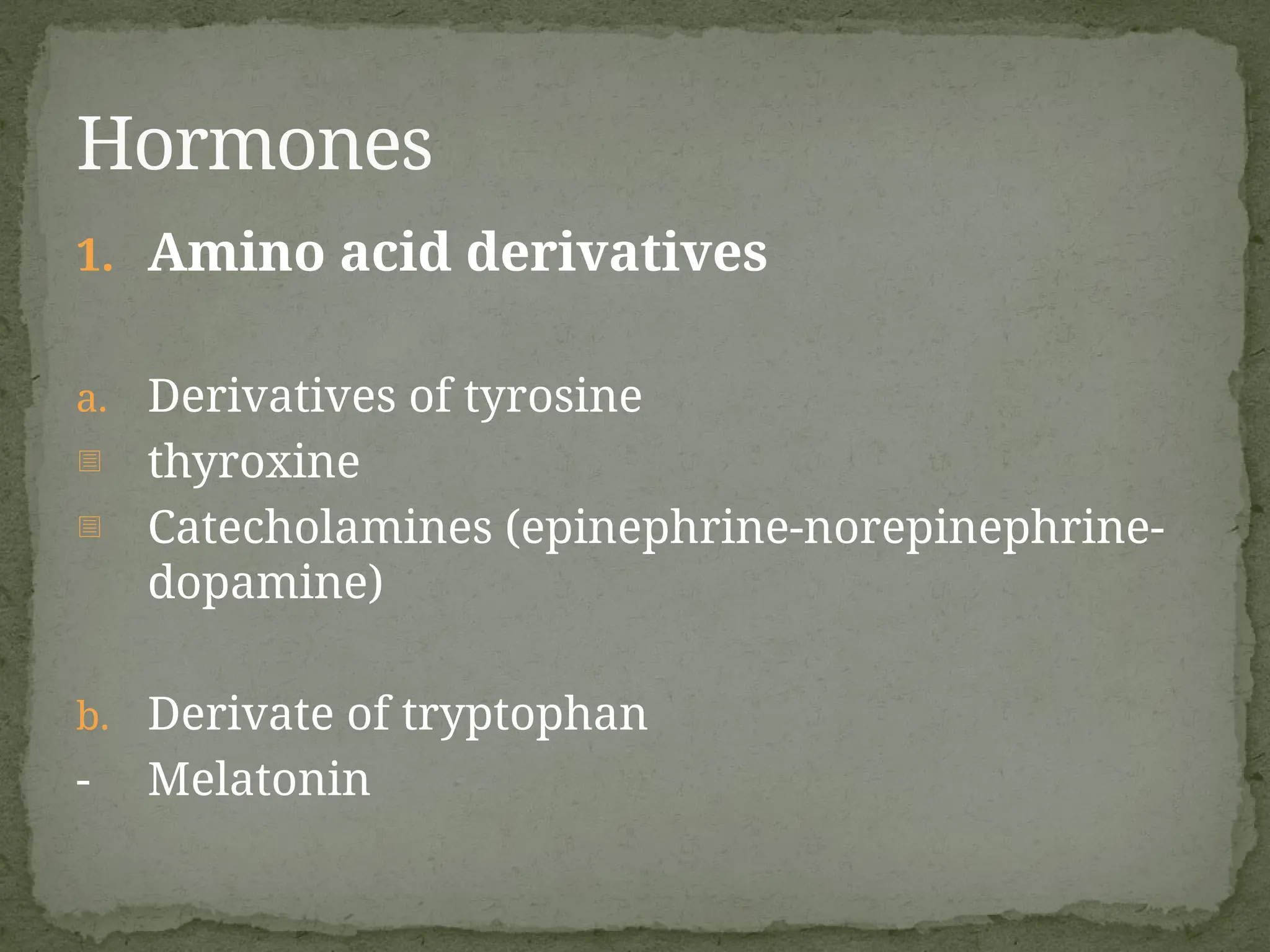
1. Amino acid derivatives
a. Derivatives of tyrosine
- thyroxine
- Catecholamines (epinephrine-norepinephrine-
dopamine)
b. Derivate of tryptophan
- Melatonin
Hormones
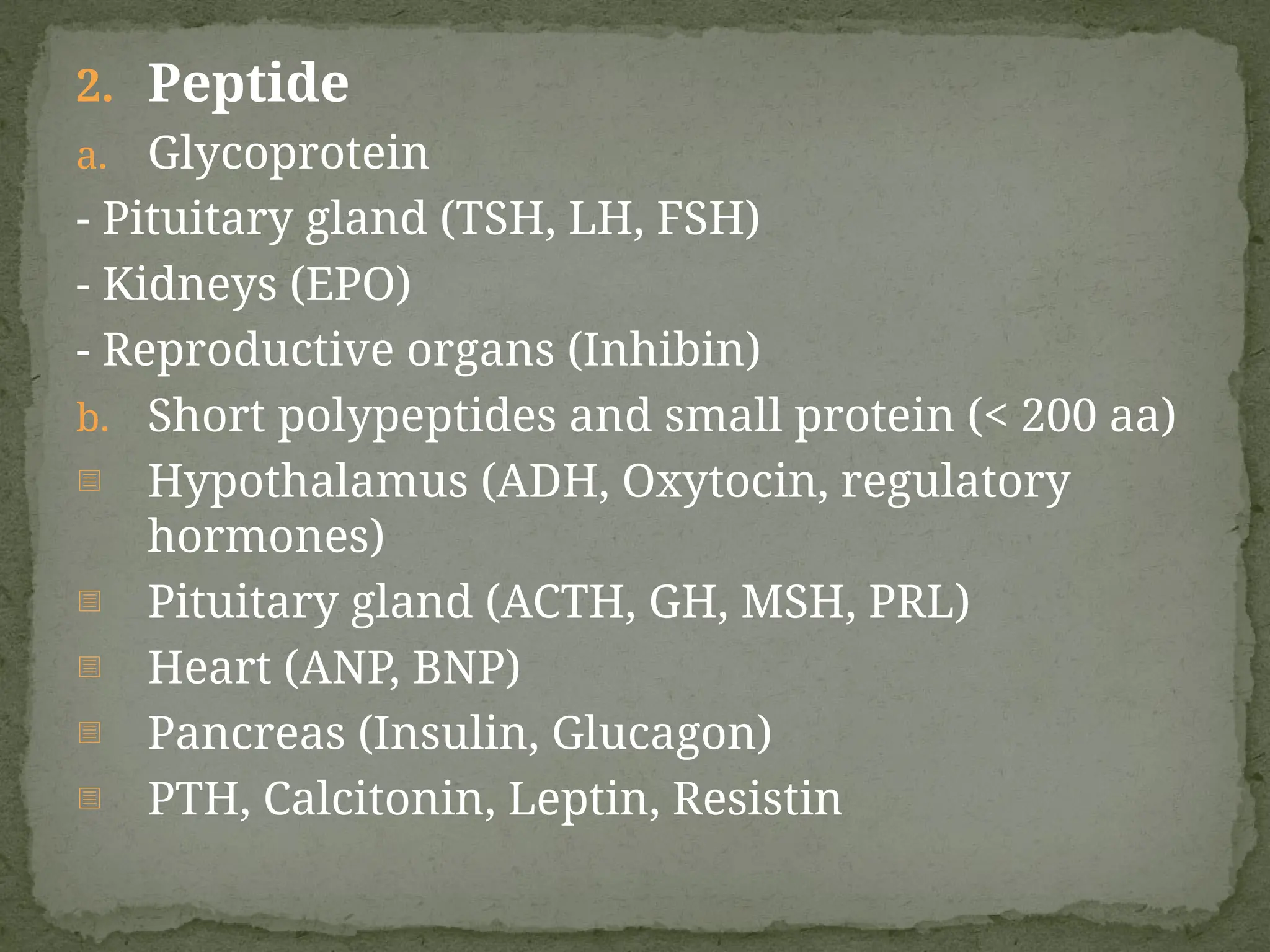
2. Peptide
a. Glycoprotein
- Pituitary gland (TSH, LH, FSH)
- Kidneys (EPO)
- Reproductive organs (Inhibin)
b. Short polypeptides and small protein (< 200 aa)
- Hypothalamus (ADH, Oxytocin, regulatory
hormones)
- Pituitary gland (ACTH, GH, MSH, PRL)
- Heart (ANP, BNP)
- Pancreas (Insulin, Glucagon)
- PTH, Calcitonin, Leptin, Resistin
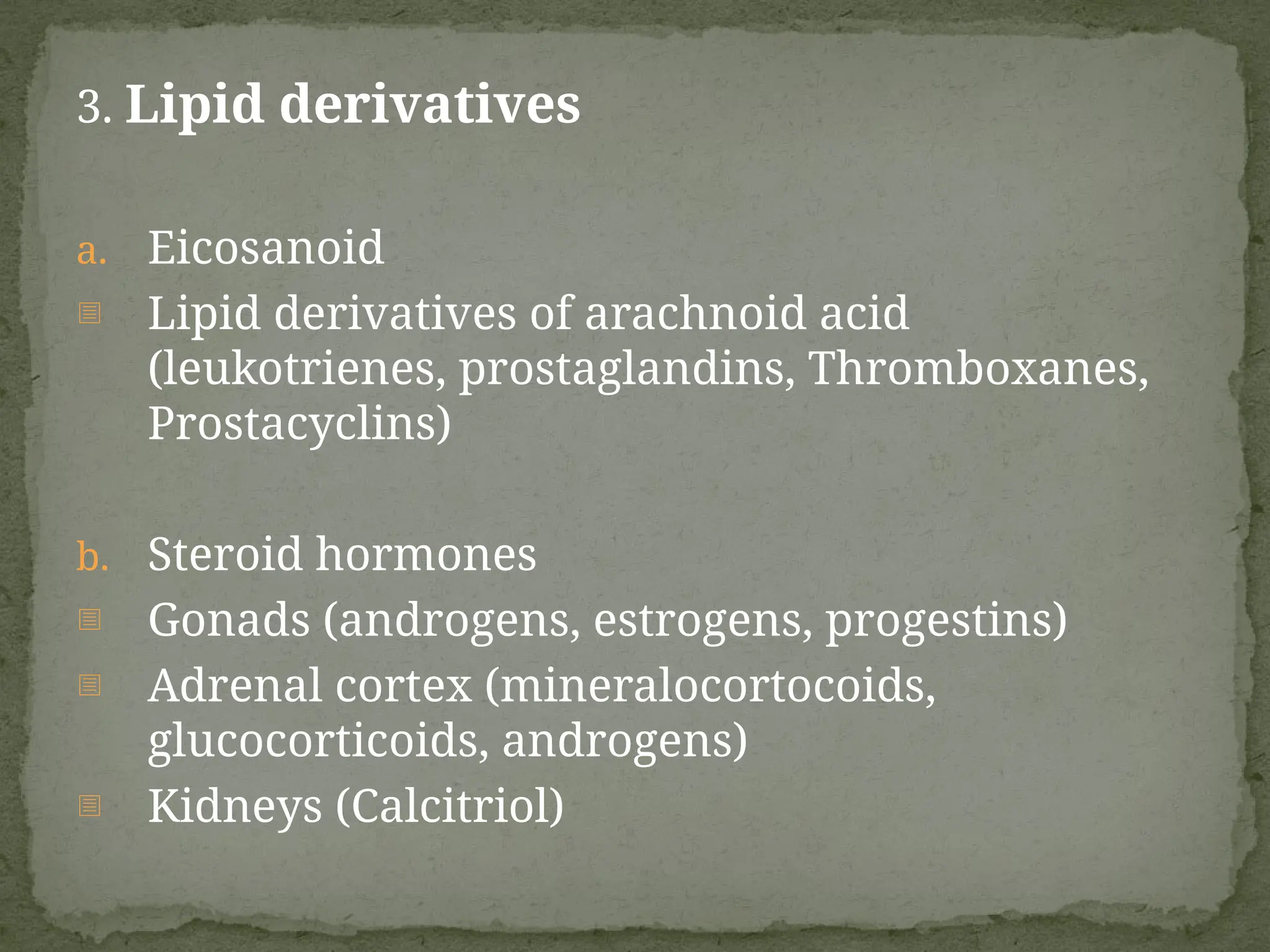
3. Lipid derivatives
a. Eicosanoid
- Lipid derivatives of arachnoid acid
(leukotrienes, prostaglandins, Thromboxanes,
Prostacyclins)
b. Steroid hormones
- Gonads (androgens, estrogens, progestins)
- Adrenal cortex (mineralocortocoids,
glucocorticoids, androgens)
- Kidneys (Calcitriol)
 Aging
 Illness
 Stress
 Environment
 Genetics
Factors affect endocrine organs
 Hormone production and secretion
 Hormone metabolism
 Hormone levels circulating in blood
 Biological activities
 Target cell or target tissue response to hormones
 Rhythms in the body
Aging
 Although most glands decrease their levels of
secretion, normal aging usually does not lead to
a deficiency state.
 Blood and tissue concentration of many other
hormones remained unchanged (TSH, Thyroid
hormones, ADH, PTH, PRL, and Glucocorticoid),
some other increase and decrease
 Some endocrine tissues become less responsive
to stimulation (GH and Insulin)
 Some target tissues become less sensitive to their
controlling hormone
 Peripheral tissues become less responsive to
some hormones (Glucocorticoid and ADH)
 Hormones are also metabolized (broken down)
more slowly
Three hormonal systems show decreasing
circulating hormone concentration during
normal aging :
1. Estrogen (menopause) and Testosteron
(andropause)
2. Dehydroepiandrosteron (adrenopause)
3. GH (somatopause)
 In women around the age of 50, cycling estradiol
production during the reproductive years is
replaced by very low, constant estradiol
 Changes in the activity of the hypothalamo-
pituitary-gonadal axis in males are slower and
more subtle. During aging, gradual decline in
serum total and free testosteron level occurs.
This condition is characterized by decrease in
testicular Leydig cell numbers and in their
secretory capacity
Estrogen and Testosteron
 Adrenal secretion of DHEA gradually decreases
over time, whereas adrenocorticotropin (ACTH)
secretion, which is physiologically linked to
plasma cortisol levels, remains largely
unchanged.
 This condition seems to be caused by a selective
decrease in the number of functional zona
reticularis cells in the adrenal cortex rather than
regulated by a central pacemaker of aging
DHEA
 Mean pulse amplitude, duration, and fraction of
GH secreted , but not pulse frequency gradually
decrease during aging.
 In parallel, there is a progressive fall in
circulating IGF-I levels in both sexes
 Its triggering pacemaker seems mainly localized
in the hypothalamus, because pituitary
somatotrops, even in the oldest old, can be
restored to their youthful secretory capacity
during treatment with GH-realising peptides
GH/IGF-I
 Period of decline in estrogens is accompanied by
vasomotor reaction, depressed mood, and
changes in skin and body composition (increase
in body fat and decrease in body mass)
 Age-associated changes in testosteron level occur
slowly and subtly
Menopause and Andropause
So, guys prepare
yourself for EMS
block examination,
good luck!
Thank you!

Lecture of Aging in Endocrine System.pptx

  • 1.
  • 2.
    1. Amino acidderivatives a. Derivatives of tyrosine - thyroxine - Catecholamines (epinephrine-norepinephrine- dopamine) b. Derivate of tryptophan - Melatonin Hormones
  • 3.
    2. Peptide a. Glycoprotein -Pituitary gland (TSH, LH, FSH) - Kidneys (EPO) - Reproductive organs (Inhibin) b. Short polypeptides and small protein (< 200 aa) - Hypothalamus (ADH, Oxytocin, regulatory hormones) - Pituitary gland (ACTH, GH, MSH, PRL) - Heart (ANP, BNP) - Pancreas (Insulin, Glucagon) - PTH, Calcitonin, Leptin, Resistin
  • 4.
    3. Lipid derivatives a.Eicosanoid - Lipid derivatives of arachnoid acid (leukotrienes, prostaglandins, Thromboxanes, Prostacyclins) b. Steroid hormones - Gonads (androgens, estrogens, progestins) - Adrenal cortex (mineralocortocoids, glucocorticoids, androgens) - Kidneys (Calcitriol)
  • 5.
     Aging  Illness Stress  Environment  Genetics Factors affect endocrine organs
  • 6.
     Hormone productionand secretion  Hormone metabolism  Hormone levels circulating in blood  Biological activities  Target cell or target tissue response to hormones  Rhythms in the body Aging
  • 7.
     Although mostglands decrease their levels of secretion, normal aging usually does not lead to a deficiency state.  Blood and tissue concentration of many other hormones remained unchanged (TSH, Thyroid hormones, ADH, PTH, PRL, and Glucocorticoid), some other increase and decrease  Some endocrine tissues become less responsive to stimulation (GH and Insulin)
  • 8.
     Some targettissues become less sensitive to their controlling hormone  Peripheral tissues become less responsive to some hormones (Glucocorticoid and ADH)  Hormones are also metabolized (broken down) more slowly
  • 9.
    Three hormonal systemsshow decreasing circulating hormone concentration during normal aging : 1. Estrogen (menopause) and Testosteron (andropause) 2. Dehydroepiandrosteron (adrenopause) 3. GH (somatopause)
  • 10.
     In womenaround the age of 50, cycling estradiol production during the reproductive years is replaced by very low, constant estradiol  Changes in the activity of the hypothalamo- pituitary-gonadal axis in males are slower and more subtle. During aging, gradual decline in serum total and free testosteron level occurs. This condition is characterized by decrease in testicular Leydig cell numbers and in their secretory capacity Estrogen and Testosteron
  • 11.
     Adrenal secretionof DHEA gradually decreases over time, whereas adrenocorticotropin (ACTH) secretion, which is physiologically linked to plasma cortisol levels, remains largely unchanged.  This condition seems to be caused by a selective decrease in the number of functional zona reticularis cells in the adrenal cortex rather than regulated by a central pacemaker of aging DHEA
  • 12.
     Mean pulseamplitude, duration, and fraction of GH secreted , but not pulse frequency gradually decrease during aging.  In parallel, there is a progressive fall in circulating IGF-I levels in both sexes  Its triggering pacemaker seems mainly localized in the hypothalamus, because pituitary somatotrops, even in the oldest old, can be restored to their youthful secretory capacity during treatment with GH-realising peptides GH/IGF-I
  • 13.
     Period ofdecline in estrogens is accompanied by vasomotor reaction, depressed mood, and changes in skin and body composition (increase in body fat and decrease in body mass)  Age-associated changes in testosteron level occur slowly and subtly Menopause and Andropause
  • 14.
    So, guys prepare yourselffor EMS block examination, good luck! Thank you!