Lecture 3 Cells: The Living Units
THE CELL THEORY A cell is the basic structural and functional unit of all organisms According to the  principle of complementarity  of structure and function, the biochemical reactions occurring in a cell are dictated by the subcellular structures present in the cell Reproduction has a cellular basis
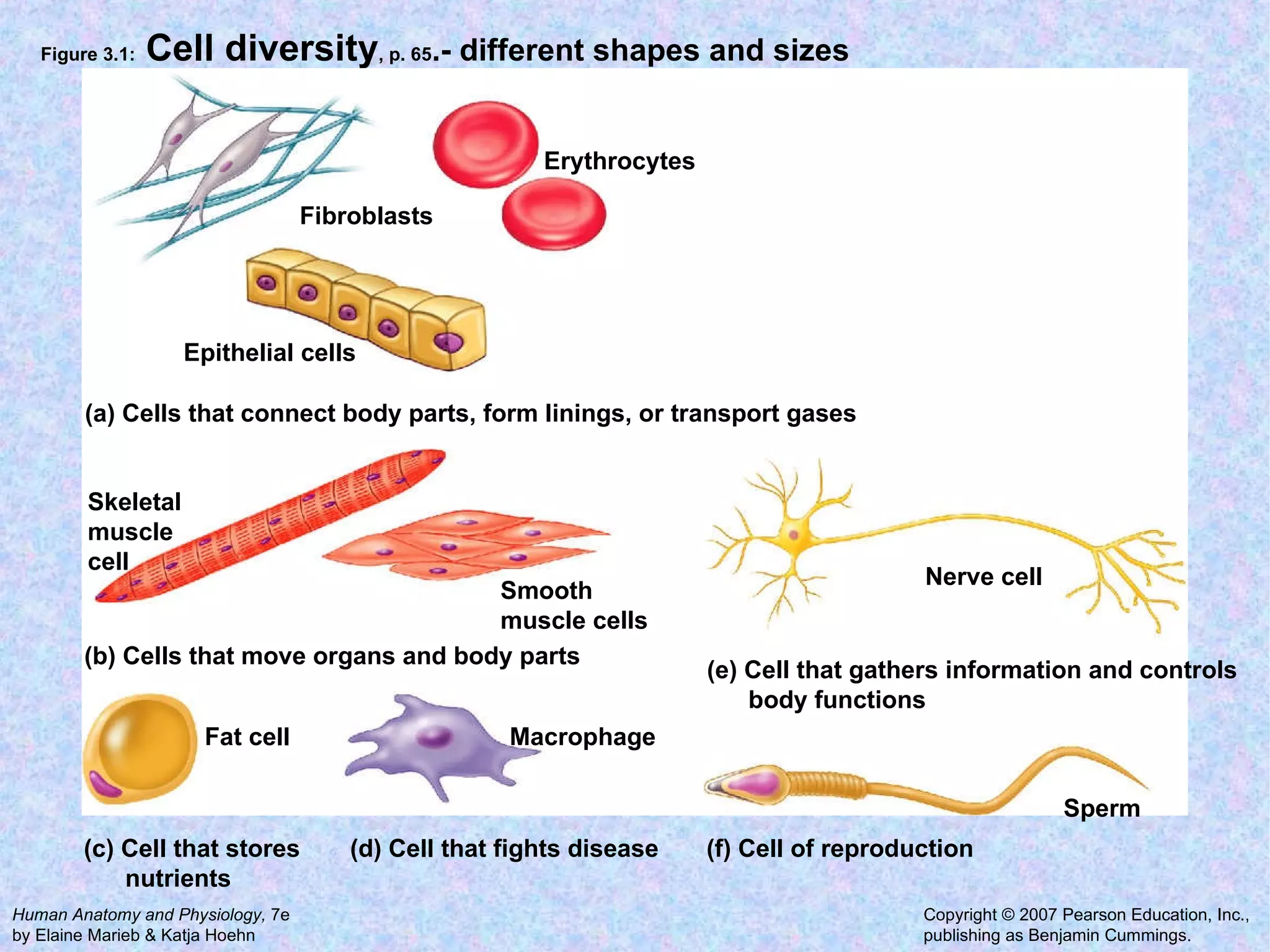
Figure 3.1:  Cell diversity , p. 65 .- different shapes and sizes Fibroblasts Erythrocytes Epithelial cells Macrophage Nerve cell Fat cell Sperm Skeletal muscle cell Smooth muscle cells (a) Cells that connect body parts, form linings, or transport gases (c) Cell that stores nutrients (b) Cells that move organs and body parts (d) Cell that fights disease (e) Cell that gathers information and controls body functions (f) Cell of reproduction
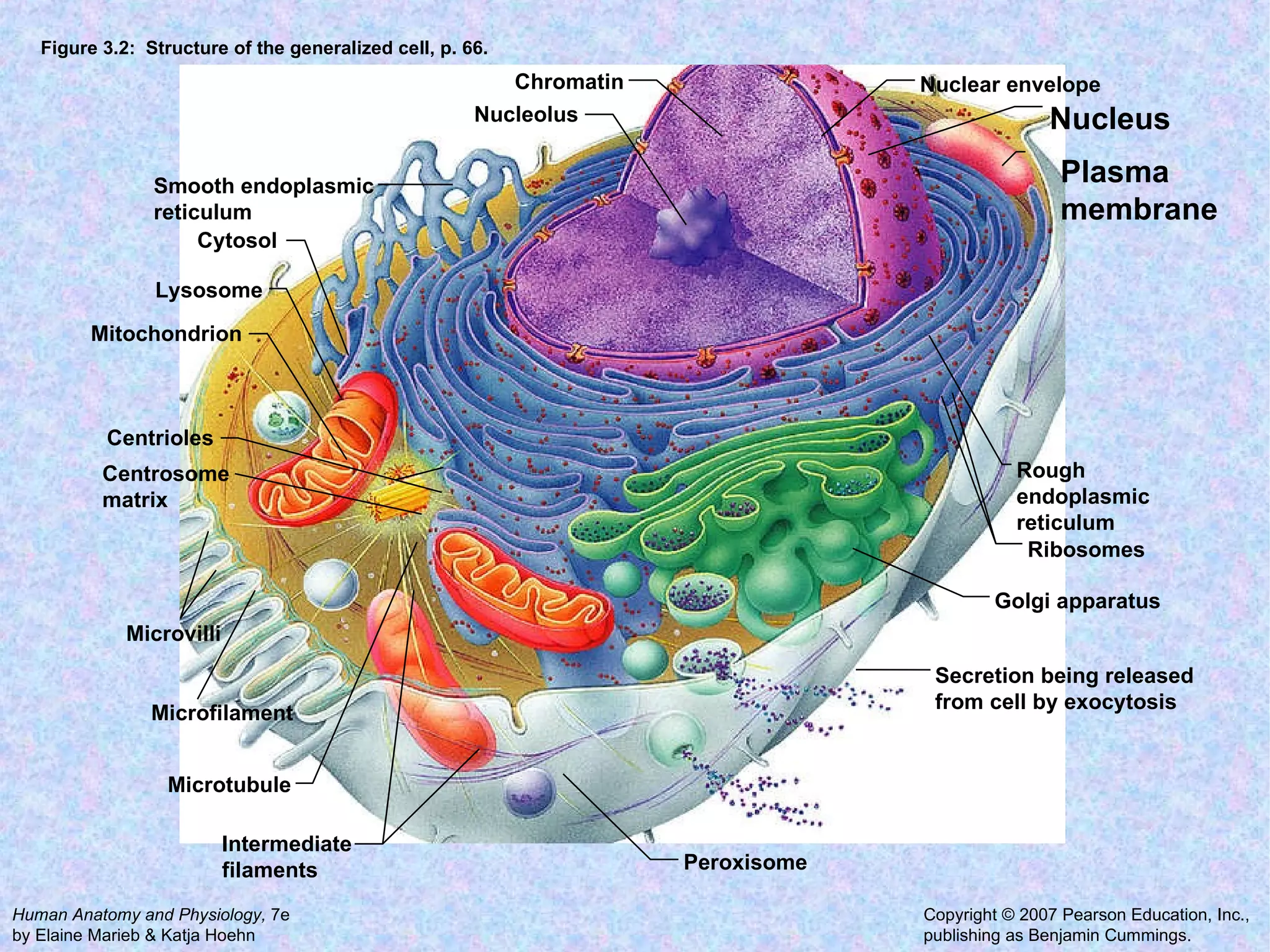
3 MAIN PARTS OF A CELL Plasma membrane  – defines the boundary of a cell Cytoplasm  – the interior of the cell between the plasma membrane and the nucleus; contains the cytoplasmic organelles Nucleus  – contains the genes which control activities of the cell
Figure 3.2:  Structure of the generalized cell, p. 66. Secretion being released from cell by exocytosis Peroxisome Ribosomes Rough endoplasmic reticulum Nucleus Nuclear envelope Chromatin Golgi apparatus Nucleolus Smooth endoplasmic reticulum  Cytosol Lysosome Mitochondrion Centrioles Centrosome matrix Microtubule Microvilli Microfilament Intermediate filaments Plasma membrane
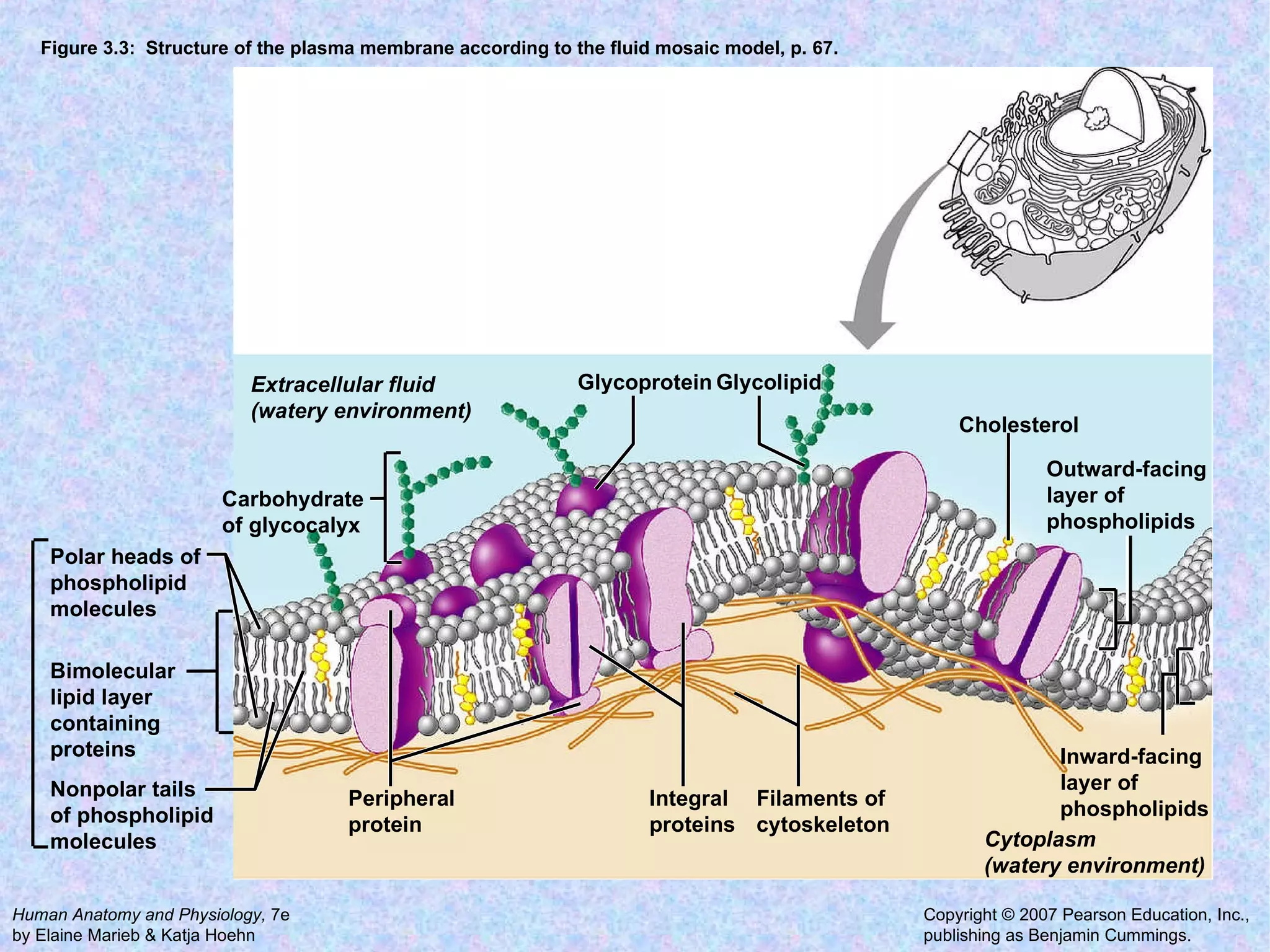
Figure 3.3:  Structure of the plasma membrane according to the fluid mosaic model, p. 67. Bimolecular lipid layer containing proteins Polar heads of phospholipid molecules Nonpolar tails of phospholipid molecules Filaments of cytoskeleton Cytoplasm (watery environment) Glycoprotein Cholesterol Outward-facing layer of phospholipids Inward-facing layer of phospholipids Extracellular fluid (watery environment) Glycolipid Peripheral protein Integral proteins Carbohydrate of glycocalyx
The Plasma Membrane Forms the boundary of a cell Thickness = 7-10nm; very thin Composed of 2 layers of phospholipids ( lipid bilayer) arranged tail to tail with the polar hydrophilic heads exposed to the aqueous extracellular fluid and the intracellular fluid Embedded in this lipid bilayer are  Membrane Proteins, Cholesterol Lipid bilayer exhibits fluidity and the membrane proteins are in constant flux - their shapes constantly change as in a kaleidoscope or a mosaic pattern. Hence, the plasma membrane is said to be of the  FLUID MOSAIC MODEL  Cholesterol inserts between the phospholipids tails to stabilize the plasma membrane = “ cholesterol therefore maintains the integrity of the plasma membrane
The Membrane Proteins Integral Proteins: span the plasma membrane exposed on one surface or both surfaces of the plasma membrane. Integral proteins exposed on both surfaces of the plasma membrane are called Transmembrane Proteins  Peripheral Proteins: attached to integral proteins or the phospholipids’ heads on the cytoplasmic face of the plasma membrane
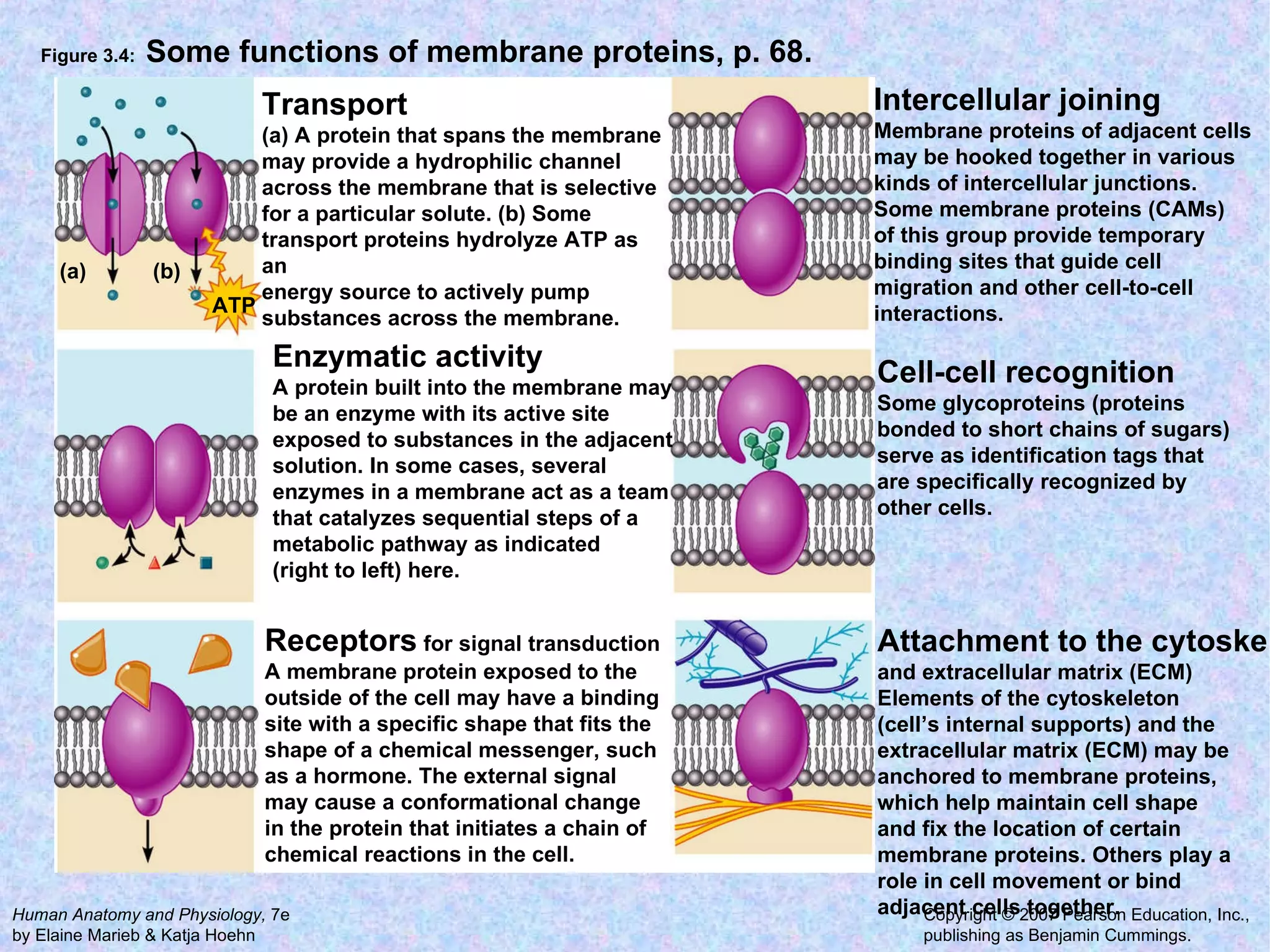
Figure 3.4:  Some functions of membrane proteins, p. 68. Transport (a) A protein that spans the membrane may provide a hydrophilic channel across the membrane that is selective for a particular solute. (b) Some transport proteins hydrolyze ATP as an energy source to actively pump substances across the membrane.  Enzymatic activity A protein built into the membrane may be an enzyme with its active site exposed to substances in the adjacent solution. In some cases, several enzymes in a membrane act as a team that catalyzes sequential steps of a metabolic pathway as indicated (right to left) here. Receptors  for signal transduction A membrane protein exposed to the outside of the cell may have a binding site with a specific shape that fits the shape of a chemical messenger, such as a hormone. The external signal may cause a conformational change in the protein that initiates a chain of chemical reactions in the cell. Intercellular joining Membrane proteins of adjacent cells may be hooked together in various kinds of intercellular junctions. Some membrane proteins (CAMs) of this group provide temporary binding sites that guide cell migration and other cell-to-cell interactions.  Cell-cell recognition Some glycoproteins (proteins bonded to short chains of sugars) serve as identification tags that are specifically recognized by other cells.  Attachment to the cytoskeleton and extracellular matrix (ECM) Elements of the cytoskeleton  (cell’s internal supports) and the extracellular matrix (ECM) may be anchored to membrane proteins, which help maintain cell shape and fix the location of certain membrane proteins. Others play a role in cell movement or bind adjacent cells together.  (a) (b) ATP
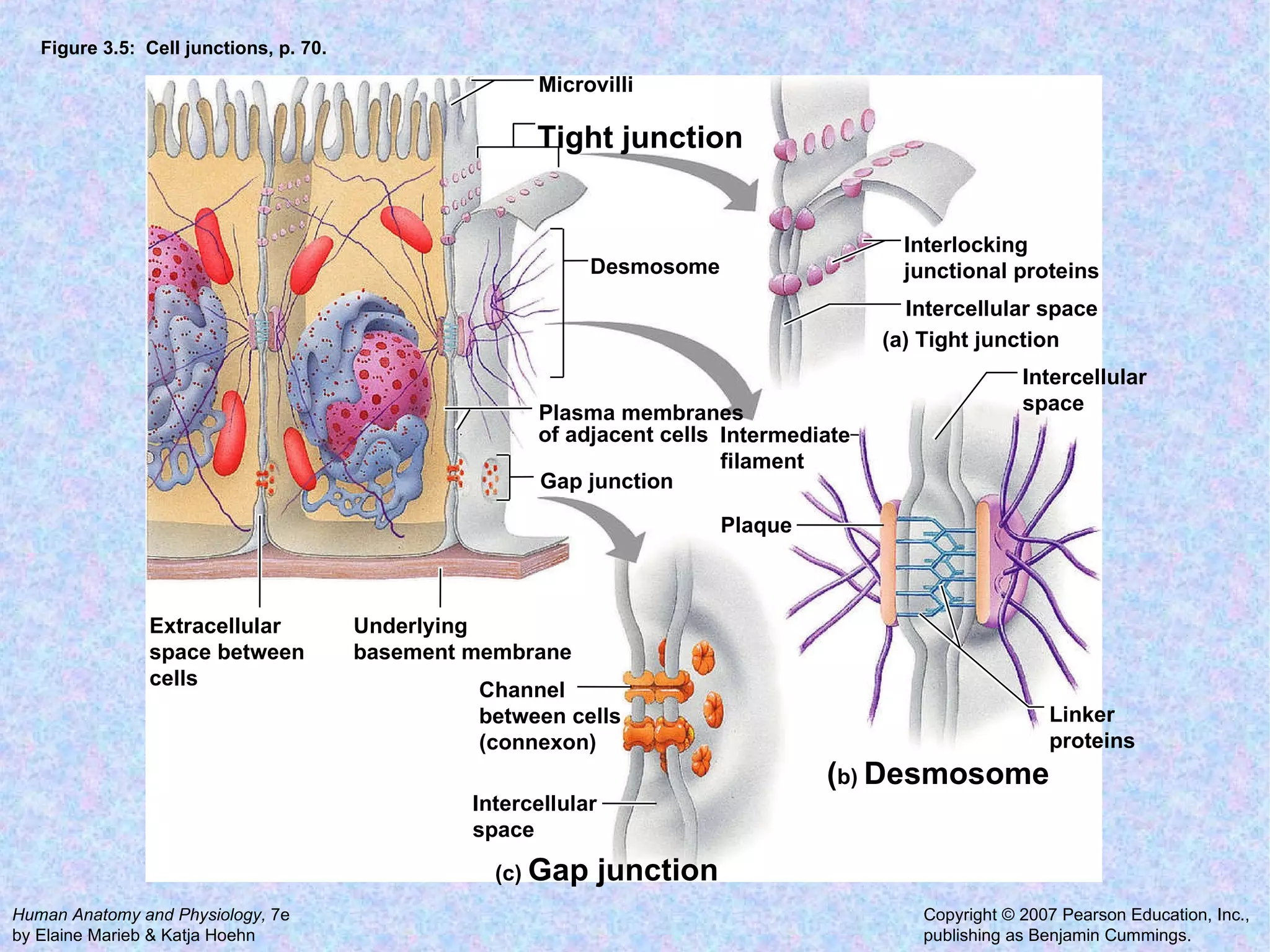
Figure 3.5:  Cell junctions, p. 70. Linker proteins Plaque Intermediate  filament Intercellular  space Intercellular space Interlocking junctional proteins Microvilli Tight junction Plasma membranes of adjacent cells Gap junction Underlying  basement membrane Extracellular  space between  cells Desmosome Intercellular space  Channel between cells (connexon) ( b)  Desmosome (a) Tight junction (c)  Gap junction
Membrane Junctions Tight Junction –  fusion of integral proteins in plasma membrane of adjacent cells forming an “impermeable junction” Desmosome  – linker proteins extending from plaques on the cytoplasmic surface of the plasma membrane of adjacent cells interdigitate to hold the cells together and prevent their separation; also known as “anchoring junction”  Gap Junction  – formed by hollow cylinder called connexons; it allows for the rapid transfer of ions between cells; also known as “communicating junction ”
MEMBRANE TRANSPORT –   the plasma membrane is a selective barrier 1.   Passive processes  – substances cross the plasma membrane without any energy input 2 main types: Diffusion and Filtration Diffusion – 3 subtypes:  Simple diffusion   Facilitated diffusion   Osmosis   Active processes –  the cell provides energy required to move  substances across the plasma membrane 2 main types: Active transport ( = “solute pumping”) and Vesicular transport Vesicular transport – Exocytosis and Endocytosis Exocytosis – movement of substances out of the cell  Endocytosis – movement of substances into the cell Phagocytois Pinocytosis Receptor-mediated endocytosis
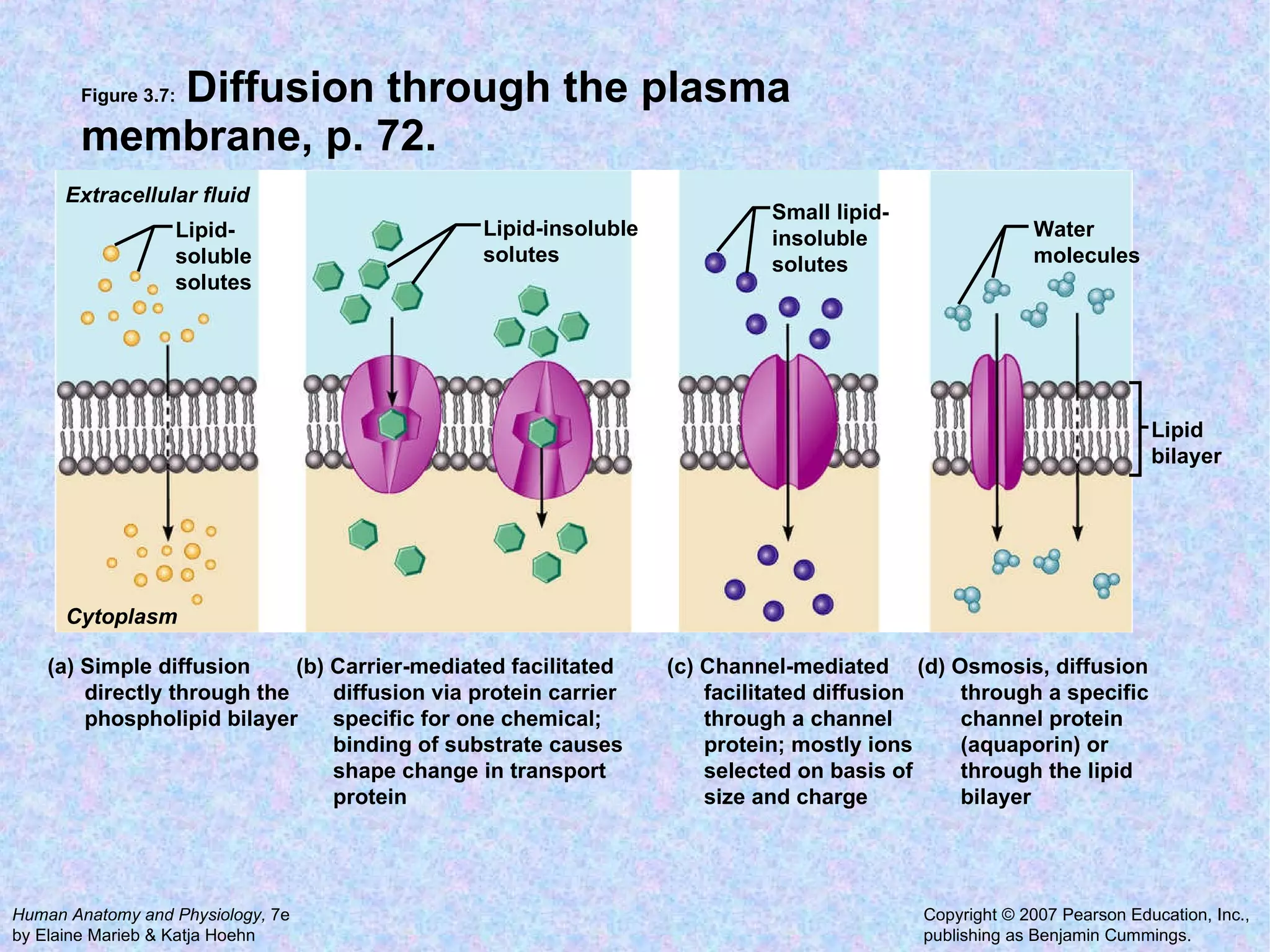
Figure 3.7:  Diffusion through the plasma membrane, p. 72. Extracellular fluid Cytoplasm Lipid- soluble solutes Lipid bilayer Lipid-insoluble solutes Water molecules Small lipid- insoluble solutes (a) Simple diffusion directly through the phospholipid bilayer (c) Channel-mediated facilitated diffusion through a channel protein; mostly ions selected on basis of size and charge  (b) Carrier-mediated facilitated diffusion via protein carrier specific for one chemical;  binding of substrate causes  shape change in transport  protein  (d) Osmosis, diffusion through a specific channel protein (aquaporin) or  through the lipid bilayer
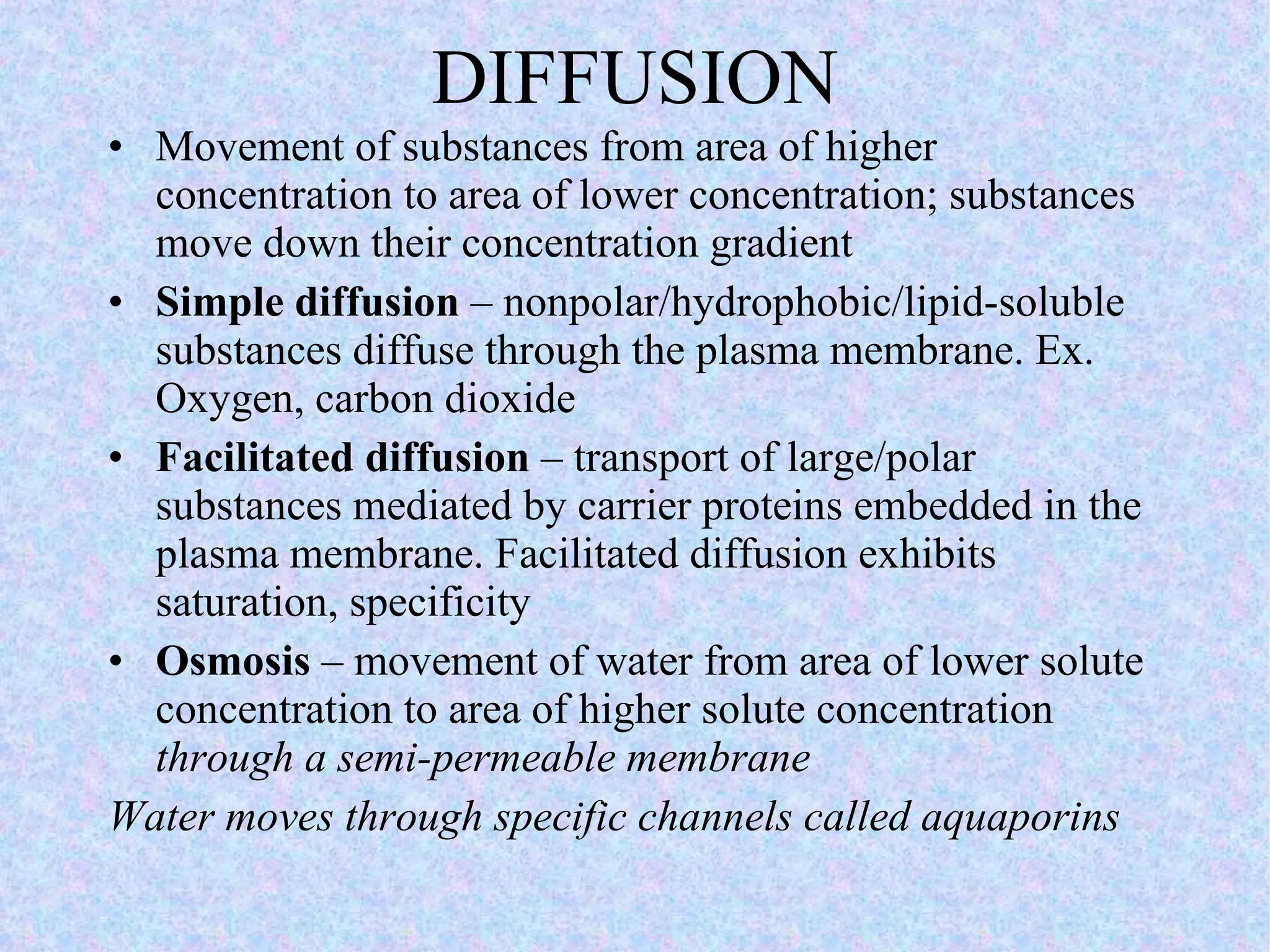
DIFFUSION Movement of substances from area of higher concentration to area of lower concentration; substances move down their concentration gradient Simple diffusion  – nonpolar/hydrophobic/lipid-soluble substances diffuse through the plasma membrane. Ex. Oxygen, carbon dioxide Facilitated diffusion  – transport of large/polar substances mediated by carrier proteins embedded in the plasma membrane. Facilitated diffusion exhibits saturation, specificity Osmosis  – movement of water from area of lower solute concentration to area of higher solute concentration  through a semi-permeable membrane Water moves through specific channels called aquaporins
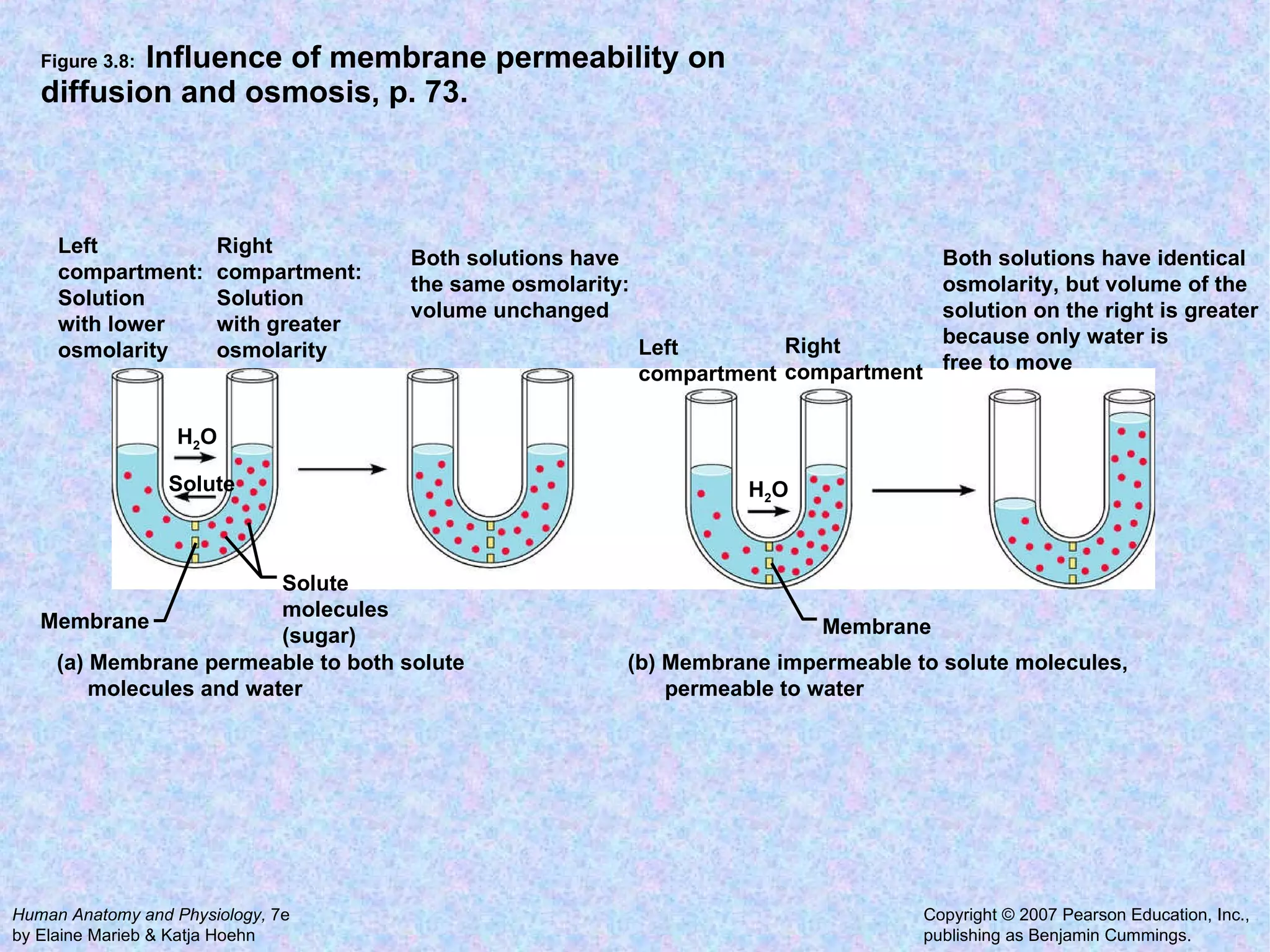
Figure 3.8:  Influence of membrane permeability on diffusion and osmosis, p. 73. Left compartment: Solution with lower osmolarity Membrane Solute molecules (sugar) Right compartment: Solution with greater osmolarity  Both solutions have the same osmolarity: volume unchanged  H 2 O Solute Left compartment Membrane Right compartment Both solutions have identical osmolarity, but volume of the solution on the right is greater because only water is free to move  H 2 O (a) Membrane permeable to both solute molecules and water  (b) Membrane impermeable to solute molecules, permeable to water
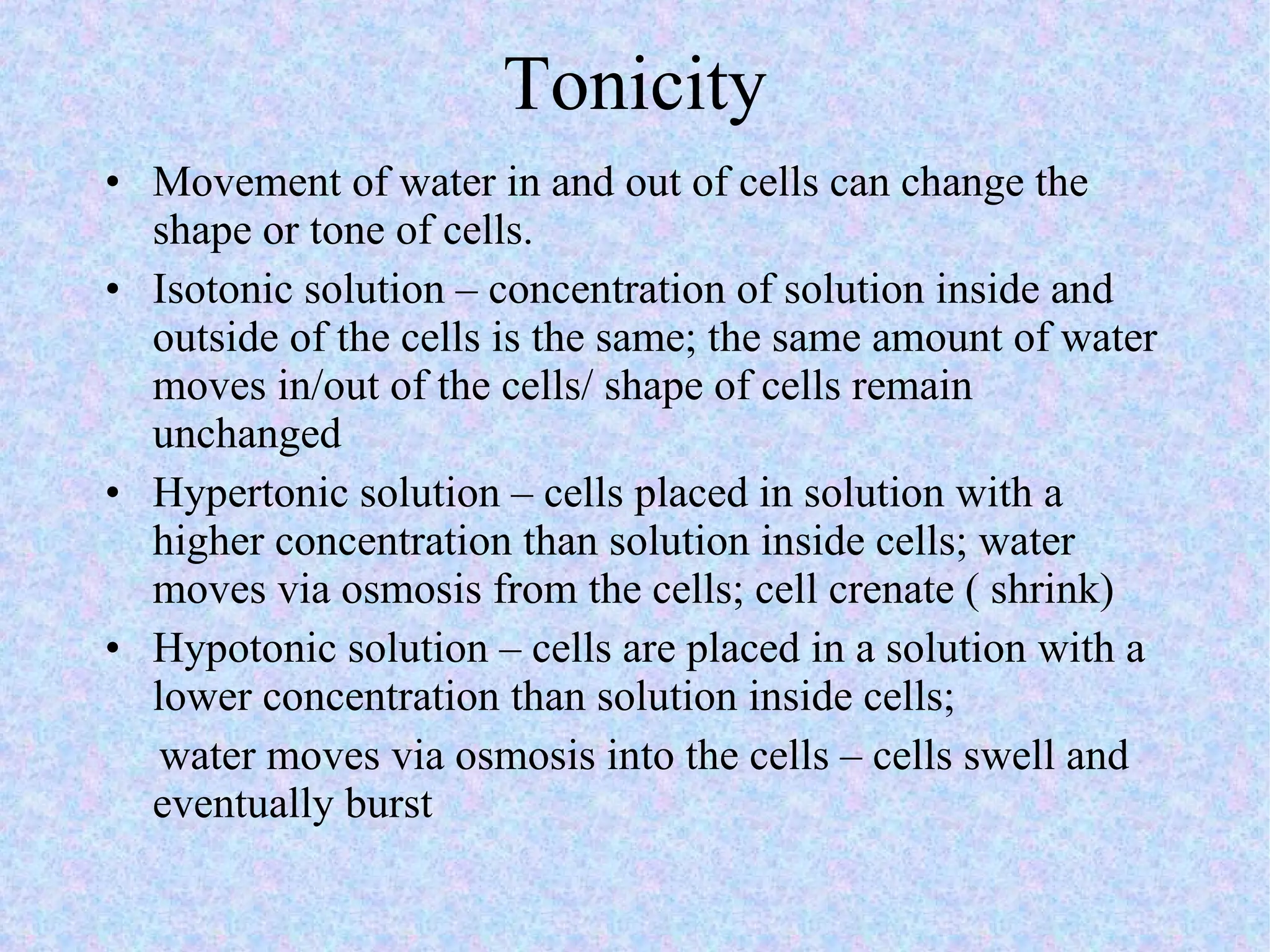
Tonicity Movement of water in and out of cells can change the shape or tone of cells. Isotonic solution – concentration of solution inside and outside of the cells is the same; the same amount of water moves in/out of the cells/ shape of cells remain unchanged Hypertonic solution – cells placed in solution with a higher concentration than solution inside cells; water moves via osmosis from the cells; cell crenate ( shrink) Hypotonic solution – cells are placed in a solution with a lower concentration than solution inside cells; water moves via osmosis into the cells – cells swell and eventually burst
Filtration A passive process – no energy input Movement of solution from area of higher pressure to area of lower pressure; down a pressure gradient
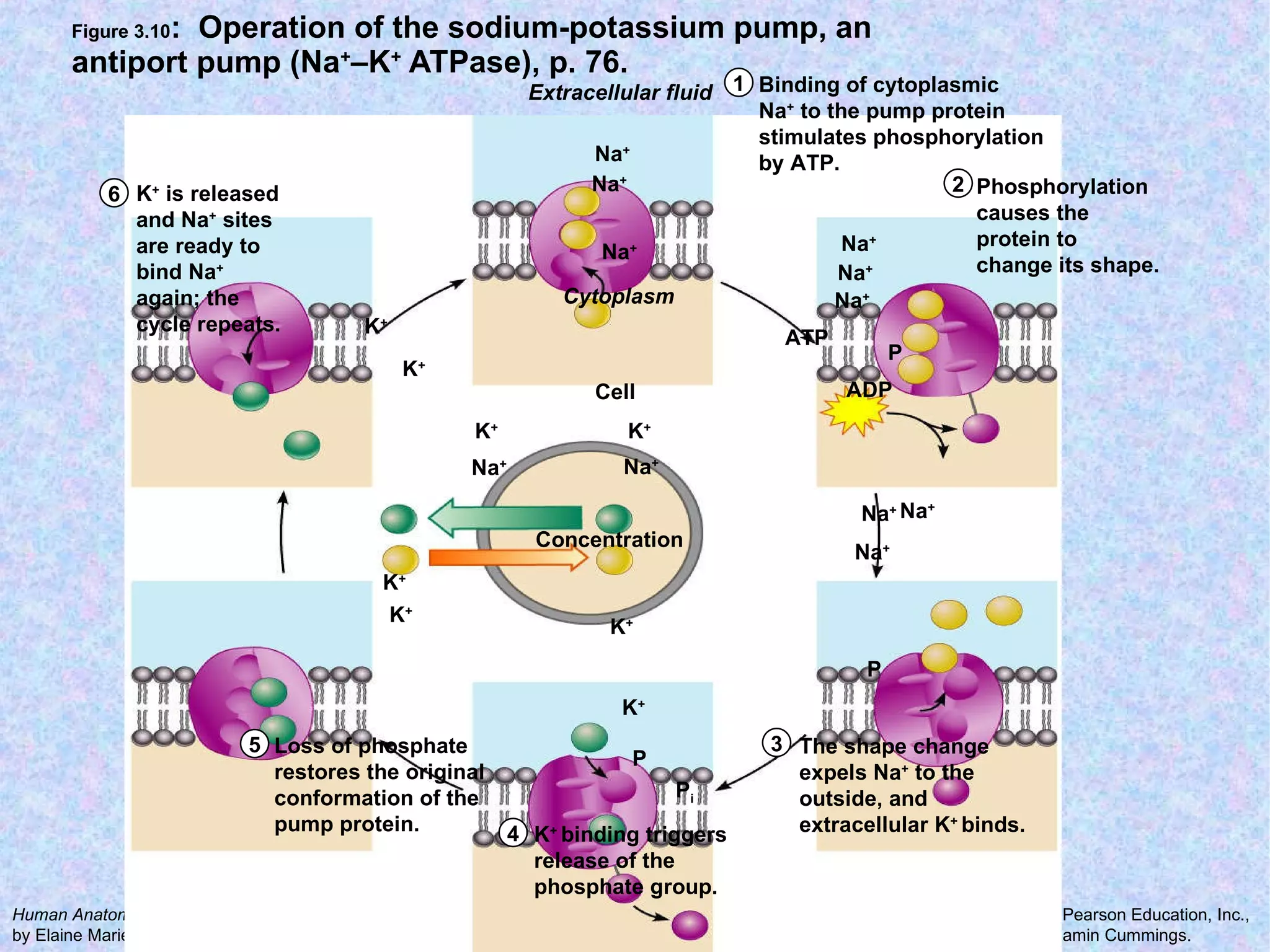
Active Processes Energy (ATP) is required for the movement of substances across the plasma membrane 2 types: Active transport and Vesicular transport Active transport –  movement of solutes/ions from area of lower solute concentration to area of higher solute concentration (against a concentration gradient); mediated by carrier proteins. Active transport exhibits saturation and specificity. Ex. sodium./potassium pump ( Na+/K+  pump) Hence,  active transport is also known as “Solute Pumping”
Figure 3.10 :  Operation of the sodium-potassium pump, an antiport pump (Na + –K +  ATPase), p. 76. Cytoplasm Extracellular fluid K +  is released  and Na +  sites  are ready to  bind Na +   again; the  cycle repeats. Cell ADP Phosphorylation  causes the  protein to  change its shape. Concentration  The shape change  expels Na +  to the  outside, and  extracellular K +  binds. Loss of phosphate  restores the original  conformation of the  pump protein. K +  binding triggers  release of the  phosphate group. Binding of cytoplasmic  Na +  to the pump protein stimulates phosphorylation  by ATP. Na + Na + Na + K + K + Na + Na + K + K + K + K + Na + Na + Na + ATP P P Na + Na + Na + K + K + P P i 1 2 3 4 5 6
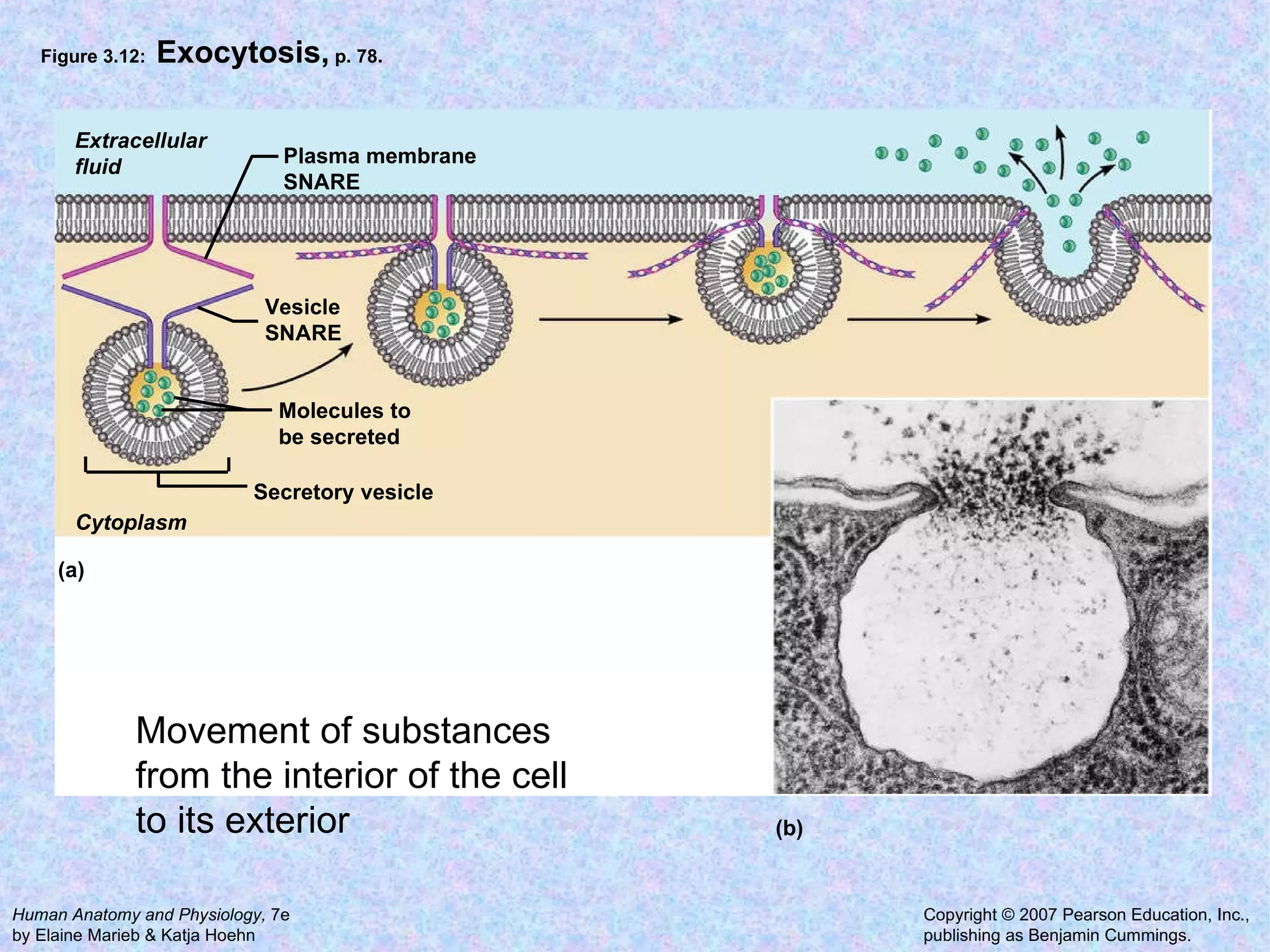
Active Process – Vesicular Transport 2 types –  Exocytosis and Endocytosis Exocytosis  – movement of substances enclosed in vesicles from the interior of cells to the exterior.  Hormones, enzymes are secreted via exocytosis Endocytosis  – movement of substances from the exterior of cells to the interior
Figure 3.12:  Exocytosis,  p. 78. Extracellular fluid Cytoplasm Molecules to be secreted  Vesicle SNARE Plasma membrane SNARE Secretory vesicle (a) (b) Movement of substances from the interior of the cell to its exterior
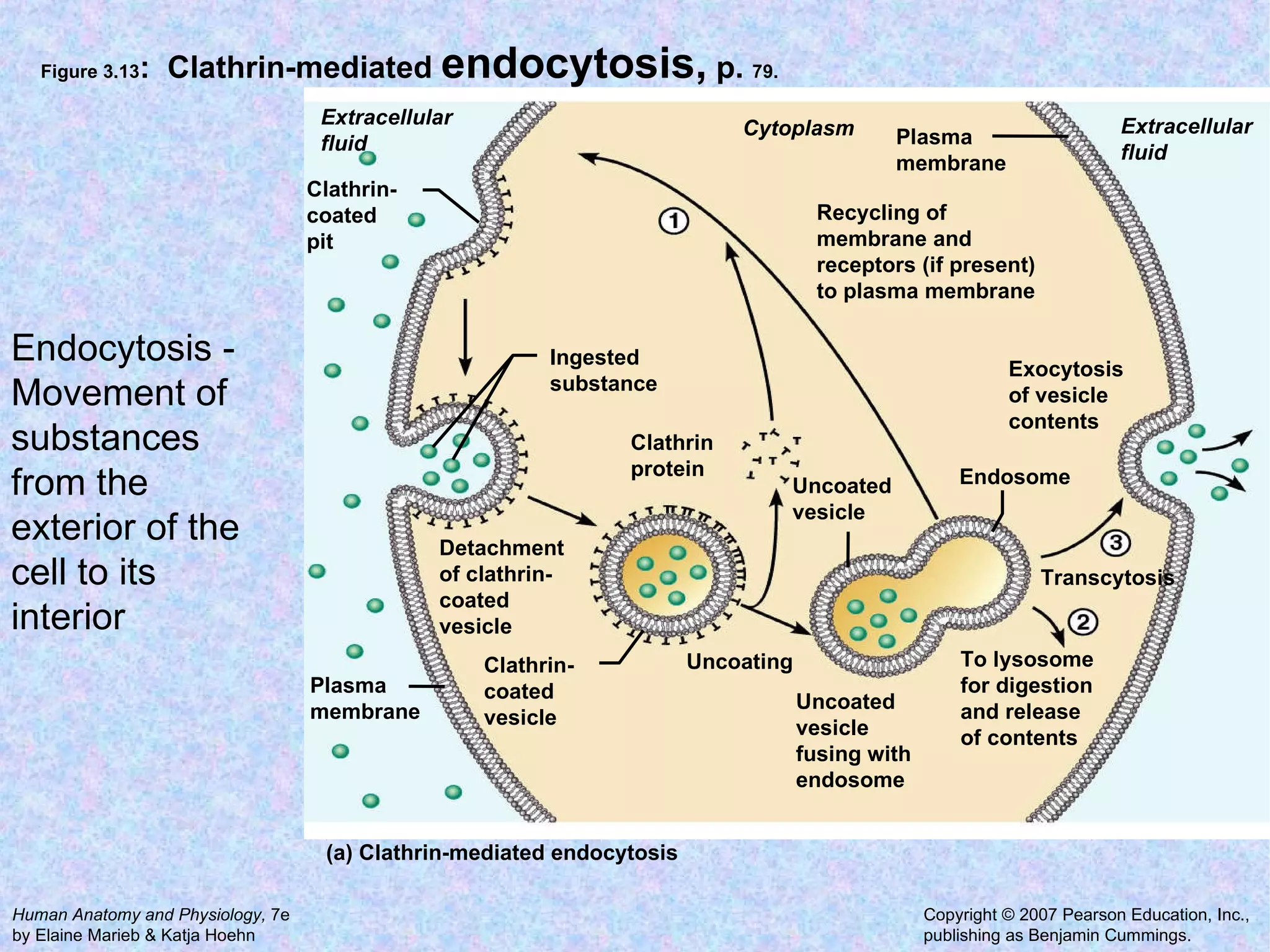
Figure 3.13 :  Clathrin-mediated  endocytosis,  p.  79. Endocytosis - Movement of substances from the exterior of the cell to its interior Recycling of membrane and receptors (if present) to plasma membrane Cytoplasm Extracellular  fluid Extracellular fluid Plasma membrane Detachment of clathrin- coated vesicle Clathrin- coated vesicle Uncoating Uncoated vesicle Uncoated vesicle fusing with endosome To lysosome for digestion and release of contents Transcytosis Endosome Exocytosis of vesicle contents Clathrin- coated pit Plasma membrane Ingested substance Clathrin protein (a) Clathrin-mediated endocytosis
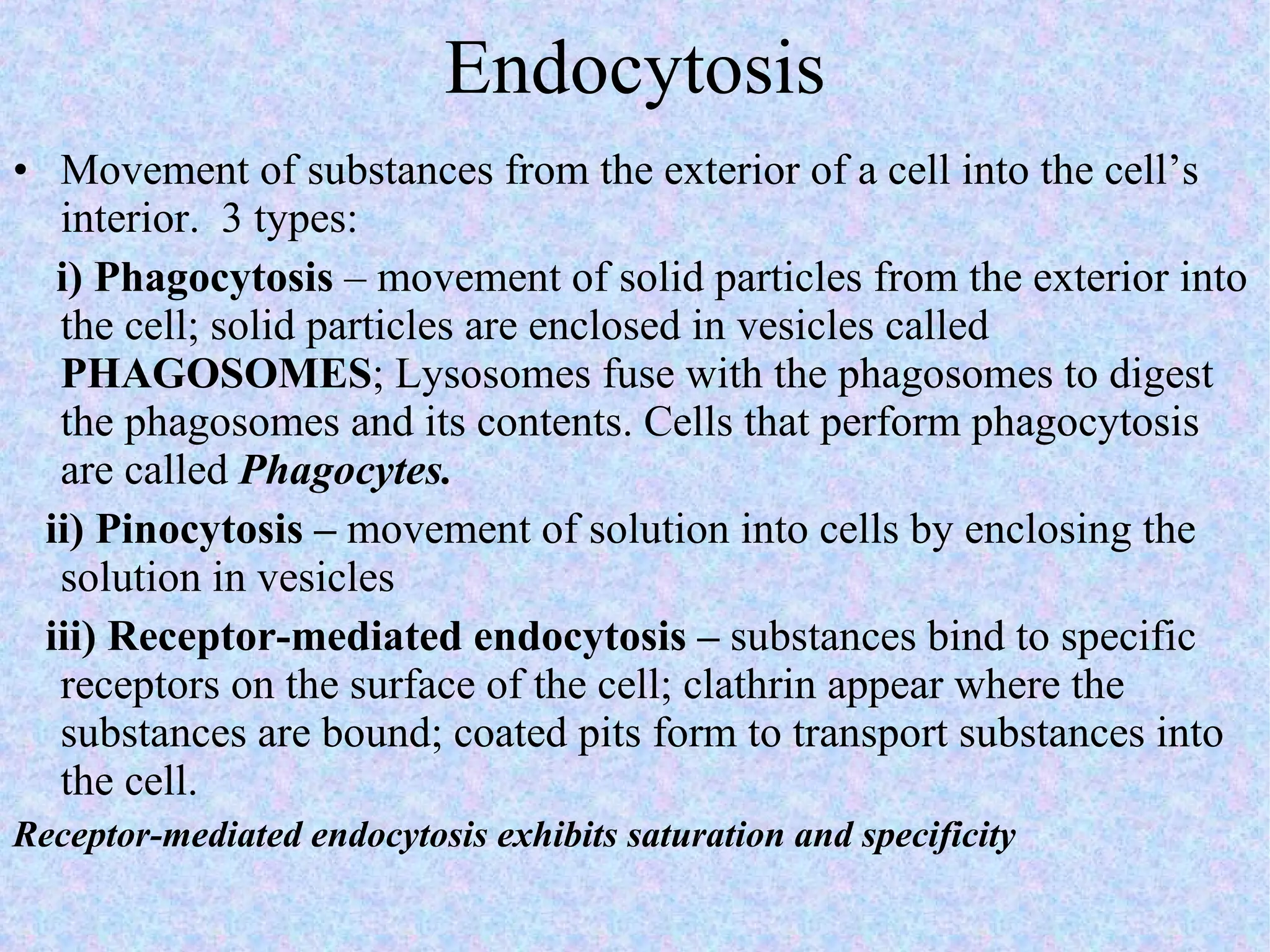
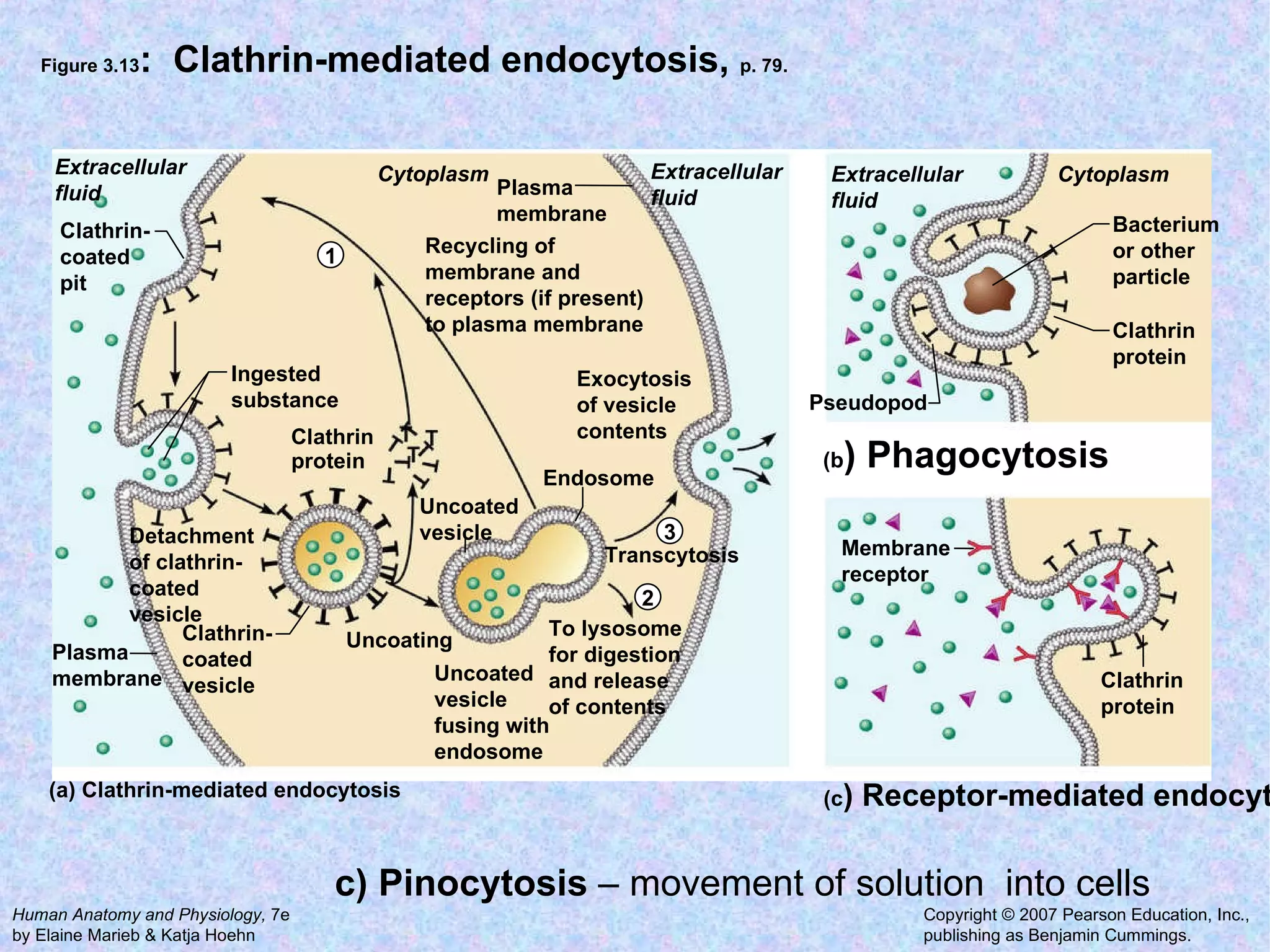
Endocytosis Movement of substances from the exterior of a cell into the cell’s interior.  3 types: i) Phagocytosis  – movement of solid particles from the exterior into the cell; solid particles are enclosed in vesicles called  PHAGOSOMES ; Lysosomes fuse with the phagosomes to digest the phagosomes and its contents. Cells that perform phagocytosis are called  Phagocytes. ii) Pinocytosis –  movement of solution into cells by enclosing the solution in vesicles iii) Receptor-mediated endocytosis –  substances bind to specific receptors on the surface of the cell; clathrin appear where the substances are bound; coated pits form to transport substances into the cell.  Receptor-mediated endocytosis exhibits saturation and specificity
Figure 3.13 :  Clathrin-mediated endocytosis,  p. 79. Recycling of membrane and receptors (if present) to plasma membrane Cytoplasm Extracellular  fluid Extracellular fluid Plasma membrane Detachment of clathrin- coated vesicle Clathrin- coated vesicle Uncoating Uncoated vesicle Uncoated vesicle fusing with endosome To lysosome for digestion and release of contents Transcytosis Endosome Exocytosis of vesicle contents Clathrin- coated pit Plasma membrane Ingested substance Clathrin protein (c ) Receptor-mediated endocytosis Extracellular fluid Cytoplasm Bacterium or other particle Pseudopod Clathrin protein (b ) Phagocytosis Clathrin protein Membrane receptor (a) Clathrin-mediated endocytosis 1 3 2 c) Pinocytosis  – movement of solution  into cells
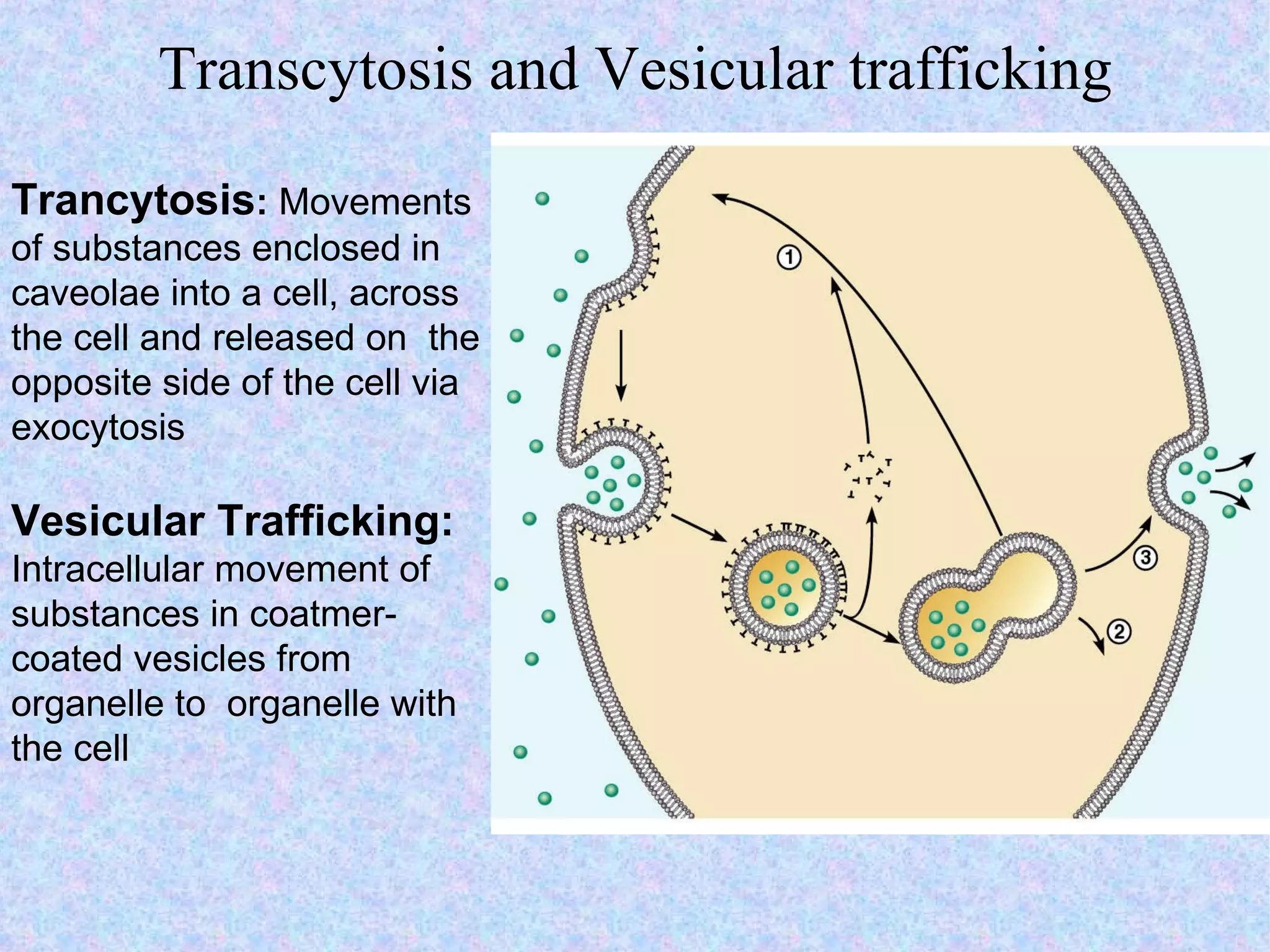
Transcytosis and Vesicular trafficking Trancytosis :  Movements of substances enclosed in caveolae into a cell, across the cell and released on  the opposite side of the cell via exocytosis Vesicular Trafficking:  Intracellular movement of substances in coatmer- coated vesicles from organelle to  organelle with the cell
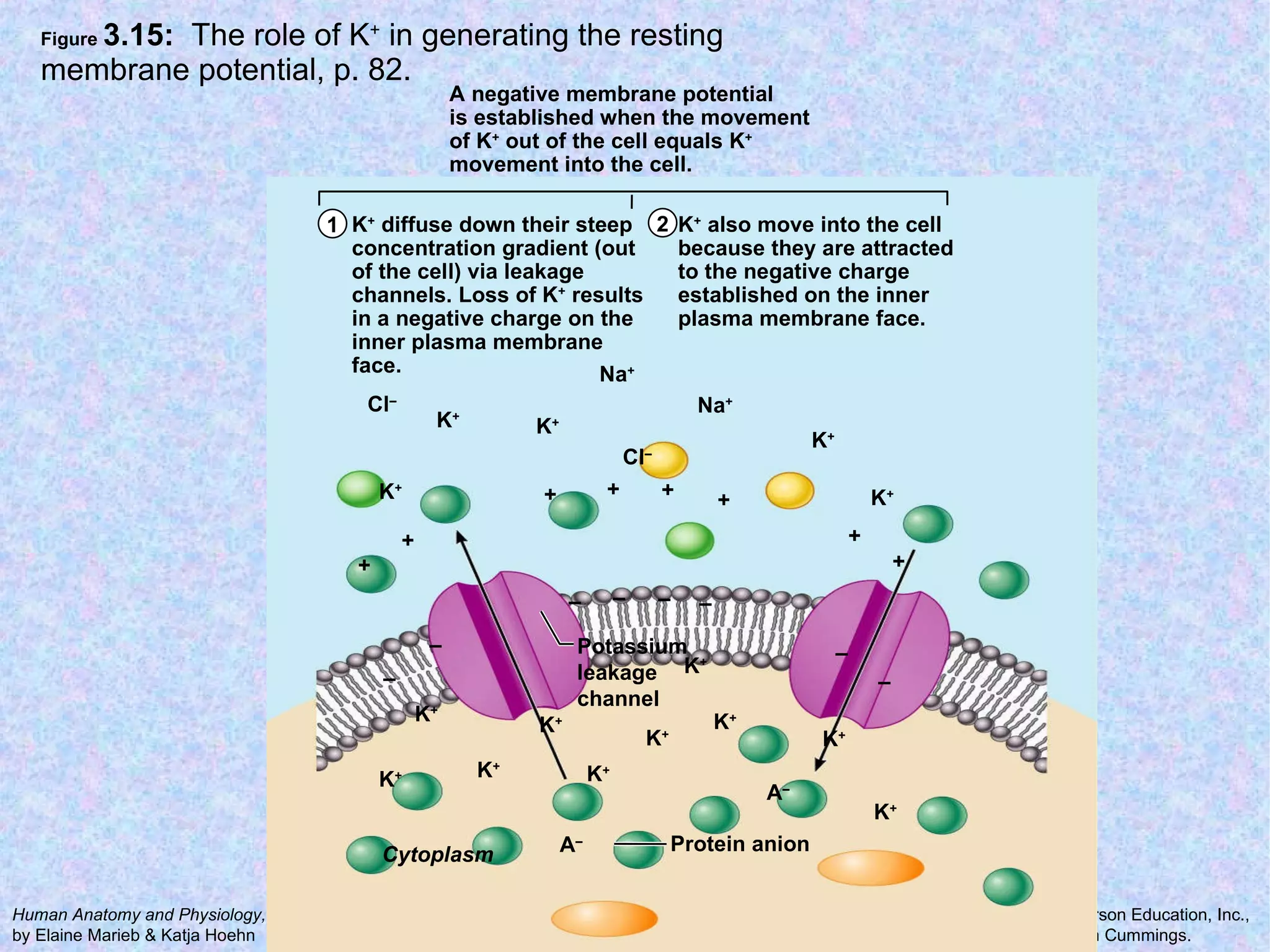
Figure  3.15:  The role of K +  in generating the resting membrane potential, p. 82. Potassium leakage channel Protein anion Cytoplasm K +  diffuse down their steep concentration gradient (out of the cell) via leakage channels. Loss of K +  results in a negative charge on the inner plasma membrane face. A negative membrane potential is established when the movement of K +  out of the cell equals K + movement into the cell. K +  also move into the cell because they are attracted to the negative charge established on the inner plasma membrane face. + – – – – – – – – + + + + + + + Na + Na + K + K + K + K + K + K + K + K + K + K + K + K + A – A – K + K + K + Cl – Cl – 1 2
The Resting Membrane Potential (RMP) RMP of resting cells is between  -50mV to -100mV RMP is established by the partial/selective permeability of the plasma  membrane to potassium ion (K+) diffusion over sodium ion( Na+) diffusion. K+ concentration is higher inside the cell than outside the cell –  K+ diffuses out of the cell  down its electrochemical gradient Na+ concentration is higher outside of the cell than inside the cell  – Na+ diffuses into the  cell down its electrochemical gradient The plasma membrane is about 75 times more permeable to K+ than Na+  = more K+ diffuses out of cell than Na+ diffusing into the cell = more positive ions move out of the cell making the cytoplasmic surface of the plasma membrane negative compared to the extracellular surface
THE CYTOPLASM Composed of cytosol, cytoplasmic organelles, and inclusions  ( such as glycosomes, melanosomes ) Cytosol – the viscous, semitransparent fluid Cytoplasmic organelles- specialized subcellular compartments with specific functions  i)  Mitochondria  = “power plants” ii)  Ribosomes  = sites of protein synthesis iii)  Endoplasmic reticulum ( ER) Rough ER = “membrane factories” Smooth ER = lipid/drug metabolism   iv)  Golgi apparatus  = “traffic director” of the cell v ) Lysosomes  = “demolition crew” vi ) Peroxisomes  = neutralize harmful free radicals vii ) Cytoskeleton
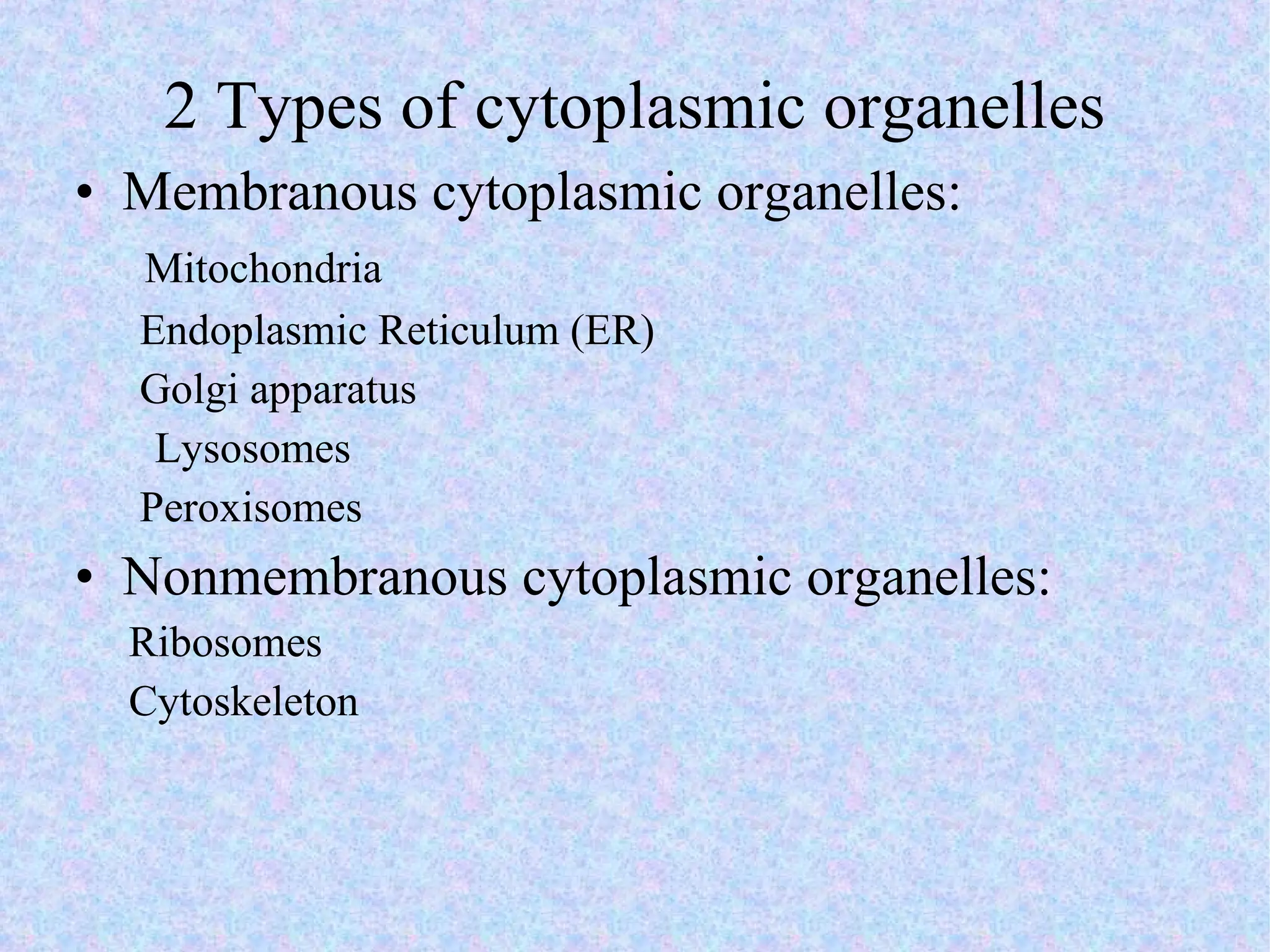
2 Types of cytoplasmic organelles Membranous cytoplasmic organelles: Mitochondria Endoplasmic Reticulum (ER) Golgi apparatus   Lysosomes Peroxisomes Nonmembranous cytoplasmic organelles: Ribosomes Cytoskeleton
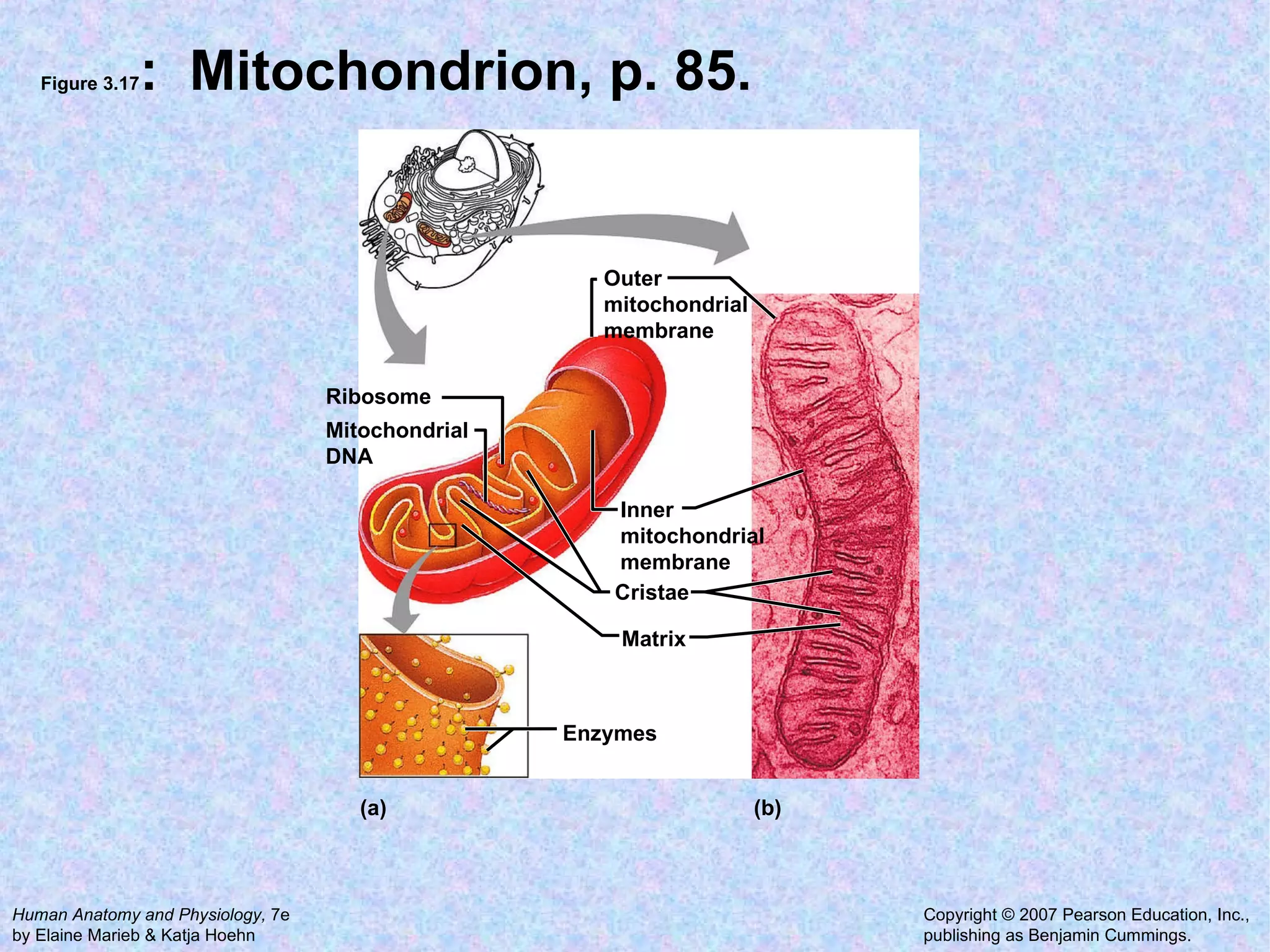
Figure 3.17 :  Mitochondrion, p. 85. Enzymes Matrix Cristae Mitochondrial DNA  Ribosome Outer mitochondrial  membrane Inner mitochondrial membrane (a) (b)
Mitochondria  Threadlike membranous organelles  - constantly changing their shapes Contain own DNA and are self-replicating organelles Composed of 2 membranes enclosing a fluid matrix 2 mitochondrial membranes are – outer and inner membranes The inner membrane consists of infoldings called  cristae Resident enzymes of the cristae and the matrix breakdown food in the presence of oxygen ( = aerobic respiration) to release energy hence, mitochondria are referred to as the  “POWER PLANTS”  of a cell
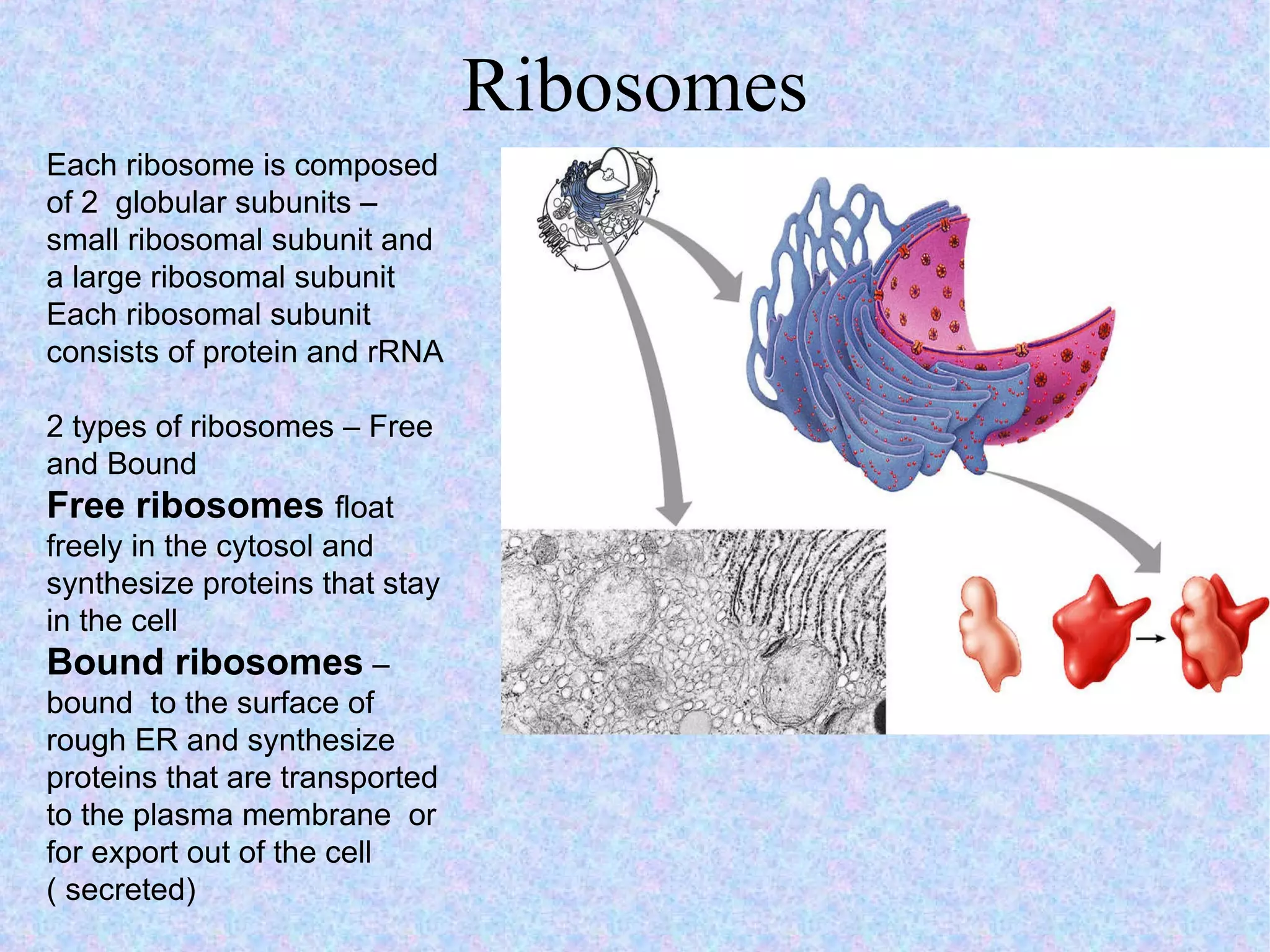
Ribosomes Each ribosome is composed of 2  globular subunits – small ribosomal subunit and a large ribosomal subunit Each ribosomal subunit consists of protein and rRNA 2 types of ribosomes – Free and Bound Free ribosomes  float freely in the cytosol and synthesize proteins that stay in the cell Bound ribosomes   – bound  to the surface of  rough ER and synthesize proteins that are transported to the plasma membrane  or for export out of the cell ( secreted)
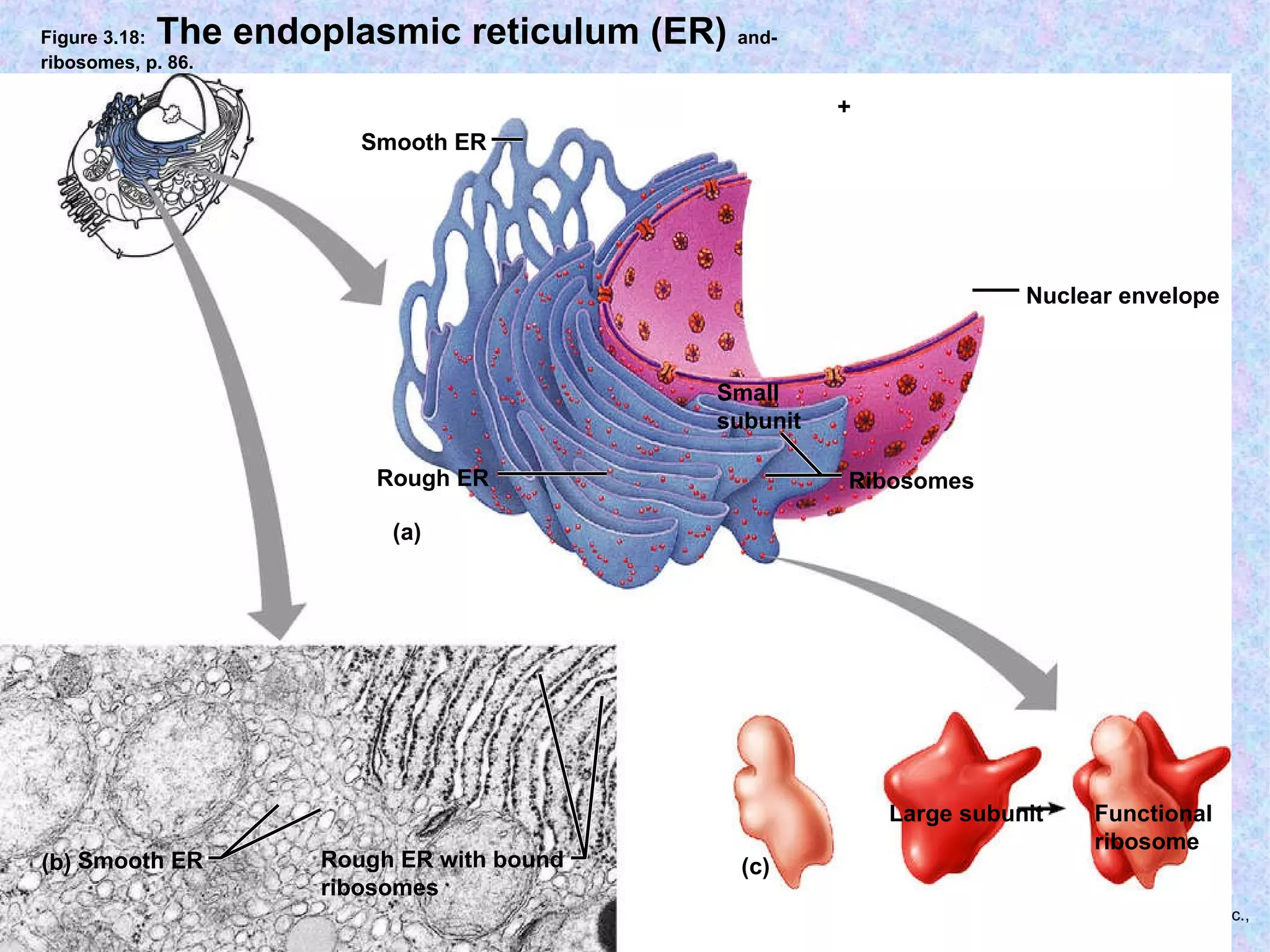
Figure 3.18:  The endoplasmic reticulum (ER)  and-  ribosomes, p. 86. Nuclear envelope Ribosomes Rough ER Smooth ER Smooth ER Rough ER with bound ribosomes  Large subunit Small subunit Functional ribosome + (a) (b) (c)
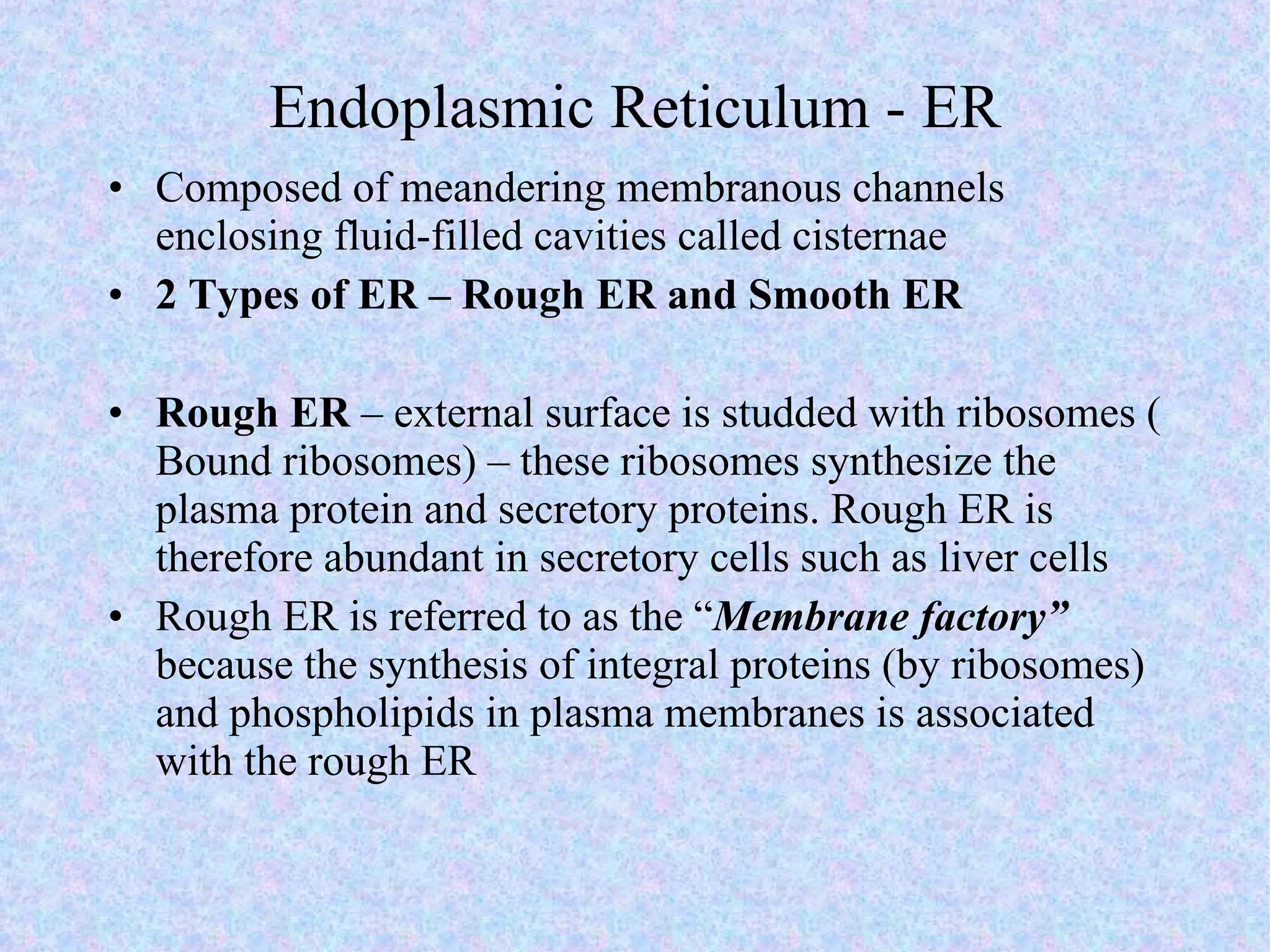
Endoplasmic Reticulum - ER Composed of meandering membranous channels enclosing fluid-filled cavities called cisternae  2 Types of ER – Rough ER and Smooth ER Rough ER  – external surface is studded with ribosomes ( Bound ribosomes) – these ribosomes synthesize the plasma protein and secretory proteins. Rough ER is therefore abundant in secretory cells such as liver cells Rough ER is referred to as the “ Membrane factory”  because the synthesis of integral proteins (by ribosomes) and phospholipids in plasma membranes is associated with the rough ER
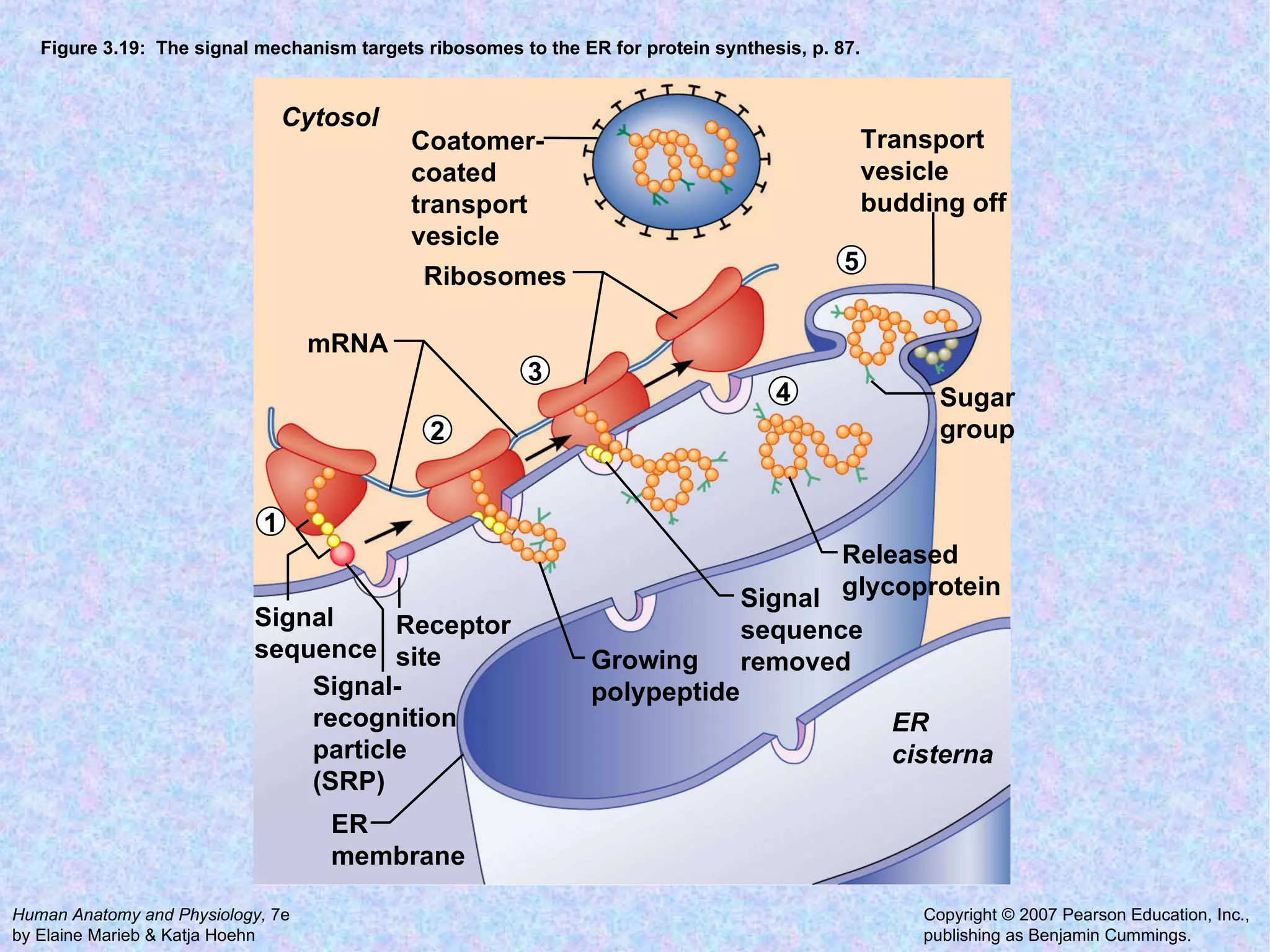
Figure 3.19:  The signal mechanism targets ribosomes to the ER for protein synthesis, p. 87. Cytosol Ribosomes mRNA Coatomer- coated transport vesicle Transport vesicle budding off Released glycoprotein ER cisterna ER membrane Signal- recognition particle (SRP) Signal sequence Receptor site Sugar group Signal sequence removed Growing polypeptide 1 2 3 4 5
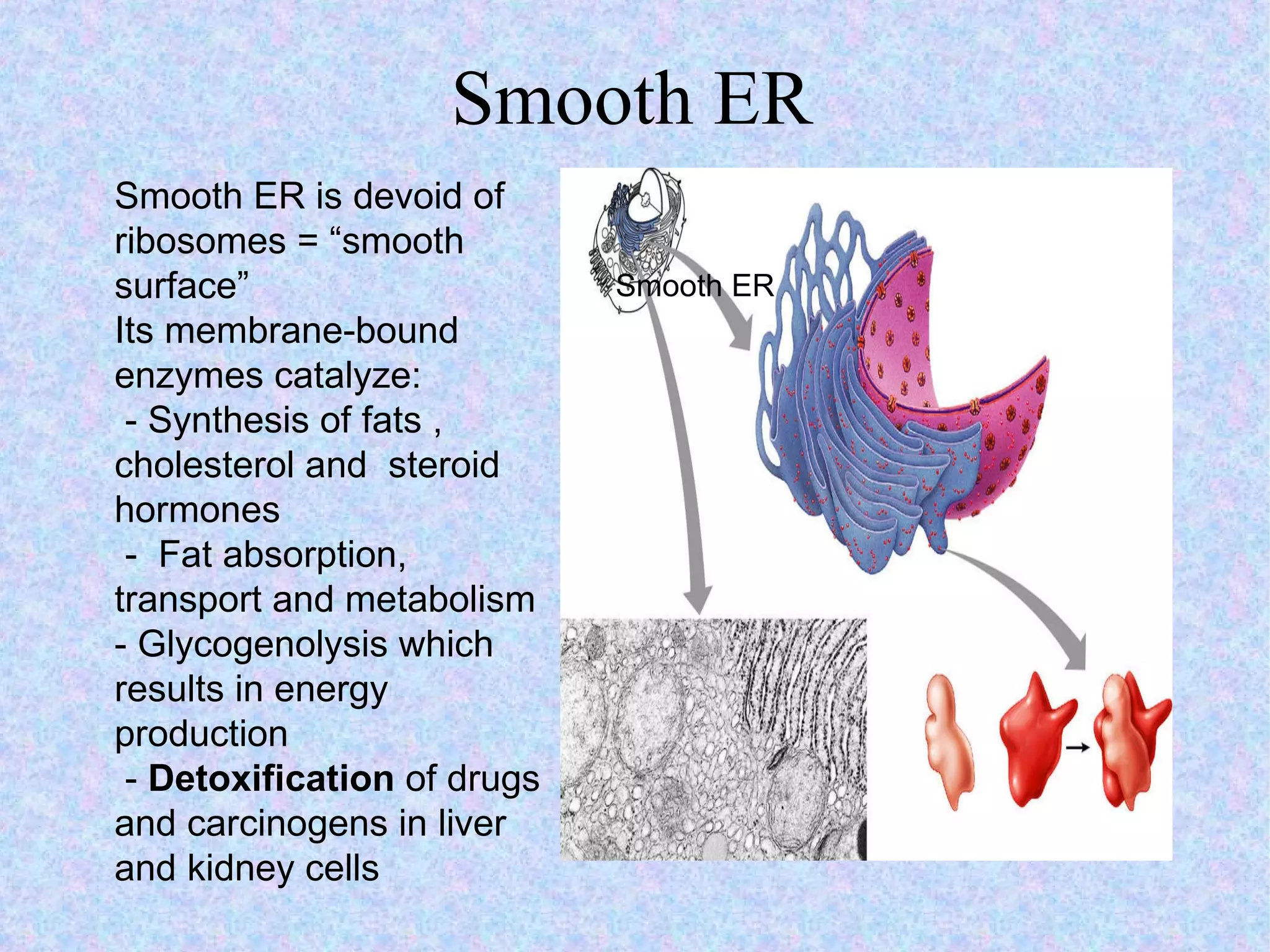
Smooth ER Smooth ER Smooth ER is devoid of ribosomes = “smooth surface” Its membrane-bound enzymes catalyze: - Synthesis of fats , cholesterol and  steroid hormones -  Fat absorption, transport and metabolism - Glycogenolysis which results in energy production  -  Detoxification  of drugs and carcinogens in liver and kidney cells
Figure 3.20 :  Golgi apparatus, p. 88. Cis face— “ receiving” side of Golgi apparatus Transport vesicle from the Golgi Transport vesicle from the Golgi  Secretory vesicle from trans face Trans face— “ shipping” side of Golgi apparatus New vesicles forming New vesicles forming Cisternae Transport vesicle from rough ER Golgi apparatus (a) (b)
Golgi Apparatus Composed of stacked /flattened membranous sacs Receives proteins and lipids from the rough ER  Golgi modifies, packages and tags proteins and lipids to their specific destinations hence, the Golgi apparatus is referred to as the “Traffic director” of the cell 3 types vesicles  produced by the Golgi:  - secretory vesicles which contain proteins released via  exocytosis  - Vesicles that contain integral proteins and lipids  destined for the plasma membrane to  incorporated into the plasma membrane   -  Vesicles containing powerful digestive enzymes that remain in the cell =  LYSOSOMES  to digest phagosomes… more on next slides
Figure 3.21:  The sequence of events from protein synthesis on the rough ER to the final distribution of those proteins , p. 88. Secretion by exocytosis Extracellular fluid Plasma membrane Vesicle incorporated into plasma membrane Coatomer coat Lysosomes  containing acid hydrolase enzymes Phagosome Proteins in cisterna Membrane Vesicle Pathway 3 Pathway 2 Secretory vesicles Proteins Pathway 1 Golgi  apparatus Cisterna Rough ER
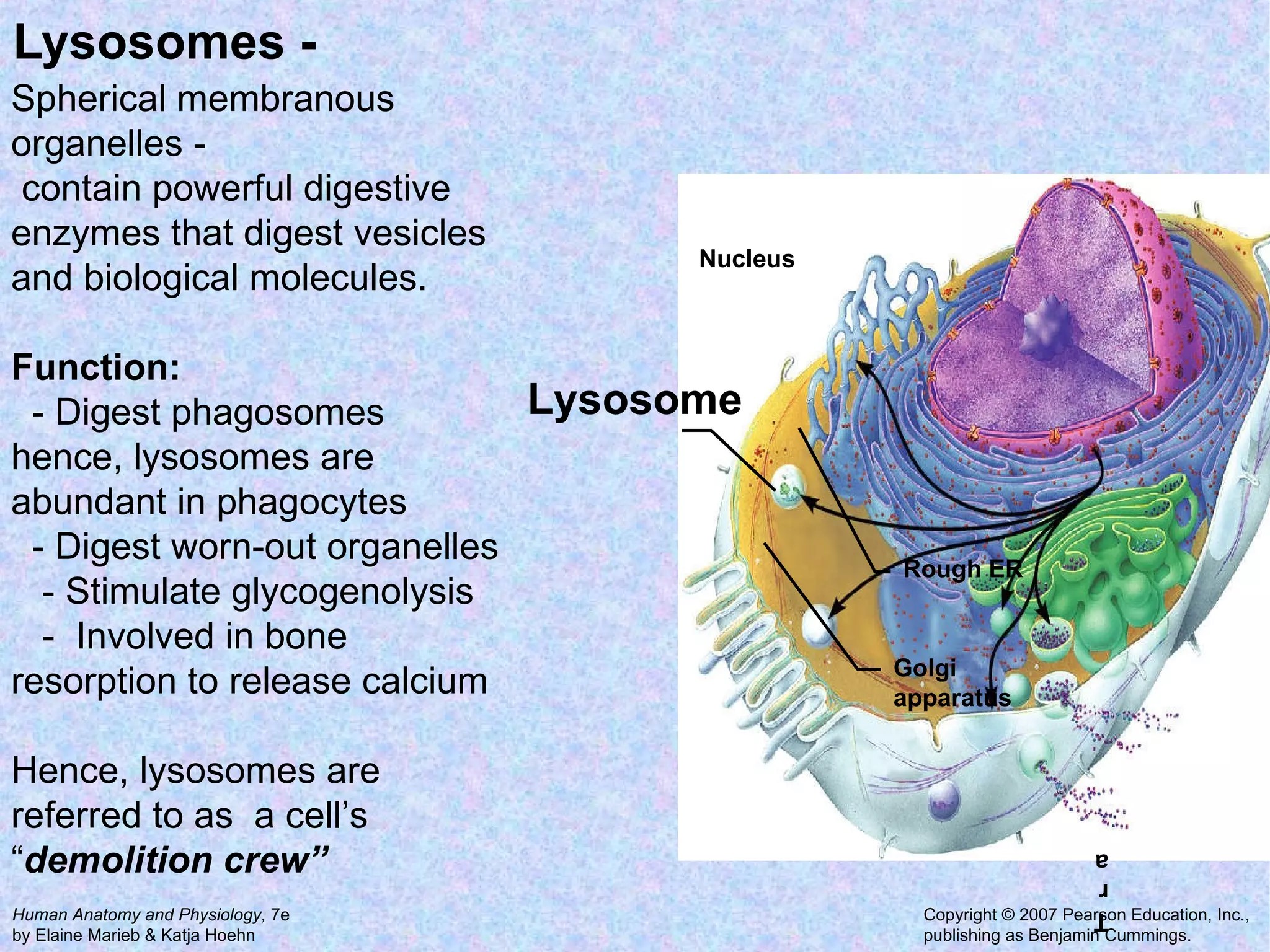
Lysosomes -  Golgi apparatus Lysosome Rough ER Tra Nucleus Spherical membranous organelles -  contain powerful digestive enzymes that digest vesicles and biological molecules.  Function: - Digest phagosomes hence, lysosomes are abundant in phagocytes - Digest worn-out organelles - Stimulate glycogenolysis -  Involved in bone resorption to release calcium Hence, lysosomes are referred to as  a cell’s “ demolition crew”
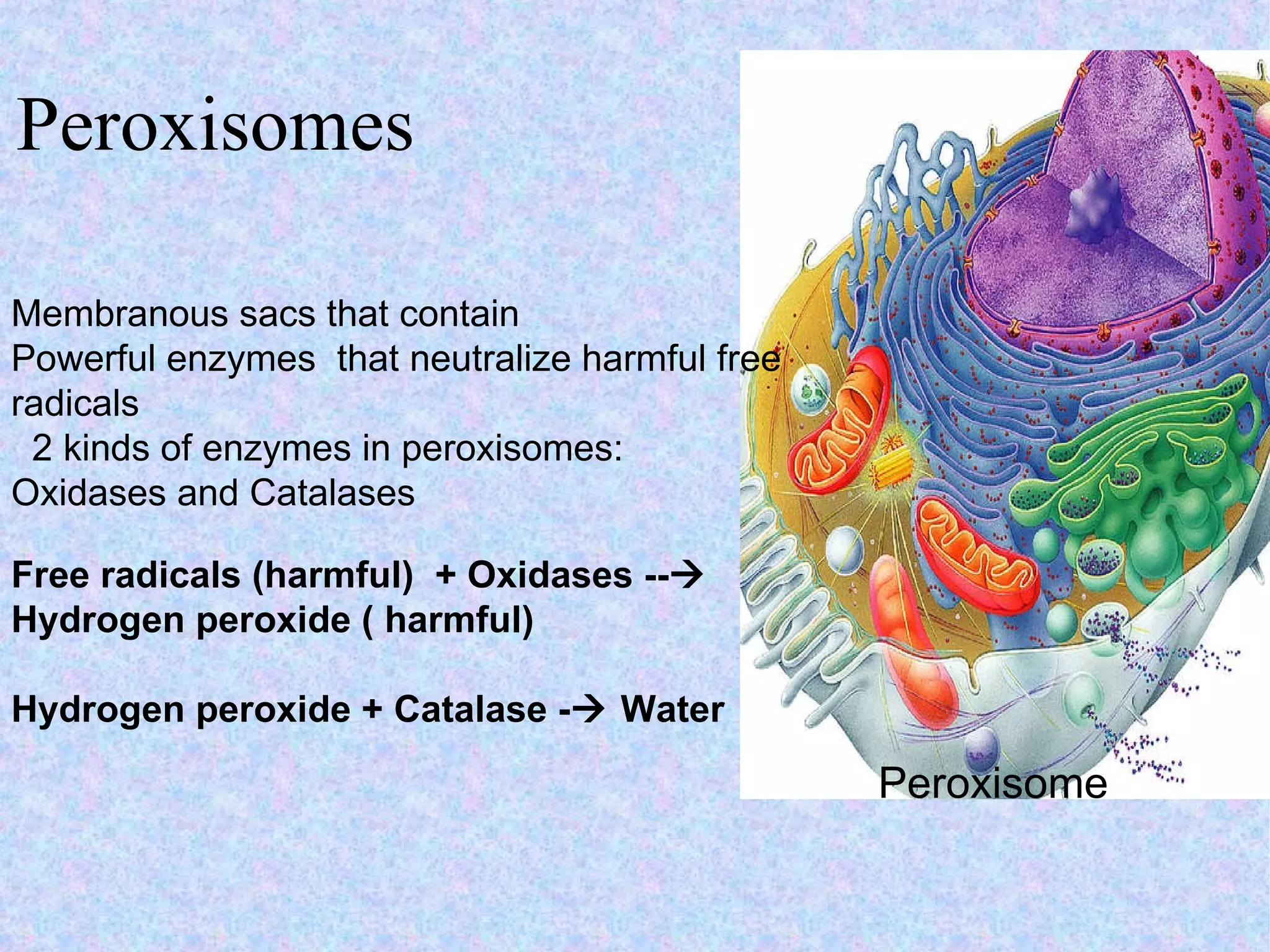
Peroxisomes Peroxisome Membranous sacs that contain  Powerful enzymes  that neutralize harmful free radicals 2 kinds of enzymes in peroxisomes: Oxidases and Catalases Free radicals (harmful)  + Oxidases --   Hydrogen peroxide ( harmful) Hydrogen peroxide + Catalase -   Water
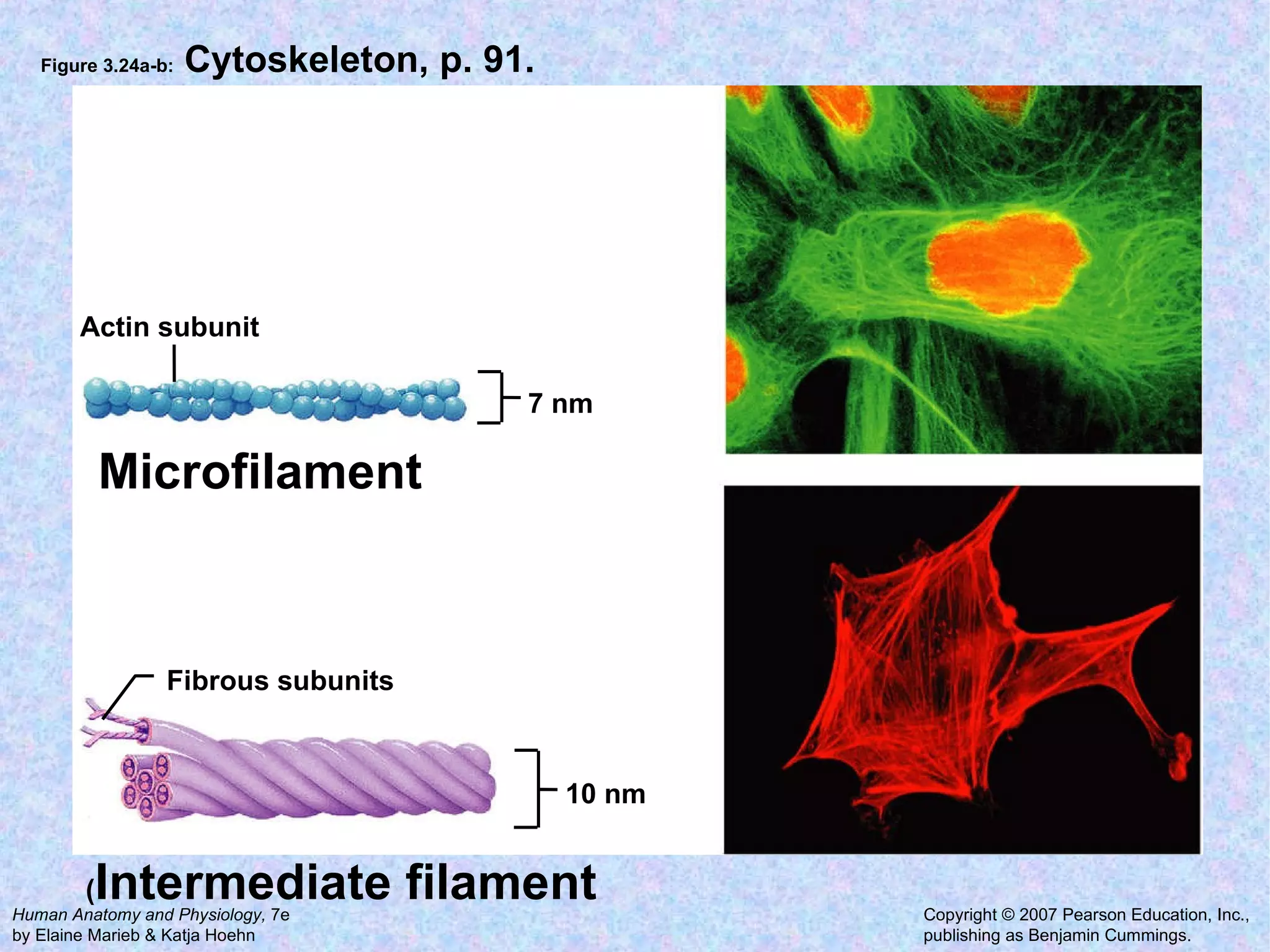
Cytoskeleton “ Cell skeleton” – consists of non membranous rod-like structures that support other cytoplasmic organelles and allow for movements 3 Types based on size and function: i ) Microtubules  – largest diameter = 25nm wide   ii ) Intermediate filaments  – diameter between that of a microtubule and a microfilament = 10nm   iii)  Microfilaments  – smallest diameter = 7nm
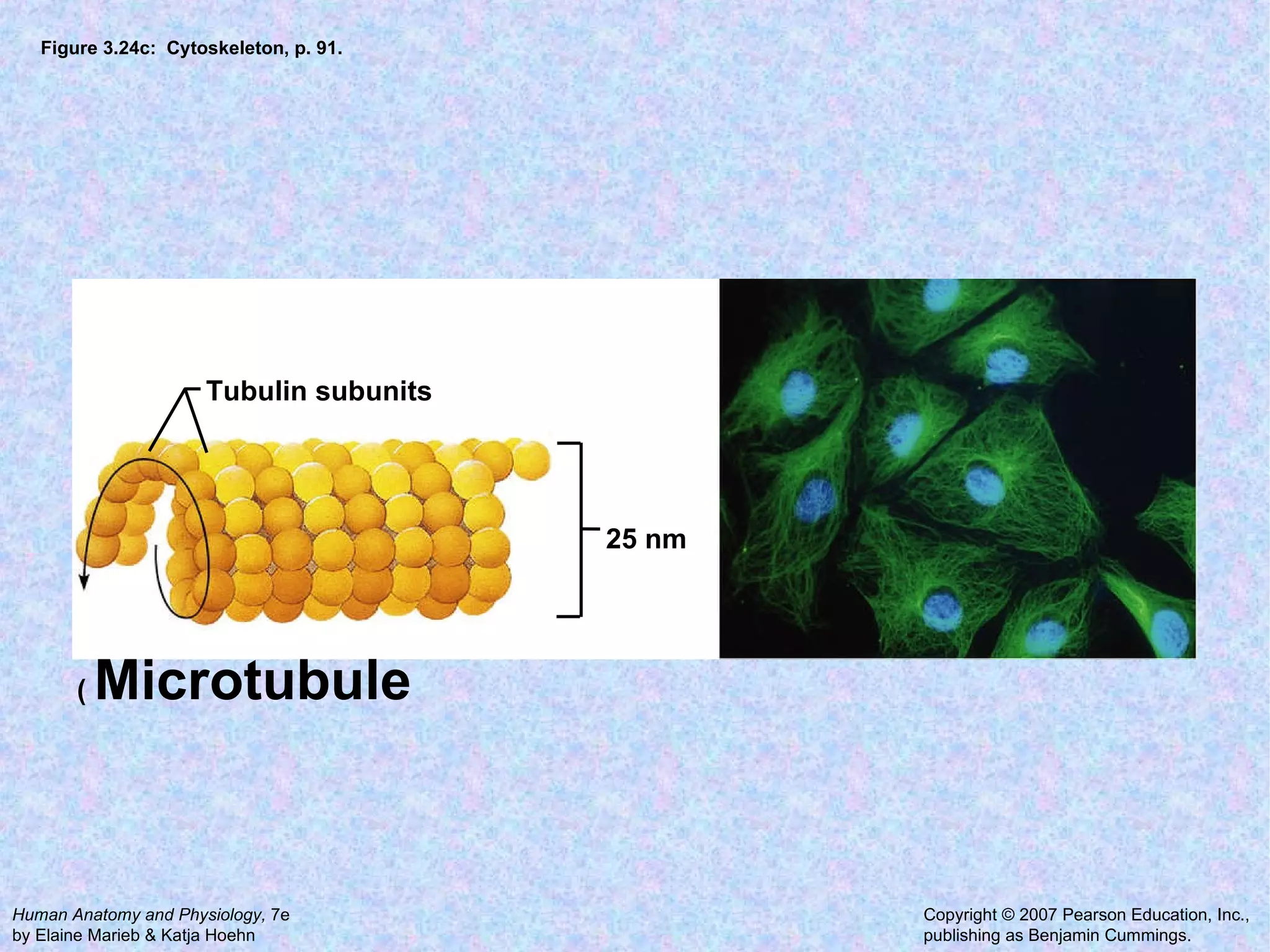
Figure 3.24c:  Cytoskeleton, p. 91. Tubulin subunits 25 nm (  Microtubule
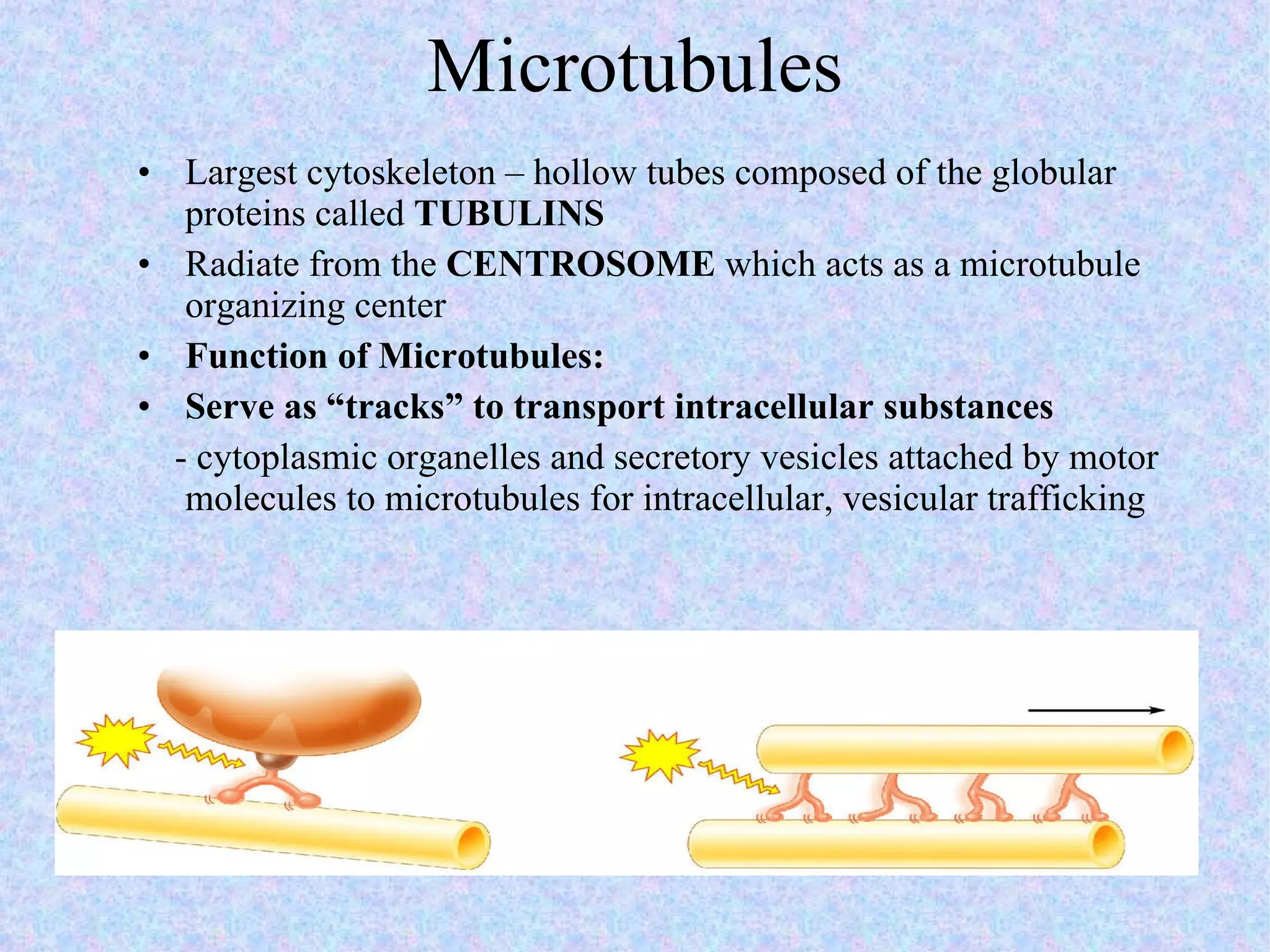
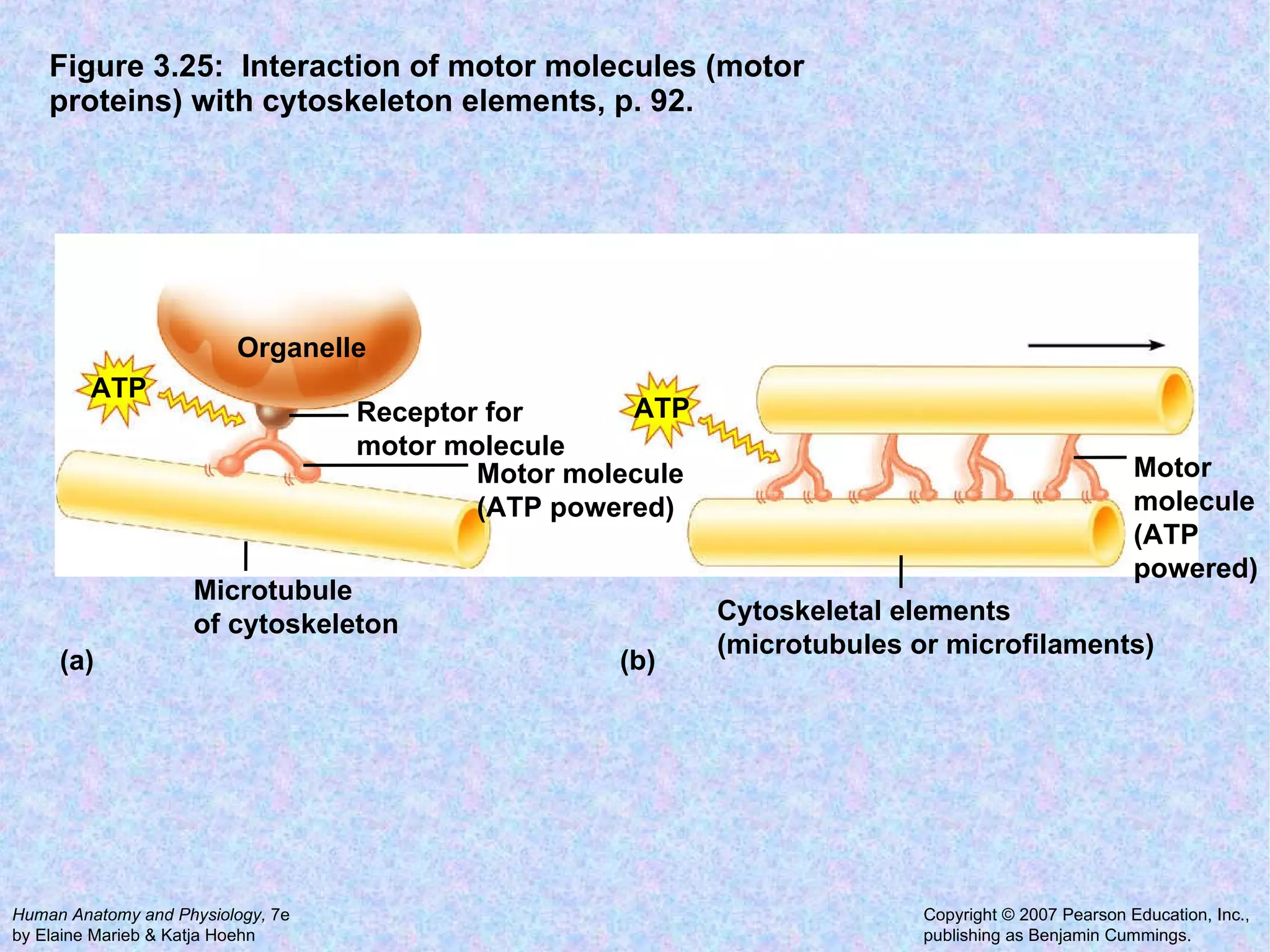
Microtubules Largest cytoskeleton – hollow tubes composed of the globular proteins called  TUBULINS Radiate from the  CENTROSOME  which acts as a microtubule organizing center Function of Microtubules: Serve as “tracks” to transport intracellular substances - cytoplasmic organelles and secretory vesicles attached by motor molecules to microtubules for intracellular, vesicular trafficking
Figure 3.25:  Interaction of motor molecules (motor proteins) with cytoskeleton elements, p. 92. Receptor for motor molecule Microtubule of cytoskeleton Motor molecule (ATP powered) Organelle Cytoskeletal elements (microtubules or microfilaments) Motor molecule (ATP powered)  (a) (b) ATP ATP
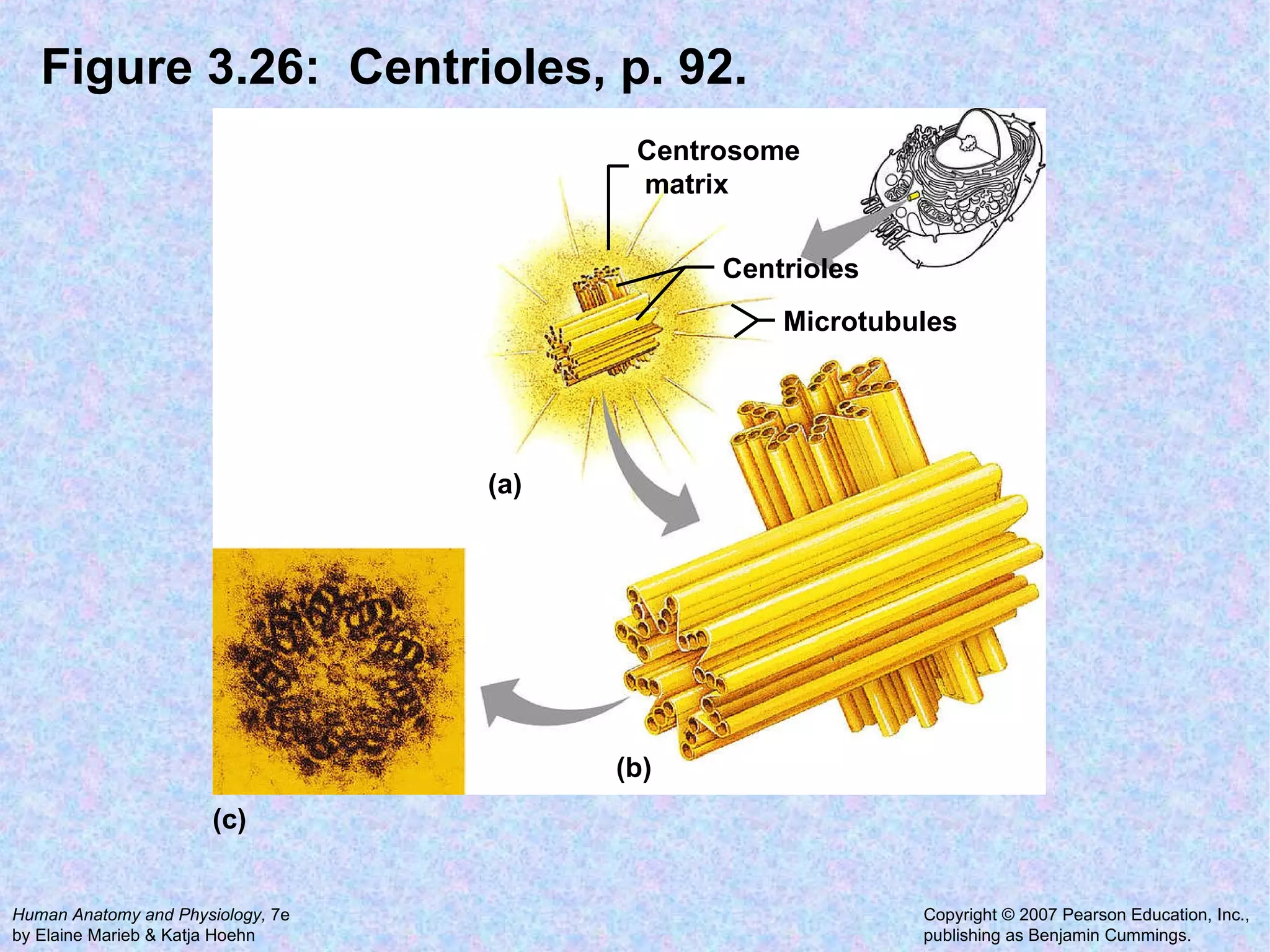
Figure 3.26:  Centrioles, p. 92. Centrosome  matrix Centrioles Microtubules  (a) (b) (c)
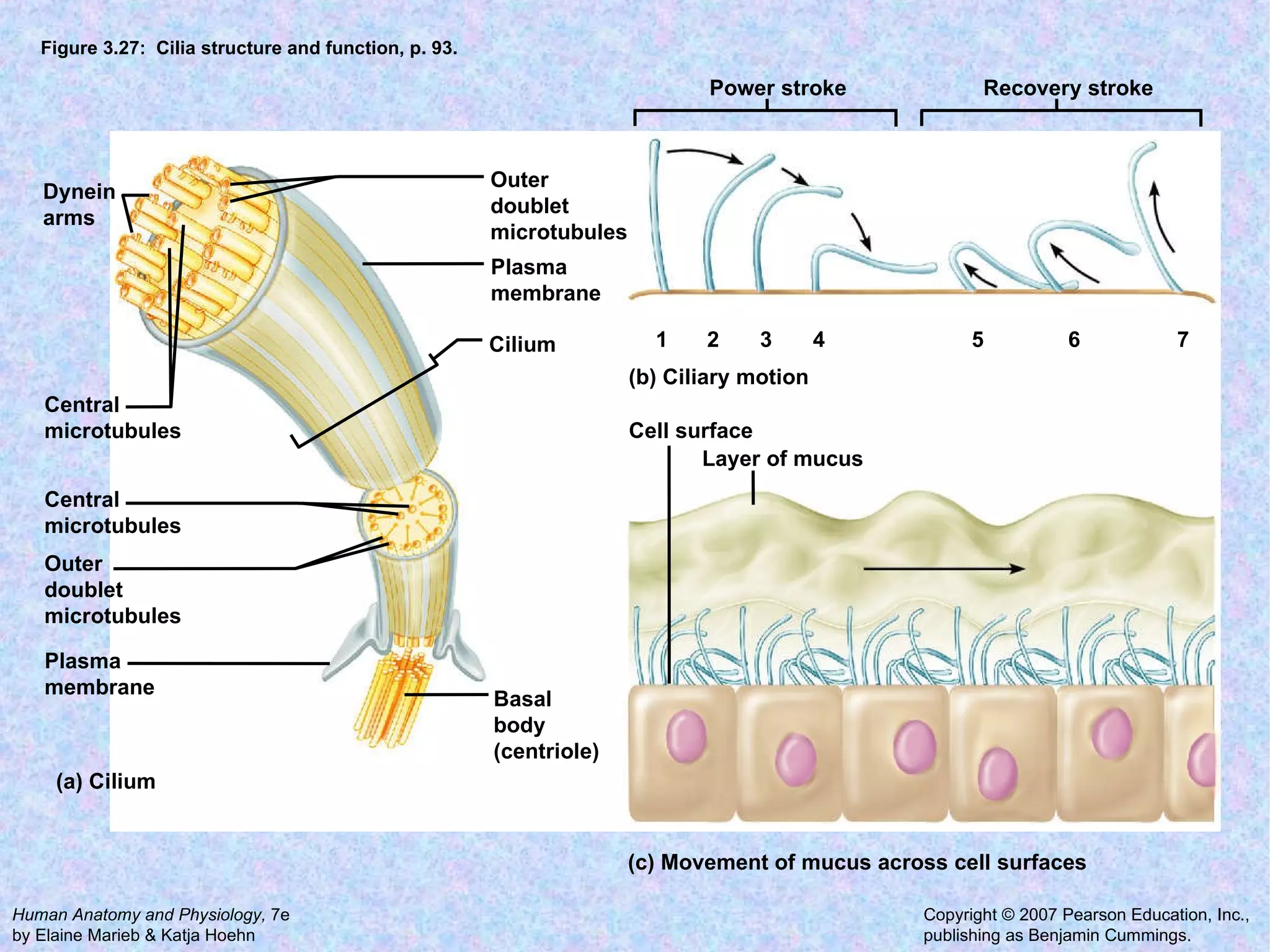
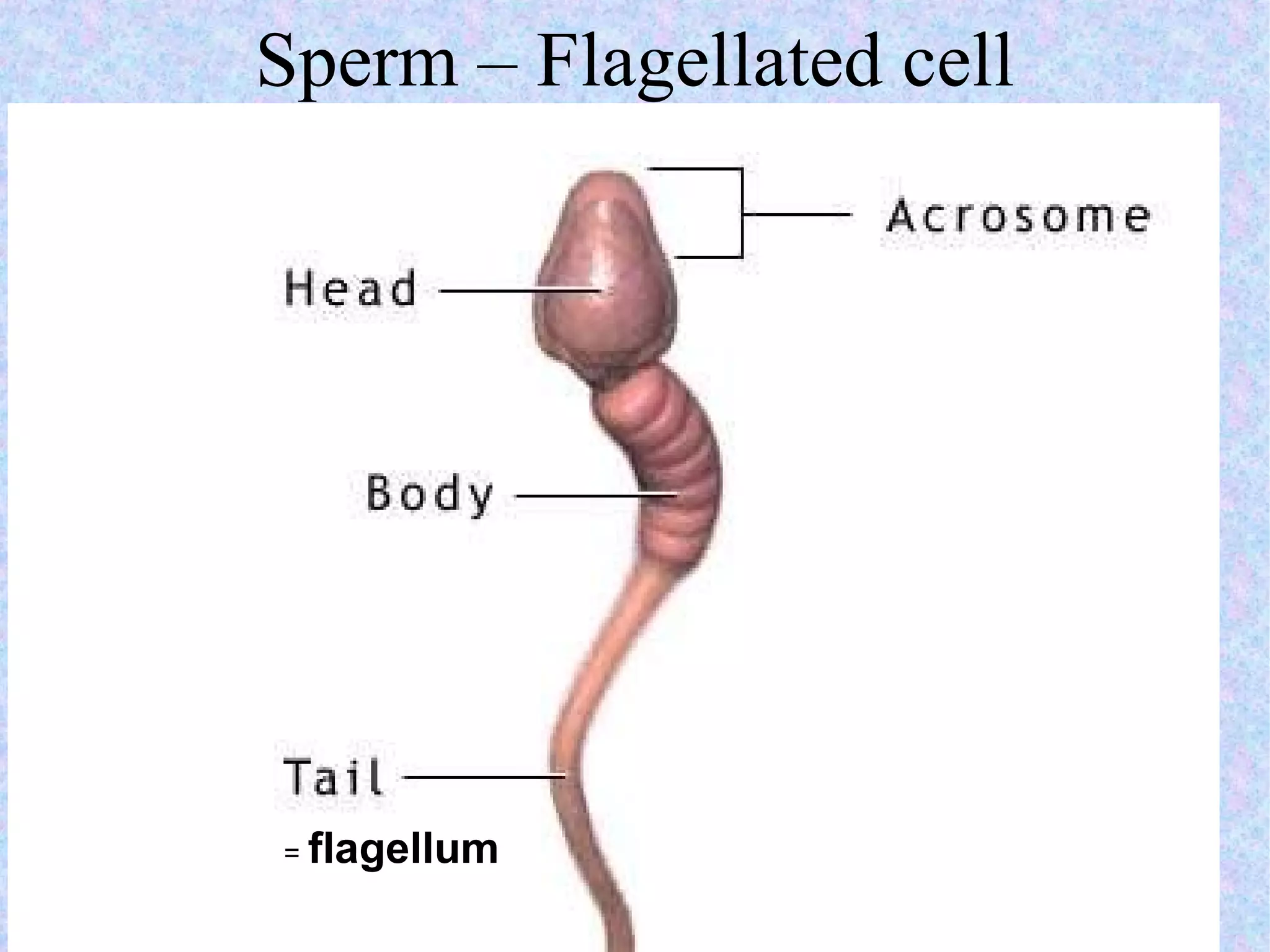
Cilia and flagella Centrosome ( microtubule-organizing center) contains a pair of  CENTRIOLES  at right angles to each other. Centrioles sprout spindle fibers ( mitotic spindles) required for cell division Centrioles form 2 types of cell extensions: CILIA and FLAGELLUM Cilia –  cellular extensions that occur in large numbers on the apical ( exposed ) surface of cells Several cells in the body are ciliated  Cilia beat to create a current that moves substances across the surface of the cells Flagellum  – a single, longer cellular extension Flagellum beats to propel the cell it extends from  The only flagellated cell in the human body is  sperm
Figure 3.27:  Cilia structure and function, p. 93. Power stroke Layer of mucus Cell surface Recovery stroke Basal body (centriole) Plasma membrane Outer doublet microtubules Central microtubules Central microtubules Dynein arms Outer doublet microtubules Plasma membrane Cilium 1 2 3 5 4 6 7 (b) Ciliary motion (c) Movement of mucus across cell surfaces (a) Cilium
Sperm – Flagellated cell         =  flagellum
Figure 3.24a-b:  Cytoskeleton, p. 91. Actin subunit 7 nm Fibrous subunits 10 nm Microfilament ( Intermediate filament
Intermediate Filaments Composed of tough, insoluble fibrous fibers Most  stable type of cytoskeleton Provide tensile strength to cells by resisting pulling forces placed on the cells Given specific names in specific cell types: Tonofilaments in epidermal cells Neurofilaments in neurons
Microfilaments Have the smallest diameter Composed of the protein ACTIN The arrangement of microfilaments is unique to each cell Function:  Involved in changes in cell shape or cell motility as in contraction Involved in the formation of cleavage furrow during cytokinesis Involved in the changes of the plasma membrane during endocytosis and exocytosis
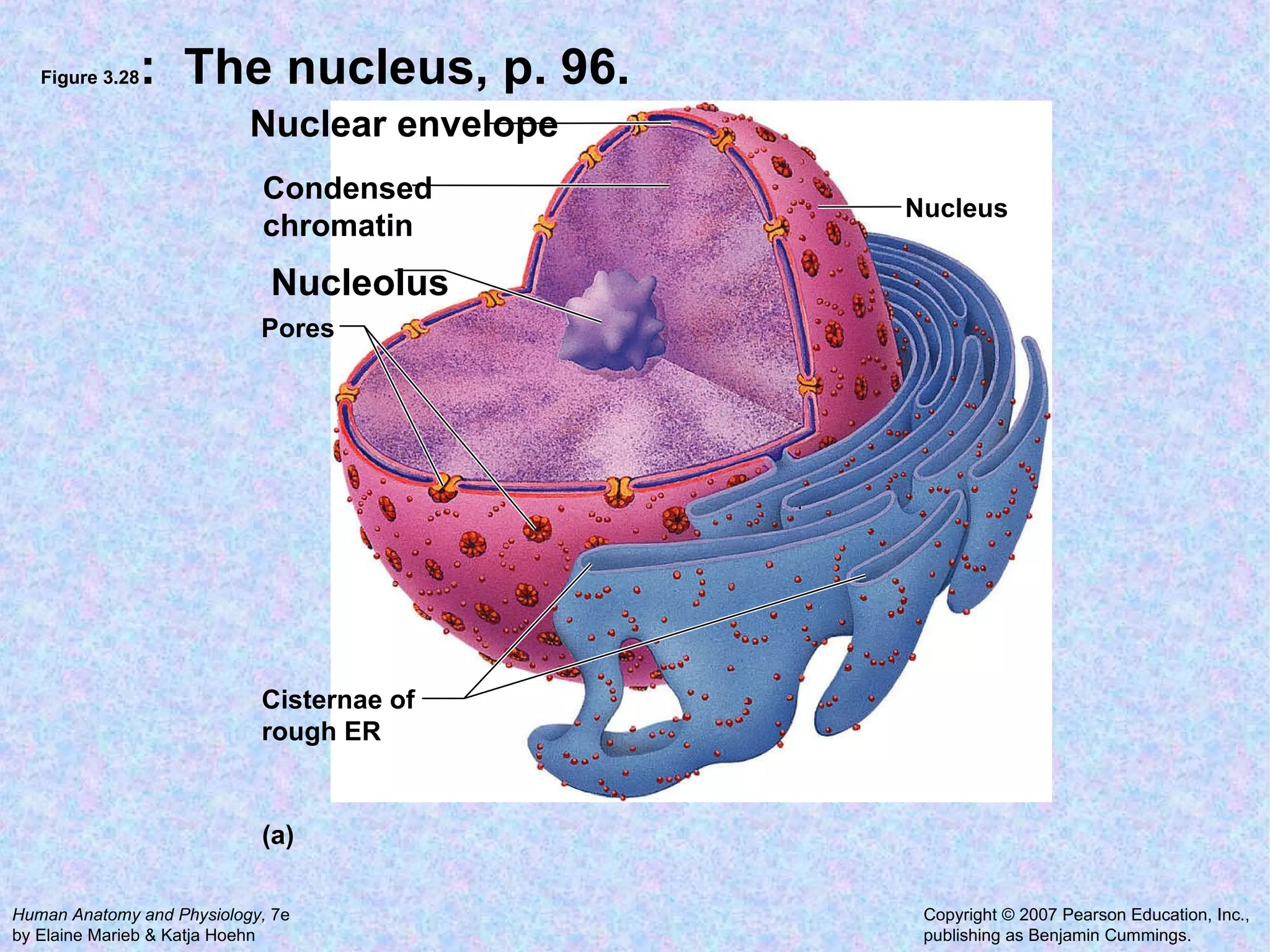
Figure 3.28 :  The nucleus, p. 96. Condensed  chromatin Nuclear envelope Nucleus Nucleolus Pores (a) Cisternae of  rough ER
The Nucleus Control center of a cell A cell with one nucleus = Uninucleate A cell with many nuclei = Multinucleate A cell without a nucleus = Anucleate 3 main regions: Nuclear membrane Nucleolus Chromatin
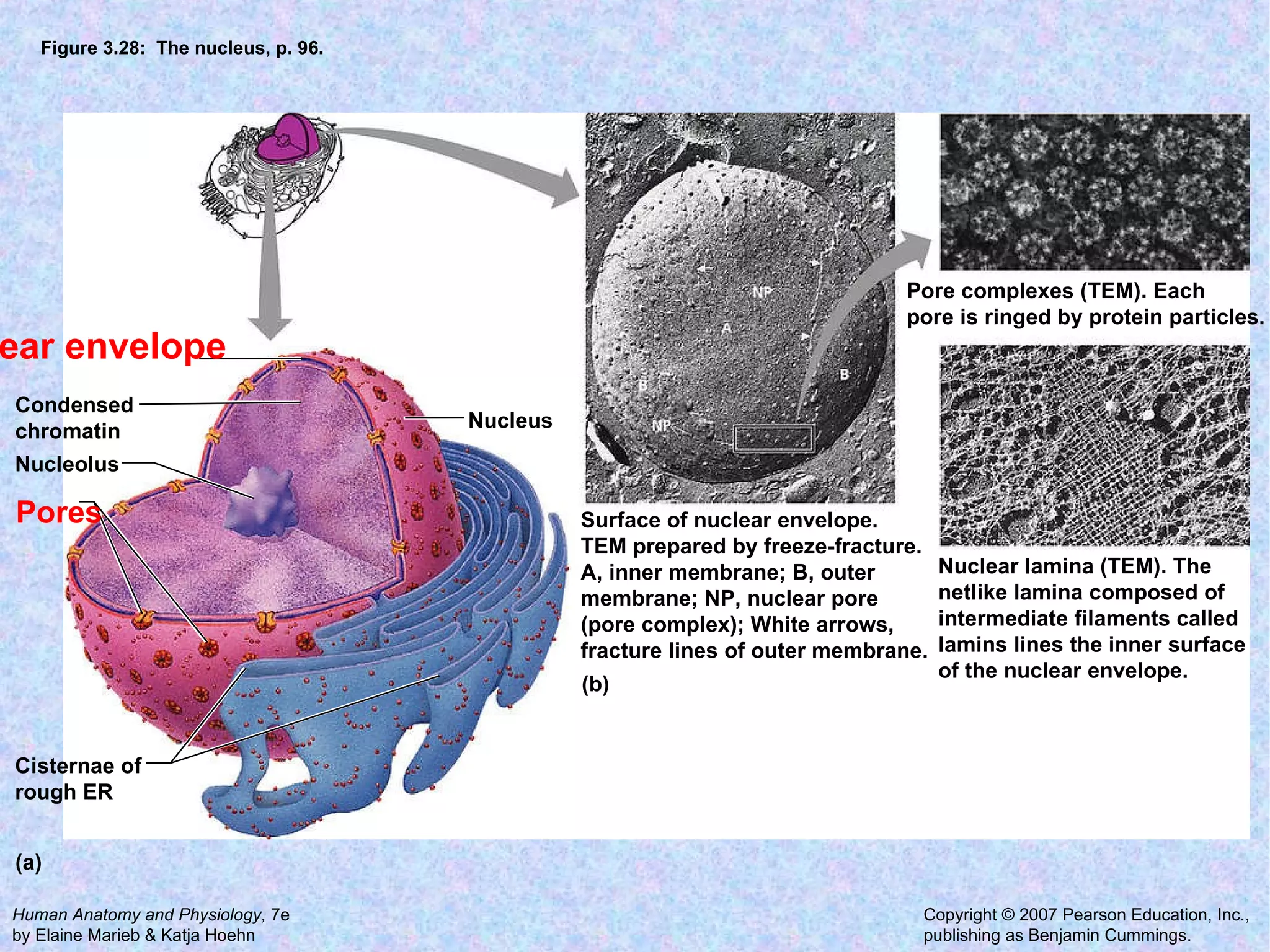
Figure 3.28:  The nucleus, p. 96. Condensed chromatin  Nuclear envelope Nucleus Surface of nuclear envelope. TEM prepared by freeze-fracture.  A, inner membrane; B, outer  membrane; NP, nuclear pore  (pore complex); White arrows,  fracture lines of outer membrane. Pore complexes (TEM). Each pore is ringed by protein particles.  Nuclear lamina (TEM). The netlike lamina composed of  intermediate filaments called  lamins lines the inner surface  of the nuclear envelope. Nucleolus Pores Cisternae of rough ER  (a) (b)
Nuclear Envelope  = Nuclear Membrane  Double-layered  selective membrane with  nuclear pores Nuclear pores allow molecules to enter /exit the nucleus – proteins translocate from the cytoplasm into the nucleus; RNA  molecules move from the nucleus into the cytoplasm
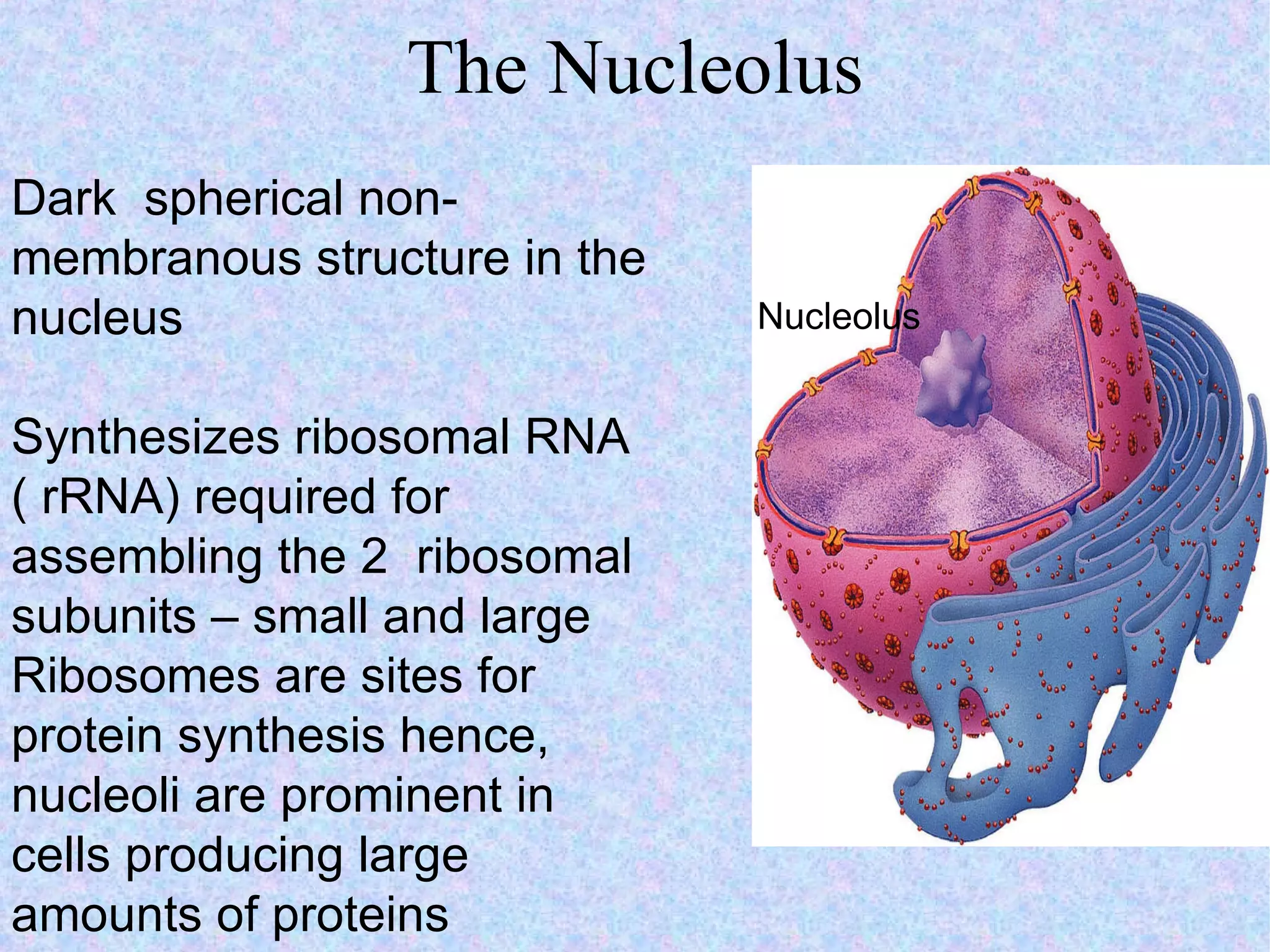
The Nucleolus Nucleolus Dark  spherical non- membranous structure in the nucleus Synthesizes ribosomal RNA ( rRNA) required for assembling the 2  ribosomal subunits – small and large  Ribosomes are sites for protein synthesis hence, nucleoli are prominent in cells producing large amounts of proteins
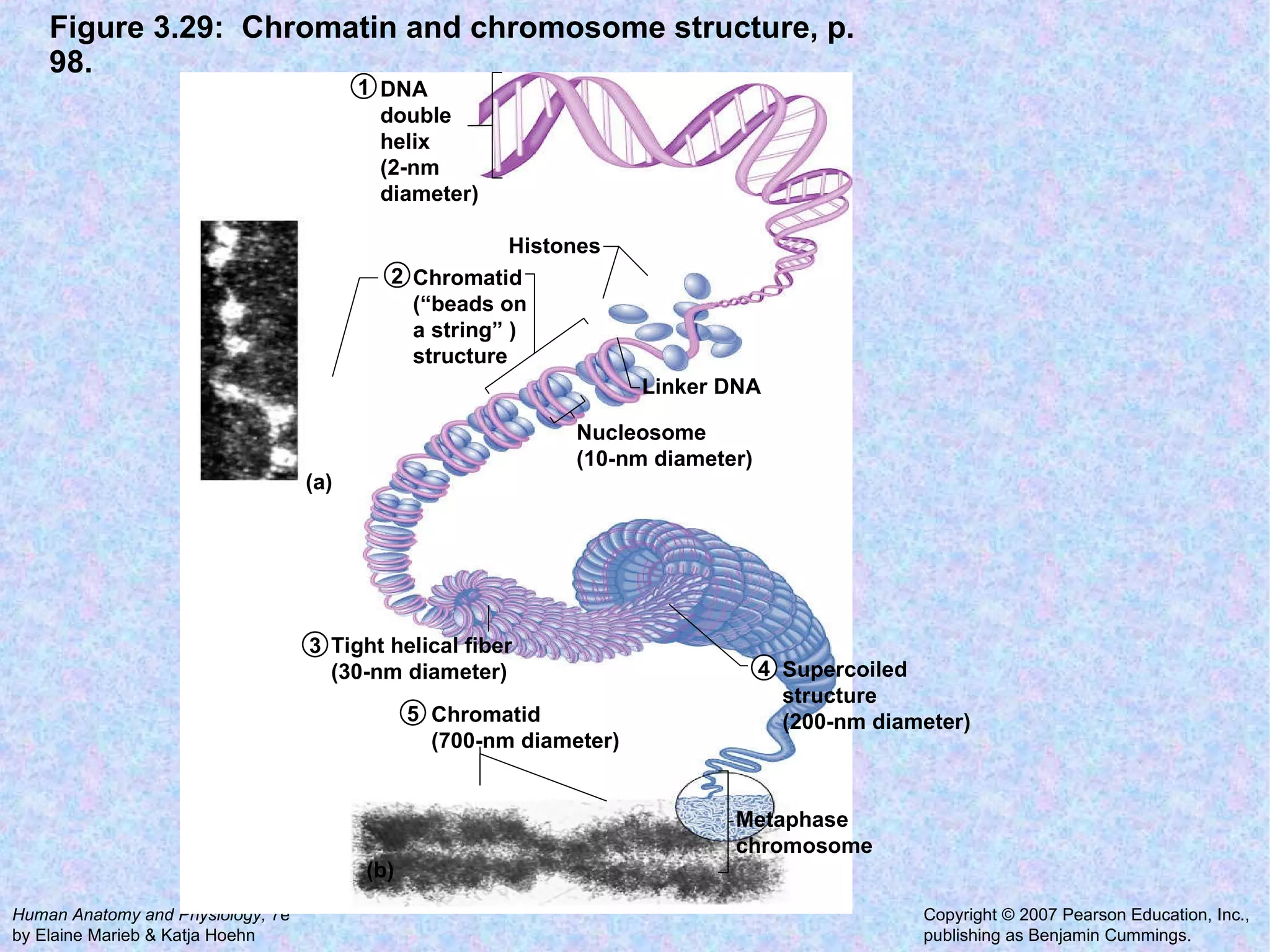
Figure 3.29:  Chromatin and chromosome structure, p. 98. Metaphase chromosome Supercoiled structure (200-nm diameter) Tight helical fiber (30-nm diameter) Chromatid (700-nm diameter) Nucleosome (10-nm diameter) Linker DNA Chromatid (“beads on a string” ) structure Histones DNA double helix (2-nm diameter) (a) (b) 1 2 3 5 4
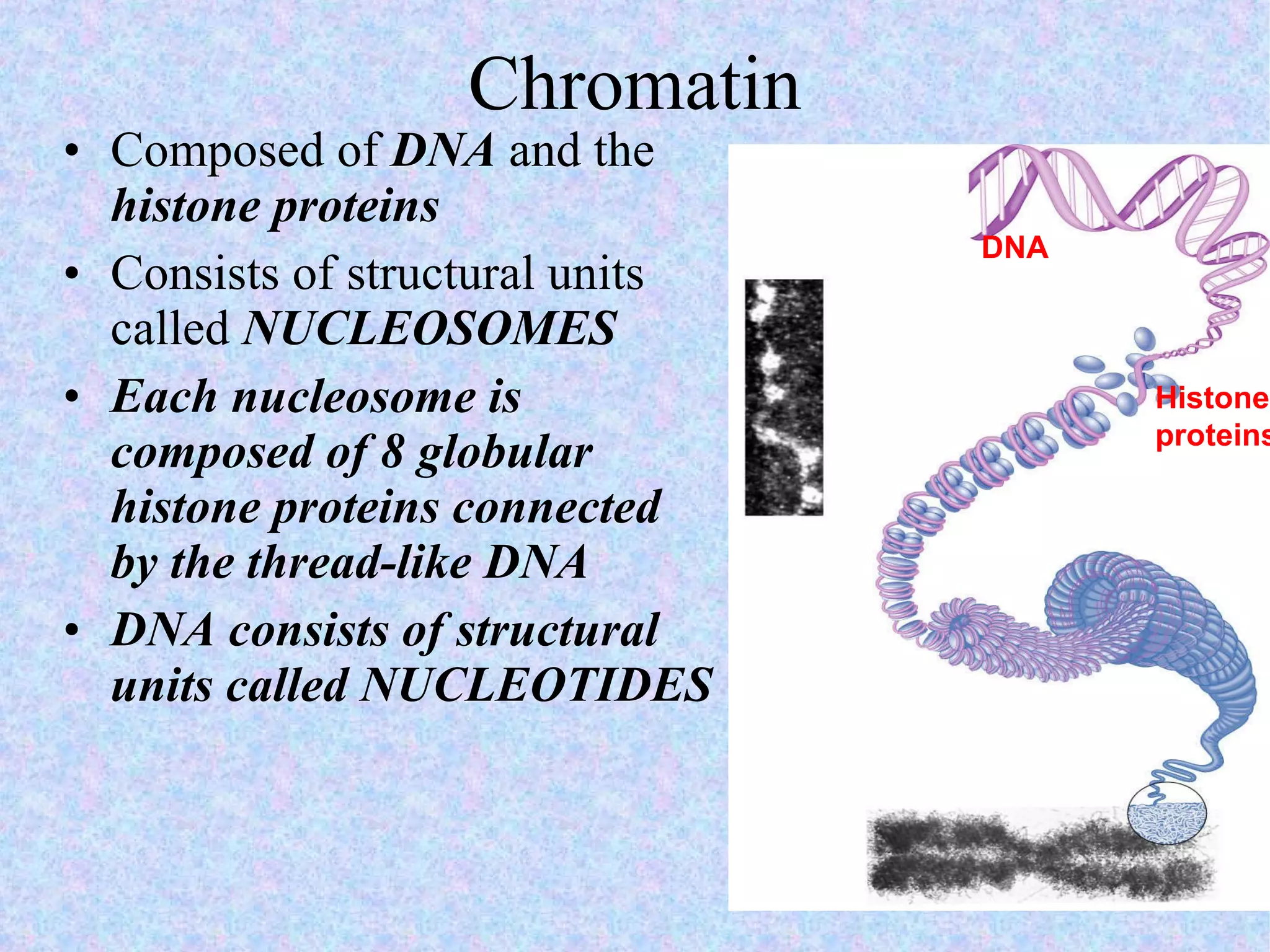
Chromatin Composed of  DNA  and the  histone proteins Consists of structural units called  NUCLEOSOMES Each nucleosome is composed of 8 globular histone proteins connected by the thread-like DNA DNA consists of structural units called NUCLEOTIDES DNA Histone proteins
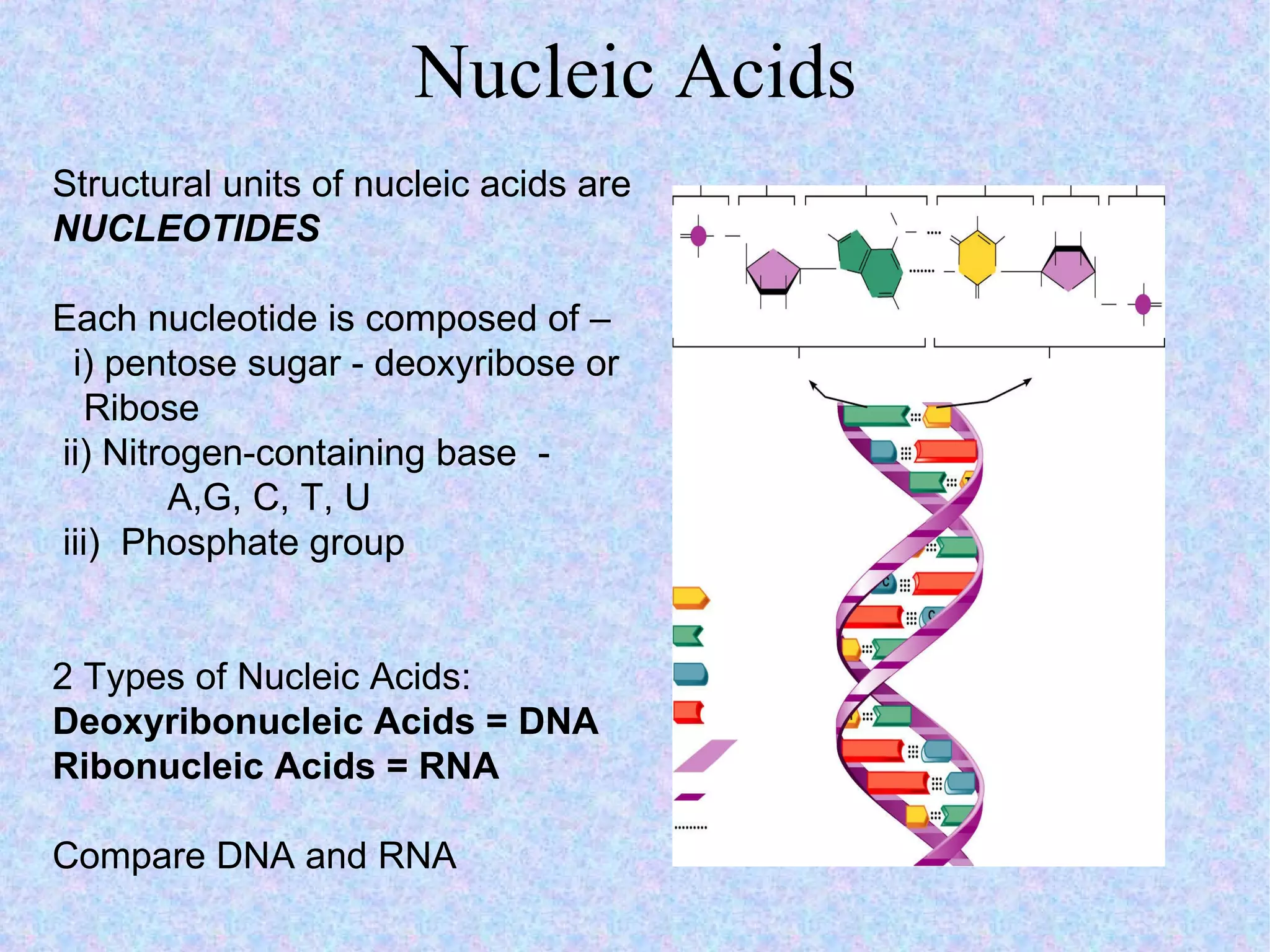
Nucleic Acids Structural units of nucleic acids are  NUCLEOTIDES Each nucleotide is composed of – i) pentose sugar - deoxyribose or  Ribose ii) Nitrogen-containing base  - A,G, C, T, U iii)  Phosphate group 2 Types of Nucleic Acids:  Deoxyribonucleic Acids = DNA Ribonucleic Acids = RNA Compare DNA and RNA
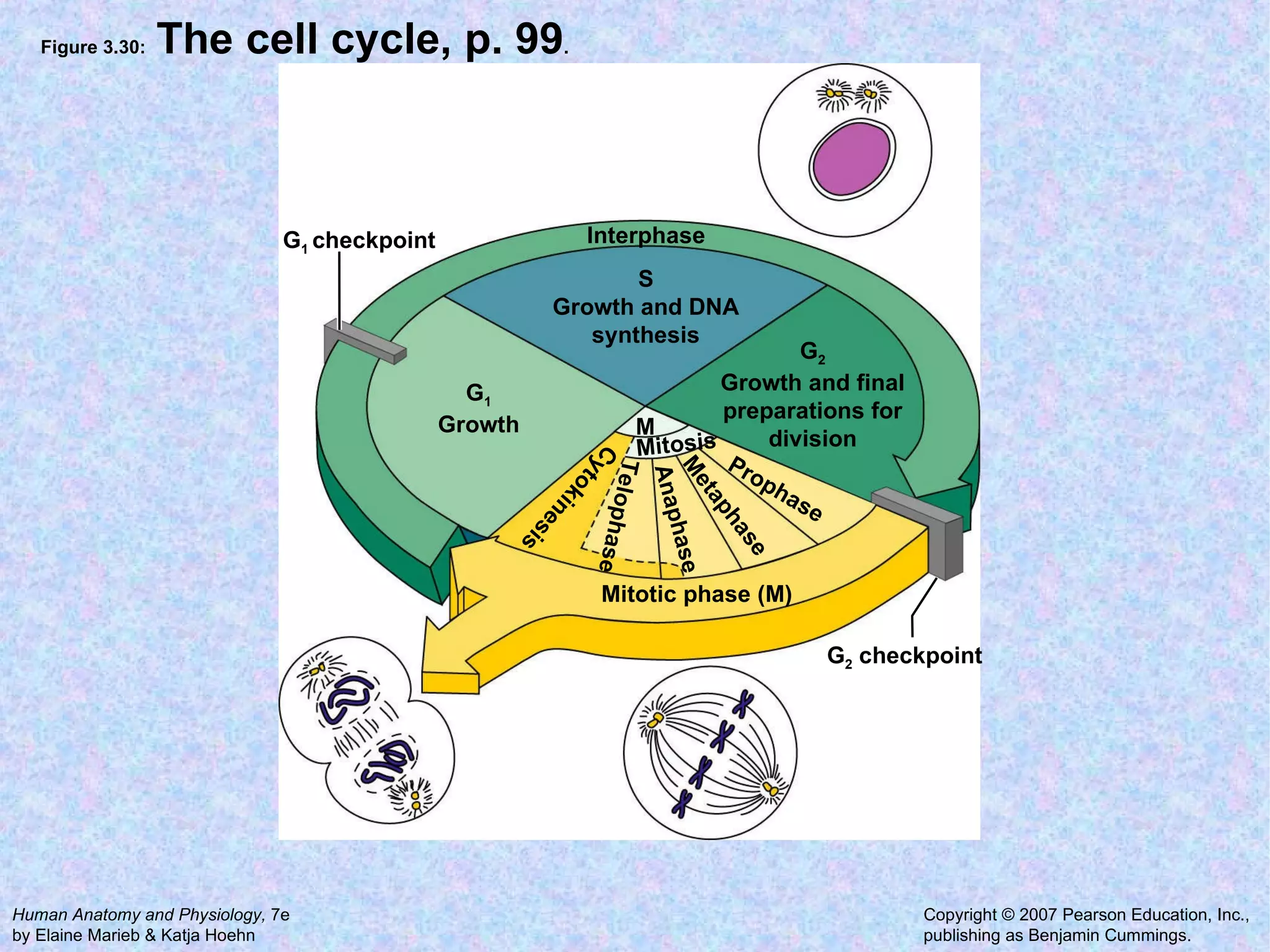
Figure 3.30:  The cell cycle, p. 99 . G 1 Growth S Growth and DNA synthesis G 2 Growth and final preparations for division M G 2  checkpoint G 1  checkpoint Interphase Cytokinesis Mitosis Telophase Anaphase Metaphase Prophase Mitotic phase (M)
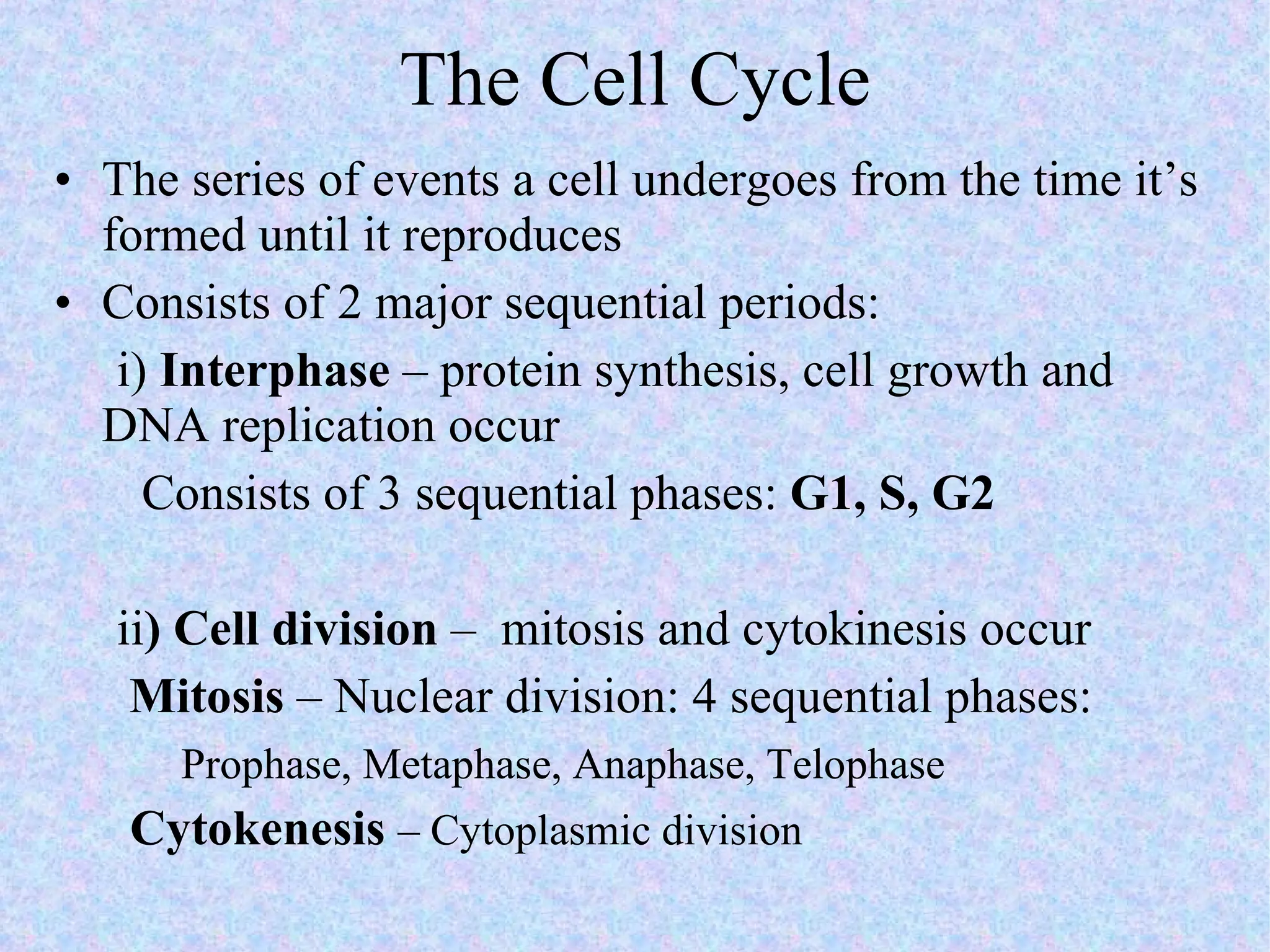
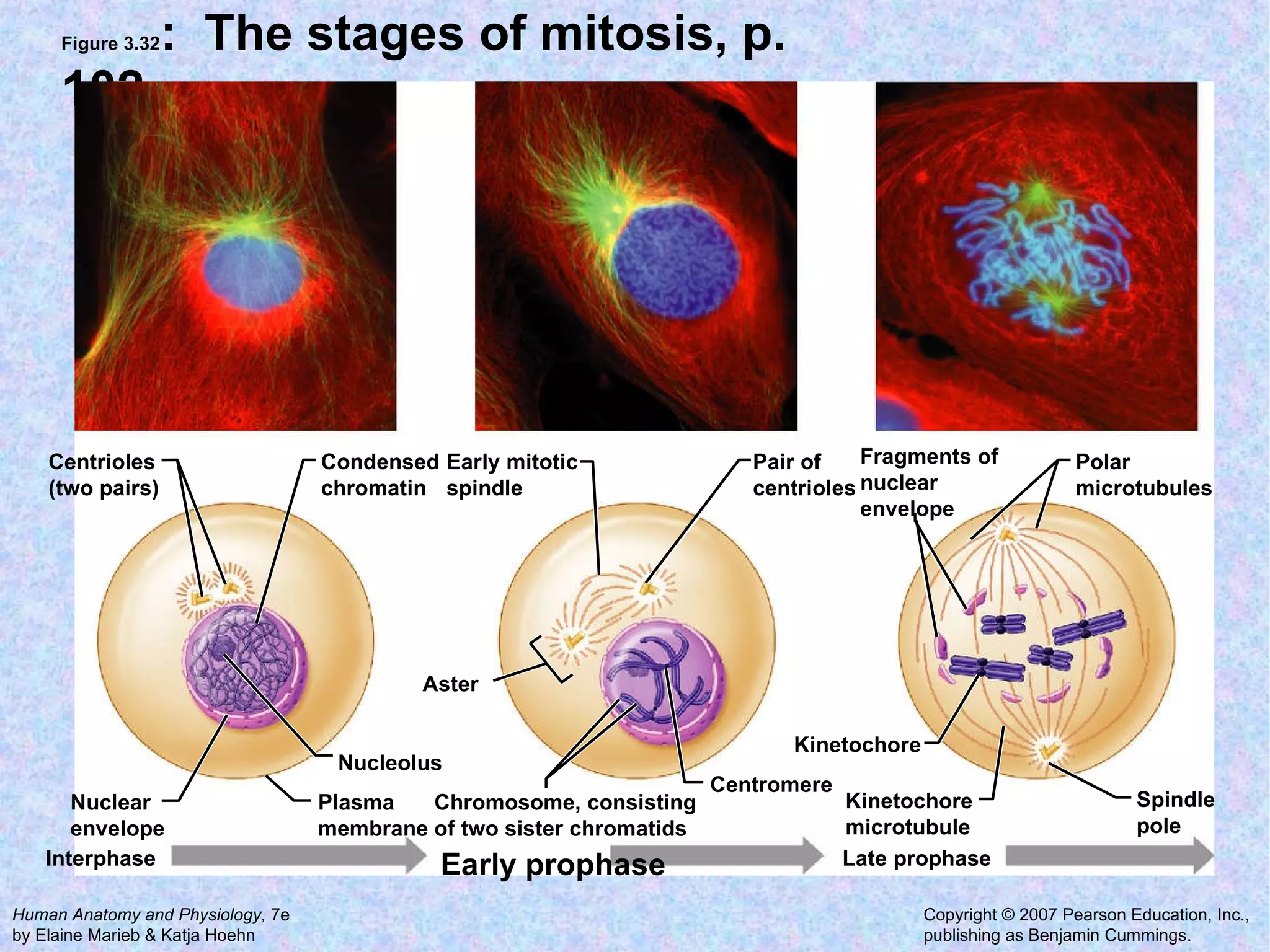
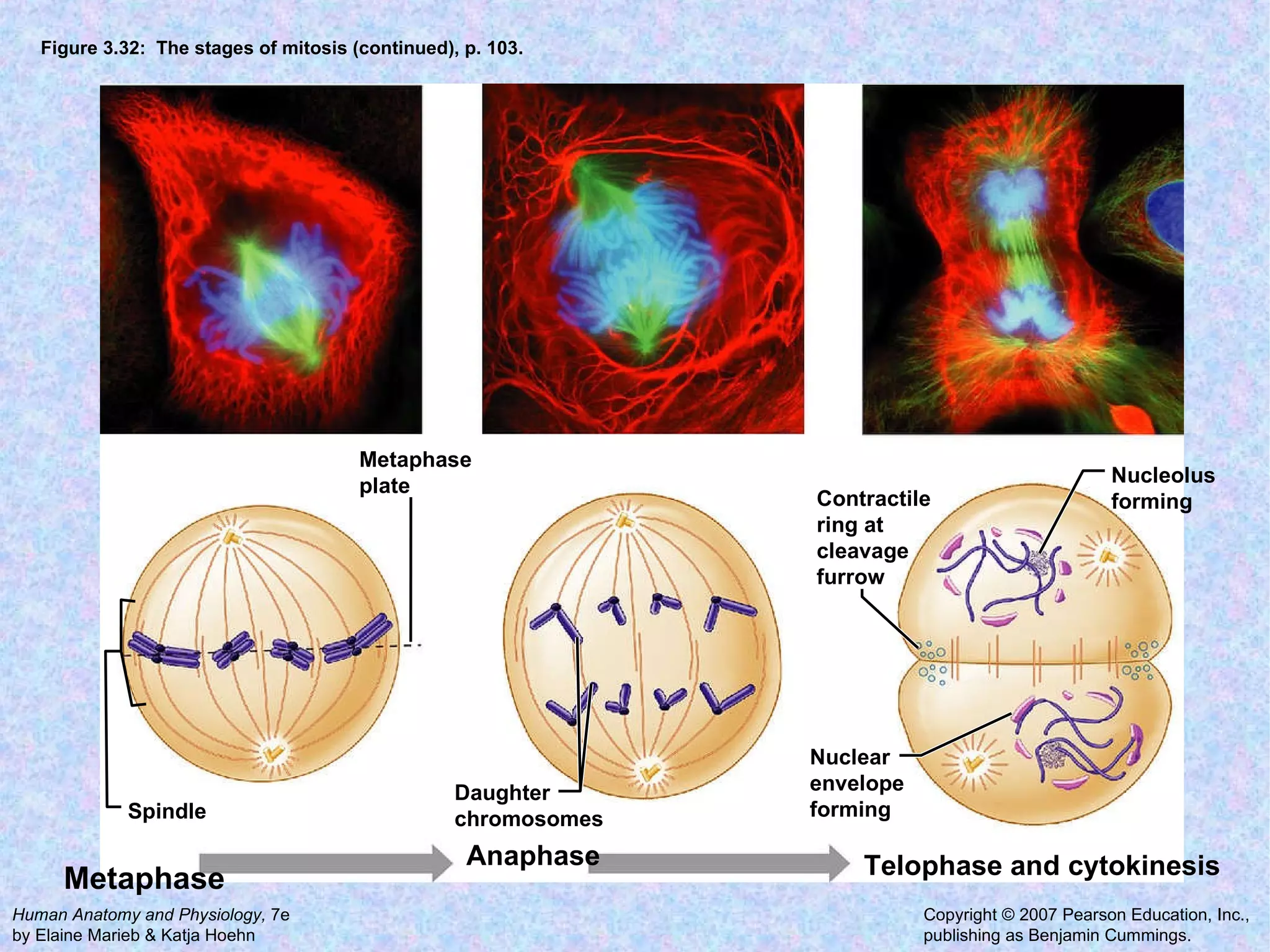
The Cell Cycle The series of events a cell undergoes from the time it’s formed until it reproduces Consists of 2 major sequential periods:  i)  Interphase  – protein synthesis, cell growth and DNA replication occur Consists of 3 sequential phases:  G1, S, G2 ii ) Cell division  –  mitosis and cytokinesis occur Mitosis  – Nuclear division: 4 sequential phases: Prophase, Metaphase, Anaphase, Telophase Cytokenesis  – Cytoplasmic division
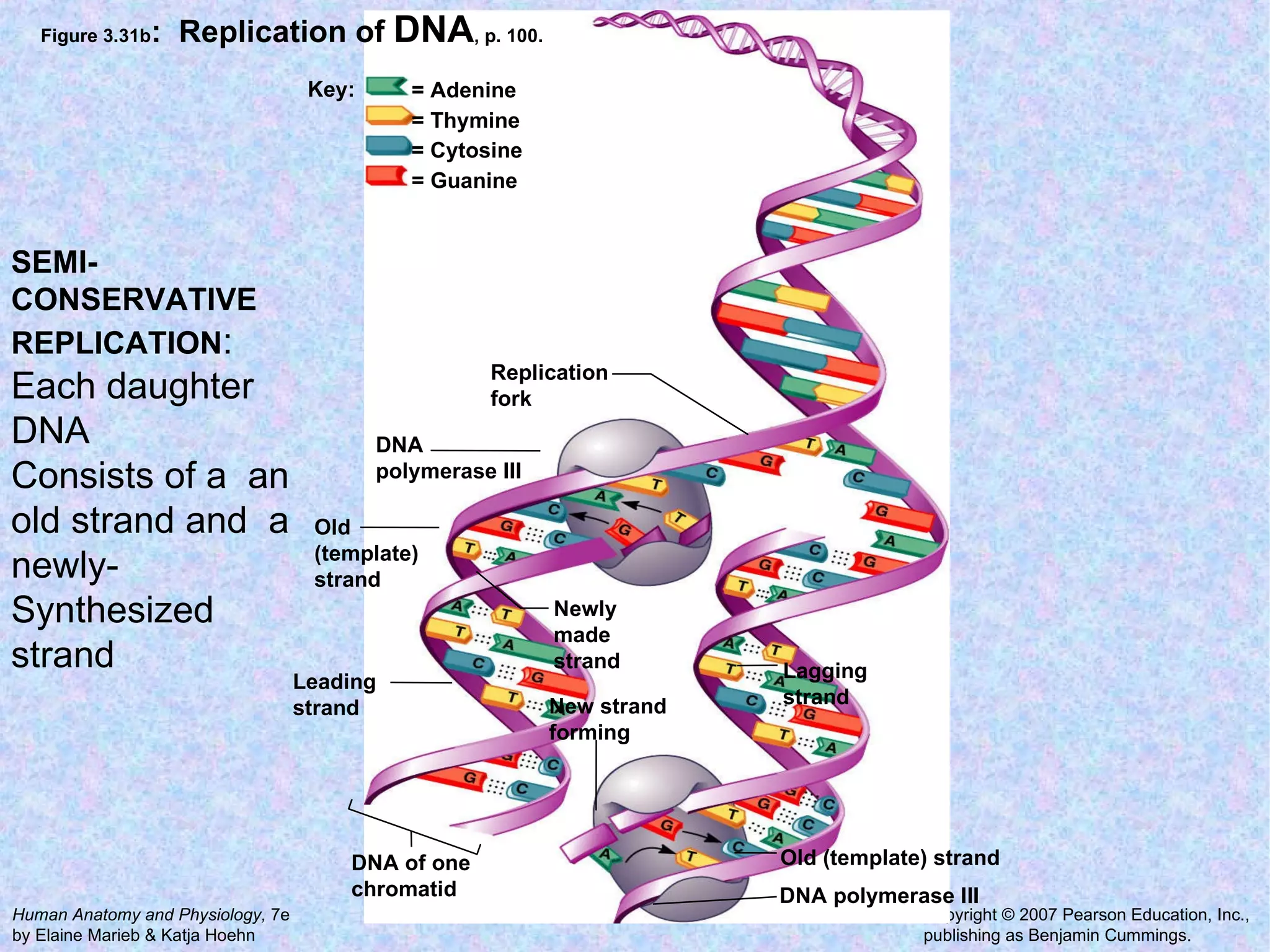
Figure 3.31b :  Replication of  DNA , p. 100. Leading strand  Replication fork  DNA polymerase III DNA polymerase III Lagging strand  Key: = Adenine = Thymine = Cytosine = Guanine New strand forming Old (template) strand Old (template) strand Newly made strand  DNA of one chromatid  SEMI-CONSERVATIVE  REPLICATION : Each daughter DNA  Consists of a  an old strand and  a newly- Synthesized strand
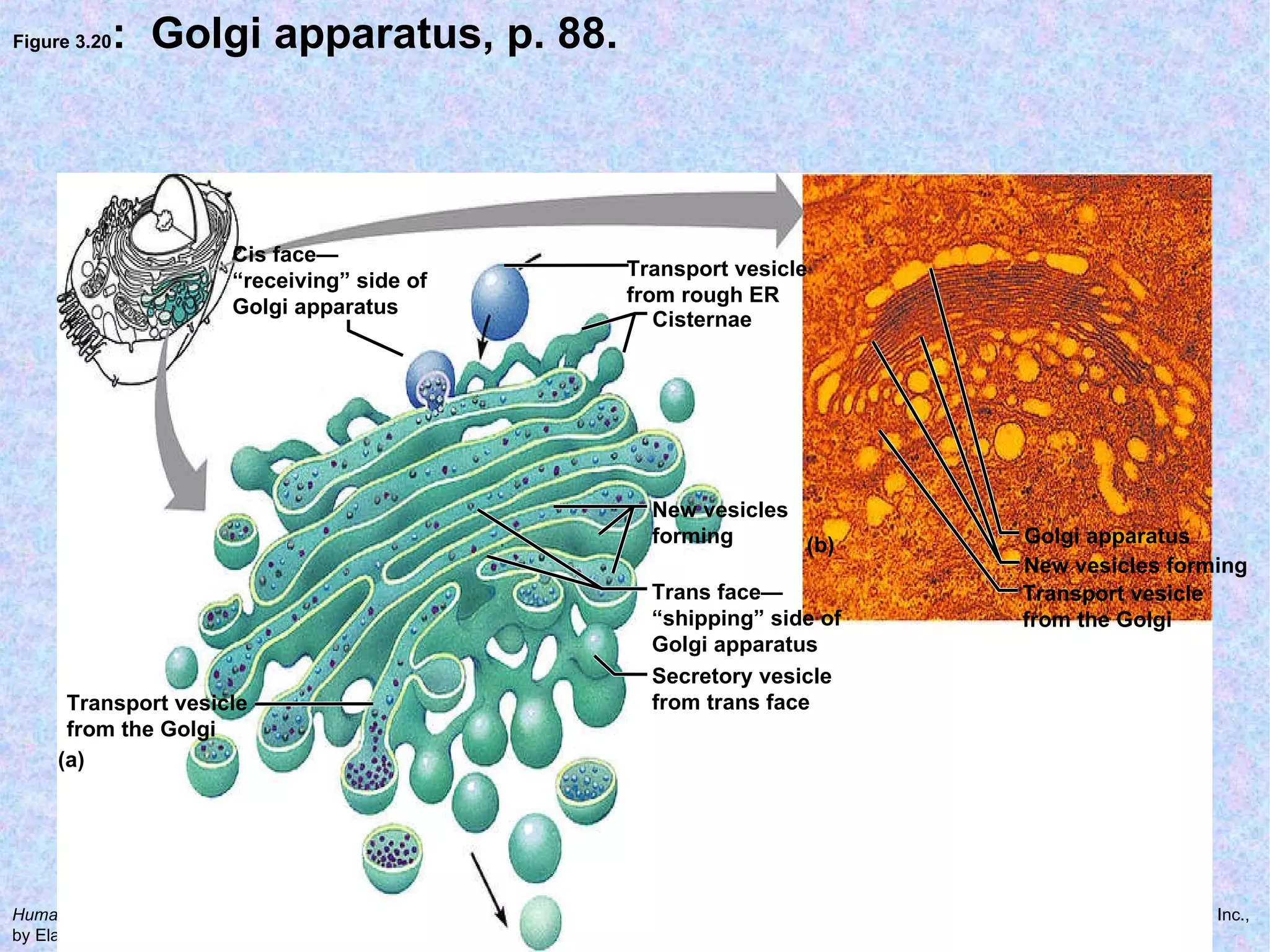
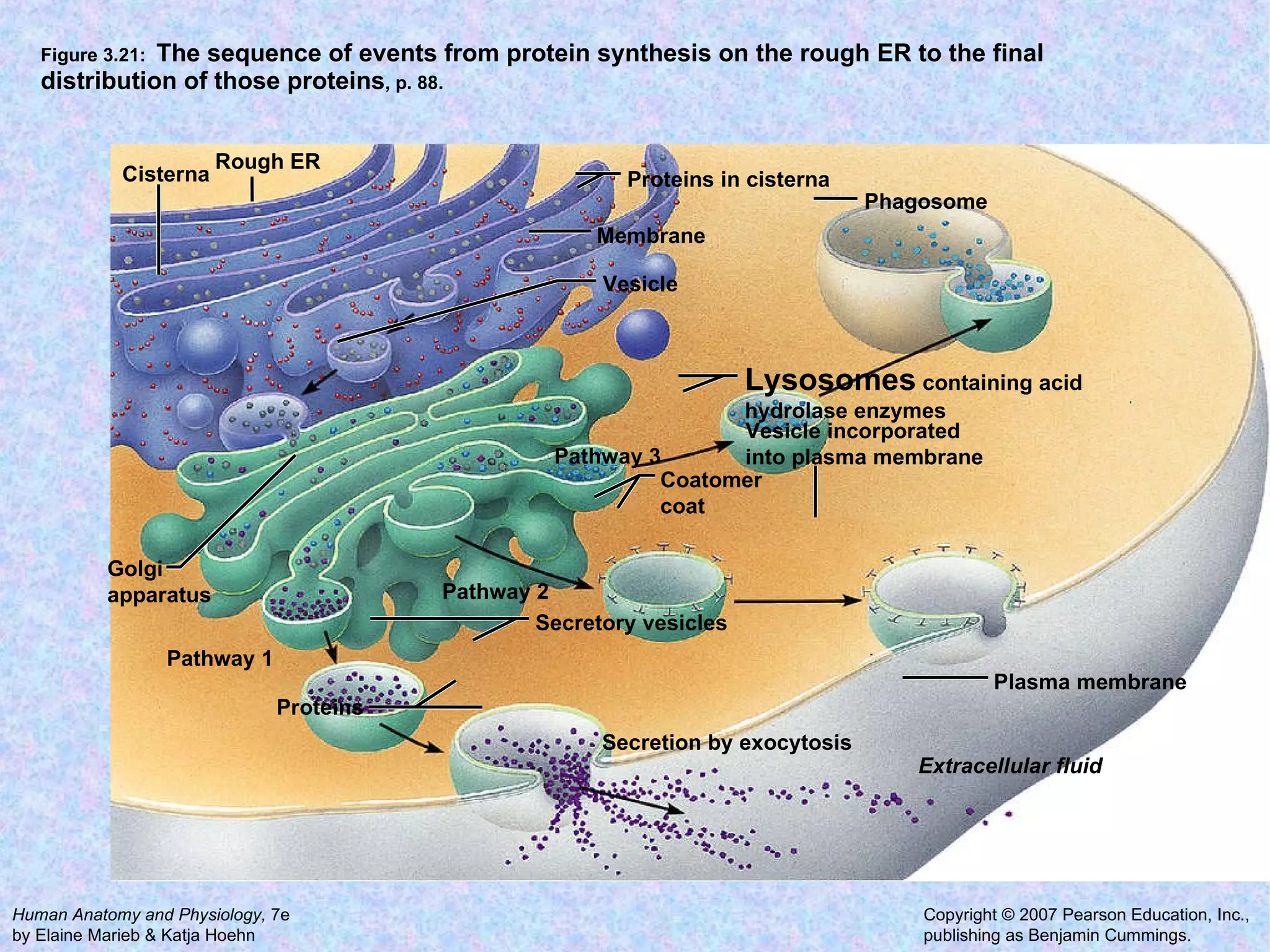
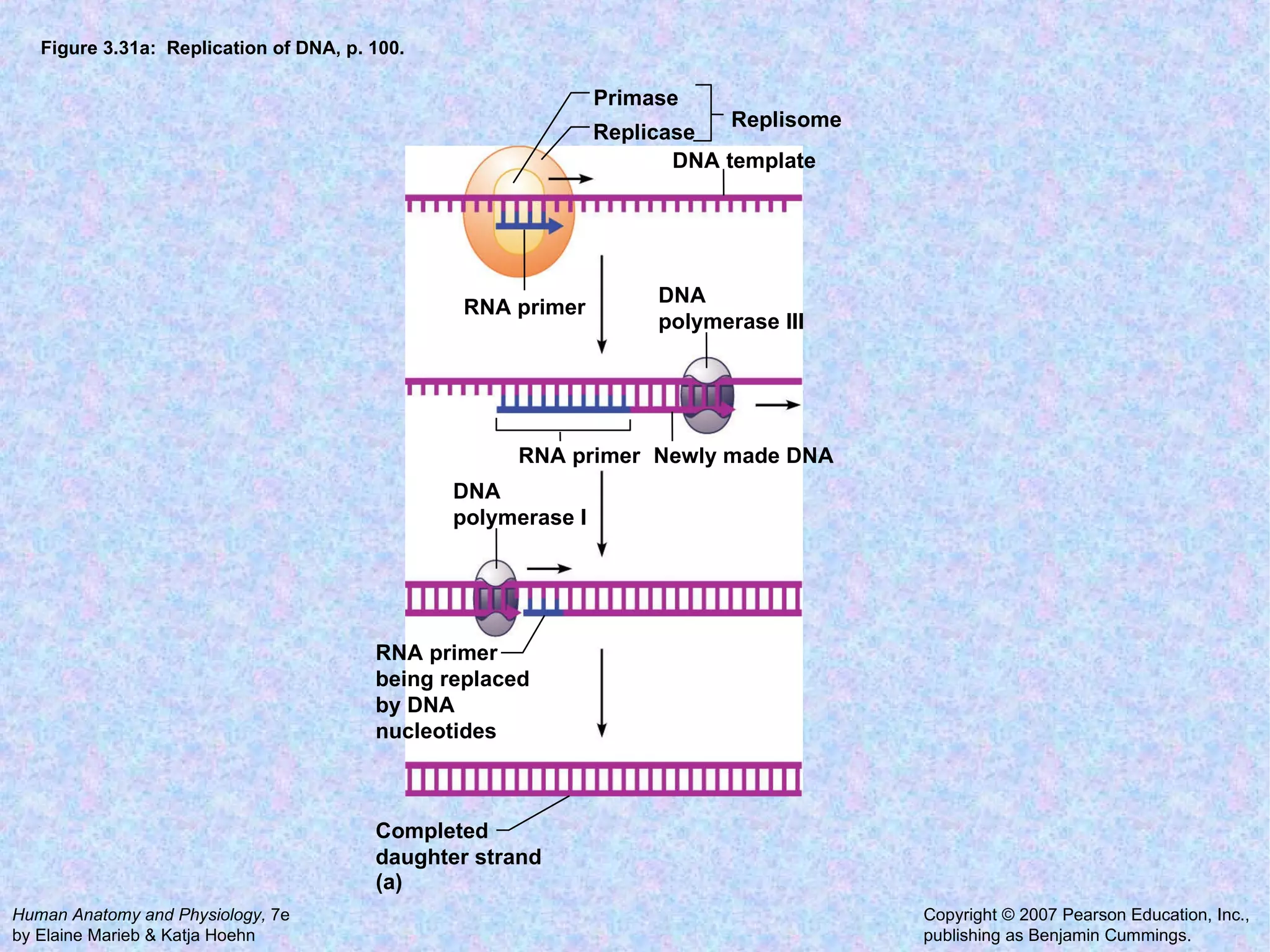
Figure 3.31a:  Replication of DNA, p. 100. Primase Replisome DNA template RNA primer RNA primer RNA primer being replaced by DNA nucleotides Completed daughter strand DNA polymerase III DNA polymerase I Newly made DNA Replicase (a)
Figure 3.32 :  The stages of mitosis, p. 102 . Interphase Early prophase Late prophase Centrioles (two pairs) Nucleolus Nuclear envelope Plasma membrane Condensed chromatin Early mitotic spindle Pair of centrioles Centromere Chromosome, consisting of two sister chromatids Aster Fragments of nuclear envelope Kinetochore microtubule Spindle pole Kinetochore Polar microtubules
Figure 3.32:  The stages of mitosis (continued), p. 103. Metaphase plate Nucleolus forming Nuclear envelope forming Contractile ring at cleavage furrow Spindle Daughter chromosomes Metaphase Anaphase Telophase and cytokinesis
Mitosis Describe the 4 stages of mitosis Compare and contrast Prophase and Telophase
Cancer cells Neoplasm – abnormal excessive proliferation of cells. 2 classes of neoplasm –  Benign and Malignant Benign neoplasm – grows slowly and it’s confined to one location Malignant neoplasm = CANCER – grows fast and aggressively; metastasizes to other organs Based on your understanding of the cell cycle, discuss ways you may design  cancer therapeutic drugs
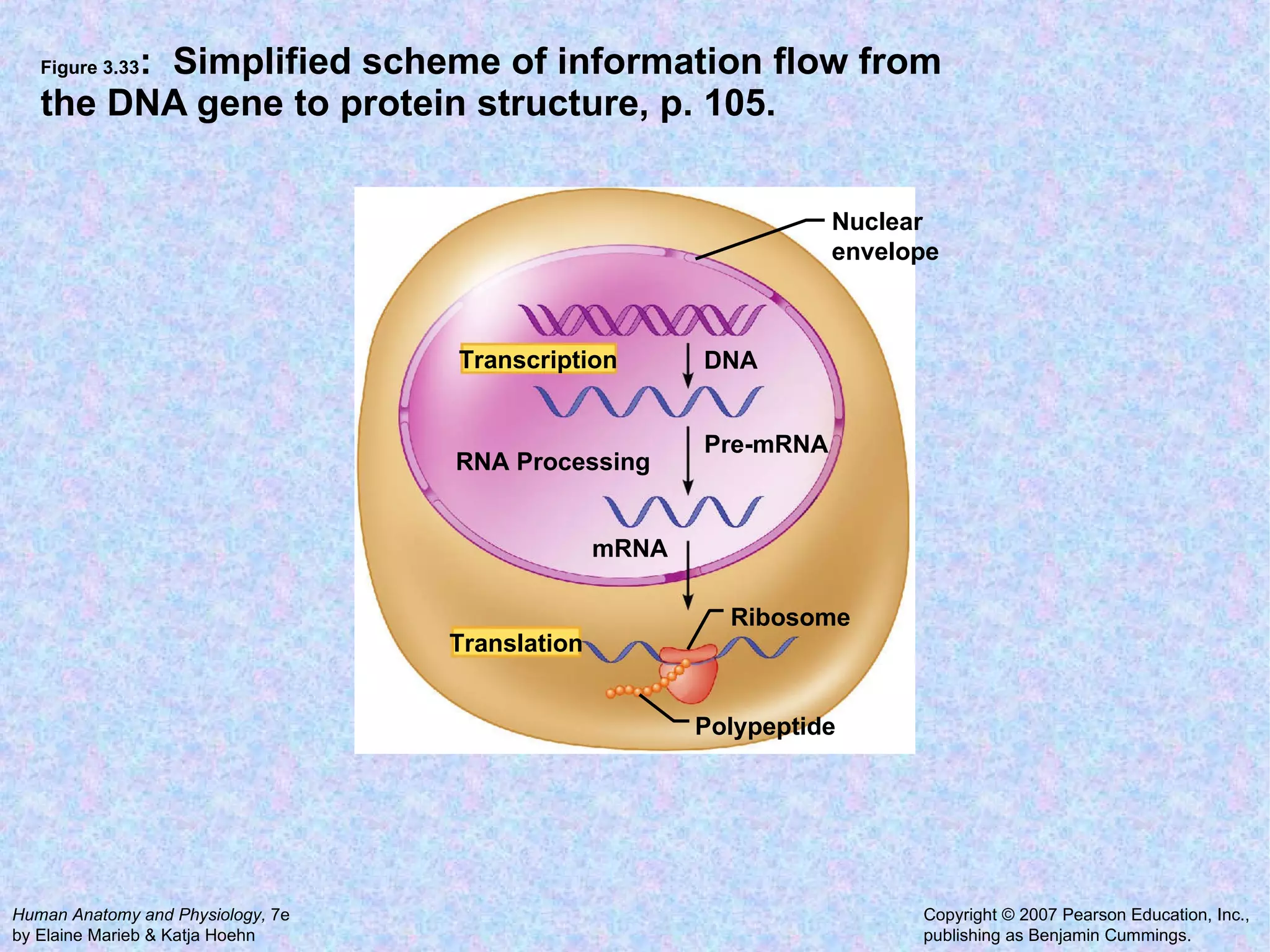
Figure 3.33 :  Simplified scheme of information flow from the DNA gene to protein structure, p. 105. Nuclear envelope  DNA Pre-mRNA mRNA Ribosome Polypeptide Translation RNA Processing Transcription
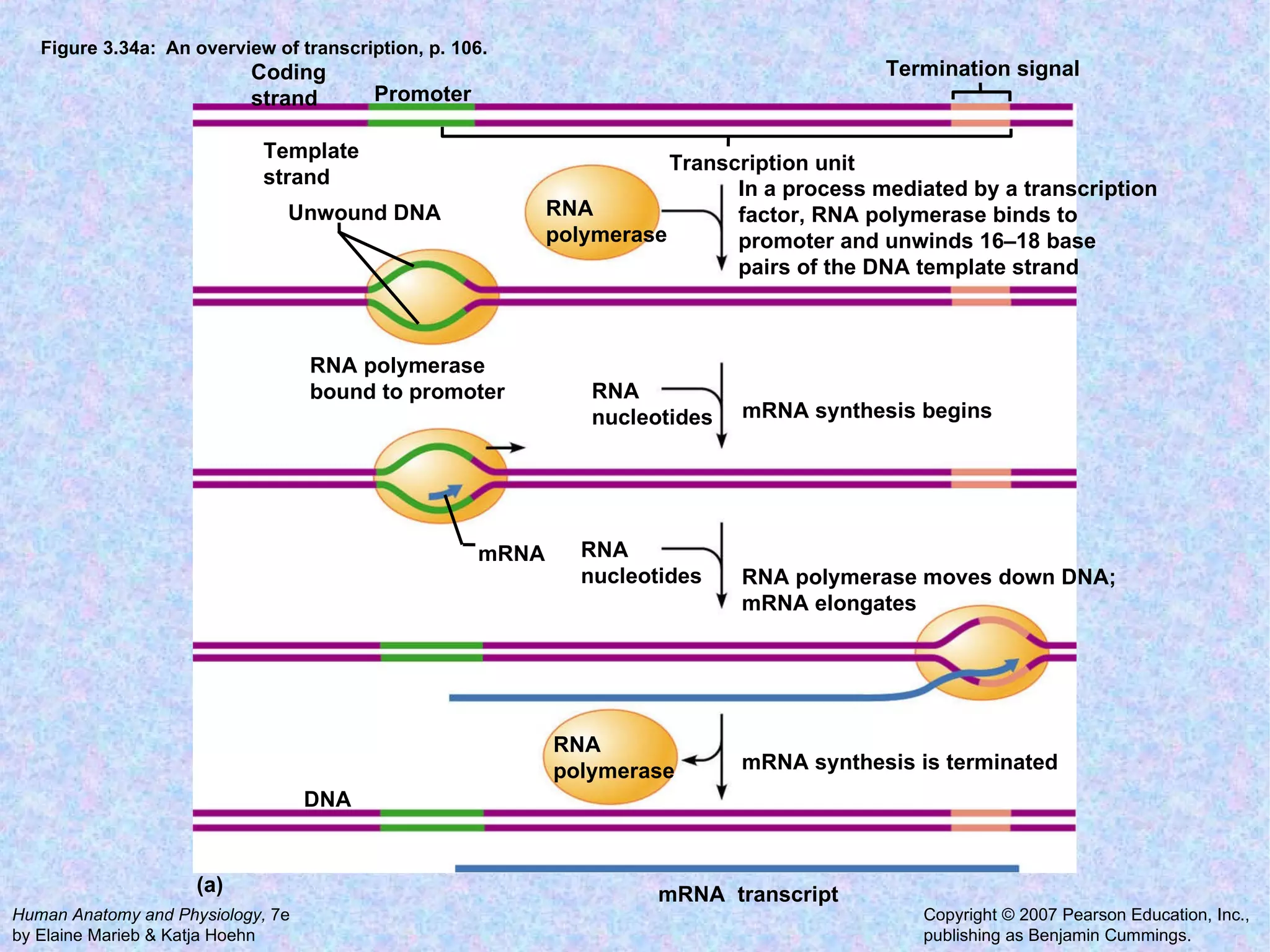
Figure 3.34a:  An overview of transcription, p. 106. Coding strand Template strand Promoter Termination signal Transcription unit In a process mediated by a transcription factor, RNA polymerase binds to promoter and unwinds 16–18 base pairs of the DNA template strand  RNA polymerase Unwound DNA RNA nucleotides RNA polymerase bound to promoter mRNA synthesis begins RNA polymerase moves down DNA; mRNA elongates RNA nucleotides mRNA synthesis is terminated RNA polymerase mRNA DNA mRNA  transcript (a)
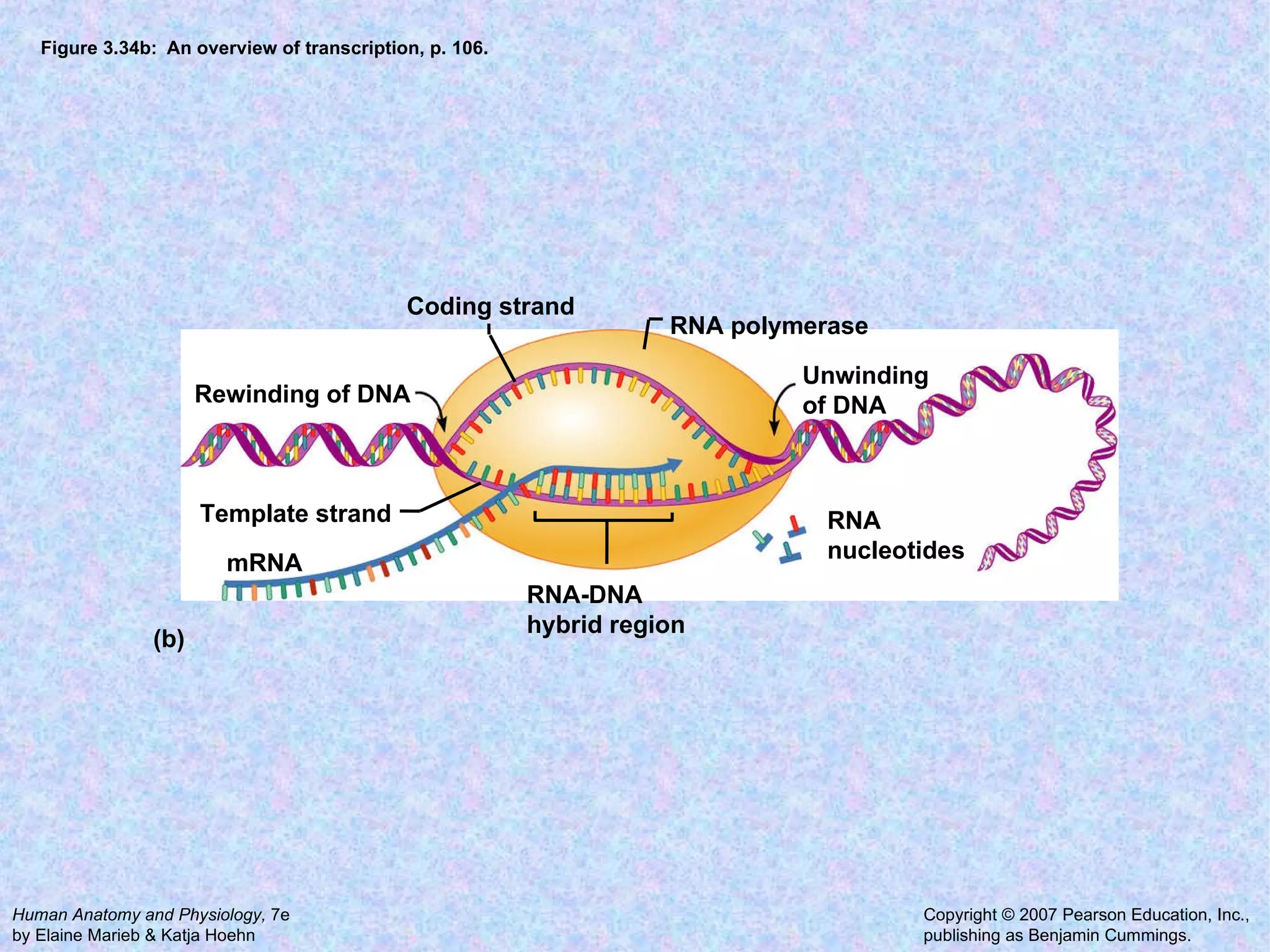
Figure 3.34b:  An overview of transcription, p. 106. RNA nucleotides RNA polymerase Unwinding of DNA Coding strand Rewinding of DNA mRNA RNA-DNA hybrid region Template strand (b)
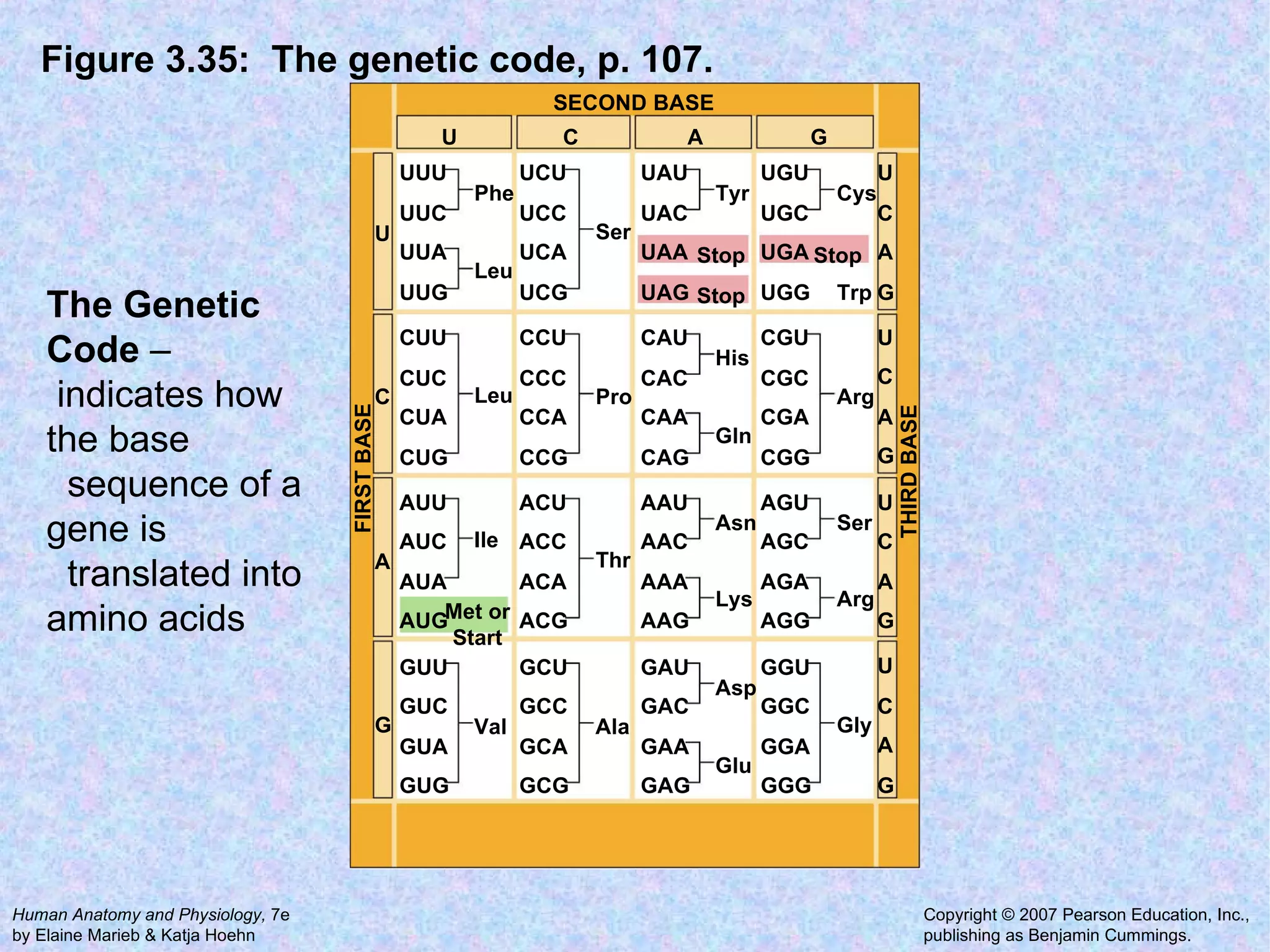
Figure 3.35:  The genetic code, p. 107. SECOND BASE UUG UUA UUC UUU Phe Leu CUG CUA CUC CUU Leu AUA AUC AUU Ile GUG GUA GUC GUU Val UCG UCA UCC UCU Ser CCG CCA CCC CCU Pro ACG ACA ACC ACU Thr GCG GCA GCC GCU Ala UAC UAU Tyr CAG CAA CAC CAU His Gln AAG AAA AAC AAU Asn Lys GAG GAA GAC GAU Asp Glu UGC UGU Cys Trp CGG CGA CGC CGU Arg AGG AGA AGC AGU Ser Arg GGG GGA GGC GGU Gly UAA Stop UGA Stop AUG Met or Start UAG Stop UGG U C A G G A C U G A C U G A C U G A C U U C A G THIRD BASE FIRST BASE The Genetic Code  – indicates how the base sequence of a gene is translated into amino acids
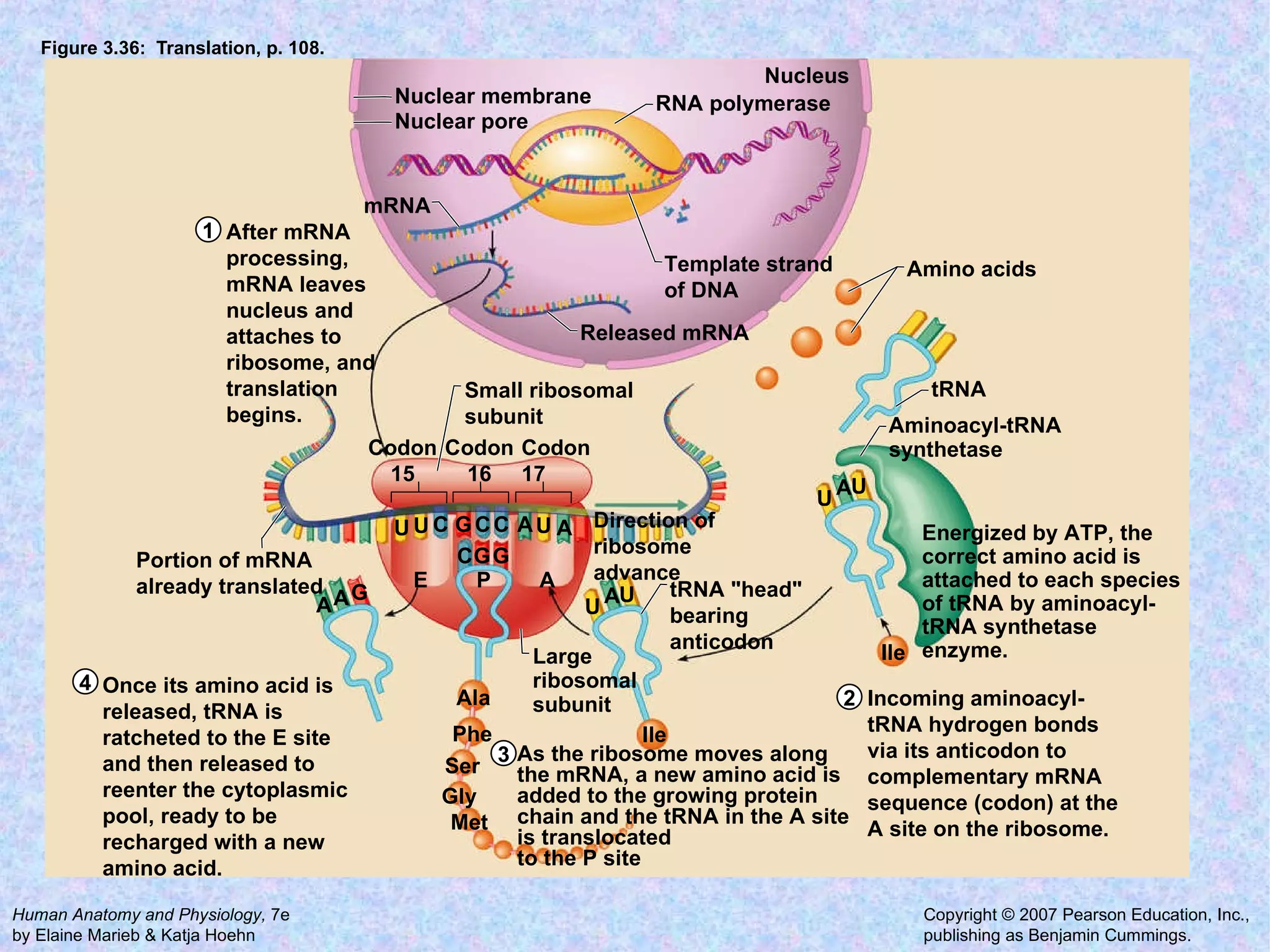
Figure 3.36:  Translation, p. 108. After mRNA  processing,  mRNA leaves  nucleus and  attaches to  ribosome, and  translation  begins. Amino acids tRNA Aminoacyl-tRNA synthetase tRNA "head"  bearing anticodon Large ribosomal subunit Small ribosomal subunit Released mRNA mRNA Template strand of DNA RNA polymerase Nuclear pore Nuclear membrane Portion of mRNA already translated Direction of ribosome advance Nucleus Once its amino acid is  released, tRNA is  ratcheted to the E site  and then released to  reenter the cytoplasmic  pool, ready to be  recharged with a new  amino acid. Incoming aminoacyl- tRNA hydrogen bonds  via its anticodon to  complementary mRNA  sequence (codon) at the  A site on the ribosome. Energized by ATP, the  correct amino acid is  attached to each species  of tRNA by aminoacyl- tRNA synthetase  enzyme. As the ribosome moves along  the mRNA, a new amino acid is  added to the growing protein  chain and the tRNA in the A site  is translocated  to the P site Codon 16 Codon 15 Codon 17 P C G G C C C A U U A U G E A Ile Ala Phe Ser Gly Met Ile A A G U A U U A U 1 4 3 2
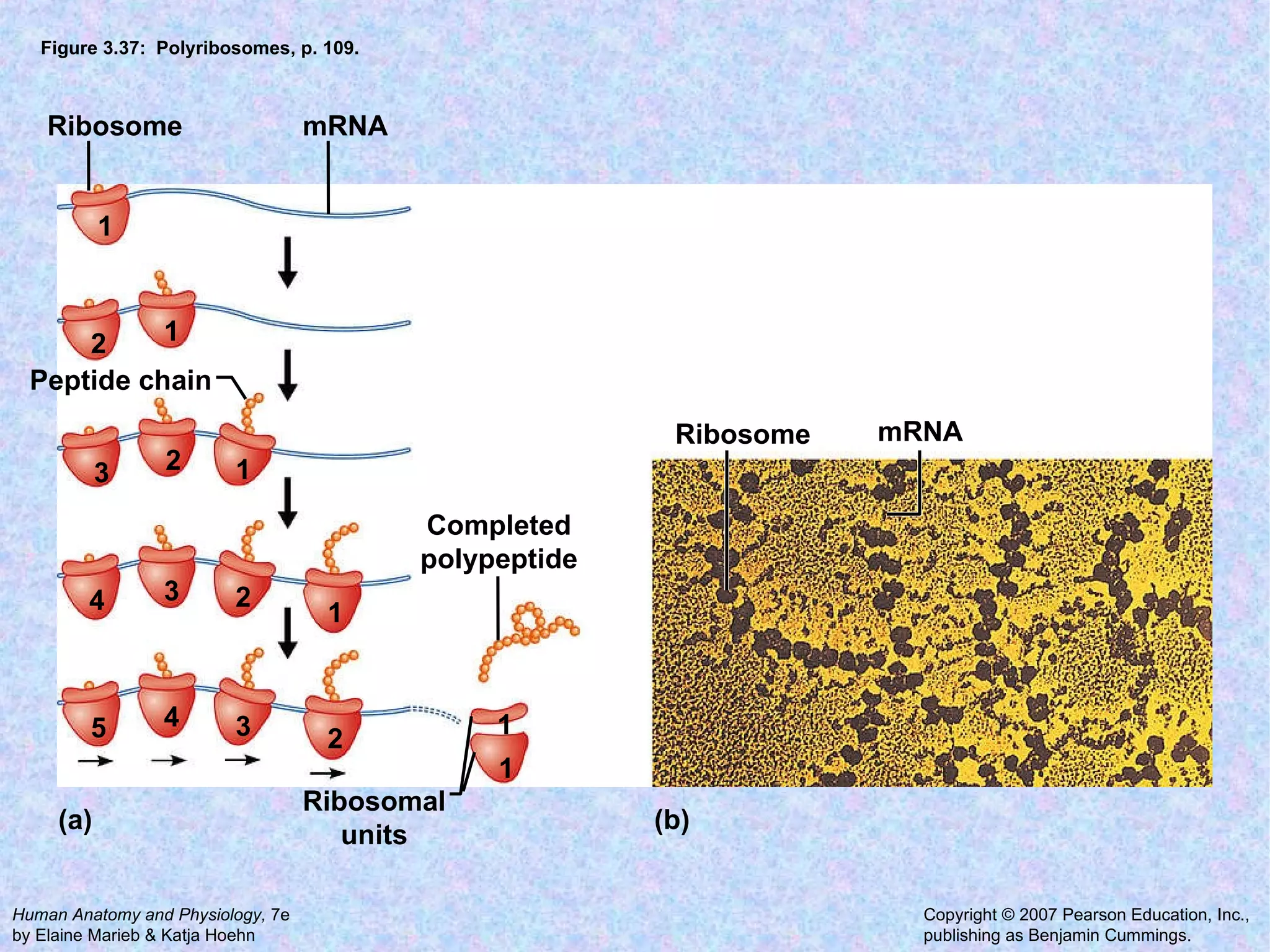
Figure 3.37:  Polyribosomes, p. 109. Ribosome Completed polypeptide Peptide chain Ribosomal units mRNA mRNA Ribosome 1 1 1 1 1 1 2 2 2 2 3 3 3 4 4 5 (a) (b)
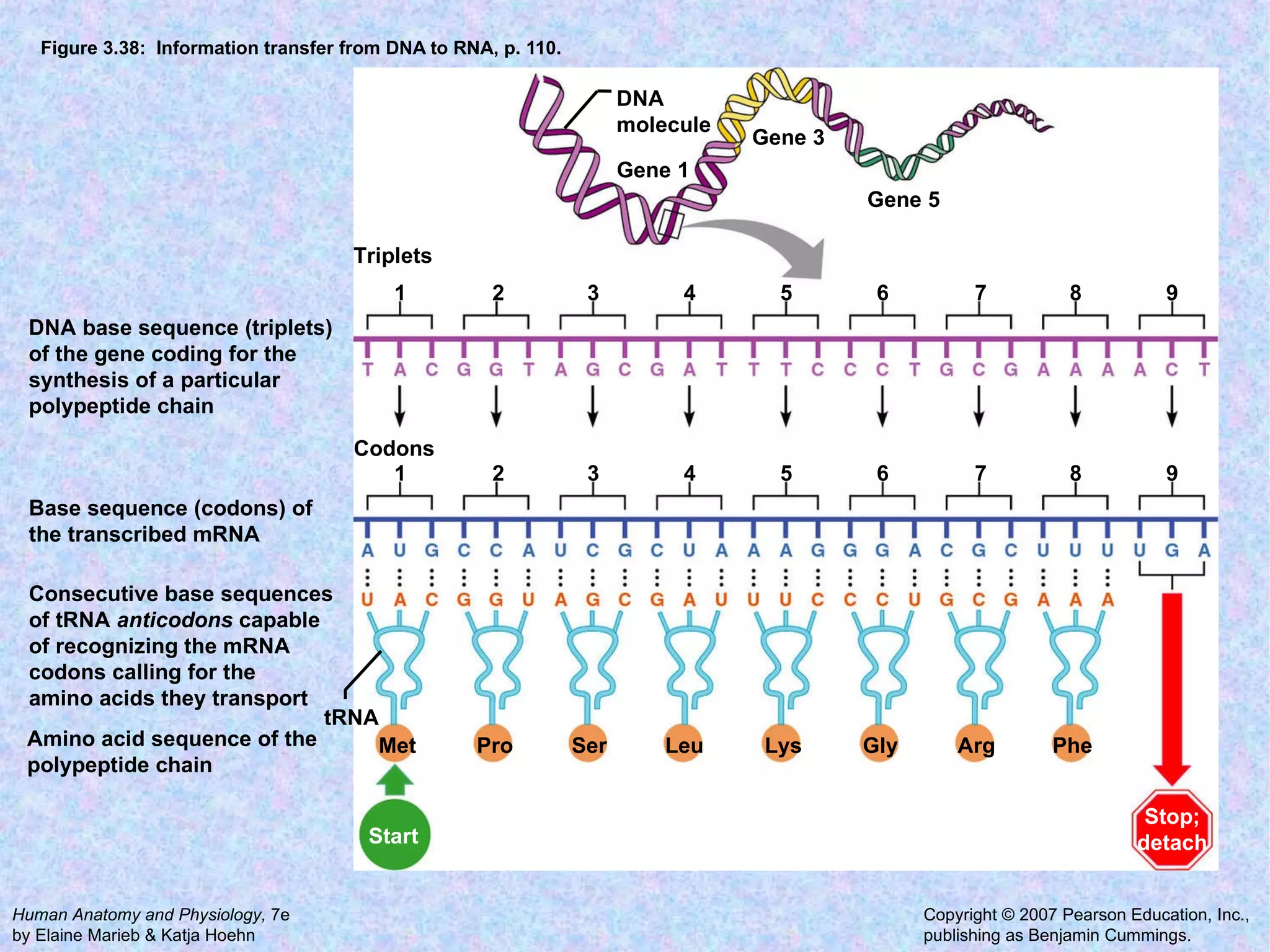
Figure 3.38:  Information transfer from DNA to RNA, p. 110. DNA molecule  Gene 1 Gene 3 Gene 5 DNA base sequence (triplets) of the gene coding for the synthesis of a particular polypeptide chain Base sequence (codons) of the transcribed mRNA Consecutive base sequences of tRNA  anticodons  capable of recognizing the mRNA codons calling for the amino acids they transport Amino acid sequence of the polypeptide chain 1 2 3 4 5 6 7 8 9 Codons Triplets tRNA 1 2 3 4 5 6 7 8 9 Start Stop; detach Met Pro Ser Leu Lys Gly Arg Phe

Lecture ce4

  • 1.
    Lecture 3 Cells:The Living Units
  • 2.
    THE CELL THEORYA cell is the basic structural and functional unit of all organisms According to the principle of complementarity of structure and function, the biochemical reactions occurring in a cell are dictated by the subcellular structures present in the cell Reproduction has a cellular basis
  • 3.
    Figure 3.1: Cell diversity , p. 65 .- different shapes and sizes Fibroblasts Erythrocytes Epithelial cells Macrophage Nerve cell Fat cell Sperm Skeletal muscle cell Smooth muscle cells (a) Cells that connect body parts, form linings, or transport gases (c) Cell that stores nutrients (b) Cells that move organs and body parts (d) Cell that fights disease (e) Cell that gathers information and controls body functions (f) Cell of reproduction
  • 4.
    3 MAIN PARTSOF A CELL Plasma membrane – defines the boundary of a cell Cytoplasm – the interior of the cell between the plasma membrane and the nucleus; contains the cytoplasmic organelles Nucleus – contains the genes which control activities of the cell
  • 5.
    Figure 3.2: Structure of the generalized cell, p. 66. Secretion being released from cell by exocytosis Peroxisome Ribosomes Rough endoplasmic reticulum Nucleus Nuclear envelope Chromatin Golgi apparatus Nucleolus Smooth endoplasmic reticulum Cytosol Lysosome Mitochondrion Centrioles Centrosome matrix Microtubule Microvilli Microfilament Intermediate filaments Plasma membrane
  • 6.
    Figure 3.3: Structure of the plasma membrane according to the fluid mosaic model, p. 67. Bimolecular lipid layer containing proteins Polar heads of phospholipid molecules Nonpolar tails of phospholipid molecules Filaments of cytoskeleton Cytoplasm (watery environment) Glycoprotein Cholesterol Outward-facing layer of phospholipids Inward-facing layer of phospholipids Extracellular fluid (watery environment) Glycolipid Peripheral protein Integral proteins Carbohydrate of glycocalyx
  • 7.
    The Plasma MembraneForms the boundary of a cell Thickness = 7-10nm; very thin Composed of 2 layers of phospholipids ( lipid bilayer) arranged tail to tail with the polar hydrophilic heads exposed to the aqueous extracellular fluid and the intracellular fluid Embedded in this lipid bilayer are Membrane Proteins, Cholesterol Lipid bilayer exhibits fluidity and the membrane proteins are in constant flux - their shapes constantly change as in a kaleidoscope or a mosaic pattern. Hence, the plasma membrane is said to be of the FLUID MOSAIC MODEL Cholesterol inserts between the phospholipids tails to stabilize the plasma membrane = “ cholesterol therefore maintains the integrity of the plasma membrane
  • 8.
    The Membrane ProteinsIntegral Proteins: span the plasma membrane exposed on one surface or both surfaces of the plasma membrane. Integral proteins exposed on both surfaces of the plasma membrane are called Transmembrane Proteins Peripheral Proteins: attached to integral proteins or the phospholipids’ heads on the cytoplasmic face of the plasma membrane
  • 9.
    Figure 3.4: Some functions of membrane proteins, p. 68. Transport (a) A protein that spans the membrane may provide a hydrophilic channel across the membrane that is selective for a particular solute. (b) Some transport proteins hydrolyze ATP as an energy source to actively pump substances across the membrane. Enzymatic activity A protein built into the membrane may be an enzyme with its active site exposed to substances in the adjacent solution. In some cases, several enzymes in a membrane act as a team that catalyzes sequential steps of a metabolic pathway as indicated (right to left) here. Receptors for signal transduction A membrane protein exposed to the outside of the cell may have a binding site with a specific shape that fits the shape of a chemical messenger, such as a hormone. The external signal may cause a conformational change in the protein that initiates a chain of chemical reactions in the cell. Intercellular joining Membrane proteins of adjacent cells may be hooked together in various kinds of intercellular junctions. Some membrane proteins (CAMs) of this group provide temporary binding sites that guide cell migration and other cell-to-cell interactions. Cell-cell recognition Some glycoproteins (proteins bonded to short chains of sugars) serve as identification tags that are specifically recognized by other cells. Attachment to the cytoskeleton and extracellular matrix (ECM) Elements of the cytoskeleton (cell’s internal supports) and the extracellular matrix (ECM) may be anchored to membrane proteins, which help maintain cell shape and fix the location of certain membrane proteins. Others play a role in cell movement or bind adjacent cells together. (a) (b) ATP
  • 10.
    Figure 3.5: Cell junctions, p. 70. Linker proteins Plaque Intermediate filament Intercellular space Intercellular space Interlocking junctional proteins Microvilli Tight junction Plasma membranes of adjacent cells Gap junction Underlying basement membrane Extracellular space between cells Desmosome Intercellular space Channel between cells (connexon) ( b) Desmosome (a) Tight junction (c) Gap junction
  • 11.
    Membrane Junctions TightJunction – fusion of integral proteins in plasma membrane of adjacent cells forming an “impermeable junction” Desmosome – linker proteins extending from plaques on the cytoplasmic surface of the plasma membrane of adjacent cells interdigitate to hold the cells together and prevent their separation; also known as “anchoring junction” Gap Junction – formed by hollow cylinder called connexons; it allows for the rapid transfer of ions between cells; also known as “communicating junction ”
  • 12.
    MEMBRANE TRANSPORT – the plasma membrane is a selective barrier 1. Passive processes – substances cross the plasma membrane without any energy input 2 main types: Diffusion and Filtration Diffusion – 3 subtypes: Simple diffusion Facilitated diffusion Osmosis Active processes – the cell provides energy required to move substances across the plasma membrane 2 main types: Active transport ( = “solute pumping”) and Vesicular transport Vesicular transport – Exocytosis and Endocytosis Exocytosis – movement of substances out of the cell Endocytosis – movement of substances into the cell Phagocytois Pinocytosis Receptor-mediated endocytosis
  • 13.
    Figure 3.7: Diffusion through the plasma membrane, p. 72. Extracellular fluid Cytoplasm Lipid- soluble solutes Lipid bilayer Lipid-insoluble solutes Water molecules Small lipid- insoluble solutes (a) Simple diffusion directly through the phospholipid bilayer (c) Channel-mediated facilitated diffusion through a channel protein; mostly ions selected on basis of size and charge (b) Carrier-mediated facilitated diffusion via protein carrier specific for one chemical; binding of substrate causes shape change in transport protein (d) Osmosis, diffusion through a specific channel protein (aquaporin) or through the lipid bilayer
  • 14.
    DIFFUSION Movement ofsubstances from area of higher concentration to area of lower concentration; substances move down their concentration gradient Simple diffusion – nonpolar/hydrophobic/lipid-soluble substances diffuse through the plasma membrane. Ex. Oxygen, carbon dioxide Facilitated diffusion – transport of large/polar substances mediated by carrier proteins embedded in the plasma membrane. Facilitated diffusion exhibits saturation, specificity Osmosis – movement of water from area of lower solute concentration to area of higher solute concentration through a semi-permeable membrane Water moves through specific channels called aquaporins
  • 15.
    Figure 3.8: Influence of membrane permeability on diffusion and osmosis, p. 73. Left compartment: Solution with lower osmolarity Membrane Solute molecules (sugar) Right compartment: Solution with greater osmolarity Both solutions have the same osmolarity: volume unchanged H 2 O Solute Left compartment Membrane Right compartment Both solutions have identical osmolarity, but volume of the solution on the right is greater because only water is free to move H 2 O (a) Membrane permeable to both solute molecules and water (b) Membrane impermeable to solute molecules, permeable to water
  • 16.
    Tonicity Movement ofwater in and out of cells can change the shape or tone of cells. Isotonic solution – concentration of solution inside and outside of the cells is the same; the same amount of water moves in/out of the cells/ shape of cells remain unchanged Hypertonic solution – cells placed in solution with a higher concentration than solution inside cells; water moves via osmosis from the cells; cell crenate ( shrink) Hypotonic solution – cells are placed in a solution with a lower concentration than solution inside cells; water moves via osmosis into the cells – cells swell and eventually burst
  • 17.
    Filtration A passiveprocess – no energy input Movement of solution from area of higher pressure to area of lower pressure; down a pressure gradient
  • 18.
    Active Processes Energy(ATP) is required for the movement of substances across the plasma membrane 2 types: Active transport and Vesicular transport Active transport – movement of solutes/ions from area of lower solute concentration to area of higher solute concentration (against a concentration gradient); mediated by carrier proteins. Active transport exhibits saturation and specificity. Ex. sodium./potassium pump ( Na+/K+ pump) Hence, active transport is also known as “Solute Pumping”
  • 19.
    Figure 3.10 : Operation of the sodium-potassium pump, an antiport pump (Na + –K + ATPase), p. 76. Cytoplasm Extracellular fluid K + is released and Na + sites are ready to bind Na + again; the cycle repeats. Cell ADP Phosphorylation causes the protein to change its shape. Concentration The shape change expels Na + to the outside, and extracellular K + binds. Loss of phosphate restores the original conformation of the pump protein. K + binding triggers release of the phosphate group. Binding of cytoplasmic Na + to the pump protein stimulates phosphorylation by ATP. Na + Na + Na + K + K + Na + Na + K + K + K + K + Na + Na + Na + ATP P P Na + Na + Na + K + K + P P i 1 2 3 4 5 6
  • 20.
    Active Process –Vesicular Transport 2 types – Exocytosis and Endocytosis Exocytosis – movement of substances enclosed in vesicles from the interior of cells to the exterior. Hormones, enzymes are secreted via exocytosis Endocytosis – movement of substances from the exterior of cells to the interior
  • 21.
    Figure 3.12: Exocytosis, p. 78. Extracellular fluid Cytoplasm Molecules to be secreted Vesicle SNARE Plasma membrane SNARE Secretory vesicle (a) (b) Movement of substances from the interior of the cell to its exterior
  • 22.
    Figure 3.13 : Clathrin-mediated endocytosis, p. 79. Endocytosis - Movement of substances from the exterior of the cell to its interior Recycling of membrane and receptors (if present) to plasma membrane Cytoplasm Extracellular fluid Extracellular fluid Plasma membrane Detachment of clathrin- coated vesicle Clathrin- coated vesicle Uncoating Uncoated vesicle Uncoated vesicle fusing with endosome To lysosome for digestion and release of contents Transcytosis Endosome Exocytosis of vesicle contents Clathrin- coated pit Plasma membrane Ingested substance Clathrin protein (a) Clathrin-mediated endocytosis
  • 23.
    Endocytosis Movement ofsubstances from the exterior of a cell into the cell’s interior. 3 types: i) Phagocytosis – movement of solid particles from the exterior into the cell; solid particles are enclosed in vesicles called PHAGOSOMES ; Lysosomes fuse with the phagosomes to digest the phagosomes and its contents. Cells that perform phagocytosis are called Phagocytes. ii) Pinocytosis – movement of solution into cells by enclosing the solution in vesicles iii) Receptor-mediated endocytosis – substances bind to specific receptors on the surface of the cell; clathrin appear where the substances are bound; coated pits form to transport substances into the cell. Receptor-mediated endocytosis exhibits saturation and specificity
  • 24.
    Figure 3.13 : Clathrin-mediated endocytosis, p. 79. Recycling of membrane and receptors (if present) to plasma membrane Cytoplasm Extracellular fluid Extracellular fluid Plasma membrane Detachment of clathrin- coated vesicle Clathrin- coated vesicle Uncoating Uncoated vesicle Uncoated vesicle fusing with endosome To lysosome for digestion and release of contents Transcytosis Endosome Exocytosis of vesicle contents Clathrin- coated pit Plasma membrane Ingested substance Clathrin protein (c ) Receptor-mediated endocytosis Extracellular fluid Cytoplasm Bacterium or other particle Pseudopod Clathrin protein (b ) Phagocytosis Clathrin protein Membrane receptor (a) Clathrin-mediated endocytosis 1 3 2 c) Pinocytosis – movement of solution into cells
  • 25.
    Transcytosis and Vesiculartrafficking Trancytosis : Movements of substances enclosed in caveolae into a cell, across the cell and released on the opposite side of the cell via exocytosis Vesicular Trafficking: Intracellular movement of substances in coatmer- coated vesicles from organelle to organelle with the cell
  • 26.
    Figure 3.15: The role of K + in generating the resting membrane potential, p. 82. Potassium leakage channel Protein anion Cytoplasm K + diffuse down their steep concentration gradient (out of the cell) via leakage channels. Loss of K + results in a negative charge on the inner plasma membrane face. A negative membrane potential is established when the movement of K + out of the cell equals K + movement into the cell. K + also move into the cell because they are attracted to the negative charge established on the inner plasma membrane face. + – – – – – – – – + + + + + + + Na + Na + K + K + K + K + K + K + K + K + K + K + K + K + A – A – K + K + K + Cl – Cl – 1 2
  • 27.
    The Resting MembranePotential (RMP) RMP of resting cells is between -50mV to -100mV RMP is established by the partial/selective permeability of the plasma membrane to potassium ion (K+) diffusion over sodium ion( Na+) diffusion. K+ concentration is higher inside the cell than outside the cell – K+ diffuses out of the cell down its electrochemical gradient Na+ concentration is higher outside of the cell than inside the cell – Na+ diffuses into the cell down its electrochemical gradient The plasma membrane is about 75 times more permeable to K+ than Na+ = more K+ diffuses out of cell than Na+ diffusing into the cell = more positive ions move out of the cell making the cytoplasmic surface of the plasma membrane negative compared to the extracellular surface
  • 28.
    THE CYTOPLASM Composedof cytosol, cytoplasmic organelles, and inclusions ( such as glycosomes, melanosomes ) Cytosol – the viscous, semitransparent fluid Cytoplasmic organelles- specialized subcellular compartments with specific functions i) Mitochondria = “power plants” ii) Ribosomes = sites of protein synthesis iii) Endoplasmic reticulum ( ER) Rough ER = “membrane factories” Smooth ER = lipid/drug metabolism iv) Golgi apparatus = “traffic director” of the cell v ) Lysosomes = “demolition crew” vi ) Peroxisomes = neutralize harmful free radicals vii ) Cytoskeleton
  • 29.
    2 Types ofcytoplasmic organelles Membranous cytoplasmic organelles: Mitochondria Endoplasmic Reticulum (ER) Golgi apparatus Lysosomes Peroxisomes Nonmembranous cytoplasmic organelles: Ribosomes Cytoskeleton
  • 30.
    Figure 3.17 : Mitochondrion, p. 85. Enzymes Matrix Cristae Mitochondrial DNA Ribosome Outer mitochondrial membrane Inner mitochondrial membrane (a) (b)
  • 31.
    Mitochondria Threadlikemembranous organelles - constantly changing their shapes Contain own DNA and are self-replicating organelles Composed of 2 membranes enclosing a fluid matrix 2 mitochondrial membranes are – outer and inner membranes The inner membrane consists of infoldings called cristae Resident enzymes of the cristae and the matrix breakdown food in the presence of oxygen ( = aerobic respiration) to release energy hence, mitochondria are referred to as the “POWER PLANTS” of a cell
  • 32.
    Ribosomes Each ribosomeis composed of 2 globular subunits – small ribosomal subunit and a large ribosomal subunit Each ribosomal subunit consists of protein and rRNA 2 types of ribosomes – Free and Bound Free ribosomes float freely in the cytosol and synthesize proteins that stay in the cell Bound ribosomes – bound to the surface of rough ER and synthesize proteins that are transported to the plasma membrane or for export out of the cell ( secreted)
  • 33.
    Figure 3.18: The endoplasmic reticulum (ER) and- ribosomes, p. 86. Nuclear envelope Ribosomes Rough ER Smooth ER Smooth ER Rough ER with bound ribosomes Large subunit Small subunit Functional ribosome + (a) (b) (c)
  • 34.
    Endoplasmic Reticulum -ER Composed of meandering membranous channels enclosing fluid-filled cavities called cisternae 2 Types of ER – Rough ER and Smooth ER Rough ER – external surface is studded with ribosomes ( Bound ribosomes) – these ribosomes synthesize the plasma protein and secretory proteins. Rough ER is therefore abundant in secretory cells such as liver cells Rough ER is referred to as the “ Membrane factory” because the synthesis of integral proteins (by ribosomes) and phospholipids in plasma membranes is associated with the rough ER
  • 35.
    Figure 3.19: The signal mechanism targets ribosomes to the ER for protein synthesis, p. 87. Cytosol Ribosomes mRNA Coatomer- coated transport vesicle Transport vesicle budding off Released glycoprotein ER cisterna ER membrane Signal- recognition particle (SRP) Signal sequence Receptor site Sugar group Signal sequence removed Growing polypeptide 1 2 3 4 5
  • 36.
    Smooth ER SmoothER Smooth ER is devoid of ribosomes = “smooth surface” Its membrane-bound enzymes catalyze: - Synthesis of fats , cholesterol and steroid hormones - Fat absorption, transport and metabolism - Glycogenolysis which results in energy production - Detoxification of drugs and carcinogens in liver and kidney cells
  • 37.
    Figure 3.20 : Golgi apparatus, p. 88. Cis face— “ receiving” side of Golgi apparatus Transport vesicle from the Golgi Transport vesicle from the Golgi Secretory vesicle from trans face Trans face— “ shipping” side of Golgi apparatus New vesicles forming New vesicles forming Cisternae Transport vesicle from rough ER Golgi apparatus (a) (b)
  • 38.
    Golgi Apparatus Composedof stacked /flattened membranous sacs Receives proteins and lipids from the rough ER Golgi modifies, packages and tags proteins and lipids to their specific destinations hence, the Golgi apparatus is referred to as the “Traffic director” of the cell 3 types vesicles produced by the Golgi: - secretory vesicles which contain proteins released via exocytosis - Vesicles that contain integral proteins and lipids destined for the plasma membrane to incorporated into the plasma membrane - Vesicles containing powerful digestive enzymes that remain in the cell = LYSOSOMES to digest phagosomes… more on next slides
  • 39.
    Figure 3.21: The sequence of events from protein synthesis on the rough ER to the final distribution of those proteins , p. 88. Secretion by exocytosis Extracellular fluid Plasma membrane Vesicle incorporated into plasma membrane Coatomer coat Lysosomes containing acid hydrolase enzymes Phagosome Proteins in cisterna Membrane Vesicle Pathway 3 Pathway 2 Secretory vesicles Proteins Pathway 1 Golgi apparatus Cisterna Rough ER
  • 40.
    Lysosomes - Golgi apparatus Lysosome Rough ER Tra Nucleus Spherical membranous organelles - contain powerful digestive enzymes that digest vesicles and biological molecules. Function: - Digest phagosomes hence, lysosomes are abundant in phagocytes - Digest worn-out organelles - Stimulate glycogenolysis - Involved in bone resorption to release calcium Hence, lysosomes are referred to as a cell’s “ demolition crew”
  • 41.
    Peroxisomes Peroxisome Membranoussacs that contain Powerful enzymes that neutralize harmful free radicals 2 kinds of enzymes in peroxisomes: Oxidases and Catalases Free radicals (harmful) + Oxidases --  Hydrogen peroxide ( harmful) Hydrogen peroxide + Catalase -  Water
  • 42.
    Cytoskeleton “ Cellskeleton” – consists of non membranous rod-like structures that support other cytoplasmic organelles and allow for movements 3 Types based on size and function: i ) Microtubules – largest diameter = 25nm wide ii ) Intermediate filaments – diameter between that of a microtubule and a microfilament = 10nm iii) Microfilaments – smallest diameter = 7nm
  • 43.
    Figure 3.24c: Cytoskeleton, p. 91. Tubulin subunits 25 nm ( Microtubule
  • 44.
    Microtubules Largest cytoskeleton– hollow tubes composed of the globular proteins called TUBULINS Radiate from the CENTROSOME which acts as a microtubule organizing center Function of Microtubules: Serve as “tracks” to transport intracellular substances - cytoplasmic organelles and secretory vesicles attached by motor molecules to microtubules for intracellular, vesicular trafficking
  • 45.
    Figure 3.25: Interaction of motor molecules (motor proteins) with cytoskeleton elements, p. 92. Receptor for motor molecule Microtubule of cytoskeleton Motor molecule (ATP powered) Organelle Cytoskeletal elements (microtubules or microfilaments) Motor molecule (ATP powered) (a) (b) ATP ATP
  • 46.
    Figure 3.26: Centrioles, p. 92. Centrosome matrix Centrioles Microtubules (a) (b) (c)
  • 47.
    Cilia and flagellaCentrosome ( microtubule-organizing center) contains a pair of CENTRIOLES at right angles to each other. Centrioles sprout spindle fibers ( mitotic spindles) required for cell division Centrioles form 2 types of cell extensions: CILIA and FLAGELLUM Cilia – cellular extensions that occur in large numbers on the apical ( exposed ) surface of cells Several cells in the body are ciliated Cilia beat to create a current that moves substances across the surface of the cells Flagellum – a single, longer cellular extension Flagellum beats to propel the cell it extends from The only flagellated cell in the human body is sperm
  • 48.
    Figure 3.27: Cilia structure and function, p. 93. Power stroke Layer of mucus Cell surface Recovery stroke Basal body (centriole) Plasma membrane Outer doublet microtubules Central microtubules Central microtubules Dynein arms Outer doublet microtubules Plasma membrane Cilium 1 2 3 5 4 6 7 (b) Ciliary motion (c) Movement of mucus across cell surfaces (a) Cilium
  • 49.
    Sperm – Flagellatedcell = flagellum
  • 50.
    Figure 3.24a-b: Cytoskeleton, p. 91. Actin subunit 7 nm Fibrous subunits 10 nm Microfilament ( Intermediate filament
  • 51.
    Intermediate Filaments Composedof tough, insoluble fibrous fibers Most stable type of cytoskeleton Provide tensile strength to cells by resisting pulling forces placed on the cells Given specific names in specific cell types: Tonofilaments in epidermal cells Neurofilaments in neurons
  • 52.
    Microfilaments Have thesmallest diameter Composed of the protein ACTIN The arrangement of microfilaments is unique to each cell Function: Involved in changes in cell shape or cell motility as in contraction Involved in the formation of cleavage furrow during cytokinesis Involved in the changes of the plasma membrane during endocytosis and exocytosis
  • 53.
    Figure 3.28 : The nucleus, p. 96. Condensed chromatin Nuclear envelope Nucleus Nucleolus Pores (a) Cisternae of rough ER
  • 54.
    The Nucleus Controlcenter of a cell A cell with one nucleus = Uninucleate A cell with many nuclei = Multinucleate A cell without a nucleus = Anucleate 3 main regions: Nuclear membrane Nucleolus Chromatin
  • 55.
    Figure 3.28: The nucleus, p. 96. Condensed chromatin Nuclear envelope Nucleus Surface of nuclear envelope. TEM prepared by freeze-fracture. A, inner membrane; B, outer membrane; NP, nuclear pore (pore complex); White arrows, fracture lines of outer membrane. Pore complexes (TEM). Each pore is ringed by protein particles. Nuclear lamina (TEM). The netlike lamina composed of intermediate filaments called lamins lines the inner surface of the nuclear envelope. Nucleolus Pores Cisternae of rough ER (a) (b)
  • 56.
    Nuclear Envelope = Nuclear Membrane Double-layered selective membrane with nuclear pores Nuclear pores allow molecules to enter /exit the nucleus – proteins translocate from the cytoplasm into the nucleus; RNA molecules move from the nucleus into the cytoplasm
  • 57.
    The Nucleolus NucleolusDark spherical non- membranous structure in the nucleus Synthesizes ribosomal RNA ( rRNA) required for assembling the 2 ribosomal subunits – small and large Ribosomes are sites for protein synthesis hence, nucleoli are prominent in cells producing large amounts of proteins
  • 58.
    Figure 3.29: Chromatin and chromosome structure, p. 98. Metaphase chromosome Supercoiled structure (200-nm diameter) Tight helical fiber (30-nm diameter) Chromatid (700-nm diameter) Nucleosome (10-nm diameter) Linker DNA Chromatid (“beads on a string” ) structure Histones DNA double helix (2-nm diameter) (a) (b) 1 2 3 5 4
  • 59.
    Chromatin Composed of DNA and the histone proteins Consists of structural units called NUCLEOSOMES Each nucleosome is composed of 8 globular histone proteins connected by the thread-like DNA DNA consists of structural units called NUCLEOTIDES DNA Histone proteins
  • 60.
    Nucleic Acids Structuralunits of nucleic acids are NUCLEOTIDES Each nucleotide is composed of – i) pentose sugar - deoxyribose or Ribose ii) Nitrogen-containing base - A,G, C, T, U iii) Phosphate group 2 Types of Nucleic Acids: Deoxyribonucleic Acids = DNA Ribonucleic Acids = RNA Compare DNA and RNA
  • 61.
    Figure 3.30: The cell cycle, p. 99 . G 1 Growth S Growth and DNA synthesis G 2 Growth and final preparations for division M G 2 checkpoint G 1 checkpoint Interphase Cytokinesis Mitosis Telophase Anaphase Metaphase Prophase Mitotic phase (M)
  • 62.
    The Cell CycleThe series of events a cell undergoes from the time it’s formed until it reproduces Consists of 2 major sequential periods: i) Interphase – protein synthesis, cell growth and DNA replication occur Consists of 3 sequential phases: G1, S, G2 ii ) Cell division – mitosis and cytokinesis occur Mitosis – Nuclear division: 4 sequential phases: Prophase, Metaphase, Anaphase, Telophase Cytokenesis – Cytoplasmic division
  • 63.
    Figure 3.31b : Replication of DNA , p. 100. Leading strand Replication fork DNA polymerase III DNA polymerase III Lagging strand Key: = Adenine = Thymine = Cytosine = Guanine New strand forming Old (template) strand Old (template) strand Newly made strand DNA of one chromatid SEMI-CONSERVATIVE REPLICATION : Each daughter DNA Consists of a an old strand and a newly- Synthesized strand
  • 64.
    Figure 3.31a: Replication of DNA, p. 100. Primase Replisome DNA template RNA primer RNA primer RNA primer being replaced by DNA nucleotides Completed daughter strand DNA polymerase III DNA polymerase I Newly made DNA Replicase (a)
  • 65.
    Figure 3.32 : The stages of mitosis, p. 102 . Interphase Early prophase Late prophase Centrioles (two pairs) Nucleolus Nuclear envelope Plasma membrane Condensed chromatin Early mitotic spindle Pair of centrioles Centromere Chromosome, consisting of two sister chromatids Aster Fragments of nuclear envelope Kinetochore microtubule Spindle pole Kinetochore Polar microtubules
  • 66.
    Figure 3.32: The stages of mitosis (continued), p. 103. Metaphase plate Nucleolus forming Nuclear envelope forming Contractile ring at cleavage furrow Spindle Daughter chromosomes Metaphase Anaphase Telophase and cytokinesis
  • 67.
    Mitosis Describe the4 stages of mitosis Compare and contrast Prophase and Telophase
  • 68.
    Cancer cells Neoplasm– abnormal excessive proliferation of cells. 2 classes of neoplasm – Benign and Malignant Benign neoplasm – grows slowly and it’s confined to one location Malignant neoplasm = CANCER – grows fast and aggressively; metastasizes to other organs Based on your understanding of the cell cycle, discuss ways you may design cancer therapeutic drugs
  • 69.
    Figure 3.33 : Simplified scheme of information flow from the DNA gene to protein structure, p. 105. Nuclear envelope DNA Pre-mRNA mRNA Ribosome Polypeptide Translation RNA Processing Transcription
  • 70.
    Figure 3.34a: An overview of transcription, p. 106. Coding strand Template strand Promoter Termination signal Transcription unit In a process mediated by a transcription factor, RNA polymerase binds to promoter and unwinds 16–18 base pairs of the DNA template strand RNA polymerase Unwound DNA RNA nucleotides RNA polymerase bound to promoter mRNA synthesis begins RNA polymerase moves down DNA; mRNA elongates RNA nucleotides mRNA synthesis is terminated RNA polymerase mRNA DNA mRNA transcript (a)
  • 71.
    Figure 3.34b: An overview of transcription, p. 106. RNA nucleotides RNA polymerase Unwinding of DNA Coding strand Rewinding of DNA mRNA RNA-DNA hybrid region Template strand (b)
  • 72.
    Figure 3.35: The genetic code, p. 107. SECOND BASE UUG UUA UUC UUU Phe Leu CUG CUA CUC CUU Leu AUA AUC AUU Ile GUG GUA GUC GUU Val UCG UCA UCC UCU Ser CCG CCA CCC CCU Pro ACG ACA ACC ACU Thr GCG GCA GCC GCU Ala UAC UAU Tyr CAG CAA CAC CAU His Gln AAG AAA AAC AAU Asn Lys GAG GAA GAC GAU Asp Glu UGC UGU Cys Trp CGG CGA CGC CGU Arg AGG AGA AGC AGU Ser Arg GGG GGA GGC GGU Gly UAA Stop UGA Stop AUG Met or Start UAG Stop UGG U C A G G A C U G A C U G A C U G A C U U C A G THIRD BASE FIRST BASE The Genetic Code – indicates how the base sequence of a gene is translated into amino acids
  • 73.
    Figure 3.36: Translation, p. 108. After mRNA processing, mRNA leaves nucleus and attaches to ribosome, and translation begins. Amino acids tRNA Aminoacyl-tRNA synthetase tRNA "head" bearing anticodon Large ribosomal subunit Small ribosomal subunit Released mRNA mRNA Template strand of DNA RNA polymerase Nuclear pore Nuclear membrane Portion of mRNA already translated Direction of ribosome advance Nucleus Once its amino acid is released, tRNA is ratcheted to the E site and then released to reenter the cytoplasmic pool, ready to be recharged with a new amino acid. Incoming aminoacyl- tRNA hydrogen bonds via its anticodon to complementary mRNA sequence (codon) at the A site on the ribosome. Energized by ATP, the correct amino acid is attached to each species of tRNA by aminoacyl- tRNA synthetase enzyme. As the ribosome moves along the mRNA, a new amino acid is added to the growing protein chain and the tRNA in the A site is translocated to the P site Codon 16 Codon 15 Codon 17 P C G G C C C A U U A U G E A Ile Ala Phe Ser Gly Met Ile A A G U A U U A U 1 4 3 2
  • 74.
    Figure 3.37: Polyribosomes, p. 109. Ribosome Completed polypeptide Peptide chain Ribosomal units mRNA mRNA Ribosome 1 1 1 1 1 1 2 2 2 2 3 3 3 4 4 5 (a) (b)
  • 75.
    Figure 3.38: Information transfer from DNA to RNA, p. 110. DNA molecule Gene 1 Gene 3 Gene 5 DNA base sequence (triplets) of the gene coding for the synthesis of a particular polypeptide chain Base sequence (codons) of the transcribed mRNA Consecutive base sequences of tRNA anticodons capable of recognizing the mRNA codons calling for the amino acids they transport Amino acid sequence of the polypeptide chain 1 2 3 4 5 6 7 8 9 Codons Triplets tRNA 1 2 3 4 5 6 7 8 9 Start Stop; detach Met Pro Ser Leu Lys Gly Arg Phe

Editor's Notes

  • #74 Translation occurs in cytoplasm 3-base sequence on tRNA called anticodon binds to a complementary codon in the mRNA covered by a ribosome; the tRNA is also attached by a specific amino acid the base sequence of an anticodon is the same as the base sequence of a triplet except thymine replaced by uracil in the anticodon
  • #76 Anticodon = original sequence