JERASH UNIVERSITY
FACULTY OF NURSING
2025-2026 ACADEMIC YEAR
FIRST SEMESTER
Lecturer:
Assistant Professor. Dr. Jawad Abu-Shennar
EMERGENCY & DISASTER NURSING – CLINICAL PRACTICE
OXYGEN THERAPY FOR
NURSES-PART (1)
Lecture- nine
Learning Outcomes
1. Outline the structure and function of the respiratory system.
2. Describe the processes of breathing (ventilation) and gas exchange
(respiration) and the role of respiratory system in gas exchange.
4. Identify factors influencing respiratory function.
5. Describe nursing assessments for oxygenation status.
6. Describe nursing measures to promote respiratory function and oxygenation.
7. Explain the use of therapeutic measures to promote respiratory function.
Functions of the Respiratory System
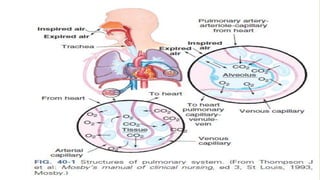
• The function of the respiratory system is gas exchange.
• Oxygen is required for cell functioning.
• Movement of oxygen and CO2 involves integration of several body
systems.
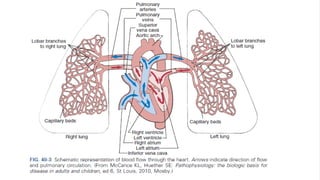
• Oxygen from inspired air diffuses from alveoli in lungs into blood
in pulmonary capillaries.
• Carbon dioxide produced during cell metabolism builds up in
tissues and diffuses from blood into the alveoli to be exhaled.
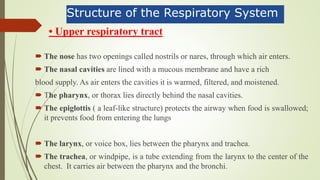
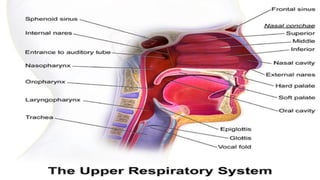
 The nose has two openings called nostrils or nares, through which air enters.
 The nasal cavities are lined with a mucous membrane and have a rich
blood supply. As air enters the cavities it is warmed, filtered, and moistened.
 The pharynx, or thorax lies directly behind the nasal cavities.
 The epiglottis ( a leaf-like structure) protects the airway when food is swallowed;
it prevents food from entering the lungs
 The larynx, or voice box, lies between the pharynx and trachea.
 The trachea, or windpipe, is a tube extending from the larynx to the center of the
chest. It carries air between the pharynx and the bronchi.
Structure of the Respiratory System
• Upper respiratory tract
7
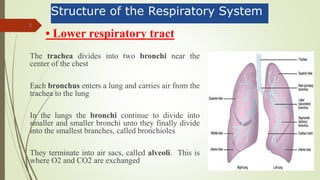
The trachea divides into two bronchi near the
center of the chest
Each bronchus enters a lung and carries air from the
trachea to the lung
In the lungs the bronchi continue to divide into
smaller and smaller bronchi unto they finally divide
into the smallest branches, called bronchioles
They terminate into air sacs, called alveoli. This is
where O2 and CO2 are exchanged
Structure of the Respiratory System
• Lower respiratory tract
Pulmonary Ventilation
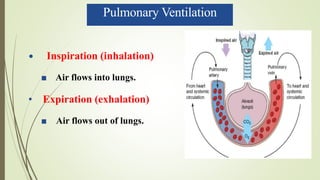
• Inspiration (inhalation)
■ Air flows into lungs.
• Expiration (exhalation)
■ Air flows out of lungs.
Pulmonary Ventilation
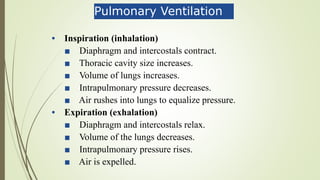
• Inspiration (inhalation)
■ Diaphragm and intercostals contract.
■ Thoracic cavity size increases.
■ Volume of lungs increases.
■ Intrapulmonary pressure decreases.
■ Air rushes into lungs to equalize pressure.
• Expiration (exhalation)
■ Diaphragm and intercostals relax.
■ Volume of the lungs decreases.
■ Intrapulmonary pressure rises.
■ Air is expelled.
Pulmonary Ventilation
• Ventilation depends on:
■ Clear airways (cilia)
■ Intact CNS and respiratory center
■ Ability of thorax to expand and contract
■ Lung compliance and lung recoil
 Compliance
• Expansibility or stretchability of lung tissue
 Recoil
• Continual tendency of lungs to collapse away from the chest wall
Factors affecting compliance & recoil:
• Intrapleural & intrapulmonary pressure, Tidal volume, Atelectasis,
Surfactant
Alveolar Gas Exchange
• Occurs after alveoli are ventilated.
• Pressure differences on each side of respiratory membranes affect diffusion.
■ Partial pressure
• Pressure exerted by each individual gas in a mixture according to its concentration in the
mixture
■ Torr- a unit of pressure based on an absolute scale
• Diffusion of oxygen from alveoli into pulmonary blood vessels on inspiration
• Diffusion of carbon dioxide from pulmonary blood vessels into alveoli for
expiration
Transport of Oxygen and Carbon Dioxide
• Oxygen
■ Transported from lungs to tissues
■ 97% of oxygen combines with hemoglobin in red
blood cells and is carried to tissues as
oxyhemoglobin.
■ Remaining oxygen is dissolved and transported in
plasma (as PaO2).
■ Rate of transport affected by:
• Cardiac output
• Erythrocytes (RBCs) and hematocrit
• Normal hematocrit 40-54% in men, 37-50% in women
• Exercise
Transport of Oxygen and Carbon Dioxide
• Carbon dioxide
■ Must be transported from tissues to lungs
■ Continually produced in process of cell metabolism
■ 65% is carried inside RBCs as bicarbonate.
■ 30% combines with hemoglobin as carbahemoglobin.
■ 5% transported in solution in plasma and as carbonic acid.
Respiratory Regulation
• Includes both neural and chemical controls to maintain correct concentrations
• Nervous system adjusts rate to maintain constant PO2 and PCO2.
• Respiratory center in medulla oblongata and pons of the brain:
■ Chemosensitive receptors in medulla oblongata respond to changes in blood and hydrogen ion
concentration.
■ Increased CO2 most strongly affects stimulation of respiration.
■ Neural receptors to O2 in carotid bodies stimulate respiratory center.
• In clients with emphysema, O2 concentration affects respiration more strongly (hypoxic drive)
because of constant buildup of CO2 in blood.
Factors Affecting Respiratory Function
• Age
■ Changes especially important if system compromised by infection, physical or emotional
stress, surgery, anesthesia, or other procedures.
■ Chest wall, airways more rigid and less elastic
■ Drier mucous membranes
■ Increased risk of aspiration from GERD (gastroesophageal reflux disease, or chronic acid
reflux)
• Environment- Altitude & Pollution
• Lifestyle- Physical activity, Occupation
• Health status- cardiac illnesses, trauma, musculoskeletal disorders, chronic
illnesses, etc.
• Medications- sedatives, antianxiety drugs
• Stress- Hyperventilation, Epinephrine
Assessing patients effectively
 WHEN YOU PERFORM a physical assessment, you’ll use four techniques:
inspection, palpation, percussion, and auscultation. Use them in sequence unless you’re
performing an abdominal assessment. Palpation and percussion can alter bowel sounds,
so you’d inspect, auscultate, percuss, then palpate an abdomen.
1. Inspection
 Inspect each body system using vision, smell, and hearing to assess normal conditions
and deviations. Assess
 for color, size, location, movement, texture, symmetry,
 odors, and sounds as you assess each body system.
Assessing patients effectively
2. Palpation
 Palpation requires you to touch the patient with different parts of your hands,
using varying degrees of pressure. Because your hands are your tools, keep your
fingernails short and your hands warm. Wear gloves when palpating mucous
membranes or areas in contact with body fluids. Palpate tender areas last.
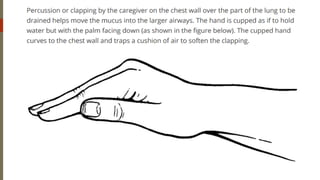
3. Percussion
 Percussion involves tapping your fingers or hands quickly and sharply against
parts of the patient’s body to help you locate organ borders, identify organ shape
and position, and determine if an organ is solid or filled with fluid or gas.
Assessing patients effectively
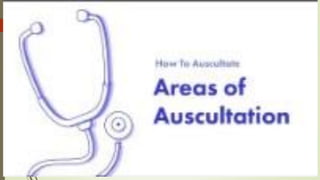
4. Auscultation
 Auscultation involves listening for various lung, heart, and bowel sounds with a stethoscope.
Getting ready
 Provide a quiet environment.
 Make sure the area to be auscultated is exposed (a gown or bed linens can interfere with sounds.)
 Warm the stethoscope head in your hand.
 Close your eyes to help focus your attention.
How to auscultate
 Use the diaphragm to pick up high-pitched sounds, such as first (S1) and second (S2) heart sounds.
Hold the diaphragm firmly against the patient’s skin, using enough pressure to leave a slight ring on
the skin afterward.
 Use the bell to pick up low-pitched sounds, such as third (S3) and fourth (S4) heart sounds. Hold the
bell lightly against the patient’s skin, just hard enough to form a seal. Holding the bell too firmly
causes the skin to act as a diaphragm, obliterating low-pitched sounds.
 Listen to and try to identify the characteristics of one sound at a time.
What will we evaluate in auscultation?
Respiratory Rate
Breathing Depth
Respiratory Rhythm
29
Photo by Andreas Hendrik
https://commons.wikimedia.org/wiki/File:Seifenblasen.jpg
Conditions Affecting Diffusion
30
Respiratory Definitions
Eupnea - normal breathing
Bradypnea - decreased breathing rate
Tachypnea – breathing very fast. Pt not always aware of it.
Apnea – not breathing at all
Hyperpnea - faster and/or deeper breathing
Hyperventilation - rapid breathing with hypocarbia
31
Hypoxemia and Hypoxia
Hypoxemia is a condition in which there is insufficient
oxygen in the blood.
Hypoxia is a condition in which there is insufficient oxygen
in the cells.
Patients who are immobile and those on bed rest are at risk.
Hypoventilation:
It occurs when alveolar ventilation is inadequate to meet the
oxygen demand of the body or eliminate sufficient carbon dioxide.
Breathing at an abnormally slow rate, resulting in an increased
amount of carbon dioxide in the blood.
 Hypoventilation- decreased rate & depth of respiration
Hyperventilation:
 It is a state of ventilation in which the lungs remove
carbondioxide faster than it is produced by celluler metaboism.
 Increased movement of air in and out of lungs. Such as
Kussmaul's breathing (deep & rapid) happens as a result of
metabolic acidosis
DyspneaDyspnea
36
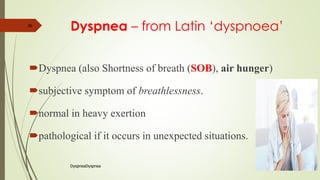
Dyspnea – from Latin ‘dyspnoea’
Dyspnea (also Shortness of breath (SOB), air hunger)
subjective symptom of breathlessness.
normal in heavy exertion
pathological if it occurs in unexpected situations.
37
What is NOT Dyspnea?
Not the O2 saturation of Hemoglobin
Not the total amount of O2 attached to Hemoglobin
Not the amount of O2 in solution in the blood (the PaO2)
Not the respiratory rate, (not all tachypnea is dyspnea)
But: a subjective sensation of air hunger.
Breath Sounds
 What are breath sounds?
 Breath sounds come from the lungs when you breathe in and out. These sounds can be heard
using a stethoscope or simply when breathing.
 Breath sounds can be normal or abnormal. Abnormal breath sounds can indicate a lung problem,
such as:
 obstruction
 inflammation
 infection
 fluid in the lungs
 asthma
 Listening to breath sounds is an important part of diagnosing many different medical conditions.
Breath Sounds
Types of breath sounds
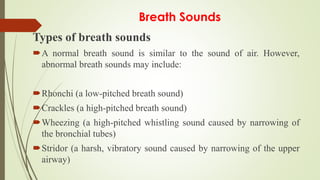
A normal breath sound is similar to the sound of air. However,
abnormal breath sounds may include:
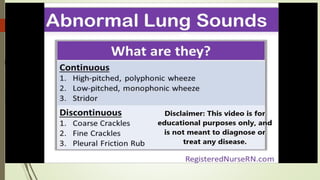
Rhonchi (a low-pitched breath sound)
Crackles (a high-pitched breath sound)
Wheezing (a high-pitched whistling sound caused by narrowing of
the bronchial tubes)
Stridor (a harsh, vibratory sound caused by narrowing of the upper
airway)
Abnormal Lung Sounds
42
Factors that Affect a Person’s O2 Needs
Red Blood Cells (RBC’s)
Aging
Fever
Pain
Patient’s airway and intact Nervous System
An early sign of risk for hypoxia is restlessness
43 Other high-risk conditions
Cardiac disease-CHF (congestive heart failure)
Pulmonary disease
Postoperative patients (for up to a week after surgery)
Sleep apnea
Decreased level of consciousness
Neuromuscular diseases
Morbid obesity
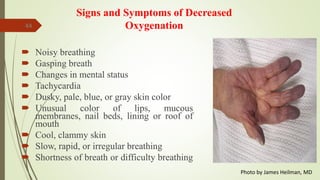
44
Signs and Symptoms of Decreased
Oxygenation
 Noisy breathing
 Gasping breath
 Changes in mental status
 Tachycardia
 Dusky, pale, blue, or gray skin color
 Unusual color of lips, mucous
membranes, nail beds, lining or roof of
mouth
 Cool, clammy skin
 Slow, rapid, or irregular breathing
 Shortness of breath or difficulty breathing
Photo by James Heilman, MD
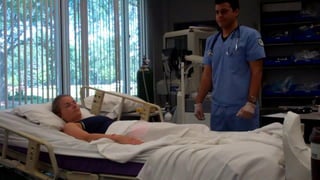
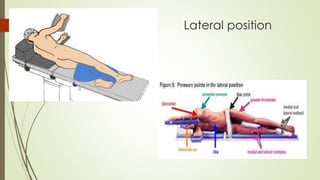
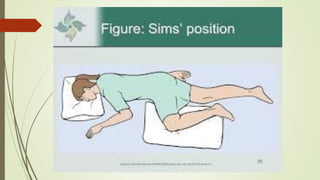
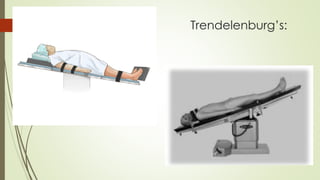
Postural drainage:
Postural drainage uses gravity to help move mucus from the
lungs up to the throat.
The person lies or sits in various positions so the part of the
lung to be drained is as high as possible.
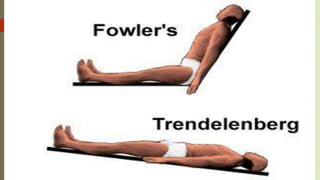
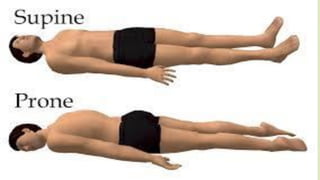
Common Positions of Patient for Postural Dranaige :
Lateral position
Trendelenburg’s:
Oxygen Therapy
Oxygen is necessary for life
colorless, odorless, tasteless gas
O2 in our atmosphere is at 21 %
The red blood cells give blood its red color, carry O2 to cells,
and take away the carbon dioxide (CO2)
Some diseases and conditions prevent enough oxygen from
feeding the body’s tissues
Oxygen is a prescription item and a physician’s order is
necessary to administer it
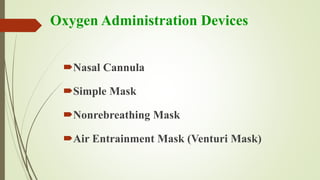
Oxygen Administration Devices
Nasal Cannula
Simple Mask
Nonrebreathing Mask
Air Entrainment Mask (Venturi Mask)
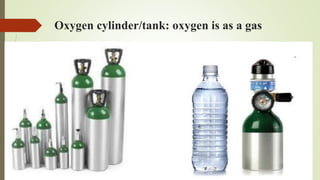
Oxygen cylinder/tank: oxygen is as a gas
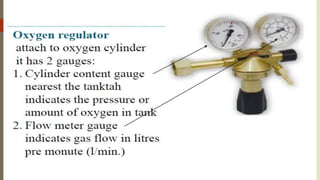
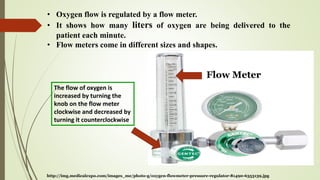
Flow Meter
http://img.medicalexpo.com/images_me/photo-g/oxygen-flowmeter-pressure-regulator-81490-6353139.jpg
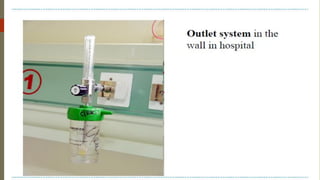
• Oxygen flow is regulated by a flow meter.
• It shows how many liters of oxygen are being delivered to the
patient each minute.
• Flow meters come in different sizes and shapes.
The flow of oxygen is
increased by turning the
knob on the flow meter
clockwise and decreased by
turning it counterclockwise
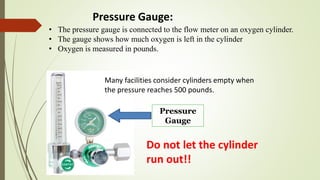
Pressure
Gauge
• The pressure gauge is connected to the flow meter on an oxygen cylinder.
• The gauge shows how much oxygen is left in the cylinder
• Oxygen is measured in pounds.
Do not let the cylinder
run out!!
Many facilities consider cylinders empty when
the pressure reaches 500 pounds.
Pressure Gauge:
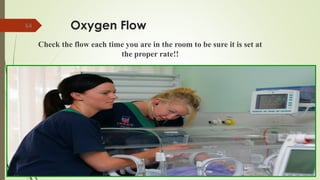
64 Oxygen Flow
Check the flow each time you are in the room to be sure it is set at
the proper rate!!
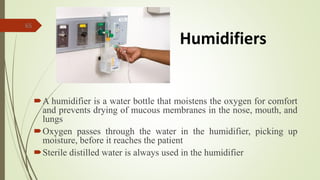
65
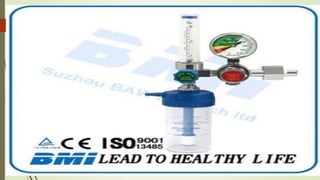
A humidifier is a water bottle that moistens the oxygen for comfort
and prevents drying of mucous membranes in the nose, mouth, and
lungs
Oxygen passes through the water in the humidifier, picking up
moisture, before it reaches the patient
Sterile distilled water is always used in the humidifier
Humidifiers
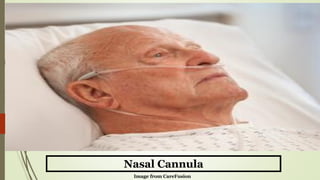
Image from CareFusion
Nasal Cannula
Nazal Canula:
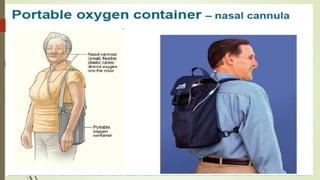
 Simple Nasal Cannula a small tube with two prongs that fit into the patient’s
nostrils
 Two sizes—pediatric and adult
 The prongs are slightly curved; make sure that the curves point inward when
you insert then into the nostrils
 Two types of straps—single strap positioned at the back of the patient’s head;
or thin plastic tubes that are placed over the ears and adjusted under the chin
 The disadvantage of this system is that it can be easily dislodged and causes
drying of the nasal mucosa.
Points to Consider in Oxygen Administration
with Nasal Cannula:
 The cannula should be placed properly in the patient's nose so that the oxygen
concentration does not decrease.
 The patient is encouraged to breathe through the nose.
 Prolonged oxygen delivery with nasal cannula irritates the respiratory tract mucosa, and
a humidifier should be added to flow meters to prevent this situation.
 The patient should be observed behind the ear for irritation, this area should be cleaned
and supported with a softening lotion.
 The nasal cannula method of oxygen administration should not be preferred in patients
who breathe through the mouth and have a blocked nose.
 Cannula tips can irritate the nostrils, so the nostrils should be checked and cleaned
frequently.
 A sterile nasal cannula should be used for each patient and should be changed when
visibly soiled.
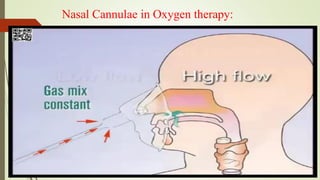
Nasal Cannulae in Oxygen therapy:
Complications:
Can irritate the skin on the cheeks and behind the ears
Higher concentrations dry nasal and oral mucous membranes
Rarely complications are perforation of nasal septum(long-term use)
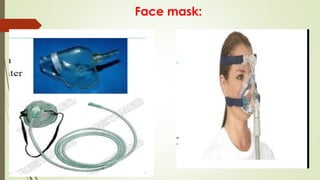
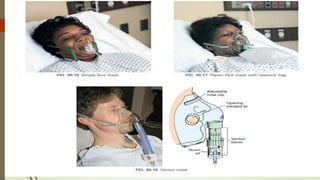
Face mask:
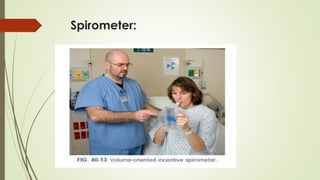
Spirometer:
Incentive spirometer:
Encourages voluntary deep breathing by providing
visual feedback to patients about inspiratory
volume.
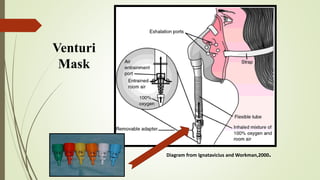
Venturi mask: for giving higher flow rate
Diagram from Ignatavicius and Workman,2000.
Venturi
Mask
http://brainly.co.id/tugas/133042
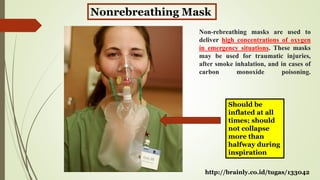
Nonrebreathing Mask
Should be
inflated at all
times; should
not collapse
more than
halfway during
inspiration
Non-rebreathing masks are used to
deliver high concentrations of oxygen
in emergency situations. These masks
may be used for traumatic injuries,
after smoke inhalation, and in cases of
carbon monoxide poisoning.
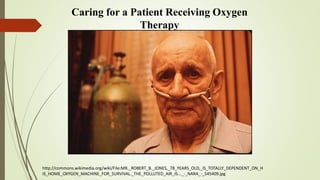
Caring for a Patient Receiving Oxygen
Therapy
http://commons.wikimedia.org/wiki/File:MR._ROBERT_B._JONES,_78_YEARS_OLD,_IS_TOTALLY_DEPENDENT_ON_H
IS_HOME_OXYGEN_MACHINE_FOR_SURVIVAL._THE_POLLUTED_AIR_IS..._-_NARA_-_545409.jpg
Complications of O2 Therapy
• Suppressed respiratory drive and low O2 tension
• Fire
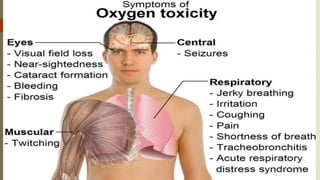
• Oxygen toxicity: O2 concentrations of greater than 50% for extended
periods of time (longer than 48 hours) can cause an overproduction of free
radicals, which can severely damage cells
■ Symptoms of Oxygen toxicity include substernal discomfort, paresthesias,
dyspnea, restlessness, fatigue, malaise, progressive respiratory
difficulty, refractory hypoxemia, alveolar atelectasis, and alveolar
infiltrates on x-ray.
Complications of O2 Therapy
• CO2 retention
■ When hypoxemia is corrected, hypoventilation occurs
leading to CO2 retention (CO2 narcosis)
• PaCO2 may increase severely to cause respiratory
acidosis, drowsiness and coma
• PaCO2 increase secondary to combination of:
• Abolition (ending) of hypoxic drive to breathe
• Increase in dead space
• Atelectasis:
■ High O2 displaces nitrogen that keeps the alveoli open. O2
is absorbed quickly into circulation
Caring for a Patient Receiving Oxygen Therapy
Elevate the head of the bed when the patient is receiving oxygen
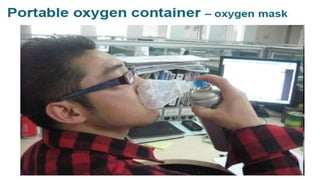
A patient wearing an oxygen mask cannot eat while wearing the
mask; the physician may order a cannula for meals
Being unable to breathe can be frightening; the patient may need
reassurance and emotional support. Check the patient frequently
and spend as much time as possible in the room
86
Nursing Care
 Carefully check the skin under the device for signs of redness or irritation
 Report any skin problems to the RN
 Because oxygen is drying, the patients receiving oxygen may need extra liquids to
drink
 They also need frequent care of the mouth and nose
 Some patients may feel warm and perspire heavily; extra bathing and linen changes
may be necessary
Lecture-9-OXYGEN THERAPY FOR NURSES-PART (1).pdf

Lecture-9-OXYGEN THERAPY FOR NURSES-PART (1).pdf

  • 1.
    JERASH UNIVERSITY FACULTY OFNURSING 2025-2026 ACADEMIC YEAR FIRST SEMESTER Lecturer: Assistant Professor. Dr. Jawad Abu-Shennar EMERGENCY & DISASTER NURSING – CLINICAL PRACTICE
  • 2.
  • 3.
    Learning Outcomes 1. Outlinethe structure and function of the respiratory system. 2. Describe the processes of breathing (ventilation) and gas exchange (respiration) and the role of respiratory system in gas exchange. 4. Identify factors influencing respiratory function. 5. Describe nursing assessments for oxygenation status. 6. Describe nursing measures to promote respiratory function and oxygenation. 7. Explain the use of therapeutic measures to promote respiratory function.
  • 4.
    Functions of theRespiratory System • The function of the respiratory system is gas exchange. • Oxygen is required for cell functioning. • Movement of oxygen and CO2 involves integration of several body systems. • Oxygen from inspired air diffuses from alveoli in lungs into blood in pulmonary capillaries. • Carbon dioxide produced during cell metabolism builds up in tissues and diffuses from blood into the alveoli to be exhaled.
  • 5.
     The nosehas two openings called nostrils or nares, through which air enters.  The nasal cavities are lined with a mucous membrane and have a rich blood supply. As air enters the cavities it is warmed, filtered, and moistened.  The pharynx, or thorax lies directly behind the nasal cavities.  The epiglottis ( a leaf-like structure) protects the airway when food is swallowed; it prevents food from entering the lungs  The larynx, or voice box, lies between the pharynx and trachea.  The trachea, or windpipe, is a tube extending from the larynx to the center of the chest. It carries air between the pharynx and the bronchi. Structure of the Respiratory System • Upper respiratory tract
  • 7.
    7 The trachea dividesinto two bronchi near the center of the chest Each bronchus enters a lung and carries air from the trachea to the lung In the lungs the bronchi continue to divide into smaller and smaller bronchi unto they finally divide into the smallest branches, called bronchioles They terminate into air sacs, called alveoli. This is where O2 and CO2 are exchanged Structure of the Respiratory System • Lower respiratory tract
  • 8.
    Pulmonary Ventilation • Inspiration(inhalation) ■ Air flows into lungs. • Expiration (exhalation) ■ Air flows out of lungs.
  • 12.
    Pulmonary Ventilation • Inspiration(inhalation) ■ Diaphragm and intercostals contract. ■ Thoracic cavity size increases. ■ Volume of lungs increases. ■ Intrapulmonary pressure decreases. ■ Air rushes into lungs to equalize pressure. • Expiration (exhalation) ■ Diaphragm and intercostals relax. ■ Volume of the lungs decreases. ■ Intrapulmonary pressure rises. ■ Air is expelled.
  • 13.
    Pulmonary Ventilation • Ventilationdepends on: ■ Clear airways (cilia) ■ Intact CNS and respiratory center ■ Ability of thorax to expand and contract ■ Lung compliance and lung recoil  Compliance • Expansibility or stretchability of lung tissue  Recoil • Continual tendency of lungs to collapse away from the chest wall Factors affecting compliance & recoil: • Intrapleural & intrapulmonary pressure, Tidal volume, Atelectasis, Surfactant
  • 14.
    Alveolar Gas Exchange •Occurs after alveoli are ventilated. • Pressure differences on each side of respiratory membranes affect diffusion. ■ Partial pressure • Pressure exerted by each individual gas in a mixture according to its concentration in the mixture ■ Torr- a unit of pressure based on an absolute scale • Diffusion of oxygen from alveoli into pulmonary blood vessels on inspiration • Diffusion of carbon dioxide from pulmonary blood vessels into alveoli for expiration
  • 15.
    Transport of Oxygenand Carbon Dioxide • Oxygen ■ Transported from lungs to tissues ■ 97% of oxygen combines with hemoglobin in red blood cells and is carried to tissues as oxyhemoglobin. ■ Remaining oxygen is dissolved and transported in plasma (as PaO2). ■ Rate of transport affected by: • Cardiac output • Erythrocytes (RBCs) and hematocrit • Normal hematocrit 40-54% in men, 37-50% in women • Exercise
  • 16.
    Transport of Oxygenand Carbon Dioxide • Carbon dioxide ■ Must be transported from tissues to lungs ■ Continually produced in process of cell metabolism ■ 65% is carried inside RBCs as bicarbonate. ■ 30% combines with hemoglobin as carbahemoglobin. ■ 5% transported in solution in plasma and as carbonic acid.
  • 17.
    Respiratory Regulation • Includesboth neural and chemical controls to maintain correct concentrations • Nervous system adjusts rate to maintain constant PO2 and PCO2. • Respiratory center in medulla oblongata and pons of the brain: ■ Chemosensitive receptors in medulla oblongata respond to changes in blood and hydrogen ion concentration. ■ Increased CO2 most strongly affects stimulation of respiration. ■ Neural receptors to O2 in carotid bodies stimulate respiratory center. • In clients with emphysema, O2 concentration affects respiration more strongly (hypoxic drive) because of constant buildup of CO2 in blood.
  • 18.
    Factors Affecting RespiratoryFunction • Age ■ Changes especially important if system compromised by infection, physical or emotional stress, surgery, anesthesia, or other procedures. ■ Chest wall, airways more rigid and less elastic ■ Drier mucous membranes ■ Increased risk of aspiration from GERD (gastroesophageal reflux disease, or chronic acid reflux) • Environment- Altitude & Pollution • Lifestyle- Physical activity, Occupation • Health status- cardiac illnesses, trauma, musculoskeletal disorders, chronic illnesses, etc. • Medications- sedatives, antianxiety drugs • Stress- Hyperventilation, Epinephrine
  • 19.
    Assessing patients effectively WHEN YOU PERFORM a physical assessment, you’ll use four techniques: inspection, palpation, percussion, and auscultation. Use them in sequence unless you’re performing an abdominal assessment. Palpation and percussion can alter bowel sounds, so you’d inspect, auscultate, percuss, then palpate an abdomen. 1. Inspection  Inspect each body system using vision, smell, and hearing to assess normal conditions and deviations. Assess  for color, size, location, movement, texture, symmetry,  odors, and sounds as you assess each body system.
  • 20.
    Assessing patients effectively 2.Palpation  Palpation requires you to touch the patient with different parts of your hands, using varying degrees of pressure. Because your hands are your tools, keep your fingernails short and your hands warm. Wear gloves when palpating mucous membranes or areas in contact with body fluids. Palpate tender areas last. 3. Percussion  Percussion involves tapping your fingers or hands quickly and sharply against parts of the patient’s body to help you locate organ borders, identify organ shape and position, and determine if an organ is solid or filled with fluid or gas.
  • 21.
    Assessing patients effectively 4.Auscultation  Auscultation involves listening for various lung, heart, and bowel sounds with a stethoscope. Getting ready  Provide a quiet environment.  Make sure the area to be auscultated is exposed (a gown or bed linens can interfere with sounds.)  Warm the stethoscope head in your hand.  Close your eyes to help focus your attention. How to auscultate  Use the diaphragm to pick up high-pitched sounds, such as first (S1) and second (S2) heart sounds. Hold the diaphragm firmly against the patient’s skin, using enough pressure to leave a slight ring on the skin afterward.  Use the bell to pick up low-pitched sounds, such as third (S3) and fourth (S4) heart sounds. Hold the bell lightly against the patient’s skin, just hard enough to form a seal. Holding the bell too firmly causes the skin to act as a diaphragm, obliterating low-pitched sounds.  Listen to and try to identify the characteristics of one sound at a time.
  • 26.
    What will weevaluate in auscultation? Respiratory Rate Breathing Depth Respiratory Rhythm
  • 29.
    29 Photo by AndreasHendrik https://commons.wikimedia.org/wiki/File:Seifenblasen.jpg Conditions Affecting Diffusion
  • 30.
    30 Respiratory Definitions Eupnea -normal breathing Bradypnea - decreased breathing rate Tachypnea – breathing very fast. Pt not always aware of it. Apnea – not breathing at all Hyperpnea - faster and/or deeper breathing Hyperventilation - rapid breathing with hypocarbia
  • 31.
    31 Hypoxemia and Hypoxia Hypoxemiais a condition in which there is insufficient oxygen in the blood. Hypoxia is a condition in which there is insufficient oxygen in the cells. Patients who are immobile and those on bed rest are at risk.
  • 32.
    Hypoventilation: It occurs whenalveolar ventilation is inadequate to meet the oxygen demand of the body or eliminate sufficient carbon dioxide. Breathing at an abnormally slow rate, resulting in an increased amount of carbon dioxide in the blood.  Hypoventilation- decreased rate & depth of respiration
  • 34.
    Hyperventilation:  It isa state of ventilation in which the lungs remove carbondioxide faster than it is produced by celluler metaboism.  Increased movement of air in and out of lungs. Such as Kussmaul's breathing (deep & rapid) happens as a result of metabolic acidosis
  • 36.
    DyspneaDyspnea 36 Dyspnea – fromLatin ‘dyspnoea’ Dyspnea (also Shortness of breath (SOB), air hunger) subjective symptom of breathlessness. normal in heavy exertion pathological if it occurs in unexpected situations.
  • 37.
    37 What is NOTDyspnea? Not the O2 saturation of Hemoglobin Not the total amount of O2 attached to Hemoglobin Not the amount of O2 in solution in the blood (the PaO2) Not the respiratory rate, (not all tachypnea is dyspnea) But: a subjective sensation of air hunger.
  • 38.
    Breath Sounds  Whatare breath sounds?  Breath sounds come from the lungs when you breathe in and out. These sounds can be heard using a stethoscope or simply when breathing.  Breath sounds can be normal or abnormal. Abnormal breath sounds can indicate a lung problem, such as:  obstruction  inflammation  infection  fluid in the lungs  asthma  Listening to breath sounds is an important part of diagnosing many different medical conditions.
  • 39.
    Breath Sounds Types ofbreath sounds A normal breath sound is similar to the sound of air. However, abnormal breath sounds may include: Rhonchi (a low-pitched breath sound) Crackles (a high-pitched breath sound) Wheezing (a high-pitched whistling sound caused by narrowing of the bronchial tubes) Stridor (a harsh, vibratory sound caused by narrowing of the upper airway)
  • 40.
  • 42.
    42 Factors that Affecta Person’s O2 Needs Red Blood Cells (RBC’s) Aging Fever Pain Patient’s airway and intact Nervous System An early sign of risk for hypoxia is restlessness
  • 43.
    43 Other high-riskconditions Cardiac disease-CHF (congestive heart failure) Pulmonary disease Postoperative patients (for up to a week after surgery) Sleep apnea Decreased level of consciousness Neuromuscular diseases Morbid obesity
  • 44.
    44 Signs and Symptomsof Decreased Oxygenation  Noisy breathing  Gasping breath  Changes in mental status  Tachycardia  Dusky, pale, blue, or gray skin color  Unusual color of lips, mucous membranes, nail beds, lining or roof of mouth  Cool, clammy skin  Slow, rapid, or irregular breathing  Shortness of breath or difficulty breathing Photo by James Heilman, MD
  • 46.
    Postural drainage: Postural drainageuses gravity to help move mucus from the lungs up to the throat. The person lies or sits in various positions so the part of the lung to be drained is as high as possible.
  • 49.
    Common Positions ofPatient for Postural Dranaige :
  • 52.
  • 54.
  • 55.
    Oxygen Therapy Oxygen isnecessary for life colorless, odorless, tasteless gas O2 in our atmosphere is at 21 % The red blood cells give blood its red color, carry O2 to cells, and take away the carbon dioxide (CO2) Some diseases and conditions prevent enough oxygen from feeding the body’s tissues Oxygen is a prescription item and a physician’s order is necessary to administer it
  • 56.
    Oxygen Administration Devices NasalCannula Simple Mask Nonrebreathing Mask Air Entrainment Mask (Venturi Mask)
  • 57.
  • 62.
    Flow Meter http://img.medicalexpo.com/images_me/photo-g/oxygen-flowmeter-pressure-regulator-81490-6353139.jpg • Oxygenflow is regulated by a flow meter. • It shows how many liters of oxygen are being delivered to the patient each minute. • Flow meters come in different sizes and shapes. The flow of oxygen is increased by turning the knob on the flow meter clockwise and decreased by turning it counterclockwise
  • 63.
    Pressure Gauge • The pressuregauge is connected to the flow meter on an oxygen cylinder. • The gauge shows how much oxygen is left in the cylinder • Oxygen is measured in pounds. Do not let the cylinder run out!! Many facilities consider cylinders empty when the pressure reaches 500 pounds. Pressure Gauge:
  • 64.
    64 Oxygen Flow Checkthe flow each time you are in the room to be sure it is set at the proper rate!!
  • 65.
    65 A humidifier isa water bottle that moistens the oxygen for comfort and prevents drying of mucous membranes in the nose, mouth, and lungs Oxygen passes through the water in the humidifier, picking up moisture, before it reaches the patient Sterile distilled water is always used in the humidifier Humidifiers
  • 68.
  • 69.
    Nazal Canula:  SimpleNasal Cannula a small tube with two prongs that fit into the patient’s nostrils  Two sizes—pediatric and adult  The prongs are slightly curved; make sure that the curves point inward when you insert then into the nostrils  Two types of straps—single strap positioned at the back of the patient’s head; or thin plastic tubes that are placed over the ears and adjusted under the chin  The disadvantage of this system is that it can be easily dislodged and causes drying of the nasal mucosa.
  • 70.
    Points to Considerin Oxygen Administration with Nasal Cannula:  The cannula should be placed properly in the patient's nose so that the oxygen concentration does not decrease.  The patient is encouraged to breathe through the nose.  Prolonged oxygen delivery with nasal cannula irritates the respiratory tract mucosa, and a humidifier should be added to flow meters to prevent this situation.  The patient should be observed behind the ear for irritation, this area should be cleaned and supported with a softening lotion.  The nasal cannula method of oxygen administration should not be preferred in patients who breathe through the mouth and have a blocked nose.  Cannula tips can irritate the nostrils, so the nostrils should be checked and cleaned frequently.  A sterile nasal cannula should be used for each patient and should be changed when visibly soiled.
  • 71.
    Nasal Cannulae inOxygen therapy:
  • 73.
    Complications: Can irritate theskin on the cheeks and behind the ears Higher concentrations dry nasal and oral mucous membranes Rarely complications are perforation of nasal septum(long-term use)
  • 74.
  • 76.
  • 77.
    Incentive spirometer: Encourages voluntarydeep breathing by providing visual feedback to patients about inspiratory volume.
  • 78.
    Venturi mask: forgiving higher flow rate
  • 79.
    Diagram from Ignataviciusand Workman,2000. Venturi Mask
  • 80.
    http://brainly.co.id/tugas/133042 Nonrebreathing Mask Should be inflatedat all times; should not collapse more than halfway during inspiration Non-rebreathing masks are used to deliver high concentrations of oxygen in emergency situations. These masks may be used for traumatic injuries, after smoke inhalation, and in cases of carbon monoxide poisoning.
  • 81.
    Caring for aPatient Receiving Oxygen Therapy http://commons.wikimedia.org/wiki/File:MR._ROBERT_B._JONES,_78_YEARS_OLD,_IS_TOTALLY_DEPENDENT_ON_H IS_HOME_OXYGEN_MACHINE_FOR_SURVIVAL._THE_POLLUTED_AIR_IS..._-_NARA_-_545409.jpg
  • 82.
    Complications of O2Therapy • Suppressed respiratory drive and low O2 tension • Fire • Oxygen toxicity: O2 concentrations of greater than 50% for extended periods of time (longer than 48 hours) can cause an overproduction of free radicals, which can severely damage cells ■ Symptoms of Oxygen toxicity include substernal discomfort, paresthesias, dyspnea, restlessness, fatigue, malaise, progressive respiratory difficulty, refractory hypoxemia, alveolar atelectasis, and alveolar infiltrates on x-ray.
  • 84.
    Complications of O2Therapy • CO2 retention ■ When hypoxemia is corrected, hypoventilation occurs leading to CO2 retention (CO2 narcosis) • PaCO2 may increase severely to cause respiratory acidosis, drowsiness and coma • PaCO2 increase secondary to combination of: • Abolition (ending) of hypoxic drive to breathe • Increase in dead space • Atelectasis: ■ High O2 displaces nitrogen that keeps the alveoli open. O2 is absorbed quickly into circulation
  • 85.
    Caring for aPatient Receiving Oxygen Therapy Elevate the head of the bed when the patient is receiving oxygen A patient wearing an oxygen mask cannot eat while wearing the mask; the physician may order a cannula for meals Being unable to breathe can be frightening; the patient may need reassurance and emotional support. Check the patient frequently and spend as much time as possible in the room
  • 86.
    86 Nursing Care  Carefullycheck the skin under the device for signs of redness or irritation  Report any skin problems to the RN  Because oxygen is drying, the patients receiving oxygen may need extra liquids to drink  They also need frequent care of the mouth and nose  Some patients may feel warm and perspire heavily; extra bathing and linen changes may be necessary