Infection Control
Aseptic Techniques
Laboratory and Radiologic Infection Control
Aseptic Techniques
SAS #10
Objectives
● Define aseptic techniques and their role in infection control.
● Understand the importance of minimizing contamination in
dental procedures.
● Explore key practices to prevent the spread of
microorganisms.
● Recognize proper handling, disposal, and maintenance
protocols for instruments and surfaces.
● Definition: Aseptic techniques are practices that
prevent or reduce the spread of microorganisms from
one site to another.
● Key Objectives: Avoid cross-contamination between
patients, dental teams, and operatory surfaces.
● Examples: Proper glove use, reducing surface
contact, and maintaining cleanliness in the operatory.
Question for the Students: What are some everyday scenarios in
dental practice where aseptic techniques are crucial?
Introduction to Aseptic Techniques
Importance of Proper Glove Use
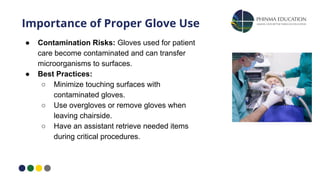
● Contamination Risks: Gloves used for patient
care become contaminated and can transfer
microorganisms to surfaces.
● Best Practices:
○ Minimize touching surfaces with
contaminated gloves.
○ Use overgloves or remove gloves when
leaving chairside.
○ Have an assistant retrieve needed items
during critical procedures.
Managing Dental Aerosols and
Spatter
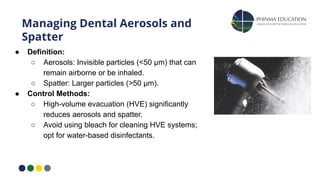
● Definition:
○ Aerosols: Invisible particles (<50 μm) that can
remain airborne or be inhaled.
○ Spatter: Larger particles (>50 μm).
● Control Methods:
○ High-volume evacuation (HVE) significantly
reduces aerosols and spatter.
○ Avoid using bleach for cleaning HVE systems;
opt for water-based disinfectants.
Preventing Reverse Flow in Saliva
Ejectors
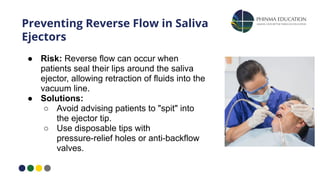
● Risk: Reverse flow can occur when
patients seal their lips around the saliva
ejector, allowing retraction of fluids into the
vacuum line.
● Solutions:
○ Avoid advising patients to "spit" into
the ejector tip.
○ Use disposable tips with
pressure-relief holes or anti-backflow
valves.
Rubber Dam Usage
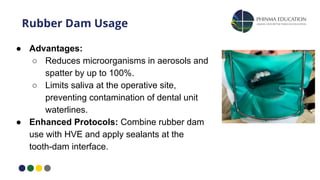
● Advantages:
○ Reduces microorganisms in aerosols and
spatter by up to 100%.
○ Limits saliva at the operative site,
preventing contamination of dental unit
waterlines.
● Enhanced Protocols: Combine rubber dam
use with HVE and apply sealants at the
tooth-dam interface.
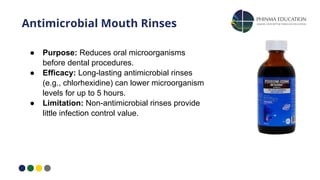
Antimicrobial Mouth Rinses
● Purpose: Reduces oral microorganisms
before dental procedures.
● Efficacy: Long-lasting antimicrobial rinses
(e.g., chlorhexidine) can lower microorganism
levels for up to 5 hours.
● Limitation: Non-antimicrobial rinses provide
little infection control value.
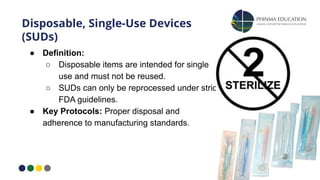
Disposable, Single-Use Devices
(SUDs)
● Definition:
○ Disposable items are intended for single
use and must not be reused.
○ SUDs can only be reprocessed under strict
FDA guidelines.
● Key Protocols: Proper disposal and
adherence to manufacturing standards.
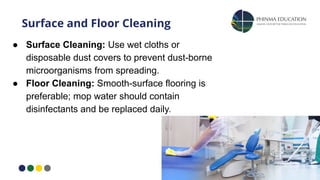
Surface and Floor Cleaning
● Surface Cleaning: Use wet cloths or
disposable dust covers to prevent dust-borne
microorganisms from spreading.
● Floor Cleaning: Smooth-surface flooring is
preferable; mop water should contain
disinfectants and be replaced daily.
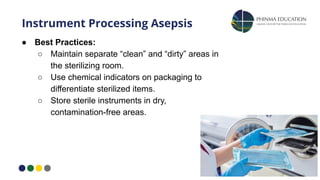
Instrument Processing Asepsis
● Best Practices:
○ Maintain separate “clean” and “dirty” areas in
the sterilizing room.
○ Use chemical indicators on packaging to
differentiate sterilized items.
○ Store sterile instruments in dry,
contamination-free areas.
Summary and Takeaways
● Aseptic techniques are vital for preventing cross-contamination in
dental practice.
● Proper glove use, aerosol management, and equipment maintenance
are key.
● Regular adherence to cleaning and sterilization protocols ensures
patient and practitioner safety.
Closing Question: What steps will you take in your future dental practice
to uphold aseptic techniques?
Laboratory and
Radiologic Infection
Control
SAS #9
● Understand the principles of infection control in dental
laboratory and radiographic procedures.
● Identify methods and materials for handling and
decontaminating soiled items.
● Learn proper procedures for protecting personnel,
patients, and the environment from contamination.
● Explore best practices for equipment sterilization,
disinfection, and personal protective measures.
Objectives
Introduction
Key Points:
● All instruments or equipment used in the
oral cavity are potential sources of
cross-infection.
● Assume all patients can transmit infectious
diseases—use universal infection control
measures.
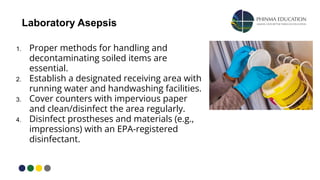
Laboratory Asepsis
1. Proper methods for handling and
decontaminating soiled items are
essential.
2. Establish a designated receiving area with
running water and handwashing facilities.
3. Cover counters with impervious paper
and clean/disinfect the area regularly.
4. Disinfect prostheses and materials (e.g.,
impressions) with an EPA-registered
disinfectant.
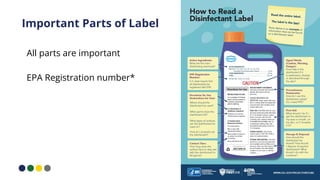
Important Parts of Label
All parts are important
EPA Registration number*
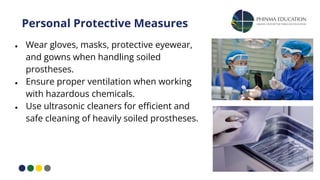
Personal Protective Measures
● Wear gloves, masks, protective eyewear,
and gowns when handling soiled
prostheses.
● Ensure proper ventilation when working
with hazardous chemicals.
● Use ultrasonic cleaners for efficient and
safe cleaning of heavily soiled prostheses.
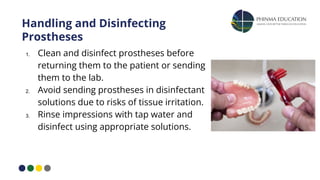
Handling and Disinfecting
Prostheses
1. Clean and disinfect prostheses before
returning them to the patient or sending
them to the lab.
2. Avoid sending prostheses in disinfectant
solutions due to risks of tissue irritation.
3. Rinse impressions with tap water and
disinfect using appropriate solutions.
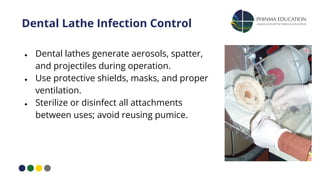
Dental Lathe Infection Control
● Dental lathes generate aerosols, spatter,
and projectiles during operation.
● Use protective shields, masks, and proper
ventilation.
● Sterilize or disinfect all attachments
between uses; avoid reusing pumice.
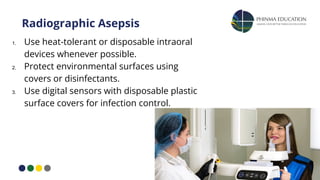
Radiographic Asepsis
1. Use heat-tolerant or disposable intraoral
devices whenever possible.
2. Protect environmental surfaces using
covers or disinfectants.
3. Use digital sensors with disposable plastic
surface covers for infection control.
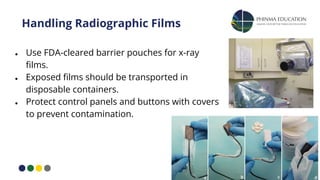
Handling Radiographic Films
● Use FDA-cleared barrier pouches for x-ray
films.
● Exposed films should be transported in
disposable containers.
● Protect control panels and buttons with covers
to prevent contamination.
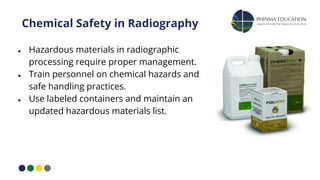
Chemical Safety in Radiography
● Hazardous materials in radiographic
processing require proper management.
● Train personnel on chemical hazards and
safe handling practices.
● Use labeled containers and maintain an
updated hazardous materials list.
Disposal of Contaminated Items
● Properly dispose of orally soiled items like
gloves, paper towels, and x-ray covers.
● Understand and comply with local
regulations for medical waste disposal.
Best Practices Summary
1. Consistent use of PPE and environmental covers.
2. Regular cleaning and disinfection of surfaces and
equipment.
3. Training and adherence to infection control
protocols.
Question for Students: What steps can dental teams
take to ensure consistent infection control?
END

Lecture 5 Infection Control Asepsis..pdf

  • 1.
    Infection Control Aseptic Techniques Laboratoryand Radiologic Infection Control
  • 2.
  • 3.
    Objectives ● Define aseptictechniques and their role in infection control. ● Understand the importance of minimizing contamination in dental procedures. ● Explore key practices to prevent the spread of microorganisms. ● Recognize proper handling, disposal, and maintenance protocols for instruments and surfaces.
  • 4.
    ● Definition: Aseptictechniques are practices that prevent or reduce the spread of microorganisms from one site to another. ● Key Objectives: Avoid cross-contamination between patients, dental teams, and operatory surfaces. ● Examples: Proper glove use, reducing surface contact, and maintaining cleanliness in the operatory. Question for the Students: What are some everyday scenarios in dental practice where aseptic techniques are crucial? Introduction to Aseptic Techniques
  • 5.
    Importance of ProperGlove Use ● Contamination Risks: Gloves used for patient care become contaminated and can transfer microorganisms to surfaces. ● Best Practices: ○ Minimize touching surfaces with contaminated gloves. ○ Use overgloves or remove gloves when leaving chairside. ○ Have an assistant retrieve needed items during critical procedures.
  • 6.
    Managing Dental Aerosolsand Spatter ● Definition: ○ Aerosols: Invisible particles (<50 μm) that can remain airborne or be inhaled. ○ Spatter: Larger particles (>50 μm). ● Control Methods: ○ High-volume evacuation (HVE) significantly reduces aerosols and spatter. ○ Avoid using bleach for cleaning HVE systems; opt for water-based disinfectants.
  • 7.
    Preventing Reverse Flowin Saliva Ejectors ● Risk: Reverse flow can occur when patients seal their lips around the saliva ejector, allowing retraction of fluids into the vacuum line. ● Solutions: ○ Avoid advising patients to "spit" into the ejector tip. ○ Use disposable tips with pressure-relief holes or anti-backflow valves.
  • 8.
    Rubber Dam Usage ●Advantages: ○ Reduces microorganisms in aerosols and spatter by up to 100%. ○ Limits saliva at the operative site, preventing contamination of dental unit waterlines. ● Enhanced Protocols: Combine rubber dam use with HVE and apply sealants at the tooth-dam interface.
  • 9.
    Antimicrobial Mouth Rinses ●Purpose: Reduces oral microorganisms before dental procedures. ● Efficacy: Long-lasting antimicrobial rinses (e.g., chlorhexidine) can lower microorganism levels for up to 5 hours. ● Limitation: Non-antimicrobial rinses provide little infection control value.
  • 10.
    Disposable, Single-Use Devices (SUDs) ●Definition: ○ Disposable items are intended for single use and must not be reused. ○ SUDs can only be reprocessed under strict FDA guidelines. ● Key Protocols: Proper disposal and adherence to manufacturing standards.
  • 11.
    Surface and FloorCleaning ● Surface Cleaning: Use wet cloths or disposable dust covers to prevent dust-borne microorganisms from spreading. ● Floor Cleaning: Smooth-surface flooring is preferable; mop water should contain disinfectants and be replaced daily.
  • 12.
    Instrument Processing Asepsis ●Best Practices: ○ Maintain separate “clean” and “dirty” areas in the sterilizing room. ○ Use chemical indicators on packaging to differentiate sterilized items. ○ Store sterile instruments in dry, contamination-free areas.
  • 13.
    Summary and Takeaways ●Aseptic techniques are vital for preventing cross-contamination in dental practice. ● Proper glove use, aerosol management, and equipment maintenance are key. ● Regular adherence to cleaning and sterilization protocols ensures patient and practitioner safety. Closing Question: What steps will you take in your future dental practice to uphold aseptic techniques?
  • 14.
  • 15.
    ● Understand theprinciples of infection control in dental laboratory and radiographic procedures. ● Identify methods and materials for handling and decontaminating soiled items. ● Learn proper procedures for protecting personnel, patients, and the environment from contamination. ● Explore best practices for equipment sterilization, disinfection, and personal protective measures. Objectives
  • 16.
    Introduction Key Points: ● Allinstruments or equipment used in the oral cavity are potential sources of cross-infection. ● Assume all patients can transmit infectious diseases—use universal infection control measures.
  • 17.
    Laboratory Asepsis 1. Propermethods for handling and decontaminating soiled items are essential. 2. Establish a designated receiving area with running water and handwashing facilities. 3. Cover counters with impervious paper and clean/disinfect the area regularly. 4. Disinfect prostheses and materials (e.g., impressions) with an EPA-registered disinfectant.
  • 18.
    Important Parts ofLabel All parts are important EPA Registration number*
  • 19.
    Personal Protective Measures ●Wear gloves, masks, protective eyewear, and gowns when handling soiled prostheses. ● Ensure proper ventilation when working with hazardous chemicals. ● Use ultrasonic cleaners for efficient and safe cleaning of heavily soiled prostheses.
  • 20.
    Handling and Disinfecting Prostheses 1.Clean and disinfect prostheses before returning them to the patient or sending them to the lab. 2. Avoid sending prostheses in disinfectant solutions due to risks of tissue irritation. 3. Rinse impressions with tap water and disinfect using appropriate solutions.
  • 21.
    Dental Lathe InfectionControl ● Dental lathes generate aerosols, spatter, and projectiles during operation. ● Use protective shields, masks, and proper ventilation. ● Sterilize or disinfect all attachments between uses; avoid reusing pumice.
  • 22.
    Radiographic Asepsis 1. Useheat-tolerant or disposable intraoral devices whenever possible. 2. Protect environmental surfaces using covers or disinfectants. 3. Use digital sensors with disposable plastic surface covers for infection control.
  • 23.
    Handling Radiographic Films ●Use FDA-cleared barrier pouches for x-ray films. ● Exposed films should be transported in disposable containers. ● Protect control panels and buttons with covers to prevent contamination.
  • 24.
    Chemical Safety inRadiography ● Hazardous materials in radiographic processing require proper management. ● Train personnel on chemical hazards and safe handling practices. ● Use labeled containers and maintain an updated hazardous materials list.
  • 25.
    Disposal of ContaminatedItems ● Properly dispose of orally soiled items like gloves, paper towels, and x-ray covers. ● Understand and comply with local regulations for medical waste disposal.
  • 26.
    Best Practices Summary 1.Consistent use of PPE and environmental covers. 2. Regular cleaning and disinfection of surfaces and equipment. 3. Training and adherence to infection control protocols. Question for Students: What steps can dental teams take to ensure consistent infection control?
  • 27.