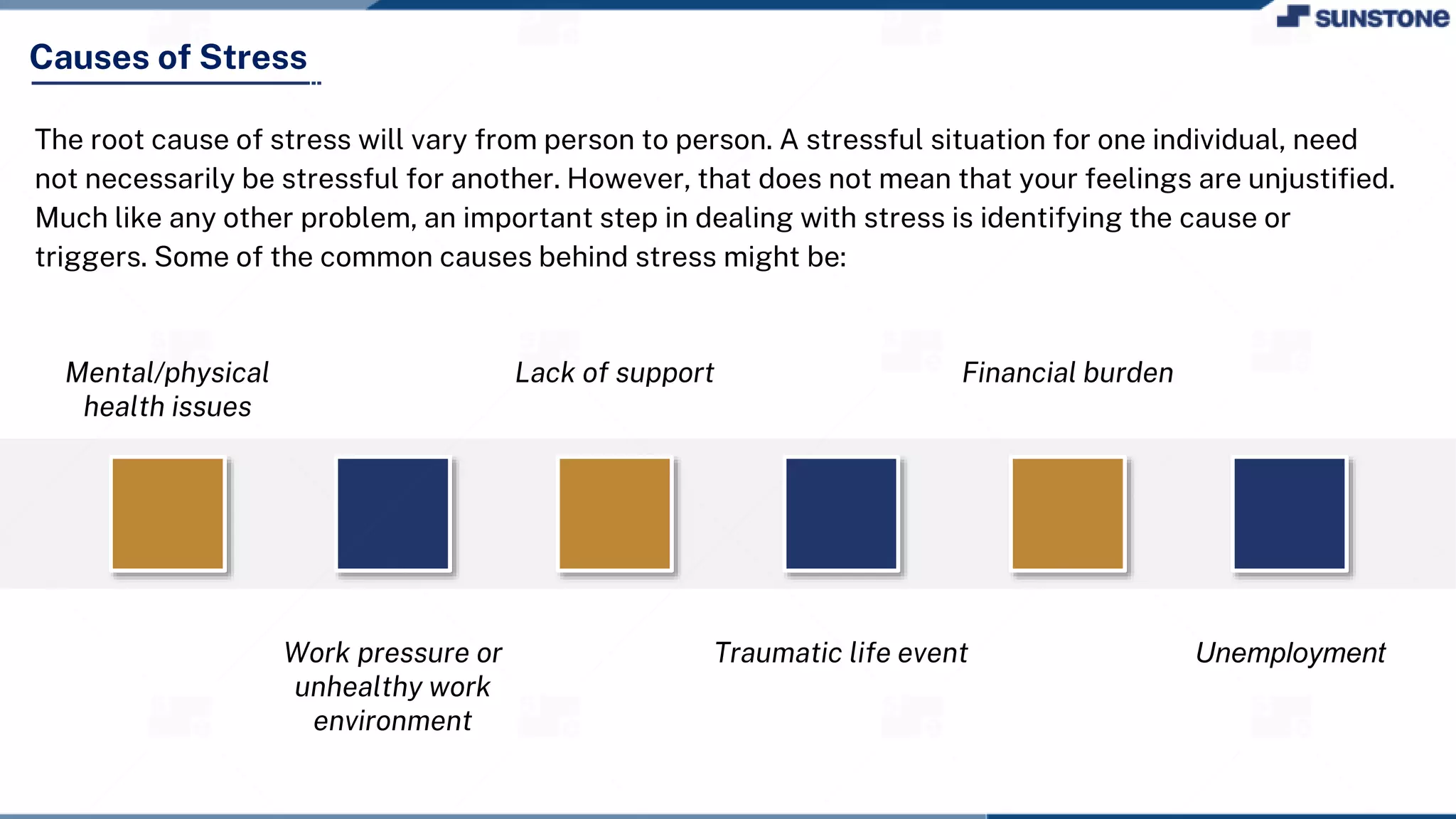
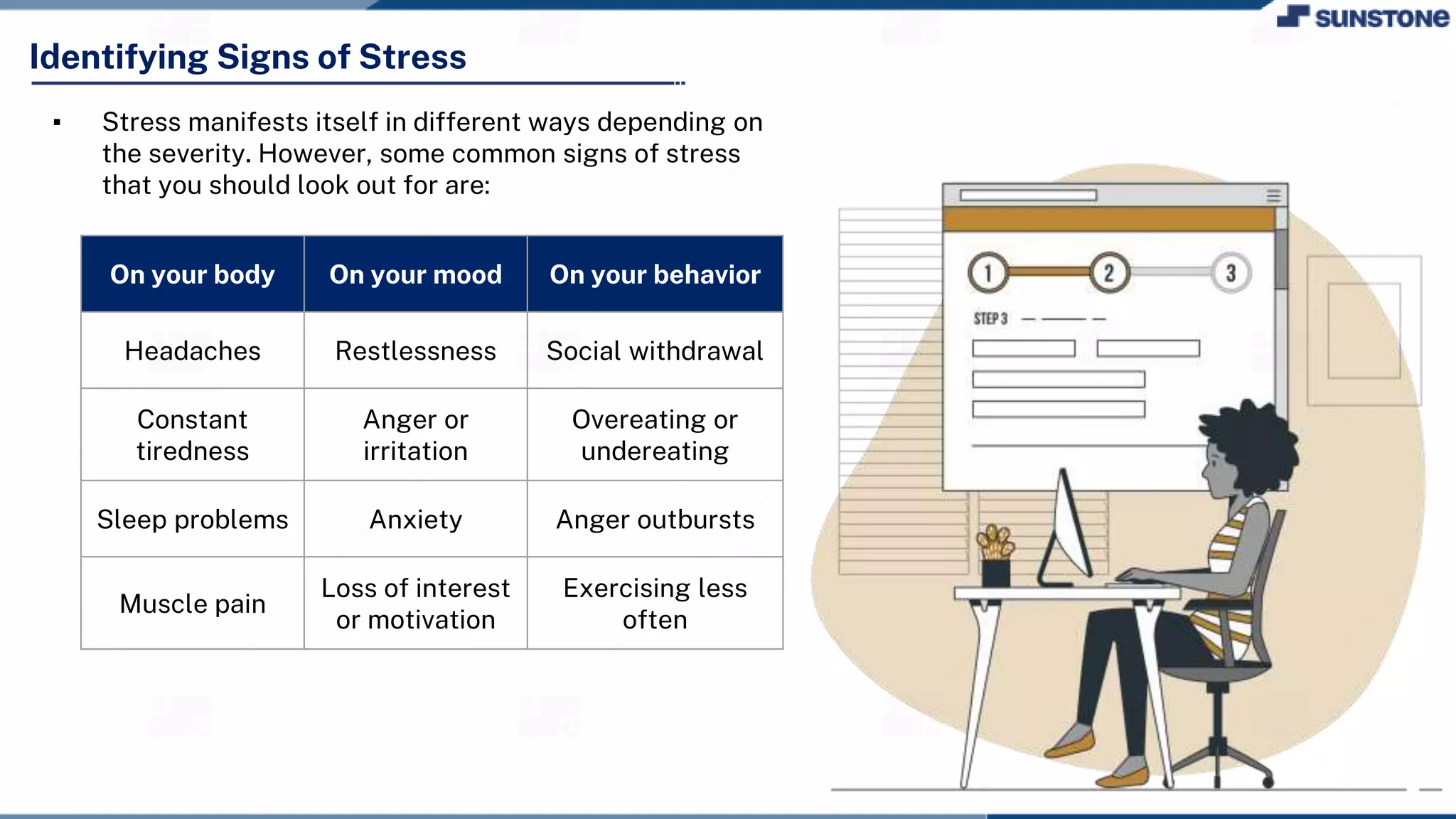
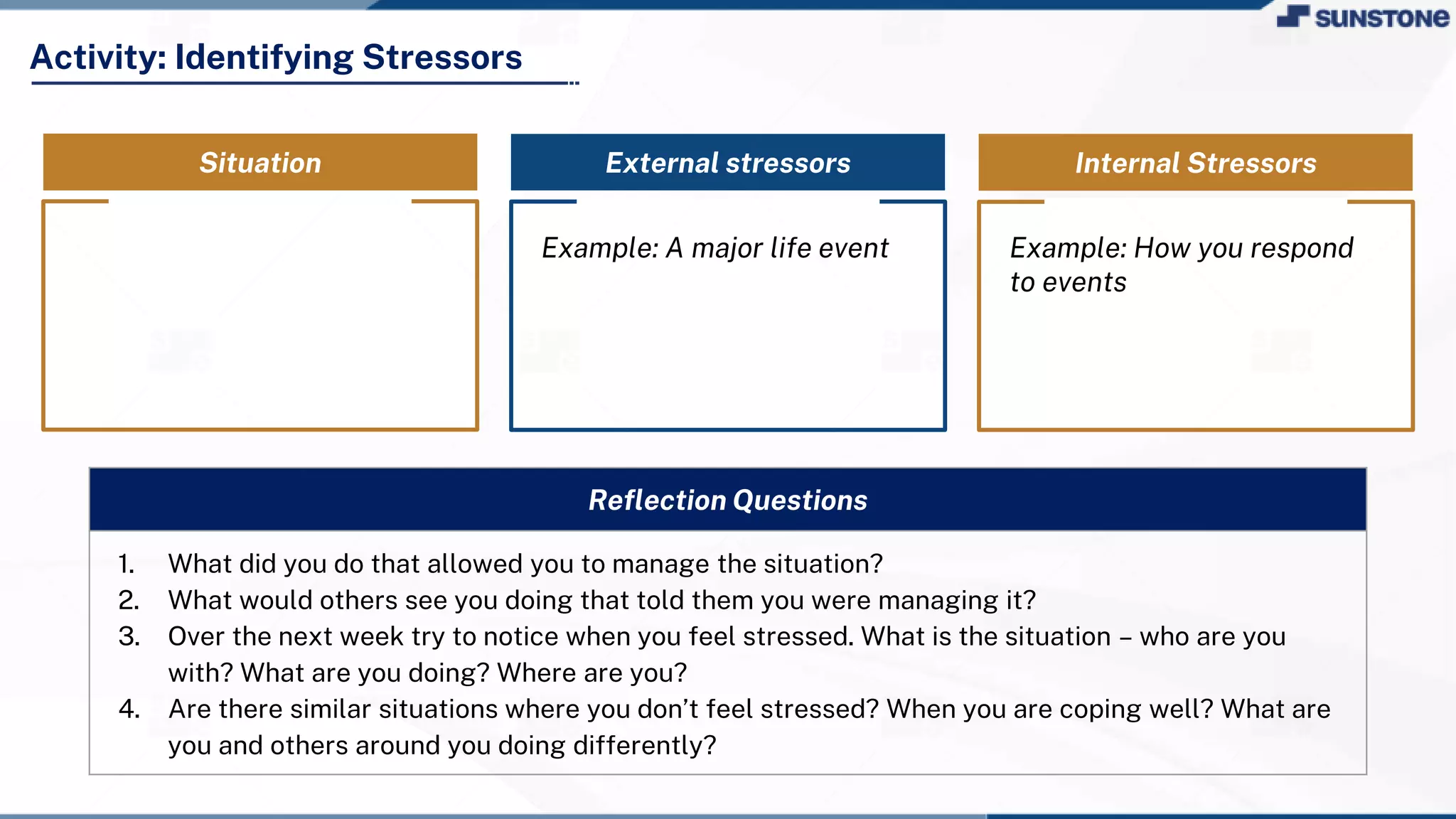
This lecture discusses stress management. It will help students recognize signs of stress, understand its impact, and create an action plan for well-being. Stress is defined as the body's response to demands and can be acute, episodic acute, or chronic. Common causes include health issues, work pressure, lack of support, trauma, finances, and unemployment. Signs include headaches, tiredness, mood changes, behaviors changes. Long term stress can negatively impact personal well-being and other life areas. Effective stress management includes identifying triggers, adopting healthy lifestyle habits, and building a strong support system.




![[Behav. sci] stress management presentation](https://cdn.slidesharecdn.com/ss_thumbnails/behav-150502143918-conversion-gate02-thumbnail.jpg?width=640&height=640&fit=bounds)


