CORROSIVE POISONS
(ORGANIC ACIDS & CONCENTRATED ALKALIES)
DR.R.H.SUKHERA
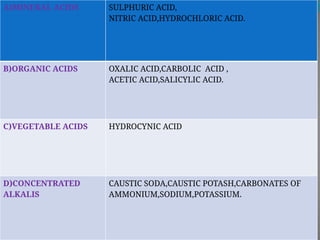
A)MINERAL ACIDS SULPHURIC ACID,
NITRIC ACID,HYDROCHLORIC ACID.
B)ORGANIC ACIDS OXALIC ACID,CARBOLIC ACID ,
ACETIC ACID,SALICYLIC ACID.
C)VEGETABLE ACIDS HYDROCYNIC ACID
D)CONCENTRATED
ALKALIS
CAUSTIC SODA,CAUSTIC POTASH,CARBONATES OF
AMMONIUM,SODIUM,POTASSIUM.
CORROSIVE POISONS
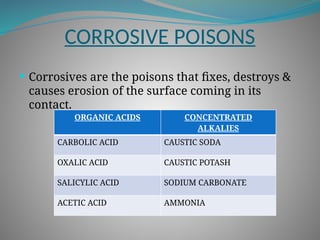
 Corrosives are the poisons that fixes, destroys &
causes erosion of the surface coming in its
contact.
ORGANIC ACIDS CONCENTRATED
ALKALIES
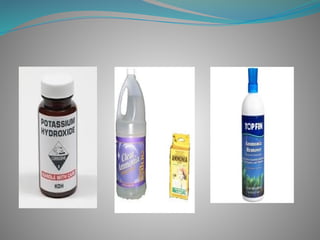
CARBOLIC ACID CAUSTIC SODA
OXALIC ACID CAUSTIC POTASH
SALICYLIC ACID SODIUM CARBONATE
ACETIC ACID AMMONIA
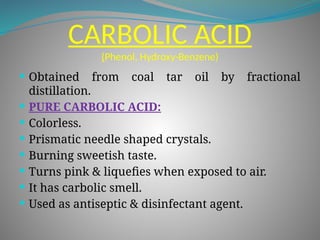
CARBOLIC ACID
(Phenol, Hydroxy-Benzene)
 Obtained from coal tar oil by fractional
distillation.
 PURE CARBOLIC ACID:
 Colorless.
 Prismatic needle shaped crystals.
 Burning sweetish taste.
 Turns pink & liquefies when exposed to air.
 It has carbolic smell.
 Used as antiseptic & disinfectant agent.
 Dettol is chlorinated phenol with turpineol.
 Household phenol (sold as phenyle) contains five percent
phenol in water.
 Derivatives of phenol:

1. Cresol
2. Thymol
3. Creosate (coal tar)
4. Menthol
5. Tannic acid
6. Napthol
7. Resorcinol
COMMERCIAL FORM
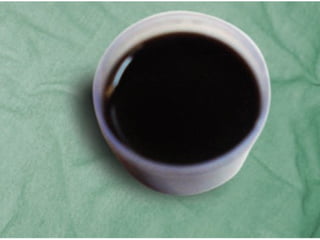
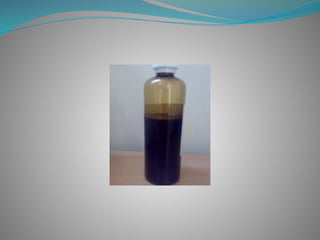
 Dark brown liquid containing several impurities.
 Used as disinfectants, antiseptics, germicides, caustics &
preservatives kept in cupboards.
 Lysol is used in explosives, fertilizers, textile, rubber,
plastics, dyes, drugs and in preservatives of vaccine.
 Significance of change in color:
 It serves as a warning of toxic properties of acid when used
as an antiseptic on the wounds.
CARBOLISM
Poisoning by carbolic acid is known as carbolism.
 ABSORPTION:
Absorbed from GIT, Respiratory tract, rectum, vagina,
serous cavities, wounds & skin.
 ELIMINATION:
In urine
Traces through the lungs.
Detoxified in the liver.
Complete elimination takes about 36-48 hours.
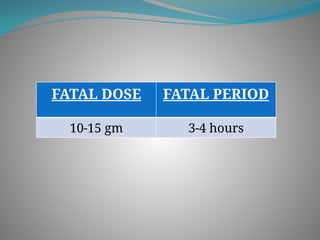
FATAL DOSE FATAL PERIOD
10-15 gm 3-4 hours
MECHANISM OF ACTION
 Locally as corrosive.
 Systemically as narcotic induces sleep & drowsiness.
 It coagulates protein.
 When applied to the skin, burning sensation, numbness
& anesthetic effect but to its action on the nerve endings.
 Irritation, inflammation & necrosis of mucus membrane.
 It stimulates respiratory center in small doses.
SIGNS & SYMPTOMS
 Burning sensation in mouth & throat.
 Mucus membrane hard & white.
 Insensibility & coma
 Face is pale & cyanosed.
 Hypothermia.
 Pulse increased, feeble.
 Slow & labored respiration.
 Smell of carbolic acid in the breath.
 Convulsions & lockjaw.
CARBOLURIA
 Decreased urine output.
 When passed there is normal or greenish look of
urine that becomes dark or olive green due to
oxidation.
 OOCHRONOSIS:
 The hydroquinone pyrocatechol cause pigmentation
in the cornea and venous complexes.
 Seen in chronic poisoning.
CAUSES OF DEATH
 Syncope
 Asphyxia due to respiratory failure
 Oedema of glottis
 Pneumonia.
TREATMENT
 Emetics fail to anesthetic effect.
 Stomach wash(plenty of warm water, along with charcoal,
olive oil, castor oil, magnesium or sodium sulphate.)
 Soap solution or 10 % glycerin.
 2 ounce of castor oil or liquid paraffin left in the stomach
after wash.
 Demulcents
 General treatment of collapse condition.
AUTOPSY FINDINGS:
 EXTERNAL FINDINGS:
 Dark brown corrosions at the angle of mouth &
chin.
 Tongue white or swollen.
 Smell of phenol
 Ash gray small sub mucosal hemorrhages may be
seen on the mucus membrane of mouth.
INTERNAL FINDINGS
 Esophageal mucosa is tough & white gray.
 Stomach mucosal folds are swollen
 Reddish fluid mixed with mucus & shreds of epithelium emitting
odor of phenol.
 Liver & spleen form white hardened patch
 Kidney inflamed, hemorrhagic spots.
 Lungs are congested & edematous
 Brain is congested & edematous.
MEDICOLEGAL ASPECTS
 Suicidal poisoning
 Accidental poisoning
 Rarely used for abortion
 Rarely used for homicidal purposes.
OXALIC ACID
(ACID OF SUGAR & SALT OF SORREL)
 Organic corrosive acid.
 Colorless, transparent.
 Prismatic crystals resembling magnesium
sulphate.
 Prepared from sugar by oxidation with nitric
acid or by heating sodium or potassium formate.
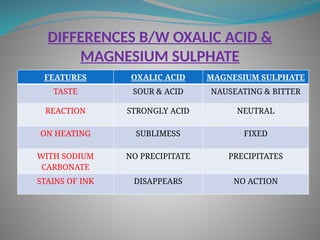
DIFFERENCES B/W OXALIC ACID &
MAGNESIUM SULPHATE
FEATURES OXALIC ACID MAGNESIUM SULPHATE
TASTE SOUR & ACID NAUSEATING & BITTER
REACTION STRONGLY ACID NEUTRAL
ON HEATING SUBLIMESS FIXED
WITH SODIUM
CARBONATE
NO PRECIPITATE PRECIPITATES
STAINS OF INK DISAPPEARS NO ACTION
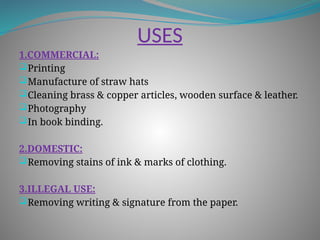
USES
1.COMMERCIAL:
Printing
Manufacture of straw hats
Cleaning brass & copper articles, wooden surface & leather.
Photography
In book binding.
2.DOMESTIC:
Removing stains of ink & marks of clothing.
3.ILLEGAL USE:
Removing writing & signature from the paper.
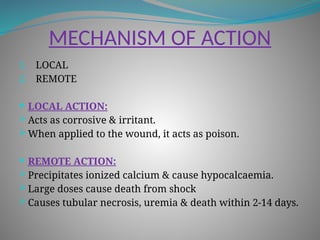
MECHANISM OF ACTION
1. LOCAL
2. REMOTE
 LOCAL ACTION:
 Acts as corrosive & irritant.
 When applied to the wound, it acts as poison.
 REMOTE ACTION:
 Precipitates ionized calcium & cause hypocalcaemia.
 Large doses cause death from shock
 Causes tubular necrosis, uremia & death within 2-14 days.
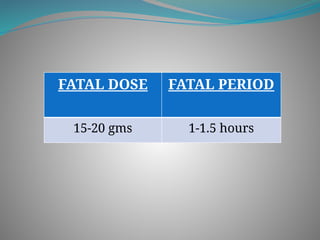
FATAL DOSE FATAL PERIOD
15-20 gms 1-1.5 hours
SIGNS & SYMPTOMS
 FULMINATING POISONING:
 Death within minutes
 Burning, sour & bitter taste in the mouth
 Throat constriction
 Nausea, vomiting
 Thirst
 Death usually occurs before the bowel is affected.
ACUTE POISONING
 Hypocalcaemia
 Muscle irritability & tenderness
 Convulsions
 Numbness
 Tingling of fingertips & legs
 Cardiovascular collapse
 Coma
 DELAYED POISONING:
 Uremia
 Decreased urine output
 Urine contains traces of blood, aluminium,calcium oxalate
crystals.
TREATMENT
ANTIDOTE: Calcium lactate or gluconate.
 Stomach wash
 Parathyroid extract 100 units I.M is given in severe cases.
 Demulsants
 Enema
 Dialysis
 Blood transfusion
AUTOPSY FINDINGS
 Bleached appearance of mucous membrane of mouth,tongue &
lips.
 Stomach inflammed.
 Stomach contents are brownish due to acid hematin.
 Kidneys swollen & congested.
 Tubules show oxalate crystals.
 All other organs are congested
MEDICOLEGAL IMPORTANCE
 Common accidental poisoning
 Rare suicidal poisoning
 Very rarely used for homicidal poisoning
 Rarely used as abortifacient
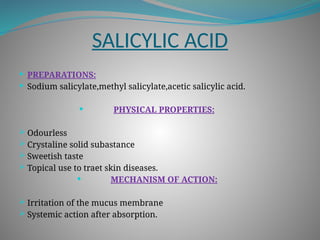
SALICYLIC ACID
 PREPARATIONS:
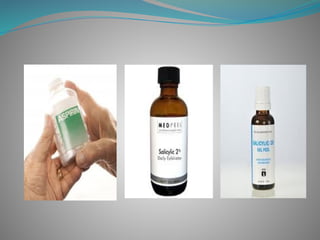
 Sodium salicylate,methyl salicylate,acetic salicylic acid.
 PHYSICAL PROPERTIES:
 Odourless
 Crystaline solid subastance
 Sweetish taste
 Topical use to traet skin diseases.
 MECHANISM OF ACTION:
 Irritation of the mucus membrane
 Systemic action after absorption.
SIGNS & SYMPTOMS
 Gastrointestinal irritation
 Dehydration
 Acidosis
 Confusion
 Dilirium
 Coma
 Haemorrhage
 Death is due to cardiovascular or respiratory
collapse.
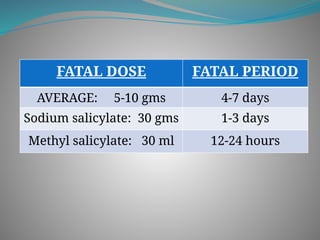
FATAL DOSE FATAL PERIOD
AVERAGE: 5-10 gms 4-7 days
Sodium salicylate: 30 gms 1-3 days
Methyl salicylate: 30 ml 12-24 hours
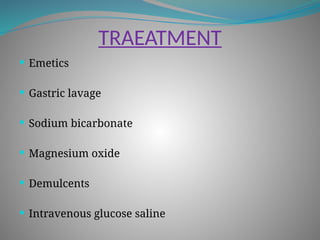
TRAEATMENT
 Emetics
 Gastric lavage
 Sodium bicarbonate
 Magnesium oxide
 Demulcents
 Intravenous glucose saline
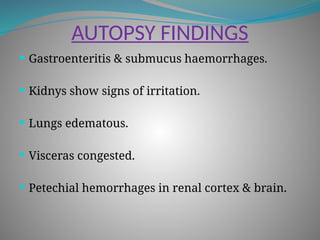
AUTOPSY FINDINGS
 Gastroenteritis & submucus haemorrhages.
 Kidnys show signs of irritation.
 Lungs edematous.
 Visceras congested.
 Petechial hemorrhages in renal cortex & brain.
MEDICOLEGAL IMPORTANCE
 Usually accidental in children.
 Used as an abortifacient.
 Suicidal poisoning .
CORROSIVE ALKALIES
 Strong solutions act as corrosives.
 In Dilute form, act as irritants.
 Concentrated forms are more dangerous.
LYE
 Lye is a mixture of caustic soda & sodium
bicarbonate,used for cleaning purposes.
 USES:
 Cleanisng agent in washing powder and pipe
cleaners.
 Used in medicines.
MECHANISM OF ACTION
 Absorption of water from the tissues.
 Precipitates protein.
 Combine with proteins to form proteineases &
fats to form soaps.
 Produces necrotic areas.
SIGNS AND SYMPTOMS
 Similar to corrosives
 Soft, edematous, red brownish scar formation.
 Charring is not present.
 Vomited matter is alkaline
 Mucus & blood in the stools.
 Blister formation is there with strong alkalies.
 INHALATION OF AMMONIA VAPOURS:
 Congestion & watering of eyes.
 Sneezing,coughing & choking.
 Sudden collapse.
 Death is due to suffocation & glottic edema.
TREATMENT
 Neutrilize the poison by vegetable acids & water.
 Demulsents.
 Stomach wash.
 Oxygen inhalation when ammonia vapours are
inhaled.
 Symptomatic treatment.
AUTOPSY FINDINGS
 Similar to corrosives.
 MEDICOLEGAL IMPORTANCE:
 Accidental poisonoing.
 Homicidal poisoning is rare.
 Ammonia vapours poisoning is common.
 Sometimes caustic soda used as vitrolage.
LECTURE 06(CORROSIVE -ORGANIC ACIDS).pptx

LECTURE 06(CORROSIVE -ORGANIC ACIDS).pptx

  • 2.
    CORROSIVE POISONS (ORGANIC ACIDS& CONCENTRATED ALKALIES) DR.R.H.SUKHERA
  • 3.
    A)MINERAL ACIDS SULPHURICACID, NITRIC ACID,HYDROCHLORIC ACID. B)ORGANIC ACIDS OXALIC ACID,CARBOLIC ACID , ACETIC ACID,SALICYLIC ACID. C)VEGETABLE ACIDS HYDROCYNIC ACID D)CONCENTRATED ALKALIS CAUSTIC SODA,CAUSTIC POTASH,CARBONATES OF AMMONIUM,SODIUM,POTASSIUM.
  • 4.
    CORROSIVE POISONS  Corrosivesare the poisons that fixes, destroys & causes erosion of the surface coming in its contact. ORGANIC ACIDS CONCENTRATED ALKALIES CARBOLIC ACID CAUSTIC SODA OXALIC ACID CAUSTIC POTASH SALICYLIC ACID SODIUM CARBONATE ACETIC ACID AMMONIA
  • 5.
    CARBOLIC ACID (Phenol, Hydroxy-Benzene) Obtained from coal tar oil by fractional distillation.  PURE CARBOLIC ACID:  Colorless.  Prismatic needle shaped crystals.  Burning sweetish taste.  Turns pink & liquefies when exposed to air.  It has carbolic smell.  Used as antiseptic & disinfectant agent.
  • 6.
     Dettol ischlorinated phenol with turpineol.  Household phenol (sold as phenyle) contains five percent phenol in water.  Derivatives of phenol:  1. Cresol 2. Thymol 3. Creosate (coal tar) 4. Menthol 5. Tannic acid 6. Napthol 7. Resorcinol
  • 7.
    COMMERCIAL FORM  Darkbrown liquid containing several impurities.  Used as disinfectants, antiseptics, germicides, caustics & preservatives kept in cupboards.  Lysol is used in explosives, fertilizers, textile, rubber, plastics, dyes, drugs and in preservatives of vaccine.  Significance of change in color:  It serves as a warning of toxic properties of acid when used as an antiseptic on the wounds.
  • 10.
    CARBOLISM Poisoning by carbolicacid is known as carbolism.  ABSORPTION: Absorbed from GIT, Respiratory tract, rectum, vagina, serous cavities, wounds & skin.  ELIMINATION: In urine Traces through the lungs. Detoxified in the liver. Complete elimination takes about 36-48 hours.
  • 11.
    FATAL DOSE FATALPERIOD 10-15 gm 3-4 hours
  • 12.
    MECHANISM OF ACTION Locally as corrosive.  Systemically as narcotic induces sleep & drowsiness.  It coagulates protein.  When applied to the skin, burning sensation, numbness & anesthetic effect but to its action on the nerve endings.  Irritation, inflammation & necrosis of mucus membrane.  It stimulates respiratory center in small doses.
  • 13.
    SIGNS & SYMPTOMS Burning sensation in mouth & throat.  Mucus membrane hard & white.  Insensibility & coma  Face is pale & cyanosed.  Hypothermia.  Pulse increased, feeble.  Slow & labored respiration.  Smell of carbolic acid in the breath.  Convulsions & lockjaw.
  • 14.
    CARBOLURIA  Decreased urineoutput.  When passed there is normal or greenish look of urine that becomes dark or olive green due to oxidation.  OOCHRONOSIS:  The hydroquinone pyrocatechol cause pigmentation in the cornea and venous complexes.  Seen in chronic poisoning.
  • 15.
    CAUSES OF DEATH Syncope  Asphyxia due to respiratory failure  Oedema of glottis  Pneumonia.
  • 16.
    TREATMENT  Emetics failto anesthetic effect.  Stomach wash(plenty of warm water, along with charcoal, olive oil, castor oil, magnesium or sodium sulphate.)  Soap solution or 10 % glycerin.  2 ounce of castor oil or liquid paraffin left in the stomach after wash.  Demulcents  General treatment of collapse condition.
  • 17.
    AUTOPSY FINDINGS:  EXTERNALFINDINGS:  Dark brown corrosions at the angle of mouth & chin.  Tongue white or swollen.  Smell of phenol  Ash gray small sub mucosal hemorrhages may be seen on the mucus membrane of mouth.
  • 18.
    INTERNAL FINDINGS  Esophagealmucosa is tough & white gray.  Stomach mucosal folds are swollen  Reddish fluid mixed with mucus & shreds of epithelium emitting odor of phenol.  Liver & spleen form white hardened patch  Kidney inflamed, hemorrhagic spots.  Lungs are congested & edematous  Brain is congested & edematous.
  • 19.
    MEDICOLEGAL ASPECTS  Suicidalpoisoning  Accidental poisoning  Rarely used for abortion  Rarely used for homicidal purposes.
  • 20.
    OXALIC ACID (ACID OFSUGAR & SALT OF SORREL)  Organic corrosive acid.  Colorless, transparent.  Prismatic crystals resembling magnesium sulphate.  Prepared from sugar by oxidation with nitric acid or by heating sodium or potassium formate.
  • 22.
    DIFFERENCES B/W OXALICACID & MAGNESIUM SULPHATE FEATURES OXALIC ACID MAGNESIUM SULPHATE TASTE SOUR & ACID NAUSEATING & BITTER REACTION STRONGLY ACID NEUTRAL ON HEATING SUBLIMESS FIXED WITH SODIUM CARBONATE NO PRECIPITATE PRECIPITATES STAINS OF INK DISAPPEARS NO ACTION
  • 23.
    USES 1.COMMERCIAL: Printing Manufacture of strawhats Cleaning brass & copper articles, wooden surface & leather. Photography In book binding. 2.DOMESTIC: Removing stains of ink & marks of clothing. 3.ILLEGAL USE: Removing writing & signature from the paper.
  • 24.
    MECHANISM OF ACTION 1.LOCAL 2. REMOTE  LOCAL ACTION:  Acts as corrosive & irritant.  When applied to the wound, it acts as poison.  REMOTE ACTION:  Precipitates ionized calcium & cause hypocalcaemia.  Large doses cause death from shock  Causes tubular necrosis, uremia & death within 2-14 days.
  • 25.
    FATAL DOSE FATALPERIOD 15-20 gms 1-1.5 hours
  • 26.
    SIGNS & SYMPTOMS FULMINATING POISONING:  Death within minutes  Burning, sour & bitter taste in the mouth  Throat constriction  Nausea, vomiting  Thirst  Death usually occurs before the bowel is affected.
  • 27.
    ACUTE POISONING  Hypocalcaemia Muscle irritability & tenderness  Convulsions  Numbness  Tingling of fingertips & legs  Cardiovascular collapse  Coma  DELAYED POISONING:  Uremia  Decreased urine output  Urine contains traces of blood, aluminium,calcium oxalate crystals.
  • 28.
    TREATMENT ANTIDOTE: Calcium lactateor gluconate.  Stomach wash  Parathyroid extract 100 units I.M is given in severe cases.  Demulsants  Enema  Dialysis  Blood transfusion
  • 29.
    AUTOPSY FINDINGS  Bleachedappearance of mucous membrane of mouth,tongue & lips.  Stomach inflammed.  Stomach contents are brownish due to acid hematin.  Kidneys swollen & congested.  Tubules show oxalate crystals.  All other organs are congested
  • 30.
    MEDICOLEGAL IMPORTANCE  Commonaccidental poisoning  Rare suicidal poisoning  Very rarely used for homicidal poisoning  Rarely used as abortifacient
  • 31.
    SALICYLIC ACID  PREPARATIONS: Sodium salicylate,methyl salicylate,acetic salicylic acid.  PHYSICAL PROPERTIES:  Odourless  Crystaline solid subastance  Sweetish taste  Topical use to traet skin diseases.  MECHANISM OF ACTION:  Irritation of the mucus membrane  Systemic action after absorption.
  • 33.
    SIGNS & SYMPTOMS Gastrointestinal irritation  Dehydration  Acidosis  Confusion  Dilirium  Coma  Haemorrhage  Death is due to cardiovascular or respiratory collapse.
  • 34.
    FATAL DOSE FATALPERIOD AVERAGE: 5-10 gms 4-7 days Sodium salicylate: 30 gms 1-3 days Methyl salicylate: 30 ml 12-24 hours
  • 35.
    TRAEATMENT  Emetics  Gastriclavage  Sodium bicarbonate  Magnesium oxide  Demulcents  Intravenous glucose saline
  • 36.
    AUTOPSY FINDINGS  Gastroenteritis& submucus haemorrhages.  Kidnys show signs of irritation.  Lungs edematous.  Visceras congested.  Petechial hemorrhages in renal cortex & brain.
  • 37.
    MEDICOLEGAL IMPORTANCE  Usuallyaccidental in children.  Used as an abortifacient.  Suicidal poisoning .
  • 38.
    CORROSIVE ALKALIES  Strongsolutions act as corrosives.  In Dilute form, act as irritants.  Concentrated forms are more dangerous.
  • 40.
    LYE  Lye isa mixture of caustic soda & sodium bicarbonate,used for cleaning purposes.  USES:  Cleanisng agent in washing powder and pipe cleaners.  Used in medicines.
  • 41.
    MECHANISM OF ACTION Absorption of water from the tissues.  Precipitates protein.  Combine with proteins to form proteineases & fats to form soaps.  Produces necrotic areas.
  • 42.
    SIGNS AND SYMPTOMS Similar to corrosives  Soft, edematous, red brownish scar formation.  Charring is not present.  Vomited matter is alkaline  Mucus & blood in the stools.  Blister formation is there with strong alkalies.  INHALATION OF AMMONIA VAPOURS:  Congestion & watering of eyes.  Sneezing,coughing & choking.  Sudden collapse.  Death is due to suffocation & glottic edema.
  • 43.
    TREATMENT  Neutrilize thepoison by vegetable acids & water.  Demulsents.  Stomach wash.  Oxygen inhalation when ammonia vapours are inhaled.  Symptomatic treatment.
  • 44.
    AUTOPSY FINDINGS  Similarto corrosives.  MEDICOLEGAL IMPORTANCE:  Accidental poisonoing.  Homicidal poisoning is rare.  Ammonia vapours poisoning is common.  Sometimes caustic soda used as vitrolage.