How	
  can	
  rainwater	
  management	
  help	
  
 support	
  smallholder	
  farmers’	
  ability	
  to	
  
adapt	
  to	
  climate	
  variability	
  and	
  change?	


Learning	
  Event	
  
    Objec>ve	


•  To	
  demonstrate	
  the	
  
   value	
  of	
  inves>ng	
  in	
  
   rainwater	
  
   management	
  to	
  
   strengthen	
  adap>ve	
  
   capacity	
  of	
  
   smallholder	
  farmers	
  	
  
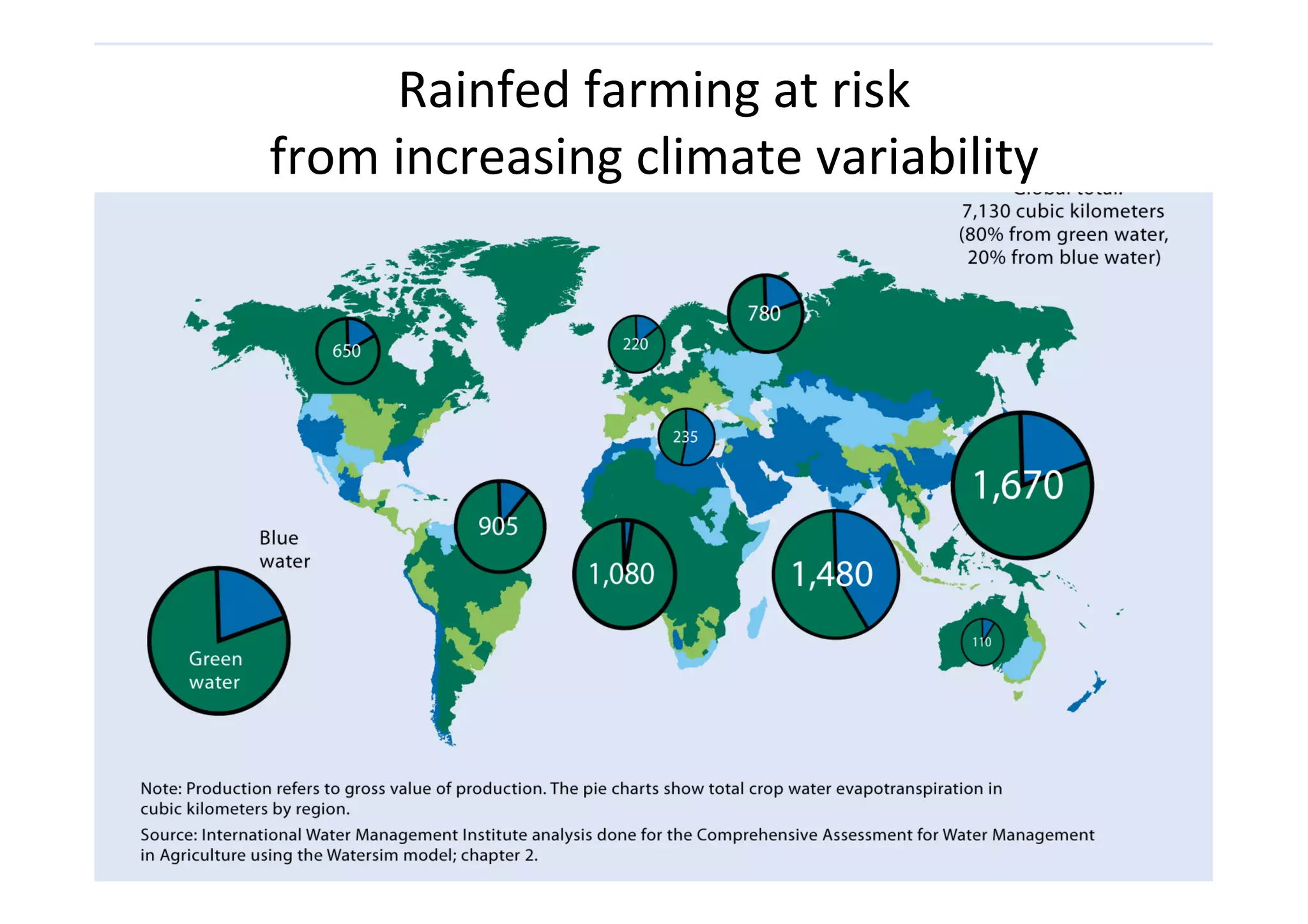
Rainfed	
  farming	
  at	
  risk	
  	
  
Dependence on igreen and blue limate	
  variability	
  
       from	
   ncreasing	
  c water 2000
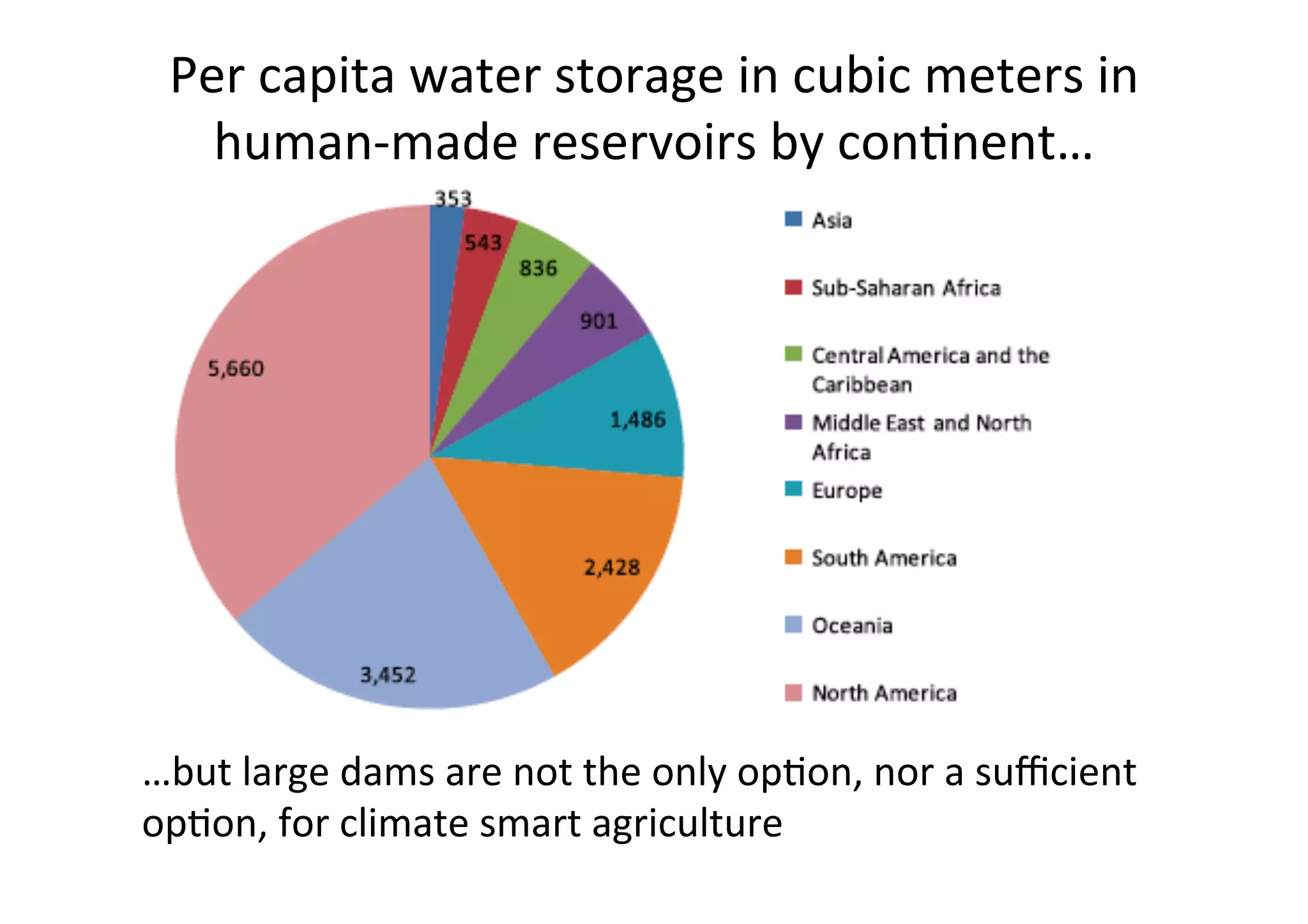
Per	
  capita	
  water	
  storage	
  in	
  cubic	
  meters	
  in	
  
    human-­‐made	
  reservoirs	
  by	
  con>nent…	


…but	
  large	
  dams	
  are	
  not	
  the	
  only	
  op>on,	
  nor	
  a	
  sufficient	
  
op>on,	
  for	
  climate	
  smart	
  agriculture	
  
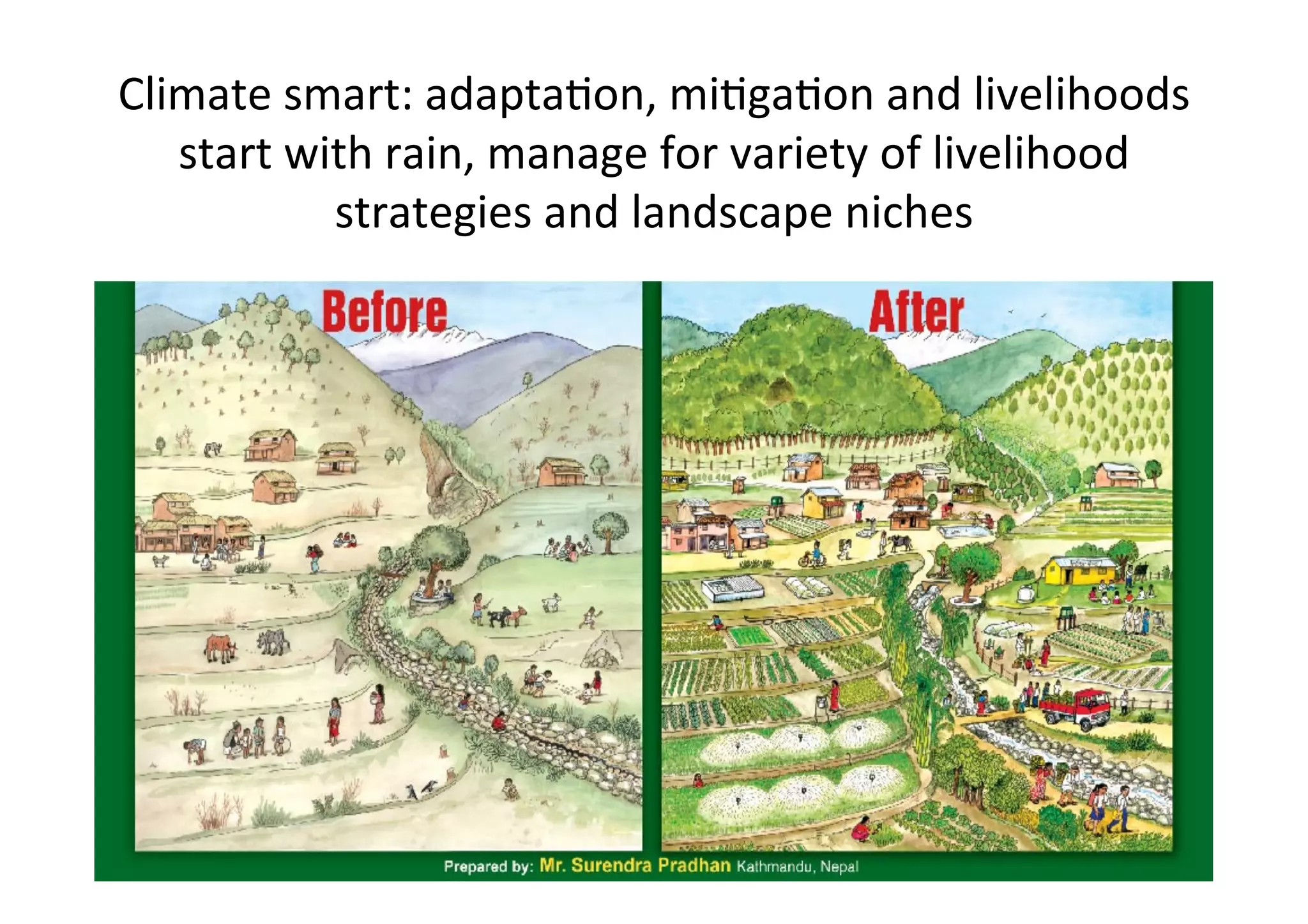
Climate	
  smart:	
  adapta>on,	
  mi>ga>on	
  and	
  livelihoods	
  
   start	
  with	
  rain,	
  manage	
  for	
  variety	
  of	
  livelihood	
  
              strategies	
  and	
  landscape	
  niches	


   4/02/2011	
  ILRI	
  Campus,	
  
                                      Water	
  and	
  Agriculture	
  Share	
  Fair	
  
   ETHIOPIA	
  	
  
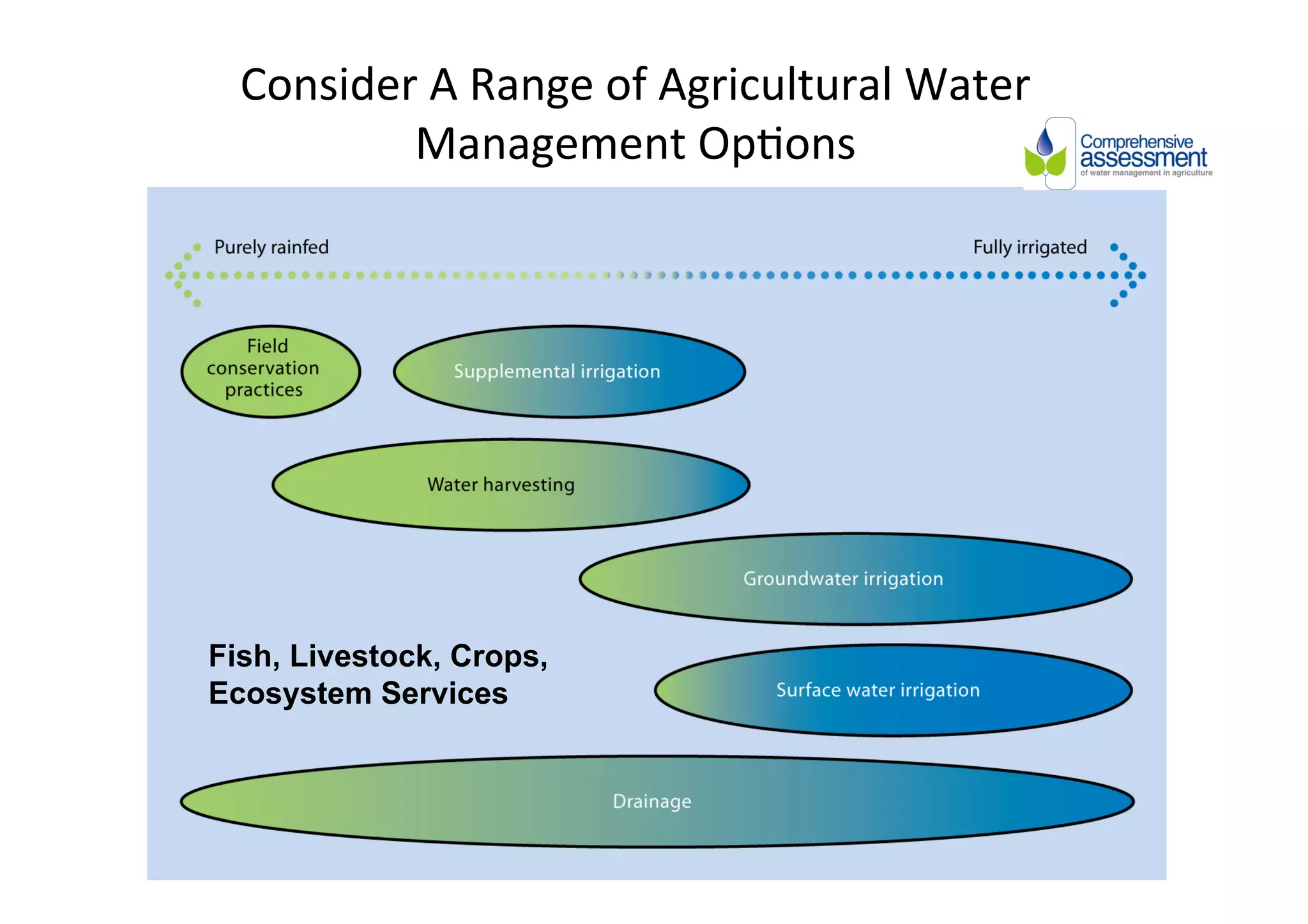
Consider	
  A	
  Range	
  of	
  Agricultural	
  Water	
  
          Management	
  Op>ons	


Fish, Livestock, Crops,
Ecosystem Services
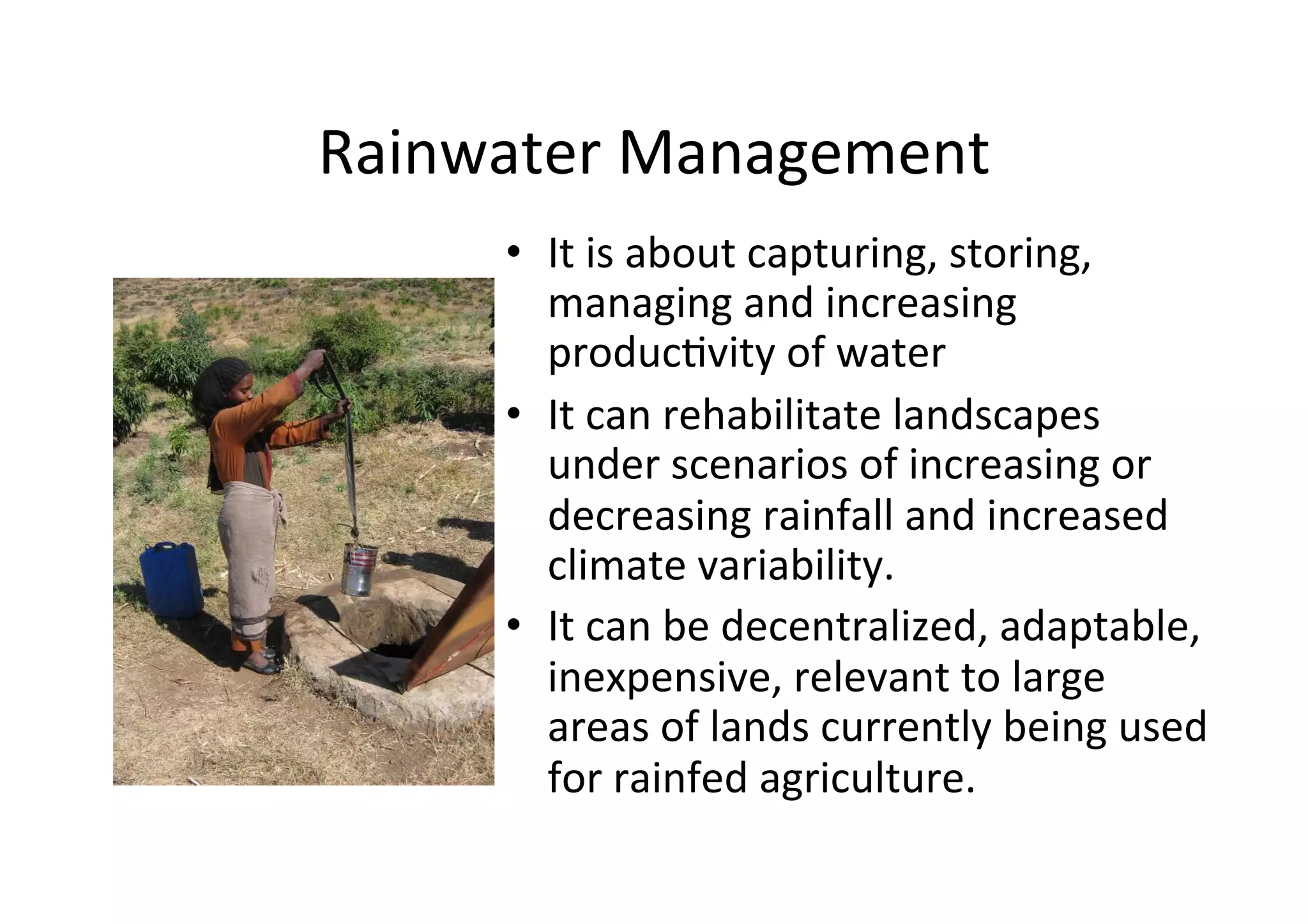
Rainwater	
  Management	
  
       •  It	
  is	
  about	
  capturing,	
  storing,	
  
          managing	
  and	
  increasing	
  
          produc>vity	
  of	
  water	
  	
  
       •  It	
  can	
  rehabilitate	
  landscapes	
  
          under	
  scenarios	
  of	
  increasing	
  or	
  
          decreasing	
  rainfall	
  and	
  increased	
  
          climate	
  variability.	
  	
  
       •  It	
  can	
  be	
  decentralized,	
  adaptable,	
  
          inexpensive,	
  relevant	
  to	
  large	
  
          areas	
  of	
  lands	
  currently	
  being	
  used	
  
          for	
  rainfed	
  agriculture.	
  
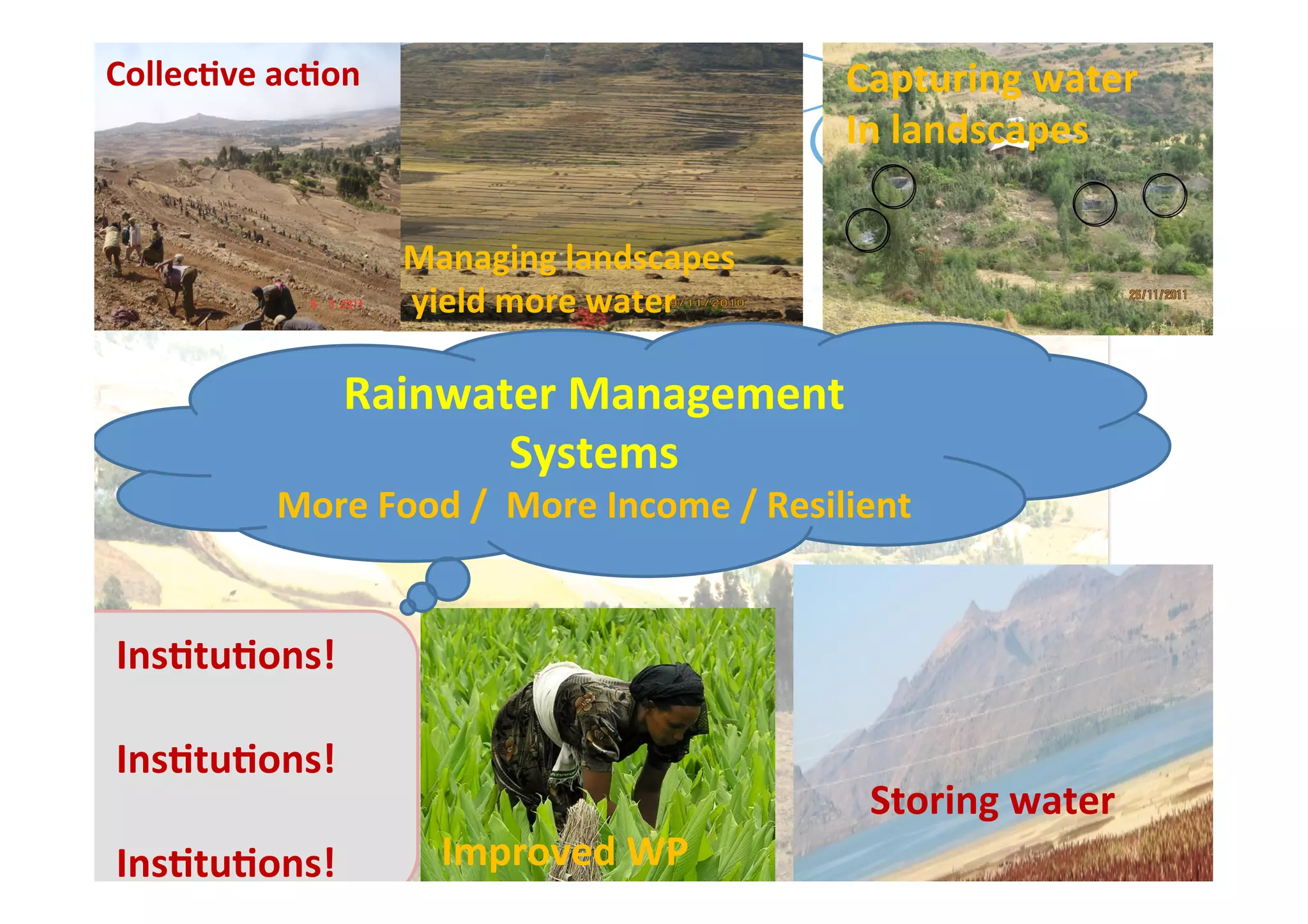
Collec.ve	
  ac.on	
                                                     Capturing	
  water	
  	
  
                                                                         In	
  landscapes	


                           Managing	
  landscapes	
  
                           	
  yield	
  more	
  water	
  

                    Rainwater	
  Management	
  
                           Systems	
  	
  
              More	
  Food	
  /	
  	
  More	
  Income	
  /	
  Resilient	


Ins.tu.ons!	


Ins.tu.ons!	


                                          Storing	
  water	
  
Ins.tu.ons!	
  	
              Improved	
  WP	
                            	
  
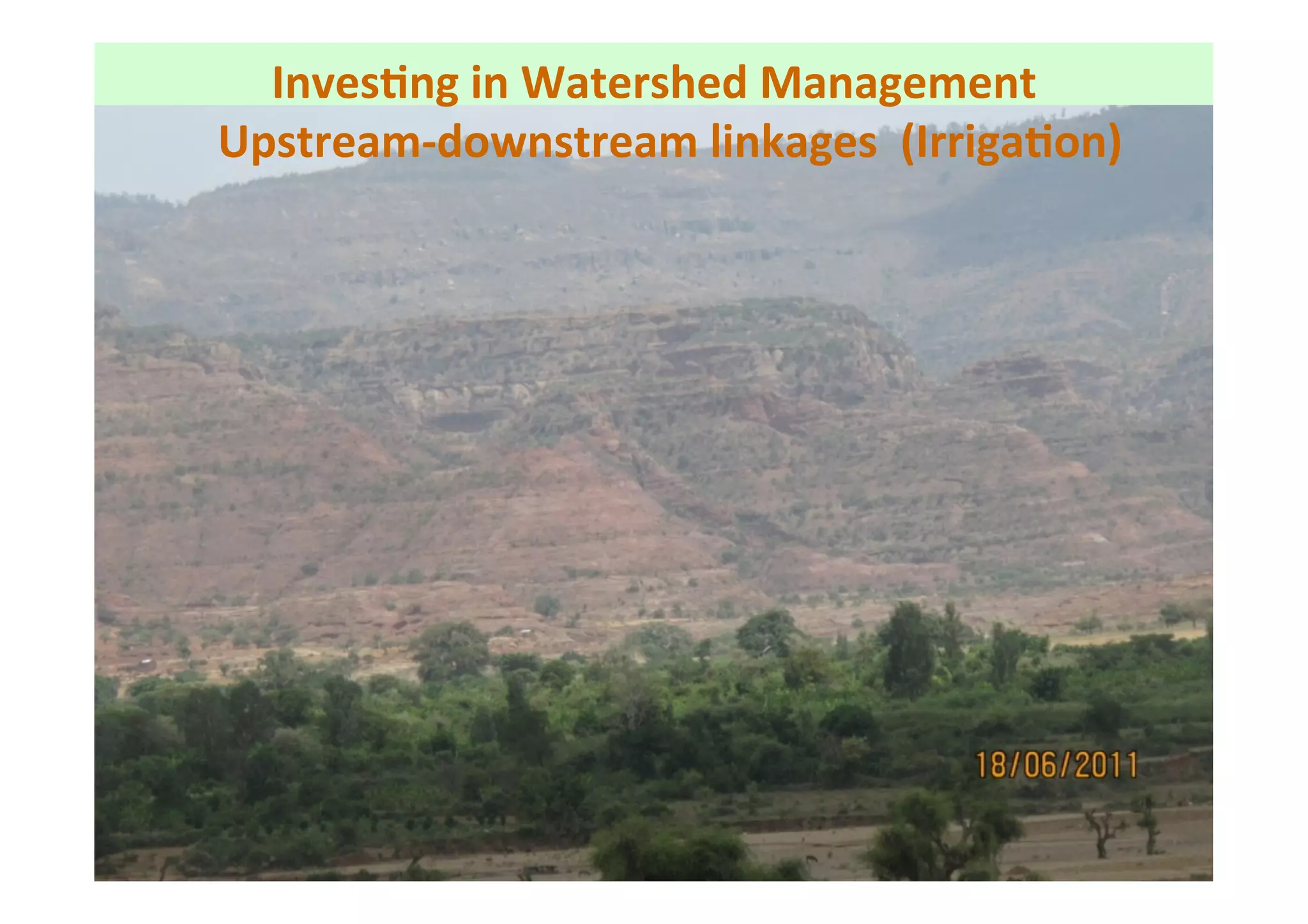
Inves.ng	
  in	
  Watershed	
  Management	


  Upstream-­‐downstream	
  linkages	
  	
  (Irriga.on)	
  
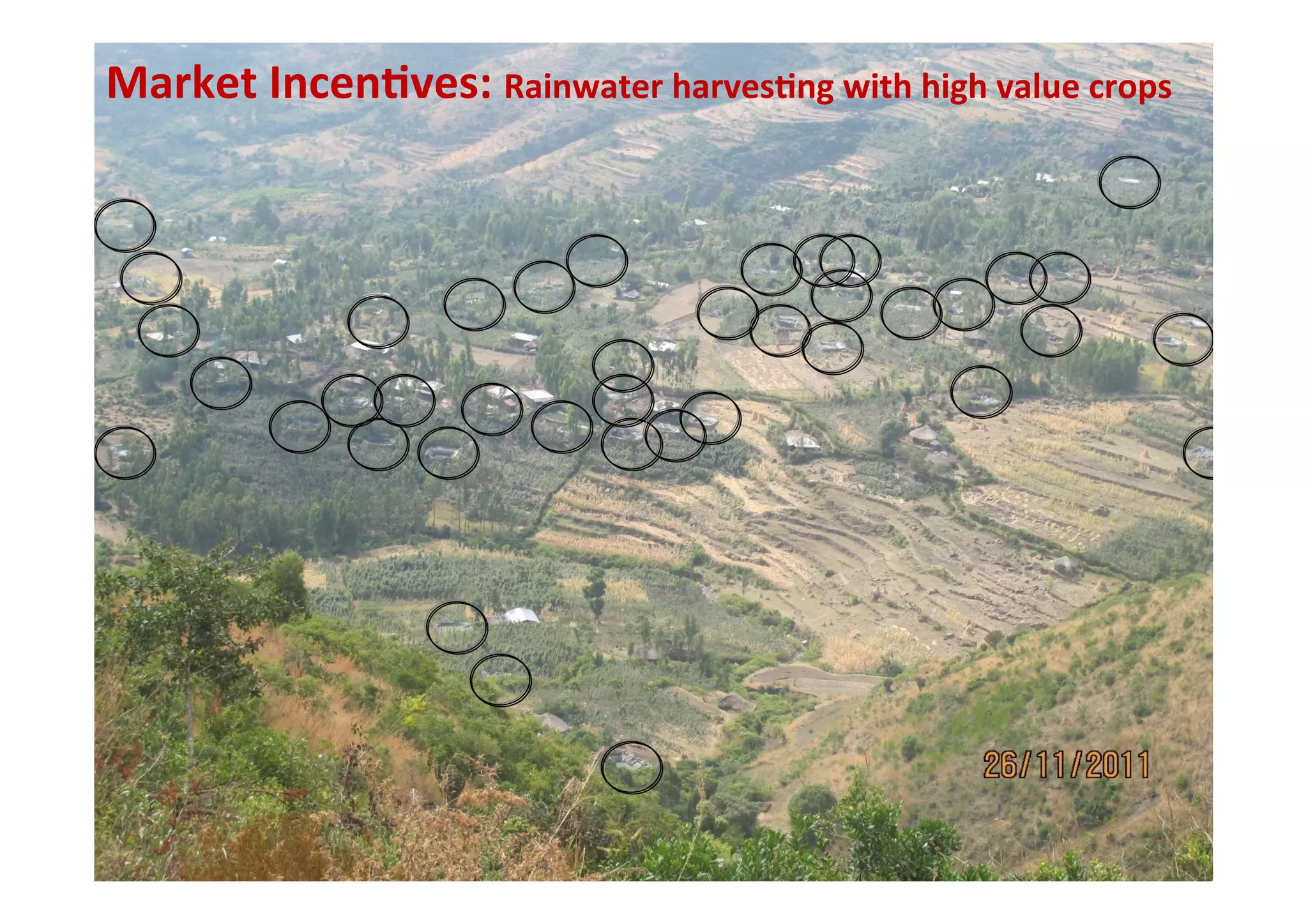
Market	
  Incen.ves:	
  Rainwater	
  harves.ng	
  with	
  high	
  value	
  crops	


                                                                               10	
  
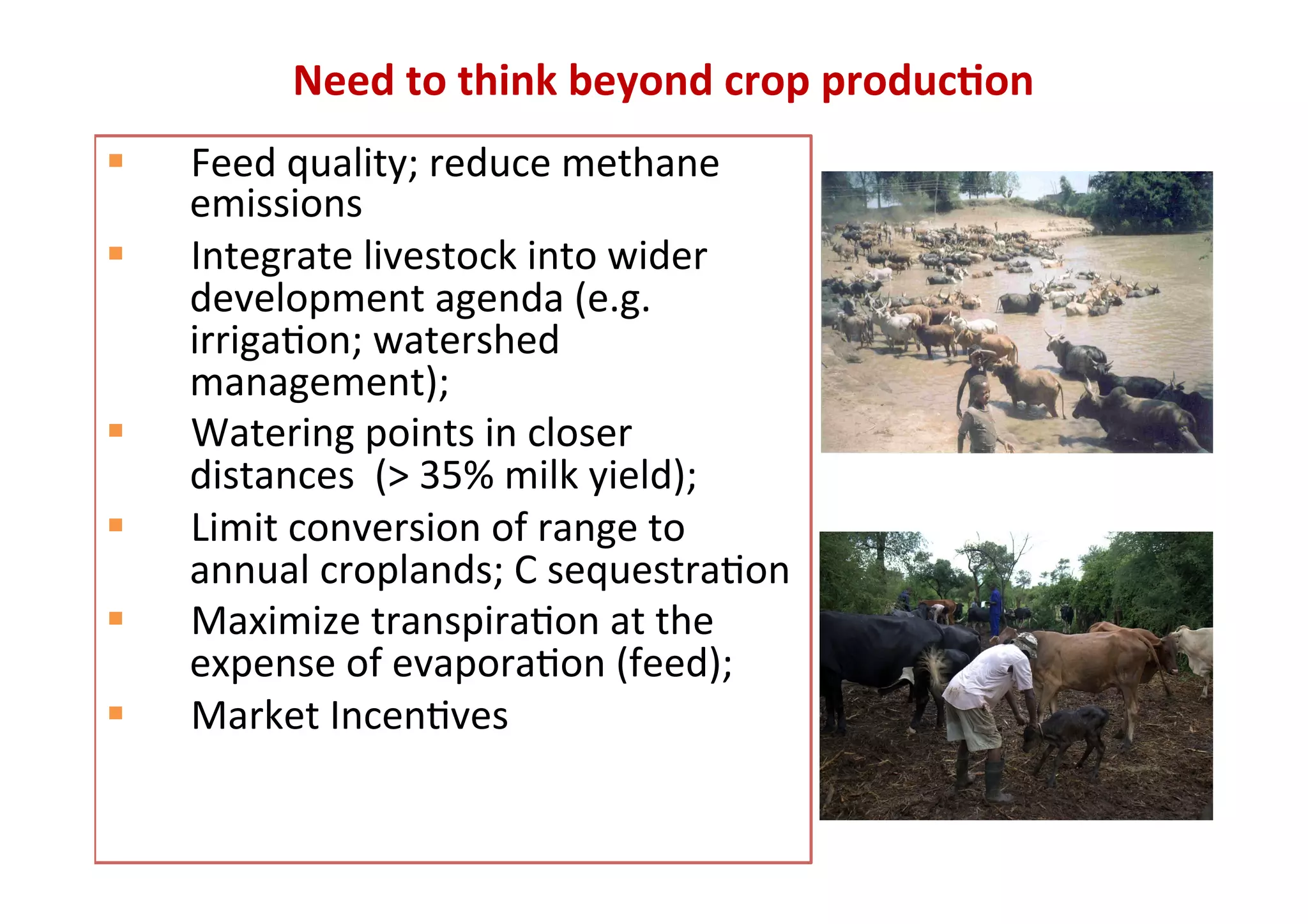
Need	
  to	
  think	
  beyond	
  crop	
  produc.on	
  
§    Feed	
  quality;	
  reduce	
  methane	
  
      emissions	
  
§    Integrate	
  livestock	
  into	
  wider	
  
      development	
  agenda	
  (e.g.	
  
      irriga>on;	
  watershed	
  
      management);	
  
§    Watering	
  points	
  in	
  closer	
  
      distances	
  	
  (>	
  35%	
  milk	
  yield);	
  
§    Limit	
  conversion	
  of	
  range	
  to	
  
      annual	
  croplands;	
  C	
  sequestra>on	
  
§    Maximize	
  transpira>on	
  at	
  the	
  
      expense	
  of	
  evapora>on	
  (feed);	
  
§    Market	
  Incen>ves	
  
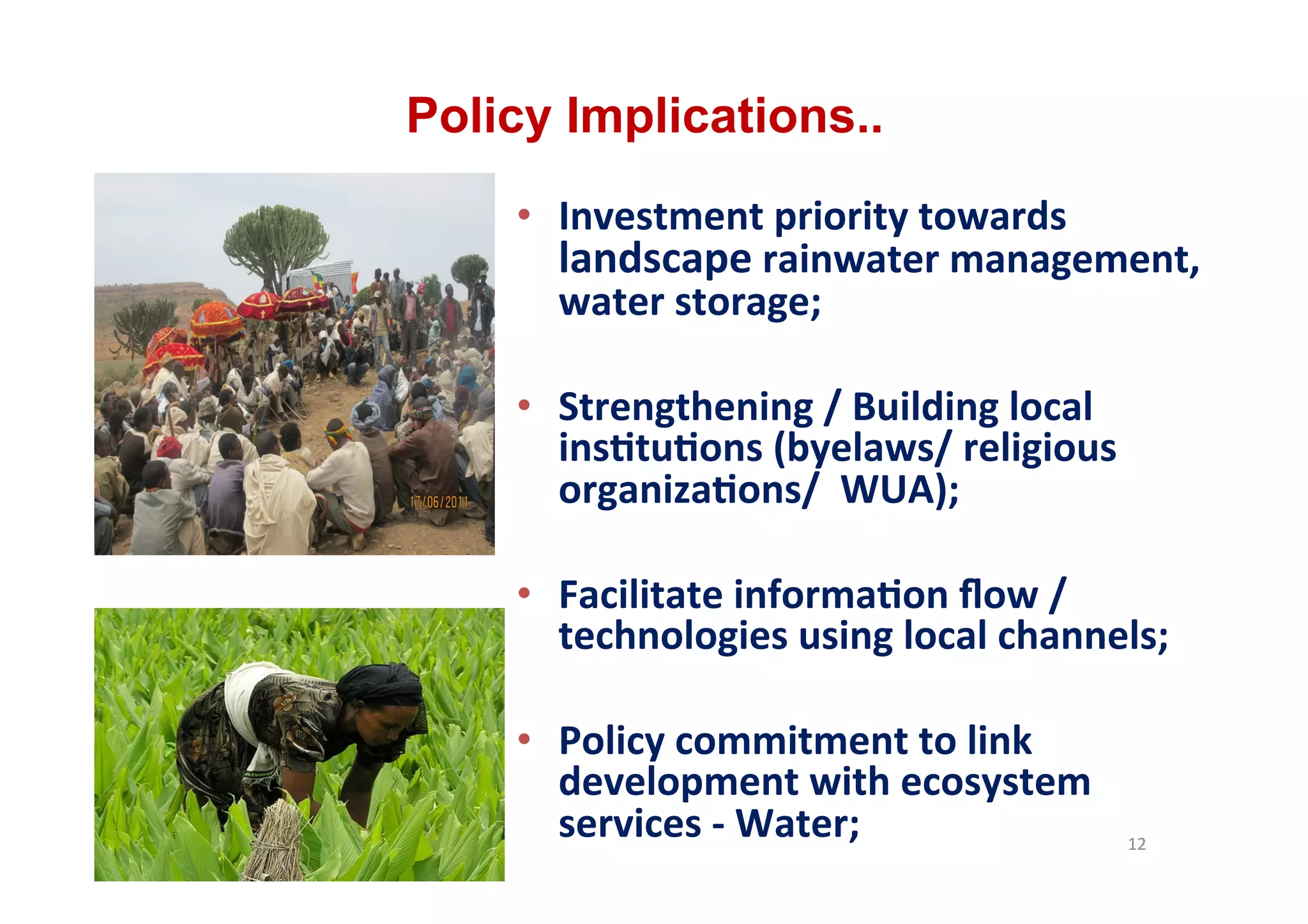
Policy Implications..
    •  Investment	
  priority	
  towards	
  
       landscape	
  rainwater	
  management,	
  
       water	
  storage;	
  

    •  Strengthening	
  /	
  Building	
  local	
  
       ins.tu.ons	
  (byelaws/	
  religious	
  
       organiza.ons/	
  	
  WUA);	
  

    •  Facilitate	
  informa.on	
  flow	
  /	
  
       technologies	
  using	
  local	
  channels;	
  

    •  Policy	
  commitment	
  to	
  link	
  
       development	
  with	
  ecosystem	
  
       services	
  -­‐	
  Water;	
  	
  	
           12	


                      Policy Implications..


•  	
  Policy	
  geared	
  towards	
  climate-­‐sensi.ve	
  systems	


  (Agriculture	
  /	
  wetlands	
  /	
  water	
  towers)	
  and	
  
       vulnerable	
  communi.es;	


•  Na.onal	
  government	
  investments	
  favoring	
  small	
  
     storage	
  structures	
  

•  Cross-­‐boundary	
  hydrological	
  planning	
  /	
  
   watershed	
  management;	
  (drought	
  and	
  flood	
  
   monitoring	
  and	
  informa.on	
  system;	
  coping	
  
   strategies);	
  	
                                                      13	
  
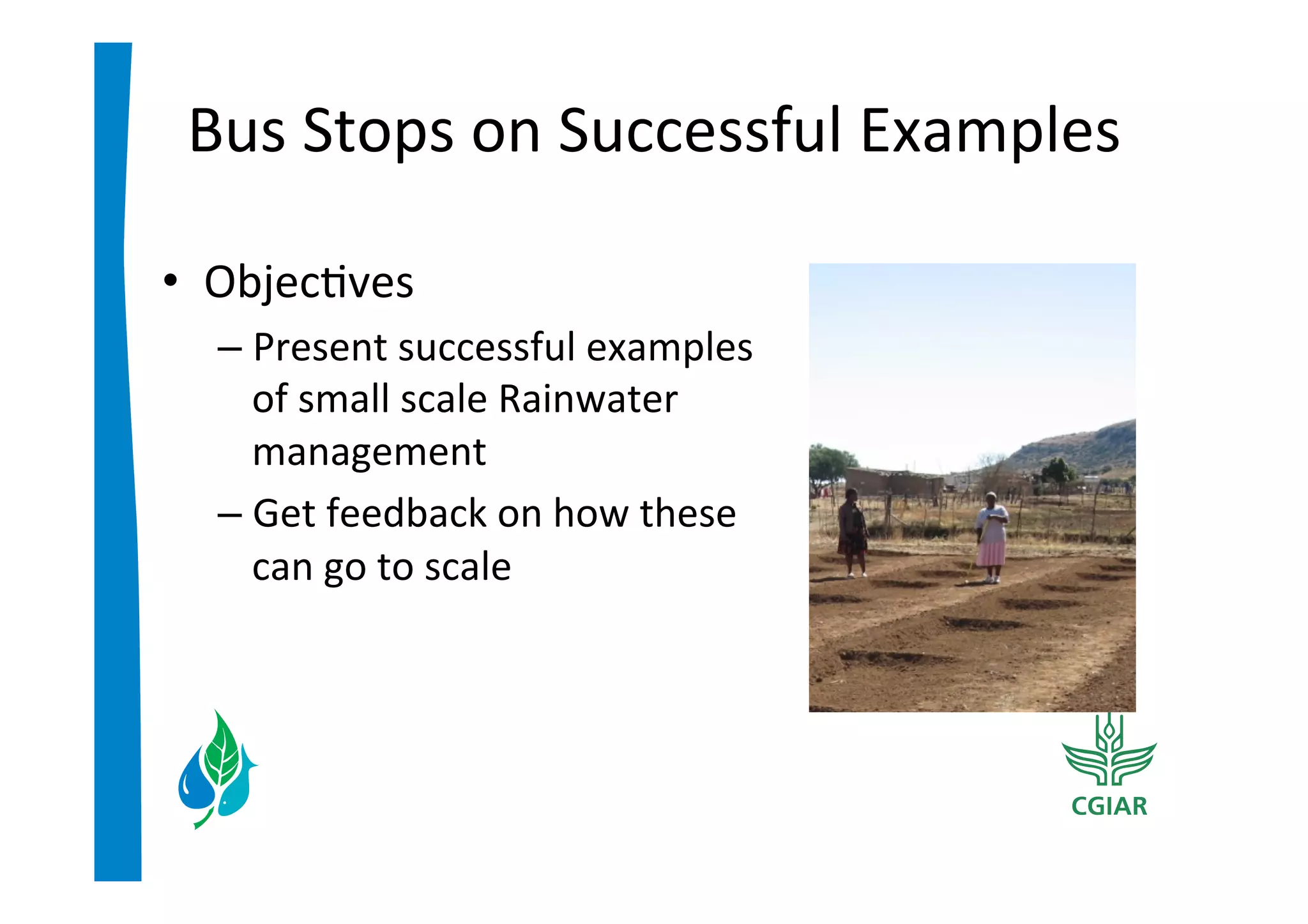
Bus	
  Stops	
  on	
  Successful	
  Examples	
  

•  Objec>ves	
  
   –  Present	
  successful	
  examples	
  
      of	
  small	
  scale	
  Rainwater	
  
      management	
  	
  
   –  Get	
  feedback	
  on	
  how	
  these	
  
      can	
  go	
  to	
  scale	
  
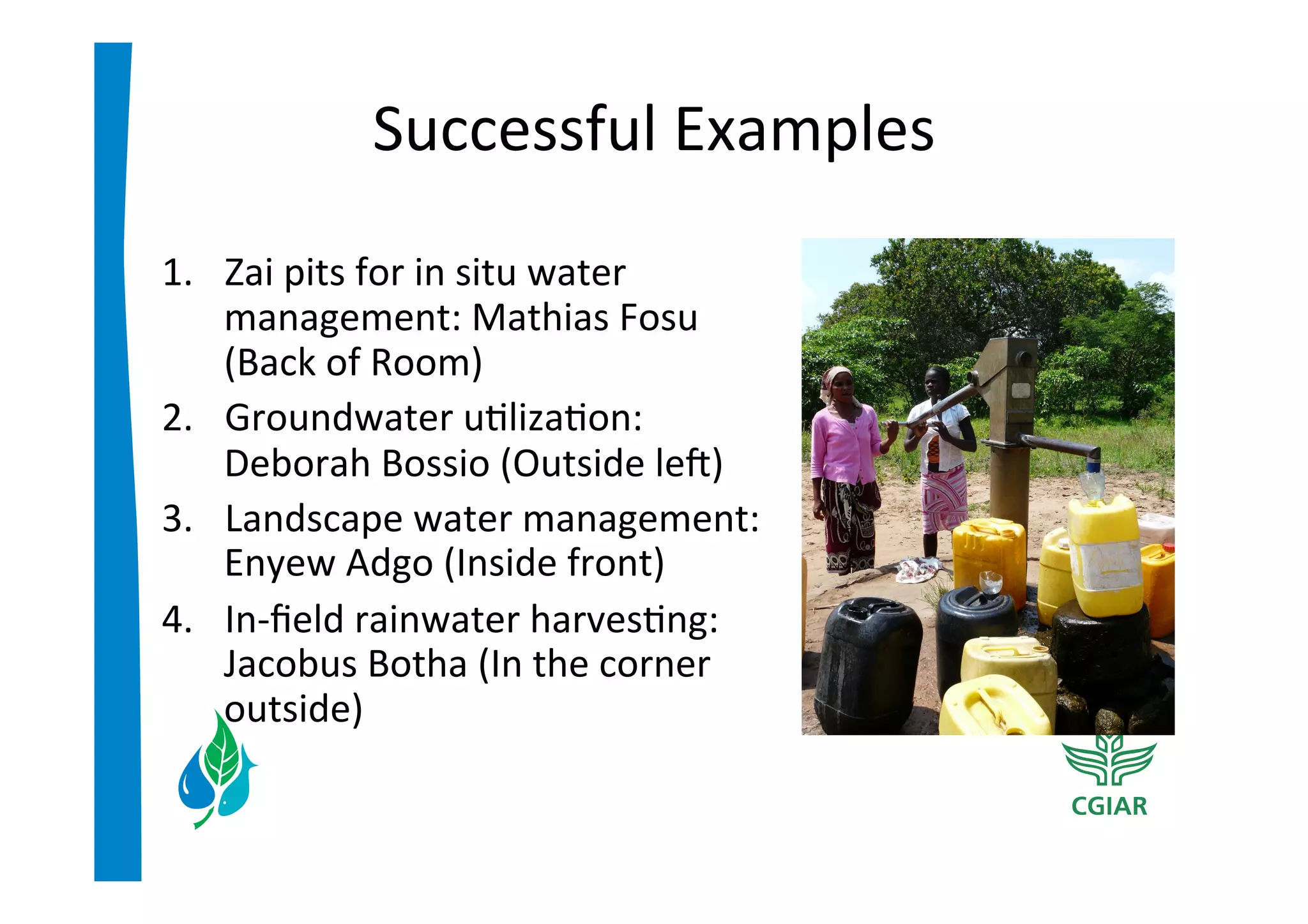
Successful	
  Examples	
  
1.  Zai	
  pits	
  for	
  in	
  situ	
  water	
  
    management:	
  Mathias	
  Fosu	
  
    (Back	
  of	
  Room)	
  
2.  Groundwater	
  u>liza>on:	
  
    Deborah	
  Bossio	
  (Outside	
  lec)	
  
3.  Landscape	
  water	
  management:	
  
    Enyew	
  Adgo	
  (Inside	
  front)	
  
4.  In-­‐field	
  rainwater	
  harves>ng:	
  
    Jacobus	
  Botha	
  (In	
  the	
  corner	
  
    outside)	
  
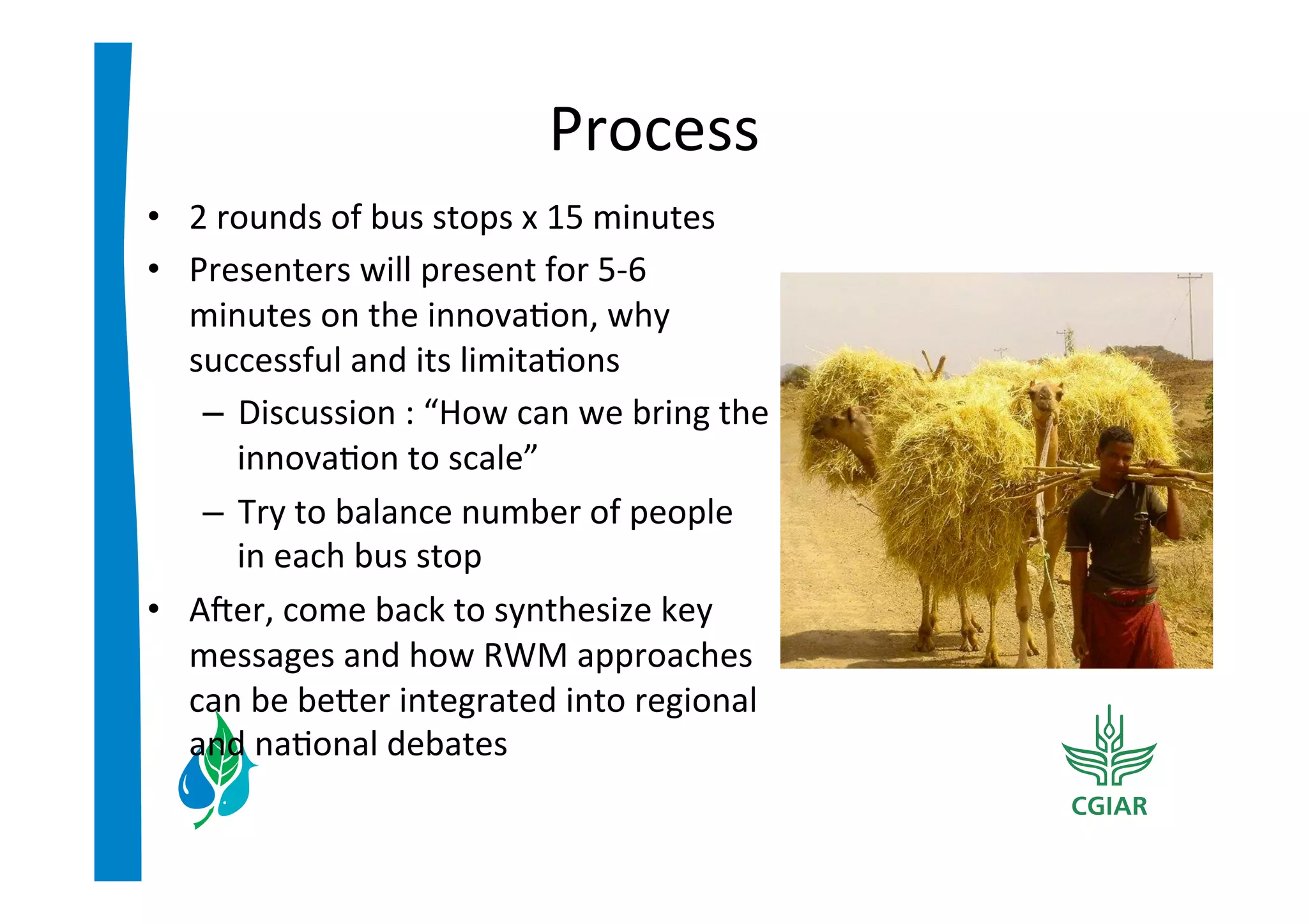
Process	
  
•  2	
  rounds	
  of	
  bus	
  stops	
  x	
  15	
  minutes	
  
•  Presenters	
  will	
  present	
  for	
  5-­‐6	
  
   minutes	
  on	
  the	
  innova>on,	
  why	
  
   successful	
  and	
  its	
  limita>ons	
  
    –  Discussion	
  :	
  “How	
  can	
  we	
  bring	
  the	
  
         innova>on	
  to	
  scale”	
  	
  
    –  Try	
  to	
  balance	
  number	
  of	
  people	
  
         in	
  each	
  bus	
  stop	
  
•  Acer,	
  come	
  back	
  to	
  synthesize	
  key	
  
   messages	
  and	
  how	
  RWM	
  approaches	
  
   can	
  be	
  beier	
  integrated	
  into	
  regional	
  
   and	
  na>onal	
  debates	
  	
  
Learn	
  more	
  at	
  

•  CPWF	
  website	
  Hip://www.waterandfood.org	
  
   –  More	
  on	
  rainwater	
  management:	
  	
  
   –  hip://waterandfood.org/page/News-­‐and-­‐Events/
      news:83	


•  IWMI	
  website:	
  www.iwmi.org	
  

Learning Event No 9, Session 2, From Agriculture and Rural Development Day (ARDD) 2011

  • 1.
    How  can  rainwater  management  help   support  smallholder  farmers’  ability  to   adapt  to  climate  variability  and  change?    
  • 2.
    Learning  Event   Objec>ve     •  To  demonstrate  the   value  of  inves>ng  in   rainwater   management  to   strengthen  adap>ve   capacity  of   smallholder  farmers    
  • 3.
    Rainfed  farming  at  risk     Dependence on igreen and blue limate  variability   from   ncreasing  c water 2000
  • 4.
    Per  capita  water  storage  in  cubic  meters  in   human-­‐made  reservoirs  by  con>nent…       …but  large  dams  are  not  the  only  op>on,  nor  a  sufficient   op>on,  for  climate  smart  agriculture  
  • 5.
    Climate  smart:  adapta>on,  mi>ga>on  and  livelihoods   start  with  rain,  manage  for  variety  of  livelihood   strategies  and  landscape  niches     4/02/2011  ILRI  Campus,   Water  and  Agriculture  Share  Fair   ETHIOPIA    
  • 6.
    Consider  A  Range  of  Agricultural  Water   Management  Op>ons   Fish, Livestock, Crops, Ecosystem Services
  • 7.
    Rainwater  Management   •  It  is  about  capturing,  storing,   managing  and  increasing   produc>vity  of  water     •  It  can  rehabilitate  landscapes   under  scenarios  of  increasing  or   decreasing  rainfall  and  increased   climate  variability.     •  It  can  be  decentralized,  adaptable,   inexpensive,  relevant  to  large   areas  of  lands  currently  being  used   for  rainfed  agriculture.  
  • 8.
    Collec.ve  ac.on   Capturing  water     In  landscapes       Managing  landscapes    yield  more  water   Rainwater  Management   Systems     More  Food  /    More  Income  /  Resilient       Ins.tu.ons!     Ins.tu.ons!       Storing  water   Ins.tu.ons!     Improved  WP    
  • 9.
    Inves.ng  in  Watershed  Management      Upstream-­‐downstream  linkages    (Irriga.on)  
  • 10.
    Market  Incen.ves:  Rainwater  harves.ng  with  high  value  crops   10  
  • 11.
    Need  to  think  beyond  crop  produc.on   §  Feed  quality;  reduce  methane   emissions   §  Integrate  livestock  into  wider   development  agenda  (e.g.   irriga>on;  watershed   management);   §  Watering  points  in  closer   distances    (>  35%  milk  yield);   §  Limit  conversion  of  range  to   annual  croplands;  C  sequestra>on   §  Maximize  transpira>on  at  the   expense  of  evapora>on  (feed);   §  Market  Incen>ves  
  • 12.
    Policy Implications.. •  Investment  priority  towards   landscape  rainwater  management,   water  storage;   •  Strengthening  /  Building  local   ins.tu.ons  (byelaws/  religious   organiza.ons/    WUA);   •  Facilitate  informa.on  flow  /   technologies  using  local  channels;   •  Policy  commitment  to  link   development  with  ecosystem   services  -­‐  Water;       12  
  • 13.
            Policy Implications..     •   Policy  geared  towards  climate-­‐sensi.ve  systems      (Agriculture  /  wetlands  /  water  towers)  and   vulnerable  communi.es;       •  Na.onal  government  investments  favoring  small   storage  structures   •  Cross-­‐boundary  hydrological  planning  /   watershed  management;  (drought  and  flood   monitoring  and  informa.on  system;  coping   strategies);     13  
  • 14.
    Bus  Stops  on  Successful  Examples   •  Objec>ves   –  Present  successful  examples   of  small  scale  Rainwater   management     –  Get  feedback  on  how  these   can  go  to  scale  
  • 15.
    Successful  Examples   1. Zai  pits  for  in  situ  water   management:  Mathias  Fosu   (Back  of  Room)   2.  Groundwater  u>liza>on:   Deborah  Bossio  (Outside  lec)   3.  Landscape  water  management:   Enyew  Adgo  (Inside  front)   4.  In-­‐field  rainwater  harves>ng:   Jacobus  Botha  (In  the  corner   outside)  
  • 16.
    Process   •  2  rounds  of  bus  stops  x  15  minutes   •  Presenters  will  present  for  5-­‐6   minutes  on  the  innova>on,  why   successful  and  its  limita>ons   –  Discussion  :  “How  can  we  bring  the   innova>on  to  scale”     –  Try  to  balance  number  of  people   in  each  bus  stop   •  Acer,  come  back  to  synthesize  key   messages  and  how  RWM  approaches   can  be  beier  integrated  into  regional   and  na>onal  debates    
  • 17.
    Learn  more  at   •  CPWF  website  Hip://www.waterandfood.org   –  More  on  rainwater  management:     –  hip://waterandfood.org/page/News-­‐and-­‐Events/ news:83     •  IWMI  website:  www.iwmi.org