Martin Waller
          Creative Learning Coordinator
         Holy Trinity Rosehill Primary School

UKLA International Conference - Friday 15th July 2011
Classroom Teacher of Orange Class (Year 2) at Holy
Trinity Rosehill Primary School.

       Creative Learning Coordinator for Nursery through to Year 6.


   Postgraduate student (MA in New Literacies) at the University
   of Sheffield.

Independent educational researcher working with a
range of organisations.
Waller, M. (2010) It’s very very fun and ecsiting – using Twitter in the
primary classroom. English Four to Eleven, Summer, pp. 14–16.

Waller, M. (2011) ‘Everyone in the World Can See It’ - Developing
Pupil Voice through Online Social Networks in Czerniawski, G. and
Kidd, W. (Eds) The Student Voice Handbook: Bridging the Academic/
Practitioner Divide. Emerald Group Publishing (Published September
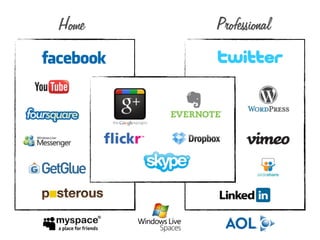
Web-based services that allow individuals to (1)
construct a public profile or semi-public profile within a
bounded system, (2) articulate a list of other users within
whom they share a connection, and (3) view and
traverse their list of connections and those made by
others within the system.
                                          (boyd and Ellison, 2008: 221)
“Friend me on Facebook and I’ll totally confirm...”
           (Dialogue from ‘Sorority Row’ - Hendler, 2009: [00:27:50])
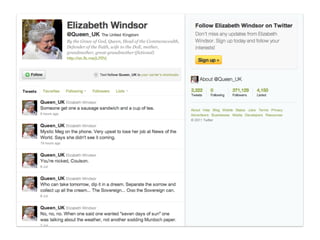
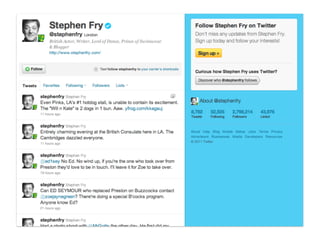
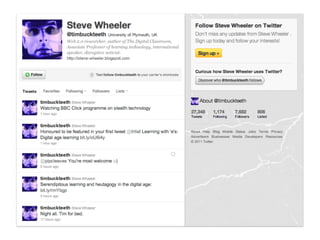
Start your own Personal Learning Network by following
the people on this Twitter list.

       http://twitter.com/MultiMartin/project-pln
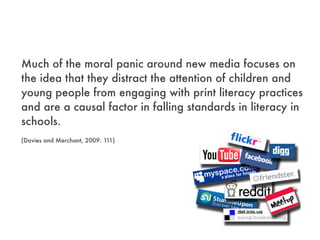
Much of the moral panic around new media focuses on
the idea that they distract the attention of children and
young people from engaging with print literacy practices
and are a causal factor in falling standards in literacy in
schools.
(Davies and Merchant, 2009: 111)
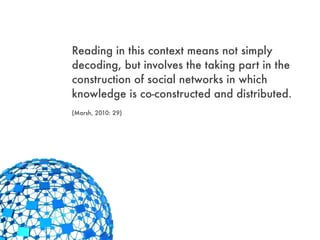
Reading in this context means not simply
decoding, but involves the taking part in the
construction of social networks in which
knowledge is co-constructed and distributed.
(Marsh, 2010: 29)
Children must not mention their name or any o ftheir
friends by name under any circumstances.

                 Children must not check for replies or direct
                 messages.

       Children must not navigate away from our Twitter
       stream page or look at other people’s profiles.

(Waller, 2010)
email                     orange class blog
 martinwaller@me.com       www.whatwedidtoday.net


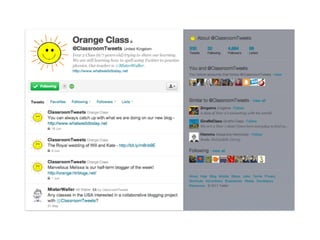
 twitter                   orange class twitter
 @MultiMartin              @ClassroomTweets
 @MisterWaller


blog
www.changinghorizons.net

Learning to Tweet/Tweeting to Learn

  • 1.
    Martin Waller Creative Learning Coordinator Holy Trinity Rosehill Primary School UKLA International Conference - Friday 15th July 2011
  • 2.
    Classroom Teacher ofOrange Class (Year 2) at Holy Trinity Rosehill Primary School. Creative Learning Coordinator for Nursery through to Year 6. Postgraduate student (MA in New Literacies) at the University of Sheffield. Independent educational researcher working with a range of organisations.
  • 3.
    Waller, M. (2010)It’s very very fun and ecsiting – using Twitter in the primary classroom. English Four to Eleven, Summer, pp. 14–16. Waller, M. (2011) ‘Everyone in the World Can See It’ - Developing Pupil Voice through Online Social Networks in Czerniawski, G. and Kidd, W. (Eds) The Student Voice Handbook: Bridging the Academic/ Practitioner Divide. Emerald Group Publishing (Published September
  • 5.
    Web-based services thatallow individuals to (1) construct a public profile or semi-public profile within a bounded system, (2) articulate a list of other users within whom they share a connection, and (3) view and traverse their list of connections and those made by others within the system. (boyd and Ellison, 2008: 221)
  • 6.
    “Friend me onFacebook and I’ll totally confirm...” (Dialogue from ‘Sorority Row’ - Hendler, 2009: [00:27:50])
  • 17.
    Start your ownPersonal Learning Network by following the people on this Twitter list. http://twitter.com/MultiMartin/project-pln
  • 18.
    Much of themoral panic around new media focuses on the idea that they distract the attention of children and young people from engaging with print literacy practices and are a causal factor in falling standards in literacy in schools. (Davies and Merchant, 2009: 111)
  • 24.
    Reading in thiscontext means not simply decoding, but involves the taking part in the construction of social networks in which knowledge is co-constructed and distributed. (Marsh, 2010: 29)
  • 27.
    Children must notmention their name or any o ftheir friends by name under any circumstances. Children must not check for replies or direct messages. Children must not navigate away from our Twitter stream page or look at other people’s profiles. (Waller, 2010)
  • 28.
    email orange class blog martinwaller@me.com www.whatwedidtoday.net twitter orange class twitter @MultiMartin @ClassroomTweets @MisterWaller blog www.changinghorizons.net