Sara Ardito
Hannah Frechette
   Ashley Keim
 Olivia Missigman
Samantha Rodney
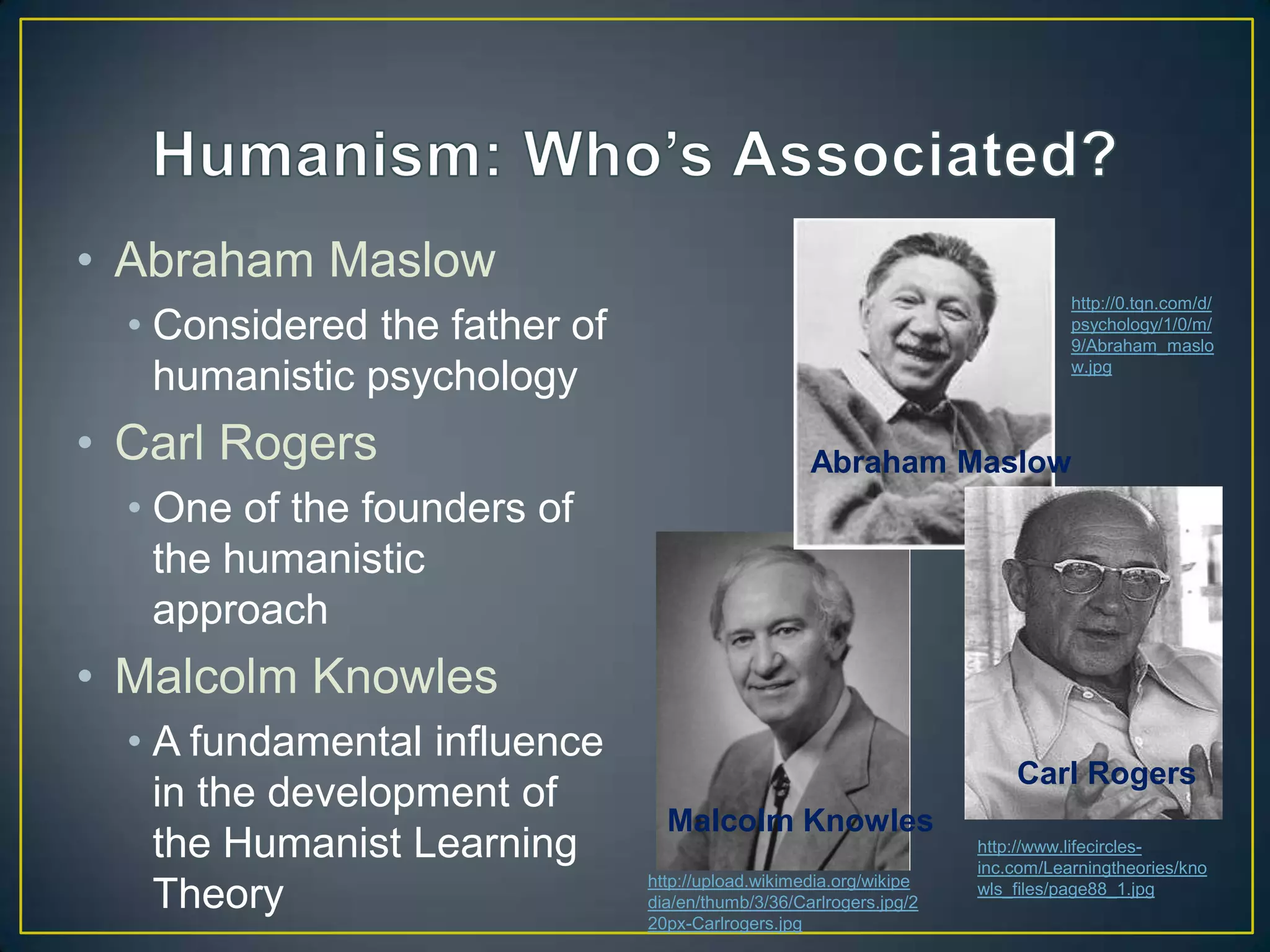
• Abraham Maslow
                                                                               http://0.tqn.com/d/
  • Considered the father of                                                   psychology/1/0/m/
                                                                               9/Abraham_maslo

    humanistic psychology                                                      w.jpg


• Carl Rogers                                      Abraham Maslow
  • One of the founders of
    the humanistic
    approach
• Malcolm Knowles
  • A fundamental influence
                                                                        Carl Rogers
    in the development of
                                 Malcolm Knowles
    the Humanist Learning                                           http://www.lifecircles-
                                                                    inc.com/Learningtheories/kno
                               http://upload.wikimedia.org/wikipe
    Theory                     dia/en/thumb/3/36/Carlrogers.jpg/2
                                                                    wls_files/page88_1.jpg
                               20px-Carlrogers.jpg
• Self-Actualization - the achievement of one's
  full potential through creativity,
  independence, spontaneity, and a grasp of
  the real world.
• Student-Centered – an approach to
  education focusing on the needs of the
  students, rather than those of others involved
  in the educational process.
• Teacher as the Facilitator – the teacher is a
  facilitator of knowledge.
• Focuses on freedom, dignity, and potential.
• A humanistic classroom is inclusive of
  everyone. It seeks to support both
  individuality and diversity by finding
  similarities among children. Lessons are
  developed for the individual, not the group.
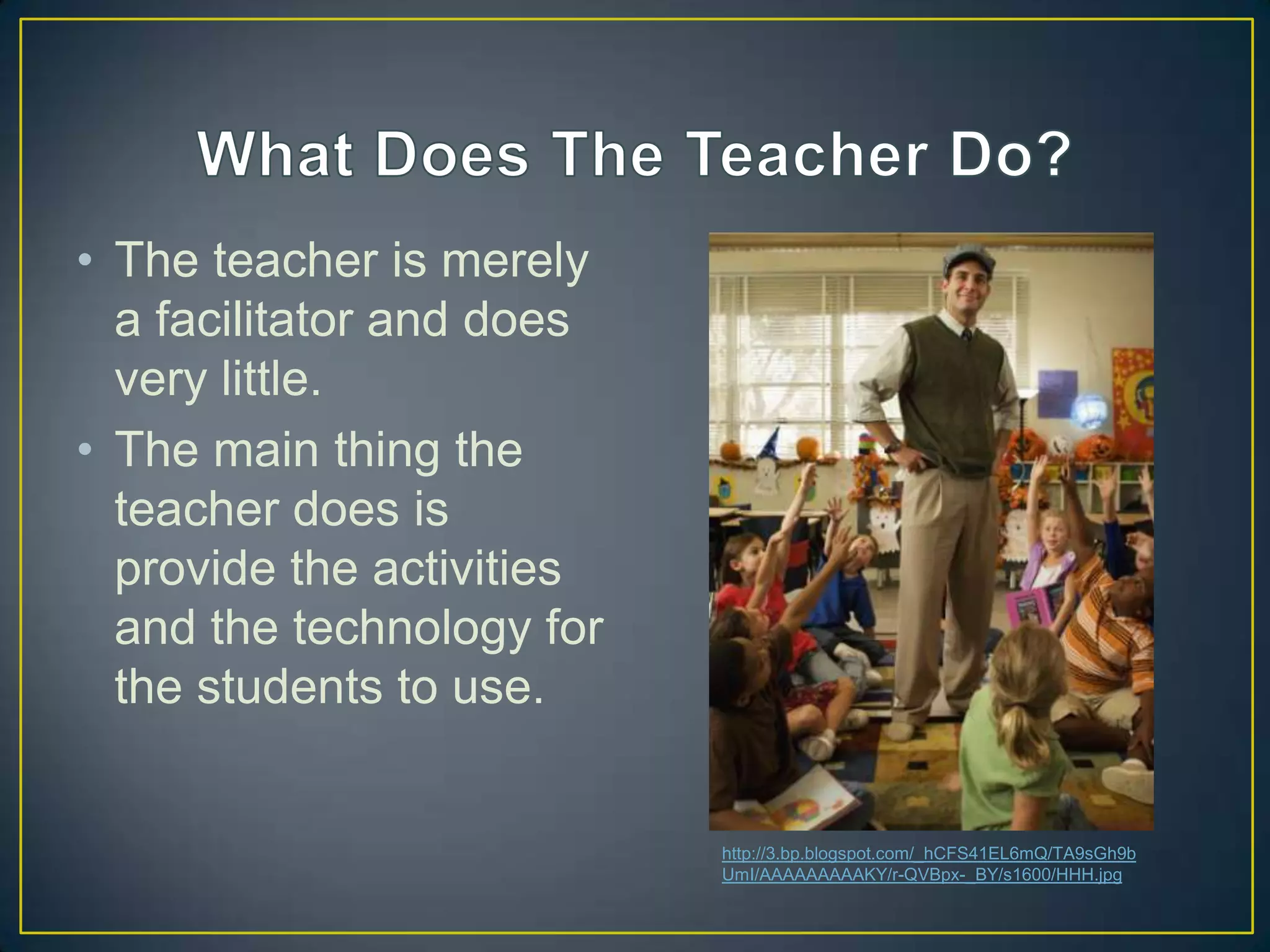
• The teacher is merely
  a facilitator and does
  very little.
• The main thing the
  teacher does is
  provide the activities
  and the technology for
  the students to use.


                           http://3.bp.blogspot.com/_hCFS41EL6mQ/TA9sGh9b
                           UmI/AAAAAAAAAKY/r-QVBpx-_BY/s1600/HHH.jpg
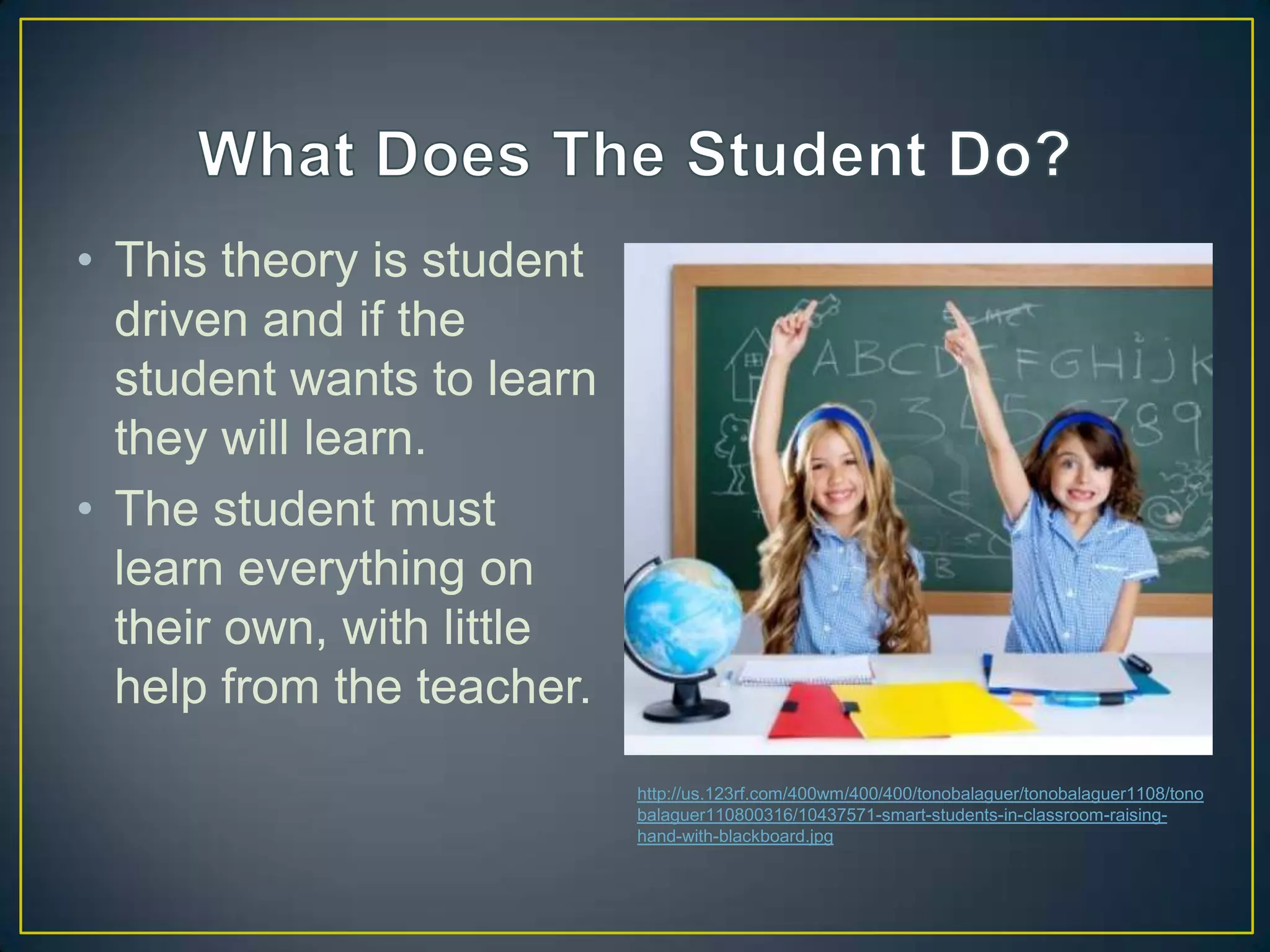
• This theory is student
  driven and if the
  student wants to learn
  they will learn.
• The student must
  learn everything on
  their own, with little
  help from the teacher.
                           http://us.123rf.com/400wm/400/400/tonobalaguer/tonobalaguer1108/tono
                           balaguer110800316/10437571-smart-students-in-classroom-raising-
                           hand-with-blackboard.jpg
• Though other theories may apply to learning, we feel
  that, overall, this theory has a large effect on the role
  of the student. Students who want to succeed in
  school will go the extra mile to work harder and try to
  'fulfill their potential.' They will spend countless hours
  studying in which they try to achieve the goals that
  they want.

Learning Theorists Team Activity: Humanism

  • 1.
    Sara Ardito Hannah Frechette Ashley Keim Olivia Missigman Samantha Rodney
  • 2.
    • Abraham Maslow http://0.tqn.com/d/ • Considered the father of psychology/1/0/m/ 9/Abraham_maslo humanistic psychology w.jpg • Carl Rogers Abraham Maslow • One of the founders of the humanistic approach • Malcolm Knowles • A fundamental influence Carl Rogers in the development of Malcolm Knowles the Humanist Learning http://www.lifecircles- inc.com/Learningtheories/kno http://upload.wikimedia.org/wikipe Theory dia/en/thumb/3/36/Carlrogers.jpg/2 wls_files/page88_1.jpg 20px-Carlrogers.jpg
  • 3.
    • Self-Actualization -the achievement of one's full potential through creativity, independence, spontaneity, and a grasp of the real world. • Student-Centered – an approach to education focusing on the needs of the students, rather than those of others involved in the educational process. • Teacher as the Facilitator – the teacher is a facilitator of knowledge. • Focuses on freedom, dignity, and potential. • A humanistic classroom is inclusive of everyone. It seeks to support both individuality and diversity by finding similarities among children. Lessons are developed for the individual, not the group.
  • 4.
    • The teacheris merely a facilitator and does very little. • The main thing the teacher does is provide the activities and the technology for the students to use. http://3.bp.blogspot.com/_hCFS41EL6mQ/TA9sGh9b UmI/AAAAAAAAAKY/r-QVBpx-_BY/s1600/HHH.jpg
  • 5.
    • This theoryis student driven and if the student wants to learn they will learn. • The student must learn everything on their own, with little help from the teacher. http://us.123rf.com/400wm/400/400/tonobalaguer/tonobalaguer1108/tono balaguer110800316/10437571-smart-students-in-classroom-raising- hand-with-blackboard.jpg
  • 6.
    • Though othertheories may apply to learning, we feel that, overall, this theory has a large effect on the role of the student. Students who want to succeed in school will go the extra mile to work harder and try to 'fulfill their potential.' They will spend countless hours studying in which they try to achieve the goals that they want.