Learning-centered
        syllabus

Relevancy, Roles, Relationship

           By: Lisa Hasler Waters, Ph.D.
Today’s objective


Define a learning centered syllabus
Identify language for a learning centered syllabus
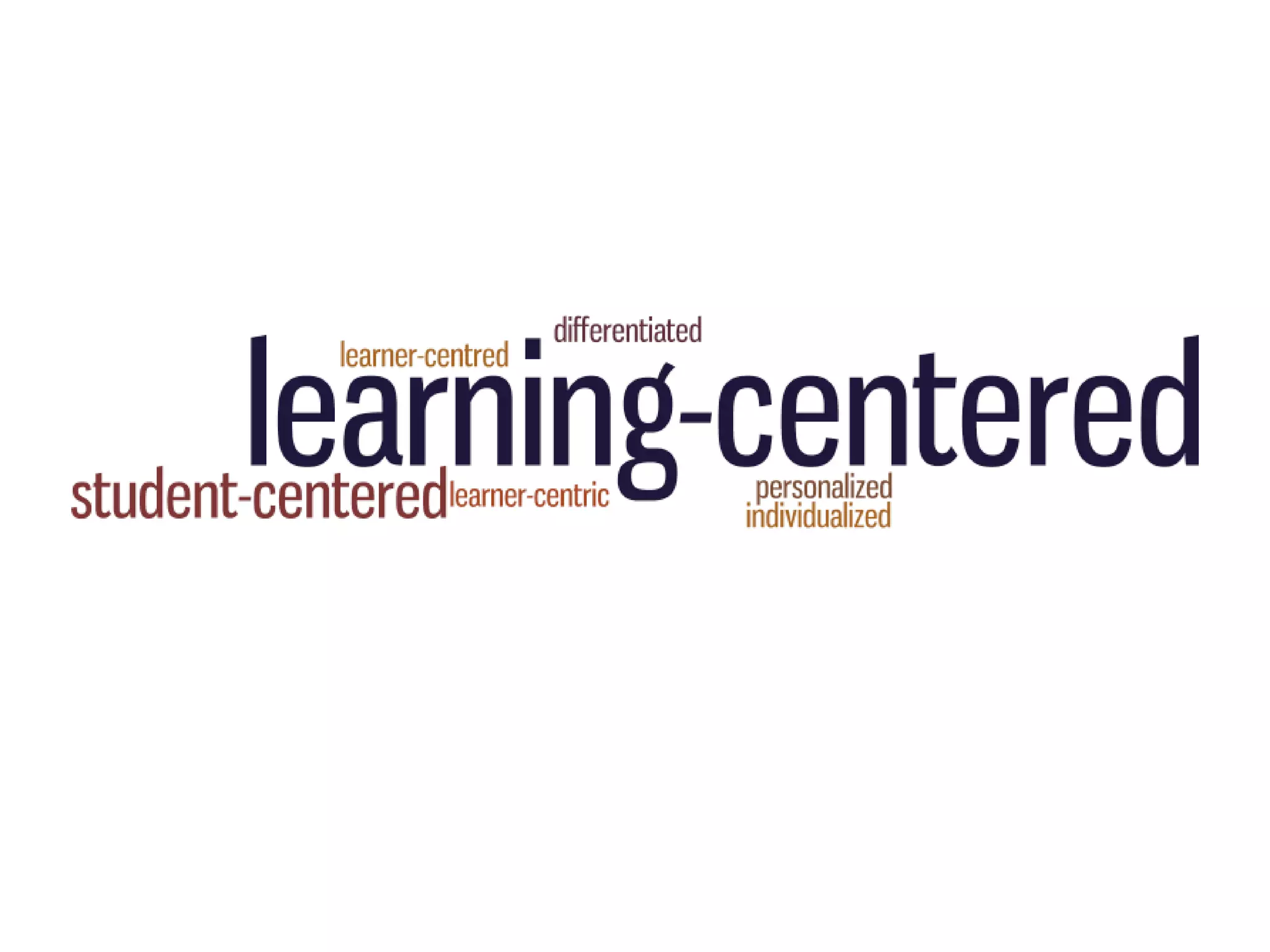
What is learning centered?


               QuickTime™ and a
                 decompressor
       are needed to see this picture.


                                         (Weimer, 2002)
Students

Play active role in their learning
Find the learning personally relevant


               (Blumberg, 2008; O’Neill & McMahon, 2005)
Teachers

Use a variety of teaching methods
 and assessments
Facilitate learning


          (Blumberg, 2008; O’Neill & McMahon, 2005)
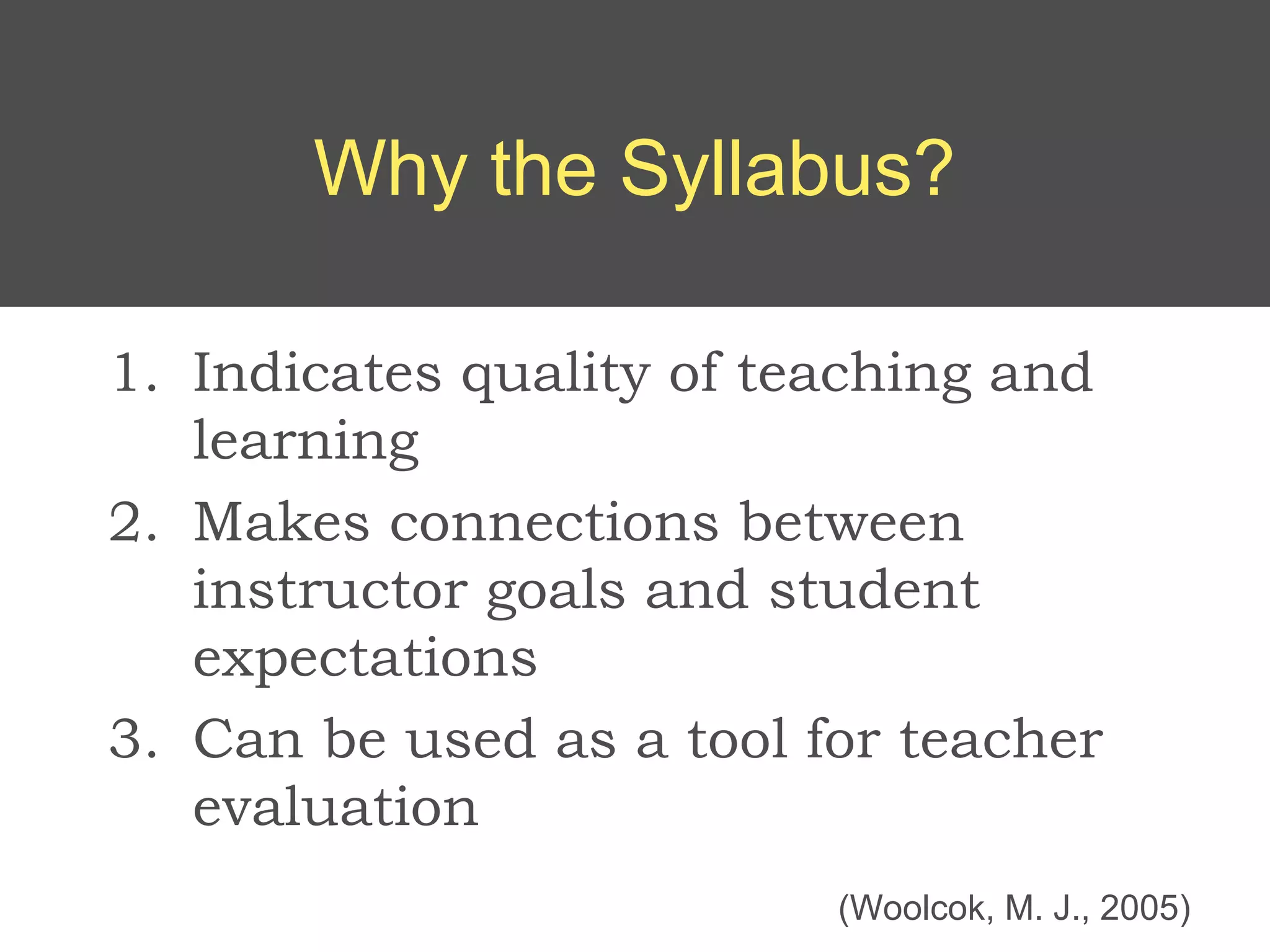
Why the Syllabus?

1. Indicates quality of teaching and
   learning
2. Makes connections between
   instructor goals and student
   expectations
3. Can be used as a tool for teacher
   evaluation
                          (Woolcok, M. J., 2005)
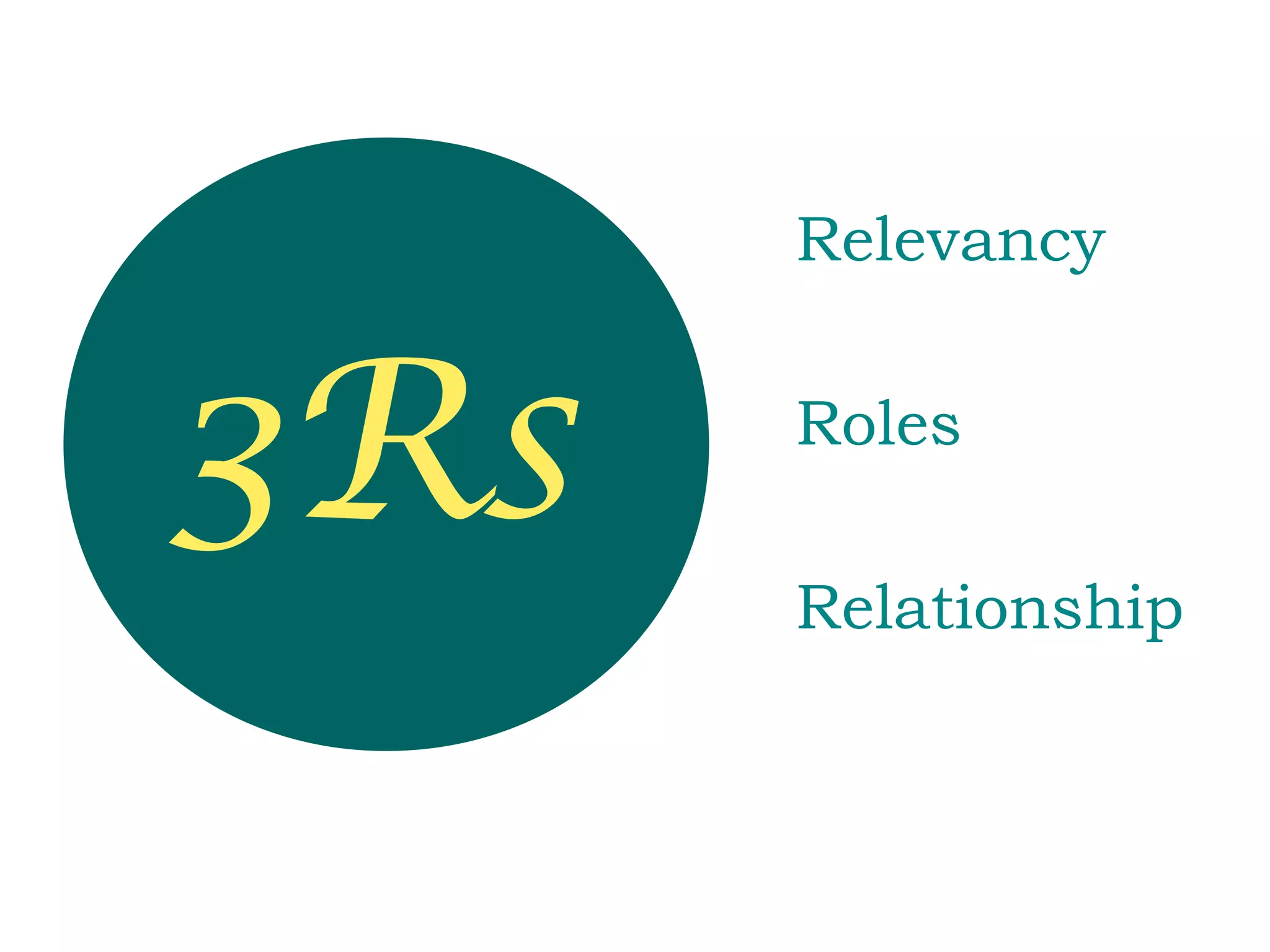
Relevancy


3Rs   Roles

      Relationship
Relevancy

Relates to student’s own life
Transferable skills and knowledge
Connects with the content
Roles


  Student           Teacher
Responsible         Facilitates
Actively involved   Involves student
Accountable         Communicates
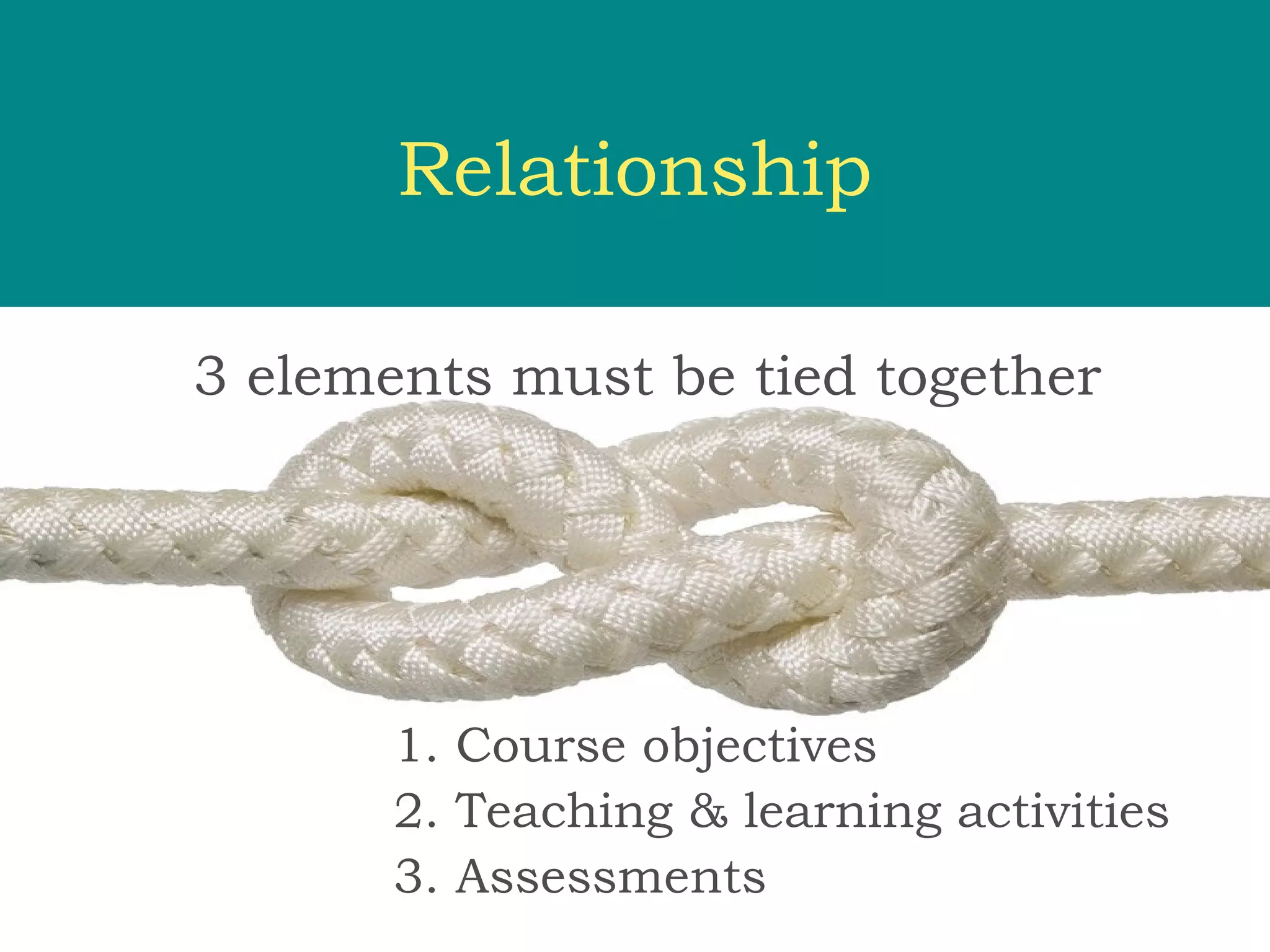
Relationship

3 elements must be tied together


       1. Course objectives
       2. Teaching & learning activities
       3. Assessments
The 3Rs in Action

Questions:
    Can the student connect with the course?
    Are expectations and roles well defined?
    Are the 3 elements tied together?
             (objectives, activities, assessments)
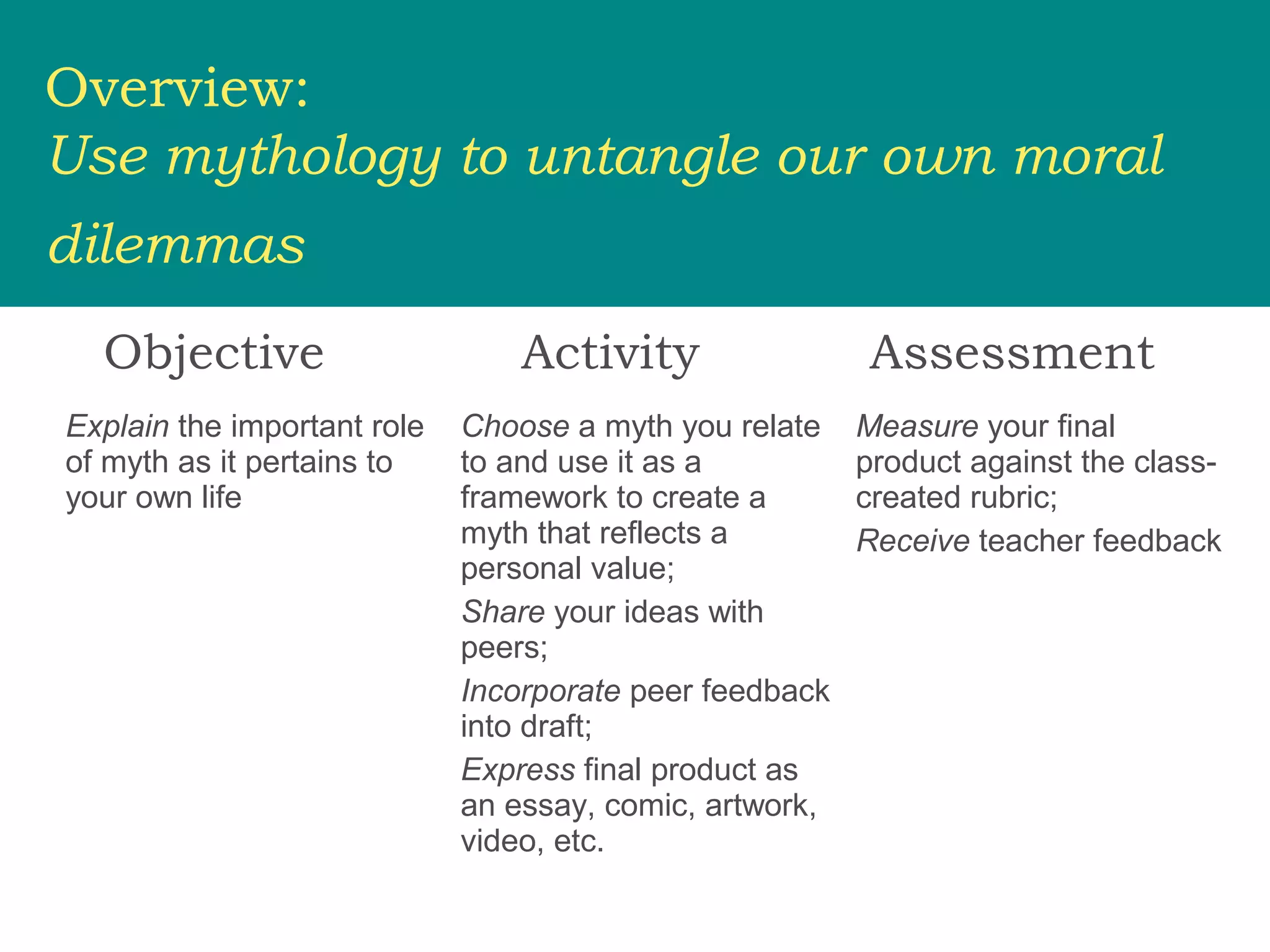
Overview:
Use mythology to untangle our own moral
dilemmas
  Objective                      Activity                Assessment
Explain the important role   Choose a myth you relate    Measure your final
of myth as it pertains to    to and use it as a          product against the class-
your own life                framework to create a       created rubric;
                             myth that reflects a        Receive teacher feedback
                             personal value;
                             Share your ideas with
                             peers;
                             Incorporate peer feedback
                             into draft;
                             Express final product as
                             an essay, comic, artwork,
                             video, etc.
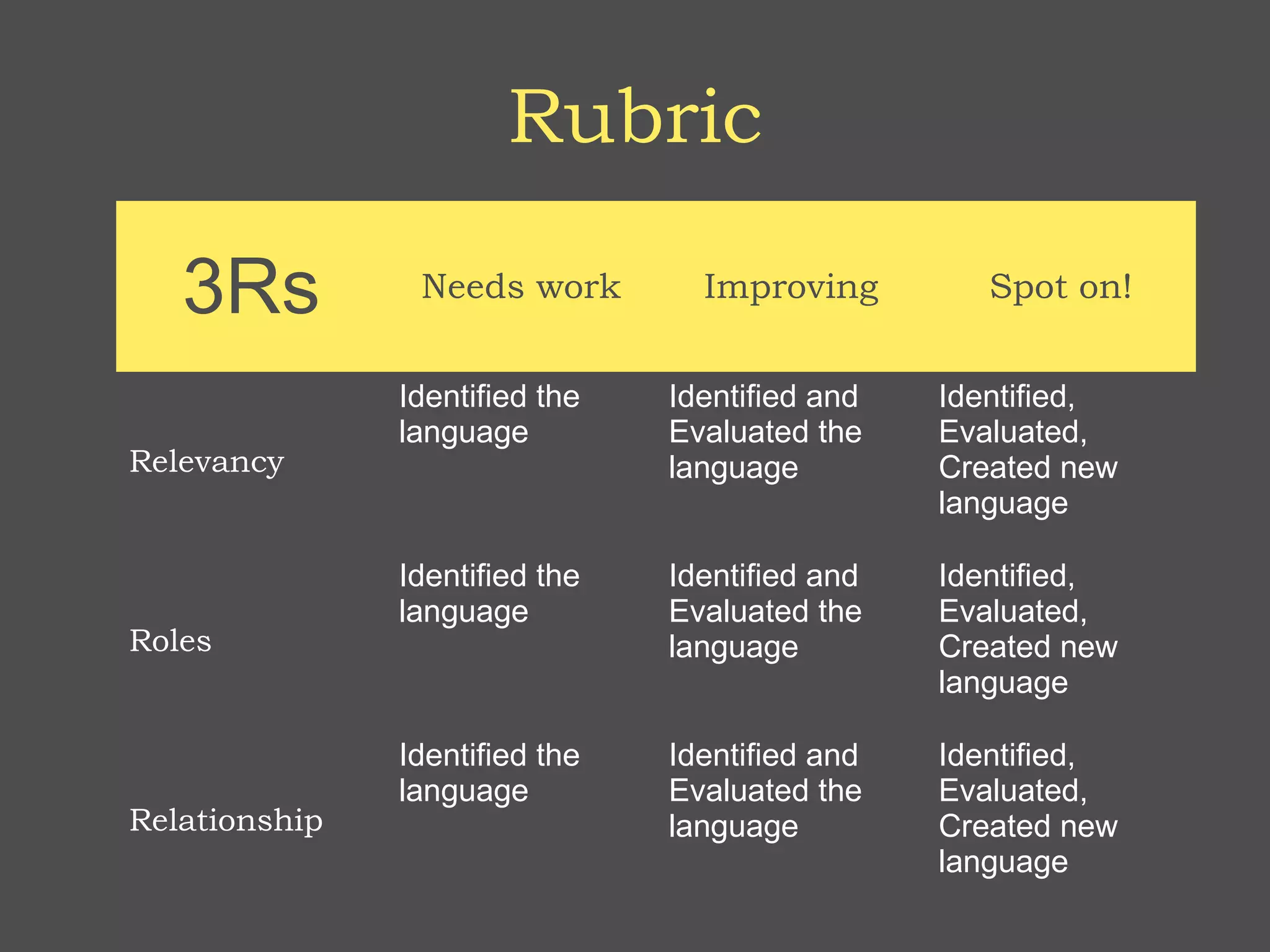
Rubric

   3Rs          Needs work        Improving         Spot on!


               Identified the   Identified and   Identified,
               language         Evaluated the    Evaluated,
Relevancy                       language         Created new
                                                 language

               Identified the   Identified and   Identified,
               language         Evaluated the    Evaluated,
Roles                           language         Created new
                                                 language

               Identified the   Identified and   Identified,
               language         Evaluated the    Evaluated,
Relationship                    language         Created new
                                                 language
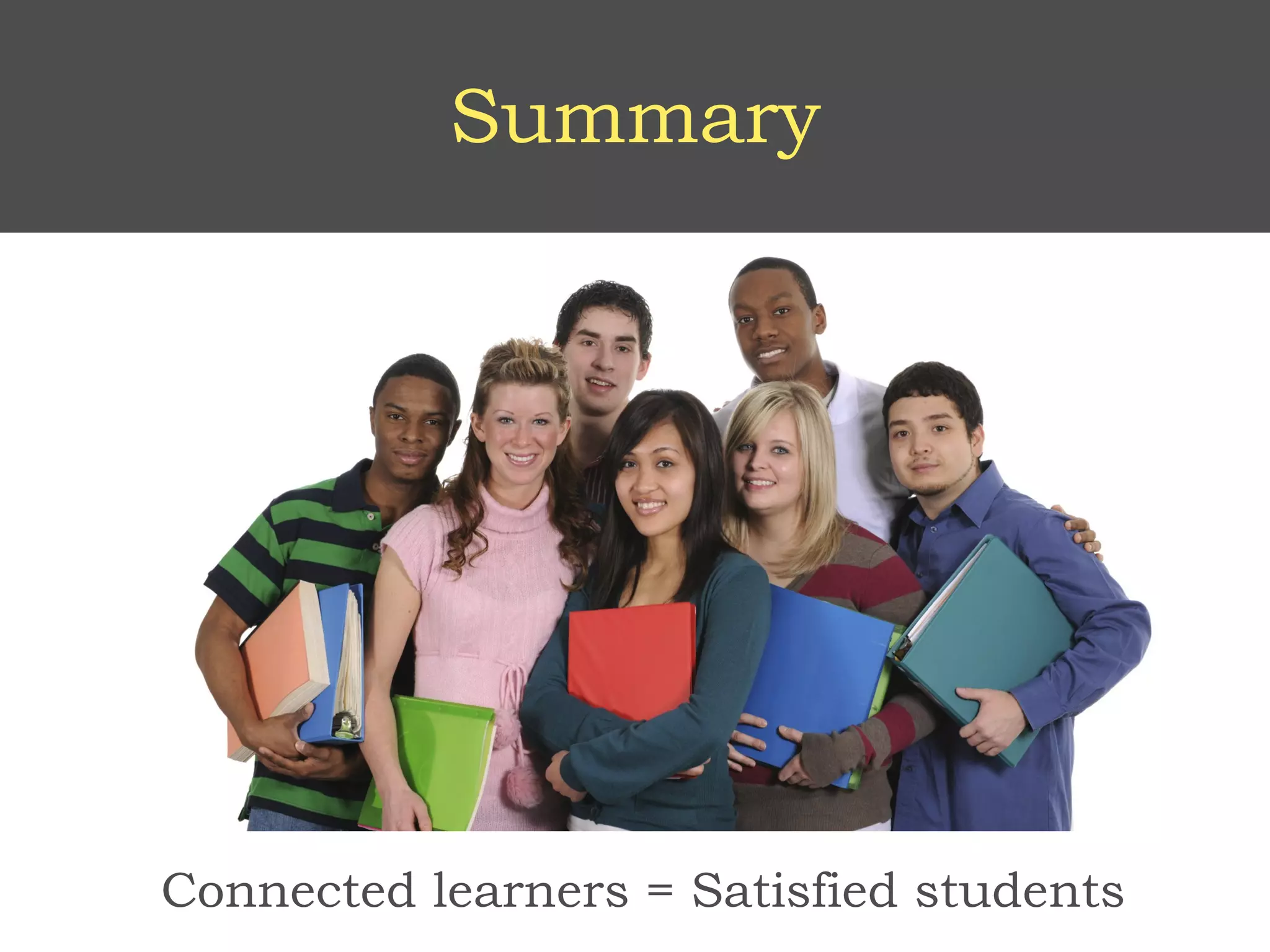
Summary


Connected learners = Satisfied students
Thank you!

    Questions?
  Please contact
Lisa Hasler Waters
hasler@hawaii.edu

Learning centered-hasler-waters

  • 1.
    Learning-centered syllabus Relevancy, Roles, Relationship By: Lisa Hasler Waters, Ph.D.
  • 2.
    Today’s objective Define alearning centered syllabus Identify language for a learning centered syllabus
  • 3.
    What is learningcentered? QuickTime™ and a decompressor are needed to see this picture. (Weimer, 2002)
  • 5.
    Students Play active rolein their learning Find the learning personally relevant (Blumberg, 2008; O’Neill & McMahon, 2005)
  • 6.
    Teachers Use a varietyof teaching methods and assessments Facilitate learning (Blumberg, 2008; O’Neill & McMahon, 2005)
  • 7.
    Why the Syllabus? 1.Indicates quality of teaching and learning 2. Makes connections between instructor goals and student expectations 3. Can be used as a tool for teacher evaluation (Woolcok, M. J., 2005)
  • 8.
    Relevancy 3Rs Roles Relationship
  • 9.
    Relevancy Relates to student’sown life Transferable skills and knowledge Connects with the content
  • 10.
    Roles Student Teacher Responsible Facilitates Actively involved Involves student Accountable Communicates
  • 11.
    Relationship 3 elements mustbe tied together 1. Course objectives 2. Teaching & learning activities 3. Assessments
  • 12.
    The 3Rs inAction Questions: Can the student connect with the course? Are expectations and roles well defined? Are the 3 elements tied together? (objectives, activities, assessments)
  • 13.
    Overview: Use mythology tountangle our own moral dilemmas Objective Activity Assessment Explain the important role Choose a myth you relate Measure your final of myth as it pertains to to and use it as a product against the class- your own life framework to create a created rubric; myth that reflects a Receive teacher feedback personal value; Share your ideas with peers; Incorporate peer feedback into draft; Express final product as an essay, comic, artwork, video, etc.
  • 14.
    Rubric 3Rs Needs work Improving Spot on! Identified the Identified and Identified, language Evaluated the Evaluated, Relevancy language Created new language Identified the Identified and Identified, language Evaluated the Evaluated, Roles language Created new language Identified the Identified and Identified, language Evaluated the Evaluated, Relationship language Created new language
  • 15.
    Summary Connected learners =Satisfied students
  • 16.
    Thank you! Questions? Please contact Lisa Hasler Waters hasler@hawaii.edu

Editor's Notes

  • #2 Overview -- today, we’ll talk about a learning centered syllabus and why we might want to implement this focus to our syllabi I am going to give you a mini experience of a learning centered workshop
  • #3 My goal today is to give the the tools to define what a learning centered syllabus is So that you can identify language appropriate for a learning centered syllabus use this information as you begin to rethink your own syllabus
  • #4 It’s a shift from what the teacher is doing to what the student is learning To a focus on what the student is doing to learn
  • #5 Lots of words concerning this topic But learning center is the focus on the learning process It’s roots have been credited back as early 1900s And referred to in Dewey and Piaget’s work describing young learners But more fully developed for adults learners under Malcolm Knowles in his adult learning theory - andragogy He asserted that adult learners: 1. Are self directed 2. Autonomous learners 3. Who seek relevancy in what they learn
  • #6 Read above Students are actively involved They have increased accountability for how they learn, what they learn
  • #7 Teachers use a variety of teaching methods and assessments To differentiate the learning Teachers get students involved in the learning process Where they are a guide to learning Rather than purveory of knowledge
  • #8 Its been said that “the quality of the course outline is a fairly reliable indicator of the quality of teaching and learning that will take place over the course of a semester” It should make explicit connections between instructor goals and student expectations Some suggest that course syllabus could be an effective tool to evaluate teacher effectiveness because it should Link Pedagogical activities to student outcomes (cite: Woolcok, M. J. V., 2005)
  • #9 So, what should a learning centered syllabus include? It should include what I refer to as the 3Rs: relevancy, roles, relationship That is, each of these elements is clearly stated so that the student Immediately identifies with the course Understands course expectations Recognizes ultimate goals of the course and how he’ll engage in the course Let’s take a closer look at each of the 3 Rs
  • #10 The student should be able to identify with the course How it will relate to his own life, the next course, or his future career Where he feels a connection to the content and is motivated to learn This can be stated in the Overview, Objectives but should also resonate in the Activities and Assessments
  • #11 The roles and responsibilities assumed by the student and the teacher are clearly defined The student 1. Takes responsibility for learning -- seeks ways to gain deeper understanding 2. Is actively involved, participates, communicates 3. Is accountable for getting work done, doing quality work, self assessment The teacher 1. Facilitates learning using different teaching methods and strategies, guides students 2. Involves student in some of the course direction, criteria 3. States how regulary the teacher gives student feedback
  • #12 The syllabus clearly links together the 3 key element that form learning centered practices: Course objectives Teaching and learning activities Assessments Within each of these elements the student finds a layer of personalization
  • #13 I took some time to review a handful of syllabi on the NOVA site. I found that they all follow a very neat, well organized format This is great for consistency and efficiency However, knowing our students (I.e. audience) we can add the layer of personalization by infusing the 3 Rs Take a look at this mocked up syllabus. I choose it because it was well written and compelling Take a moment to identify language the reflects our 3 Rs, learning centered Use the 3 questions posted on this slide as a guide
  • #14 Ideally, we’d have time to dissect the syllabus and go through it as a group. In the essence of time, I revised this closely to what seemed representative of the original intentions of the course (read: Overview) In Objectives: Here we see a direct link to their own life -- may help them associate with why learn myths, or the purpose of myth’s in today’s world In activities: we see the student choosing -- his theme, the way he presents and actively engaged in with peers to build their knowledge In assessment -- we see they are doing their own assessments, using a class created rubric We might even restructure the way the online syllabus is organized -- using this layout to create a more Visual representation of the 3rs
  • #15 If we had more time, we could have assessed our own learning And then move onto to use what we’ve practiced in our own syllabus
  • #16 IN SUMMARY, The syllabus can show the student how the course is relevant to him beyond school walls It gives him and the instructor an idea of the roles and responsibilities There is a clear link between the objectives, activities and assessments, -- all of which actively engage the student where learning Becomes his responsibility and the teacher clearly identifies expectations A student who feels connected to his learning is a better, happier learner!