LEARNERS IN
DIFFICULT
CICUMSTANCES AND
FROM INDIGENOUS
GROUPS
INTRODUCTI
ON
The term "Children in Especially Difficult Circumstances (CEDC)" was
defined by UNICEF in 1986 to identify children facing significant
challenges such as armed conflict, disasters, exploitation, abuse,
neglect, and discrimination. Later, Ocampo (1998) and Ennew (2003)
expanded this definition to include children forced to work, sexually
abused, living on the streets, affected by natural disasters, involved
in armed conflicts, and those vulnerable due to illness, poverty, or
exclusion (UNICEF, 2006).
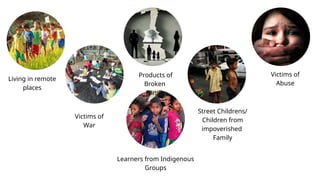
Living in remote
places
Victims of
War
Products of
Broken
Family
Street Childrens/
Children from
impoverished
Family
Learners from Indigenous
Groups
Victims of
Abuse
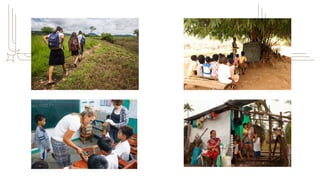
1. LIVING IN REMOTE PLACES
Learners who lives in geographically isolated areas,often far from urban centers and
educational institutions.
CHARACTERISTI
CS
Geographic
Isolation
Limited
Infrastructure
Cultural and Linguistic
Barriers
Economic
Hardship
1
.
4
.
2
.
3
.
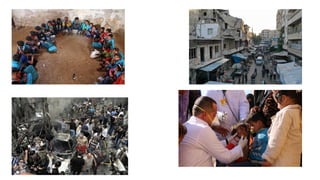
2. VICTIMS OF WAR
• Are individuals who suffer harm because of armed conflict. This harm
can be physical, psychological, or material, and can include death,
injury, displacement, loss of property, and emotional distress.
• Exposure to Violence
• Displacement
• Loss of Family and Community
• Economic Hardship
• Health Issues
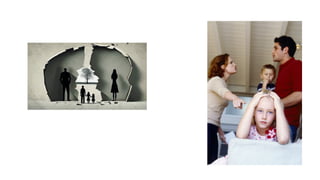
3. PRODUCT OF BROKEN FAMILY
• Refers to individuals, who grow up in families where the parental
relationship has ended due to separation, divorce, or other conflicts.
• Emotional Distress
• Academic Challenges
• Social Difficulties
• Mental Health Issues
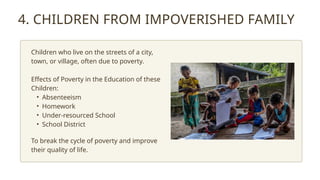
4. CHILDREN FROM IMPOVERISHED FAMILY
Children who live on the streets of a city,
town, or village, often due to poverty.
Effects of Poverty in the Education of these
Children:
• Absenteeism
• Homework
• Under-resourced School
• School District
To break the cycle of poverty and improve
their quality of life.
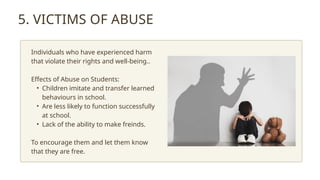
5. VICTIMS OF ABUSE
Individuals who have experienced harm
that violate their rights and well-being..
Effects of Abuse on Students:
• Children imitate and transfer learned
behaviours in school.
• Are less likely to function successfully
at school.
• Lack of the ability to make freinds.
To encourage them and let them know
that they are free.
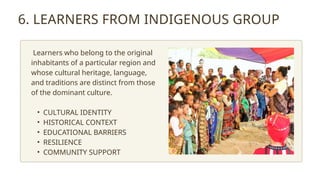
6. LEARNERS FROM INDIGENOUS GROUP
Learners who belong to the original
inhabitants of a particular region and
whose cultural heritage, language,
and traditions are distinct from those
of the dominant culture.
• CULTURAL IDENTITY
• HISTORICAL CONTEXT
• EDUCATIONAL BARRIERS
• RESILIENCE
• COMMUNITY SUPPORT
THANK YOU
FOR
LISTENING!
Learners in Difficult circumstances.pptx

Learners in Difficult circumstances.pptx

  • 1.
  • 2.
    INTRODUCTI ON The term "Childrenin Especially Difficult Circumstances (CEDC)" was defined by UNICEF in 1986 to identify children facing significant challenges such as armed conflict, disasters, exploitation, abuse, neglect, and discrimination. Later, Ocampo (1998) and Ennew (2003) expanded this definition to include children forced to work, sexually abused, living on the streets, affected by natural disasters, involved in armed conflicts, and those vulnerable due to illness, poverty, or exclusion (UNICEF, 2006).
  • 3.
    Living in remote places Victimsof War Products of Broken Family Street Childrens/ Children from impoverished Family Learners from Indigenous Groups Victims of Abuse
  • 4.
    1. LIVING INREMOTE PLACES Learners who lives in geographically isolated areas,often far from urban centers and educational institutions. CHARACTERISTI CS Geographic Isolation Limited Infrastructure Cultural and Linguistic Barriers Economic Hardship 1 . 4 . 2 . 3 .
  • 6.
    2. VICTIMS OFWAR • Are individuals who suffer harm because of armed conflict. This harm can be physical, psychological, or material, and can include death, injury, displacement, loss of property, and emotional distress. • Exposure to Violence • Displacement • Loss of Family and Community • Economic Hardship • Health Issues
  • 8.
    3. PRODUCT OFBROKEN FAMILY • Refers to individuals, who grow up in families where the parental relationship has ended due to separation, divorce, or other conflicts. • Emotional Distress • Academic Challenges • Social Difficulties • Mental Health Issues
  • 10.
    4. CHILDREN FROMIMPOVERISHED FAMILY Children who live on the streets of a city, town, or village, often due to poverty. Effects of Poverty in the Education of these Children: • Absenteeism • Homework • Under-resourced School • School District To break the cycle of poverty and improve their quality of life.
  • 11.
    5. VICTIMS OFABUSE Individuals who have experienced harm that violate their rights and well-being.. Effects of Abuse on Students: • Children imitate and transfer learned behaviours in school. • Are less likely to function successfully at school. • Lack of the ability to make freinds. To encourage them and let them know that they are free.
  • 12.
    6. LEARNERS FROMINDIGENOUS GROUP Learners who belong to the original inhabitants of a particular region and whose cultural heritage, language, and traditions are distinct from those of the dominant culture. • CULTURAL IDENTITY • HISTORICAL CONTEXT • EDUCATIONAL BARRIERS • RESILIENCE • COMMUNITY SUPPORT
  • 13.