Lean:
Transforming veterinary care
by uncovering opportunities
within your greatest asset
• VetMB from Cambridge in 2000
• Practice owner 2003 - 2006
• MBA from Bath in 2008
• Director of Blue Cross 2008
• Introduced Lean to Blue Cross 2010
• Certified Management Consultant 2011
• Fellow of the Institute of Directors 2012
• theleanvetpractice.com
My
background
2
4
What is lean?
Lean is a culture of continuous improvement practiced at every
level of the organisation and by every member of the team.
It’s a way of working
Lean is a way of looking at our daily work and removing any
activities which don’t add value to make it better.
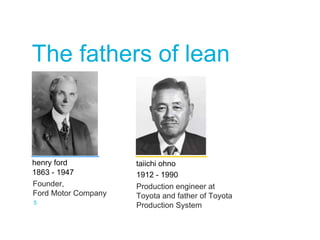
The fathers of lean
5
taiichi ohno
1912 - 1990
henry ford
1863 - 1947
Founder,
Ford Motor Company
Production engineer at
Toyota and father of Toyota
Production System
6
the toyota production
system
• Most successful car manufacturer in the world
• Greatest number of technical innovations
• Highest level of employee satisfaction
• Relentless commitment to eliminating waste
• Staff makes 1,000,000 improvement suggestions a year.
90% are implemented.
But can it work for veterinary medicine?
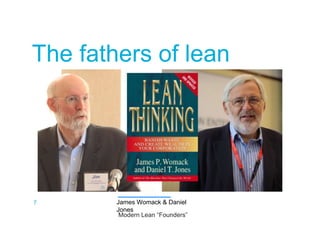
The fathers of lean
7 James Womack & Daniel
Jones
Modern Lean “Founders”
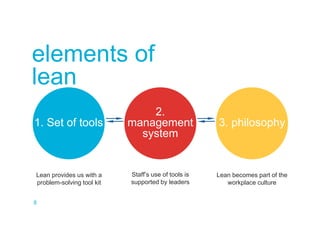
elements of
lean
2.
management
system
Staff’s use of tools is
supported by leaders
1. Set of tools
Lean provides us with a
problem-solving tool kit
3. philosophy
Lean becomes part of the
workplace culture
8
9
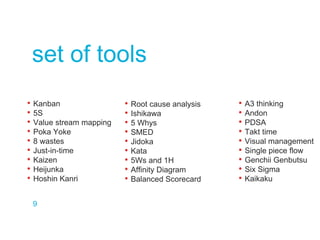
set of tools
• Root cause analysis
• Ishikawa
• 5 Whys
• SMED
• Jidoka
• Kata
• 5Ws and 1H
• Affinity Diagram
• Balanced Scorecard
• A3 thinking
• Andon
• PDSA
• Takt time
• Visual management
• Single piece flow
• Genchii Genbutsu
• Six Sigma
• Kaikaku
• Kanban
• 5S
• Value stream mapping
• Poka Yoke
• 8 wastes
• Just-in-time
• Kaizen
• Heijunka
• Hoshin Kanri
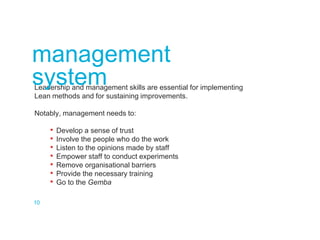
Leadership and management skills are essential for implementing
Lean methods and for sustaining improvements.
Notably, management needs to:
• Develop a sense of trust
• Involve the people who do the work
• Listen to the opinions made by staff
• Empower staff to conduct experiments
• Remove organisational barriers
• Provide the necessary training
• Go to the Gemba
management
system
10
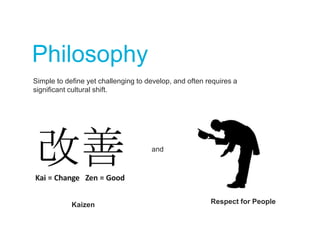
Philosophy
Simple to define yet challenging to develop, and often requires a
significant cultural shift.
and
Kaizen Respect for People
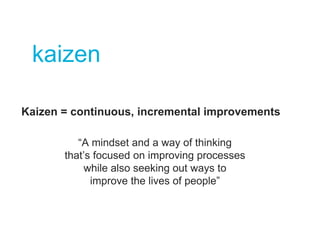
kaizen
Kaizen = continuous, incremental improvements
“A mindset and a way of thinking
that’s focused on improving processes
while also seeking out ways to
improve the lives of people”
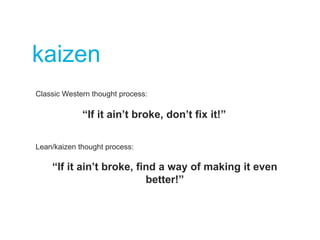
kaizen
“If it ain’t broke, don’t fix it!”
“If it ain’t broke, find a way of making it even
better!”
Classic Western thought process:
Lean/kaizen thought process:
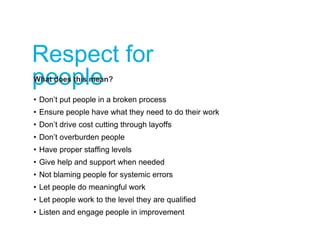
Respect for
peopleWhat does this mean?
• Don’t put people in a broken process
• Ensure people have what they need to do their work
• Don’t drive cost cutting through layoffs
• Don’t overburden people
• Have proper staffing levels
• Give help and support when needed
• Not blaming people for systemic errors
• Let people do meaningful work
• Let people work to the level they are qualified
• Listen and engage people in improvement
1
7
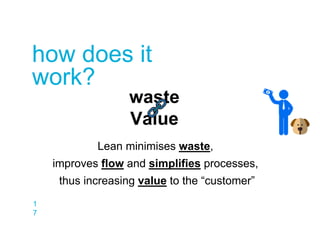
how does it
work?
Lean minimises waste,
improves flow and simplifies processes,
thus increasing value to the “customer”
waste
Value
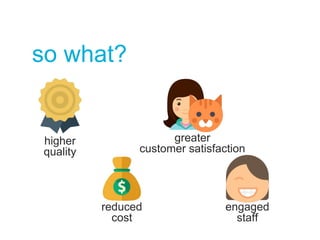
so what?
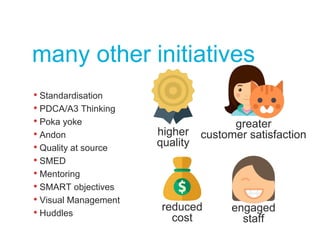
higher
quality
greater
customer satisfaction
reduced
cost
engaged
staff
2
4
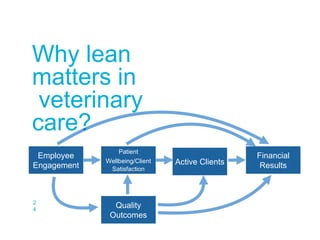
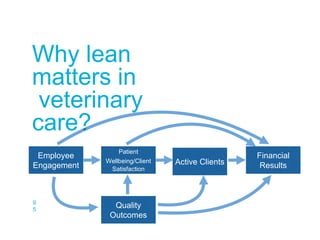
Why lean
matters in
veterinary
care?
Employee
Engagement
Patient
Wellbeing/Client
Satisfaction
Active Clients
Financial
Results
Quality
Outcomes
Who uses
lean?
2
6
Who uses
lean?
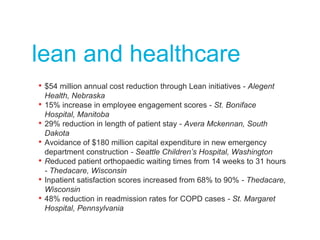
lean and healthcare
• $54 million annual cost reduction through Lean initiatives - Alegent
Health, Nebraska
• 15% increase in employee engagement scores - St. Boniface
Hospital, Manitoba
• 29% reduction in length of patient stay - Avera Mckennan, South
Dakota
• Avoidance of $180 million capital expenditure in new emergency
department construction - Seattle Children’s Hospital, Washington
• Reduced patient orthopaedic waiting times from 14 weeks to 31 hours
- Thedacare, Wisconsin
• Inpatient satisfaction scores increased from 68% to 90% - Thedacare,
Wisconsin
• 48% reduction in readmission rates for COPD cases - St. Margaret
Hospital, Pennsylvania
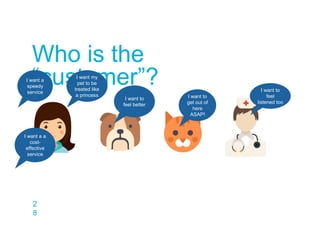
Who is the
“customer”?
2
8
I want a
speedy
service
I want my
pet to be
treated like
a princess
I want a a
cost-
effective
service
I want to
feel better
I want to
get out of
here
ASAP!
I want to
feel
listened too
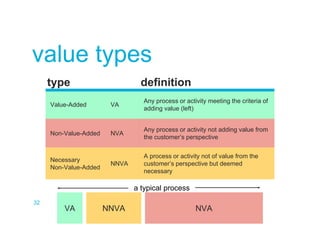
type definition
Value-Added VA
Any process or activity meeting the criteria of
adding value (left)
Non-Value-Added NVA
Any process or activity not adding value from
the customer’s perspective
Necessary
Non-Value-Added
NNVA
A process or activity not of value from the
customer’s perspective but deemed
necessary
value types
32
VA NNVA NVA
a typical process
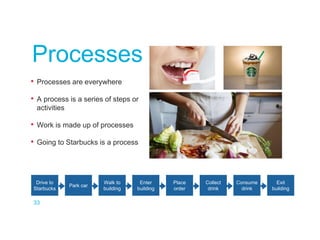
• Processes are everywhere
• A process is a series of steps or
activities
• Work is made up of processes
• Going to Starbucks is a process
Processes
33
Drive to
Starbucks
Park car
Walk to
building
Enter
building
Place
order
Collect
drink
Consume
drink
Exit
building
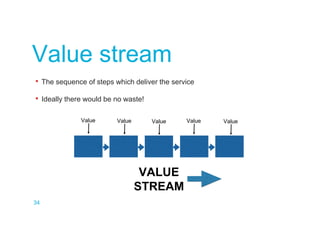
• The sequence of steps which deliver the service
• Ideally there would be no waste!
Value stream
34
Value Value Value Value Value
VALUE
STREAM
3
5
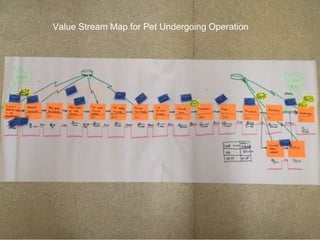
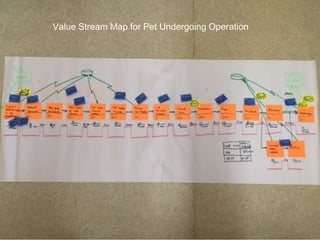
Value Stream Map for Pet Undergoing Operation
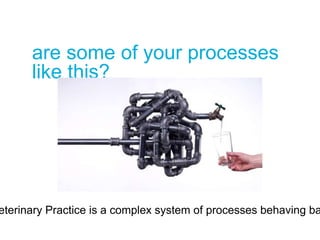
are some of your processes
like this?
eterinary Practice is a complex system of processes behaving ba
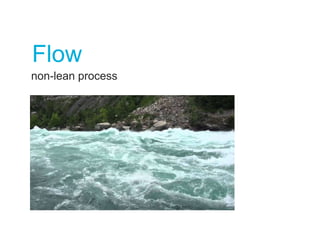
Flow
37
non-lean process
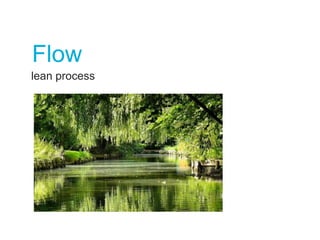
Flow
38
lean process
43
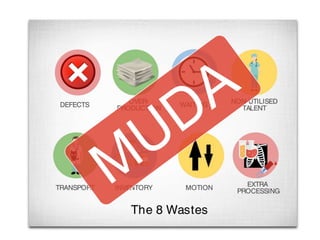
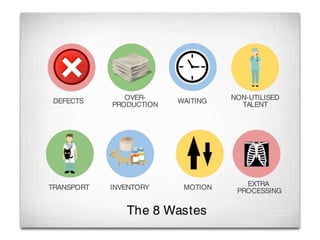
tool 1 - the 8 wastes
4
4
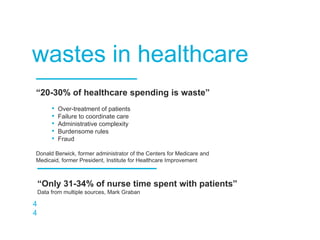
wastes in healthcare
“20-30% of healthcare spending is waste”
• Over-treatment of patients
• Failure to coordinate care
• Administrative complexity
• Burdensome rules
• Fraud
Donald Berwick, former administrator of the Centers for Medicare and
Medicaid, former President, Institute for Healthcare Improvement
“Only 31-34% of nurse time spent with patients”
Data from multiple sources, Mark Graban
4
5
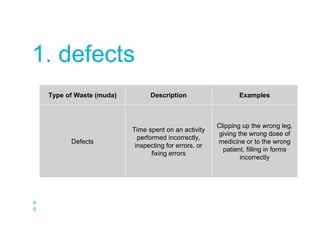
1. defects
Type of Waste (muda) Description Examples
Defects
Time spent on an activity
performed incorrectly,
inspecting for errors, or
fixing errors
Clipping up the wrong leg,
giving the wrong dose of
medicine or to the wrong
patient, filling in forms
incorrectly
4
6
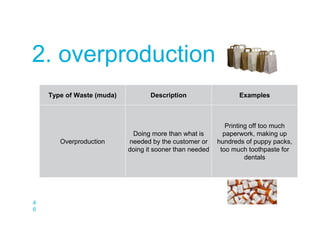
2. overproduction
Type of Waste (muda) Description Examples
Overproduction
Doing more than what is
needed by the customer or
doing it sooner than needed
Printing off too much
paperwork, making up
hundreds of puppy packs,
too much toothpaste for
dentals
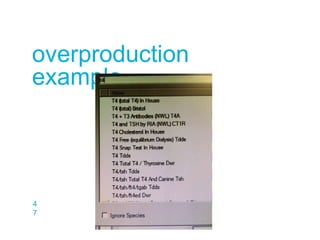
overproduction
example
4
7
4
8
3. waiting
Type of Waste (muda) Description Examples
Waiting
Waiting for the next activity
when nothing productive is
occurring
Clients/patients waiting for
appointment, vets/nurses
waiting for appointments to
arrive, waiting for a piece of
equipment to be set up
4
9
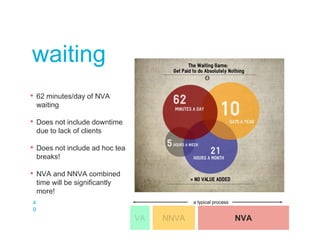
waiting
• 62 minutes/day of NVA
waiting
• Does not include downtime
due to lack of clients
• Does not include ad hoc tea
breaks!
• NVA and NNVA combined
time will be significantly
more!
a typical process
5
0
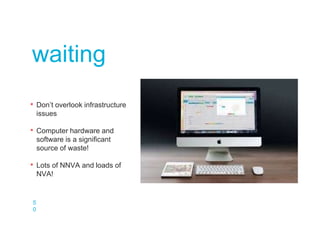
waiting
• Don’t overlook infrastructure
issues
• Computer hardware and
software is a significant
source of waste!
• Lots of NNVA and loads of
NVA!
5
1
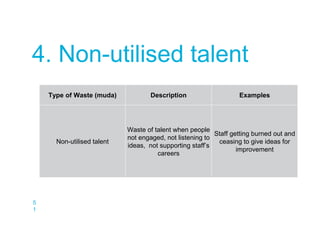
4. Non-utilised talent
Type of Waste (muda) Description Examples
Non-utilised talent
Waste of talent when people
not engaged, not listening to
ideas, not supporting staff’s
careers
Staff getting burned out and
ceasing to give ideas for
improvement
5
3
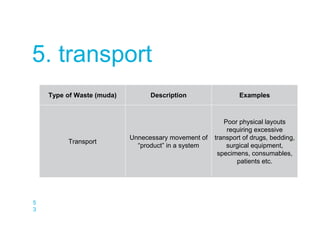
5. transport
Type of Waste (muda) Description Examples
Transport
Unnecessary movement of
“product” in a system
Poor physical layouts
requiring excessive
transport of drugs, bedding,
surgical equipment,
specimens, consumables,
patients etc.
5
4
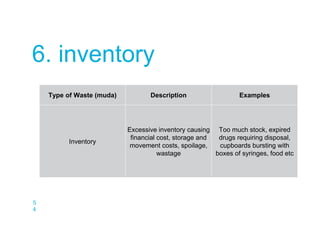
6. inventory
Type of Waste (muda) Description Examples
Inventory
Excessive inventory causing
financial cost, storage and
movement costs, spoilage,
wastage
Too much stock, expired
drugs requiring disposal,
cupboards bursting with
boxes of syringes, food etc
5
5
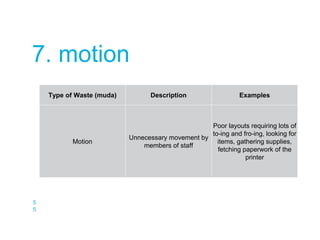
7. motion
Type of Waste (muda) Description Examples
Motion
Unnecessary movement by
members of staff
Poor layouts requiring lots of
to-ing and fro-ing, looking for
items, gathering supplies,
fetching paperwork of the
printer
5
6
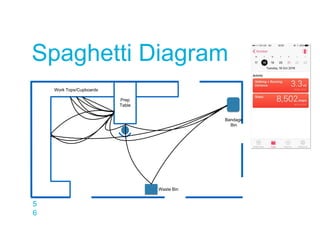
Spaghetti Diagram
Prep
Table
Work Tops/Cupboards
Waste Bin
Bandage
Bin
5
7
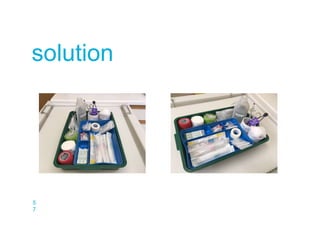
solution
5
8
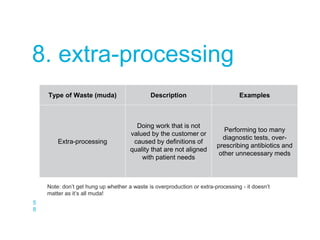
8. extra-processing
Type of Waste (muda) Description Examples
Extra-processing
Doing work that is not
valued by the customer or
caused by definitions of
quality that are not aligned
with patient needs
Performing too many
diagnostic tests, over-
prescribing antibiotics and
other unnecessary meds
Note: don’t get hung up whether a waste is overproduction or extra-processing - it doesn’t
matter as it’s all muda!
5
9
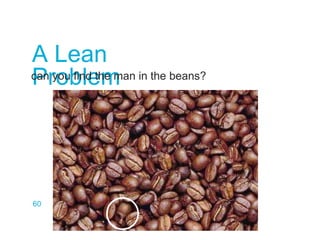
A Lean
Problem
60
can you find the man in the beans?
A Lean
Problem
61
“The most dangerous kind of
waste is the waste we do not
recognise”
Dr. Shigeo Shingo
6
3
6
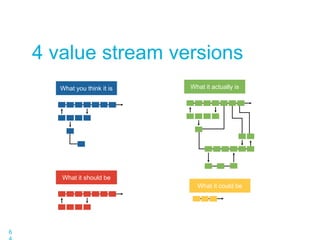
4 value stream versions
What you think it is
What it should be
What it actually is
What it could be
6
5
Value Stream Map for Pet Undergoing Operation
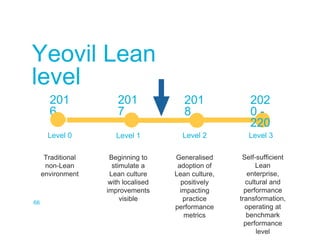
201
8
Level 2
Generalised
adoption of
Lean culture,
positively
impacting
practice
performance
metrics
202
0 -
220
Level 3
Self-sufficient
Lean
enterprise,
cultural and
performance
transformation,
operating at
benchmark
performance
level
201
7
Level 1
Beginning to
stimulate a
Lean culture
with localised
improvements
visible
201
6
Level 0
Traditional
non-Lean
environment
Yeovil Lean
level
66
6
7
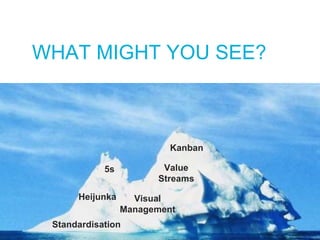
WHAT MIGHT YOU SEE?
Kanban
5s
Standardisation
Heijunka
Value
Streams
Visual
Management
6
8
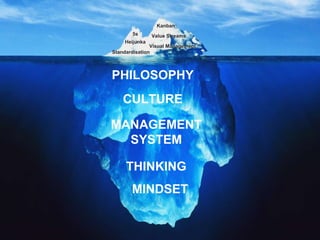
Kanban
5s
Standardisation
Heijunka
Value Streams
Visual Management
PHILOSOPHY
CULTURE
MANAGEMENT
SYSTEM
MINDSET
THINKING
6
9
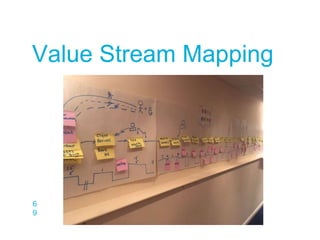
Value Stream Mapping
70
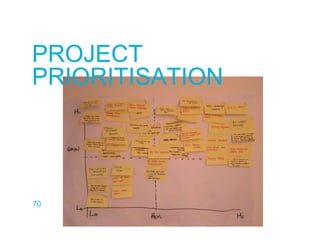
PROJECT
PRIORITISATION
7
1
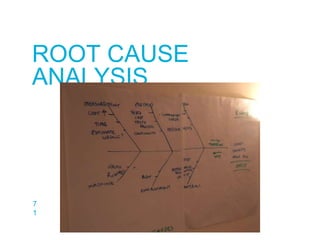
ROOT CAUSE
ANALYSIS
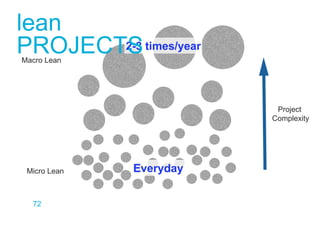
72
Project
Complexity
Micro Lean
Macro Lean
Everyday
2-3 times/year
lean
PROJECTS
7
3
HR
m
m
n
b
j
b
jH
R
jjjj
H
R
kj
n
kj
n
Sort
Set
Shine
Standardise
Sustain
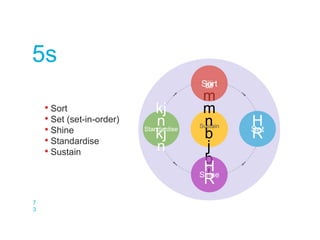
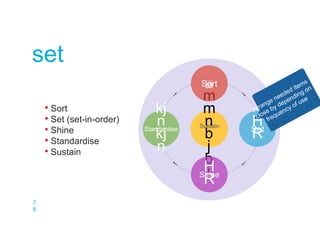
• Sort
• Set (set-in-order)
• Shine
• Standardise
• Sustain
5s
7
4
HR
m
m
n
b
j
b
jH
R
jjjj
H
R
kj
n
kj
n
Sort
Set
Shine
Standardise
Sustain
• Sort
• Set (set-in-order)
• Shine
• Standardise
• Sustain
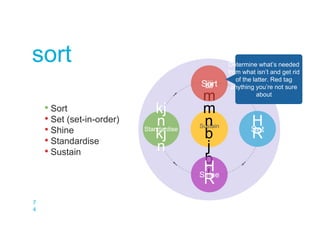
sort Determine what’s needed
from what isn’t and get rid
of the latter. Red tag
anything you’re not sure
about
7
5
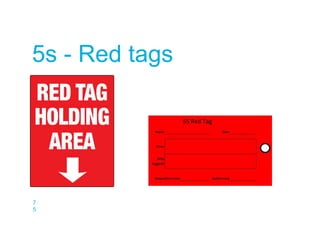
5s - Red tags
7
6
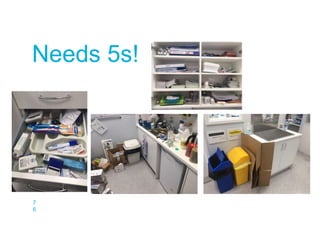
Needs 5s!
7
7
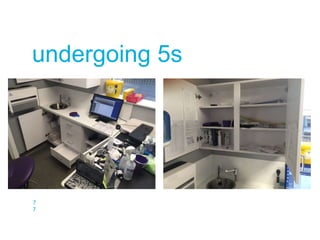
undergoing 5s
7
8
HR
m
m
n
b
j
b
jH
R
jjjj
H
R
kj
n
kj
n
Sort
Set
Shine
Standardise
Sustain
• Sort
• Set (set-in-order)
• Shine
• Standardise
• Sustain
set
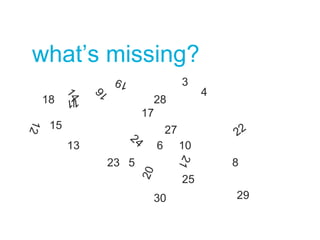
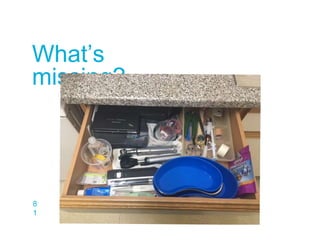
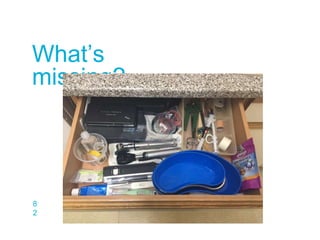
what’s missing?
3
4
5 8
28
6 10
18
17
15
13
27
25
23
30 29
1
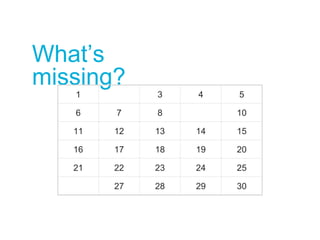
What’s
missing?
1 3 4 5
6 7 8 10
11 12 13 14 15
16 17 18 19 20
21 22 23 24 25
27 28 29 30
8
1
What’s
missing?
8
2
What’s
missing?
8
3
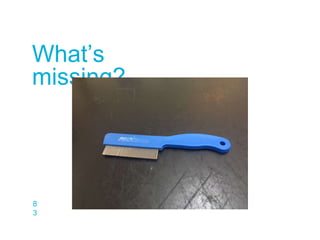
What’s
missing?
8
4
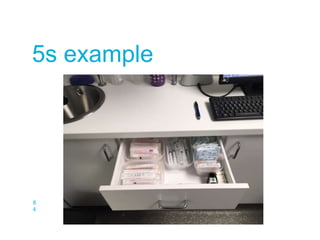
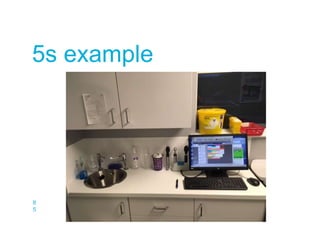
5s example
8
5
5s example
8
6
HR
m
m
n
b
j
b
jH
R
jjjj
H
R
kj
n
kj
n
Sort
Set
Shine
Standardise
Sustain
• Sort
• Set (set-in-order)
• Shine
• Standardise
• Sustain
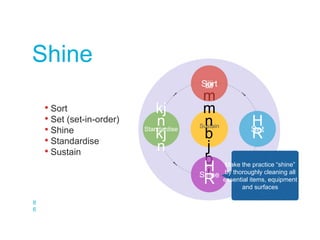
Shine
Make the practice “shine”
by thoroughly cleaning all
essential items, equipment
and surfaces
8
7
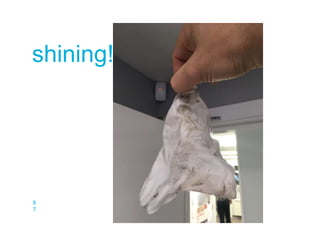
shining!
8
8
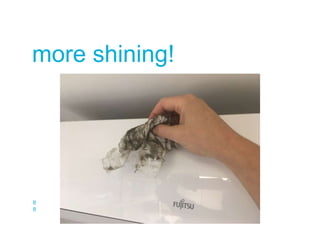
more shining!
8
9
HR
m
m
n
b
j
b
jH
R
jjjj
H
R
kj
n
kj
n
Sort
Set
Shine
Standardise
Sustain
• Sort
• Set (set-in-order)
• Shine
• Standardise
• Sustain
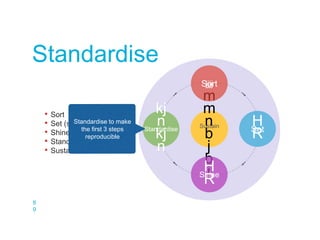
Standardise
Standardise to make
the first 3 steps
reproducible
9
0
HR
m
m
n
b
j
b
jH
R
jjjj
H
R
kj
n
kj
n
Sort
Set
Shine
Standardise
Sustain
• Sort
• Set (set-in-order)
• Shine
• Standardise
• Sustain
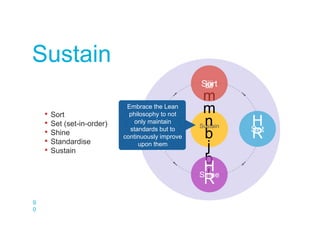
Sustain
Embrace the Lean
philosophy to not
only maintain
standards but to
continuously improve
upon them
9
1
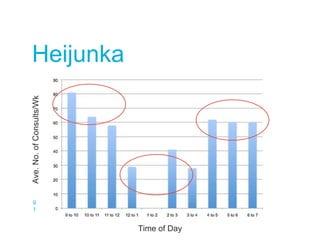
Heijunka
Time of Day
9
2
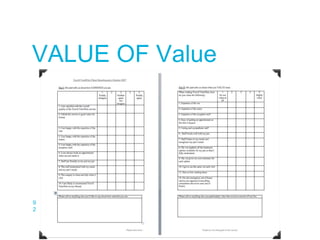
VALUE OF Value
many other initiatives
• Standardisation
• PDCA/A3 Thinking
• Poka yoke
• Andon
• Quality at source
• SMED
• Mentoring
• SMART objectives
• Visual Management
• Huddles
higher
quality
greater
customer satisfaction
reduced
cost
engaged
staff
9
4
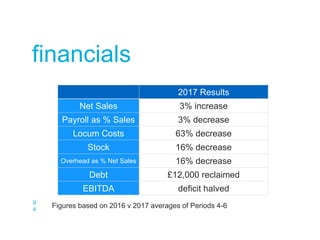
financials
2017 Results
Net Sales 3% increase
Payroll as % Sales 3% decrease
Locum Costs 63% decrease
Stock 16% decrease
Overhead as % Net Sales 16% decrease
Debt £12,000 reclaimed
EBITDA deficit halved
Figures based on 2016 v 2017 averages of Periods 4-6
9
5
Why lean
matters in
veterinary
care?
Employee
Engagement
Patient
Wellbeing/Client
Satisfaction
Active Clients
Financial
Results
Quality
Outcomes
9
6
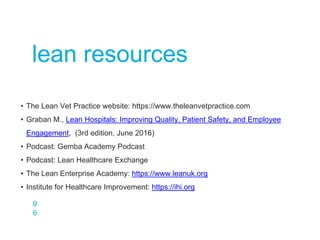
lean resources
• The Lean Vet Practice website: https://www.theleanvetpractice.com
• Graban M., Lean Hospitals: Improving Quality, Patient Safety, and Employee
Engagement, (3rd edition, June 2016)
• Podcast: Gemba Academy Podcast
• Podcast: Lean Healthcare Exchange
• The Lean Enterprise Academy: https://www.leanuk.org
• Institute for Healthcare Improvement: https://ihi.org
please CONTACT
ME
THANK
YOU
97
phone: 07871
062 995
EMAIL:
theleanvetpractice@gmail.com
Value
QualityValue Stream
Customer Kanban
Respect
Philosophy
Management System
5S
8 Wastes
Cost
Standardised Work
160
theLEANvetpractice.com
making veterinary work easier

Lean Veterinary Practice