1
LEAN: Understanding a Basic
Scatter Diagram
Part of Series on Quality Systems Management Tools
Dr. Sharon L. Burton, DBA, LSSBB, HCS, SWP
Goal
The goal of this lesson is for users to understand
the usage of a Scatter Diagram as a quality and
business process improvement tool.
Learning Objectives
At the end of this lesson users should be able to
 Articulate the usage of a scatter diagram
 Explain how to develop a scatter diagram
 Demonstrate the development of a scatter
diagram
What is a Scatter Diagram?
The scatter diagram is also known as:
 Scatter plot
 Scatter chart
 Scattergram
This tool is referred to as a plot or a mathematical
diagram.
Purpose of the Scatter Diagram
 The purpose of the scatter diagram is to plot
relationships between multiple variables for a set
of data in a single view.
 Data sets
X – horizontal
Y – vertical
 The plots, which can be colorful, are known as
cartesian coordinates.
Creation Time to Allot for the Scatter Diagram
From Start to Finish Allow 5 hours
• Data Collection: 1-3 hours
• Diagramming the Scatter Diagram: 1 hour
• Walk through of Scatter Diagram with Stakeholders: 1
hour
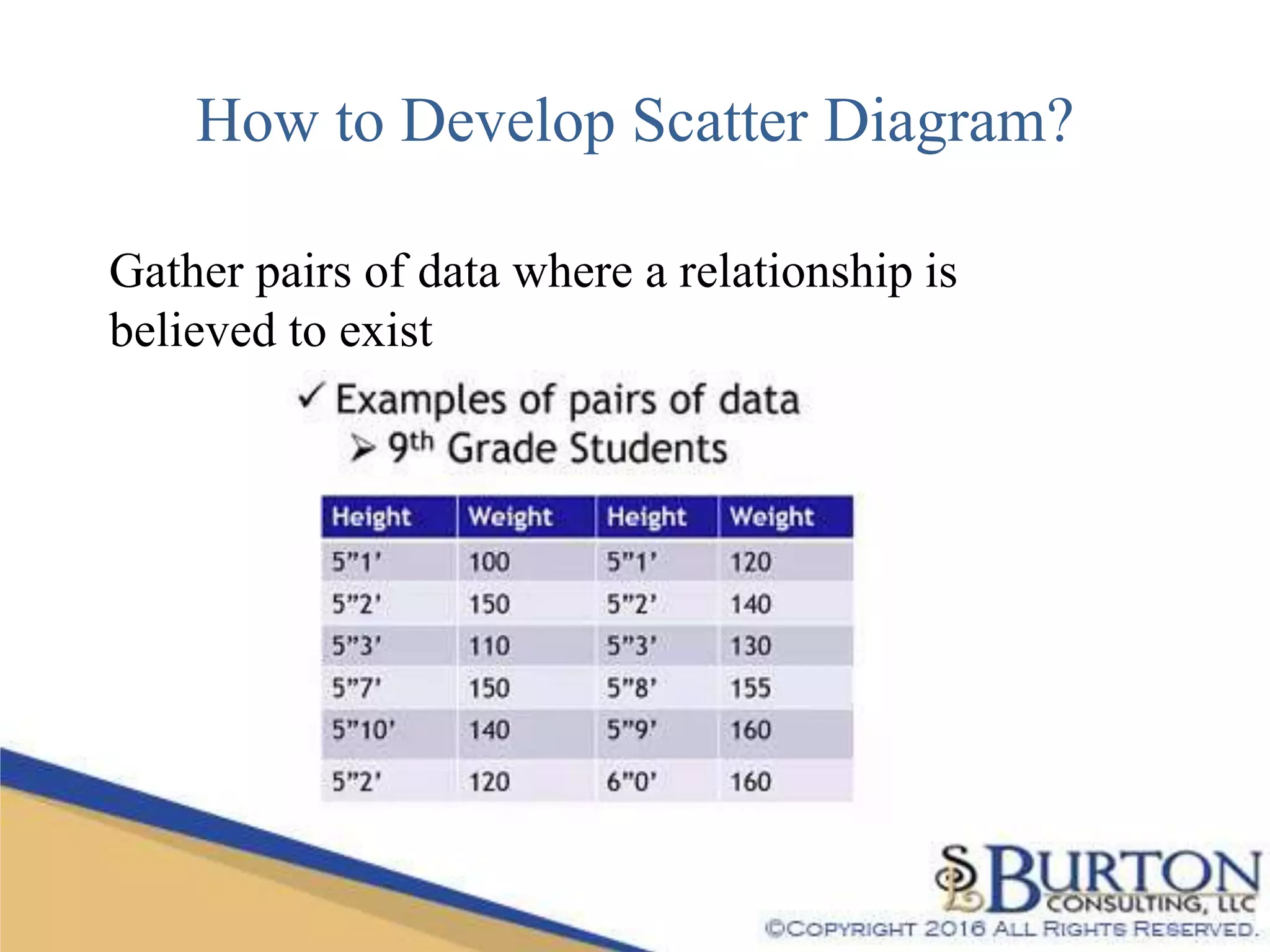
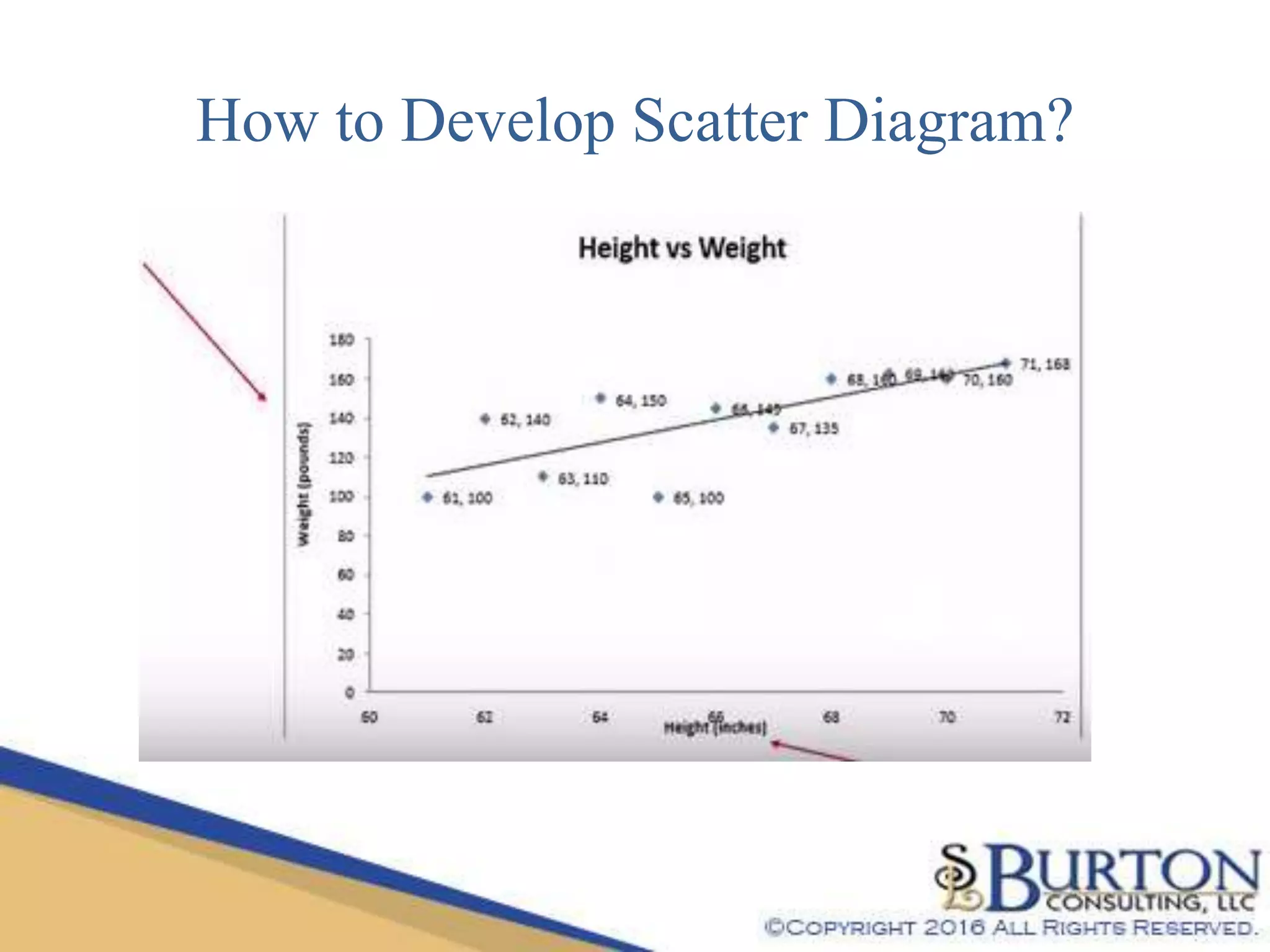
How to Develop Scatter Diagram?
Gather pairs of data where a relationship is
believed to exist
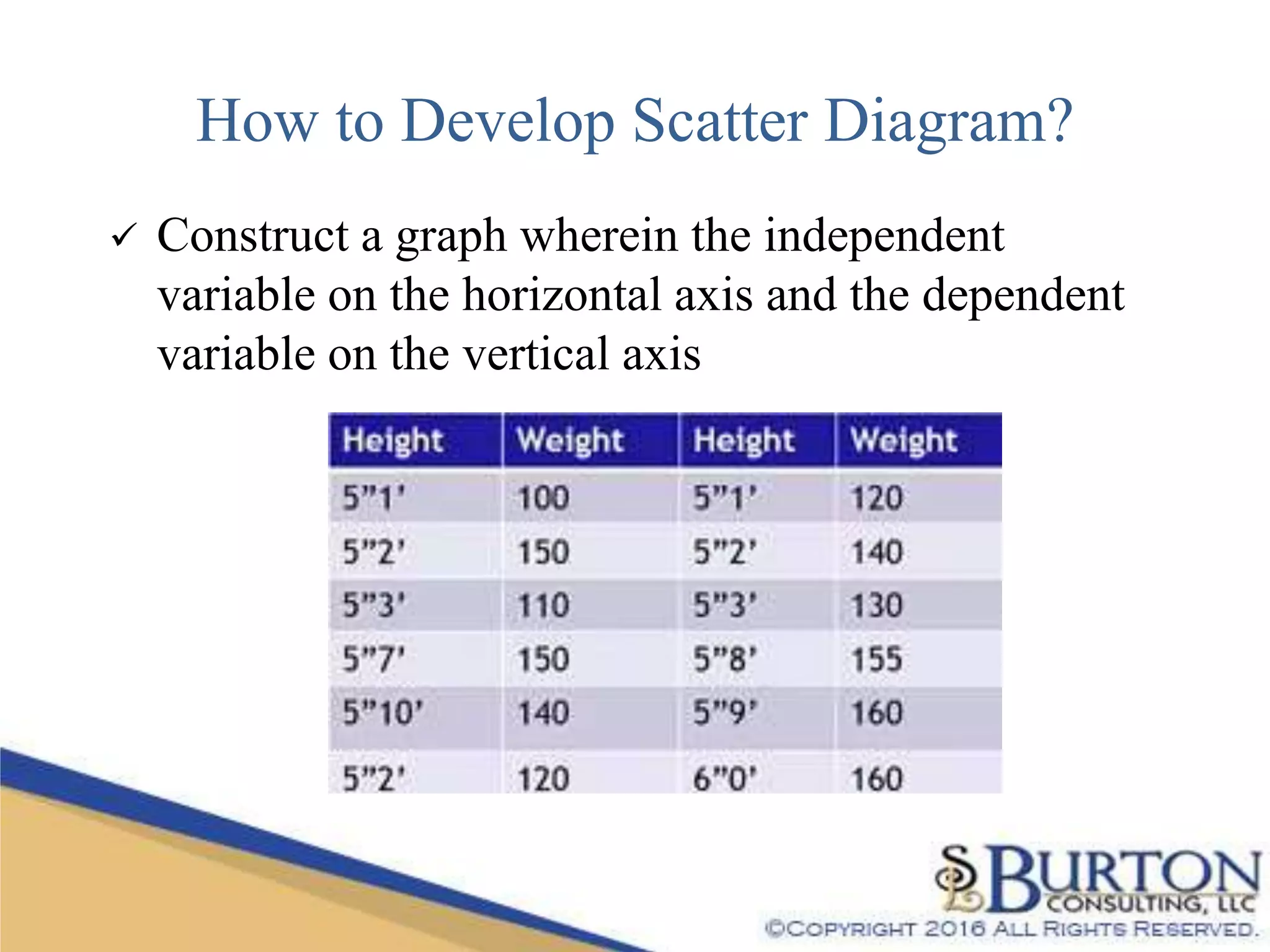
How to Develop Scatter Diagram?
 Construct a graph wherein the independent
variable on the horizontal axis and the dependent
variable on the vertical axis
How to Develop Scatter Diagram?
Bibliography
Doherty, M. E., & Anderson, R. B, (2009). Variation in scatterplot displays.
Behavior Research Methods, 41(1), 55-60. doi: 10.3758/BRM.41.1.55
Friendly, M., & Denis, D. (2005). The early origins and development of the
scatterplot. Journal of the History of The Behavioral Sciences, 41(2), 103-
130.
iSixSigma. (2016). Scatter Plot. Retrieved from
https://www.isixsigma.com/dictionary/scatter-plot
Scatterplots. (n.d.) Scatterplots. Retrieved from
http://mste.illinois.edu/courses/ci330ms/yousey/scatterinfor.html

LEAN: Understanding a Scatter Gram ( Quality Tools Series 2016)

  • 1.
    1 LEAN: Understanding aBasic Scatter Diagram Part of Series on Quality Systems Management Tools Dr. Sharon L. Burton, DBA, LSSBB, HCS, SWP
  • 2.
    Goal The goal ofthis lesson is for users to understand the usage of a Scatter Diagram as a quality and business process improvement tool.
  • 3.
    Learning Objectives At theend of this lesson users should be able to  Articulate the usage of a scatter diagram  Explain how to develop a scatter diagram  Demonstrate the development of a scatter diagram
  • 4.
    What is aScatter Diagram? The scatter diagram is also known as:  Scatter plot  Scatter chart  Scattergram This tool is referred to as a plot or a mathematical diagram.
  • 5.
    Purpose of theScatter Diagram  The purpose of the scatter diagram is to plot relationships between multiple variables for a set of data in a single view.  Data sets X – horizontal Y – vertical  The plots, which can be colorful, are known as cartesian coordinates.
  • 6.
    Creation Time toAllot for the Scatter Diagram From Start to Finish Allow 5 hours • Data Collection: 1-3 hours • Diagramming the Scatter Diagram: 1 hour • Walk through of Scatter Diagram with Stakeholders: 1 hour
  • 7.
    How to DevelopScatter Diagram? Gather pairs of data where a relationship is believed to exist
  • 8.
    How to DevelopScatter Diagram?  Construct a graph wherein the independent variable on the horizontal axis and the dependent variable on the vertical axis
  • 9.
    How to DevelopScatter Diagram?
  • 10.
    Bibliography Doherty, M. E.,& Anderson, R. B, (2009). Variation in scatterplot displays. Behavior Research Methods, 41(1), 55-60. doi: 10.3758/BRM.41.1.55 Friendly, M., & Denis, D. (2005). The early origins and development of the scatterplot. Journal of the History of The Behavioral Sciences, 41(2), 103- 130. iSixSigma. (2016). Scatter Plot. Retrieved from https://www.isixsigma.com/dictionary/scatter-plot Scatterplots. (n.d.) Scatterplots. Retrieved from http://mste.illinois.edu/courses/ci330ms/yousey/scatterinfor.html