






Lean Startup Methodology
Robert Love
What is "Lean"?
●   Takes its name from "Lean Manufacturing"
●   Toyota Production System (TPS)
●   Preserving value with less work
●   Value is defined as any action or process
    that a customer would be willing to pay for
What's a "Startup"?
A human institution designed to create new
products and services under conditions of
extreme uncertainty.
The five principles:
1.   Entrepreneurs are everywhere
2.   Entrepreneurship is management
3.   Validated learning
4.   Innovation accounting
5.   Build-Measure-Learn
Entrepreneurs are everywhere
● You don't have to work in a garage to be in a
  startup
● All industries
● All sectors
Entrepreneurship is management
● A startup is an institution, not just a product
● Requires management
● A new kind of management specifically
  geared to its context of extreme uncertainty
Validated learning
● Startups exist not to make stuff, make
  money, or serve customers
● They exist to learn how to build a
  sustainable business
● This learning can be validated
  scientifically, by running experiments that
  allow us to test each element of our vision
Innovation accounting
● Improve entrepreneurial outcomes
● Hold entrepreneurs accountable
● Focus on the boring stuff:
  ○ How to measure progress
  ○ How to setup milestones
  ○ How to prioritize work
● This requires a new kind of accounting
  specific to startups
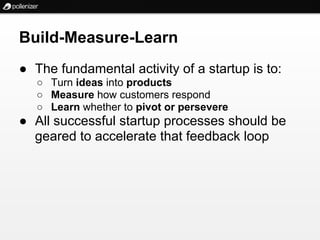
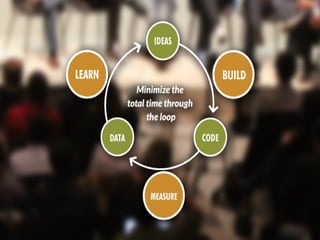
Build-Measure-Learn
● The fundamental activity of a startup is to:
   ○ Turn ideas into products
   ○ Measure how customers respond
   ○ Learn whether to pivot or persevere
● All successful startup processes should be
  geared to accelerate that feedback loop
"Founders that learn
are more successful"
"Startups that pivot
once or twice raise 2.5x
      the money"
http://getlisted.me/
Problem
It's hard to determine the best person for a job
(both ways).
Solution
If we could create a list of the best people for a
given profession...

● Employers could find the best people
● The best people could land jobs perfectly
  matched to their skills
Smoke test
● What can we test before we build anything?
● What can we do before we have to build?
● How can we find out if anyone finds this list
  valuable enough to pay for it?
Experiment #1: Hypothesis
Recruiters will pay for a list of top talent in a
profession.
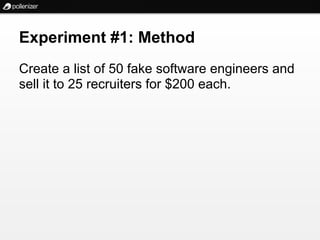
Experiment #1: Method
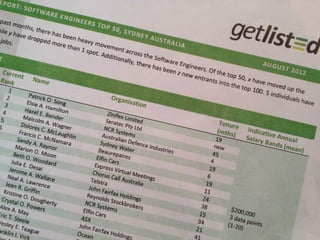
Create a list of 50 fake software engineers and
sell it to 25 recruiters for $200 each.
Experiment #1: Results
No lists were sold.
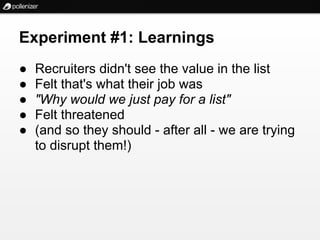
Experiment #1: Learnings
●   Recruiters didn't see the value in the list
●   Felt that's what their job was
●   "Why would we just pay for a list"
●   Felt threatened
●   (and so they should - after all - we are trying
    to disrupt them!)
Pivot or Persevere?
Pivot!
Experiment #2: Hypothesis
In order to avoid expensive recruiter fees,
businesses will pay for a list of top talent in a
profession.
Experiment #2: Method
Take our list of 50 fake software engineers and
sell it to 25 businesses for $200 each.
Experiment #2: Results
No lists were sold.
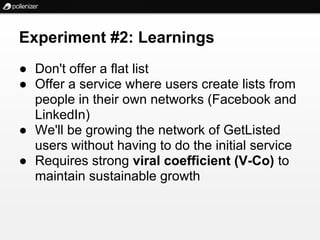
Experiment #2: Learnings
● Don't offer a flat list
● Offer a service where users create lists from
  people in their own networks (Facebook and
  LinkedIn)
● We'll be growing the network of GetListed
  users without having to do the initial service
● Requires strong viral coefficient (V-Co) to
  maintain sustainable growth
Pivot or Persevere?
Pivot!
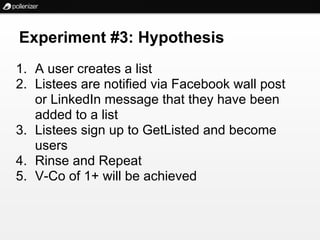
Experiment #3: Hypothesis
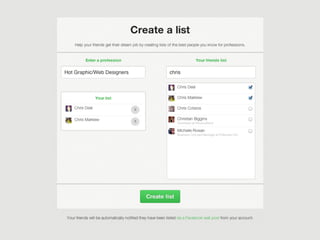
1. A user creates a list
2. Listees are notified via Facebook wall post
   or LinkedIn message that they have been
   added to a list
3. Listees sign up to GetListed and become
   users
4. Rinse and Repeat
5. V-Co of 1+ will be achieved
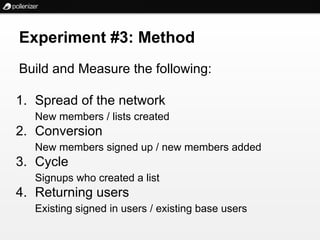
Experiment #3: Method
Build and Measure the following:

1. Spread of the network
   New members / lists created
2. Conversion
   New members signed up / new members added
3. Cycle
   Signups who created a list
4. Returning users
   Existing signed in users / existing base users
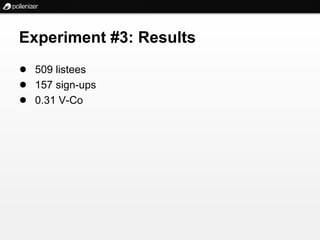
Experiment #3: Results
● 509 listees
● 157 sign-ups
● 0.31 V-Co
Pivot or Persevere?
Persevere!
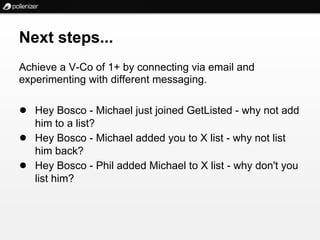
Next steps...
Achieve a V-Co of 1+ by connecting via email and
experimenting with different messaging.

● Hey Bosco - Michael just joined GetListed - why not add
    him to a list?
●   Hey Bosco - Michael added you to X list - why not list
    him back?
●   Hey Bosco - Phil added Michael to X list - why don't you
    list him?
Thanks
● robert@pollenizer.com
● http://au.linkedin.com/in/robertlove

Lean Startup Methodology

  • 1.
  • 4.
    What is "Lean"? ● Takes its name from "Lean Manufacturing" ● Toyota Production System (TPS) ● Preserving value with less work ● Value is defined as any action or process that a customer would be willing to pay for
  • 5.
    What's a "Startup"? Ahuman institution designed to create new products and services under conditions of extreme uncertainty.
  • 6.
    The five principles: 1. Entrepreneurs are everywhere 2. Entrepreneurship is management 3. Validated learning 4. Innovation accounting 5. Build-Measure-Learn
  • 7.
    Entrepreneurs are everywhere ●You don't have to work in a garage to be in a startup ● All industries ● All sectors
  • 8.
    Entrepreneurship is management ●A startup is an institution, not just a product ● Requires management ● A new kind of management specifically geared to its context of extreme uncertainty
  • 9.
    Validated learning ● Startupsexist not to make stuff, make money, or serve customers ● They exist to learn how to build a sustainable business ● This learning can be validated scientifically, by running experiments that allow us to test each element of our vision
  • 10.
    Innovation accounting ● Improveentrepreneurial outcomes ● Hold entrepreneurs accountable ● Focus on the boring stuff: ○ How to measure progress ○ How to setup milestones ○ How to prioritize work ● This requires a new kind of accounting specific to startups
  • 11.
    Build-Measure-Learn ● The fundamentalactivity of a startup is to: ○ Turn ideas into products ○ Measure how customers respond ○ Learn whether to pivot or persevere ● All successful startup processes should be geared to accelerate that feedback loop
  • 13.
    "Founders that learn aremore successful"
  • 14.
    "Startups that pivot onceor twice raise 2.5x the money"
  • 15.
  • 16.
    Problem It's hard todetermine the best person for a job (both ways).
  • 17.
    Solution If we couldcreate a list of the best people for a given profession... ● Employers could find the best people ● The best people could land jobs perfectly matched to their skills
  • 18.
    Smoke test ● Whatcan we test before we build anything? ● What can we do before we have to build? ● How can we find out if anyone finds this list valuable enough to pay for it?
  • 21.
    Experiment #1: Hypothesis Recruiterswill pay for a list of top talent in a profession.
  • 22.
    Experiment #1: Method Createa list of 50 fake software engineers and sell it to 25 recruiters for $200 each.
  • 24.
    Experiment #1: Results Nolists were sold.
  • 25.
    Experiment #1: Learnings ● Recruiters didn't see the value in the list ● Felt that's what their job was ● "Why would we just pay for a list" ● Felt threatened ● (and so they should - after all - we are trying to disrupt them!)
  • 26.
  • 27.
  • 28.
    Experiment #2: Hypothesis Inorder to avoid expensive recruiter fees, businesses will pay for a list of top talent in a profession.
  • 29.
    Experiment #2: Method Takeour list of 50 fake software engineers and sell it to 25 businesses for $200 each.
  • 30.
    Experiment #2: Results Nolists were sold.
  • 31.
    Experiment #2: Learnings ●Don't offer a flat list ● Offer a service where users create lists from people in their own networks (Facebook and LinkedIn) ● We'll be growing the network of GetListed users without having to do the initial service ● Requires strong viral coefficient (V-Co) to maintain sustainable growth
  • 32.
  • 33.
  • 34.
    Experiment #3: Hypothesis 1.A user creates a list 2. Listees are notified via Facebook wall post or LinkedIn message that they have been added to a list 3. Listees sign up to GetListed and become users 4. Rinse and Repeat 5. V-Co of 1+ will be achieved
  • 35.
    Experiment #3: Method Buildand Measure the following: 1. Spread of the network New members / lists created 2. Conversion New members signed up / new members added 3. Cycle Signups who created a list 4. Returning users Existing signed in users / existing base users
  • 38.
    Experiment #3: Results ●509 listees ● 157 sign-ups ● 0.31 V-Co
  • 39.
  • 40.
  • 41.
    Next steps... Achieve aV-Co of 1+ by connecting via email and experimenting with different messaging. ● Hey Bosco - Michael just joined GetListed - why not add him to a list? ● Hey Bosco - Michael added you to X list - why not list him back? ● Hey Bosco - Phil added Michael to X list - why don't you list him?
  • 42.