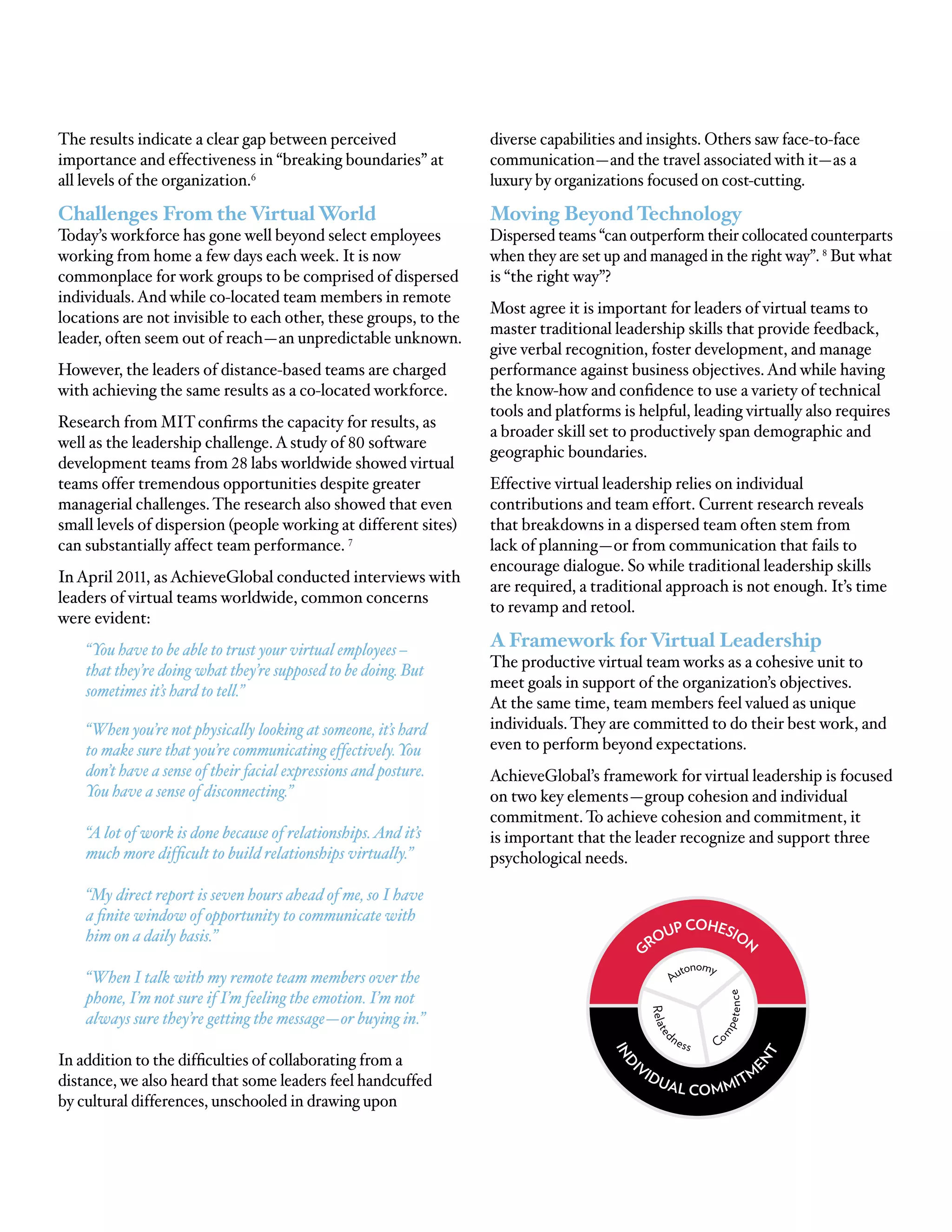
The document discusses the challenges of leading virtual teams where employees work remotely in different locations. It notes that while technology enables remote work, building trust and effective communication is difficult without face-to-face interaction. Surveys found that while executives see boundary-spanning as important for leadership, most feel ineffective at it. Leading virtual teams requires mastering traditional leadership skills as well as techniques for spanning distances. The framework emphasizes building group cohesion and individual commitment by supporting autonomy, relatedness, and competence.