

LEADERSHIP STYLES
DEFINING A LEADER… 
Think of a leader that you worked for or 
observed… 
What does this person do and what qualities 
does this person have that make you admire 
him or her as a leader?
LEADERSHIP STYLES 
 Autocratic (Authoritarian) 
 Bureaucratic 
 Democratic 
 Coercive 
 Transactional 
 Transformational 
 Laissez-Faire
AUTOCRATIC(AUTHORITARIAN) 
 Manager retains power (classical approach) 
 Manager is decision-making authority 
 Manager does not consult employees for input 
 Subordinates expected to obey orders without 
explanations 
 Motivation provided through structured rewards 
and punishments
WHEN TO USE AUTOCRATIC 
 New, untrained employees 
 Employees are motivated 
 Employees do not respond to any other leadership style 
 High-volume production needs 
 Limited time for decision making 
 Manager’s power is challenged by an employee
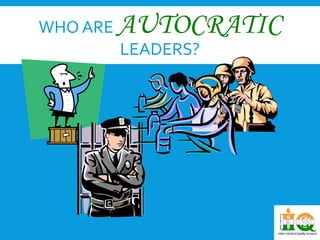
WHO ARE AUTOCRATIC 
LEADERS?
BUREAUCRATIC 
 Manager manages “by the book¨ 
 Everything must be done according to 
procedure or policy 
 If it isn’t covered by the book, the manager 
refers to the next level above him or her 
 Police officer more than leader
WHEN TO USE 
BUREAUCRATIC 
 Performing routine tasks 
 Need for standards/procedures 
 Use of dangerous or delicate equipment 
 Safety or security training being conducted 
 Tasks that require handling cash
WHO ARE 
BUREAUCRATICLEADERS?
DEMOCRATIC 
 Often referred to as participative style 
 Keeps employees informed 
 Shares decision making and problem solving 
responsibilities 
 “Coach” who has the final say, but… 
 Gathers information from staff members before 
making decisions
DEMOCRATICCONTINUED 
 Help employees evaluate their own performance 
 Allows employees to establish goals 
 Encourages employees to grow on the job and be 
promoted 
 Recognizes and encourages achievement 
 Can produce high quality and high quantity work for 
long periods of time
WHEN TO USE DEMOCRATIC 
 To keep employees informed 
 To encourage employees to share in decision-making 
and problem-solving 
 To provide opportunities for employees to 
develop a high sense of personal growth and job 
satisfaction 
 Complex problems that require a lots of input 
 To encourage team building and participation.
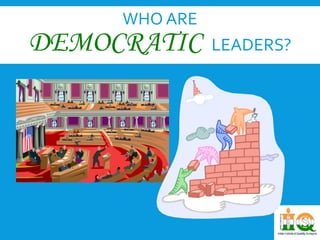
WHO ARE 
DEMOCRATIC LEADERS?
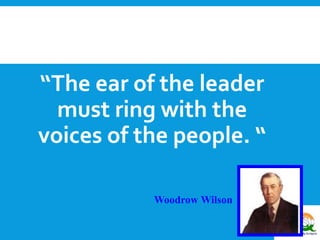
“The ear of the leader 
must ring with the 
voices of the people. “ 
Woodrow Wilson
COERCIVE 
 Power from a person’s authority to punish 
 Most obvious types of power a leader has. 
 Good leaders use coercive power only as a last 
resort: 
 In today’s sophisticated and complex workplace, excessive 
use of coercive power unleashes unpredictable and 
destabilizing forces which can ultimately undermine the 
leader using it.
WHEN TO USE COERCIVE 
 To meet very short term goals 
 When left with no other choice 
 In times of crisis
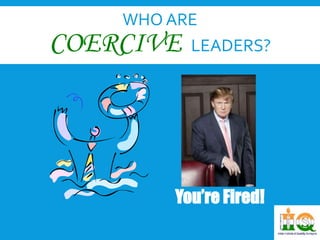
WHO ARE 
COERCIVE LEADERS? 
You’re Fired!
TRANSACTIONAL 
 Motivate followers by appealing to their own self-interest 
 Motivate by the exchange process. 
 EX: business owners exchange status and wages for the work 
effort of the employee. 
 Focuses on the accomplishment of tasks & good worker 
relationships in exchange for desirable rewards. 
 Encourage leader to adapt their style and behavior to 
meet expectations of followers
WHEN TO USE 
TRANSACTIONAL 
 Leader wants to be in control 
 When there are approaching deadlines that must be met 
 Relationship is short term
A RESULT OF THE 
LEADERSHIP WE KNEW... 
“We made workers into robots; we 
made them into machines…
...Now, we want them to become a 
different kind of person: to come up with 
new ideas.” 
Jack Smith, CEO, General Motors
TRANSFORMATIONAL 
 Charismatic and visionary 
 Inspire followers to transcend their self-interest for the organization 
 Appeal to followers' ideals and values 
 Inspire followers to think about problems in new or different ways 
 Common strategies used to influence followers include vision and 
framing 
Research indicates that transformational leadership is more 
strongly correlated with lower turnover rates, higher productivity, 
and higher employee satisfaction.
TRANSFORMATIONALCONT. 
 Instils feelings of confidence, admiration and 
commitment 
 Stimulates followers intellectually, arousing them 
to develop new ways to think about problems. 
 Uses contingent rewards to positively reinforce 
desirable performances 
 Flexible and innovative.
When to use Transformational 
 When leaders want members to be an active 
part of the organization and have ownership to 
it 
 When leaders are building a sense of purpose 
 When the organization has a long term plan 
 When people need to be motivated
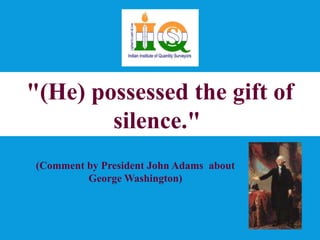
"(He) possessed the gift of 
silence." 
(Comment by President John Adams about 
George Washington)
LAISSEZ-FAIRE 
 Also known as the “hands-off¨ style 
 Little or no direction 
 Gives followers as much freedom as possible 
 All authority or power is given to the followers 
 Followers must determine goals, make decisions, 
and resolve problems on their own.
WHEN TO USE LAISSEZ-FAIRE 
 Employees are highly skilled, experienced, and 
educated 
 Employees have pride in their work and the drive 
to do it successfully on their own 
 Outside experts, such as staff specialists or 
consultants are being used 
 Employees are trustworthy and experienced
OTHER REFERENCED THEORIES 
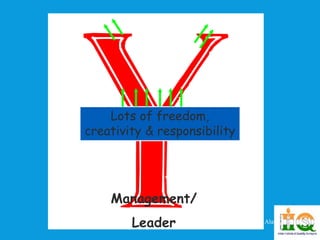
Theory X and Theory Y 
 Theory X and Theory Y each represent different ways 
in which leaders view employees. 
 Theory X is the traditional view of direction and control 
by managers. 
 Theory Y is the view that individual and organizational 
goals can be integrated.
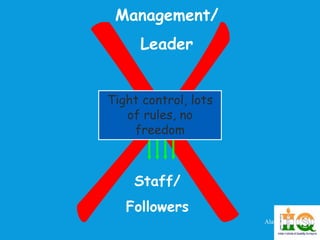
Management/ 
Leader 
Staff/ 
Followers 
Alan Chapmen 
Tight control, lots 
of rules, no 
freedom
Alan Chapmen 
Staff/ 
Followers 
Lots of freedom, 
creativity & responsibility 
Management/ 
Leader
OTHER REFERENCED THEORIES 
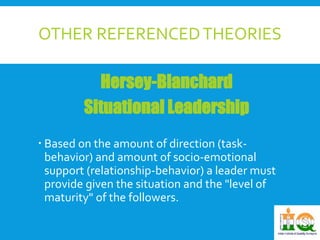
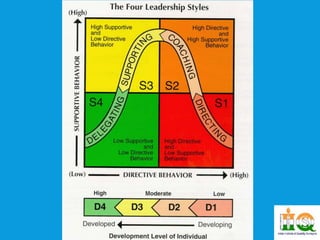
Hersey-Blanchard 
Situational Leadership 
 Based on the amount of direction (task-behavior) 
and amount of socio-emotional 
support (relationship-behavior) a leader must 
provide given the situation and the "level of 
maturity" of the followers.
SELECTING A STYLE 
 Some people are motivated by reward 
 Some people are motivated by punishment 
 Social systems work best with a chain of 
command 
 When people have agreed to do a job, a 
part of the deal is that they cede authority 
to their leader

Leadership styles

  • 1.
  • 2.
    DEFINING A LEADER… Think of a leader that you worked for or observed… What does this person do and what qualities does this person have that make you admire him or her as a leader?
  • 3.
    LEADERSHIP STYLES Autocratic (Authoritarian)  Bureaucratic  Democratic  Coercive  Transactional  Transformational  Laissez-Faire
  • 4.
    AUTOCRATIC(AUTHORITARIAN)  Managerretains power (classical approach)  Manager is decision-making authority  Manager does not consult employees for input  Subordinates expected to obey orders without explanations  Motivation provided through structured rewards and punishments
  • 5.
    WHEN TO USEAUTOCRATIC  New, untrained employees  Employees are motivated  Employees do not respond to any other leadership style  High-volume production needs  Limited time for decision making  Manager’s power is challenged by an employee
  • 6.
  • 7.
    BUREAUCRATIC  Managermanages “by the book¨  Everything must be done according to procedure or policy  If it isn’t covered by the book, the manager refers to the next level above him or her  Police officer more than leader
  • 8.
    WHEN TO USE BUREAUCRATIC  Performing routine tasks  Need for standards/procedures  Use of dangerous or delicate equipment  Safety or security training being conducted  Tasks that require handling cash
  • 9.
  • 10.
    DEMOCRATIC  Oftenreferred to as participative style  Keeps employees informed  Shares decision making and problem solving responsibilities  “Coach” who has the final say, but…  Gathers information from staff members before making decisions
  • 11.
    DEMOCRATICCONTINUED  Helpemployees evaluate their own performance  Allows employees to establish goals  Encourages employees to grow on the job and be promoted  Recognizes and encourages achievement  Can produce high quality and high quantity work for long periods of time
  • 12.
    WHEN TO USEDEMOCRATIC  To keep employees informed  To encourage employees to share in decision-making and problem-solving  To provide opportunities for employees to develop a high sense of personal growth and job satisfaction  Complex problems that require a lots of input  To encourage team building and participation.
  • 13.
  • 14.
    “The ear ofthe leader must ring with the voices of the people. “ Woodrow Wilson
  • 15.
    COERCIVE  Powerfrom a person’s authority to punish  Most obvious types of power a leader has.  Good leaders use coercive power only as a last resort:  In today’s sophisticated and complex workplace, excessive use of coercive power unleashes unpredictable and destabilizing forces which can ultimately undermine the leader using it.
  • 16.
    WHEN TO USECOERCIVE  To meet very short term goals  When left with no other choice  In times of crisis
  • 17.
    WHO ARE COERCIVELEADERS? You’re Fired!
  • 18.
    TRANSACTIONAL  Motivatefollowers by appealing to their own self-interest  Motivate by the exchange process.  EX: business owners exchange status and wages for the work effort of the employee.  Focuses on the accomplishment of tasks & good worker relationships in exchange for desirable rewards.  Encourage leader to adapt their style and behavior to meet expectations of followers
  • 19.
    WHEN TO USE TRANSACTIONAL  Leader wants to be in control  When there are approaching deadlines that must be met  Relationship is short term
  • 20.
    A RESULT OFTHE LEADERSHIP WE KNEW... “We made workers into robots; we made them into machines…
  • 21.
    ...Now, we wantthem to become a different kind of person: to come up with new ideas.” Jack Smith, CEO, General Motors
  • 22.
    TRANSFORMATIONAL  Charismaticand visionary  Inspire followers to transcend their self-interest for the organization  Appeal to followers' ideals and values  Inspire followers to think about problems in new or different ways  Common strategies used to influence followers include vision and framing Research indicates that transformational leadership is more strongly correlated with lower turnover rates, higher productivity, and higher employee satisfaction.
  • 23.
    TRANSFORMATIONALCONT.  Instilsfeelings of confidence, admiration and commitment  Stimulates followers intellectually, arousing them to develop new ways to think about problems.  Uses contingent rewards to positively reinforce desirable performances  Flexible and innovative.
  • 24.
    When to useTransformational  When leaders want members to be an active part of the organization and have ownership to it  When leaders are building a sense of purpose  When the organization has a long term plan  When people need to be motivated
  • 25.
    "(He) possessed thegift of silence." (Comment by President John Adams about George Washington)
  • 26.
    LAISSEZ-FAIRE  Alsoknown as the “hands-off¨ style  Little or no direction  Gives followers as much freedom as possible  All authority or power is given to the followers  Followers must determine goals, make decisions, and resolve problems on their own.
  • 27.
    WHEN TO USELAISSEZ-FAIRE  Employees are highly skilled, experienced, and educated  Employees have pride in their work and the drive to do it successfully on their own  Outside experts, such as staff specialists or consultants are being used  Employees are trustworthy and experienced
  • 28.
    OTHER REFERENCED THEORIES Theory X and Theory Y  Theory X and Theory Y each represent different ways in which leaders view employees.  Theory X is the traditional view of direction and control by managers.  Theory Y is the view that individual and organizational goals can be integrated.
  • 29.
    Management/ Leader Staff/ Followers Alan Chapmen Tight control, lots of rules, no freedom
  • 30.
    Alan Chapmen Staff/ Followers Lots of freedom, creativity & responsibility Management/ Leader
  • 31.
    OTHER REFERENCED THEORIES Hersey-Blanchard Situational Leadership  Based on the amount of direction (task-behavior) and amount of socio-emotional support (relationship-behavior) a leader must provide given the situation and the "level of maturity" of the followers.
  • 33.
    SELECTING A STYLE  Some people are motivated by reward  Some people are motivated by punishment  Social systems work best with a chain of command  When people have agreed to do a job, a part of the deal is that they cede authority to their leader