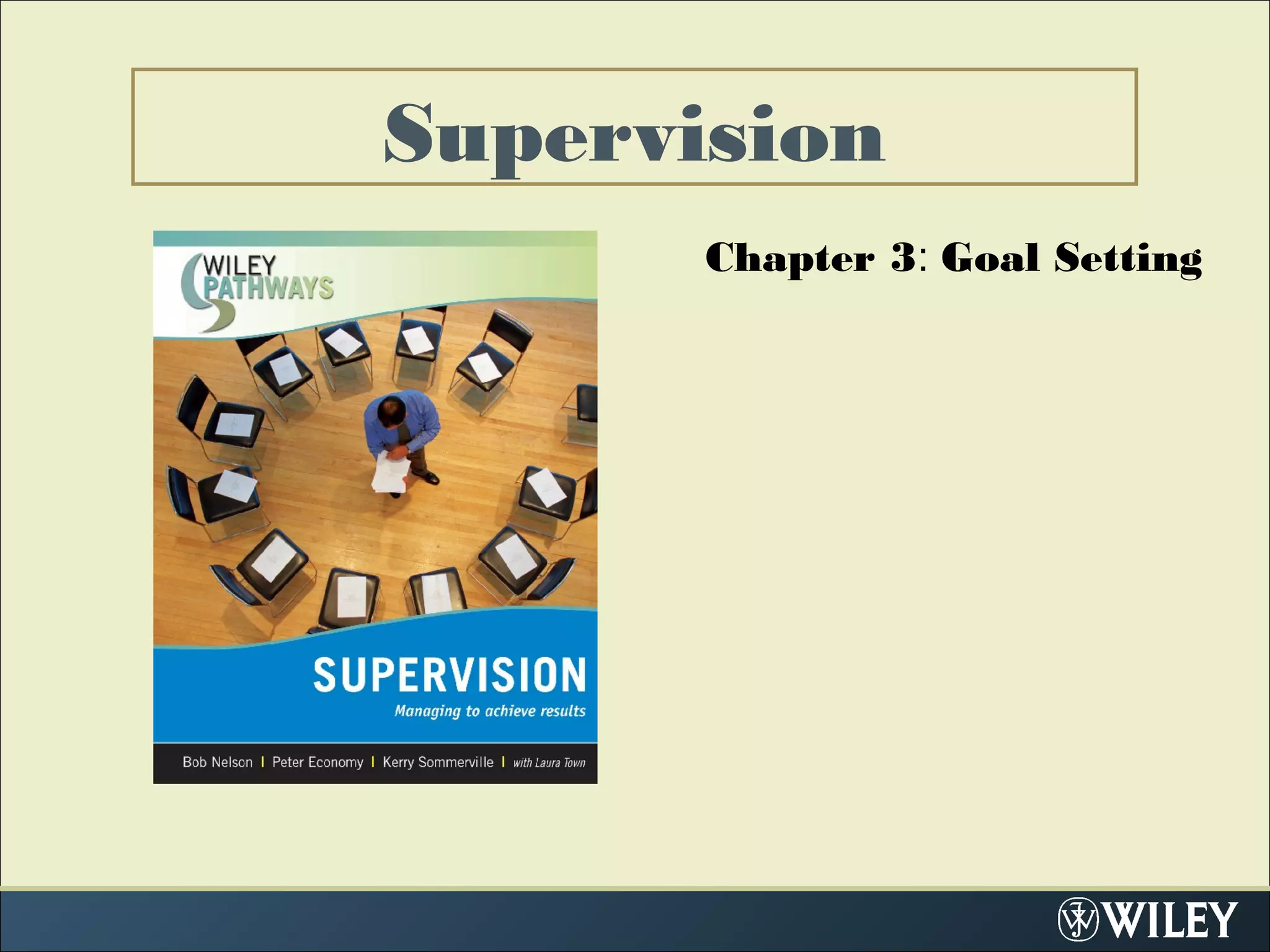
Supervision
Chapter 3: Goal Setting
• In most companies, top management
sets the overall purpose—the vision
—of the organization.
• You are much more likely to be
achieve your vision when you take a
planned, goal-oriented approach,
communicate this approach, and
have the support of other employees.
Purpose
Vision
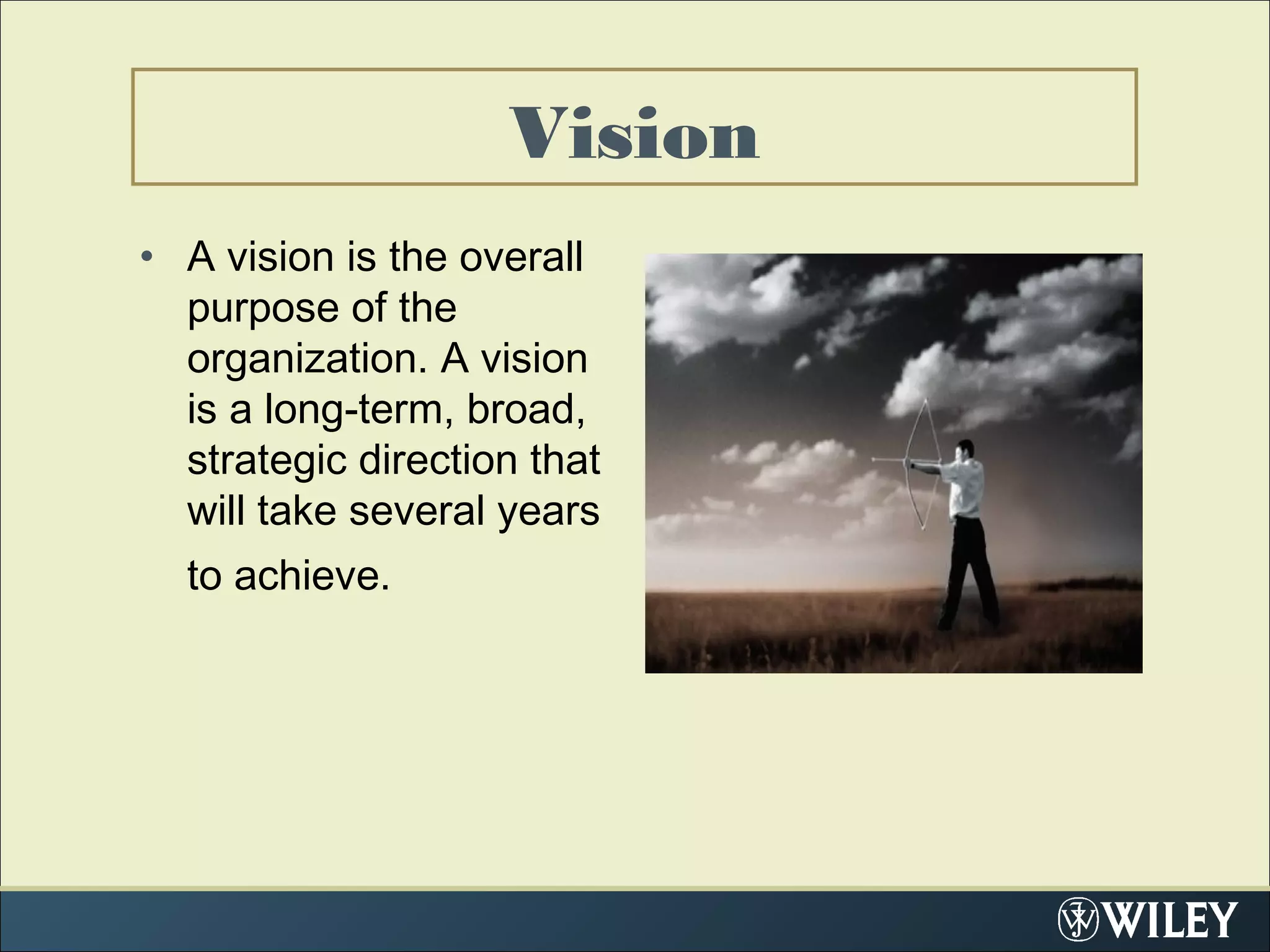
• A vision is the overall
purpose of the
organization. A vision
is a long-term, broad,
strategic direction that
will take several years
to achieve.
Goals
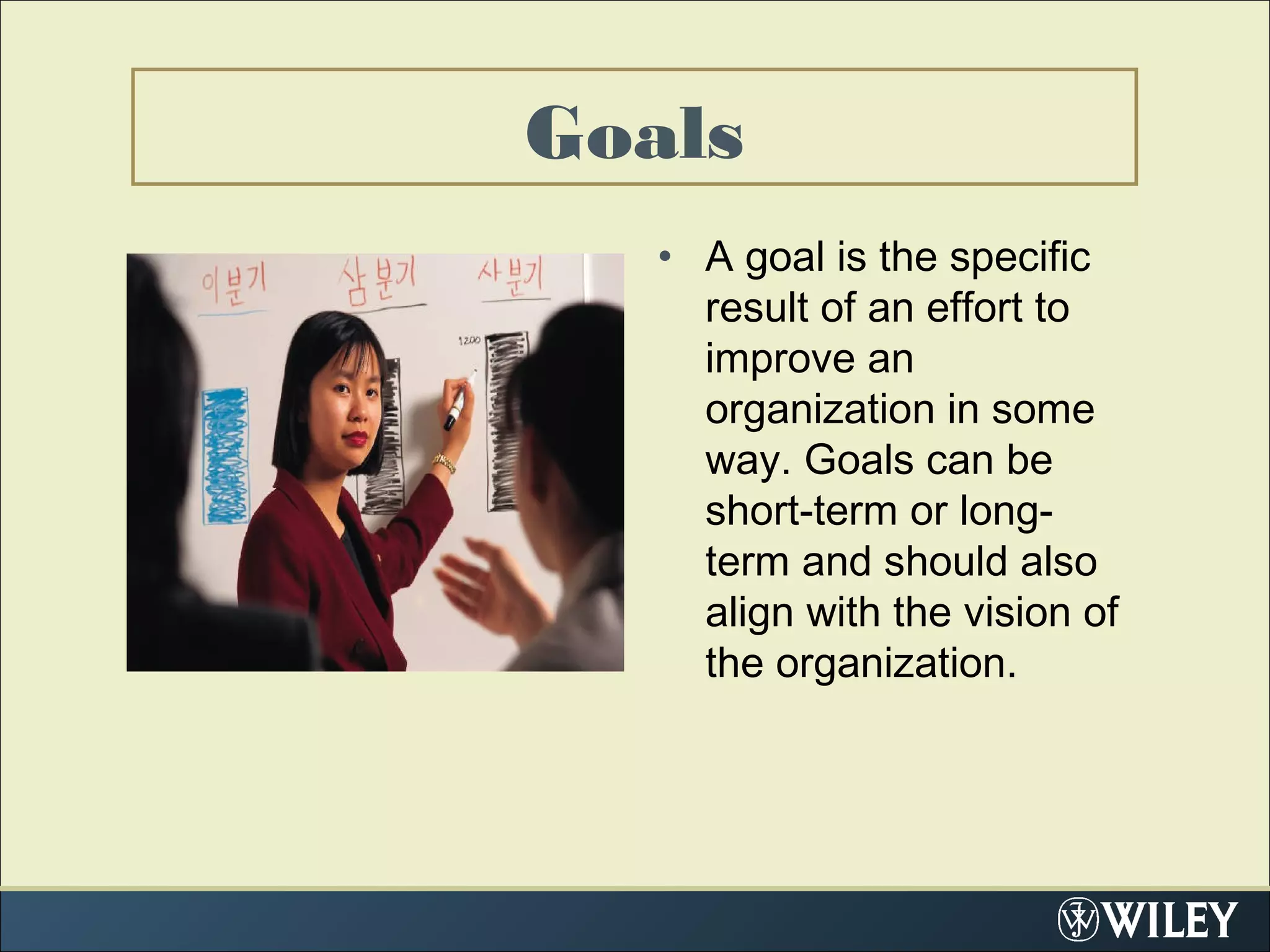
• A goal is the specific
result of an effort to
improve an
organization in some
way. Goals can be
short-term or long-
term and should also
align with the vision of
the organization.
•Following are the main reasons to set
goals whenever you want to accomplish
something significant:
– Goals provide direction.
– Goals tell you how far you’ve traveled.
– Goals help make your overall vision
attainable.
– Goals clarify everyone’s role.
– Goals give people something to strive for.
•For goals to be useful, they have to link
directly to the final vision.  
Goals
• The best goals are SMART goals
referring to a handy checklist for the
five characteristics of well-designed
goals.
– Specific.
– Measurable.
– Attainable.
– Relevant.
– Time-bound.
SMART
Significant Goals
• Too many goals can overwhelm you
and your employees.
• It’s far better to set a few significant
goals and then concentrate your efforts
on attaining them.
• Ensure that you follow through on the
goals.
• Many companies establish goals and
then return to business as usual
Communicating Goals
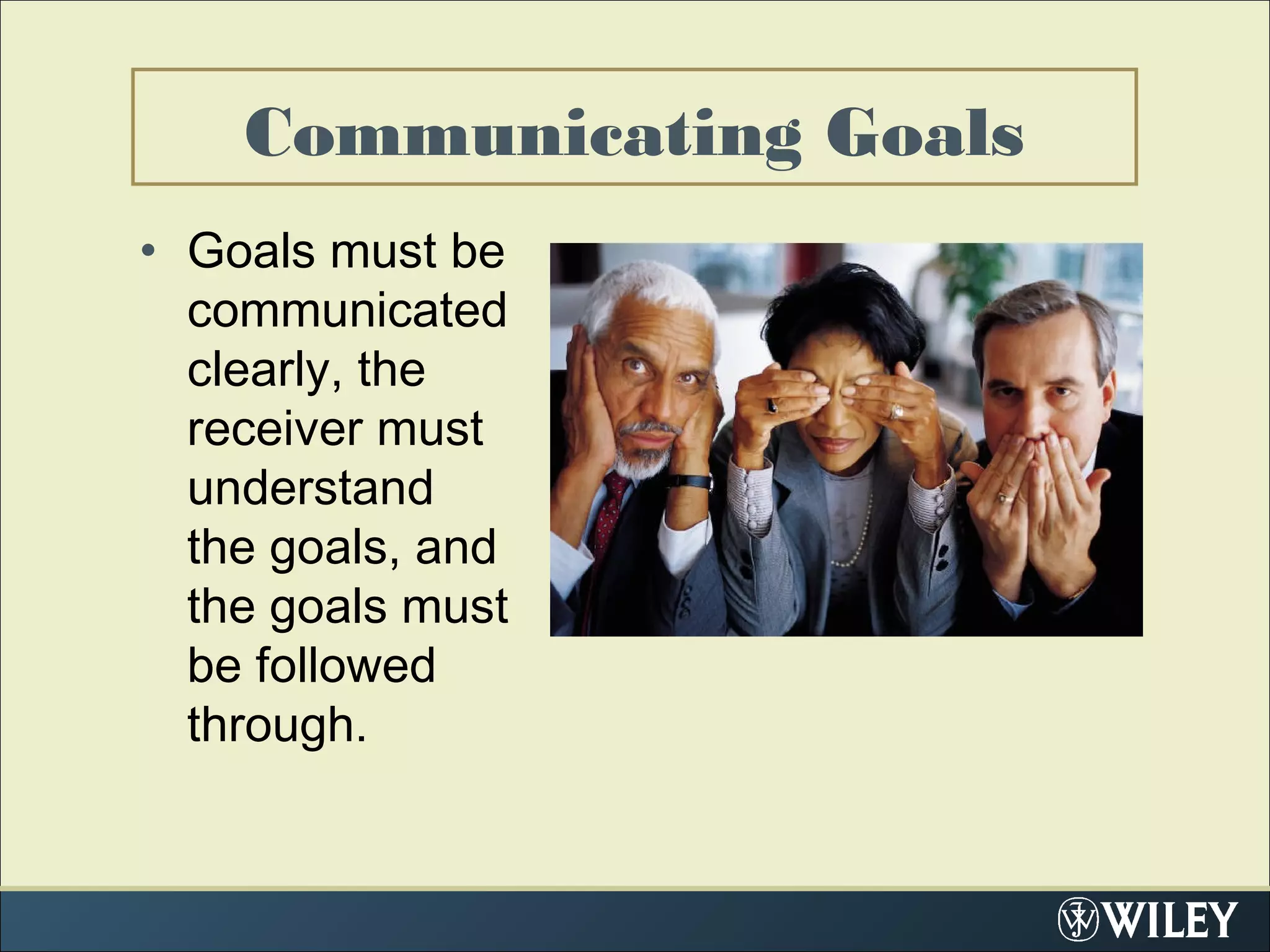
• Goals must be
communicated
clearly, the
receiver must
understand
the goals, and
the goals must
be followed
through.
Communicating Goals
• Goals are personal, and the methods you
use to communicate them must be much
more formal and direct.
• Ask your employees to prepare and
present plans and milestone schedules
explaining how they can accomplish the
assigned goals by the deadlines that you
agreed to.
• Communicating your organization’s vision
is as important as communicating specific
goals.
Goal Focused
• The process of goal setting often
generates a lot of excitement and energy
within employees.
• Managers must take steps to ensure that
the organization’s focus remains centered
on the goals and not on other matters.
• Staying focused on goals can be
extremely difficult—particularly when
you’re a busy person and the goals are
added on top of your regular
responsibilities.
Goals and Results
• One of the biggest problems that
employees face is confusing activity with
results.
• A general rule that says that 80 percent of
workers’ productivity comes from 20
percent of their activity.
• Following are some tips to help you and
your employees work on the items that
help all of you achieve the company’s
goals:
– Do your number one priority first!
– Get organized!
– Just say no!
Achieving Goals
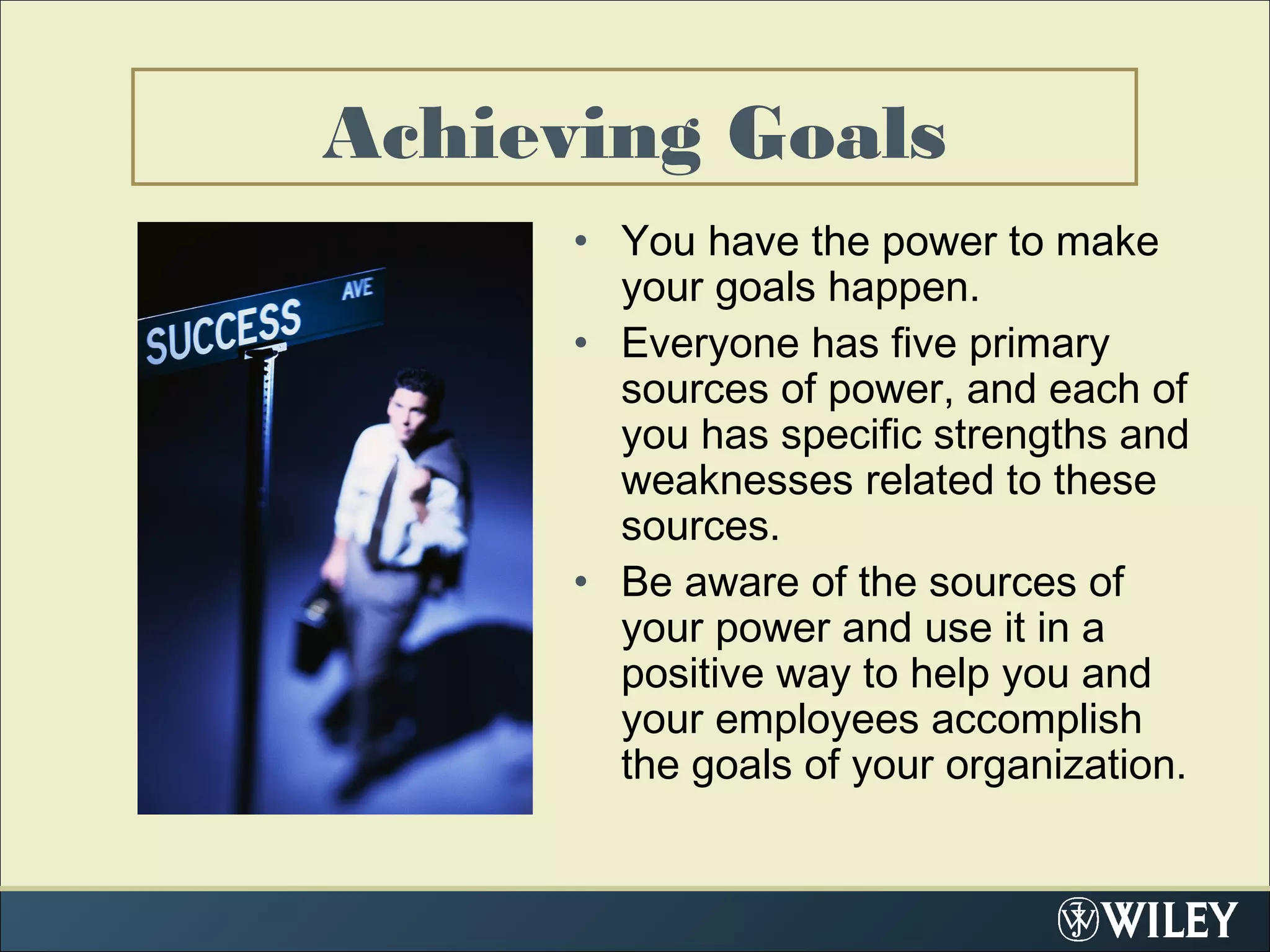
• You have the power to make
your goals happen.
• Everyone has five primary
sources of power, and each of
you has specific strengths and
weaknesses related to these
sources.
• Be aware of the sources of
your power and use it in a
positive way to help you and
your employees accomplish
the goals of your organization.
• An organization can live up to its full
potential only if it sets and strives
toward goals that are closely aligned
with the company’s vision. As you
have learned, these goals must be
communicated effectively and
prioritized. You and other managers
can use different sources of power to
ensure the goals have buy-in from all
employees.
Summary
Copyright Notice
© 2007 John Wiley & Sons, Inc. All rights reserved.
Reproduction or translation of this work beyond that
permitted in section 117 of the 1976 United States
Copyright Act without express permission of the copyright
owner is unlawful. Request for further information should
be addressed to the Permissions Department, John Wiley
& Sons, Inc. The purchaser may make back-up copies for
his/her use only and not for distribution or resale. The
Publisher assumes no responsibility for errors, omissions,
or damages caused by the use of these programs or from
the use of the information herein.
All clipart and photos courtesy of Microsoft.com

Ldr151 orig-ch03

  • 1.
  • 2.
    • In mostcompanies, top management sets the overall purpose—the vision —of the organization. • You are much more likely to be achieve your vision when you take a planned, goal-oriented approach, communicate this approach, and have the support of other employees. Purpose
  • 3.
    Vision • A visionis the overall purpose of the organization. A vision is a long-term, broad, strategic direction that will take several years to achieve.
  • 4.
    Goals • A goalis the specific result of an effort to improve an organization in some way. Goals can be short-term or long- term and should also align with the vision of the organization.
  • 5.
    •Following are themain reasons to set goals whenever you want to accomplish something significant: – Goals provide direction. – Goals tell you how far you’ve traveled. – Goals help make your overall vision attainable. – Goals clarify everyone’s role. – Goals give people something to strive for. •For goals to be useful, they have to link directly to the final vision.   Goals
  • 6.
    • The bestgoals are SMART goals referring to a handy checklist for the five characteristics of well-designed goals. – Specific. – Measurable. – Attainable. – Relevant. – Time-bound. SMART
  • 7.
    Significant Goals • Toomany goals can overwhelm you and your employees. • It’s far better to set a few significant goals and then concentrate your efforts on attaining them. • Ensure that you follow through on the goals. • Many companies establish goals and then return to business as usual
  • 8.
    Communicating Goals • Goalsmust be communicated clearly, the receiver must understand the goals, and the goals must be followed through.
  • 9.
    Communicating Goals • Goalsare personal, and the methods you use to communicate them must be much more formal and direct. • Ask your employees to prepare and present plans and milestone schedules explaining how they can accomplish the assigned goals by the deadlines that you agreed to. • Communicating your organization’s vision is as important as communicating specific goals.
  • 10.
    Goal Focused • Theprocess of goal setting often generates a lot of excitement and energy within employees. • Managers must take steps to ensure that the organization’s focus remains centered on the goals and not on other matters. • Staying focused on goals can be extremely difficult—particularly when you’re a busy person and the goals are added on top of your regular responsibilities.
  • 11.
    Goals and Results •One of the biggest problems that employees face is confusing activity with results. • A general rule that says that 80 percent of workers’ productivity comes from 20 percent of their activity. • Following are some tips to help you and your employees work on the items that help all of you achieve the company’s goals: – Do your number one priority first! – Get organized! – Just say no!
  • 12.
    Achieving Goals • Youhave the power to make your goals happen. • Everyone has five primary sources of power, and each of you has specific strengths and weaknesses related to these sources. • Be aware of the sources of your power and use it in a positive way to help you and your employees accomplish the goals of your organization.
  • 13.
    • An organizationcan live up to its full potential only if it sets and strives toward goals that are closely aligned with the company’s vision. As you have learned, these goals must be communicated effectively and prioritized. You and other managers can use different sources of power to ensure the goals have buy-in from all employees. Summary
  • 14.
    Copyright Notice © 2007John Wiley & Sons, Inc. All rights reserved. Reproduction or translation of this work beyond that permitted in section 117 of the 1976 United States Copyright Act without express permission of the copyright owner is unlawful. Request for further information should be addressed to the Permissions Department, John Wiley & Sons, Inc. The purchaser may make back-up copies for his/her use only and not for distribution or resale. The Publisher assumes no responsibility for errors, omissions, or damages caused by the use of these programs or from the use of the information herein. All clipart and photos courtesy of Microsoft.com