With whom was the power given to sanction segregation?
Our constitution is colorblind, and neither knows nor tolerates classes among its citizens…it does not require integration.  It merely forbids segregation.
Plessy v. FergusonReasonable to separate because of established customs, usages, and traditions.No matter how blatantly and objectionable the law affects a “particular classification of people”.S
Cumming v. Board of Ed. of Richmond CountyOnly interest of federal judiciary is to ensure that all citizens should share equitably in the tax burdenWhere would black high school students be taught?
Borea College v. Kentucky Both races could not receive instruction from any institution as a corporation unless it was done so 25 miles apart.
The constitution is a colorblind document, yet …These 3 cases established that the states could constitutionally maintain separate systems of education for blacks and whites, and in addition to this they could reach into private education and allow it to be segregated as well.
With whom was the power given to sanction segregation?The States
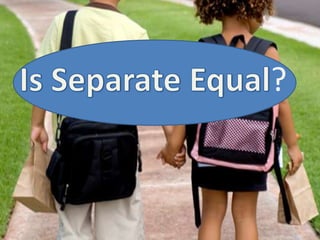
Is Separate Equal?
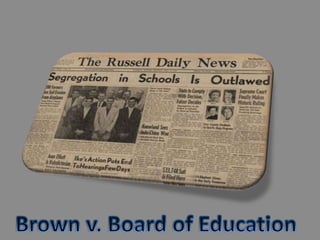
NAACP-1930Gains v. Canada-19381950 Supreme Court case-rocked the foundation of Separate But EqualBrown v. Board of Education of TopekaSeparation inherently unequalAftermath of this landmark decision
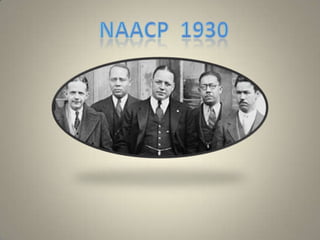
NAACP  1930
Gains v. Canada
1950 Supreme Court Case
Brown v. Board of Education
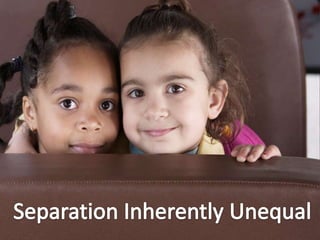
Separation Inherently Unequal
Aftermath of decision
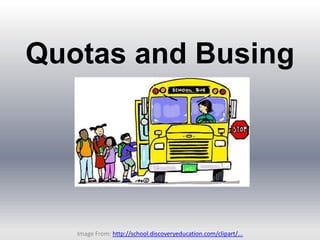
Quotas and Busing Image From: http://school.discoveryeducation.com/clipart/...
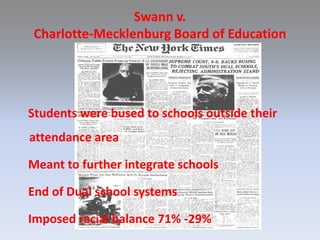
Swann v. Charlotte-Mecklenburg Board of Education   Students were bused to schools outside their   attendance area   Meant to further integrate schools   End of Dual school systems   Imposed racial balance 71% -29%
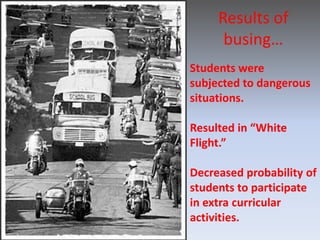
Results of busing…Students were subjected to dangerous situations.Resulted in “White Flight.”Decreased probability of students to participate in extra curricular activities.
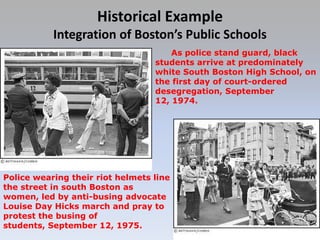
Historical ExampleIntegration of Boston’s Public SchoolsAs police stand guard, black students arrive atpredominately white South Boston High School, on the first day of court-ordered desegregation, September 12, 1974.Police wearing their riot helmets line the street in south Boston as women, led by anti-busing advocate Louise Day Hicks march and pray to protest the busing of students, September 12, 1975.
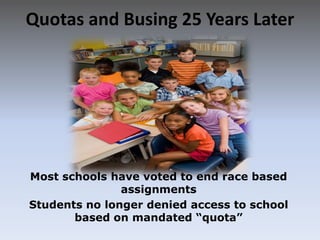
Quotas and Busing 25 Years LaterMost schools have voted to end race based assignmentsStudents no longer denied access to school based on mandated “quota”
Has the law failed to undothe segregation that was originally caused by the law?
The most segregated group in the nations public schools is white students.True or False
TRUE. While white students are attending schools with slightly more students of colorthan in the past, they remain the most isolated of all racial groups.
Due to the history of slavery and segregation in the South, southern states are themost segregated states for black students.True or False
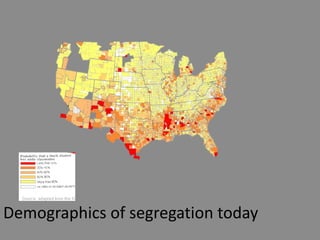
FALSE.  In 2009, the top five segregated states where black students attended majority minority schools (where greater than 50% of students are of color) are California, New York, Illinois, Maryland and Texas. The first southern state in this ranking is Texas, in fifth place.
Demographics of segregation today
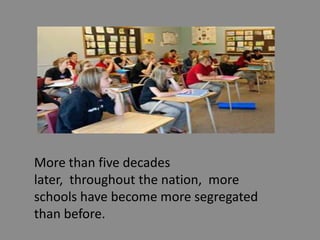
More than five decades later,  throughout the nation,  more schools have become more segregated than before.
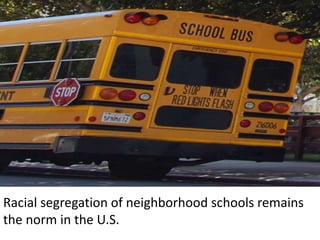
Racial segregation of neighborhood schools remains the norm in the U.S.
What steps can we take to move forward in providing equal educational opportunities to all?
Voluntary integration plans among school districtsLeaders making  the case that desegregation properly implemented is valuable to all students  More progressive civil right agencies
ReferencesImages Fromhttp://www.bing.com/imageshttp://www.office.microsoft.com/en-us/imageshttp://www.loc.gov/exhibits/brown/brown-segregation.htmlhttp://school.discoveryeducation.com/clipart/Video FromPBS(producer).(1974).Eyes on the prize :School desegregation in Boston[video].	Available from	http://www.pbs.org/wgbh/amex/eyesontheprize/story/21_boston.htmlOther Resourceshttp://www.pbs.org/wnet/jimcrow/stories_events_gaines.htmlhttp://www.oyez.org/cases/1940-1949/1949/1949_44

Law presentation revised

  • 1.
    With whom wasthe power given to sanction segregation?
  • 2.
    Our constitution iscolorblind, and neither knows nor tolerates classes among its citizens…it does not require integration. It merely forbids segregation.
  • 3.
    Plessy v. FergusonReasonableto separate because of established customs, usages, and traditions.No matter how blatantly and objectionable the law affects a “particular classification of people”.S
  • 4.
    Cumming v. Boardof Ed. of Richmond CountyOnly interest of federal judiciary is to ensure that all citizens should share equitably in the tax burdenWhere would black high school students be taught?
  • 5.
    Borea College v.Kentucky Both races could not receive instruction from any institution as a corporation unless it was done so 25 miles apart.
  • 6.
    The constitution isa colorblind document, yet …These 3 cases established that the states could constitutionally maintain separate systems of education for blacks and whites, and in addition to this they could reach into private education and allow it to be segregated as well.
  • 7.
    With whom wasthe power given to sanction segregation?The States
  • 8.
  • 9.
    NAACP-1930Gains v. Canada-19381950Supreme Court case-rocked the foundation of Separate But EqualBrown v. Board of Education of TopekaSeparation inherently unequalAftermath of this landmark decision
  • 10.
  • 11.
  • 12.
  • 13.
    Brown v. Boardof Education
  • 14.
  • 15.
  • 16.
    Quotas and BusingImage From: http://school.discoveryeducation.com/clipart/...
  • 17.
    Swann v. Charlotte-MecklenburgBoard of Education Students were bused to schools outside their attendance area Meant to further integrate schools End of Dual school systems Imposed racial balance 71% -29%
  • 18.
    Results of busing…Studentswere subjected to dangerous situations.Resulted in “White Flight.”Decreased probability of students to participate in extra curricular activities.
  • 19.
    Historical ExampleIntegration ofBoston’s Public SchoolsAs police stand guard, black students arrive atpredominately white South Boston High School, on the first day of court-ordered desegregation, September 12, 1974.Police wearing their riot helmets line the street in south Boston as women, led by anti-busing advocate Louise Day Hicks march and pray to protest the busing of students, September 12, 1975.
  • 20.
    Quotas and Busing25 Years LaterMost schools have voted to end race based assignmentsStudents no longer denied access to school based on mandated “quota”
  • 22.
    Has the lawfailed to undothe segregation that was originally caused by the law?
  • 23.
    The most segregatedgroup in the nations public schools is white students.True or False
  • 24.
    TRUE. While whitestudents are attending schools with slightly more students of colorthan in the past, they remain the most isolated of all racial groups.
  • 25.
    Due to thehistory of slavery and segregation in the South, southern states are themost segregated states for black students.True or False
  • 26.
    FALSE. In2009, the top five segregated states where black students attended majority minority schools (where greater than 50% of students are of color) are California, New York, Illinois, Maryland and Texas. The first southern state in this ranking is Texas, in fifth place.
  • 27.
  • 28.
    More than fivedecades later, throughout the nation, more schools have become more segregated than before.
  • 29.
    Racial segregation ofneighborhood schools remains the norm in the U.S.
  • 30.
    What steps canwe take to move forward in providing equal educational opportunities to all?
  • 31.
    Voluntary integration plansamong school districtsLeaders making the case that desegregation properly implemented is valuable to all students More progressive civil right agencies
  • 32.
    ReferencesImages Fromhttp://www.bing.com/imageshttp://www.office.microsoft.com/en-us/imageshttp://www.loc.gov/exhibits/brown/brown-segregation.htmlhttp://school.discoveryeducation.com/clipart/Video FromPBS(producer).(1974).Eyeson the prize :School desegregation in Boston[video]. Available from http://www.pbs.org/wgbh/amex/eyesontheprize/story/21_boston.htmlOther Resourceshttp://www.pbs.org/wnet/jimcrow/stories_events_gaines.htmlhttp://www.oyez.org/cases/1940-1949/1949/1949_44