PREPARED BY:
PRANAY ADHIKARI (01)

KAUSTUBH BARVE (11)

KRITI AGRAWAL (03)

MEET BHADRA (13)

MONICA ANGANE (05)

REWAT BHARSAKLE (15)

RUCHITA BADRUKA (07)

ADITYA BHIMANWAR (17)

MEGHA BANSAL (09)

AMOL BHOLE (19)
Accord legal sanctity to electronic records

Provide legal recognition of electronic
records, e-transactions, digital signature etc.
Facilitate e-governance
Establish a regulatory body supervising
certifying authorities
Amend IPC, 1860, Indian Evidence Act, 1872 , RBI
Act, 1934 & Banker’s Books Evidence Act, 1891
Increasing use of
ICTs in
conducting
business
transactions

Adoption of
model law by
UNICTRAL

WTO likely to
conduct
transactions
only in
electronic
medium

Reasons
for
enactment
of IT act

No legal
protection
under the
existing laws

Growing
international
trade through
electronic
means


Need for amendment
Increased use of internet and computer
Rise in the number of cyber crimes.



Structure of IT act
Functions:


Authentication & verification of electronic records by use of asymmetric

crypto system and hash function



Identify the sender



Make contents of the document binding on person putting digital
signature.


Various methods by which one can sign an electronic record.



Electronic sound, symbol, or process



Example: Typed name or a digitized image of a handwritten signature.



Legalized as valid mode of signature in ITAA 2008


Application of ICTs to the processes of government functioning



Government at your fingertips



4 basic models are G to C, G to E, G to G and G to B.



Example: Railway ticket booking, Gramdoot (Rajasthan)


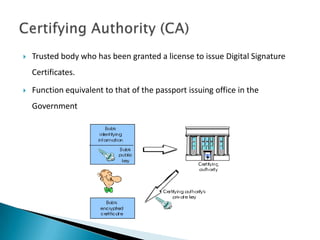
Trusted body who has been granted a license to issue Digital Signature
Certificates.



Function equivalent to that of the passport issuing office in the
Government


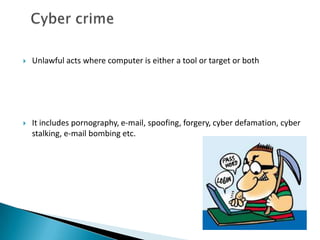
Unlawful acts where computer is either a tool or target or both



It includes pornography, e-mail, spoofing, forgery, cyber defamation, cyber
stalking, e-mail bombing etc.
HACKING

• Gaining unauthorized access to a
computer system
• Trespassing any computer

PHISHING

• Fraudulently acquiring sensitive
information by camouflaging as a
trustworthy person
• Example:Congratulations you have
won $100,00,000
1. Number of Cyber Crimes recorded in India in last 5 years:
3500
3000
2500
2000
1500

2876

1000

1791

500
0

966
288

420

2008

2009

965

2010

2011

2012

2013
2. State wise count of the cyber-crime in 2012:

500
400
300
200
100
0

429

471

412

269

205
4. Country wise distribution of cyber crimes:
SECTION 43.
Penalty and Compensation for damage to computer, computer system, etc:
Penalty:Pay damages by way of compensation not exceeding 1 crore rupees
to the person so affected.
SECTION 43(A).
Compensation for failure to protect data:
Penalty: Pay damages by way of compensation, not exceeding five crore
rupees, to the person so affected.
Example:
Pune Citibank Mphasis BPO Fraud: 2005
SECTION 65.
Tampering with Computer Source Documents
Penalties: Imprisonment up to three years, or with fine which may extend up
to two lakh rupees, or with both
Example:
Syed Asifuddin Vs. The State of Andhra Pradesh
SECTION 66.
Computer Related Offences
Penalties: Imprisonment up to 3 years and/or fine of five lakh rupees

Example:
Kumar v/s Whitley case
SECTION66(A)
Punishment for sending offensive messages through communication Service
Penalties: Imprisonment up to 3 years and/or fine
Example:
Bomb Hoax mail
SECTION 66 (D): Punishment for cheating by personation by using computer
resource
Penalties: Imprisonment which may extend to 3 years and fine which may extend to
one lakh rupees.
Example:
Samdeep Varghese v/s State of Kerala
SECTION 66 (E):
Punishment for violation of privacy
Penalties: Imprisonment which may extend to 3 years or with fine not exceeding
two lakh rupees, or with both.

Example:
Nagpur Congress leader’s son MMS scandal
SECTION 66 (F):
Punishment for cyber terrorism
Penalties: Imprisonment which may extend to imprisonment for life.
Example:
Parliament attack case





Strengthening and standardizing banks infrastructure
Communication and networking
Inter branch connectivity
‘Cyber Cash’ & ‘cyber books’

E-Banking services:
 ATM
 Electronic fund Transfer
 Electronic clearing service
 Credit card/debit card
 Sms banking
 Internet banking


Trade association of IT and BPO industry



NPO with over 1400 members



Facilitates business and trade in software and services



Encourages advancement of research in software technology.
Initiatives taken by NASSCOM:
• Domestic Market Initiative
• Innovation Initiative
• Education Initiative
• Women in Leadership IT Initiative
1.NMIMS Case

2. Bazee.com case

3.Niraj Ambani’s credit card fraud:
India
1. Freedom of expression is

Brazil
1. Freedom of expression is

wider.
2. Principles of broadcasting not

subject to certain restrictions.
2. Strict principles to be followed

as strict as Brazil.

while broadcasting content in
media.

3. Data protection (DP) rules

3. No data protection law in

– April 2011 enacted

4. Personal data of citizens is
easily accessible

Brazil.

4.

Personal data is accessible
only to citizens and the source
must be safeguarded.
IT ACT 2000

IT ACT 2000

  • 2.
    PREPARED BY: PRANAY ADHIKARI(01) KAUSTUBH BARVE (11) KRITI AGRAWAL (03) MEET BHADRA (13) MONICA ANGANE (05) REWAT BHARSAKLE (15) RUCHITA BADRUKA (07) ADITYA BHIMANWAR (17) MEGHA BANSAL (09) AMOL BHOLE (19)
  • 3.
    Accord legal sanctityto electronic records Provide legal recognition of electronic records, e-transactions, digital signature etc. Facilitate e-governance Establish a regulatory body supervising certifying authorities Amend IPC, 1860, Indian Evidence Act, 1872 , RBI Act, 1934 & Banker’s Books Evidence Act, 1891
  • 4.
    Increasing use of ICTsin conducting business transactions Adoption of model law by UNICTRAL WTO likely to conduct transactions only in electronic medium Reasons for enactment of IT act No legal protection under the existing laws Growing international trade through electronic means
  • 5.
     Need for amendment Increaseduse of internet and computer Rise in the number of cyber crimes.  Structure of IT act
  • 6.
    Functions:  Authentication & verificationof electronic records by use of asymmetric crypto system and hash function  Identify the sender  Make contents of the document binding on person putting digital signature.
  • 8.
     Various methods bywhich one can sign an electronic record.  Electronic sound, symbol, or process  Example: Typed name or a digitized image of a handwritten signature.  Legalized as valid mode of signature in ITAA 2008
  • 9.
     Application of ICTsto the processes of government functioning  Government at your fingertips  4 basic models are G to C, G to E, G to G and G to B.  Example: Railway ticket booking, Gramdoot (Rajasthan)
  • 10.
     Trusted body whohas been granted a license to issue Digital Signature Certificates.  Function equivalent to that of the passport issuing office in the Government
  • 12.
     Unlawful acts wherecomputer is either a tool or target or both  It includes pornography, e-mail, spoofing, forgery, cyber defamation, cyber stalking, e-mail bombing etc.
  • 13.
    HACKING • Gaining unauthorizedaccess to a computer system • Trespassing any computer PHISHING • Fraudulently acquiring sensitive information by camouflaging as a trustworthy person • Example:Congratulations you have won $100,00,000
  • 14.
    1. Number ofCyber Crimes recorded in India in last 5 years: 3500 3000 2500 2000 1500 2876 1000 1791 500 0 966 288 420 2008 2009 965 2010 2011 2012 2013
  • 15.
    2. State wisecount of the cyber-crime in 2012: 500 400 300 200 100 0 429 471 412 269 205
  • 16.
    4. Country wisedistribution of cyber crimes:
  • 17.
    SECTION 43. Penalty andCompensation for damage to computer, computer system, etc: Penalty:Pay damages by way of compensation not exceeding 1 crore rupees to the person so affected. SECTION 43(A). Compensation for failure to protect data: Penalty: Pay damages by way of compensation, not exceeding five crore rupees, to the person so affected. Example: Pune Citibank Mphasis BPO Fraud: 2005
  • 18.
    SECTION 65. Tampering withComputer Source Documents Penalties: Imprisonment up to three years, or with fine which may extend up to two lakh rupees, or with both Example: Syed Asifuddin Vs. The State of Andhra Pradesh SECTION 66. Computer Related Offences Penalties: Imprisonment up to 3 years and/or fine of five lakh rupees Example: Kumar v/s Whitley case
  • 19.
    SECTION66(A) Punishment for sendingoffensive messages through communication Service Penalties: Imprisonment up to 3 years and/or fine Example: Bomb Hoax mail SECTION 66 (D): Punishment for cheating by personation by using computer resource Penalties: Imprisonment which may extend to 3 years and fine which may extend to one lakh rupees. Example: Samdeep Varghese v/s State of Kerala
  • 20.
    SECTION 66 (E): Punishmentfor violation of privacy Penalties: Imprisonment which may extend to 3 years or with fine not exceeding two lakh rupees, or with both. Example: Nagpur Congress leader’s son MMS scandal SECTION 66 (F): Punishment for cyber terrorism Penalties: Imprisonment which may extend to imprisonment for life. Example: Parliament attack case
  • 21.
        Strengthening and standardizingbanks infrastructure Communication and networking Inter branch connectivity ‘Cyber Cash’ & ‘cyber books’ E-Banking services:  ATM  Electronic fund Transfer  Electronic clearing service  Credit card/debit card  Sms banking  Internet banking
  • 22.
     Trade association ofIT and BPO industry  NPO with over 1400 members  Facilitates business and trade in software and services  Encourages advancement of research in software technology.
  • 23.
    Initiatives taken byNASSCOM: • Domestic Market Initiative • Innovation Initiative • Education Initiative • Women in Leadership IT Initiative
  • 24.
    1.NMIMS Case 2. Bazee.comcase 3.Niraj Ambani’s credit card fraud:
  • 25.
    India 1. Freedom ofexpression is Brazil 1. Freedom of expression is wider. 2. Principles of broadcasting not subject to certain restrictions. 2. Strict principles to be followed as strict as Brazil. while broadcasting content in media. 3. Data protection (DP) rules 3. No data protection law in – April 2011 enacted 4. Personal data of citizens is easily accessible Brazil. 4. Personal data is accessible only to citizens and the source must be safeguarded.