DR.AKHILESH KUNOOR MD,FAPSR
MBBS: T. D. Medical College, Alappuzha(1999-2004)
M.D : SCB Medical College ,Cuttack(2008-2011)
Professor, Amrita institute of Medical sciences, Kochi, Kerala
NTEP State Task Force Vice Chairman ( Kerala)
Member ,Technical Working Group, Latent TB and State level difficult to Treat clinic, Kerala
Coordinator, Amrita Pulmonary Rehabilitation Programme
Governing Council Member APCCM, Secretary, Cochin Thoracic Society
Publications : (No.) 32
Area Of Interest : COPD, Pulmonary Rehabilitation, Tuberculosis, Public Health
Memberships /Fellowships : ICS,NCCP,ERS,APCCM,IAA,IMA,APSR,ACCP
Awards :
Young Pulmonologist Appreciation Award (APCCM)-2018
Young Pulmonologist Award (APCCM) -2019
Best oral presentation ( 2nd prize)-Consultant (NAPCON 2019)
National Guideline for Programmatic
management of Tuberculosis
Preventive Treatment
Dr Akhilesh K
Professor, Respiratory Medicine,AIMS Kochi
State Task Force Vice chairman,NTEP,Kerala
Member-Technical Working Group LTBI &
State level Difficult to treat TB Clinic, Kerala
Attended national TOT in PMTPT
Case scenario
• 46 year old lady presented with 2 weeks of cough with scanty expectoration
,Weight loss for the last 6 months. She is diagnosed as pulmonary TB by sputum
NAAT. She resides with 4 year old daughter 14 year old son 70 year old mother
and 26 year old sister in law who is pregnant along with her husband( 50 year
old) who is a chronic alcoholic A
 What should be the policy for TB prevention treatment in this family?
Overview
• Nearly 35-40 crores Indian population having TBI
• 5-10% of TBI will develop disease over their life within 2 years of initial infection.
• The risk is increased in certain conditions
 > 25 times - Contacts of Bacteriologically positive
16-25 times -HIV
3-4 time -Other immunocompromised (eg DM)
Magnitude of the problem&
Rationale
• 35-40 crores- TBI in Indian population
• 5-10% of TBI will develop disease over
their life within 2 years of initial
infection
• Increased risk in Bacteriologically
positive(25 times),HIV(16-25 times)
,immunocompromised(3-4 times)
• 71% House hold contacts of pulmonary TB patients have baseline TBI and
2% develop active TB
• If untreated there is a chance of active TB in children
< 1year -40%
1-10 years -24%
11-15 years -16%
• The risk of developing TB disease after TPT decreases by 60% and upto
90% in PLHIV
• National strategic plan( NSP 2017-2025)- End TB 2025
• Scaling up TPT would be key to hasten the rate of decline in TB incidence from
2.5% at present to 10% required annually.
Detect Treat Prevent Build
PREVENT
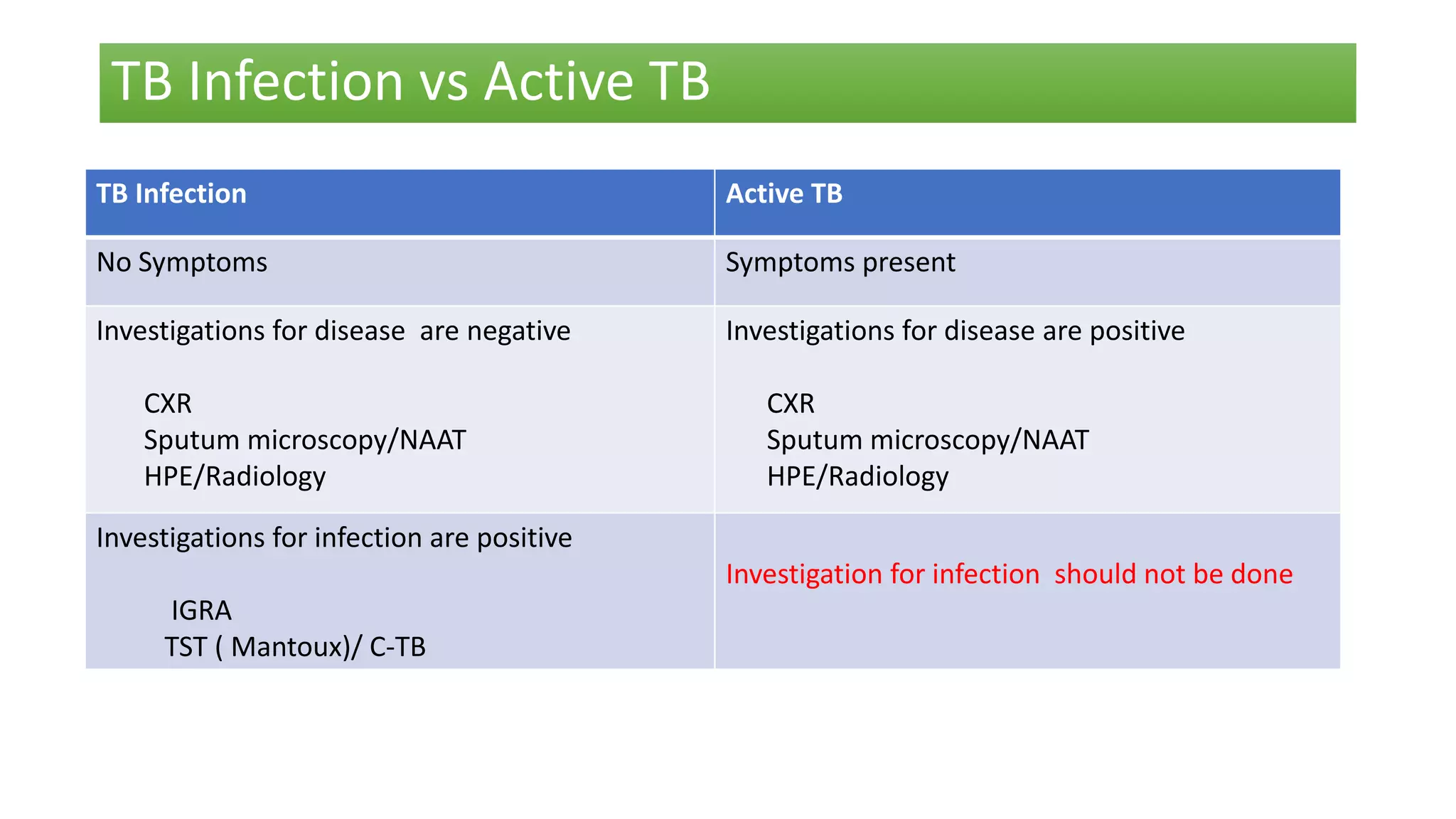
TB Infection vs Active TB
TB Infection Active TB
No Symptoms Symptoms present
Investigations for disease are negative
CXR
Sputum microscopy/NAAT
HPE/Radiology
Investigations for disease are positive
CXR
Sputum microscopy/NAAT
HPE/Radiology
Investigations for infection are positive
IGRA
TST ( Mantoux)/ C-TB
Investigation for infection should not be done
Definitions
• Adult: Person over 19 years of age.
• Child: up to and including 18 years of age. [This include adolescents aged 10-18 years.]
• Contact investigation: is a systematic process for identifying previously undiagnosed people with TB disease
and TB infection among the contacts of an index TB patient
[ identification, clinical evaluation and/or testing and provision of appropriate anti-TB treatment (for people
with confirmed TB) or TB preventive treatment (for those without TB disease)].
• Close contact: is a person who is not in the household but shared an enclosed space, such as at a social
gathering, workplace or facility, for extended periods during the day with the index TB patient during the
three months before commencement of the current TB treatment episode.
• High TB transmission setting: is a setting with a high frequency of individuals with undetected or
undiagnosed TB disease, or where infectious TB patients are present and there is a high risk of TB
transmission. [untreated/ inadequately treated, aerosol-generating procedure, presence of susceptible
individuals]
• Household contact (HHC): is a person who shared the same enclosed living space as the index TB patient for
one or more nights or for frequent or extended daytime periods during the three months before the start of
current TB treatment. ( Close contacts are inclusive)
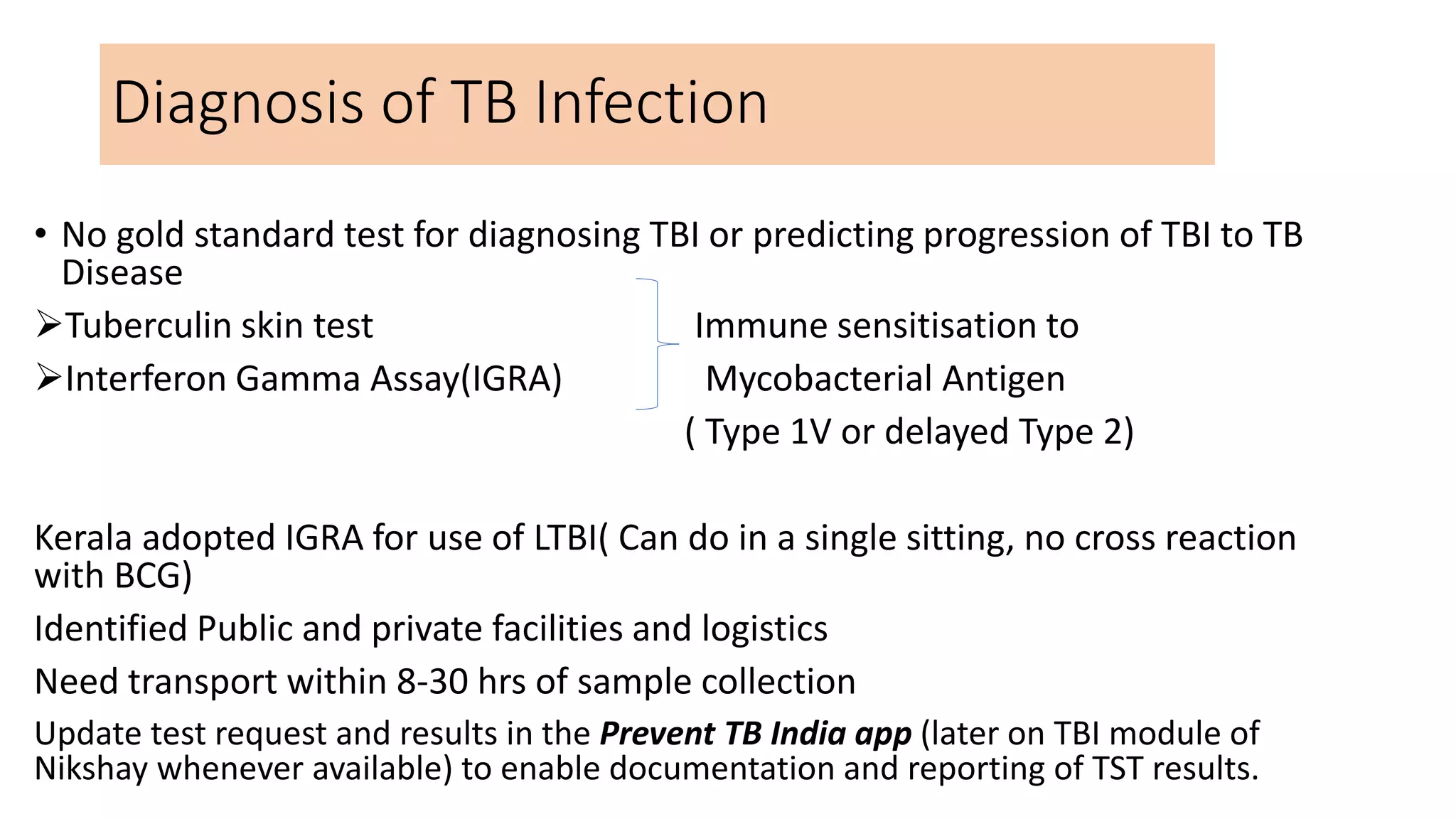
Diagnosis of TB Infection
• No gold standard test for diagnosing TBI or predicting progression of TBI to TB
Disease
Tuberculin skin test Immune sensitisation to
Interferon Gamma Assay(IGRA) Mycobacterial Antigen
( Type 1V or delayed Type 2)
Kerala adopted IGRA for use of LTBI( Can do in a single sitting, no cross reaction
with BCG)
Identified Public and private facilities and logistics
Need transport within 8-30 hrs of sample collection
Update test request and results in the Prevent TB India app (later on TBI module of
Nikshay whenever available) to enable documentation and reporting of TST results.
Target population & Policy
Target Population Strategy
PL HIV
-Adults and children>12 months
-Infants <12 months with HIV in contact with active TB
HHC<5 years of active PTB patients
Rule out TB( Chest Xray and symptoms)
TPT
HHC>5 years of active PTB Rule out active TB
Test for TBI(IGRA)
TPT if TBI positive only
High risk Groups
Immunosuppressants
Anti TNF alfa
Dialysis
Silicosis
Preparing Organ /Hematological transplant
Rule out active TB
Test for TBI(IGRA)
TPT if TBI positive only
NO TEST or TPT
DM
Smokers
Alcoholic
High risk transmission setting-Map for future
strategies
TEST&
TREAT
TPT Must not be deferred in the absence of IGRA
/Chest Xray
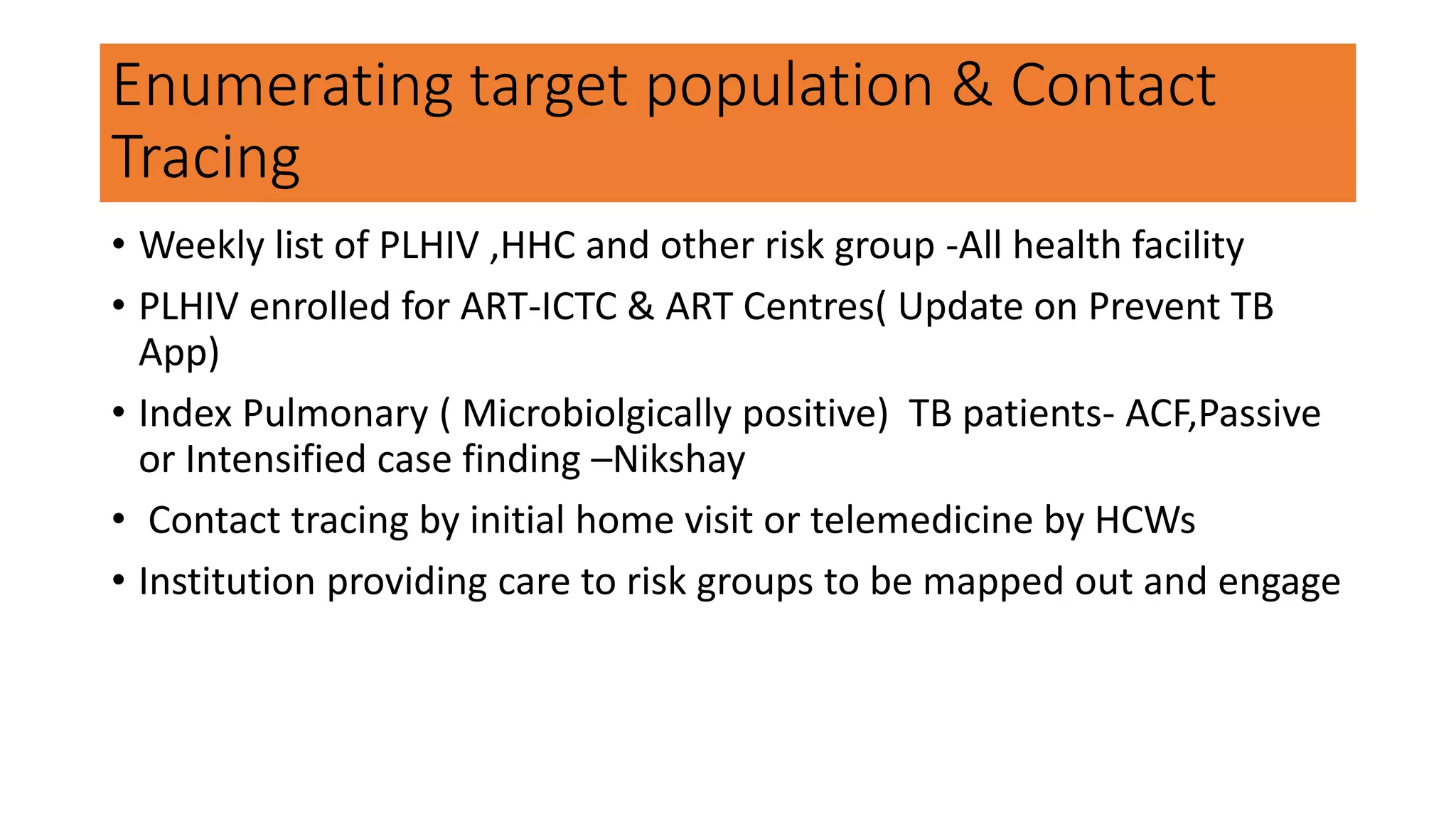
Enumerating target population & Contact
Tracing
• Weekly list of PLHIV ,HHC and other risk group -All health facility
• PLHIV enrolled for ART-ICTC & ART Centres( Update on Prevent TB
App)
• Index Pulmonary ( Microbiolgically positive) TB patients- ACF,Passive
or Intensified case finding –Nikshay
• Contact tracing by initial home visit or telemedicine by HCWs
• Institution providing care to risk groups to be mapped out and engage
Ruling out of active Disease
TPT should be given
after ruling out active
TB irrespective of
level of
immunosuppression,
pregnancy ,Previous
ATT
Cascade of Care Approach
Losses and
Drops outs in
cascade of
care
Contraindications of TPT
• Active TB disease
• Acute or chronic hepatitis
• Concurrent use of other hepatotoxic medications (such as nevirapine)
• Regular and heavy alcohol consumption
• Signs and symptoms of peripheral neuropathy like persistent tingling, numbness and burning
sensation in the limbs
• Allergy or known hypersensitivity to any drugs being considered for TPT
• Pregnancy or previous h/o TB are not contraindication
Counselling
Rationale for TPT , protective benefits to the individual, the household , community
Free availability of TPT under NTEP
TPT regimen, duration, drug intake , follow-up schedule
Potential side effects, adverse events and its management, importance of compliance
Reasons and schedule of regular clinical and laboratory follow-up for treatment monitoring;
Signs and symptoms of active TB and need of health care visit.
• Treatment supporter:
 Assess if a treatment supporter is needed or self-administration is possible
 Trained family member/ community volunteer/ workplace treatment partner or
health-care workers.
DOTS by Treatment supporter if for weekly regimen
Pre-treatment evaluation
History
Personal History:
• Allergy/hypersensitivity (INH, Rif,
Rifapentin, Rifabutin)
• HIV Status ,ART Regimen
• Pregnancy status, Birth control method
• Comorbidities
( malnutrition,diabetes,CLD)
Drug History:
ARV,Opiods,Antimalarials –interaction with TPT
Social and financial assessment:
Barriers for completion
Clinical
LFT:
-Routine baseline test not recommended
-In risk group ,strongly suggested
(CLD,H/o liver disease, alcohol, HIV, pregnancy,
immediate post partum period)
Weight measurement: In Children
Responsibility of a medical officer
• TPT Initiation
• Monitoring
• management of adverse event
• declaring treatment outcome
• long term follow up
TB Preventive Treatment
• Shorter Rifamycin based regimen ( 3 HP)
-Similar preventive efficacy
-High completion rate( 82% Vs 60% with 6H)
- Low Risk of Hepatotoxicity
-Less Adverse Drug reactions
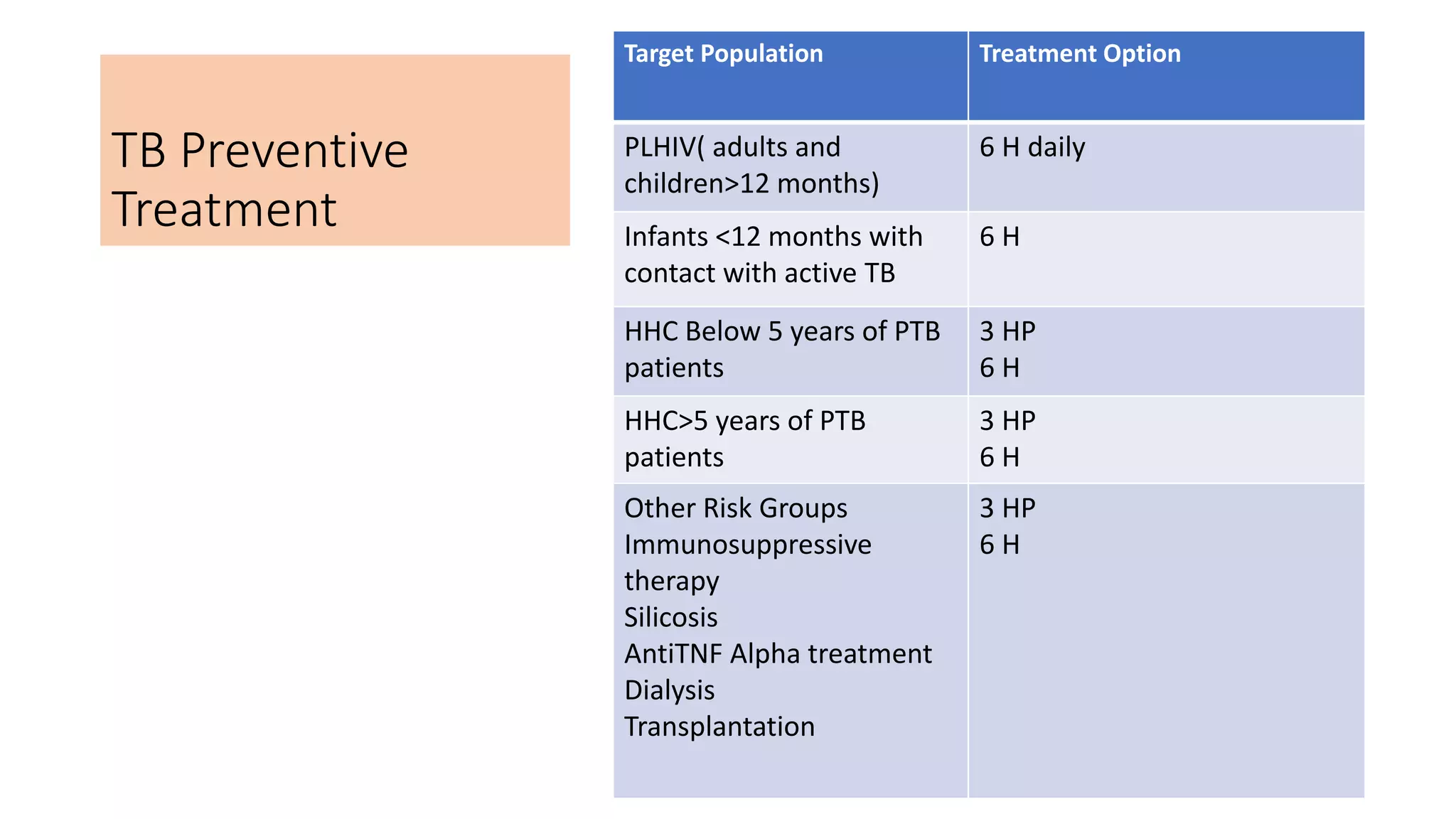
TB Preventive
Treatment
Target Population Treatment Option
PLHIV( adults and
children>12 months)
6 H daily
Infants <12 months with
contact with active TB
6 H
HHC Below 5 years of PTB
patients
3 HP
6 H
HHC>5 years of PTB
patients
3 HP
6 H
Other Risk Groups
Immunosuppressive
therapy
Silicosis
AntiTNF Alpha treatment
Dialysis
Transplantation
3 HP
6 H
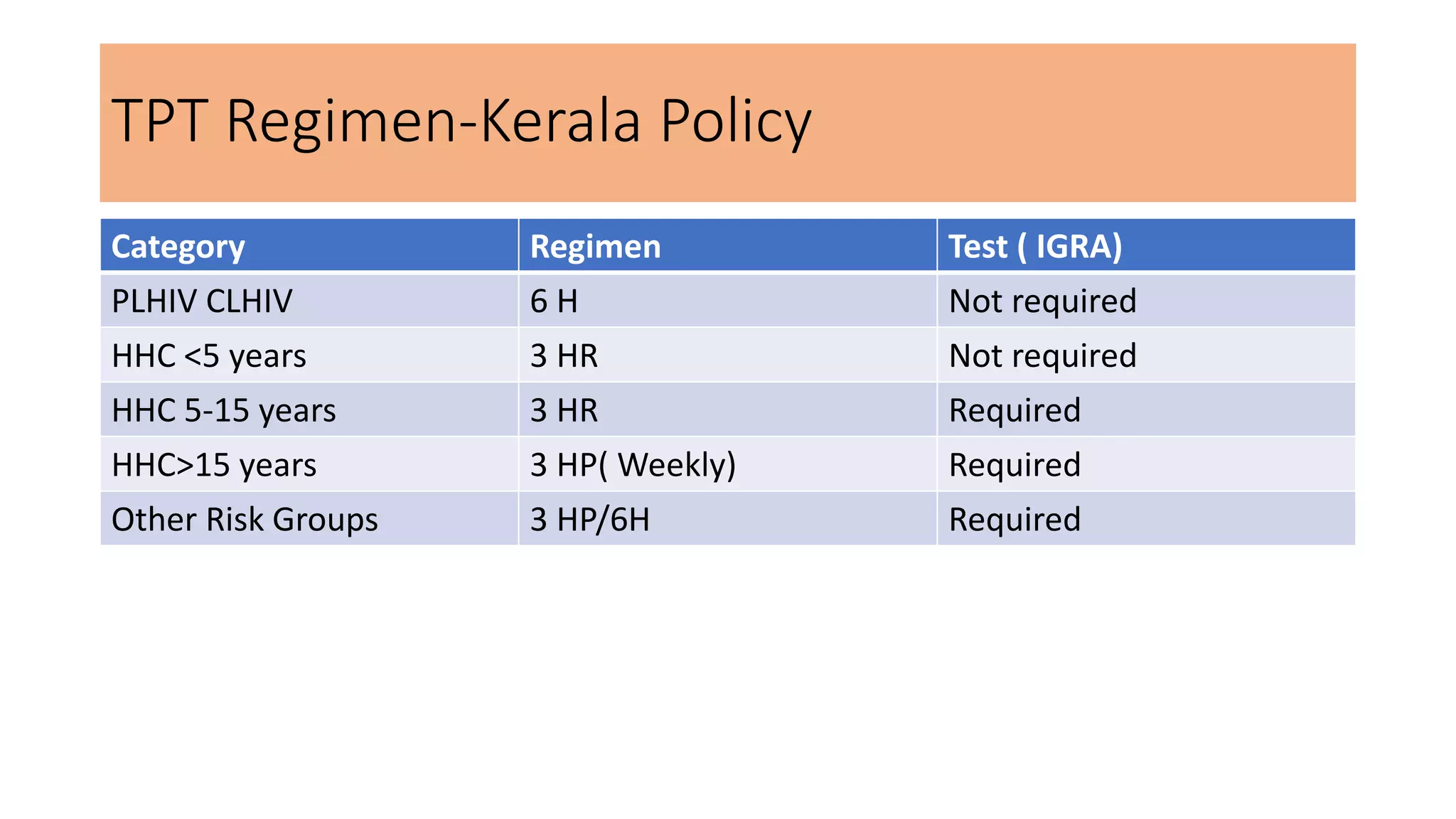
TPT Regimen-Kerala Policy
Category Regimen Test ( IGRA)
PLHIV CLHIV 6 H Not required
HHC <5 years 3 HR Not required
HHC 5-15 years 3 HR Required
HHC>15 years 3 HP( Weekly) Required
Other Risk Groups 3 HP/6H Required
6 H
ISONIAZID
Daily
182 doses
Pill burden/dose
Safe in Pregnancy
Safe with ART
Absorption-Better in empty stomach
50% reduction with meal
3 HP
ISONIAZID+RIFAPENTIN
Weekly once
12 doses
Pill burden/dose
-9 pills/loose drugs& 3 pills / FDC
Pregnancy-Not Indicated
Contraindicated-Drug interaction with
ART
Peak concentration increased with meal
Contacts of DR TB Patients
Post treatment PLHIV/CL HIV
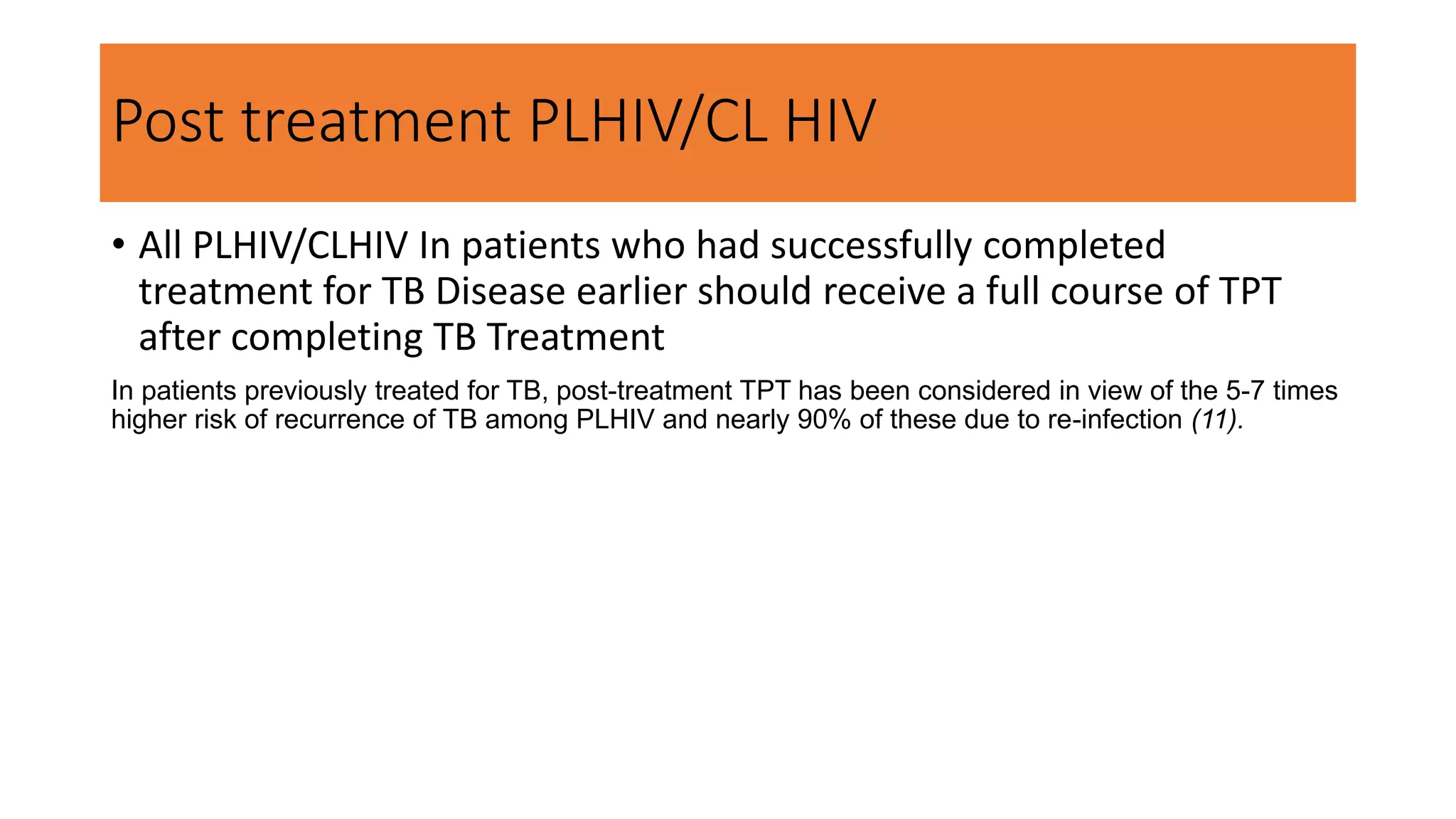
• All PLHIV/CLHIV In patients who had successfully completed
treatment for TB Disease earlier should receive a full course of TPT
after completing TB Treatment
In patients previously treated for TB, post-treatment TPT has been considered in view of the 5-7 times
higher risk of recurrence of TB among PLHIV and nearly 90% of these due to re-infection (11).
Role of Pyridoxin
Infrequent AE- Peripheral neuropathy
Symmetrical numbness and tingling in extremities
Risk groups
• Malnutrition
• Chronic alcohol dependence
• HIV
• Renal failure
• DM
• Pregnant/Breast feeding
Treatment: Withdrawal of INH and High dose pyridoxin(100mg/day)
Prophylaxis:
Children-10 mg/kg/day
Adults -25 mg/day
PLHIV- 50 mg/day
• Even if pyridoxin not available TPT to be given
• In High Risk group Multi Vitamin B Complex can be substituted
• Close monitoring for Adverse events
Emergence of Drug Resistance:
• No evidence with TPT
• Ruling out active disease is important before TPT
• Rapid DST if TB detected before,during or after TPT
Management of adverse events
Adverse event Stop and reintroduce Stop and do not reintroduce
Flu like syndrome Mild- Continue treatment & Observe Moderate to severe- Change to 6 H
Drug Fever If fever<39 deg Fever> 39 deg after reintroduction
Persistent nausea,vomiting,diarrhea Antiemetic/Antidiarrheal
Cautious reintroduction of 3 HP
Diarrhoea/nausea which needing
rehydration
Cutaneous reaction Diffuse rash with no or limited
vesicles
Extensive bullous lesion,Mucosal
ulceration,SJS,TEN
Hepatitis No symptoms and liver enzymes<5
times normal
Liver enzymes>5 times normal
without symptoms or >3 times with
symptoms
Psychosis,seizure Antispychotics, antiepileptic If persistent
Hypersensitivity reaction If severe use 6 H
Special Situations
Pregnancy & Birth Control
• 6 H Safe in Pregnancy
• On Rifamycins – OCP failure-Use barrier contraceptives or IUDs
• In women having hormonal contraceptive implants, the interval for replacing the
implants may need to be shortened from 12 weeks to eight weeks
Liver Disease
TPT with caution in baseline transaminase >3 times ULN
Defer in end stage Liver disease
In acute hepatitis defer until acute illness resolved
6 H tolerated in chronic Hepatitis B and C
Special situation
• Renal Failure
• Safe to use
• Severe renal failure-Pyridoxin to be given
• PLHIV
-Rifampicin and Rifamycin can be co administed with efavirenz
-Higher dose of Raltegalvir(800 mg BD) to be used
-Should not be co administed with protease inhiBtors or nevirapin
• Babies Born to mothers with TB disease
-If baby is un well, paediatric referral
-Ensure treatment for mother
-Ensure infection control
-If baby is well TPT may be provided
-BCG vaccination should not be delayed even if TPT is given
-Pyridoxin 10 mg/kg/day during TPT and while on mothers treatment ( If breast
fed)
-HIV exposed and patient on nevirapine 6 H can be safely given
-Breast feeding can be continued
• People who use drugs
- Safe to use 6 H
- Monitor Liver toxicity
Contacts of MDR TB
• MDR with FQ Sensitive-6 Lfx
• If H is susceptible in R resistant -6 H
• H Resistant with R sensitive -4 R
Monitoring
• Preferably taken under direct supervision of health worker
• If not, establish strong adherence mechanism
family treatment supporter
audio/video call weekly on the day of intake
• Provide treatment card
• Documentation in TPT register at TU level
• Once monthly clinical follow up
Management of
Interruption
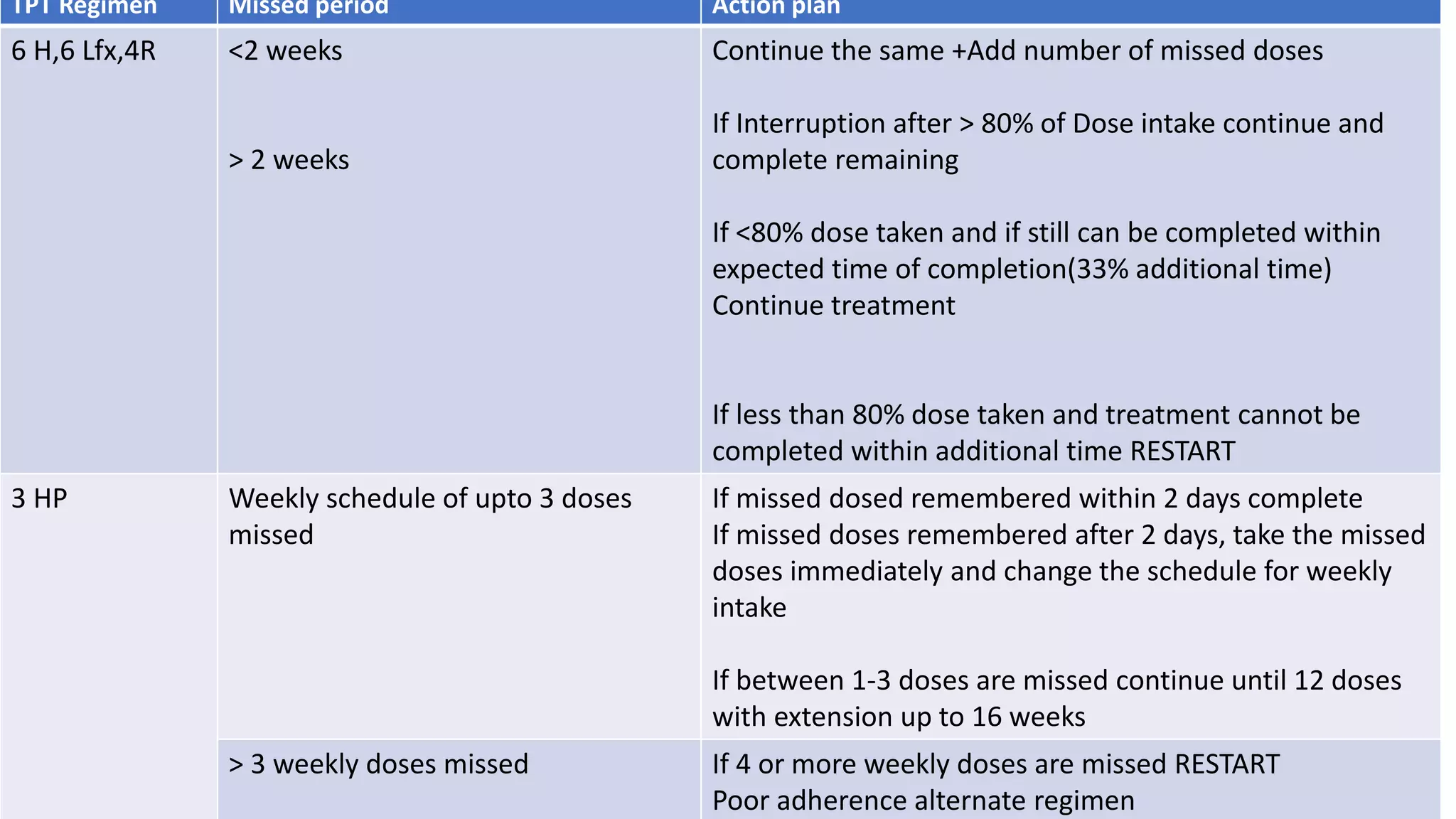
TPT Regimen Missed period Action plan
6 H,6 Lfx,4R <2 weeks
> 2 weeks
Continue the same +Add number of missed doses
If Interruption after > 80% of Dose intake continue and
complete remaining
If <80% dose taken and if still can be completed within
expected time of completion(33% additional time)
Continue treatment
If less than 80% dose taken and treatment cannot be
completed within additional time RESTART
3 HP Weekly schedule of upto 3 doses
missed
If missed dosed remembered within 2 days complete
If missed doses remembered after 2 days, take the missed
doses immediately and change the schedule for weekly
intake
If between 1-3 doses are missed continue until 12 doses
with extension up to 16 weeks
> 3 weekly doses missed If 4 or more weekly doses are missed RESTART
Poor adherence alternate regimen
Treatment completion:
6 H /6Lfx:
80% of recommended dose(144/180)
consumed within 133% planned TPT
duration (239)
3 HP:
80% recommended dose(11/12)
consumed within 133% planned
duration(120 days)
Lost to Follow up:
• TPT interruption by 8 consecutive
weeks(2 months or more for 6 H,6
Lfx )
• 4 consecutive weeks( 1month or
more for 3 HP)
Long Term Follow Up- 6, 12, 18, 24 m
• All household contacts of pulmonary TB shall be followed up by the primary
health care team looking for development of active symptoms of TB.
• The same vigil shall continue for all those who were diagnosed with TBI
even after those who completed treatment.
• If any individual initiated on TBI, later develops TB, tests for detecting
resistance to INH and Rifampicin shall be offered at baseline if a biological
specimen is available.
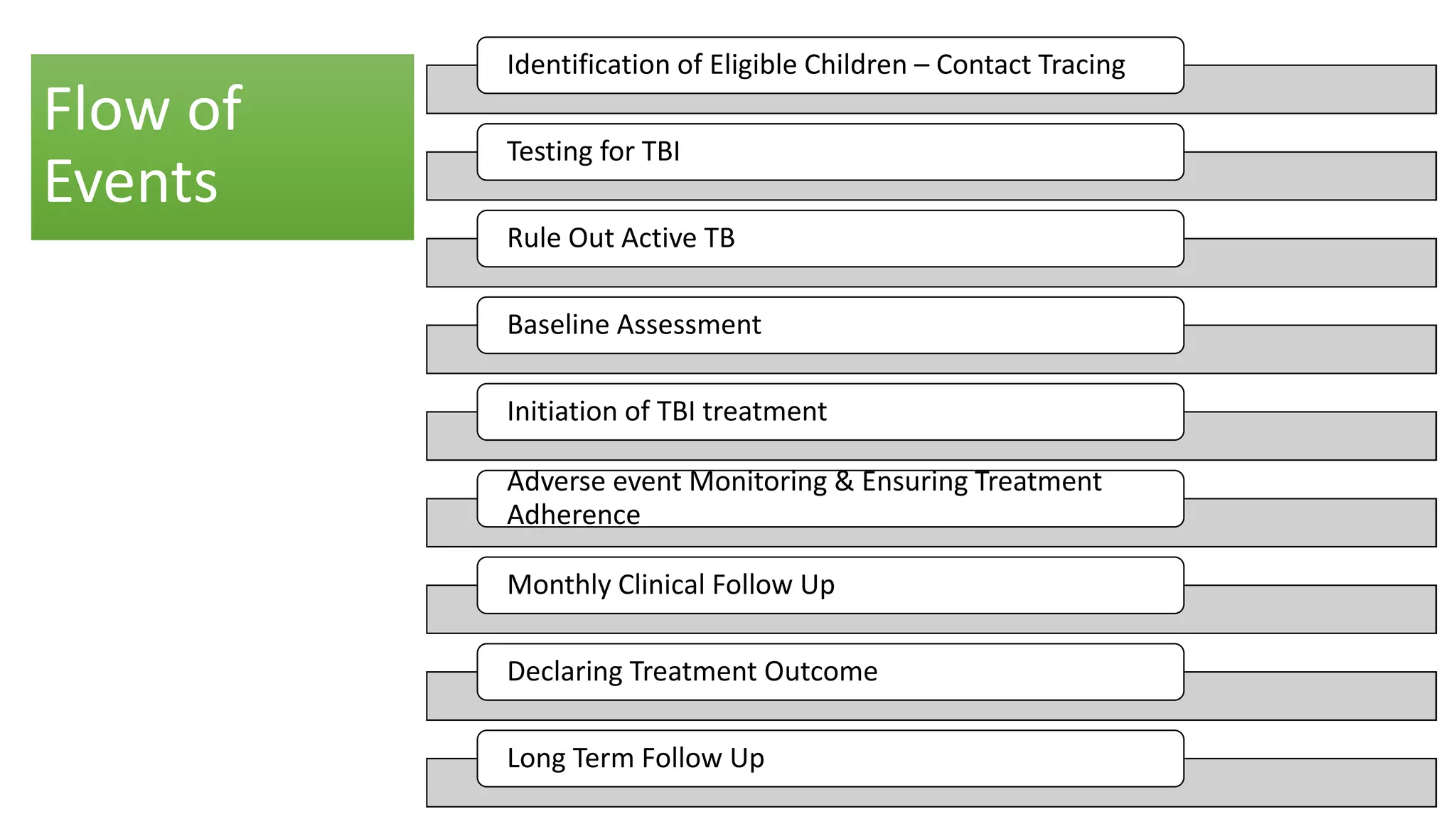
Flow of
Events
Identification of Eligible Children – Contact Tracing
Testing for TBI
Rule Out Active TB
Baseline Assessment
Initiation of TBI treatment
Adverse event Monitoring & Ensuring Treatment
Adherence
Monthly Clinical Follow Up
Declaring Treatment Outcome
Long Term Follow Up
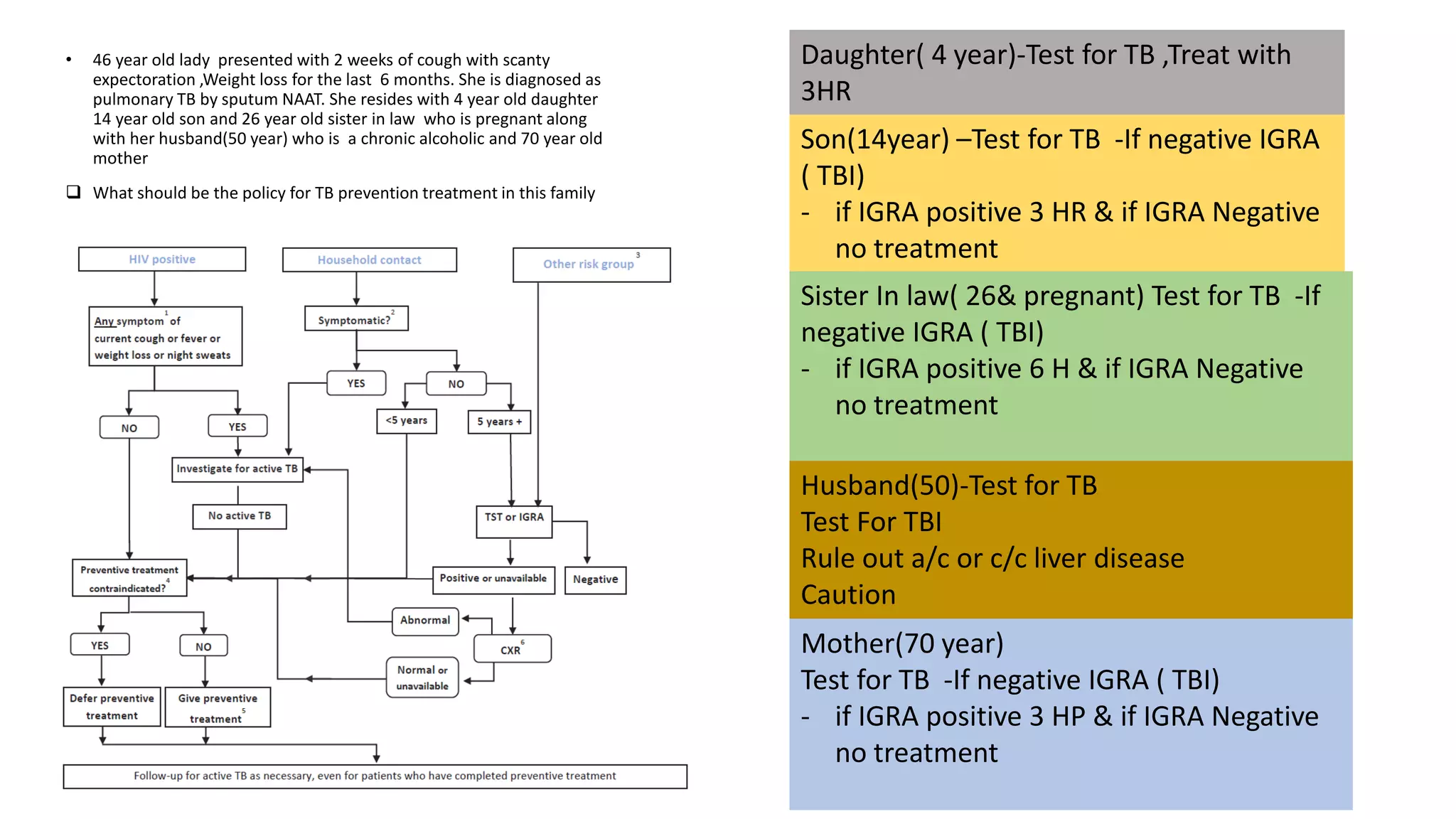
• 46 year old lady presented with 2 weeks of cough with scanty
expectoration ,Weight loss for the last 6 months. She is diagnosed as
pulmonary TB by sputum NAAT. She resides with 4 year old daughter
14 year old son and 26 year old sister in law who is pregnant along
with her husband(50 year) who is a chronic alcoholic and 70 year old
mother
 What should be the policy for TB prevention treatment in this family
Daughter( 4 year)-Test for TB ,Treat with
3HR
Son(14year) –Test for TB -If negative IGRA
( TBI)
- if IGRA positive 3 HR & if IGRA Negative
no treatment
Sister In law( 26& pregnant) Test for TB -If
negative IGRA ( TBI)
- if IGRA positive 6 H & if IGRA Negative
no treatment
Husband(50)-Test for TB
Test For TBI
Rule out a/c or c/c liver disease
Caution
Mother(70 year)
Test for TB -If negative IGRA ( TBI)
- if IGRA positive 3 HP & if IGRA Negative
no treatment
Summary
- DETECT-TREAT-PREVENT-BUILD
- Ruling Out active Disease
- Kerala policy-test& treat
- Current regimens-3 HP,6 H,3HR,6Lfx,4R
- Counsel, treat, monitor
Latent TB Guideline.pptx

Latent TB Guideline.pptx

  • 1.
    DR.AKHILESH KUNOOR MD,FAPSR MBBS:T. D. Medical College, Alappuzha(1999-2004) M.D : SCB Medical College ,Cuttack(2008-2011) Professor, Amrita institute of Medical sciences, Kochi, Kerala NTEP State Task Force Vice Chairman ( Kerala) Member ,Technical Working Group, Latent TB and State level difficult to Treat clinic, Kerala Coordinator, Amrita Pulmonary Rehabilitation Programme Governing Council Member APCCM, Secretary, Cochin Thoracic Society Publications : (No.) 32 Area Of Interest : COPD, Pulmonary Rehabilitation, Tuberculosis, Public Health Memberships /Fellowships : ICS,NCCP,ERS,APCCM,IAA,IMA,APSR,ACCP Awards : Young Pulmonologist Appreciation Award (APCCM)-2018 Young Pulmonologist Award (APCCM) -2019 Best oral presentation ( 2nd prize)-Consultant (NAPCON 2019)
  • 2.
    National Guideline forProgrammatic management of Tuberculosis Preventive Treatment Dr Akhilesh K Professor, Respiratory Medicine,AIMS Kochi State Task Force Vice chairman,NTEP,Kerala Member-Technical Working Group LTBI & State level Difficult to treat TB Clinic, Kerala Attended national TOT in PMTPT
  • 3.
    Case scenario • 46year old lady presented with 2 weeks of cough with scanty expectoration ,Weight loss for the last 6 months. She is diagnosed as pulmonary TB by sputum NAAT. She resides with 4 year old daughter 14 year old son 70 year old mother and 26 year old sister in law who is pregnant along with her husband( 50 year old) who is a chronic alcoholic A  What should be the policy for TB prevention treatment in this family?
  • 4.
    Overview • Nearly 35-40crores Indian population having TBI • 5-10% of TBI will develop disease over their life within 2 years of initial infection. • The risk is increased in certain conditions  > 25 times - Contacts of Bacteriologically positive 16-25 times -HIV 3-4 time -Other immunocompromised (eg DM)
  • 5.
    Magnitude of theproblem& Rationale • 35-40 crores- TBI in Indian population • 5-10% of TBI will develop disease over their life within 2 years of initial infection • Increased risk in Bacteriologically positive(25 times),HIV(16-25 times) ,immunocompromised(3-4 times)
  • 6.
    • 71% Household contacts of pulmonary TB patients have baseline TBI and 2% develop active TB • If untreated there is a chance of active TB in children < 1year -40% 1-10 years -24% 11-15 years -16% • The risk of developing TB disease after TPT decreases by 60% and upto 90% in PLHIV
  • 7.
    • National strategicplan( NSP 2017-2025)- End TB 2025 • Scaling up TPT would be key to hasten the rate of decline in TB incidence from 2.5% at present to 10% required annually. Detect Treat Prevent Build PREVENT
  • 8.
    TB Infection vsActive TB TB Infection Active TB No Symptoms Symptoms present Investigations for disease are negative CXR Sputum microscopy/NAAT HPE/Radiology Investigations for disease are positive CXR Sputum microscopy/NAAT HPE/Radiology Investigations for infection are positive IGRA TST ( Mantoux)/ C-TB Investigation for infection should not be done
  • 9.
    Definitions • Adult: Personover 19 years of age. • Child: up to and including 18 years of age. [This include adolescents aged 10-18 years.] • Contact investigation: is a systematic process for identifying previously undiagnosed people with TB disease and TB infection among the contacts of an index TB patient [ identification, clinical evaluation and/or testing and provision of appropriate anti-TB treatment (for people with confirmed TB) or TB preventive treatment (for those without TB disease)]. • Close contact: is a person who is not in the household but shared an enclosed space, such as at a social gathering, workplace or facility, for extended periods during the day with the index TB patient during the three months before commencement of the current TB treatment episode. • High TB transmission setting: is a setting with a high frequency of individuals with undetected or undiagnosed TB disease, or where infectious TB patients are present and there is a high risk of TB transmission. [untreated/ inadequately treated, aerosol-generating procedure, presence of susceptible individuals] • Household contact (HHC): is a person who shared the same enclosed living space as the index TB patient for one or more nights or for frequent or extended daytime periods during the three months before the start of current TB treatment. ( Close contacts are inclusive)
  • 10.
    Diagnosis of TBInfection • No gold standard test for diagnosing TBI or predicting progression of TBI to TB Disease Tuberculin skin test Immune sensitisation to Interferon Gamma Assay(IGRA) Mycobacterial Antigen ( Type 1V or delayed Type 2) Kerala adopted IGRA for use of LTBI( Can do in a single sitting, no cross reaction with BCG) Identified Public and private facilities and logistics Need transport within 8-30 hrs of sample collection Update test request and results in the Prevent TB India app (later on TBI module of Nikshay whenever available) to enable documentation and reporting of TST results.
  • 11.
    Target population &Policy Target Population Strategy PL HIV -Adults and children>12 months -Infants <12 months with HIV in contact with active TB HHC<5 years of active PTB patients Rule out TB( Chest Xray and symptoms) TPT HHC>5 years of active PTB Rule out active TB Test for TBI(IGRA) TPT if TBI positive only High risk Groups Immunosuppressants Anti TNF alfa Dialysis Silicosis Preparing Organ /Hematological transplant Rule out active TB Test for TBI(IGRA) TPT if TBI positive only NO TEST or TPT DM Smokers Alcoholic High risk transmission setting-Map for future strategies TEST& TREAT TPT Must not be deferred in the absence of IGRA /Chest Xray
  • 12.
    Enumerating target population& Contact Tracing • Weekly list of PLHIV ,HHC and other risk group -All health facility • PLHIV enrolled for ART-ICTC & ART Centres( Update on Prevent TB App) • Index Pulmonary ( Microbiolgically positive) TB patients- ACF,Passive or Intensified case finding –Nikshay • Contact tracing by initial home visit or telemedicine by HCWs • Institution providing care to risk groups to be mapped out and engage
  • 13.
    Ruling out ofactive Disease TPT should be given after ruling out active TB irrespective of level of immunosuppression, pregnancy ,Previous ATT
  • 14.
  • 15.
    Losses and Drops outsin cascade of care
  • 16.
    Contraindications of TPT •Active TB disease • Acute or chronic hepatitis • Concurrent use of other hepatotoxic medications (such as nevirapine) • Regular and heavy alcohol consumption • Signs and symptoms of peripheral neuropathy like persistent tingling, numbness and burning sensation in the limbs • Allergy or known hypersensitivity to any drugs being considered for TPT • Pregnancy or previous h/o TB are not contraindication
  • 17.
    Counselling Rationale for TPT, protective benefits to the individual, the household , community Free availability of TPT under NTEP TPT regimen, duration, drug intake , follow-up schedule Potential side effects, adverse events and its management, importance of compliance Reasons and schedule of regular clinical and laboratory follow-up for treatment monitoring; Signs and symptoms of active TB and need of health care visit.
  • 18.
    • Treatment supporter: Assess if a treatment supporter is needed or self-administration is possible  Trained family member/ community volunteer/ workplace treatment partner or health-care workers. DOTS by Treatment supporter if for weekly regimen
  • 19.
    Pre-treatment evaluation History Personal History: •Allergy/hypersensitivity (INH, Rif, Rifapentin, Rifabutin) • HIV Status ,ART Regimen • Pregnancy status, Birth control method • Comorbidities ( malnutrition,diabetes,CLD) Drug History: ARV,Opiods,Antimalarials –interaction with TPT Social and financial assessment: Barriers for completion Clinical LFT: -Routine baseline test not recommended -In risk group ,strongly suggested (CLD,H/o liver disease, alcohol, HIV, pregnancy, immediate post partum period) Weight measurement: In Children
  • 20.
    Responsibility of amedical officer • TPT Initiation • Monitoring • management of adverse event • declaring treatment outcome • long term follow up
  • 21.
    TB Preventive Treatment •Shorter Rifamycin based regimen ( 3 HP) -Similar preventive efficacy -High completion rate( 82% Vs 60% with 6H) - Low Risk of Hepatotoxicity -Less Adverse Drug reactions
  • 22.
    TB Preventive Treatment Target PopulationTreatment Option PLHIV( adults and children>12 months) 6 H daily Infants <12 months with contact with active TB 6 H HHC Below 5 years of PTB patients 3 HP 6 H HHC>5 years of PTB patients 3 HP 6 H Other Risk Groups Immunosuppressive therapy Silicosis AntiTNF Alpha treatment Dialysis Transplantation 3 HP 6 H
  • 23.
    TPT Regimen-Kerala Policy CategoryRegimen Test ( IGRA) PLHIV CLHIV 6 H Not required HHC <5 years 3 HR Not required HHC 5-15 years 3 HR Required HHC>15 years 3 HP( Weekly) Required Other Risk Groups 3 HP/6H Required
  • 25.
    6 H ISONIAZID Daily 182 doses Pillburden/dose Safe in Pregnancy Safe with ART Absorption-Better in empty stomach 50% reduction with meal 3 HP ISONIAZID+RIFAPENTIN Weekly once 12 doses Pill burden/dose -9 pills/loose drugs& 3 pills / FDC Pregnancy-Not Indicated Contraindicated-Drug interaction with ART Peak concentration increased with meal
  • 26.
    Contacts of DRTB Patients
  • 27.
    Post treatment PLHIV/CLHIV • All PLHIV/CLHIV In patients who had successfully completed treatment for TB Disease earlier should receive a full course of TPT after completing TB Treatment In patients previously treated for TB, post-treatment TPT has been considered in view of the 5-7 times higher risk of recurrence of TB among PLHIV and nearly 90% of these due to re-infection (11).
  • 28.
    Role of Pyridoxin InfrequentAE- Peripheral neuropathy Symmetrical numbness and tingling in extremities Risk groups • Malnutrition • Chronic alcohol dependence • HIV • Renal failure • DM • Pregnant/Breast feeding Treatment: Withdrawal of INH and High dose pyridoxin(100mg/day) Prophylaxis: Children-10 mg/kg/day Adults -25 mg/day PLHIV- 50 mg/day
  • 29.
    • Even ifpyridoxin not available TPT to be given • In High Risk group Multi Vitamin B Complex can be substituted • Close monitoring for Adverse events Emergence of Drug Resistance: • No evidence with TPT • Ruling out active disease is important before TPT • Rapid DST if TB detected before,during or after TPT
  • 30.
    Management of adverseevents Adverse event Stop and reintroduce Stop and do not reintroduce Flu like syndrome Mild- Continue treatment & Observe Moderate to severe- Change to 6 H Drug Fever If fever<39 deg Fever> 39 deg after reintroduction Persistent nausea,vomiting,diarrhea Antiemetic/Antidiarrheal Cautious reintroduction of 3 HP Diarrhoea/nausea which needing rehydration Cutaneous reaction Diffuse rash with no or limited vesicles Extensive bullous lesion,Mucosal ulceration,SJS,TEN Hepatitis No symptoms and liver enzymes<5 times normal Liver enzymes>5 times normal without symptoms or >3 times with symptoms Psychosis,seizure Antispychotics, antiepileptic If persistent Hypersensitivity reaction If severe use 6 H
  • 31.
    Special Situations Pregnancy &Birth Control • 6 H Safe in Pregnancy • On Rifamycins – OCP failure-Use barrier contraceptives or IUDs • In women having hormonal contraceptive implants, the interval for replacing the implants may need to be shortened from 12 weeks to eight weeks Liver Disease TPT with caution in baseline transaminase >3 times ULN Defer in end stage Liver disease In acute hepatitis defer until acute illness resolved 6 H tolerated in chronic Hepatitis B and C
  • 32.
  • 33.
    • Renal Failure •Safe to use • Severe renal failure-Pyridoxin to be given • PLHIV -Rifampicin and Rifamycin can be co administed with efavirenz -Higher dose of Raltegalvir(800 mg BD) to be used -Should not be co administed with protease inhiBtors or nevirapin
  • 34.
    • Babies Bornto mothers with TB disease -If baby is un well, paediatric referral -Ensure treatment for mother -Ensure infection control -If baby is well TPT may be provided -BCG vaccination should not be delayed even if TPT is given -Pyridoxin 10 mg/kg/day during TPT and while on mothers treatment ( If breast fed) -HIV exposed and patient on nevirapine 6 H can be safely given -Breast feeding can be continued
  • 35.
    • People whouse drugs - Safe to use 6 H - Monitor Liver toxicity Contacts of MDR TB • MDR with FQ Sensitive-6 Lfx • If H is susceptible in R resistant -6 H • H Resistant with R sensitive -4 R
  • 36.
    Monitoring • Preferably takenunder direct supervision of health worker • If not, establish strong adherence mechanism family treatment supporter audio/video call weekly on the day of intake • Provide treatment card • Documentation in TPT register at TU level • Once monthly clinical follow up
  • 37.
  • 38.
    TPT Regimen Missedperiod Action plan 6 H,6 Lfx,4R <2 weeks > 2 weeks Continue the same +Add number of missed doses If Interruption after > 80% of Dose intake continue and complete remaining If <80% dose taken and if still can be completed within expected time of completion(33% additional time) Continue treatment If less than 80% dose taken and treatment cannot be completed within additional time RESTART 3 HP Weekly schedule of upto 3 doses missed If missed dosed remembered within 2 days complete If missed doses remembered after 2 days, take the missed doses immediately and change the schedule for weekly intake If between 1-3 doses are missed continue until 12 doses with extension up to 16 weeks > 3 weekly doses missed If 4 or more weekly doses are missed RESTART Poor adherence alternate regimen
  • 39.
    Treatment completion: 6 H/6Lfx: 80% of recommended dose(144/180) consumed within 133% planned TPT duration (239) 3 HP: 80% recommended dose(11/12) consumed within 133% planned duration(120 days) Lost to Follow up: • TPT interruption by 8 consecutive weeks(2 months or more for 6 H,6 Lfx ) • 4 consecutive weeks( 1month or more for 3 HP)
  • 40.
    Long Term FollowUp- 6, 12, 18, 24 m • All household contacts of pulmonary TB shall be followed up by the primary health care team looking for development of active symptoms of TB. • The same vigil shall continue for all those who were diagnosed with TBI even after those who completed treatment. • If any individual initiated on TBI, later develops TB, tests for detecting resistance to INH and Rifampicin shall be offered at baseline if a biological specimen is available.
  • 41.
    Flow of Events Identification ofEligible Children – Contact Tracing Testing for TBI Rule Out Active TB Baseline Assessment Initiation of TBI treatment Adverse event Monitoring & Ensuring Treatment Adherence Monthly Clinical Follow Up Declaring Treatment Outcome Long Term Follow Up
  • 42.
    • 46 yearold lady presented with 2 weeks of cough with scanty expectoration ,Weight loss for the last 6 months. She is diagnosed as pulmonary TB by sputum NAAT. She resides with 4 year old daughter 14 year old son and 26 year old sister in law who is pregnant along with her husband(50 year) who is a chronic alcoholic and 70 year old mother  What should be the policy for TB prevention treatment in this family Daughter( 4 year)-Test for TB ,Treat with 3HR Son(14year) –Test for TB -If negative IGRA ( TBI) - if IGRA positive 3 HR & if IGRA Negative no treatment Sister In law( 26& pregnant) Test for TB -If negative IGRA ( TBI) - if IGRA positive 6 H & if IGRA Negative no treatment Husband(50)-Test for TB Test For TBI Rule out a/c or c/c liver disease Caution Mother(70 year) Test for TB -If negative IGRA ( TBI) - if IGRA positive 3 HP & if IGRA Negative no treatment
  • 43.
    Summary - DETECT-TREAT-PREVENT-BUILD - RulingOut active Disease - Kerala policy-test& treat - Current regimens-3 HP,6 H,3HR,6Lfx,4R - Counsel, treat, monitor