
Diagnostic Laparoscopy for ITU 
Patients 
SAGES 
(Society of American Gastrointestinal 
and Endoscopic Surgeons)
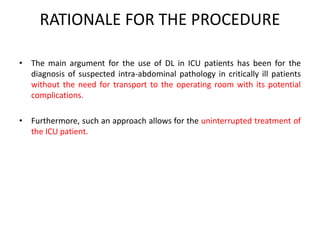
RATIONALE FOR THE PROCEDURE 
• The main argument for the use of DL in ICU patients has been for the 
diagnosis of suspected intra-abdominal pathology in critically ill patients 
without the need for transport to the operating room with its potential 
complications. 
• Furthermore, such an approach allows for the uninterrupted treatment of 
the ICU patient.
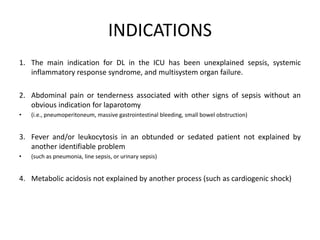
INDICATIONS 
1. The main indication for DL in the ICU has been unexplained sepsis, systemic 
inflammatory response syndrome, and multisystem organ failure. 
2. Abdominal pain or tenderness associated with other signs of sepsis without an 
obvious indication for laparotomy 
• (i.e., pneumoperitoneum, massive gastrointestinal bleeding, small bowel obstruction) 
3. Fever and/or leukocytosis in an obtunded or sedated patient not explained by 
another identifiable problem 
• (such as pneumonia, line sepsis, or urinary sepsis) 
4. Metabolic acidosis not explained by another process (such as cardiogenic shock)
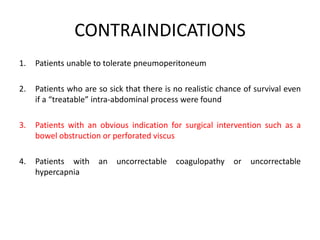
CONTRAINDICATIONS 
1. Patients unable to tolerate pneumoperitoneum 
2. Patients who are so sick that there is no realistic chance of survival even 
if a “treatable” intra-abdominal process were found 
3. Patients with an obvious indication for surgical intervention such as a 
bowel obstruction or perforated viscus 
4. Patients with an uncorrectable coagulopathy or uncorrectable 
hypercapnia
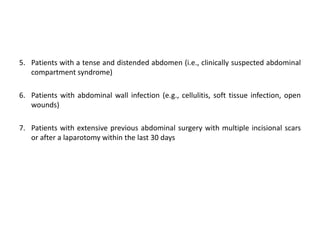
5. Patients with a tense and distended abdomen (i.e., clinically suspected abdominal 
compartment syndrome) 
6. Patients with abdominal wall infection (e.g., cellulitis, soft tissue infection, open 
wounds) 
7. Patients with extensive previous abdominal surgery with multiple incisional scars 
or after a laparotomy within the last 30 days
RISKS 
1. Delay in the diagnosis and treatment of patients if the procedure is false negative 
2. Missed pathology and its associated complications 
3. Procedure- and anesthesia-related complications
BENEFITS 
1. Expeditious diagnosis of suspected intra-abdominal pathology 
2. Minimization of treatment interruption by not moving the patient outside the ICU 
3. Avoid the morbidity of open exploration 
4. Avoid potential risks associated with transportation to the operating room or 
radiology for diagnostic tests 
5. Ability to provide therapeutic intervention
DIAGNOSTIC ACCURACY OF THE 
PROCEDURE 
• The diagnostic accuracy of the procedure is high, ranging between 90 and 100% in 
the published series 
• The procedure has been reported to prevent unnecessary laparotomies in 36-95% 
of patients. Its sensitivity has also been demonstrated in patients with suspected 
abdominal complications after cardiac surgery
• Diagnostic laparoscopy has been compared with diagnostic peritoneal lavage and 
found to have superior diagnostic accuracy to DPL in critically ill patients . 
• It has also been found to be superior to computed tomography (CT) or ultrasound 
of the abdomen
LIMITATION 
• The main limitation of the procedure is for the evaluation of retroperitoneal 
structures with the few false negative reported findings attributed to 
retroperitoneal processes like pancreatitis. Nevertheless, the procedure appears to 
have excellent accuracy when evaluating for two of the most prevalent diseases in 
this population, acalculous cholecystitis and ischemic bowel
PATIENT OUTCOMES 
• The procedure can be performed safely, is well tolerated in ICU patients and only a 
few minor complications have been described (bradycardia and increased peak 
airway pressure that resolved after release of pneumoperitoneum and perforation 
of a gangrenous gallbladder during manipulation). 
• Overall morbidity has been reported between 0 and 8% 
• No mortality directly associated with the procedure has been described 
Nevertheless, the ICU patient population has very high mortality rates (33-79%) 
regardless of the findings of DL.
RECOMMENDATIONS 
1. Diagnostic laparoscopy is technically feasible and can be applied safely in 
appropriated selected ICU patients. The procedure should be used in critically ill 
patients when an intra-abdominal catastrophe is suspected but cannot be ruled 
out by noninvasive means and would otherwise require an exploratory 
laparotomy. 
2. It should be given strong consideration in ICU patients with suspected acalculous 
cholecystitis or ischemic bowel, as its accuracy likely exceeds that of noninvasive 
studies. 
3. On the other hand, it should be kept in mind that the procedure is unlikely to 
identify retroperitoneal processes.

Diagnostic Laparoscopy for ITU patients

  • 1.
    Diagnostic Laparoscopy forITU Patients SAGES (Society of American Gastrointestinal and Endoscopic Surgeons)
  • 2.
    RATIONALE FOR THEPROCEDURE • The main argument for the use of DL in ICU patients has been for the diagnosis of suspected intra-abdominal pathology in critically ill patients without the need for transport to the operating room with its potential complications. • Furthermore, such an approach allows for the uninterrupted treatment of the ICU patient.
  • 3.
    INDICATIONS 1. Themain indication for DL in the ICU has been unexplained sepsis, systemic inflammatory response syndrome, and multisystem organ failure. 2. Abdominal pain or tenderness associated with other signs of sepsis without an obvious indication for laparotomy • (i.e., pneumoperitoneum, massive gastrointestinal bleeding, small bowel obstruction) 3. Fever and/or leukocytosis in an obtunded or sedated patient not explained by another identifiable problem • (such as pneumonia, line sepsis, or urinary sepsis) 4. Metabolic acidosis not explained by another process (such as cardiogenic shock)
  • 4.
    CONTRAINDICATIONS 1. Patientsunable to tolerate pneumoperitoneum 2. Patients who are so sick that there is no realistic chance of survival even if a “treatable” intra-abdominal process were found 3. Patients with an obvious indication for surgical intervention such as a bowel obstruction or perforated viscus 4. Patients with an uncorrectable coagulopathy or uncorrectable hypercapnia
  • 5.
    5. Patients witha tense and distended abdomen (i.e., clinically suspected abdominal compartment syndrome) 6. Patients with abdominal wall infection (e.g., cellulitis, soft tissue infection, open wounds) 7. Patients with extensive previous abdominal surgery with multiple incisional scars or after a laparotomy within the last 30 days
  • 6.
    RISKS 1. Delayin the diagnosis and treatment of patients if the procedure is false negative 2. Missed pathology and its associated complications 3. Procedure- and anesthesia-related complications
  • 7.
    BENEFITS 1. Expeditiousdiagnosis of suspected intra-abdominal pathology 2. Minimization of treatment interruption by not moving the patient outside the ICU 3. Avoid the morbidity of open exploration 4. Avoid potential risks associated with transportation to the operating room or radiology for diagnostic tests 5. Ability to provide therapeutic intervention
  • 8.
    DIAGNOSTIC ACCURACY OFTHE PROCEDURE • The diagnostic accuracy of the procedure is high, ranging between 90 and 100% in the published series • The procedure has been reported to prevent unnecessary laparotomies in 36-95% of patients. Its sensitivity has also been demonstrated in patients with suspected abdominal complications after cardiac surgery
  • 9.
    • Diagnostic laparoscopyhas been compared with diagnostic peritoneal lavage and found to have superior diagnostic accuracy to DPL in critically ill patients . • It has also been found to be superior to computed tomography (CT) or ultrasound of the abdomen
  • 10.
    LIMITATION • Themain limitation of the procedure is for the evaluation of retroperitoneal structures with the few false negative reported findings attributed to retroperitoneal processes like pancreatitis. Nevertheless, the procedure appears to have excellent accuracy when evaluating for two of the most prevalent diseases in this population, acalculous cholecystitis and ischemic bowel
  • 11.
    PATIENT OUTCOMES •The procedure can be performed safely, is well tolerated in ICU patients and only a few minor complications have been described (bradycardia and increased peak airway pressure that resolved after release of pneumoperitoneum and perforation of a gangrenous gallbladder during manipulation). • Overall morbidity has been reported between 0 and 8% • No mortality directly associated with the procedure has been described Nevertheless, the ICU patient population has very high mortality rates (33-79%) regardless of the findings of DL.
  • 12.
    RECOMMENDATIONS 1. Diagnosticlaparoscopy is technically feasible and can be applied safely in appropriated selected ICU patients. The procedure should be used in critically ill patients when an intra-abdominal catastrophe is suspected but cannot be ruled out by noninvasive means and would otherwise require an exploratory laparotomy. 2. It should be given strong consideration in ICU patients with suspected acalculous cholecystitis or ischemic bowel, as its accuracy likely exceeds that of noninvasive studies. 3. On the other hand, it should be kept in mind that the procedure is unlikely to identify retroperitoneal processes.