z
Perforated Peptic Ulcer
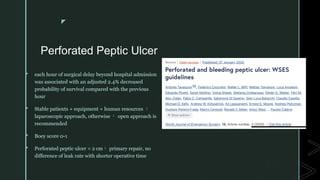
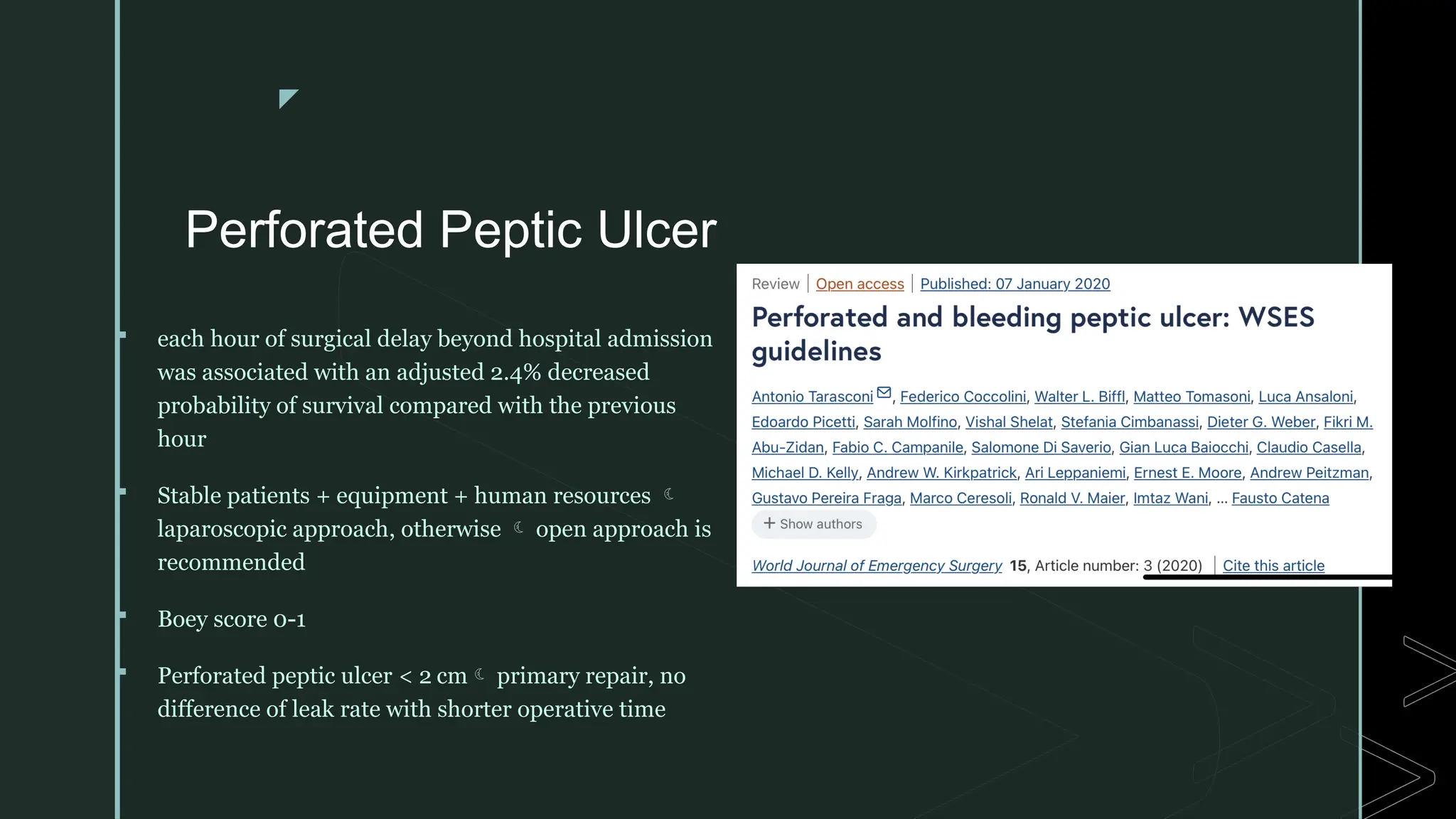
 each hour of surgical delay beyond hospital admission
was associated with an adjusted 2.4% decreased
probability of survival compared with the previous
hour
 Stable patients + equipment + human resources 
laparoscopic approach, otherwise  open approach is
recommended
 Boey score 0-1
 Perforated peptic ulcer < 2 cm primary repair, no
difference of leak rate with shorter operative time
z
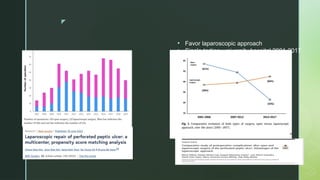
 Even in unstable case : experienced center
 Five university hospitals in South Korea, 2009 – 2019
• Favor laparoscopic approach
• Single tertiary university hospital 2001-2017
z
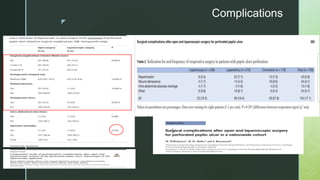
Complications
z
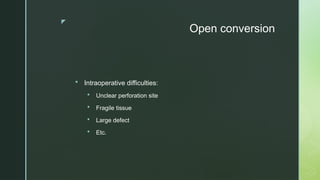
Open conversion
 Intraoperative difficulties:
 Unclear perforation site
 Fragile tissue
 Large defect
 Etc.
z
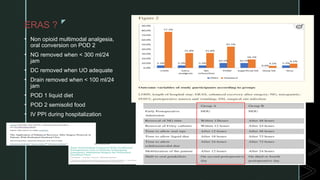
ERAS ?
• Non opioid multimodal analgesia,
oral conversion on POD 2
• NG removed when < 300 ml/24
jam
• DC removed when UO adequate
• Drain removed when < 100 ml/24
jam
• POD 1 liquid diet
• POD 2 semisolid food
• IV PPI during hospitalization
z
Laparoscopy
Appendectomy
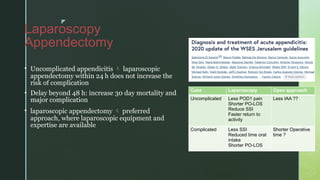
• Uncomplicated appendicitis  laparoscopic
appendectomy within 24 h does not increase the
risk of complication
• Delay beyond 48 h: increase 30 day mortality and
major complication
• laparoscopic appendectomy  preferred
approach, where laparoscopic equipment and
expertise are available
Case Laparoscopy Open approach
Uncomplicated Less POD1 pain
Shorter PO-LOS
Reduce SSI
Faster return to
activity
Less IAA ??
Complicated Less SSI
Reduced time oral
intake
Shorter PO-LOS
Shorter Operative
time ?
z
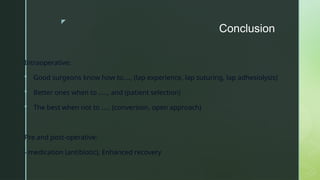
Conclusion
Intraoperative:
 Good surgeons know how to…., (lap experience, lap suturing, lap adhesiolysis)
 Better ones when to ….., and (patient selection)
 The best when not to ….. (conversion, open approach)
Pre and post-operative:
- medication (antibiotic), Enhanced recovery
z
THANK YOU

Laparoscopic Appendicitis dan Peptic ulcer perforation.pptx

  • 1.
    z Perforated Peptic Ulcer each hour of surgical delay beyond hospital admission was associated with an adjusted 2.4% decreased probability of survival compared with the previous hour  Stable patients + equipment + human resources  laparoscopic approach, otherwise  open approach is recommended  Boey score 0-1  Perforated peptic ulcer < 2 cm primary repair, no difference of leak rate with shorter operative time
  • 2.
    z  Even inunstable case : experienced center  Five university hospitals in South Korea, 2009 – 2019 • Favor laparoscopic approach • Single tertiary university hospital 2001-2017
  • 3.
  • 4.
    z Open conversion  Intraoperativedifficulties:  Unclear perforation site  Fragile tissue  Large defect  Etc.
  • 5.
    z ERAS ? • Nonopioid multimodal analgesia, oral conversion on POD 2 • NG removed when < 300 ml/24 jam • DC removed when UO adequate • Drain removed when < 100 ml/24 jam • POD 1 liquid diet • POD 2 semisolid food • IV PPI during hospitalization
  • 6.
    z Laparoscopy Appendectomy • Uncomplicated appendicitis laparoscopic appendectomy within 24 h does not increase the risk of complication • Delay beyond 48 h: increase 30 day mortality and major complication • laparoscopic appendectomy  preferred approach, where laparoscopic equipment and expertise are available Case Laparoscopy Open approach Uncomplicated Less POD1 pain Shorter PO-LOS Reduce SSI Faster return to activity Less IAA ?? Complicated Less SSI Reduced time oral intake Shorter PO-LOS Shorter Operative time ?
  • 7.
    z Conclusion Intraoperative:  Good surgeonsknow how to…., (lap experience, lap suturing, lap adhesiolysis)  Better ones when to ….., and (patient selection)  The best when not to ….. (conversion, open approach) Pre and post-operative: - medication (antibiotic), Enhanced recovery
  • 8.