The document discusses several key points about the nature of signs and language:
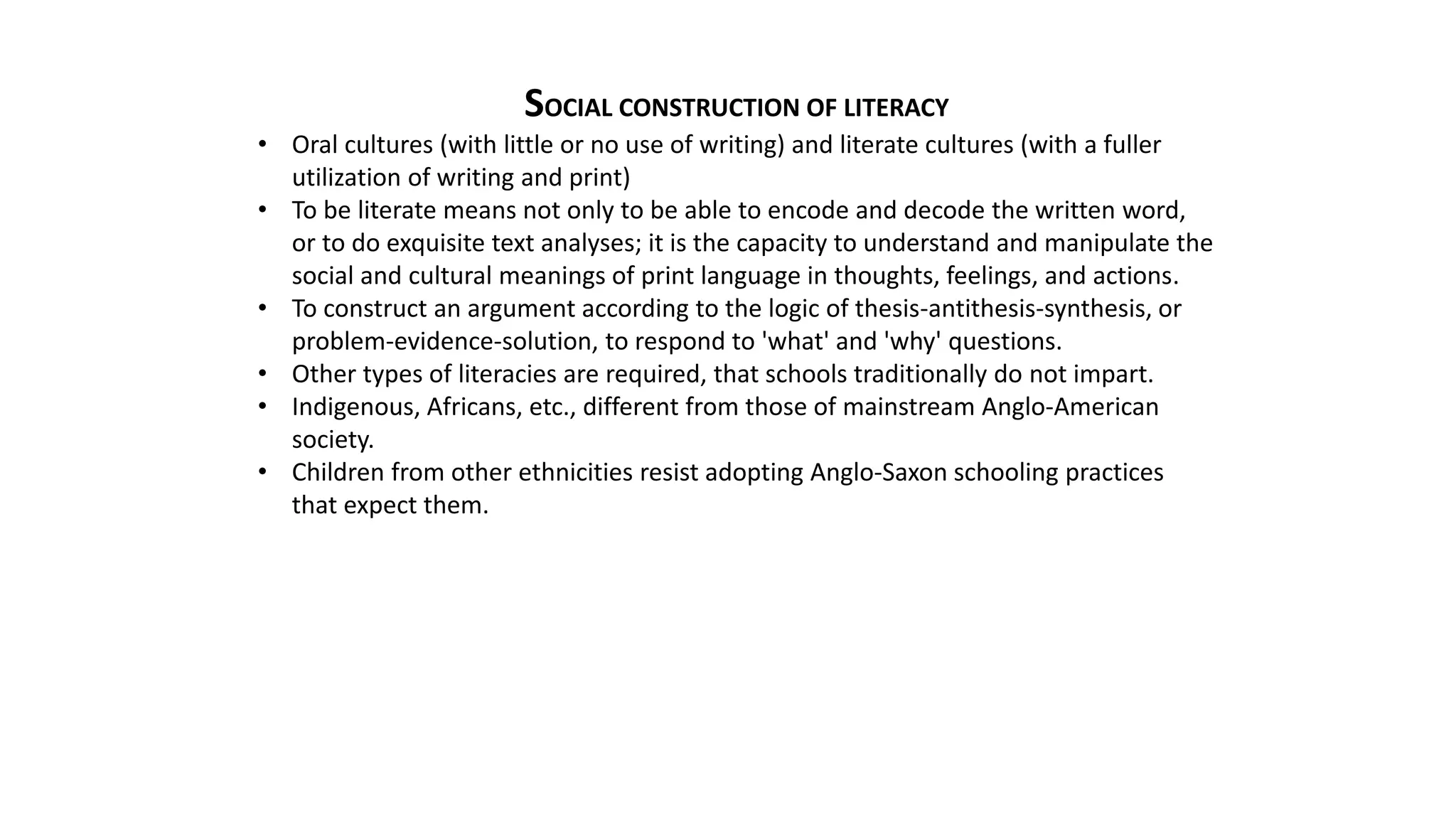
- Signs have no natural connection to the real world and are arbitrary, which allows them to be appropriated by discourse communities. Native speakers may feel signs have natural meanings due to cultural immersion.
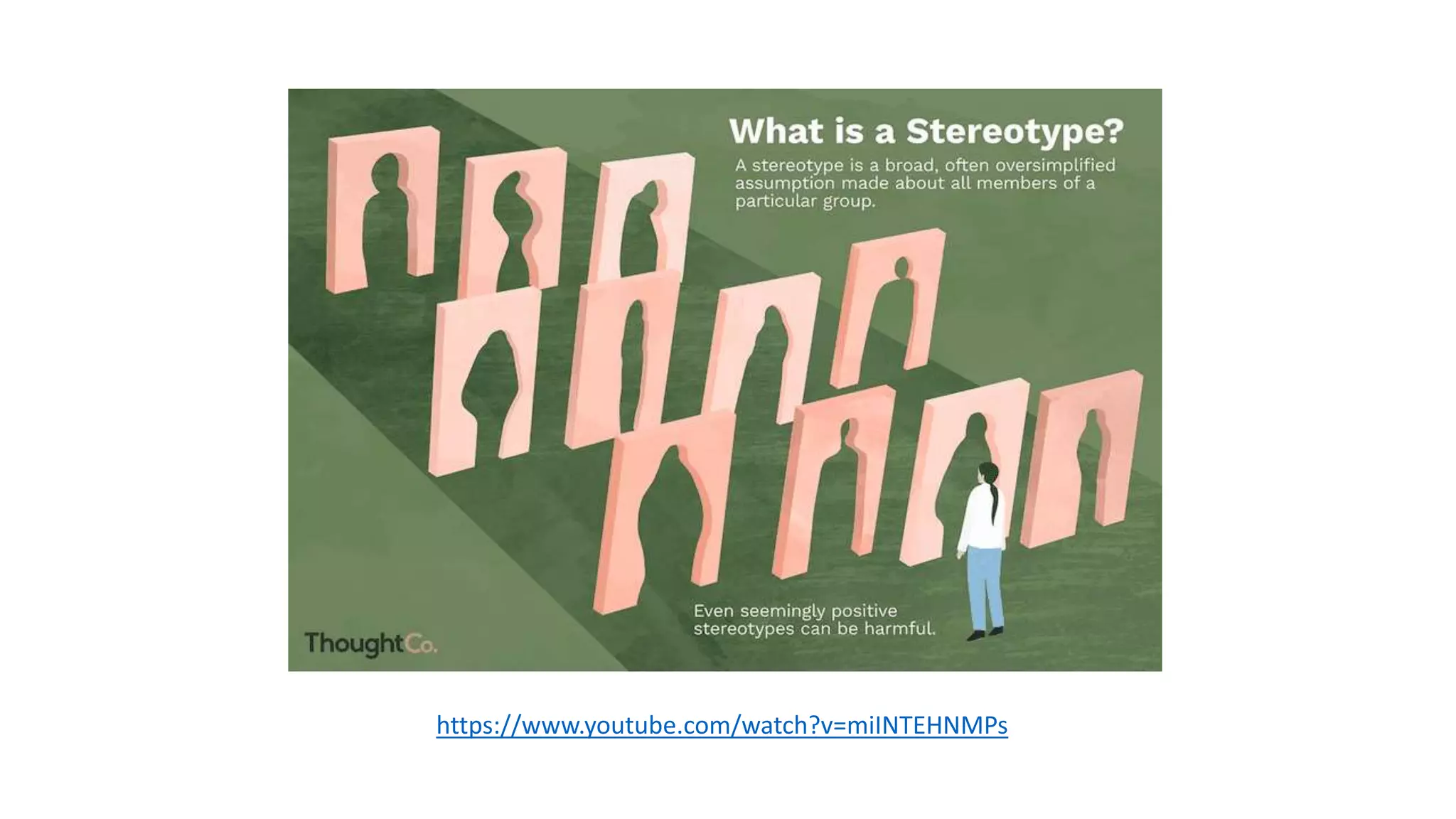
- Political and historical symbols take on simplified meanings through repeated use over time, shaping users' memories and conferring mythical weight. Cultural stereotypes also become frozen signs that affect both users and subjects.
- Signs establish semantic and pragmatic relationships with other signs based on direct exchanges and broader discourse contexts. Coherence is created through inferences between speakers rather than being inherent.
- The arbitrariness of signs gives language its power as






![The linguistics expert Dan Everett, who spent many years among the Pirahã, tells of
a group of men killing a very sick baby by pouring copious amounts of alcohol in its
mouth. He explained: “They felt certain that this baby was going to die. They felt it
was suffering terribly [. . .] So they euthanized the child.”](https://image.slidesharecdn.com/languageandculture7-200725220306/75/Language-and-culture-7-19-2048.jpg)









![• Internalized oppression works to ensure that oppressed people will accept their social positioning within the
existing social structure in which whites claim power and privilege as their inalienable right.
• Successful Latinxs who experience internalized oppression question their abilities, feel like frauds, and fear being
outed as incompetent (Medina and Luna 2000).
• The problem lies in the hierarchy of knowledge systems where one system is recognized, utilized, celebrated, and
expected whereas the other is denied or erased. These broadly defined “American” ideologies and practices
were imposed.
• “American” values for individualism and independence (Bellah et al. 1985) were explicitly and implicitly taught in
the schools.
• Revolutionary critical pedagogy is a philosophy of praxis that seeks to transform our current capitalist world (and
the antagonisms it creates) into one that is class free, where labor becomes a creative endeavor beyond
necessity and for the benefits of the entire society (Allman 1999; McLaren 2012).
• The alternative to capitalism involves true democracy where individual desires are not in direct competition with
those of the rest of society and everyone’s voice counts.
• […] la preservación de las lenguas y culturas indígenas ha sido más un objetivo de ciertos agentes externos como
los etno-lingüistas, la Iglesia progresista y la izquierda, y de algunos líderes indígenas, que un deseo de los
indígenas de base (Martínez, 2009, p. 192).
• https://www.youtube.com/watch?v=24SqeMc0O_w](https://image.slidesharecdn.com/languageandculture7-200725220306/75/Language-and-culture-7-33-2048.jpg)