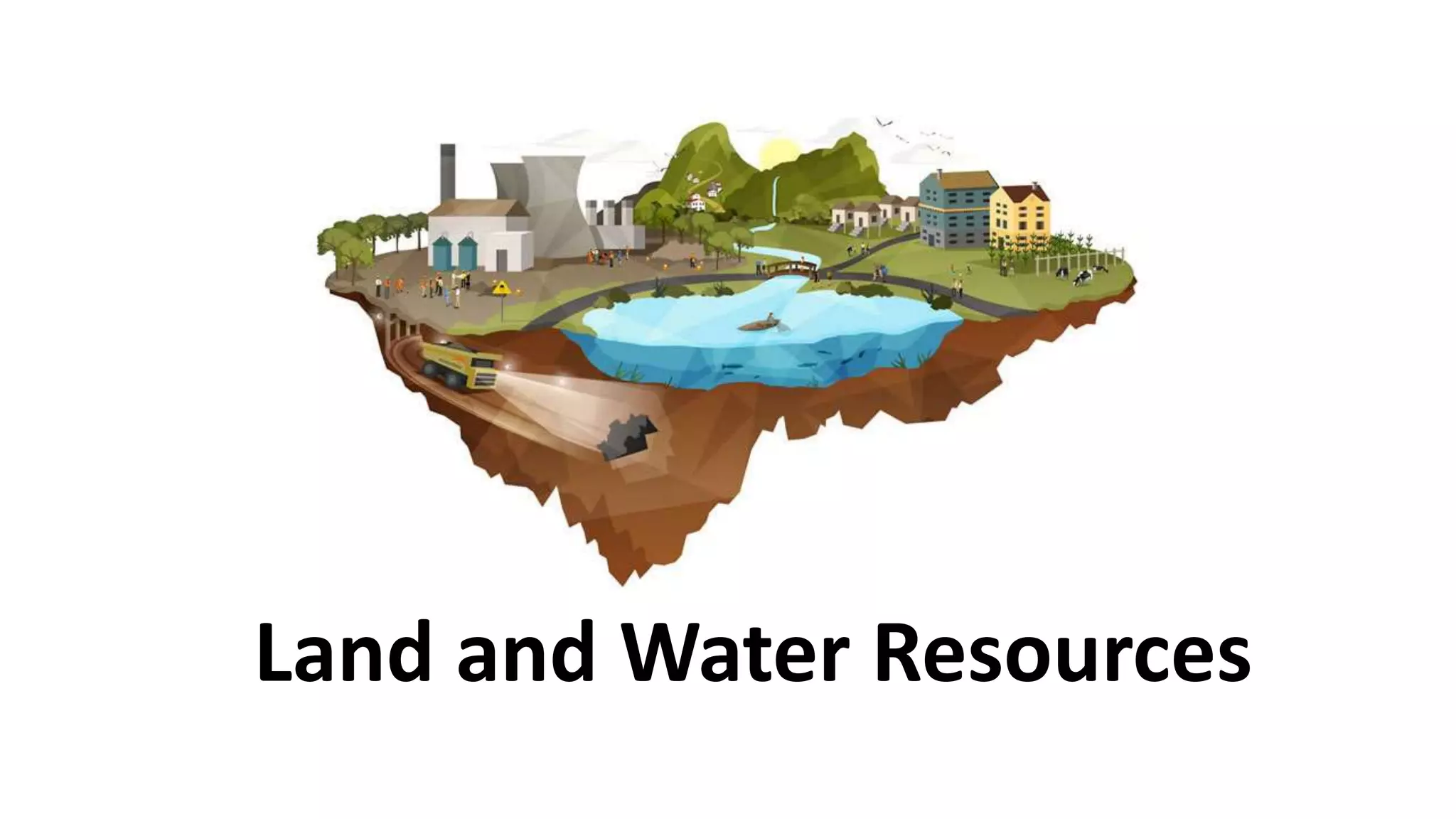
Land and Water Resources
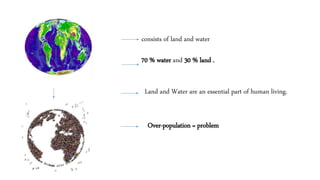
consists of land and water
70 % water and 30 % land .
Over-population = problem
Land and Water are an essential part of human living.
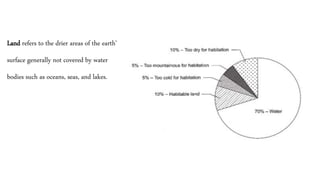
Land refers to the drier areas of the earth’
surface generally not covered by water
bodies such as oceans, seas, and lakes.
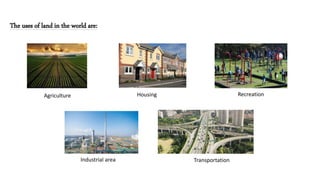
The uses of land in the world are:
Agriculture Housing Recreation
Industrial area Transportation
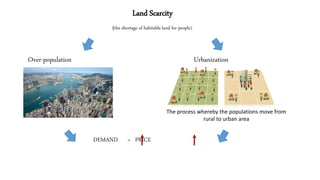
Land Scarcity
(the shortage of habitable land for people)
Over-population Urbanization
DEMAND = PRICE
The process whereby the populations move from
rural to urban area
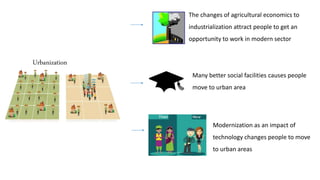
Urbanization
The changes of agricultural economics to
industrialization attract people to get an
opportunity to work in modern sector
Many better social facilities causes people
move to urban area
Modernization as an impact of
technology changes people to move
to urban areas
3. List 3 uses of land area.
Quiz Review
1. How many percent(age) of land and water areas of our earth?
2. How many percent(age) of land that is habitable for human living?
4. List 5 negative effects of OVERPOPULATION.
5. List 5 causes why people move from rural to urban area (urbanization).
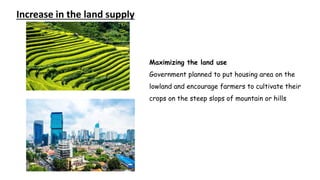
Increase in the land supply
Maximizing the land use
Government planned to put housing area on the
lowland and encourage farmers to cultivate their
crops on the steep slops of mountain or hills
Increase in the land supply
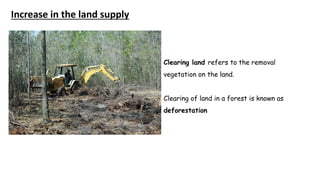
Clearing land refers to the removal
vegetation on the land.
Clearing of land in a forest is known as
deforestation
Increase in the land supply
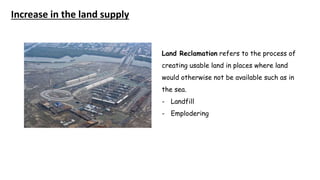
Land Reclamation refers to the process of
creating usable land in places where land
would otherwise not be available such as in
the sea.
- Landfill
- Emplodering
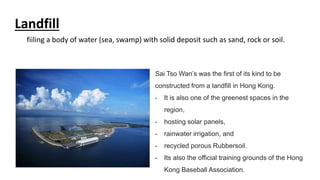
Sai Tso Wan’s was the first of its kind to be
constructed from a landfill in Hong Kong.
- It is also one of the greenest spaces in the
region,
- hosting solar panels,
- rainwater irrigation, and
- recycled porous Rubbersoil.
- Its also the official training grounds of the Hong
Kong Baseball Association.
Landfill
fiiling a body of water (sea, swamp) with solid deposit such as sand, rock or soil.
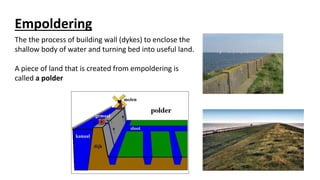
Empoldering
The the process of building wall (dykes) to enclose the
shallow body of water and turning bed into useful land.
A piece of land that is created from empoldering is
called a polder
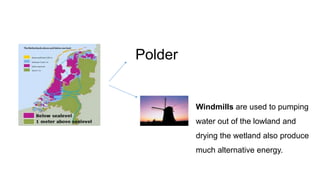
Windmills are used to pumping
water out of the lowland and
drying the wetland also produce
much alternative energy.
Polder
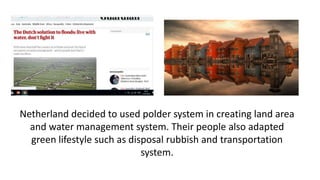
Netherland decided to used polder system in creating land area
and water management system. Their people also adapted
green lifestyle such as disposal rubbish and transportation
system.
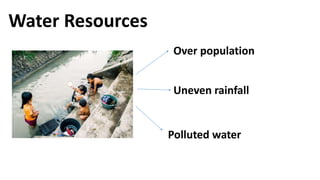
Water Resources
Over population
Uneven rainfall
Polluted water
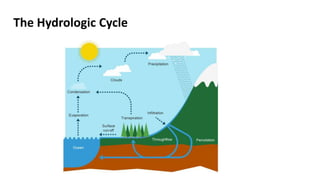
The Hydrologic Cycle
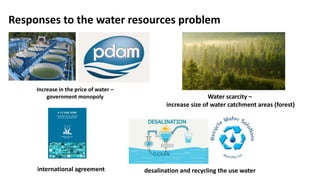
Responses to the water resources problem
desalination and recycling the use water
Increase in the price of water –
government monopoly Water scarcity –
increase size of water catchment areas (forest)
international agreement
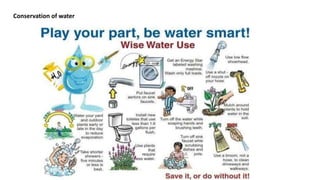
Conservation of water
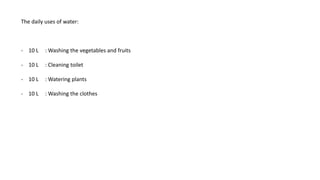
The daily uses of water:
- 10 L : Washing the vegetables and fruits
- 10 L : Cleaning toilet
- 10 L : Watering plants
- 10 L : Washing the clothes
Land and water resources

Land and water resources

  • 1.
    Land and WaterResources
  • 2.
    consists of landand water 70 % water and 30 % land . Over-population = problem Land and Water are an essential part of human living.
  • 3.
    Land refers tothe drier areas of the earth’ surface generally not covered by water bodies such as oceans, seas, and lakes.
  • 4.
    The uses ofland in the world are: Agriculture Housing Recreation Industrial area Transportation
  • 5.
    Land Scarcity (the shortageof habitable land for people) Over-population Urbanization DEMAND = PRICE The process whereby the populations move from rural to urban area
  • 6.
    Urbanization The changes ofagricultural economics to industrialization attract people to get an opportunity to work in modern sector Many better social facilities causes people move to urban area Modernization as an impact of technology changes people to move to urban areas
  • 7.
    3. List 3uses of land area. Quiz Review 1. How many percent(age) of land and water areas of our earth? 2. How many percent(age) of land that is habitable for human living? 4. List 5 negative effects of OVERPOPULATION. 5. List 5 causes why people move from rural to urban area (urbanization).
  • 8.
    Increase in theland supply Maximizing the land use Government planned to put housing area on the lowland and encourage farmers to cultivate their crops on the steep slops of mountain or hills
  • 9.
    Increase in theland supply Clearing land refers to the removal vegetation on the land. Clearing of land in a forest is known as deforestation
  • 10.
    Increase in theland supply Land Reclamation refers to the process of creating usable land in places where land would otherwise not be available such as in the sea. - Landfill - Emplodering
  • 11.
    Sai Tso Wan’swas the first of its kind to be constructed from a landfill in Hong Kong. - It is also one of the greenest spaces in the region, - hosting solar panels, - rainwater irrigation, and - recycled porous Rubbersoil. - Its also the official training grounds of the Hong Kong Baseball Association. Landfill fiiling a body of water (sea, swamp) with solid deposit such as sand, rock or soil.
  • 12.
    Empoldering The the processof building wall (dykes) to enclose the shallow body of water and turning bed into useful land. A piece of land that is created from empoldering is called a polder
  • 13.
    Windmills are usedto pumping water out of the lowland and drying the wetland also produce much alternative energy. Polder
  • 14.
    Netherland decided toused polder system in creating land area and water management system. Their people also adapted green lifestyle such as disposal rubbish and transportation system.
  • 15.
  • 16.
  • 17.
    Responses to thewater resources problem desalination and recycling the use water Increase in the price of water – government monopoly Water scarcity – increase size of water catchment areas (forest) international agreement
  • 18.
  • 19.
    The daily usesof water: - 10 L : Washing the vegetables and fruits - 10 L : Cleaning toilet - 10 L : Watering plants - 10 L : Washing the clothes