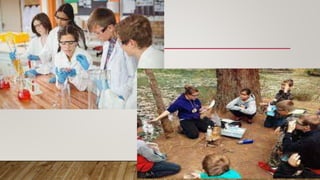
SAFETY IN THE LAB
AND IN THE FIELD
SCIENCE, TECHNOLOGY, ENGINEERING, ARTS AND MATHEMATICS
STEAM
A. THINGS TO PONDER
LAB SAFETY
•You are responsible for your own safety and the
safety of others
•To avoid accidents, you must know your
responsibilities
•You are expected to behave appropriately
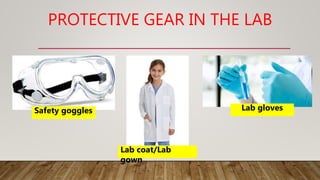
PROTECTIVE GEAR IN THE LAB
Safety goggles
Lab coat/Lab
gown
Lab gloves
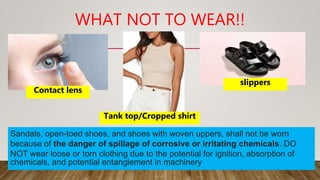
WHAT NOT TO WEAR!!
Contact lens
Tank top/Cropped shirt
slippers
Sandals, open-toed shoes, and shoes with woven uppers, shall not be worn
because of the danger of spillage of corrosive or irritating chemicals. DO
NOT wear loose or torn clothing due to the potential for ignition, absorption of
chemicals, and potential entanglement in machinery
LET’S WATCH THIS VIDEO FIRST 
• Fire extinguisher basics for science laboratory | Lab safety
https://www.youtube.com/watch?v=g3vlmioGjMQ
B. THINGS TO PONDER
LAB SAFETY
• Keep the lab NEAT. Clean up when finished, report spills
to avoid slip and fall hazard
• If you are or another student is injured, inform your
teacher immediately
• DO NOT take any food or drink in the lab, nor take any
chemicals out of the lab
B. THINGS TO PONDER
FIELD SAFETY
•Leave natural areas as you found them
•Stay with your group
•Use proper accident procedures
•Inform your teacher about a hazard in the
environment or if accidents occur
GENERAL LAB SAFETY VIDEO
• https://www.youtube.com/watch?v=MEIXRLcC6RA
SAFETY SYMBOLS
•The following symbols are used
throughout the use of the lab. Remember
to keep in mind all the safety rules and
they must be followed at all times
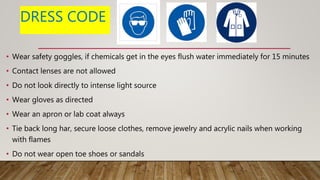
DRESS CODE
• Wear safety goggles, if chemicals get in the eyes flush water immediately for 15 minutes
• Contact lenses are not allowed
• Do not look directly to intense light source
• Wear gloves as directed
• Wear an apron or lab coat always
• Tie back long har, secure loose clothes, remove jewelry and acrylic nails when working
with flames
• Do not wear open toe shoes or sandals
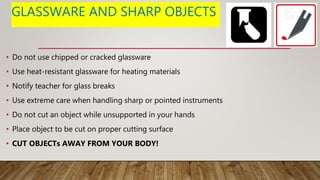
GLASSWARE AND SHARP OBJECTS
• Do not use chipped or cracked glassware
• Use heat-resistant glassware for heating materials
• Notify teacher for glass breaks
• Use extreme care when handling sharp or pointed instruments
• Do not cut an object while unsupported in your hands
• Place object to be cut on proper cutting surface
• CUT OBJECTs AWAY FROM YOUR BODY!
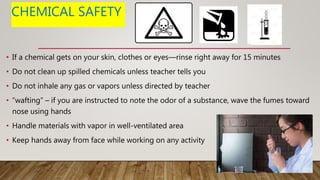
CHEMICAL SAFETY
• If a chemical gets on your skin, clothes or eyes—rinse right away for 15 minutes
• Do not clean up spilled chemicals unless teacher tells you
• Do not inhale any gas or vapors unless directed by teacher
• “wafting” – if you are instructed to note the odor of a substance, wave the fumes toward
nose using hands
• Handle materials with vapor in well-ventilated area
• Keep hands away from face while working on any activity
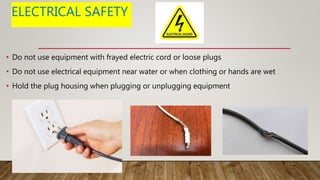
ELECTRICAL SAFETY
• Do not use equipment with frayed electric cord or loose plugs
• Do not use electrical equipment near water or when clothing or hands are wet
• Hold the plug housing when plugging or unplugging equipment
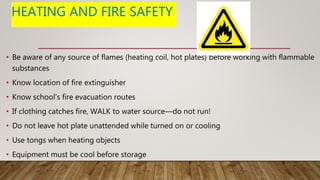
HEATING AND FIRE SAFETY
• Be aware of any source of flames (heating coil, hot plates) before working with flammable
substances
• Know location of fire extinguisher
• Know school’s fire evacuation routes
• If clothing catches fire, WALK to water source—do not run!
• Do not leave hot plate unattended while turned on or cooling
• Use tongs when heating objects
• Equipment must be cool before storage
PLANT AND ANIMAL SAFETY
• Do not eat any part of the plant
• Do not pick any wild plant unless instructed by teacher
• Handle animals only under teacher’s direction
• Treat animals carefully and respectfully
• Wash hands thoroughly with soap and water after handling plant or
animal
CLEAN UP
• Keep surfaces clean and protective equipment as well
• Dispose of hazardous materials or sharp objects ONLY if directed by
teacher
• Wash hand thoroughly with soap and water before leaving the lab
after experiments
• DO NOT LEAVE THE LAB DIRTY

Lab Safety.pptx

  • 1.
    SAFETY IN THELAB AND IN THE FIELD SCIENCE, TECHNOLOGY, ENGINEERING, ARTS AND MATHEMATICS STEAM
  • 3.
    A. THINGS TOPONDER LAB SAFETY •You are responsible for your own safety and the safety of others •To avoid accidents, you must know your responsibilities •You are expected to behave appropriately
  • 4.
    PROTECTIVE GEAR INTHE LAB Safety goggles Lab coat/Lab gown Lab gloves
  • 5.
    WHAT NOT TOWEAR!! Contact lens Tank top/Cropped shirt slippers Sandals, open-toed shoes, and shoes with woven uppers, shall not be worn because of the danger of spillage of corrosive or irritating chemicals. DO NOT wear loose or torn clothing due to the potential for ignition, absorption of chemicals, and potential entanglement in machinery
  • 6.
    LET’S WATCH THISVIDEO FIRST  • Fire extinguisher basics for science laboratory | Lab safety https://www.youtube.com/watch?v=g3vlmioGjMQ
  • 7.
    B. THINGS TOPONDER LAB SAFETY • Keep the lab NEAT. Clean up when finished, report spills to avoid slip and fall hazard • If you are or another student is injured, inform your teacher immediately • DO NOT take any food or drink in the lab, nor take any chemicals out of the lab
  • 8.
    B. THINGS TOPONDER FIELD SAFETY •Leave natural areas as you found them •Stay with your group •Use proper accident procedures •Inform your teacher about a hazard in the environment or if accidents occur
  • 9.
    GENERAL LAB SAFETYVIDEO • https://www.youtube.com/watch?v=MEIXRLcC6RA
  • 10.
    SAFETY SYMBOLS •The followingsymbols are used throughout the use of the lab. Remember to keep in mind all the safety rules and they must be followed at all times
  • 11.
    DRESS CODE • Wearsafety goggles, if chemicals get in the eyes flush water immediately for 15 minutes • Contact lenses are not allowed • Do not look directly to intense light source • Wear gloves as directed • Wear an apron or lab coat always • Tie back long har, secure loose clothes, remove jewelry and acrylic nails when working with flames • Do not wear open toe shoes or sandals
  • 12.
    GLASSWARE AND SHARPOBJECTS • Do not use chipped or cracked glassware • Use heat-resistant glassware for heating materials • Notify teacher for glass breaks • Use extreme care when handling sharp or pointed instruments • Do not cut an object while unsupported in your hands • Place object to be cut on proper cutting surface • CUT OBJECTs AWAY FROM YOUR BODY!
  • 13.
    CHEMICAL SAFETY • Ifa chemical gets on your skin, clothes or eyes—rinse right away for 15 minutes • Do not clean up spilled chemicals unless teacher tells you • Do not inhale any gas or vapors unless directed by teacher • “wafting” – if you are instructed to note the odor of a substance, wave the fumes toward nose using hands • Handle materials with vapor in well-ventilated area • Keep hands away from face while working on any activity
  • 14.
    ELECTRICAL SAFETY • Donot use equipment with frayed electric cord or loose plugs • Do not use electrical equipment near water or when clothing or hands are wet • Hold the plug housing when plugging or unplugging equipment
  • 15.
    HEATING AND FIRESAFETY • Be aware of any source of flames (heating coil, hot plates) before working with flammable substances • Know location of fire extinguisher • Know school’s fire evacuation routes • If clothing catches fire, WALK to water source—do not run! • Do not leave hot plate unattended while turned on or cooling • Use tongs when heating objects • Equipment must be cool before storage
  • 16.
    PLANT AND ANIMALSAFETY • Do not eat any part of the plant • Do not pick any wild plant unless instructed by teacher • Handle animals only under teacher’s direction • Treat animals carefully and respectfully • Wash hands thoroughly with soap and water after handling plant or animal
  • 17.
    CLEAN UP • Keepsurfaces clean and protective equipment as well • Dispose of hazardous materials or sharp objects ONLY if directed by teacher • Wash hand thoroughly with soap and water before leaving the lab after experiments • DO NOT LEAVE THE LAB DIRTY