Introduction to Critical Thinking
Week 2nd
Mahmood Detho
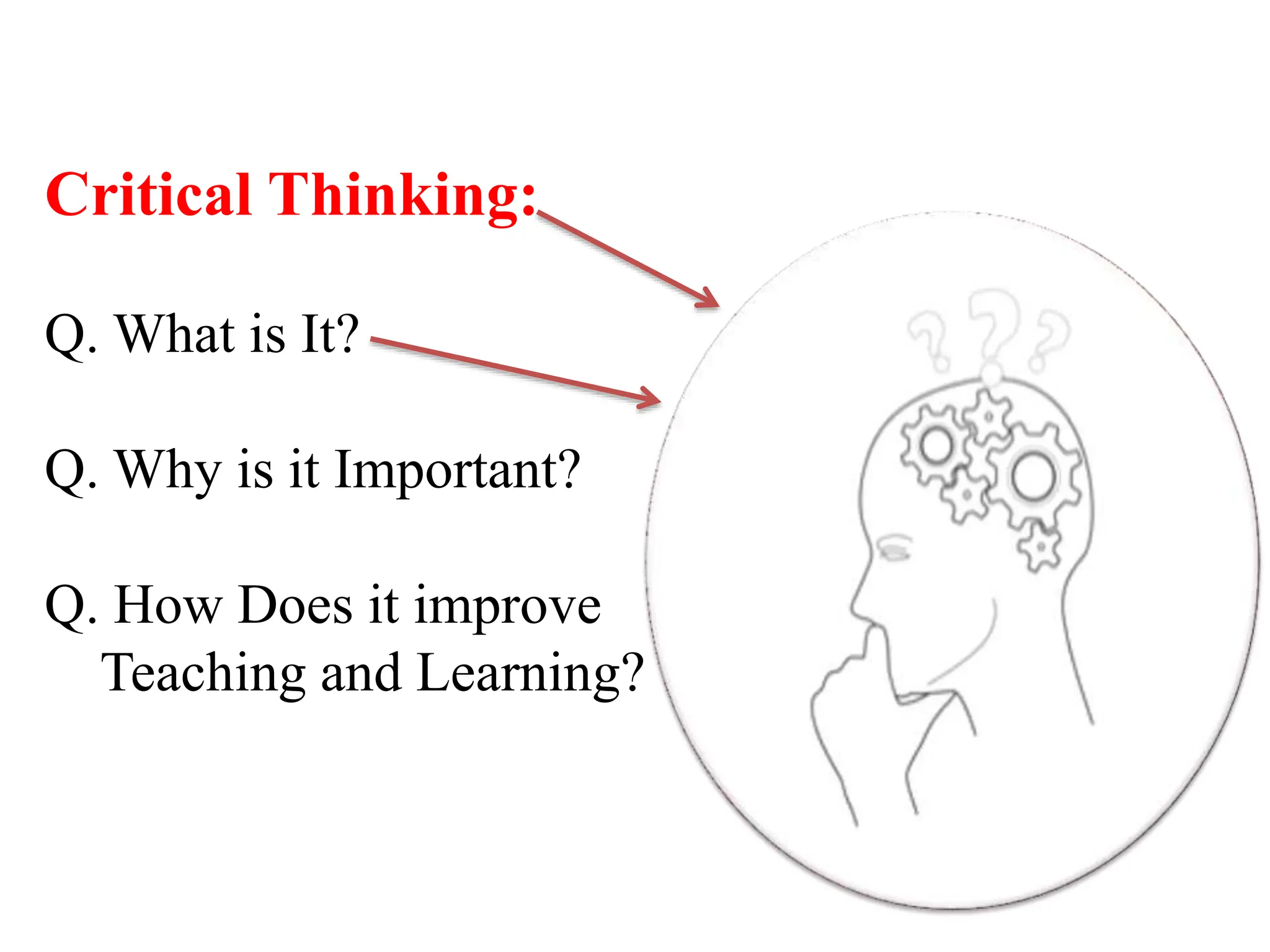
Critical Thinking:
Q. What is It?
Q. Why is it Important?
Q. How Does it improve
Teaching and Learning?
Why Concern Ourselves With Thinking?
Because whenever we are dealing with
human life, we are almost always dealing
with thinking.
Learning Disability
Learning disabilities (LDs) refer to a number of disorders that may affect the
acquisition, organization, retention, comprehension, or the use of both verbal or
nonverbal information. Odeilis Dominguez; Paola Carugno.
Activity # 1
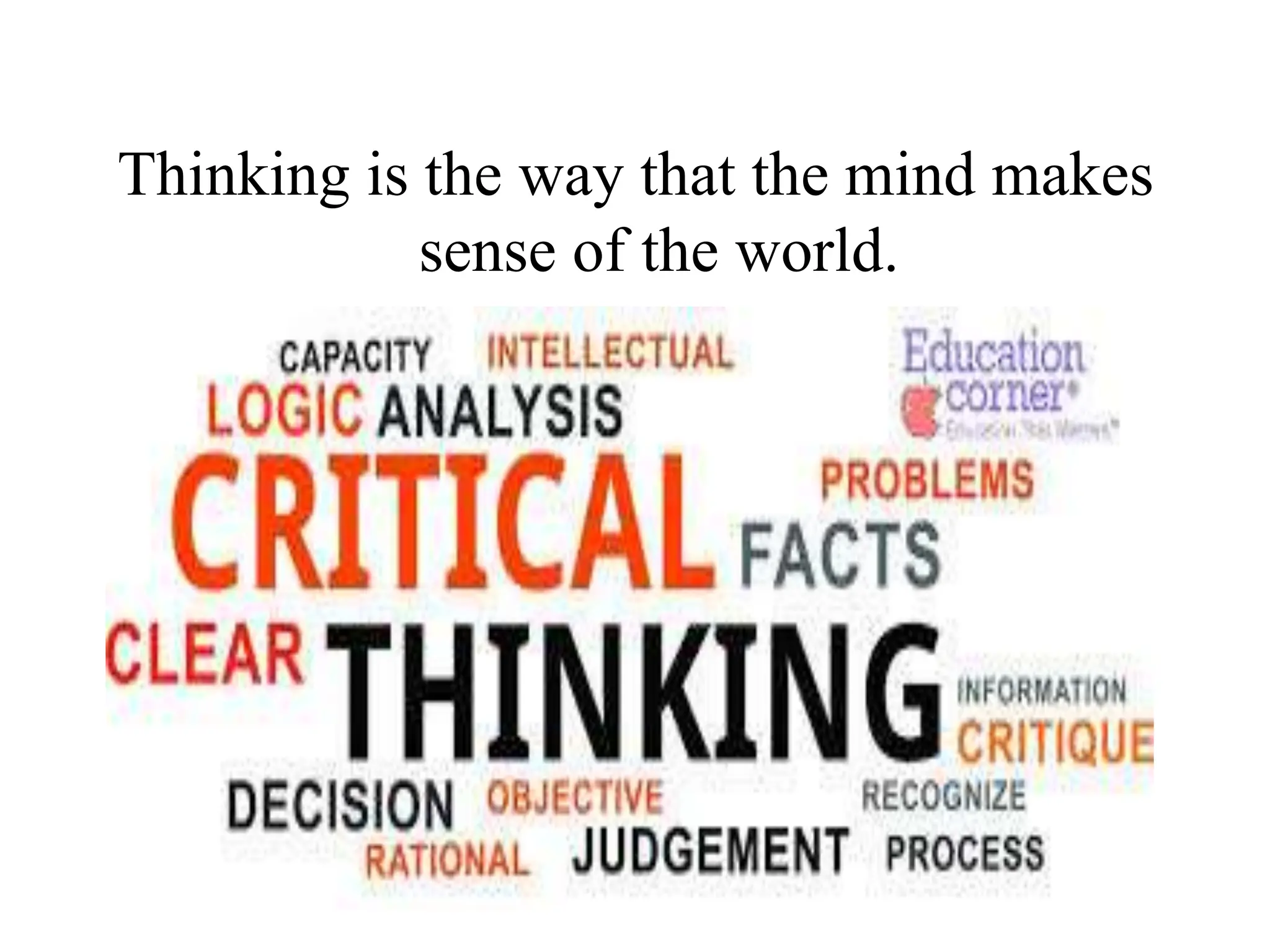
Thinking is the way that the mind makes
sense of the world.
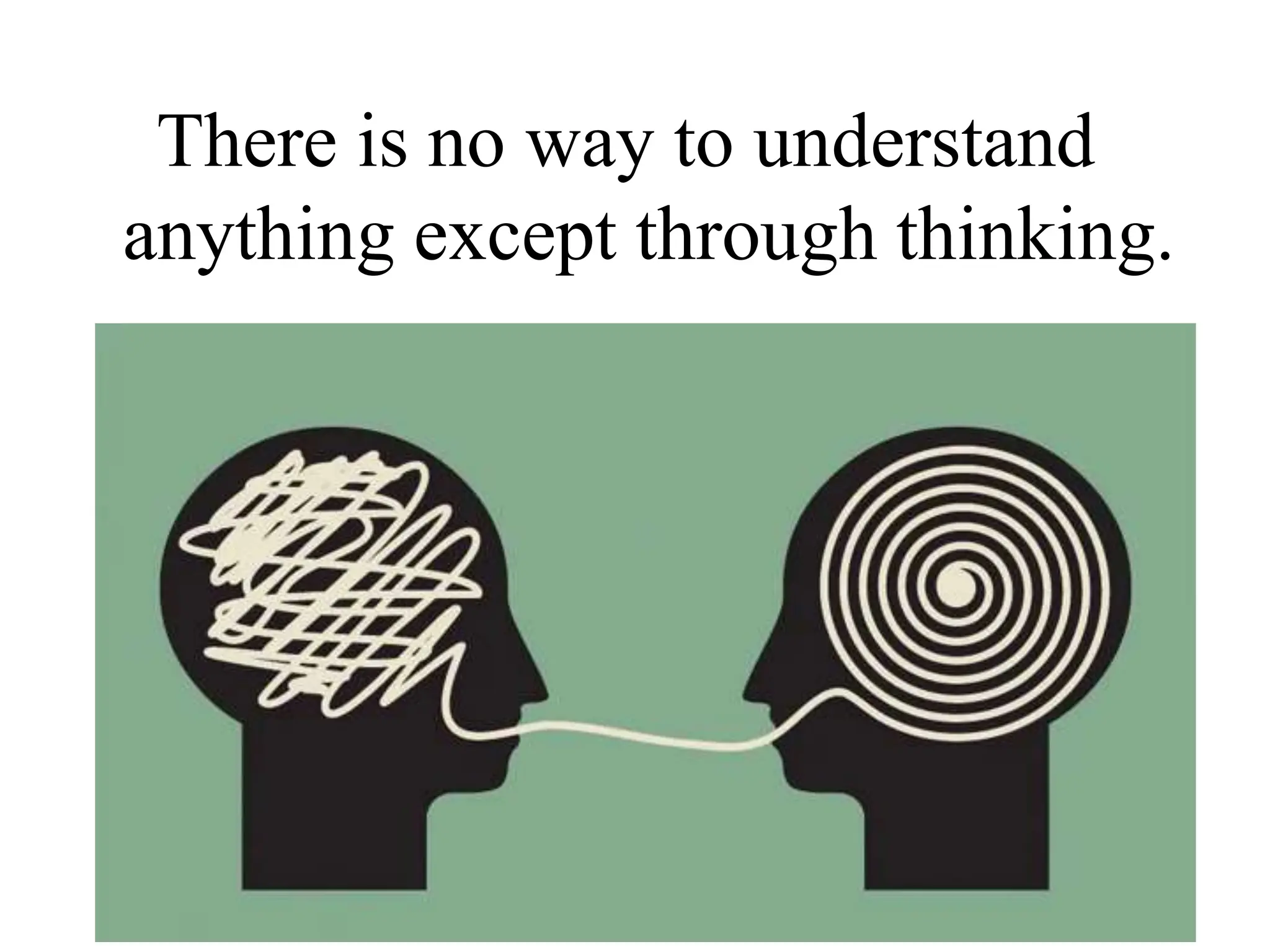
There is no way to understand
anything except through thinking.
• what there is
• what is happening
• what our problems are
• what our options are
• what threatens us
• what is important
• what is unimportant
• who our friends are
• who our enemies are
• what our “history” is
• who we are
• who loves us
Thinking tells us:
Thinking determines:
• what we learn
• how we learn
• what we think is important to learn
• what effort we should expend
• what we think is true
• what we think is false
• how things should be viewed
• whether our learning is of high or low quality
• whether our learning is deep or superficial
Everything we
know, believe,
want, fear and
hope for, our
thinking tells
us.
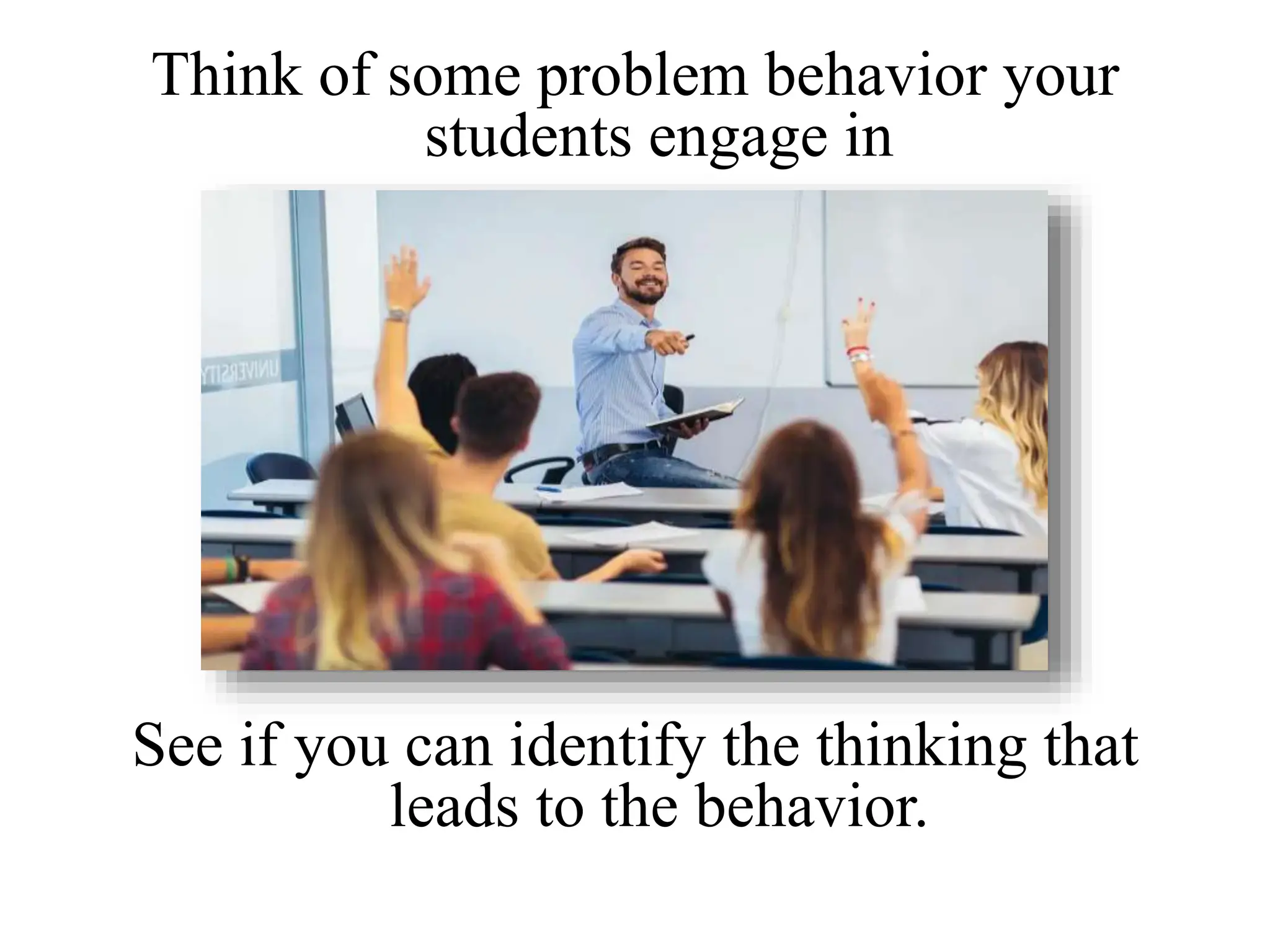
Think of some problem behavior your
students engage in
See if you can identify the thinking that
leads to the behavior.
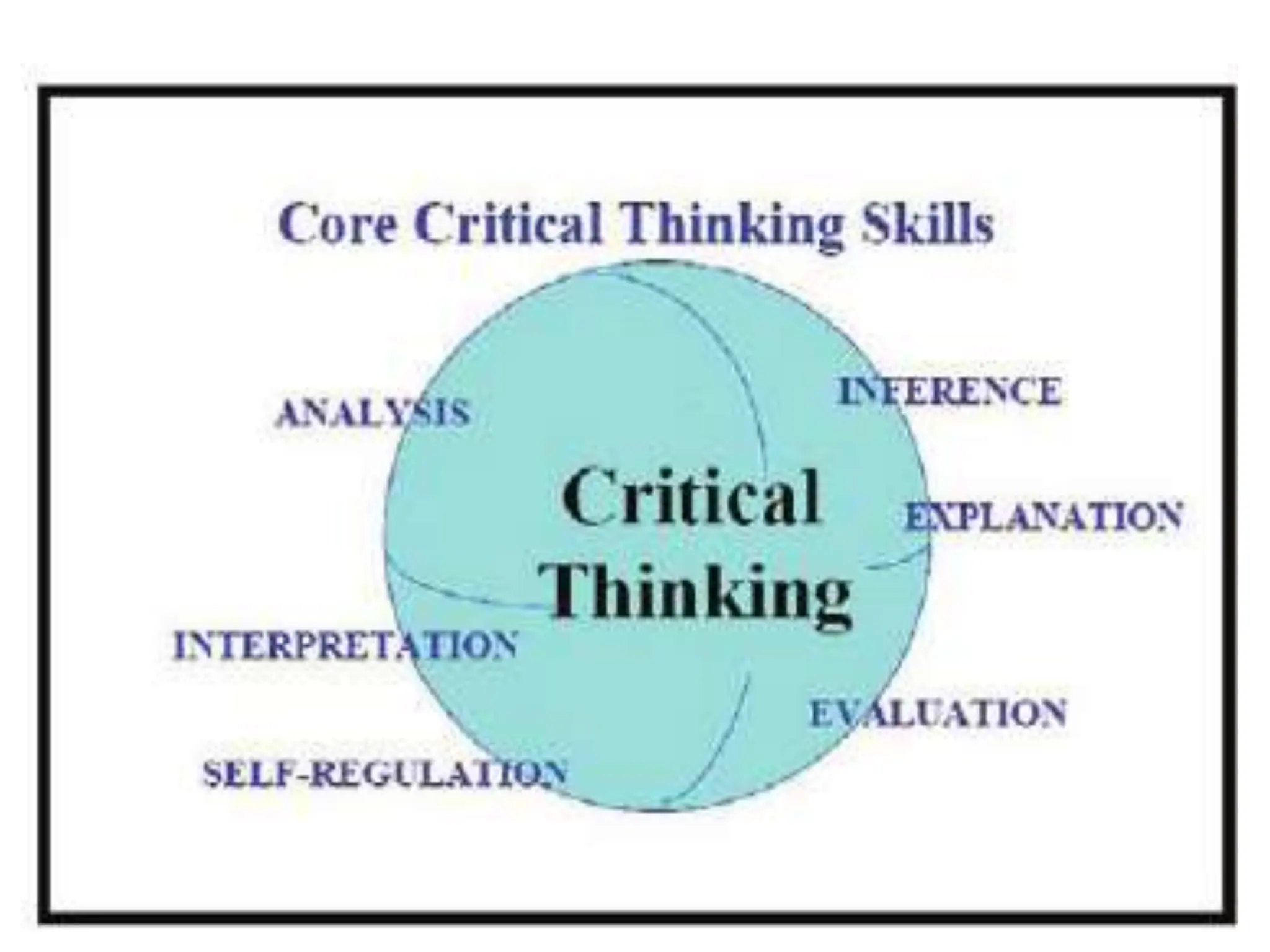
Critical Thinking
Is a Self-Directed Process
By Which We Take Deliberate
Steps
To Think at the Highest Level
of Quality.
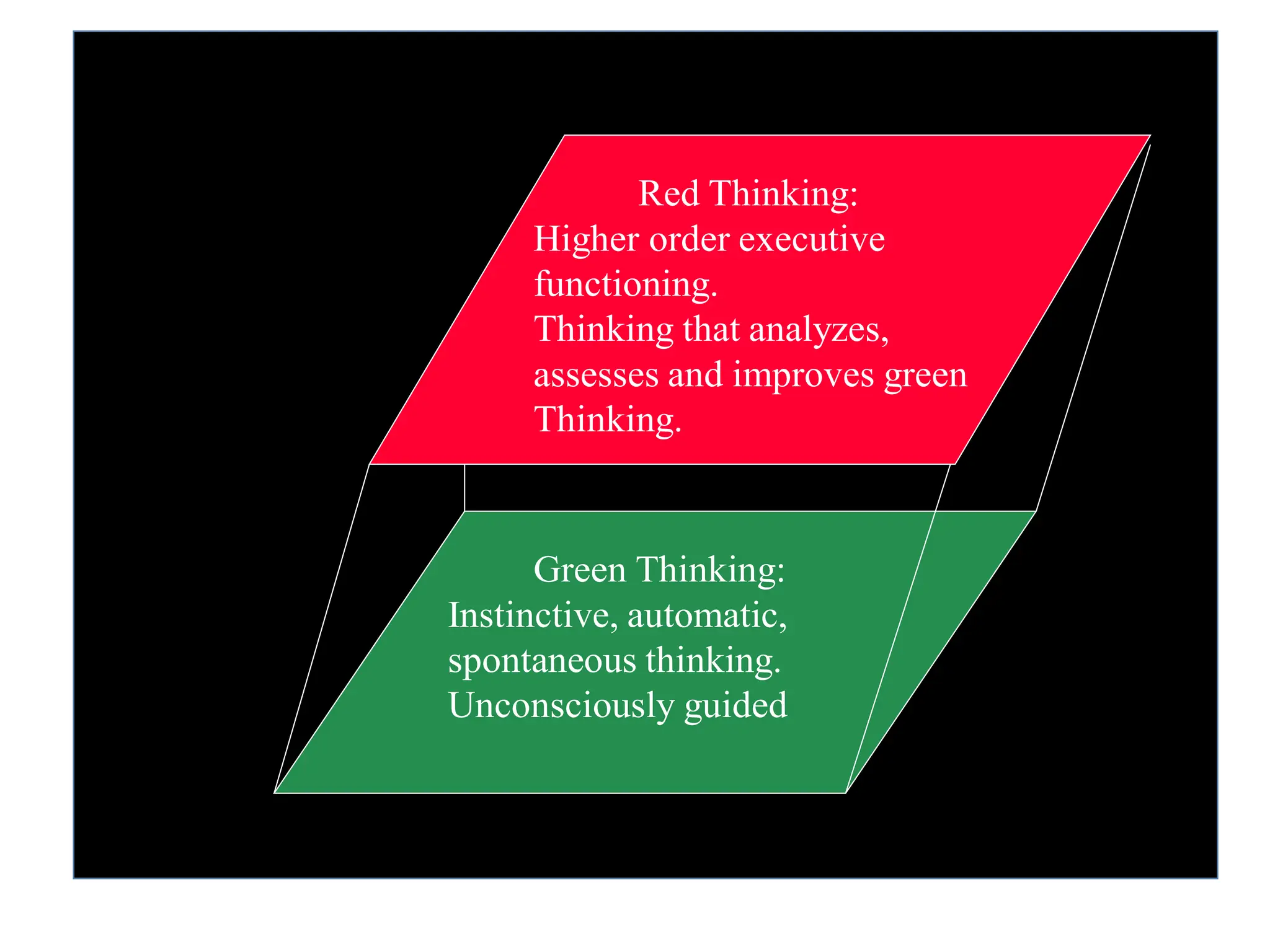
Red Thinking:
Higher order executive
functioning.
Thinking that analyzes,
assesses and improves green
Thinking.
Green Thinking:
Instinctive, automatic,
spontaneous thinking.
Unconsciously guided
Critical Thinking Is Not New
Socrates 2,400 years ago discovered by a
method of probing questioning that people often
could not rationally justify their confident
claims to knowledge.
In 1605, Francis Bacon, wrote the first book on
critical thinking, The Advancement of Learning, in
which he documented various forms of human
irrationality and the need to establish new habits of
thought through education.
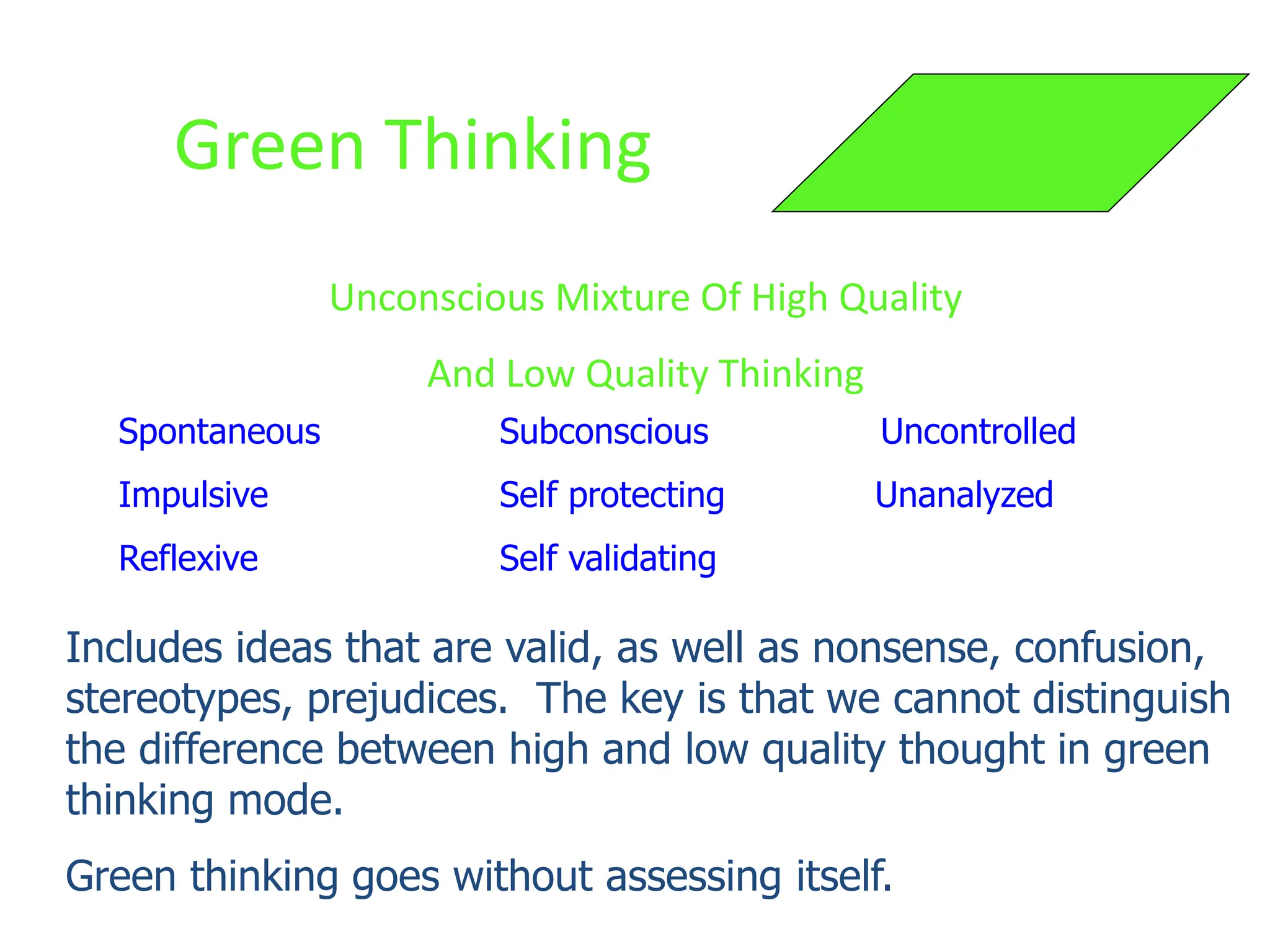
Green Thinking
Unconscious Mixture Of High Quality
And Low Quality Thinking
Spontaneous Subconscious Uncontrolled
Impulsive Self protecting Unanalyzed
Reflexive Self validating
Includes ideas that are valid, as well as nonsense, confusion,
stereotypes, prejudices. The key is that we cannot distinguish
the difference between high and low quality thought in green
thinking mode.
Green thinking goes without assessing itself.
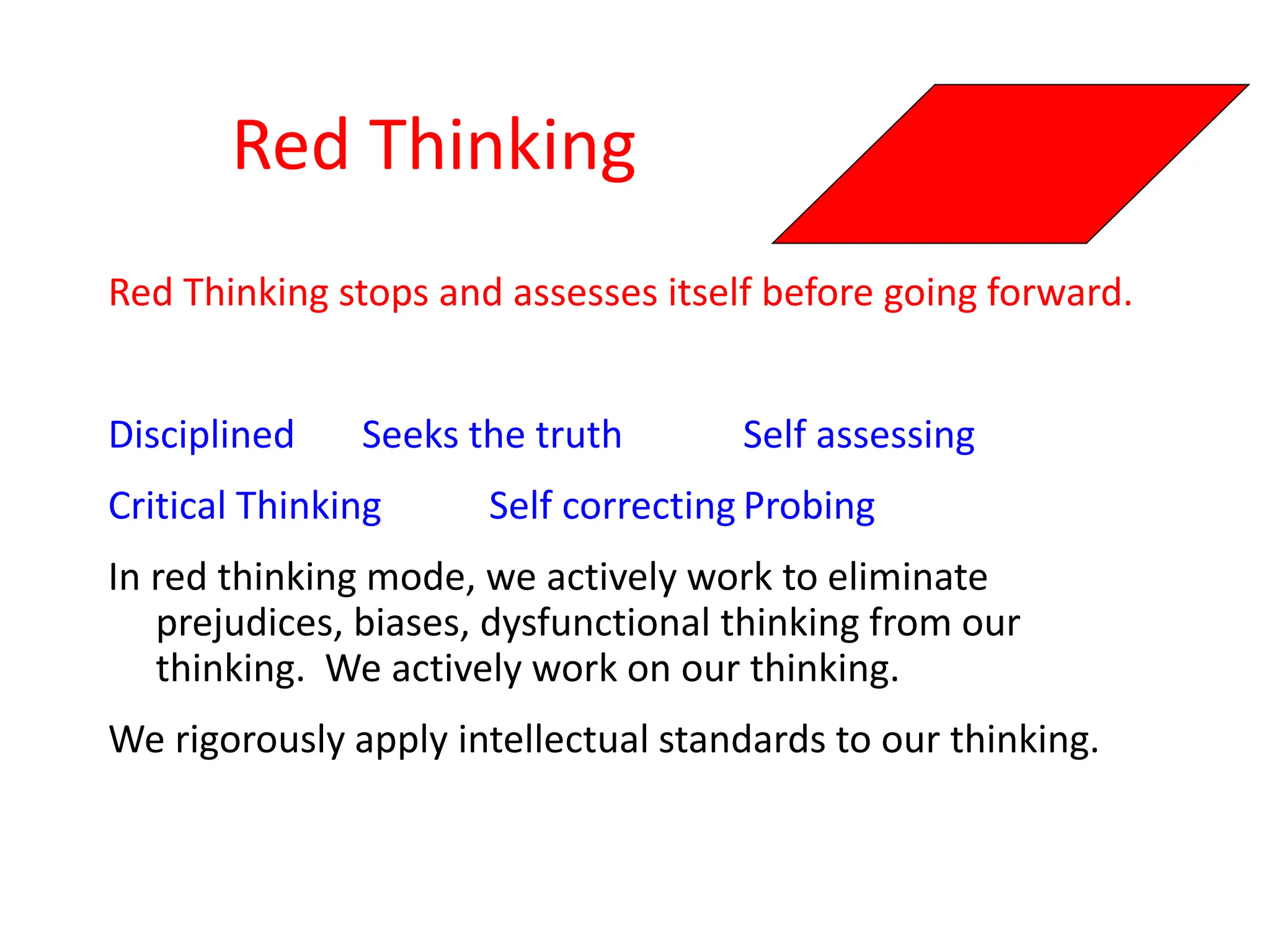
Red Thinking
Red Thinking stops and assesses itself before going forward.
Disciplined Seeks the truth Self assessing
Critical Thinking Self correcting Probing
In red thinking mode, we actively work to eliminate
prejudices, biases, dysfunctional thinking from our
thinking. We actively work on our thinking.
We rigorously apply intellectual standards to our thinking.
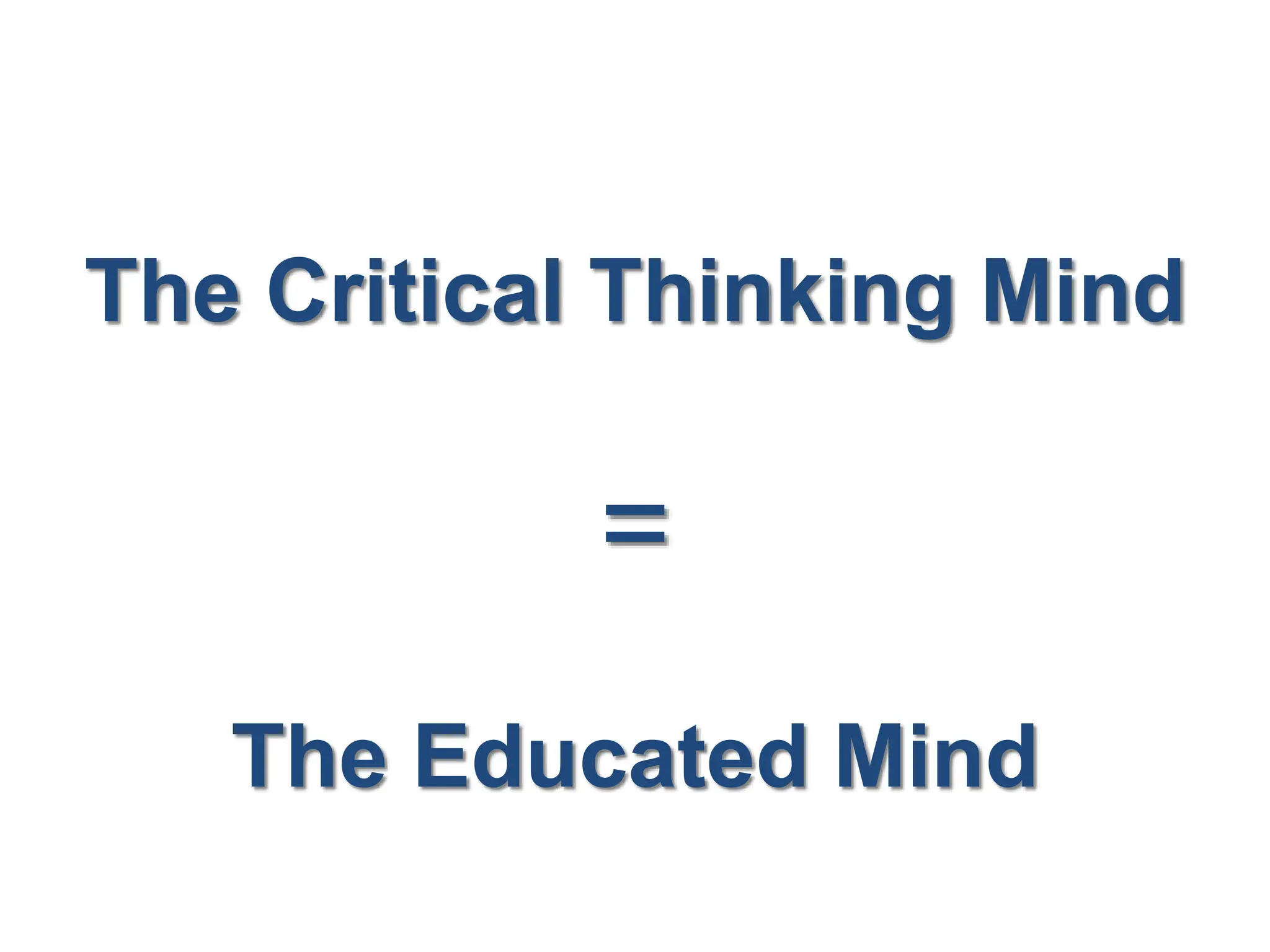
The Critical Thinking Mind
=
The Educated Mind
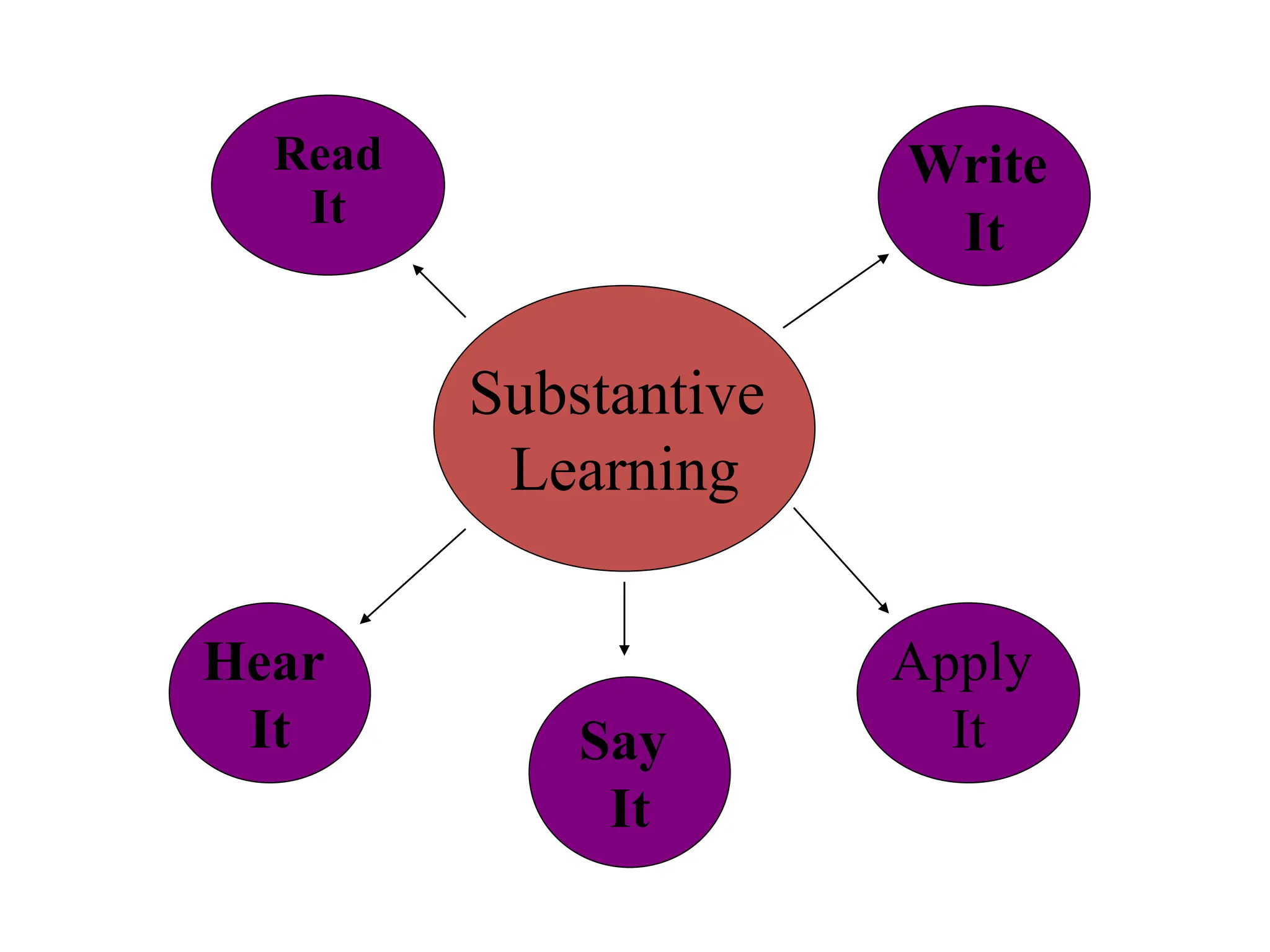
Substantive
Learning
Write
It
Hear
It Say
It
Apply
It
Read
It
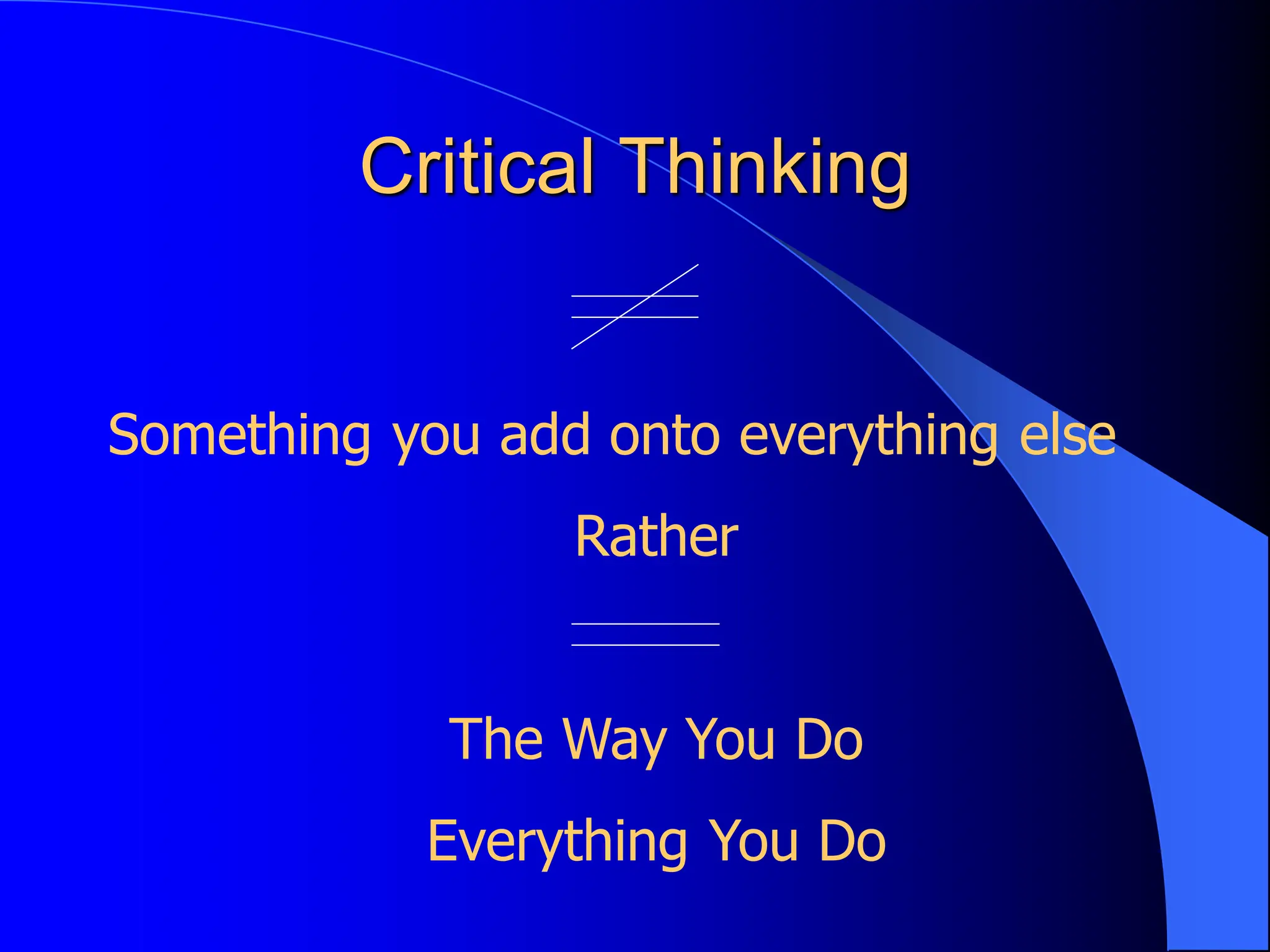
Critical Thinking
Something you add onto everything else
Rather
The Way You Do
Everything You Do
Activity: What is Critical Thinking?
To be clear in writing:
• 1) state
• 2) elaborate (In other words…)
• 3) exemplify and/or illustrate
Write out the most important thing you know about
critical thinking, in this form:
1) Critical thinking is …..
2) In other words…
3) For example of…
Think for Yourself: 1-1
Beginning to
Think About Your Thinking
• To begin to think about your thinking, make a list of any
problems you believe currently exist with your thinking.
Try to be as explicit as possible. The more problems you
identify the better. For each problem you identify,
complete the following statements:
• 1. One problem with my thinking is…
• 2. This is a problem because…
• 3. If I adequately addressed this problem, the quality of
my life would improve in the following ways…
Think for Yourself: 1-2
Critique Your Thinking
Consider your thinking in these domains of your life: at work, in personal
relationships, in teaching, in intimate relationships, as a reader, as a writer, in
planning your life, in dealing with your emotions, in figuring out complex situations.
Complete these statements:
• Right now, I believe my thinking across all domains of my life is of ______________
quality. I based this judgment on _________________.
• 1. In the following areas, I think very well…
• 2. In the following areas, my thinking is OK, not great, but not terrible either…
• 3. In the following areas, my thinking is probably of low quality…
• List at least three areas for each of the above.
Questions?
• What is Critical thinking?
• Define Critical Thinking.
• Explain the process of Critical Thinking.
• How critical thinking works?
• Origin of Critical Thinking.
• What is difference between Red Thinking and Green
Thinking? Narrate with examples.
• Effects of critical thinking.
Thank you!
If you have any question
please don’t ask I am now
exausted!

Lecture 01 & 02Intro to Critical Thinking.ppt

  • 1.
    Introduction to CriticalThinking Week 2nd Mahmood Detho
  • 2.
    Critical Thinking: Q. Whatis It? Q. Why is it Important? Q. How Does it improve Teaching and Learning?
  • 3.
    Why Concern OurselvesWith Thinking? Because whenever we are dealing with human life, we are almost always dealing with thinking.
  • 4.
    Learning Disability Learning disabilities(LDs) refer to a number of disorders that may affect the acquisition, organization, retention, comprehension, or the use of both verbal or nonverbal information. Odeilis Dominguez; Paola Carugno. Activity # 1
  • 5.
    Thinking is theway that the mind makes sense of the world.
  • 6.
    There is noway to understand anything except through thinking.
  • 7.
    • what thereis • what is happening • what our problems are • what our options are • what threatens us • what is important • what is unimportant • who our friends are • who our enemies are • what our “history” is • who we are • who loves us Thinking tells us:
  • 8.
    Thinking determines: • whatwe learn • how we learn • what we think is important to learn • what effort we should expend • what we think is true • what we think is false • how things should be viewed • whether our learning is of high or low quality • whether our learning is deep or superficial
  • 9.
    Everything we know, believe, want,fear and hope for, our thinking tells us.
  • 10.
    Think of someproblem behavior your students engage in See if you can identify the thinking that leads to the behavior.
  • 12.
    Critical Thinking Is aSelf-Directed Process By Which We Take Deliberate Steps To Think at the Highest Level of Quality.
  • 13.
    Red Thinking: Higher orderexecutive functioning. Thinking that analyzes, assesses and improves green Thinking. Green Thinking: Instinctive, automatic, spontaneous thinking. Unconsciously guided
  • 14.
    Critical Thinking IsNot New Socrates 2,400 years ago discovered by a method of probing questioning that people often could not rationally justify their confident claims to knowledge. In 1605, Francis Bacon, wrote the first book on critical thinking, The Advancement of Learning, in which he documented various forms of human irrationality and the need to establish new habits of thought through education.
  • 15.
    Green Thinking Unconscious MixtureOf High Quality And Low Quality Thinking Spontaneous Subconscious Uncontrolled Impulsive Self protecting Unanalyzed Reflexive Self validating Includes ideas that are valid, as well as nonsense, confusion, stereotypes, prejudices. The key is that we cannot distinguish the difference between high and low quality thought in green thinking mode. Green thinking goes without assessing itself.
  • 16.
    Red Thinking Red Thinkingstops and assesses itself before going forward. Disciplined Seeks the truth Self assessing Critical Thinking Self correcting Probing In red thinking mode, we actively work to eliminate prejudices, biases, dysfunctional thinking from our thinking. We actively work on our thinking. We rigorously apply intellectual standards to our thinking.
  • 17.
    The Critical ThinkingMind = The Educated Mind
  • 18.
  • 19.
    Critical Thinking Something youadd onto everything else Rather The Way You Do Everything You Do
  • 20.
    Activity: What isCritical Thinking? To be clear in writing: • 1) state • 2) elaborate (In other words…) • 3) exemplify and/or illustrate Write out the most important thing you know about critical thinking, in this form: 1) Critical thinking is ….. 2) In other words… 3) For example of…
  • 21.
    Think for Yourself:1-1 Beginning to Think About Your Thinking • To begin to think about your thinking, make a list of any problems you believe currently exist with your thinking. Try to be as explicit as possible. The more problems you identify the better. For each problem you identify, complete the following statements: • 1. One problem with my thinking is… • 2. This is a problem because… • 3. If I adequately addressed this problem, the quality of my life would improve in the following ways…
  • 22.
    Think for Yourself:1-2 Critique Your Thinking Consider your thinking in these domains of your life: at work, in personal relationships, in teaching, in intimate relationships, as a reader, as a writer, in planning your life, in dealing with your emotions, in figuring out complex situations. Complete these statements: • Right now, I believe my thinking across all domains of my life is of ______________ quality. I based this judgment on _________________. • 1. In the following areas, I think very well… • 2. In the following areas, my thinking is OK, not great, but not terrible either… • 3. In the following areas, my thinking is probably of low quality… • List at least three areas for each of the above.
  • 23.
    Questions? • What isCritical thinking? • Define Critical Thinking. • Explain the process of Critical Thinking. • How critical thinking works? • Origin of Critical Thinking. • What is difference between Red Thinking and Green Thinking? Narrate with examples. • Effects of critical thinking.
  • 24.
    Thank you! If youhave any question please don’t ask I am now exausted!