Understanding Water
Pollution
An In-Depth Exploration of Causes, Effects, and
Sustainable Solutions
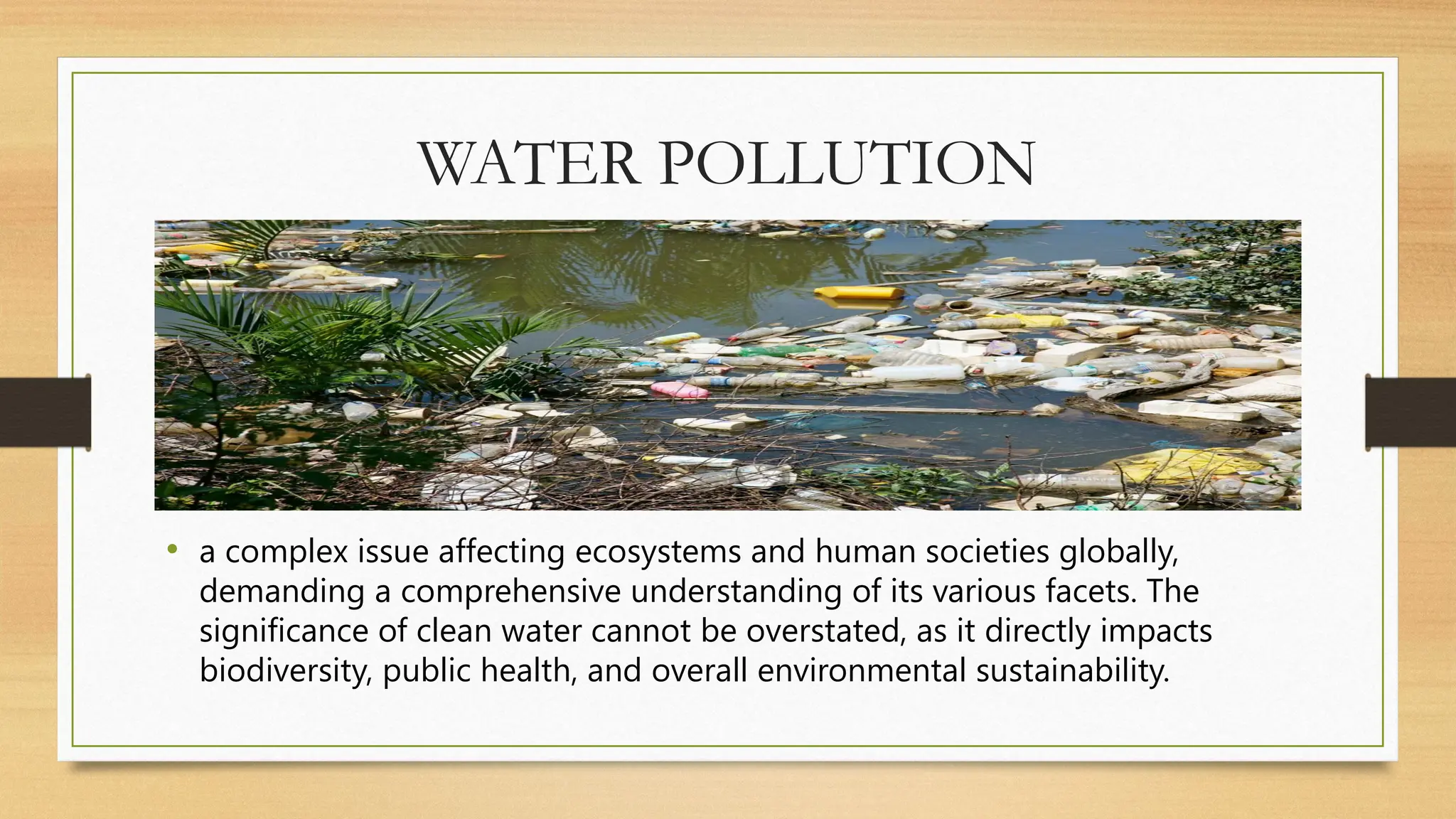
WATER POLLUTION
• a complex issue affecting ecosystems and human societies globally,
demanding a comprehensive understanding of its various facets. The
significance of clean water cannot be overstated, as it directly impacts
biodiversity, public health, and overall environmental sustainability.
Types of Water Pollution
• Chemical Pollution
- Originating from industrial activities, chemical
pollutants like heavy metals (mercury, lead) and pesticides
find their way into water bodies, causing long-term harm to
aquatic life and posing risks to human health.
Nutrient Pollution
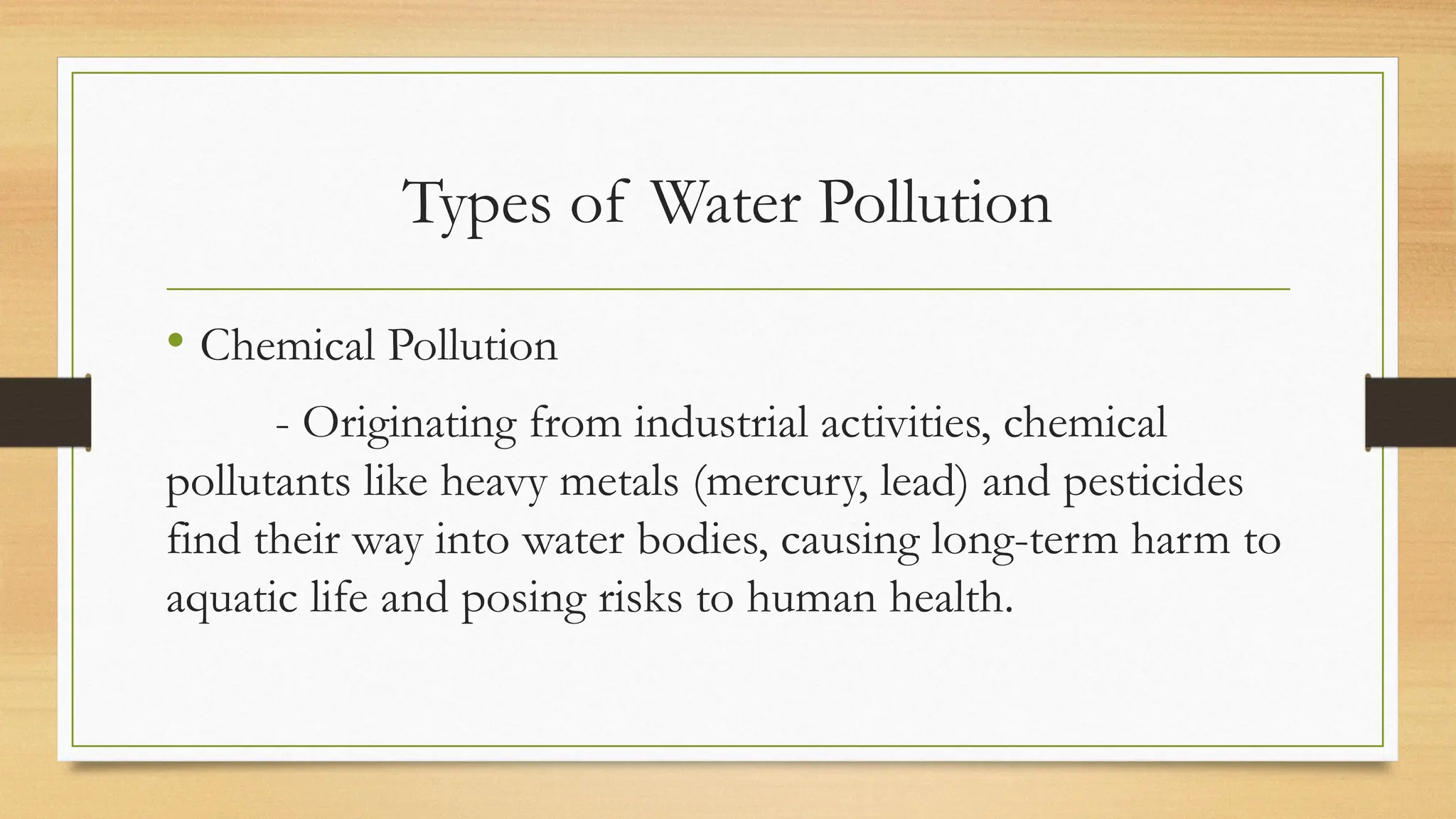
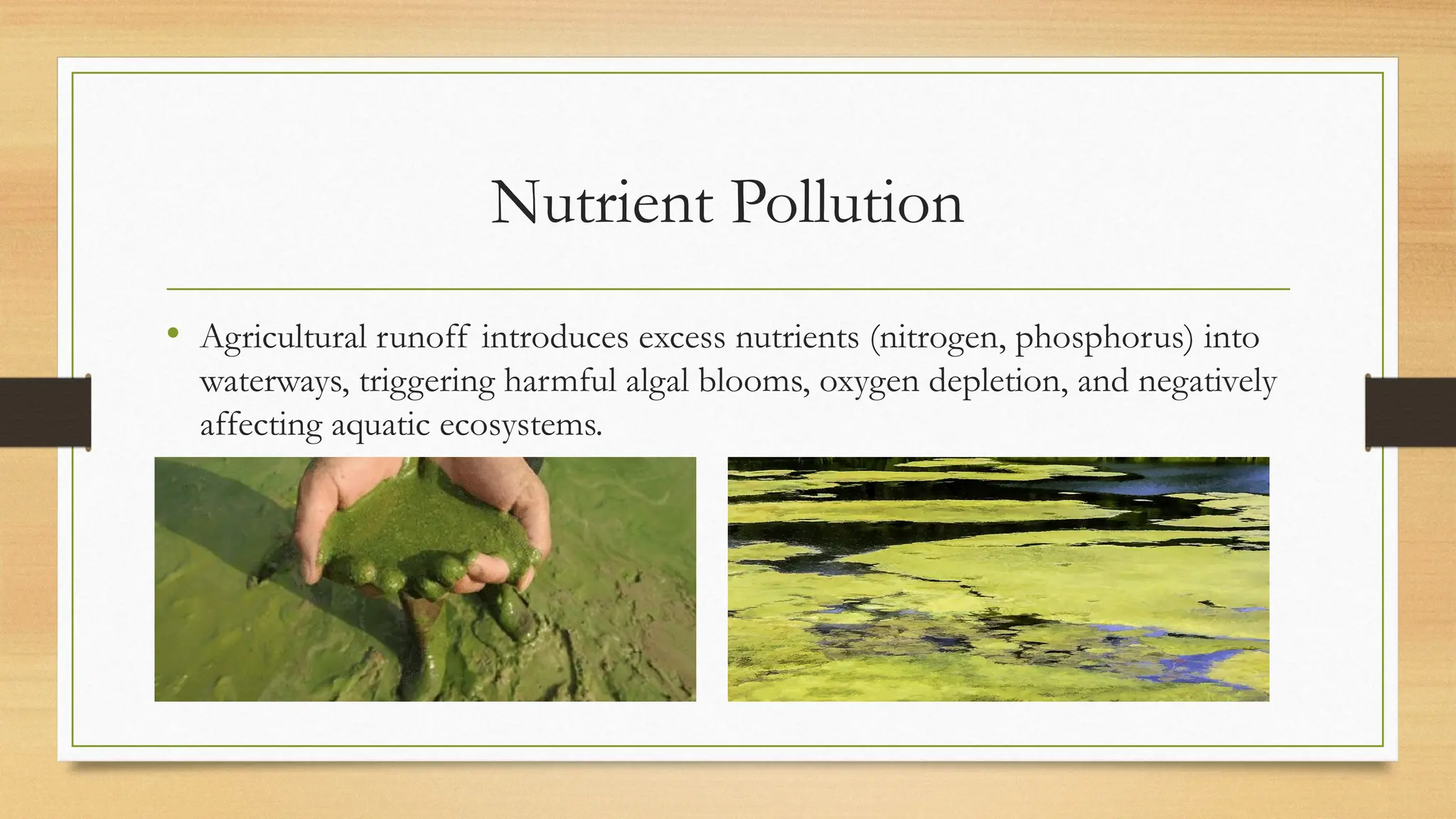
• Agricultural runoff introduces excess nutrients (nitrogen, phosphorus) into
waterways, triggering harmful algal blooms, oxygen depletion, and negatively
affecting aquatic ecosystems.
Microbial Pollution
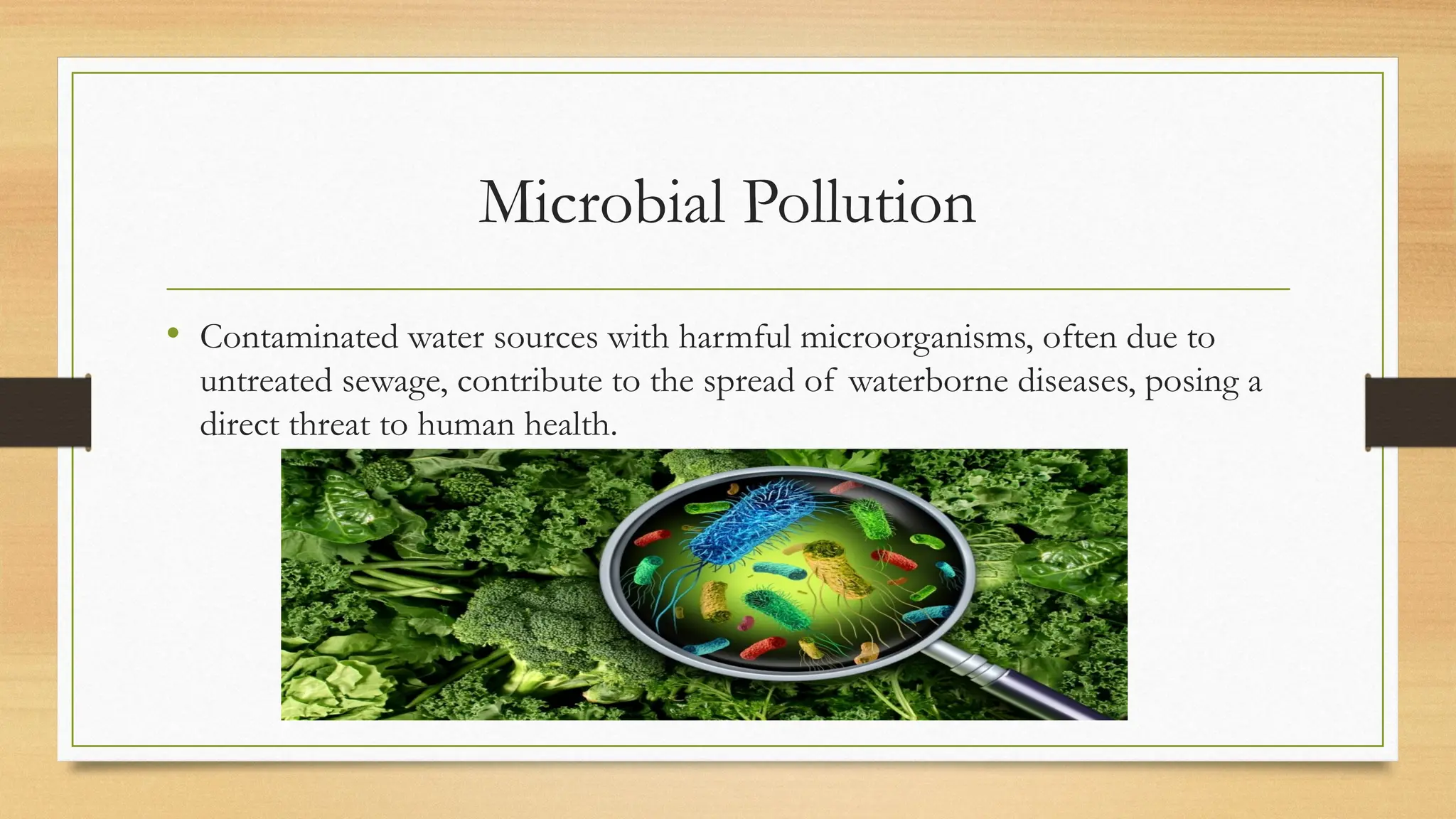
• Contaminated water sources with harmful microorganisms, often due to
untreated sewage, contribute to the spread of waterborne diseases, posing a
direct threat to human health.
Physical Pollution
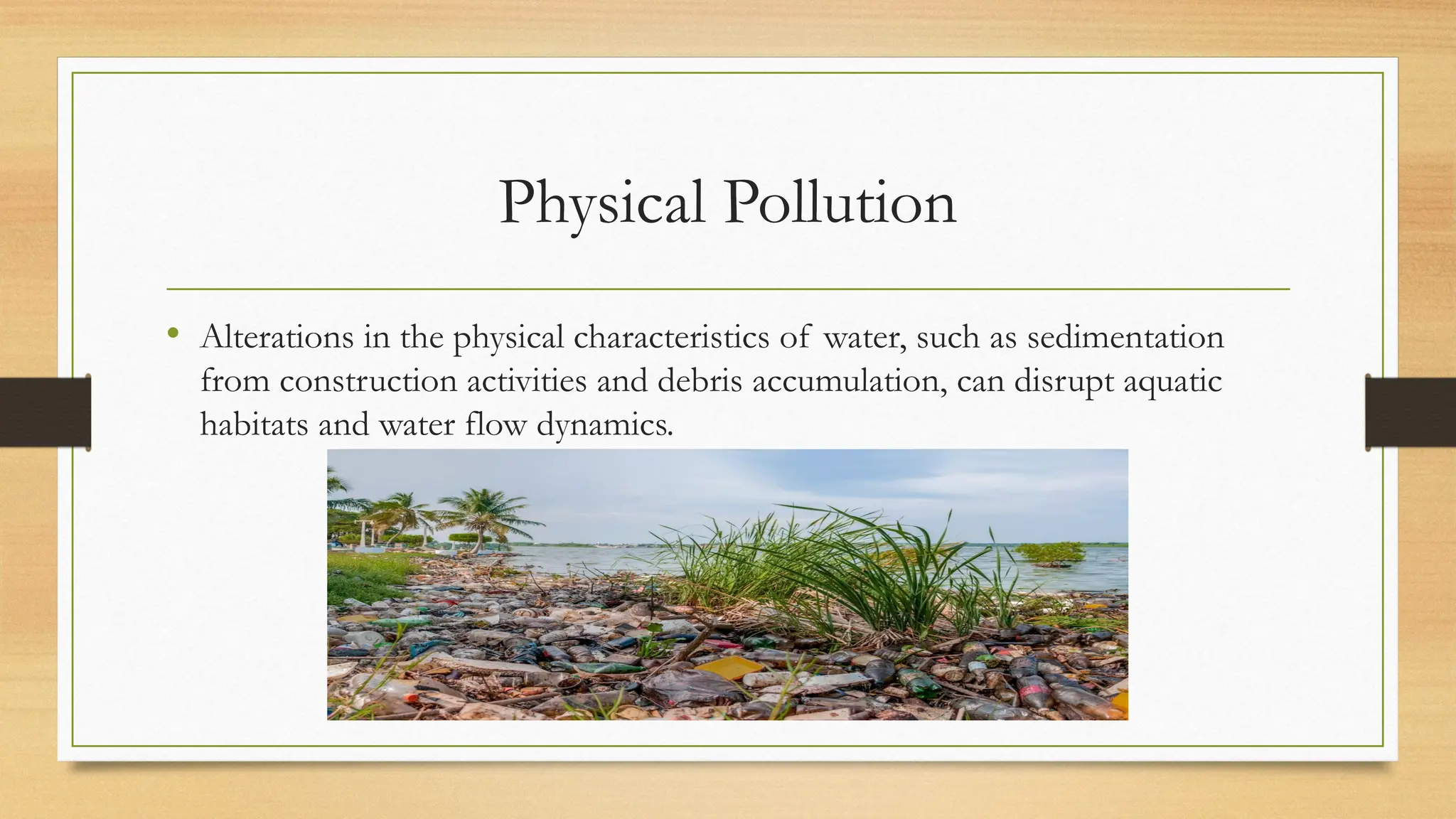
• Alterations in the physical characteristics of water, such as sedimentation
from construction activities and debris accumulation, can disrupt aquatic
habitats and water flow dynamics.
Causes of
Water Pollution
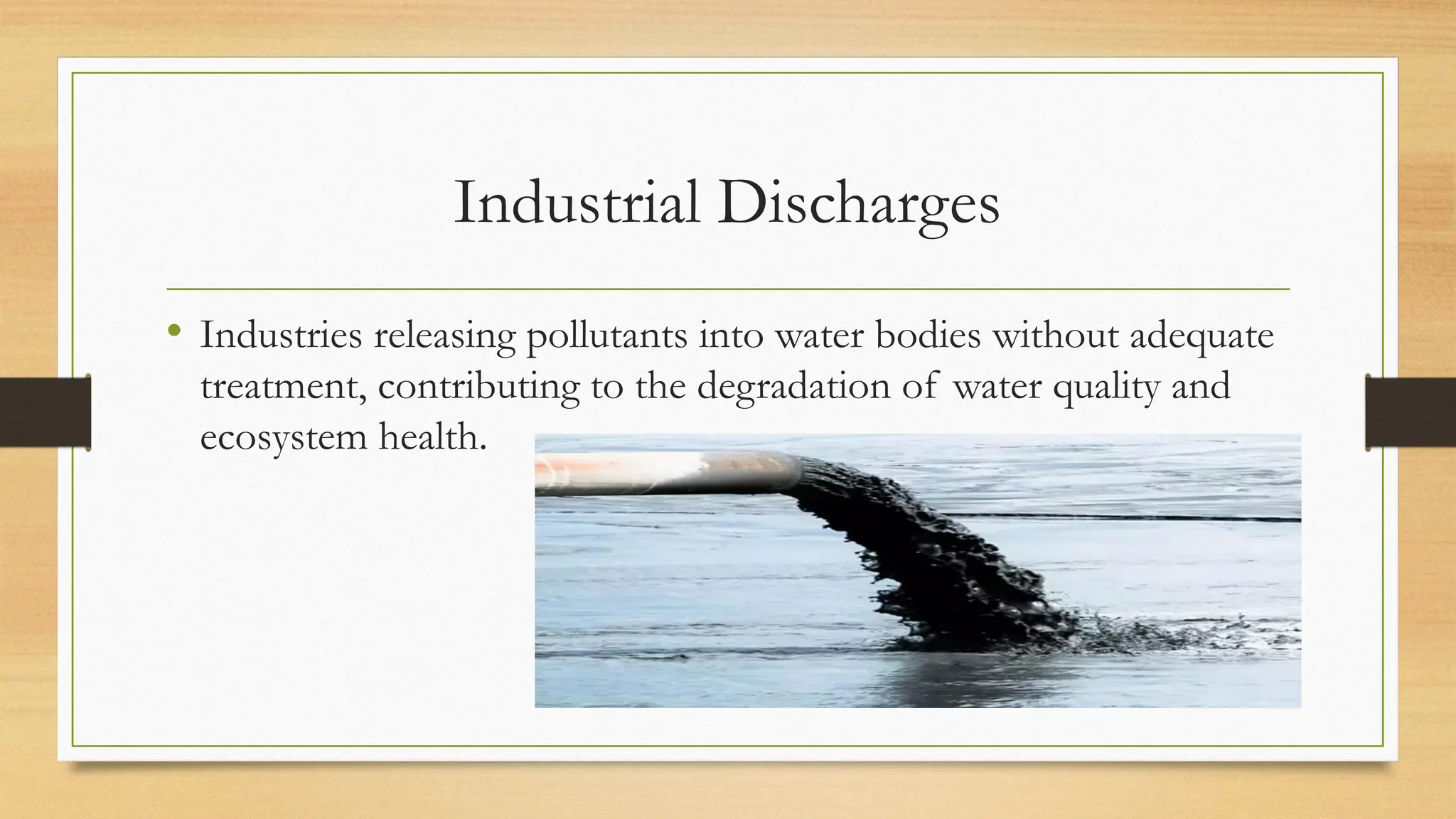
Industrial Discharges
• Industries releasing pollutants into water bodies without adequate
treatment, contributing to the degradation of water quality and
ecosystem health.
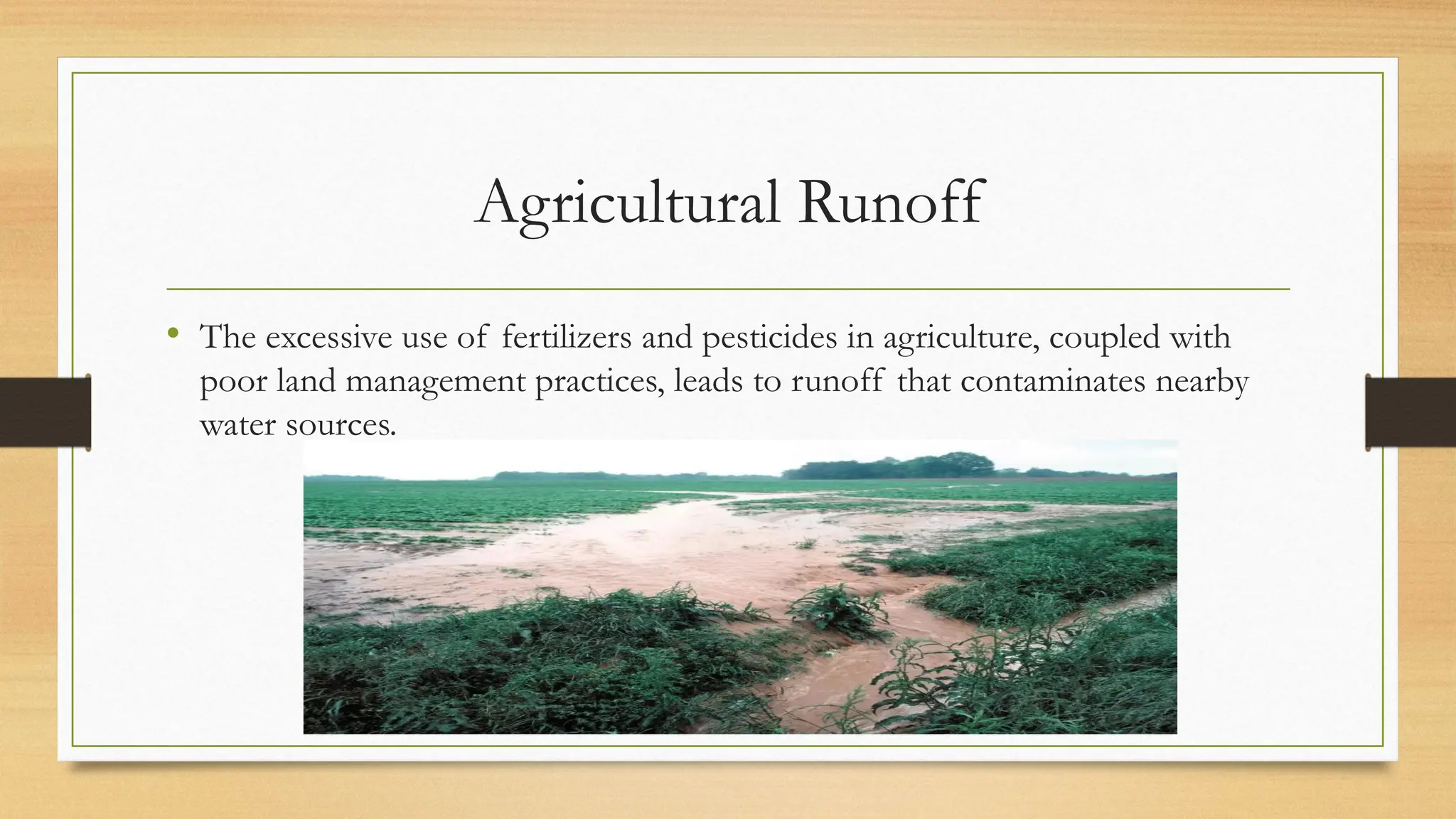
Agricultural Runoff
• The excessive use of fertilizers and pesticides in agriculture, coupled with
poor land management practices, leads to runoff that contaminates nearby
water sources.
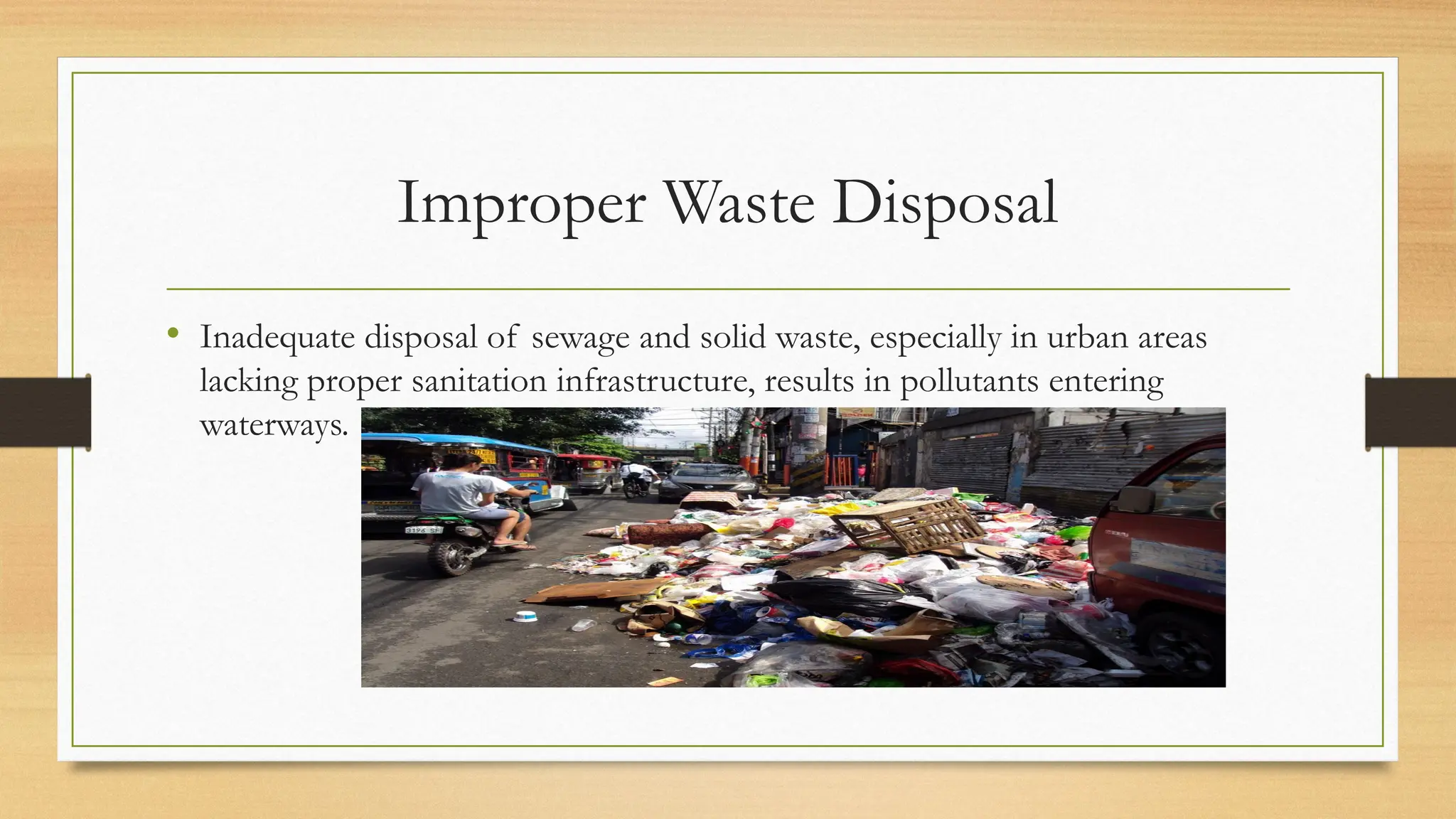
Improper Waste Disposal
• Inadequate disposal of sewage and solid waste, especially in urban areas
lacking proper sanitation infrastructure, results in pollutants entering
waterways.
Effects of Water Pollution
• Devastating impacts on aquatic ecosystems, including loss of
biodiversity, habitat destruction, and disruptions in food chains.
• Human health risks arise from the consumption of contaminated
water, leading to waterborne diseases such as cholera, dysentery, and
gastrointestinal illnesses.
• The economic toll is significant, as polluted water sources affect
industries, fisheries, and tourism.
Case Studies
Exxon Valdez Oil Spill (1989)
• The oil spill in Alaska demonstrated the long-lasting ecological consequences of oil pollution,
affecting marine life and habitats.
Flint Water Crisis (2014-2016)
• Examining the systemic failures in water management and infrastructure that led to lead
contamination in the city's drinking water.
YAMUNA RIVER POLLUTION IN INDIA
• Highlighting ongoing challenges in managing pollution in rapidly developing regions, addressing
industrial discharges and untreated sewage.
Prevention and Mitigation
• Implementing sustainable practices in industries, such as adopting
cleaner production methods and efficient waste management.
• Strengthening and enforcing environmental regulations to hold
industries accountable for their impact on water quality.
• Promoting community involvement in clean-up initiatives,
awareness campaigns, and advocating for responsible water use at
the individual level.
Global Water Challenges
• Examining the disparities in water pollution impact, with
developing regions facing more significant challenges due to
limited resources and infrastructure.
• Recognizing the interconnectedness of water pollution issues on a
global scale, emphasizing the need for international collaboration
in addressing shared water challenges.
Future Outlook
• Exploring advanced water treatment technologies, such as
nanotechnology and innovative filtration methods, to improve
water quality and reduce pollutants.
• The role of education and awareness in fostering a culture of
water conservation, promoting responsible consumption, and
instigating behavioral changes towards sustainable water practices.
Conclusion
• Summarizing key points: Understanding the complexities of water pollution,
its diverse causes, and wide-ranging effects.
• Emphasize the urgency of proactive measures at local, national, and global
levels to address water pollution, ensure clean water access, and safeguard the
health of ecosystems and communities.
Thank You!


LESSON 5 Understanding-Water-Pollution.pptx

  • 1.
    Understanding Water Pollution An In-DepthExploration of Causes, Effects, and Sustainable Solutions
  • 2.
    WATER POLLUTION • acomplex issue affecting ecosystems and human societies globally, demanding a comprehensive understanding of its various facets. The significance of clean water cannot be overstated, as it directly impacts biodiversity, public health, and overall environmental sustainability.
  • 3.
    Types of WaterPollution • Chemical Pollution - Originating from industrial activities, chemical pollutants like heavy metals (mercury, lead) and pesticides find their way into water bodies, causing long-term harm to aquatic life and posing risks to human health.
  • 4.
    Nutrient Pollution • Agriculturalrunoff introduces excess nutrients (nitrogen, phosphorus) into waterways, triggering harmful algal blooms, oxygen depletion, and negatively affecting aquatic ecosystems.
  • 5.
    Microbial Pollution • Contaminatedwater sources with harmful microorganisms, often due to untreated sewage, contribute to the spread of waterborne diseases, posing a direct threat to human health.
  • 6.
    Physical Pollution • Alterationsin the physical characteristics of water, such as sedimentation from construction activities and debris accumulation, can disrupt aquatic habitats and water flow dynamics.
  • 7.
  • 8.
    Industrial Discharges • Industriesreleasing pollutants into water bodies without adequate treatment, contributing to the degradation of water quality and ecosystem health.
  • 9.
    Agricultural Runoff • Theexcessive use of fertilizers and pesticides in agriculture, coupled with poor land management practices, leads to runoff that contaminates nearby water sources.
  • 10.
    Improper Waste Disposal •Inadequate disposal of sewage and solid waste, especially in urban areas lacking proper sanitation infrastructure, results in pollutants entering waterways.
  • 11.
    Effects of WaterPollution • Devastating impacts on aquatic ecosystems, including loss of biodiversity, habitat destruction, and disruptions in food chains. • Human health risks arise from the consumption of contaminated water, leading to waterborne diseases such as cholera, dysentery, and gastrointestinal illnesses. • The economic toll is significant, as polluted water sources affect industries, fisheries, and tourism.
  • 12.
    Case Studies Exxon ValdezOil Spill (1989) • The oil spill in Alaska demonstrated the long-lasting ecological consequences of oil pollution, affecting marine life and habitats. Flint Water Crisis (2014-2016) • Examining the systemic failures in water management and infrastructure that led to lead contamination in the city's drinking water. YAMUNA RIVER POLLUTION IN INDIA • Highlighting ongoing challenges in managing pollution in rapidly developing regions, addressing industrial discharges and untreated sewage.
  • 13.
    Prevention and Mitigation •Implementing sustainable practices in industries, such as adopting cleaner production methods and efficient waste management. • Strengthening and enforcing environmental regulations to hold industries accountable for their impact on water quality. • Promoting community involvement in clean-up initiatives, awareness campaigns, and advocating for responsible water use at the individual level.
  • 14.
    Global Water Challenges •Examining the disparities in water pollution impact, with developing regions facing more significant challenges due to limited resources and infrastructure. • Recognizing the interconnectedness of water pollution issues on a global scale, emphasizing the need for international collaboration in addressing shared water challenges.
  • 15.
    Future Outlook • Exploringadvanced water treatment technologies, such as nanotechnology and innovative filtration methods, to improve water quality and reduce pollutants. • The role of education and awareness in fostering a culture of water conservation, promoting responsible consumption, and instigating behavioral changes towards sustainable water practices.
  • 16.
    Conclusion • Summarizing keypoints: Understanding the complexities of water pollution, its diverse causes, and wide-ranging effects. • Emphasize the urgency of proactive measures at local, national, and global levels to address water pollution, ensure clean water access, and safeguard the health of ecosystems and communities.
  • 17.