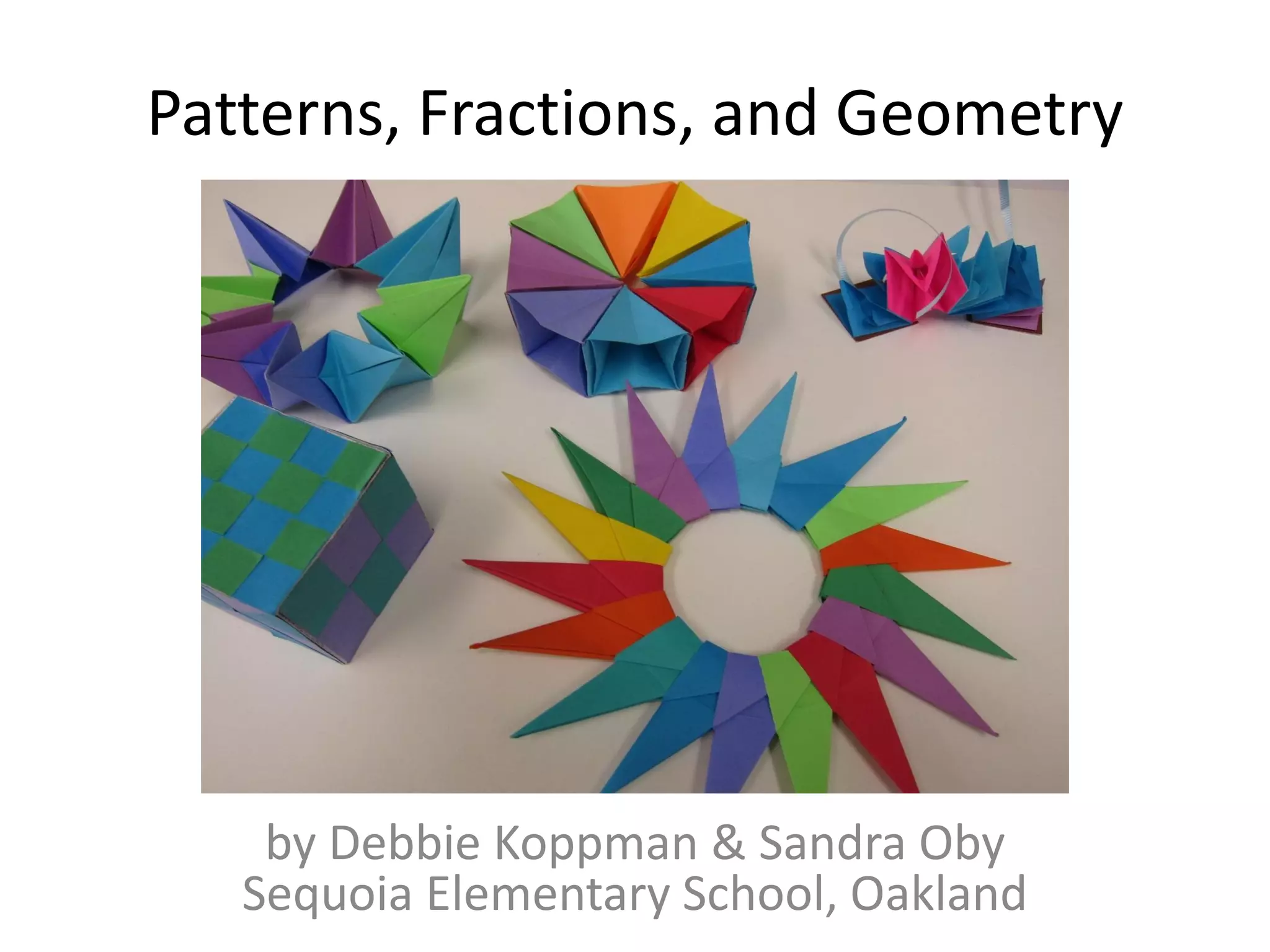
Patterns, Fractions, and Geometry
by Debbie Koppman & Sandra Oby
Sequoia Elementary School, Oakland
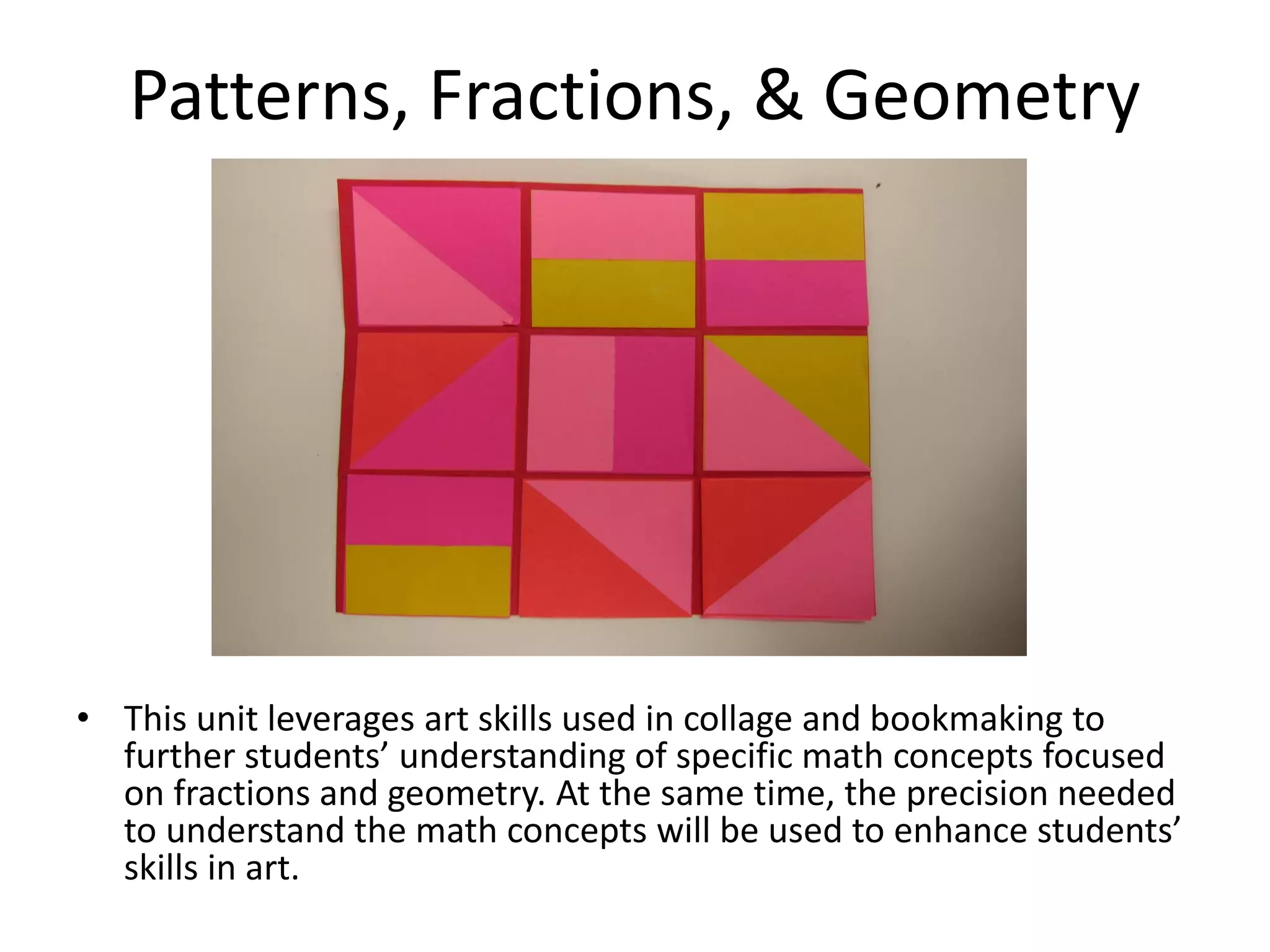
Patterns, Fractions, & Geometry
• This unit leverages art skills used in collage and bookmaking to
further students’ understanding of specific math concepts focused
on fractions and geometry. At the same time, the precision needed
to understand the math concepts will be used to enhance students’
skills in art.
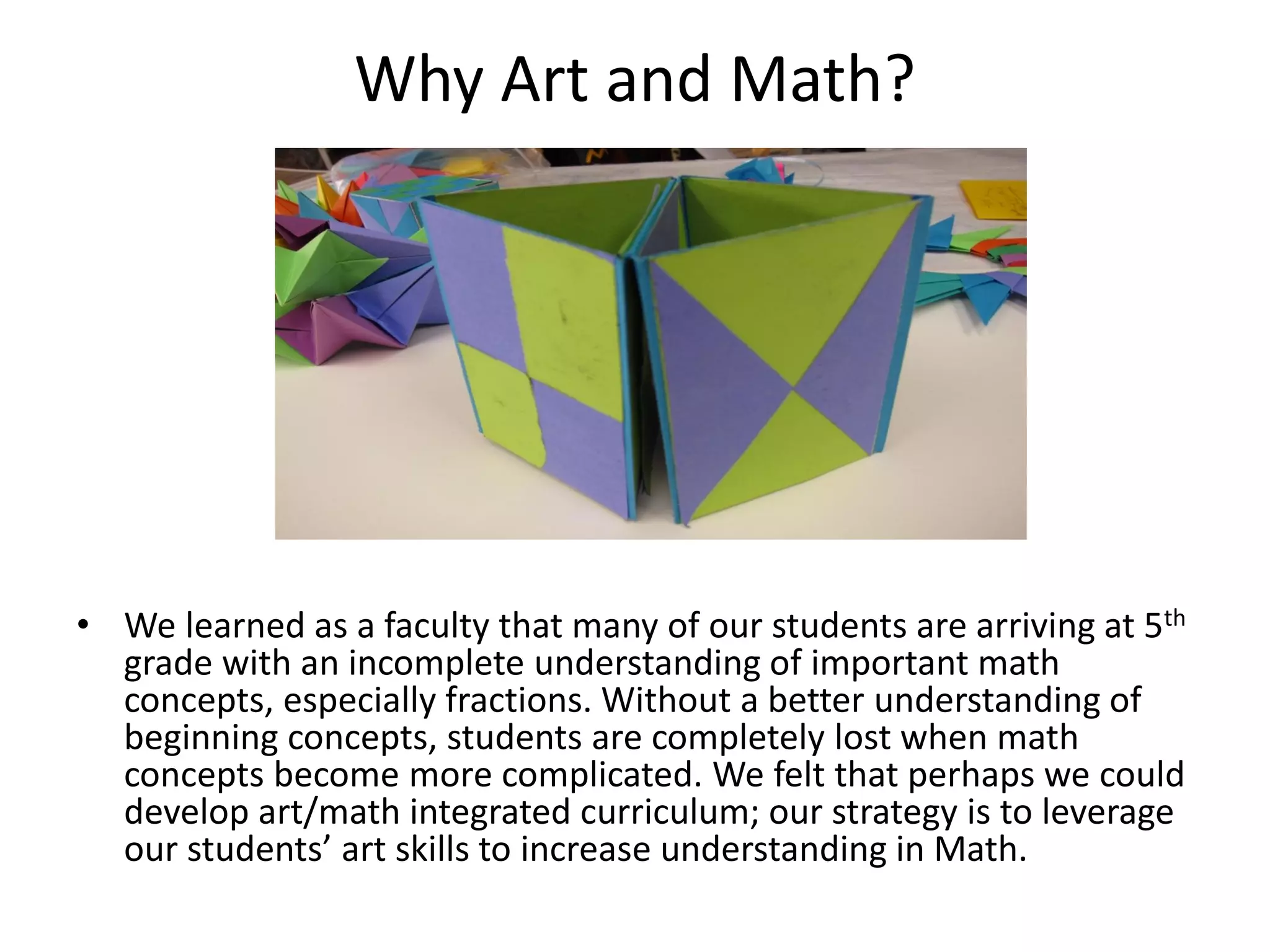
Why Art and Math?
• We learned as a faculty that many of our students are arriving at 5th
grade with an incomplete understanding of important math
concepts, especially fractions. Without a better understanding of
beginning concepts, students are completely lost when math
concepts become more complicated. We felt that perhaps we could
develop art/math integrated curriculum; our strategy is to leverage
our students’ art skills to increase understanding in Math.
Understanding Goals
• What is the relationship between patterns, geometry, and
fractions?
• (OBSERVE, DEVELOP CRAFT, ENGAGE/PERSIST)
• How can we use art skills to build understanding of fractions
and geometry, and how do skills in math inform artistic
practice?
• (DEVELOP CRAFT, OBSERVE, ENGAGE/PERSIST, REFLECT)
• How can we find relationships and make connections
between 2D and 3D shapes?
• (STRETCH & EXPLORE, EXPRESS, ENVISION)
• How have artists from multiple cultures used patterns,
fractions, and geometry?
• (UNDERSTAND ART WORLD, REFLECT)
Common Core Content Standards: Math
• 3rd Grade: Recognize and generate simple equivalent fractions, e.g.,
1/2=2/4 etc. Explain why the fractions are equivalent by using a visual
fraction model.
• 4th Grade: Visualize, describe, and make models of geometric solids (e.g.,
prisms, pyramids) in terms of the number and shape of faces, edges, and
vertices; interpret two-dimensional representations of three-dimensional
objects; and draw patterns (of faces) for a solid that, when cut and folded,
will make a model of the solid.
• 5th Grade: Solve word problems involving addition and subtraction of
fractions referring to the same whole, including cases of unlike
denominators, e.g., by using visual fraction models or equations to
represent the problem. Use benchmark fractions and number sense of
fractions to estimate mentally and assess the reasonableness of answers.
5th Grade: Construct a cube and rectangular box from two-dimensional
patterns and use these patterns to compute the surface area for these
objects.
Cultural Inclusion Strategies
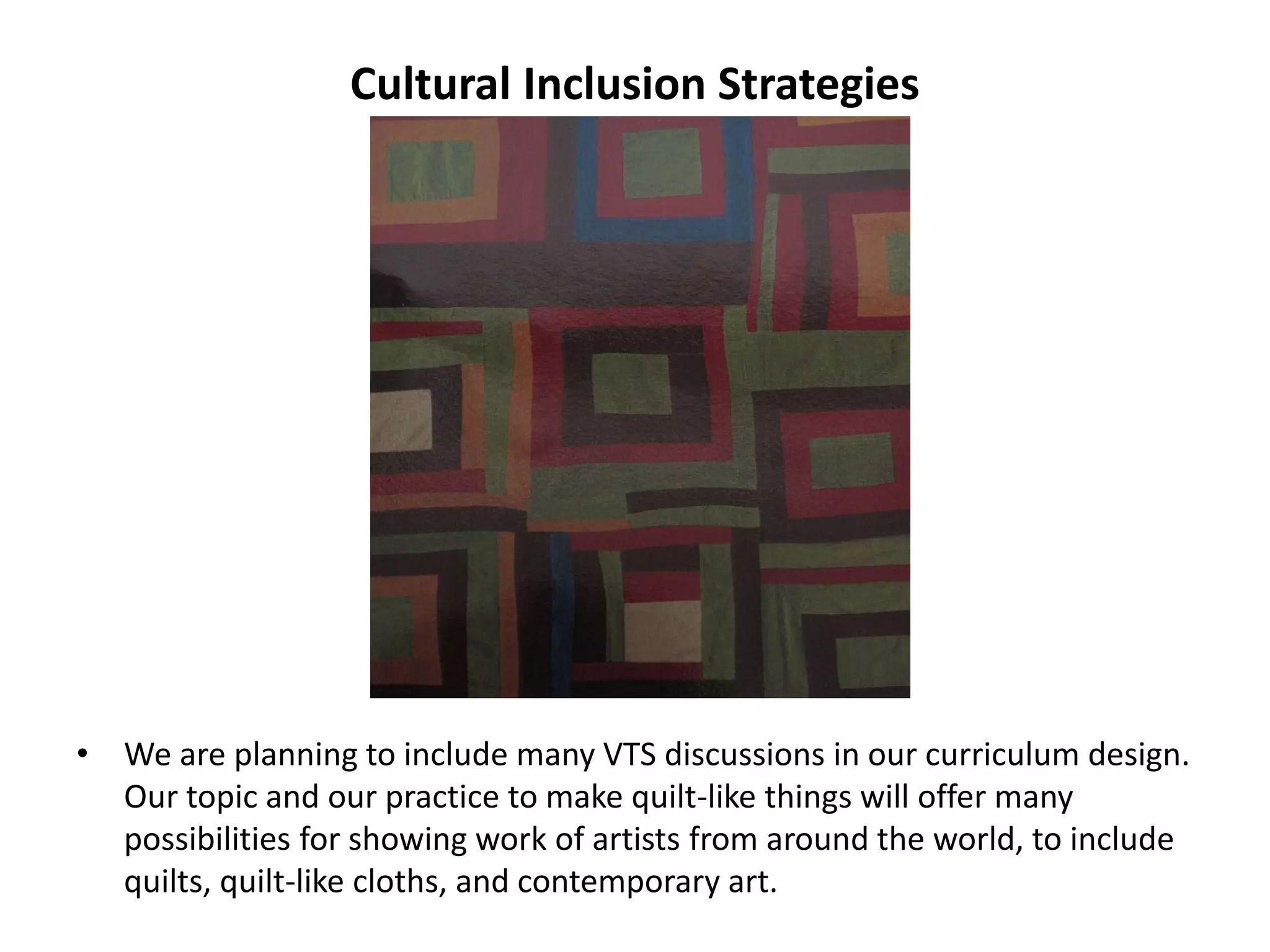
• We are planning to include many VTS discussions in our curriculum design.
Our topic and our practice to make quilt-like things will offer many
possibilities for showing work of artists from around the world, to include
quilts, quilt-like cloths, and contemporary art.
How have artists from various cultures used patterns, fractions, and
geometry?
What is the relationship between patterns, geometry, and fractions?
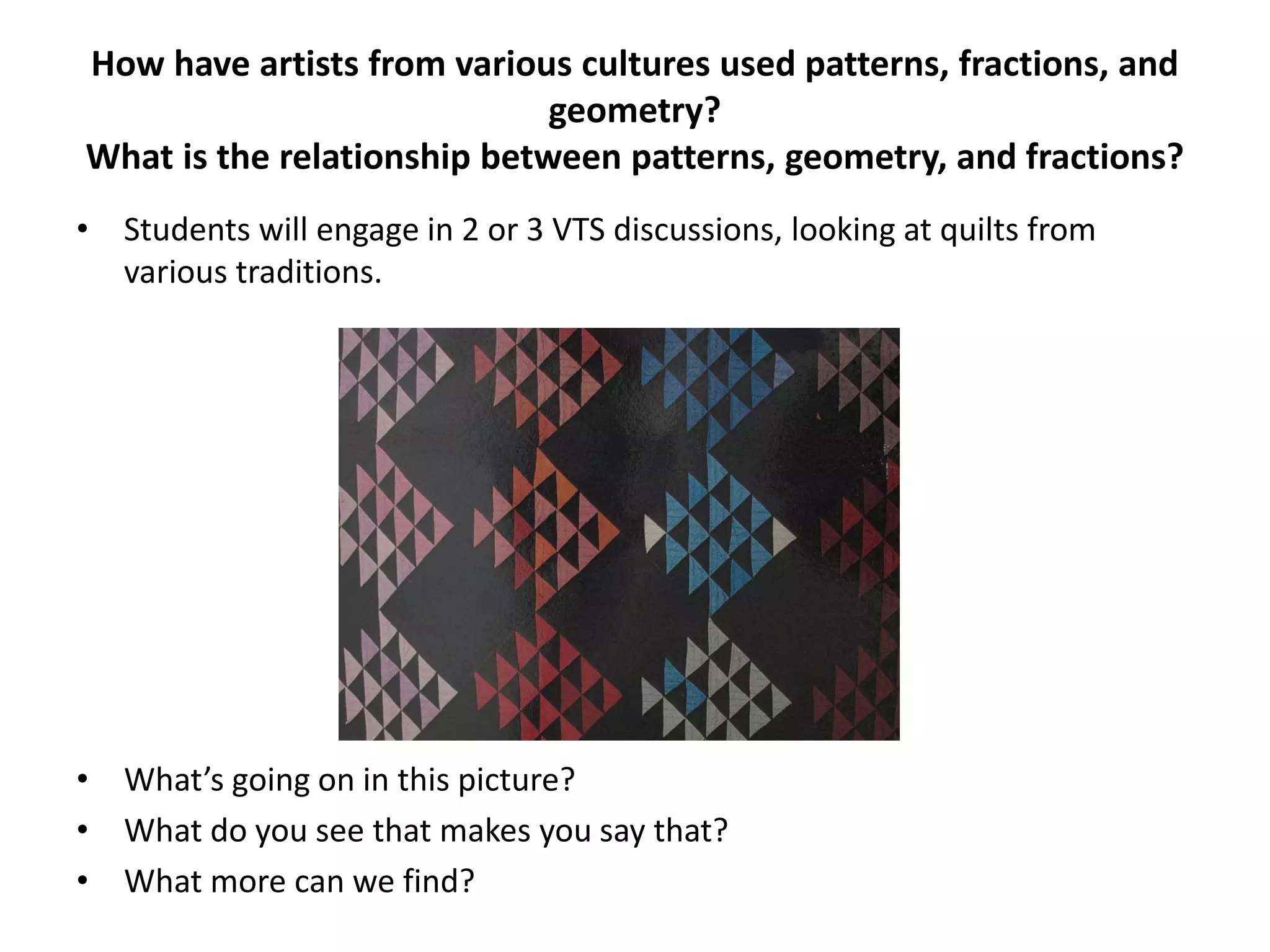
• Students will engage in 2 or 3 VTS discussions, looking at quilts from
various traditions.
• What’s going on in this picture?
• What do you see that makes you say that?
• What more can we find?
How can we use art skills to build understanding of fractions and
geometry, and how do skills in math inform artistic practice?
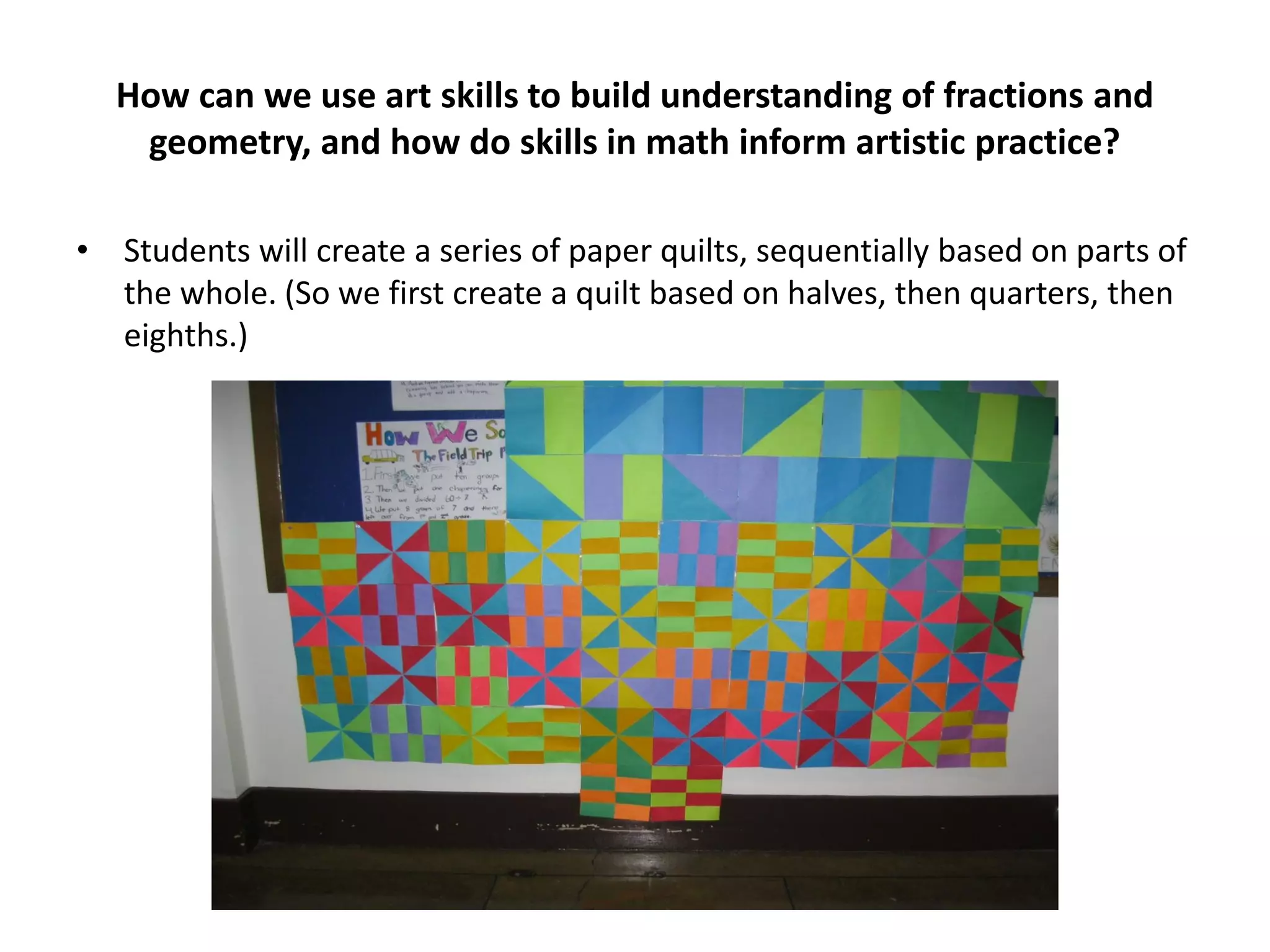
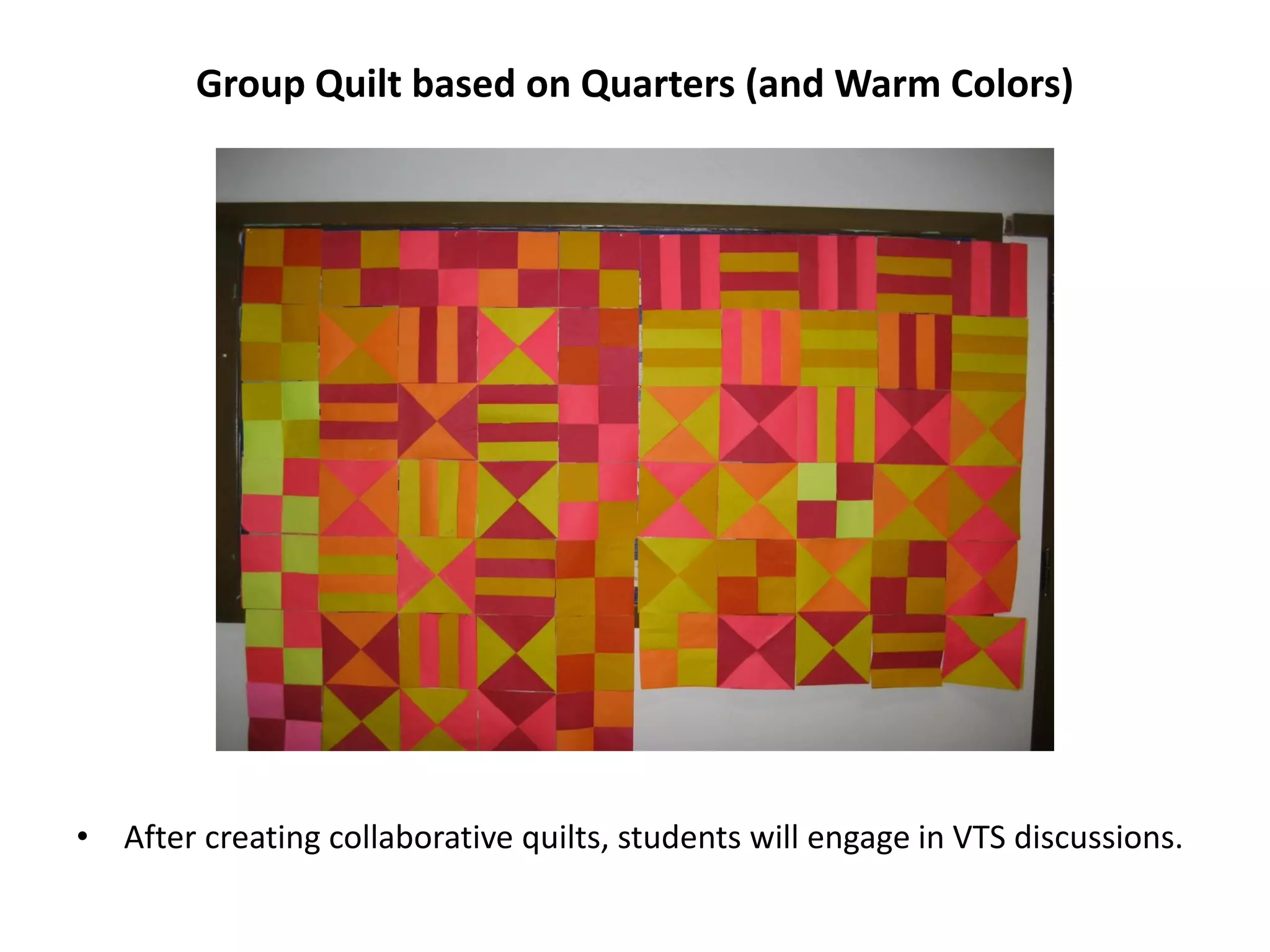
• Students will create a series of paper quilts, sequentially based on parts of
the whole. (So we first create a quilt based on halves, then quarters, then
eighths.)
Group Quilt based on Quarters (and Warm Colors)
• After creating collaborative quilts, students will engage in VTS discussions.
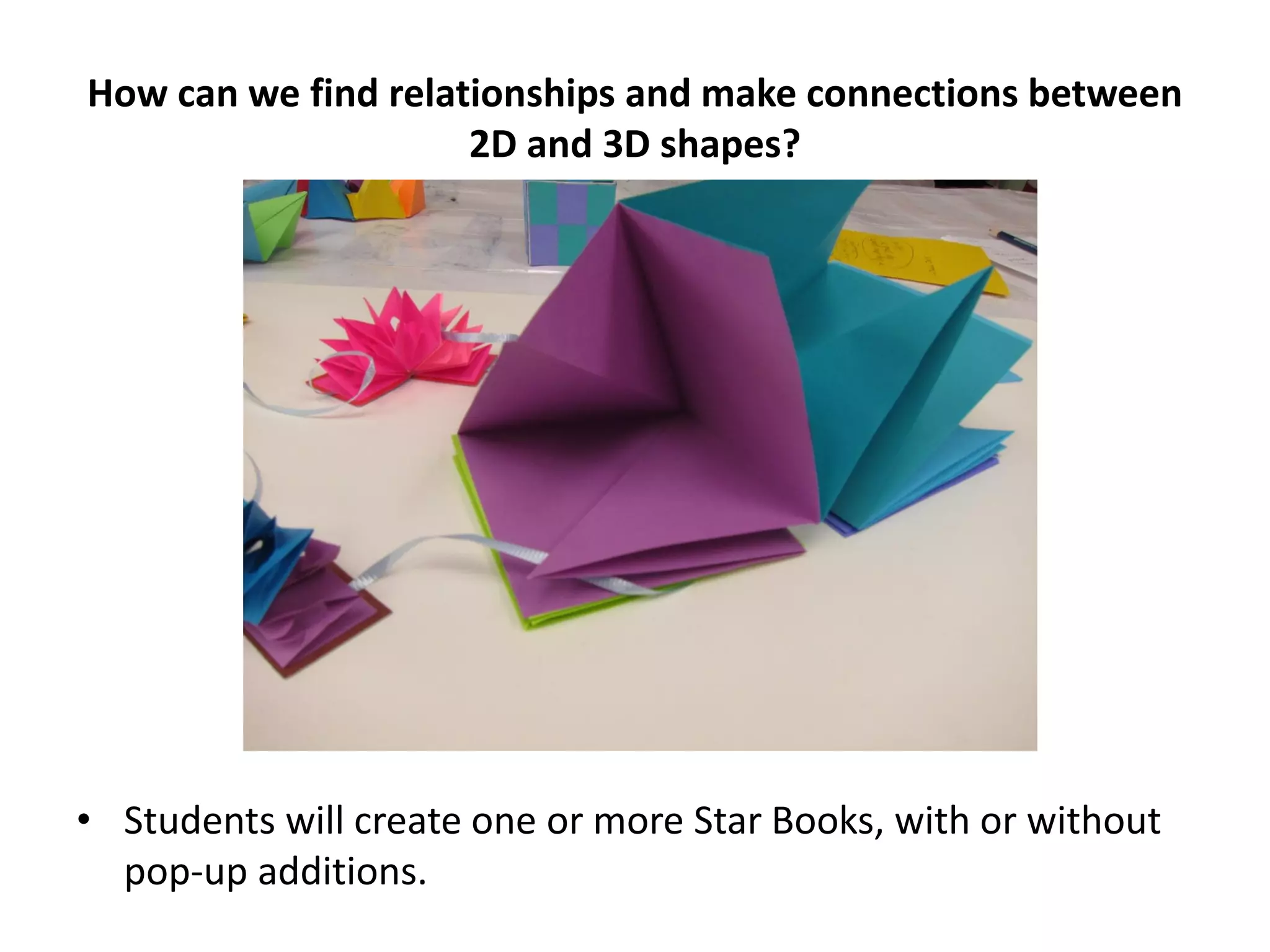
How can we find relationships and make connections between
2D and 3D shapes?
• Students will create one or more Star Books, with or without
pop-up additions.
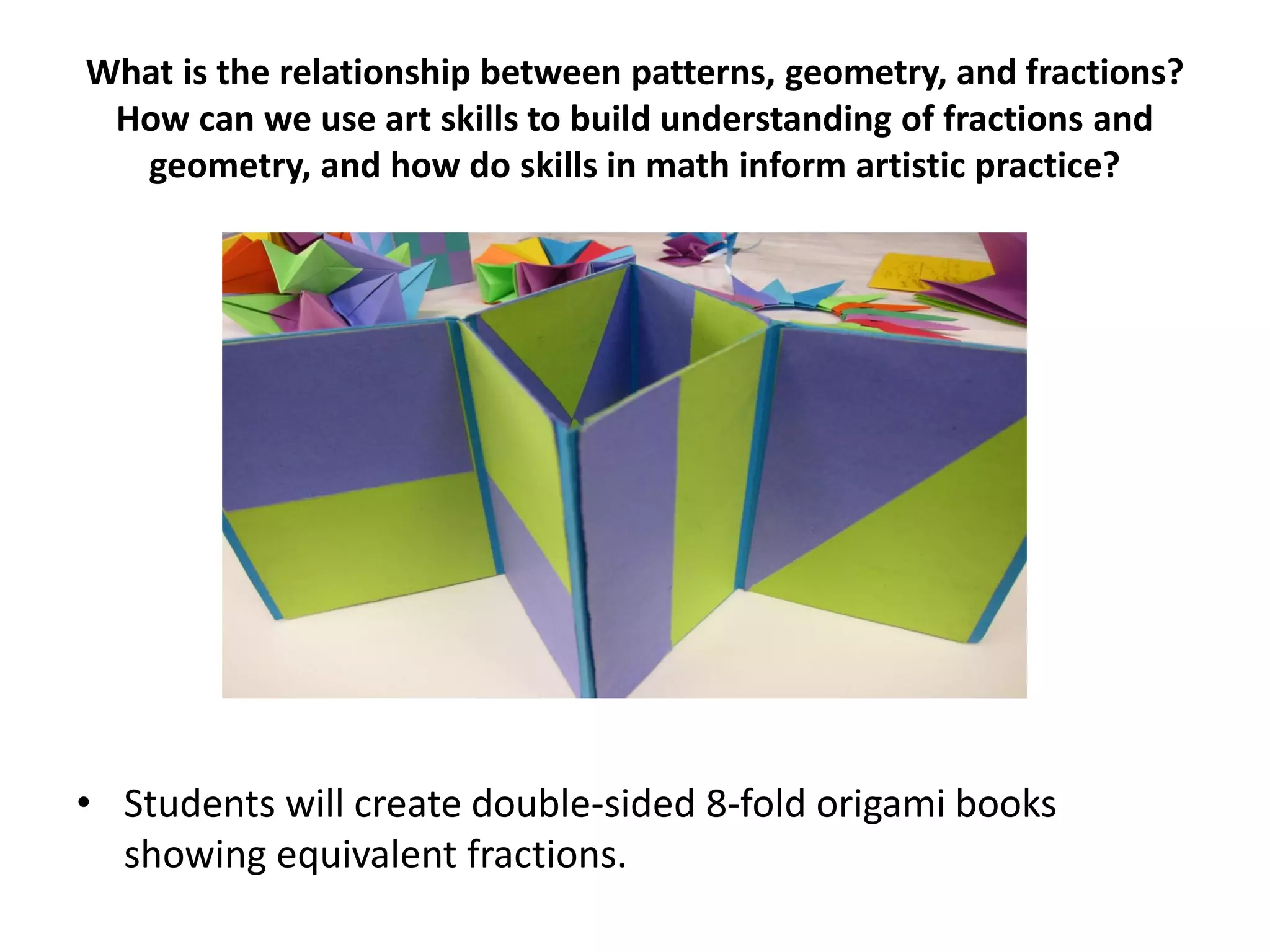
What is the relationship between patterns, geometry, and fractions?
How can we use art skills to build understanding of fractions and
geometry, and how do skills in math inform artistic practice?
• Students will create double-sided 8-fold origami books
showing equivalent fractions.
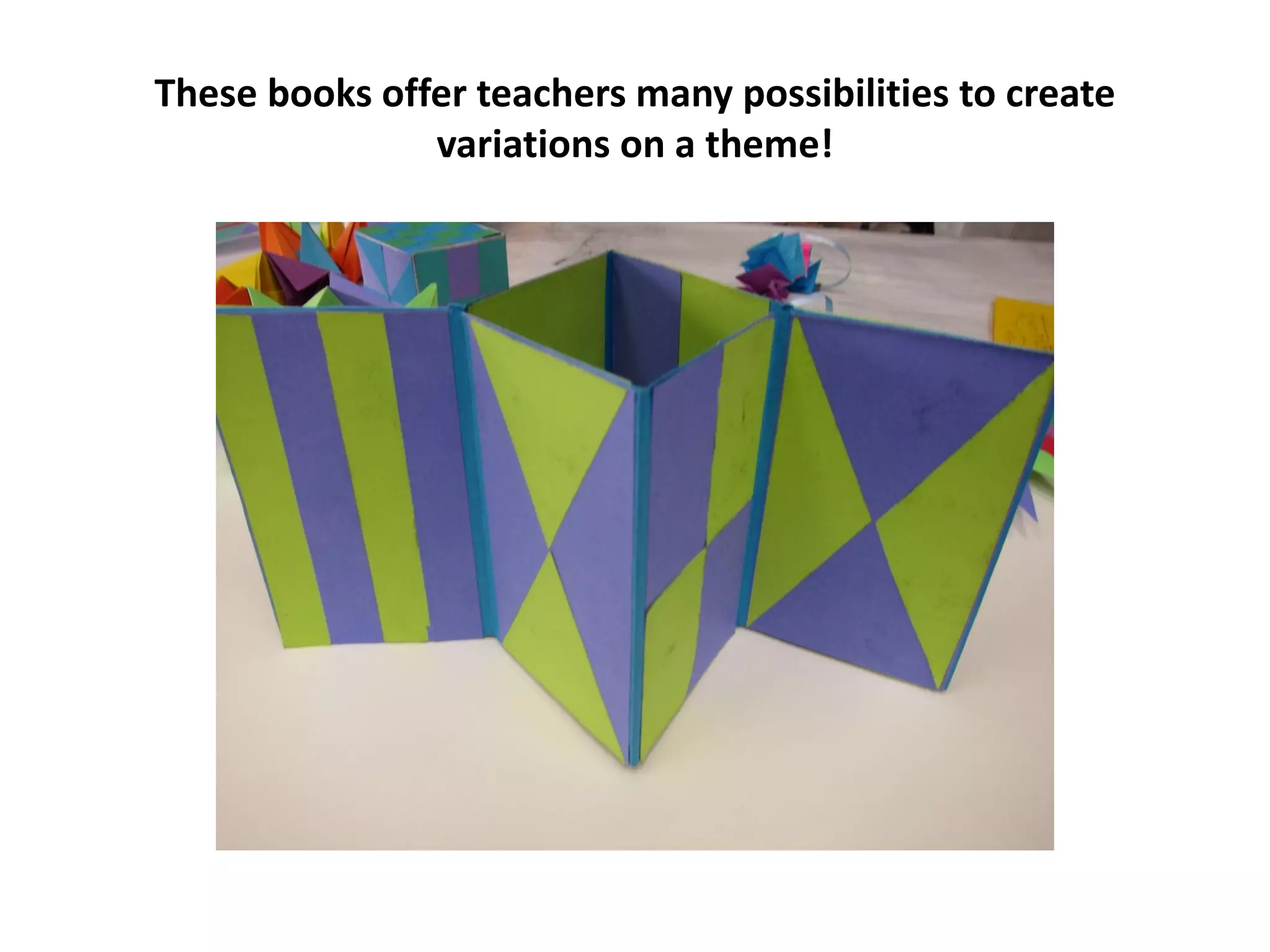
These books offer teachers many possibilities to create
variations on a theme!
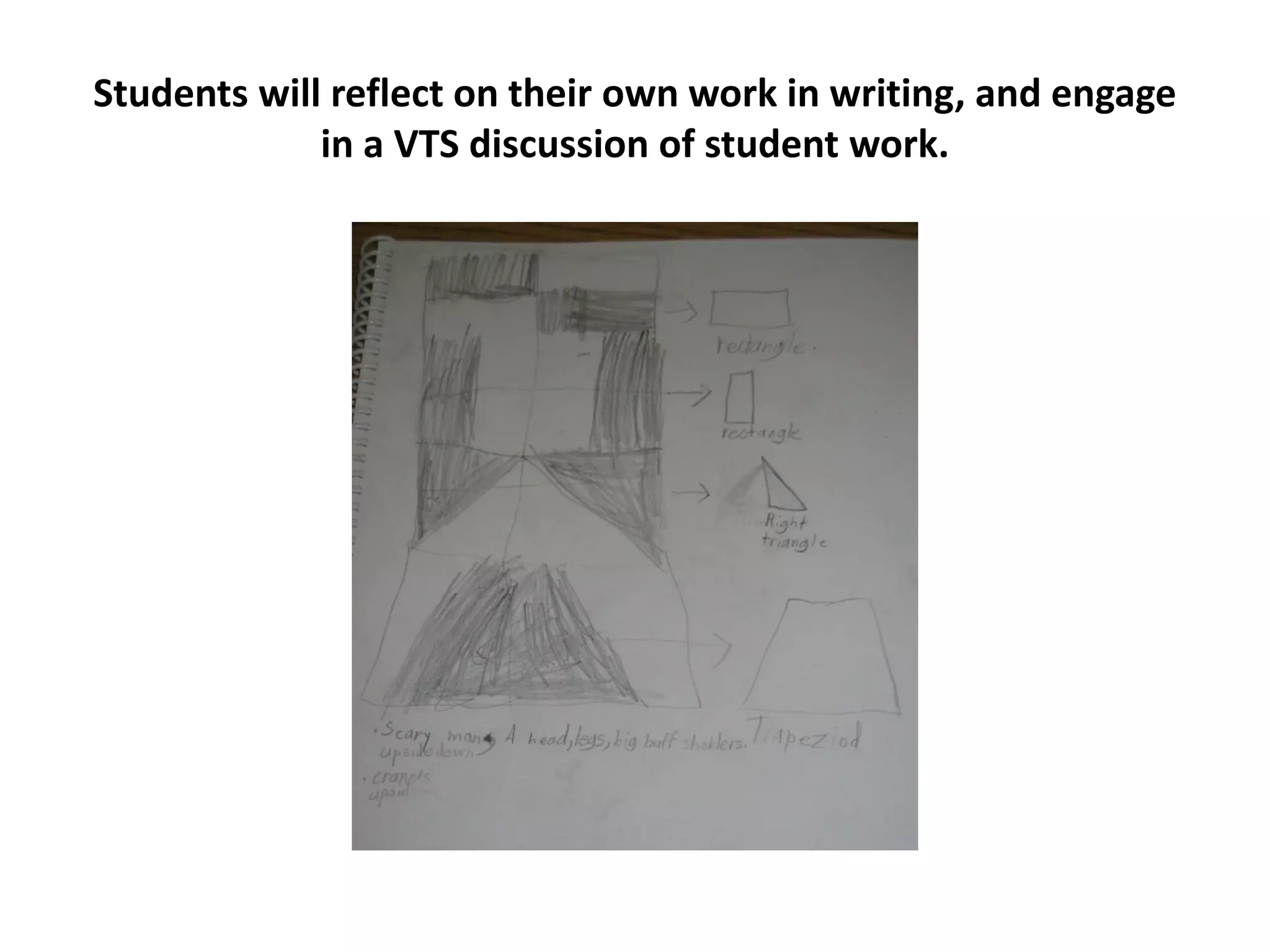
Students will reflect on their own work in writing, and engage
in a VTS discussion of student work.
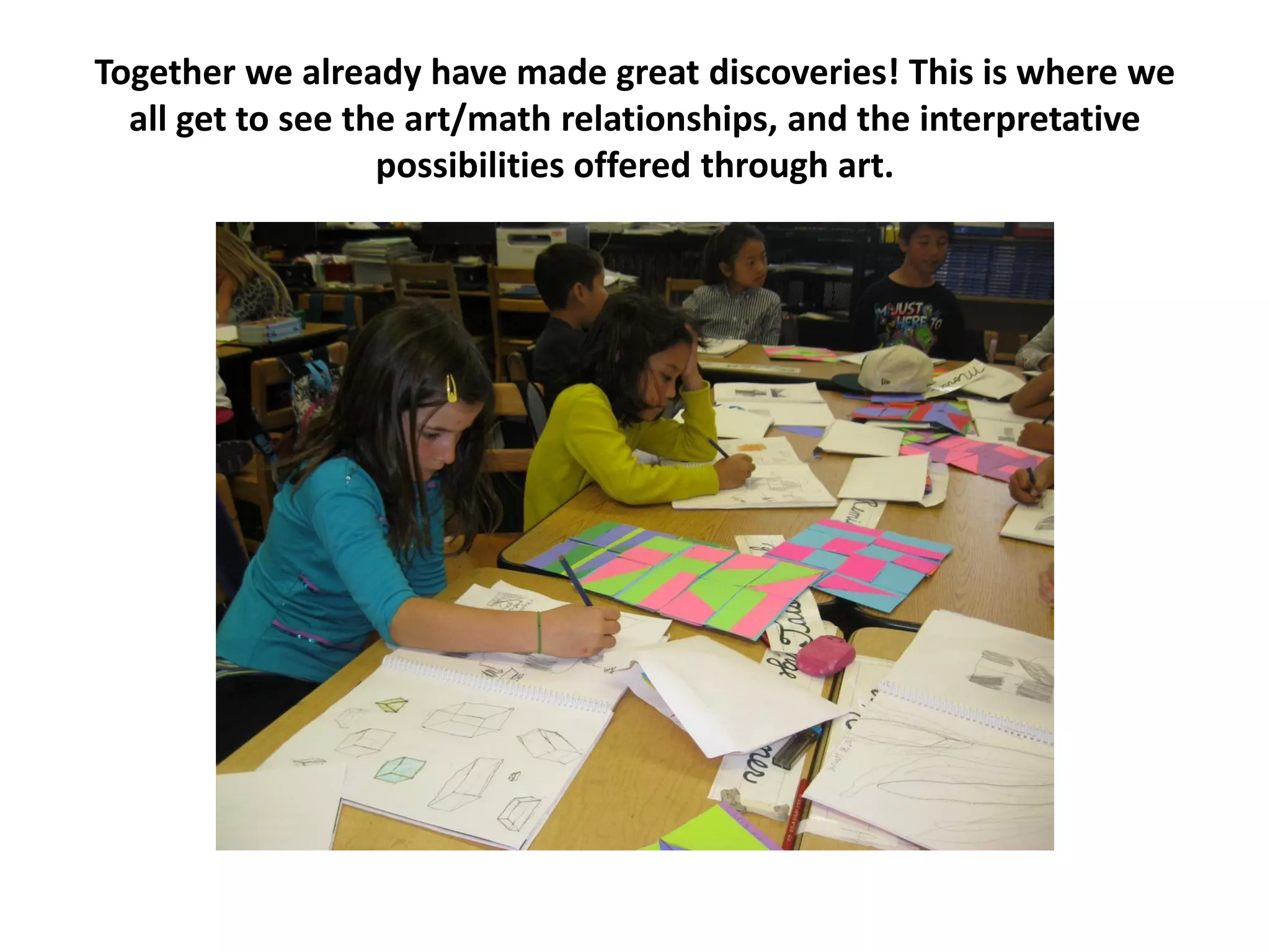
Together we already have made great discoveries! This is where we
all get to see the art/math relationships, and the interpretative
possibilities offered through art.
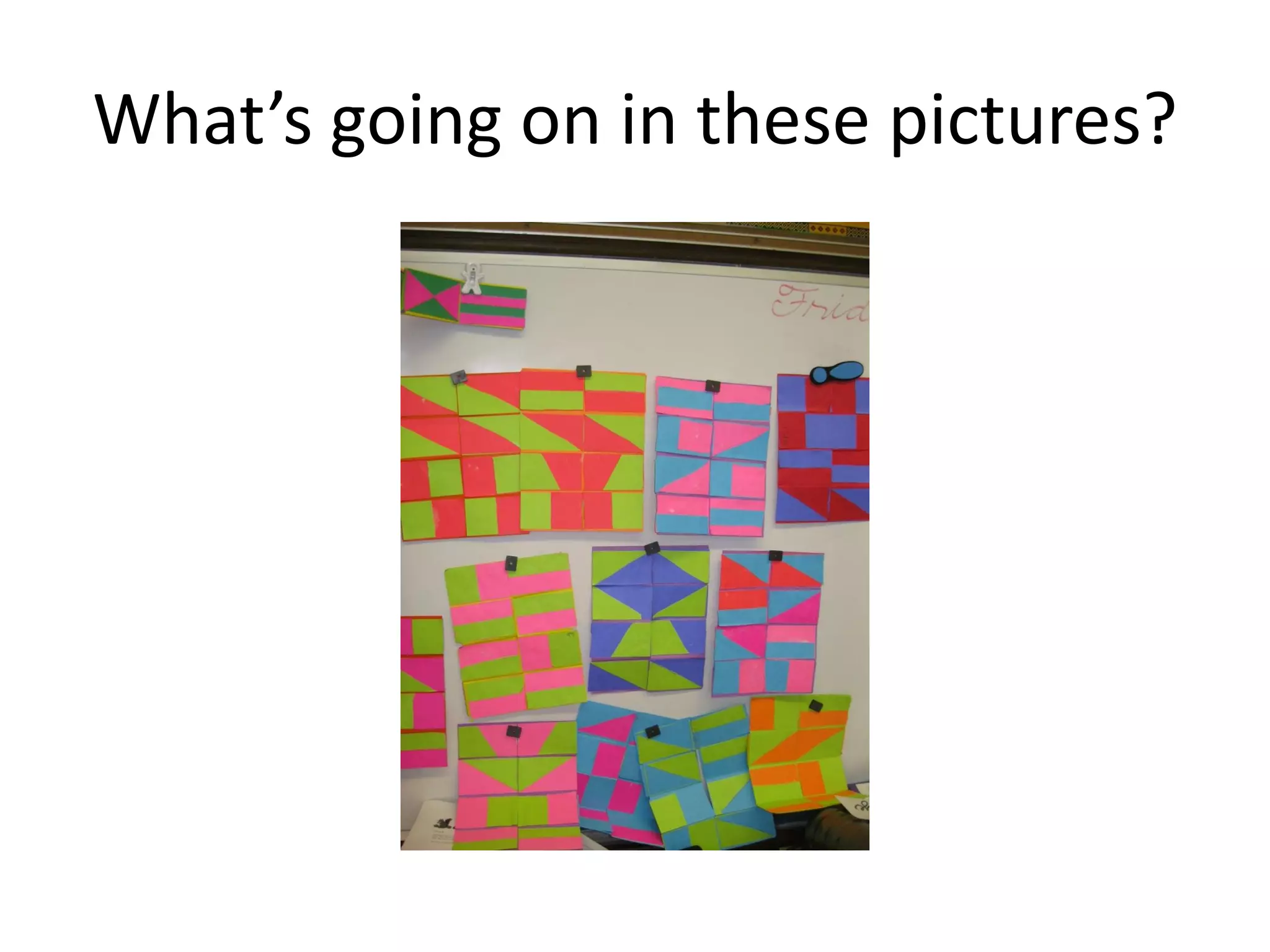
What’s going on in these pictures?
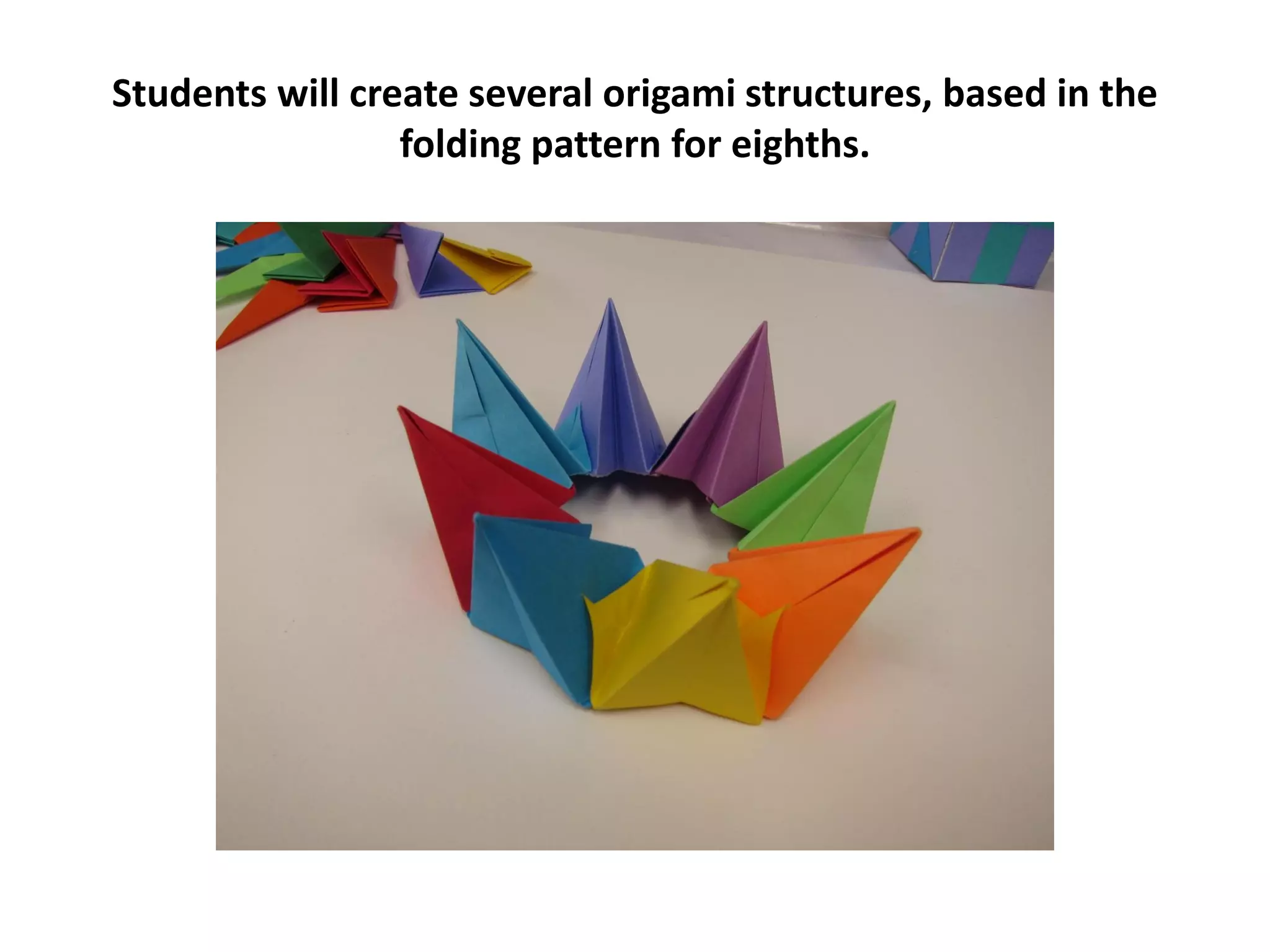
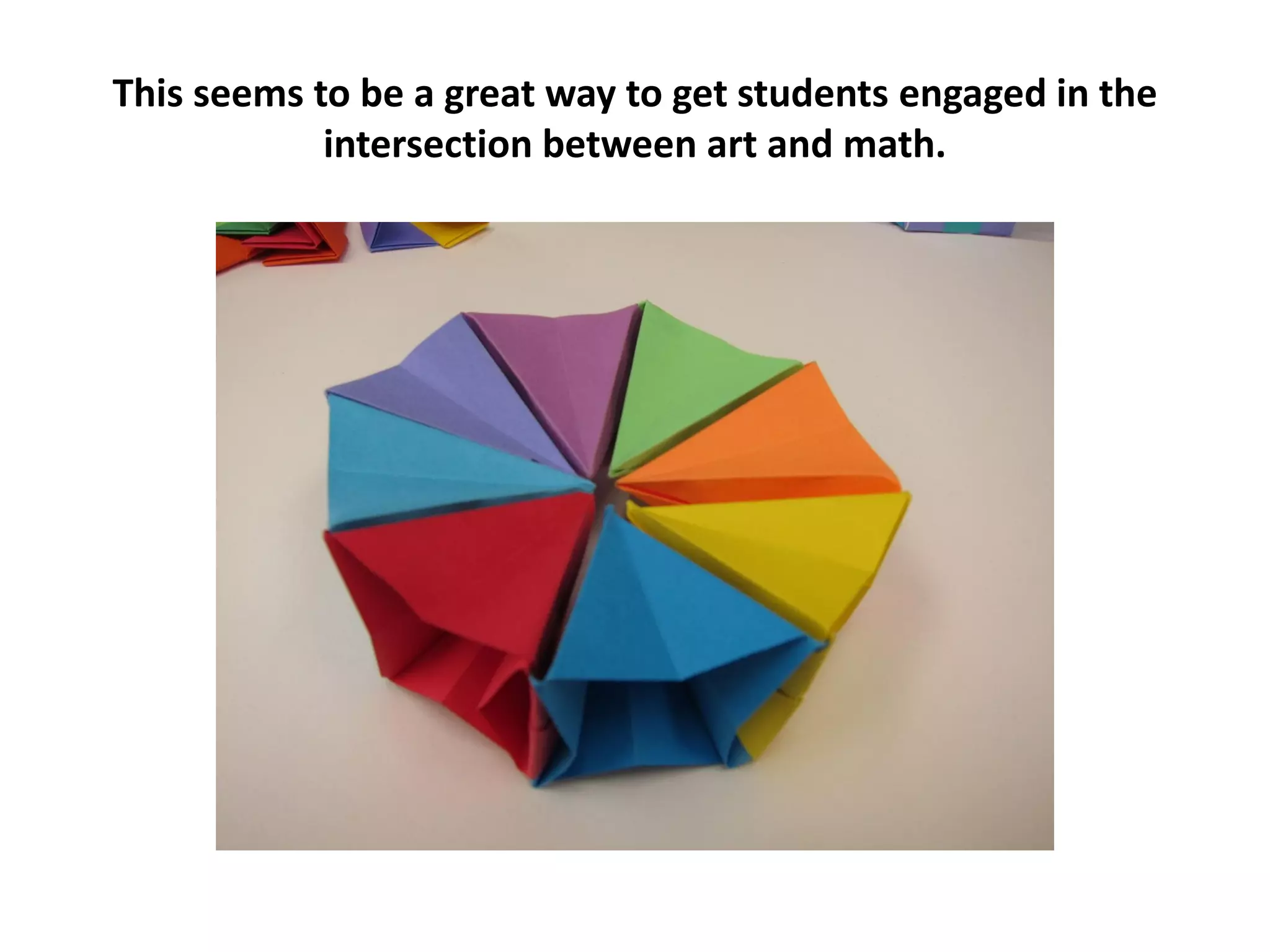
Students will create several origami structures, based in the
folding pattern for eighths.
This seems to be a great way to get students engaged in the
intersection between art and math.
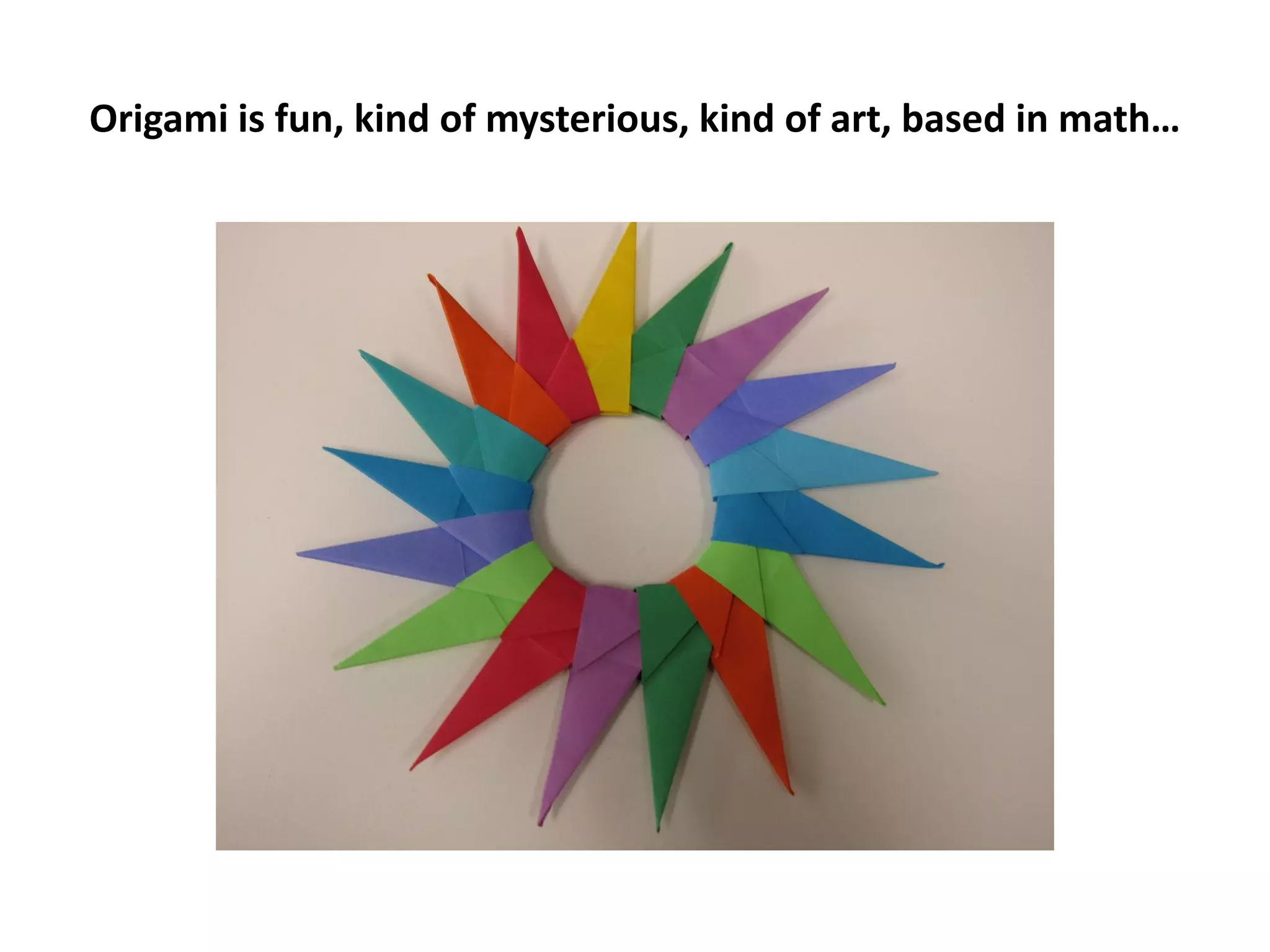
Origami is fun, kind of mysterious, kind of art, based in math…
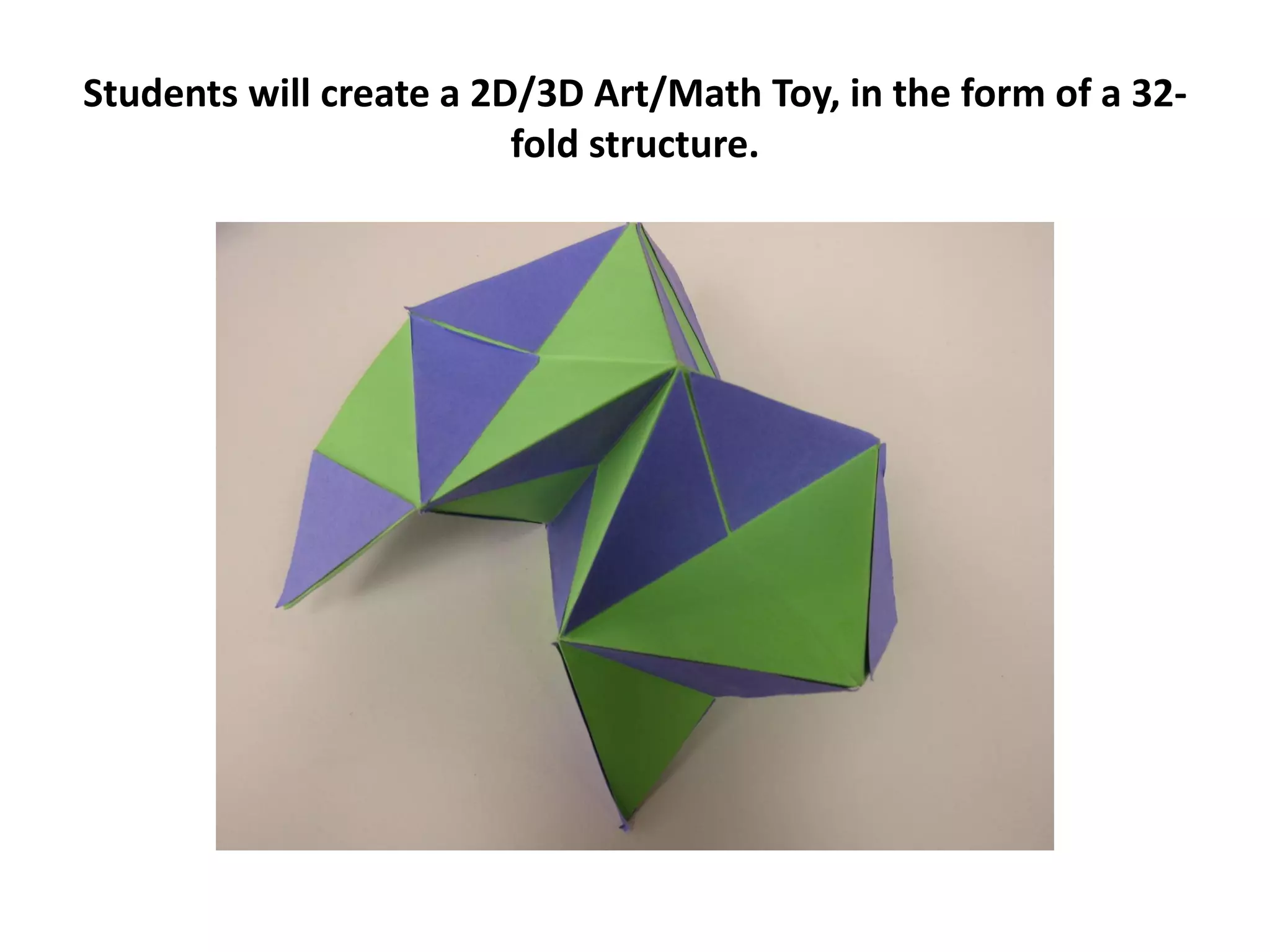
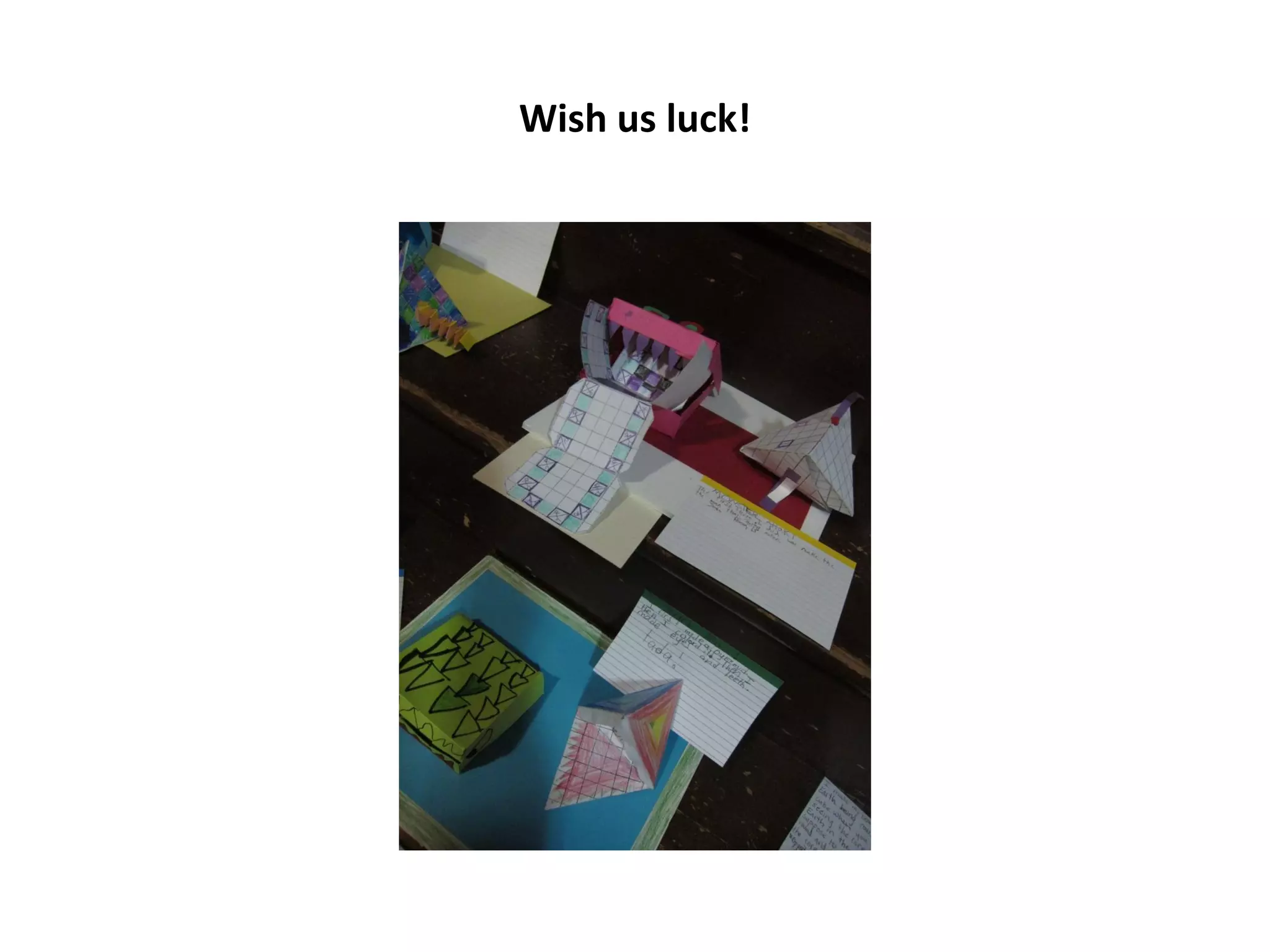
Students will create a 2D/3D Art/Math Toy, in the form of a 32-
fold structure.
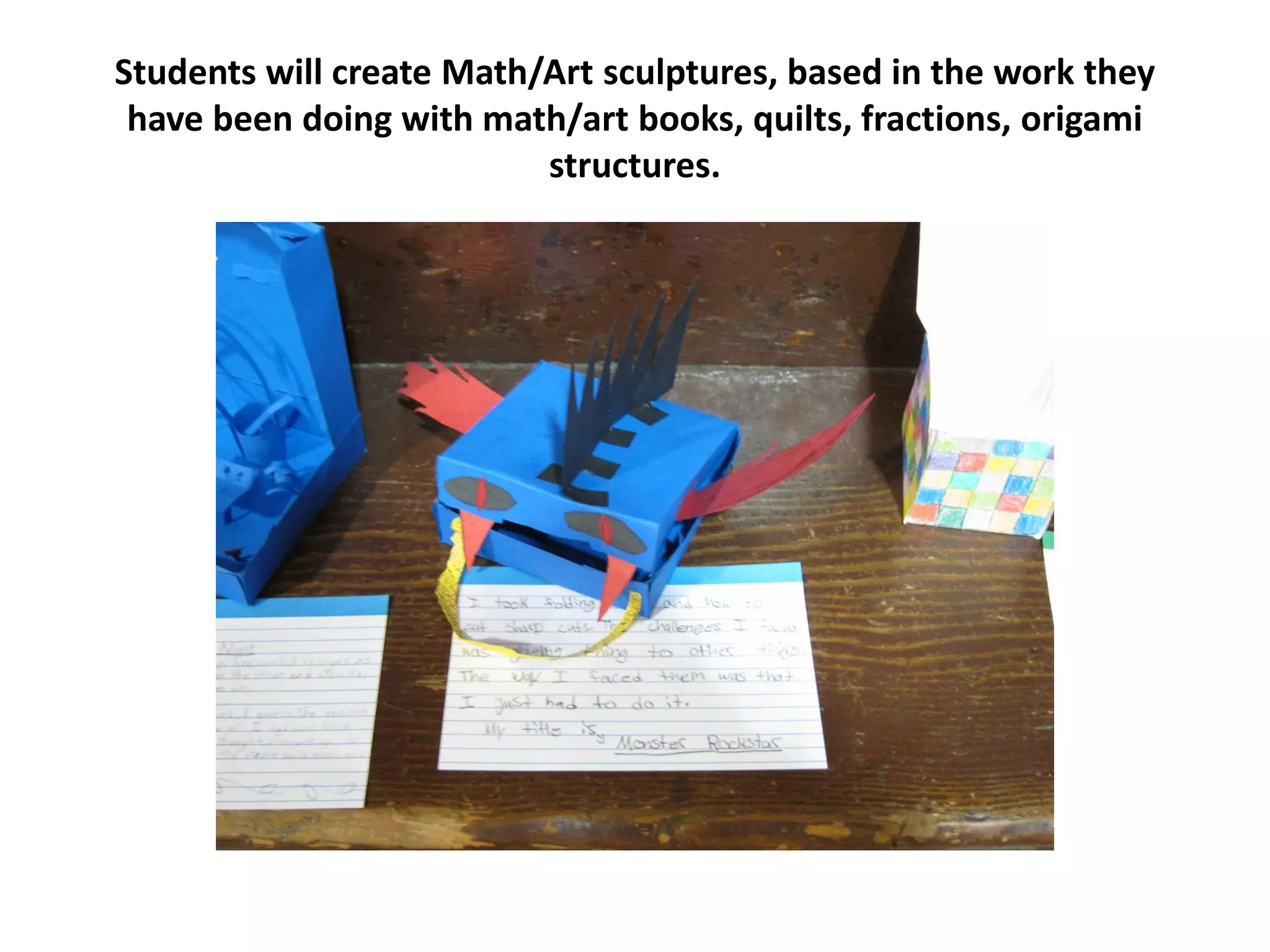
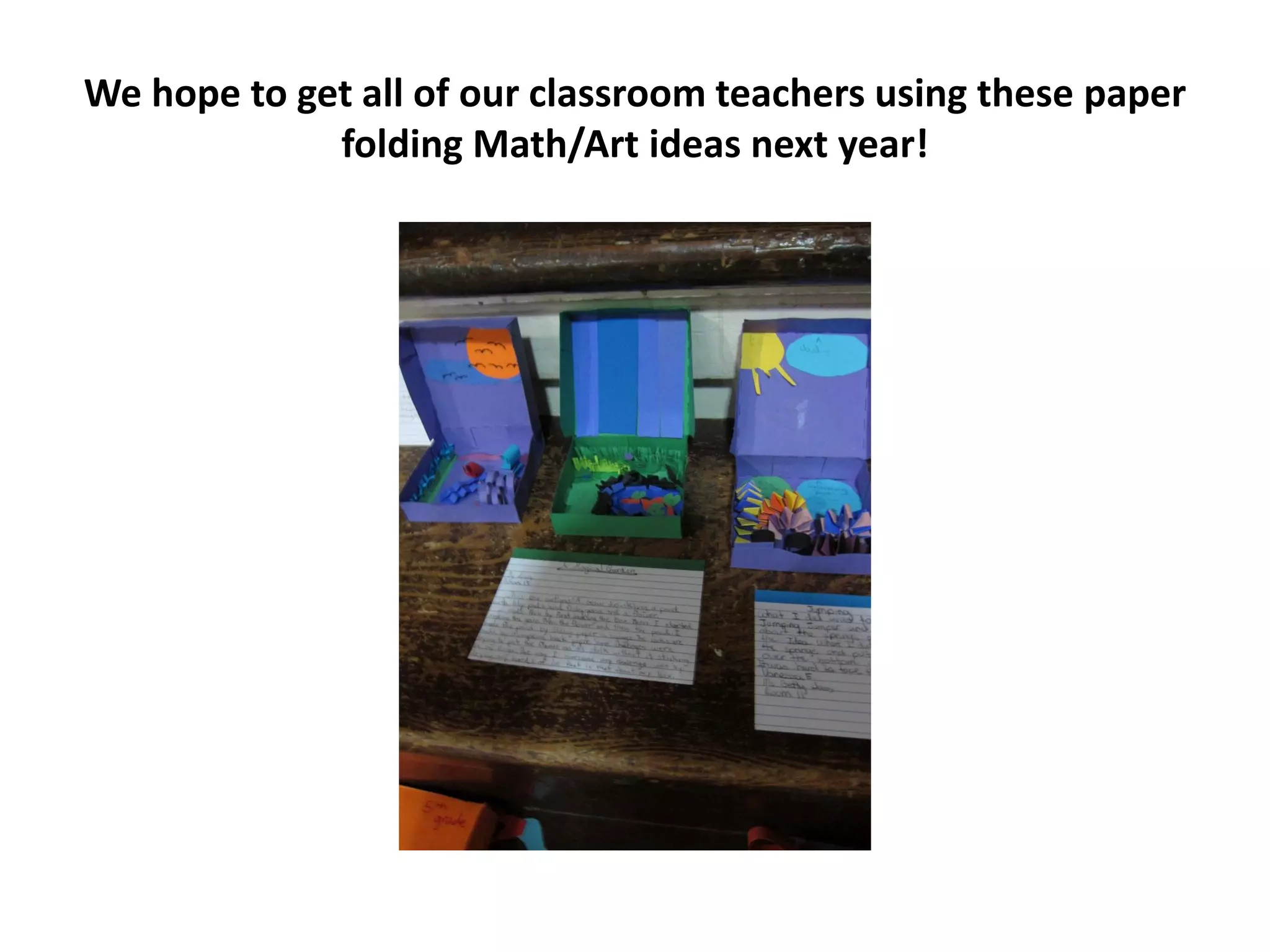
Students will create Math/Art sculptures, based in the work they
have been doing with math/art books, quilts, fractions, origami
structures.
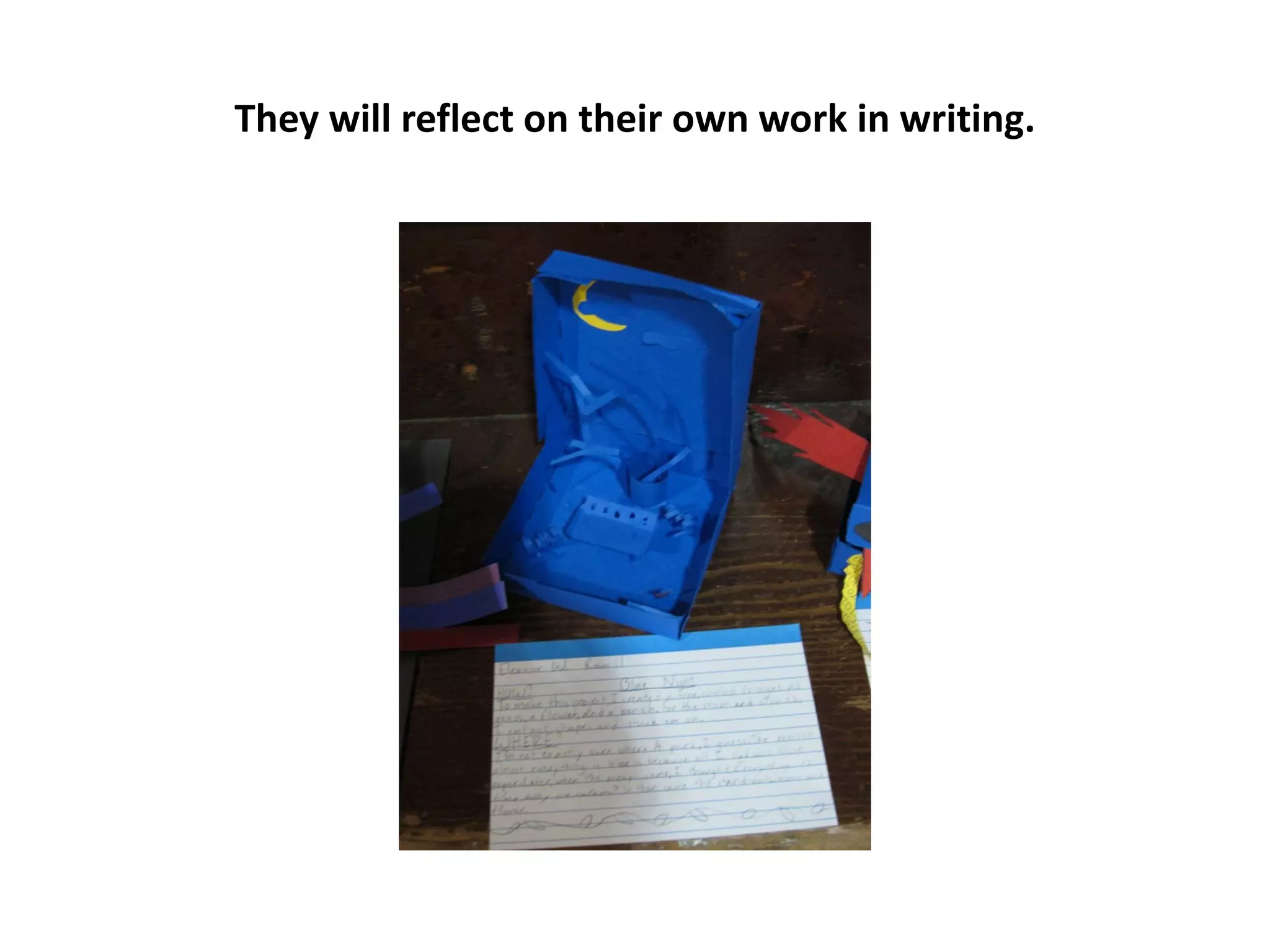
They will reflect on their own work in writing.
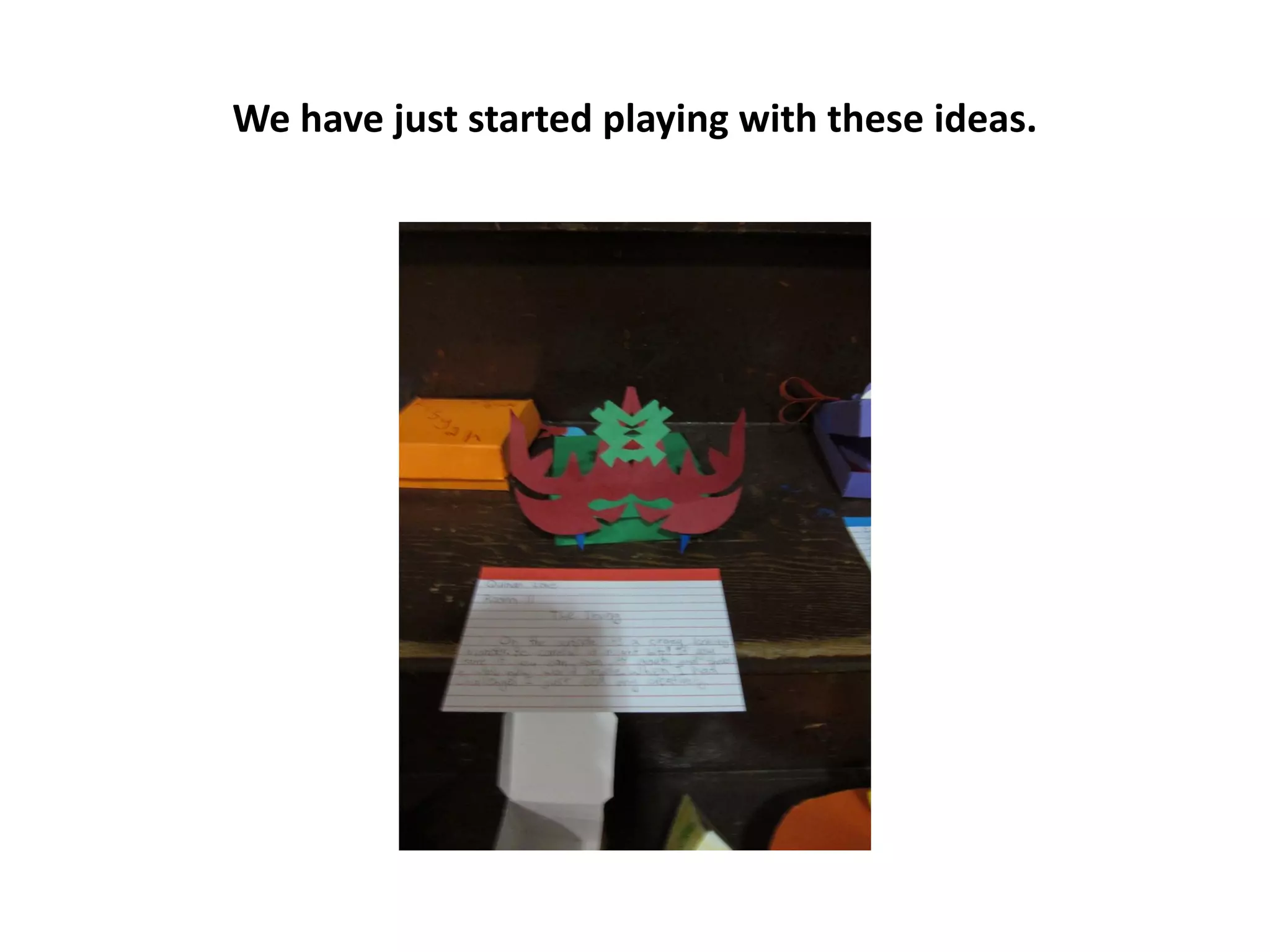
We have just started playing with these ideas.
We hope to get all of our classroom teachers using these paper
folding Math/Art ideas next year!
Wish us luck!
Reflections: Debbie
• I am completely rededicated in an even stronger way to the
idea of the importance of hands-on learning, as I am again
even more aware of my own learning style, and the fact
that I think with my hands, through making things, pretty
much all the time.
• I was completely fascinated by the idea of creating
Art/Math integrated curriculum, and realized how little I
really understand about Math.
• I am also rededicated to the value of ongoing collaboration
between artists and classroom teachers. I feel that ongoing
discussions about our work, our ways of learning, and our
students’ challenges are invaluable, and helps all of us
rethink our habits, practices, and curriculum design.
Reflections: Sandra
• This class reinforced my belief that art is such an integral part
of learning whether it is math, science, language arts or social
studies.
• The ongoing assessment throughout the unit allows for
immediate feedback which ensures that all students develop
critical meta-cognitive thought processes.
• I feel that to instill in my students a focused work ethic is
important as well as the ability to make careful observations
and this will serve them well in life. Equally important, I want
my students to reflect on the comments of their classmates
and to use those ideas to build upon their own.

Koppman oby-patterns, fractions, and geometry

  • 1.
    Patterns, Fractions, andGeometry by Debbie Koppman & Sandra Oby Sequoia Elementary School, Oakland
  • 2.
    Patterns, Fractions, &Geometry • This unit leverages art skills used in collage and bookmaking to further students’ understanding of specific math concepts focused on fractions and geometry. At the same time, the precision needed to understand the math concepts will be used to enhance students’ skills in art.
  • 3.
    Why Art andMath? • We learned as a faculty that many of our students are arriving at 5th grade with an incomplete understanding of important math concepts, especially fractions. Without a better understanding of beginning concepts, students are completely lost when math concepts become more complicated. We felt that perhaps we could develop art/math integrated curriculum; our strategy is to leverage our students’ art skills to increase understanding in Math.
  • 4.
    Understanding Goals • Whatis the relationship between patterns, geometry, and fractions? • (OBSERVE, DEVELOP CRAFT, ENGAGE/PERSIST) • How can we use art skills to build understanding of fractions and geometry, and how do skills in math inform artistic practice? • (DEVELOP CRAFT, OBSERVE, ENGAGE/PERSIST, REFLECT) • How can we find relationships and make connections between 2D and 3D shapes? • (STRETCH & EXPLORE, EXPRESS, ENVISION) • How have artists from multiple cultures used patterns, fractions, and geometry? • (UNDERSTAND ART WORLD, REFLECT)
  • 5.
    Common Core ContentStandards: Math • 3rd Grade: Recognize and generate simple equivalent fractions, e.g., 1/2=2/4 etc. Explain why the fractions are equivalent by using a visual fraction model. • 4th Grade: Visualize, describe, and make models of geometric solids (e.g., prisms, pyramids) in terms of the number and shape of faces, edges, and vertices; interpret two-dimensional representations of three-dimensional objects; and draw patterns (of faces) for a solid that, when cut and folded, will make a model of the solid. • 5th Grade: Solve word problems involving addition and subtraction of fractions referring to the same whole, including cases of unlike denominators, e.g., by using visual fraction models or equations to represent the problem. Use benchmark fractions and number sense of fractions to estimate mentally and assess the reasonableness of answers. 5th Grade: Construct a cube and rectangular box from two-dimensional patterns and use these patterns to compute the surface area for these objects.
  • 6.
    Cultural Inclusion Strategies •We are planning to include many VTS discussions in our curriculum design. Our topic and our practice to make quilt-like things will offer many possibilities for showing work of artists from around the world, to include quilts, quilt-like cloths, and contemporary art.
  • 7.
    How have artistsfrom various cultures used patterns, fractions, and geometry? What is the relationship between patterns, geometry, and fractions? • Students will engage in 2 or 3 VTS discussions, looking at quilts from various traditions. • What’s going on in this picture? • What do you see that makes you say that? • What more can we find?
  • 8.
    How can weuse art skills to build understanding of fractions and geometry, and how do skills in math inform artistic practice? • Students will create a series of paper quilts, sequentially based on parts of the whole. (So we first create a quilt based on halves, then quarters, then eighths.)
  • 9.
    Group Quilt basedon Quarters (and Warm Colors) • After creating collaborative quilts, students will engage in VTS discussions.
  • 10.
    How can wefind relationships and make connections between 2D and 3D shapes? • Students will create one or more Star Books, with or without pop-up additions.
  • 11.
    What is therelationship between patterns, geometry, and fractions? How can we use art skills to build understanding of fractions and geometry, and how do skills in math inform artistic practice? • Students will create double-sided 8-fold origami books showing equivalent fractions.
  • 12.
    These books offerteachers many possibilities to create variations on a theme!
  • 13.
    Students will reflecton their own work in writing, and engage in a VTS discussion of student work.
  • 14.
    Together we alreadyhave made great discoveries! This is where we all get to see the art/math relationships, and the interpretative possibilities offered through art.
  • 15.
    What’s going onin these pictures?
  • 16.
    Students will createseveral origami structures, based in the folding pattern for eighths.
  • 17.
    This seems tobe a great way to get students engaged in the intersection between art and math.
  • 18.
    Origami is fun,kind of mysterious, kind of art, based in math…
  • 19.
    Students will createa 2D/3D Art/Math Toy, in the form of a 32- fold structure.
  • 20.
    Students will createMath/Art sculptures, based in the work they have been doing with math/art books, quilts, fractions, origami structures.
  • 21.
    They will reflecton their own work in writing.
  • 22.
    We have juststarted playing with these ideas.
  • 23.
    We hope toget all of our classroom teachers using these paper folding Math/Art ideas next year!
  • 24.
  • 25.
    Reflections: Debbie • Iam completely rededicated in an even stronger way to the idea of the importance of hands-on learning, as I am again even more aware of my own learning style, and the fact that I think with my hands, through making things, pretty much all the time. • I was completely fascinated by the idea of creating Art/Math integrated curriculum, and realized how little I really understand about Math. • I am also rededicated to the value of ongoing collaboration between artists and classroom teachers. I feel that ongoing discussions about our work, our ways of learning, and our students’ challenges are invaluable, and helps all of us rethink our habits, practices, and curriculum design.
  • 26.
    Reflections: Sandra • Thisclass reinforced my belief that art is such an integral part of learning whether it is math, science, language arts or social studies. • The ongoing assessment throughout the unit allows for immediate feedback which ensures that all students develop critical meta-cognitive thought processes. • I feel that to instill in my students a focused work ethic is important as well as the ability to make careful observations and this will serve them well in life. Equally important, I want my students to reflect on the comments of their classmates and to use those ideas to build upon their own.