KNOWN AND UNKNOWN: THE
STATISTICIAN’S GUIDE ON
CROSSING A DESERT
TAKE AWAYS AND INSIGHTS
1
• Statistics is about us
2
• The new age of progress
requires good numeracy
skills
3
• People lack good numeracy
skills caused by biases,
environment and
preconceived notions
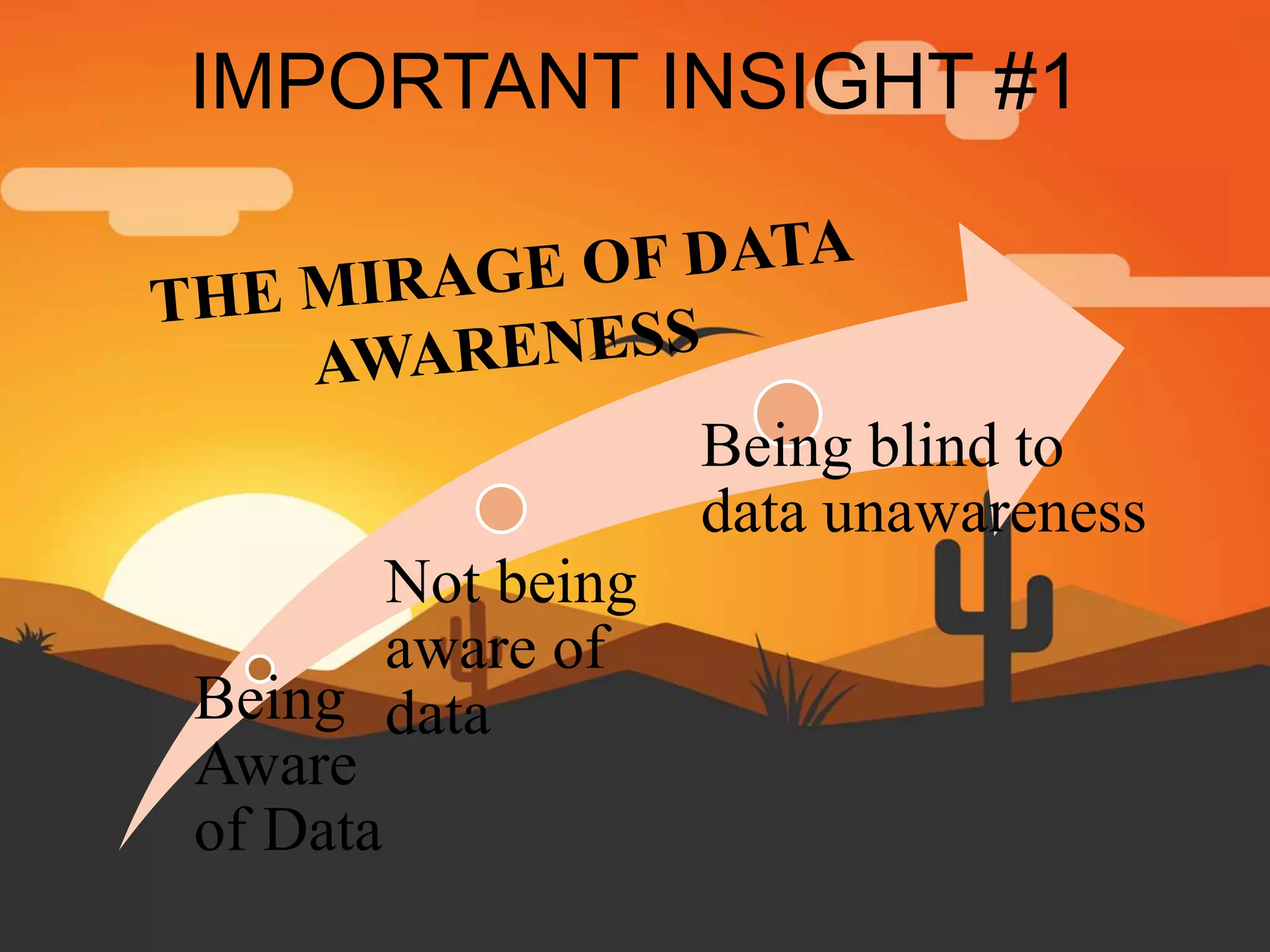
IMPORTANT INSIGHT #1
Being
Aware
of Data
Not being
aware of
data
Being blind to
data unawareness
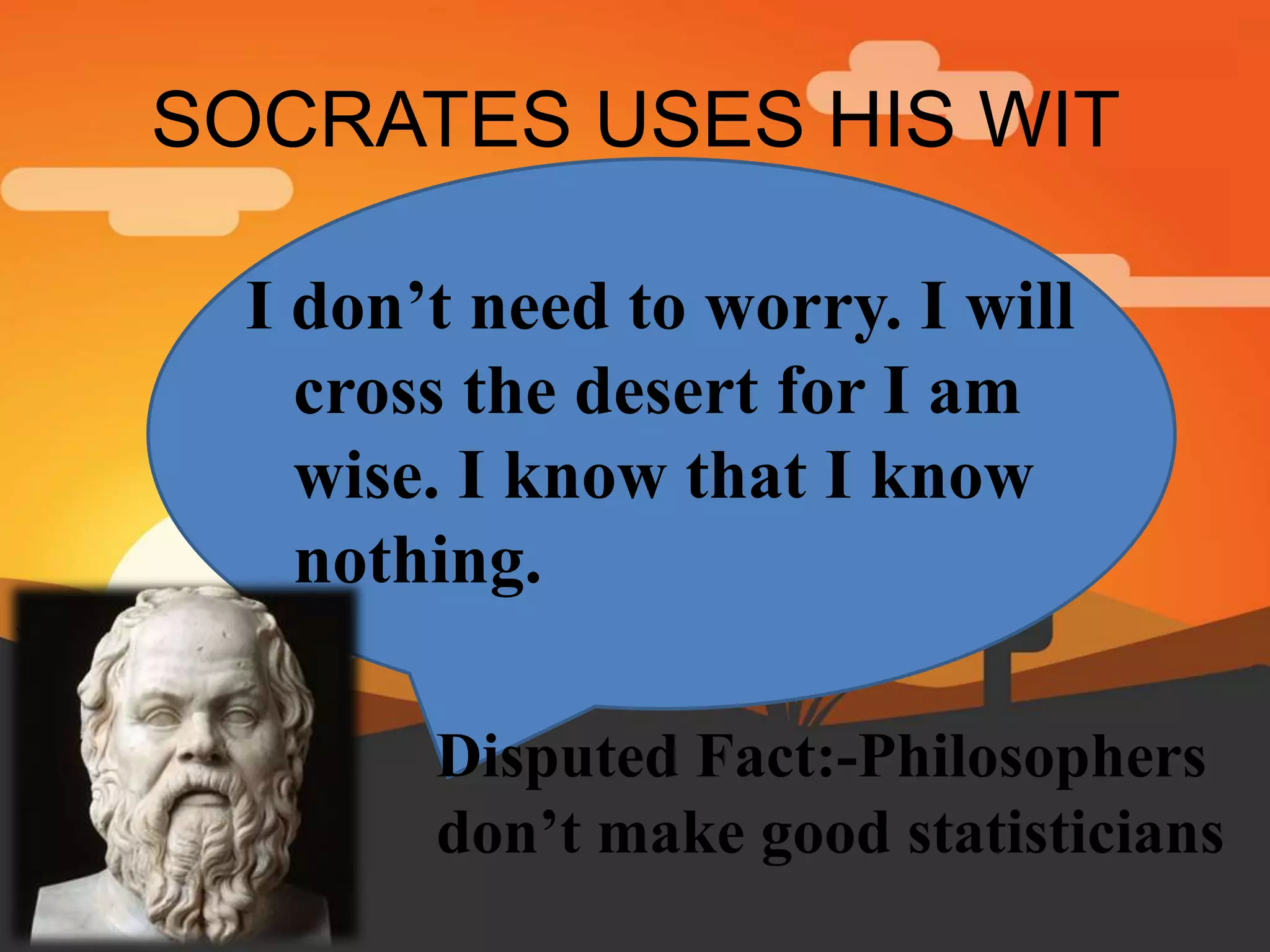
SOCRATES USES HIS WIT
I don’t need to worry. I will
cross the desert for I am
wise. I know that I know
nothing.
Disputed Fact:-Philosophers
don’t make good statisticians
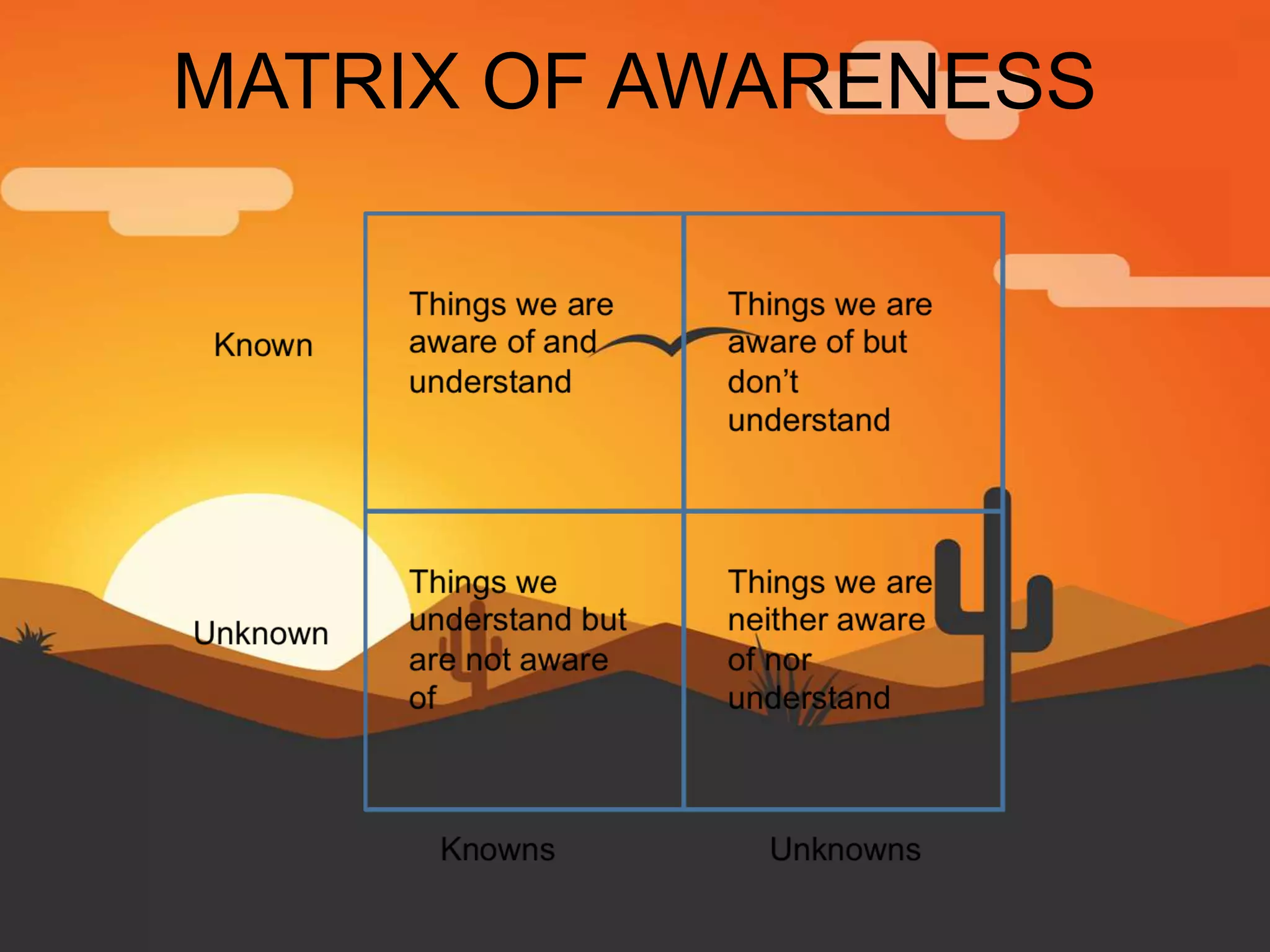
MATRIX OF AWARENESS
There are known knowns. These are things we
know that we know. There are known
unknowns. That is to say, there are things that
we know we don't know. But there are also
unknown unknowns. There are things we don't
know we don't know.
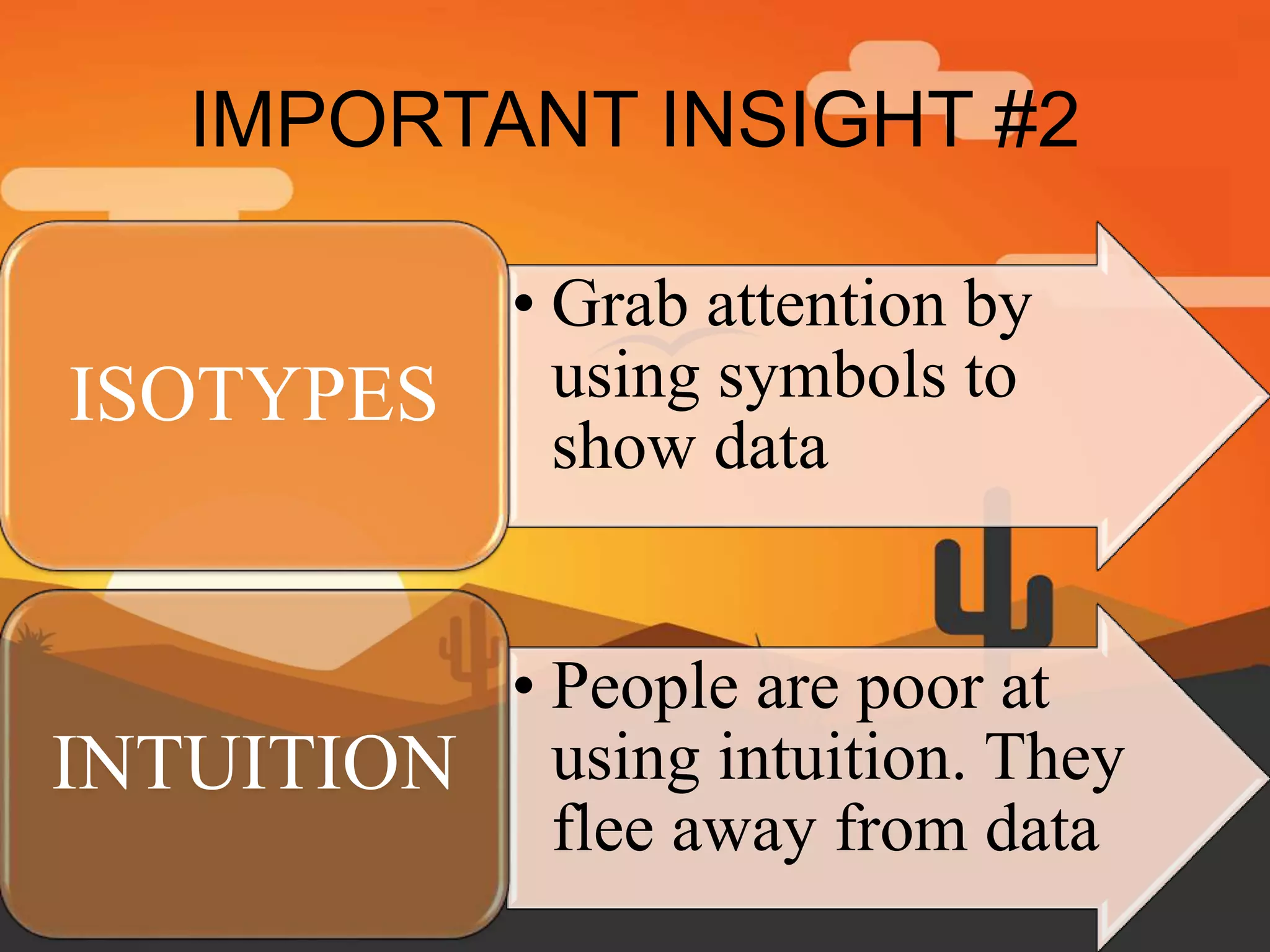
IMPORTANT INSIGHT #2
• Grab attention by
using symbols to
show data
ISOTYPES
• People are poor at
using intuition. They
flee away from data
INTUITION
THE WHYS- RELEVANCE
1
• Managers can make mistakes
estimating customers, employees and
businesses.
2
• Good decision making requires good
data which requires good
understanding
3
• Managers may be unaware of their
own statistical blindness
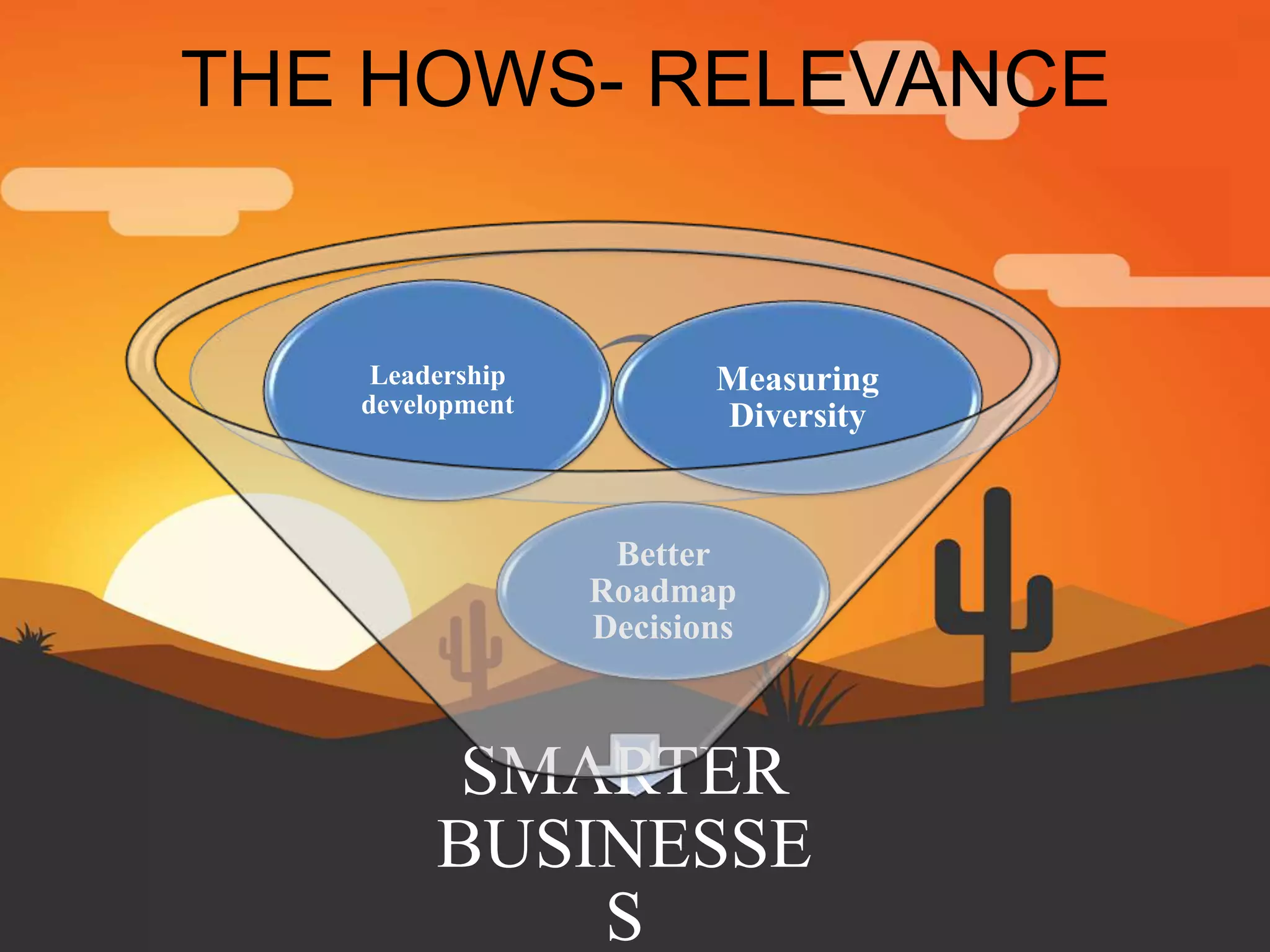
THE HOWS- RELEVANCE
SMARTER
BUSINESSE
S
Better
Roadmap
Decisions
Leadership
development
Measuring
Diversity
RELEVANCE
• More and more businesses are becoming
internet and computer conscious.
Managers need to adapt.
• India is an IT hub with a rapid
technological expansion rate.
Management no longer is one-
dimensional.
COMMON MISTAKES MADE
• #1: Not using all the data available
• #2: Not letting the data represent itself
• #3: Not connecting people with the data
• #4: Not knowing which data to use
• #5: Not knowing how to interpret the
data and results
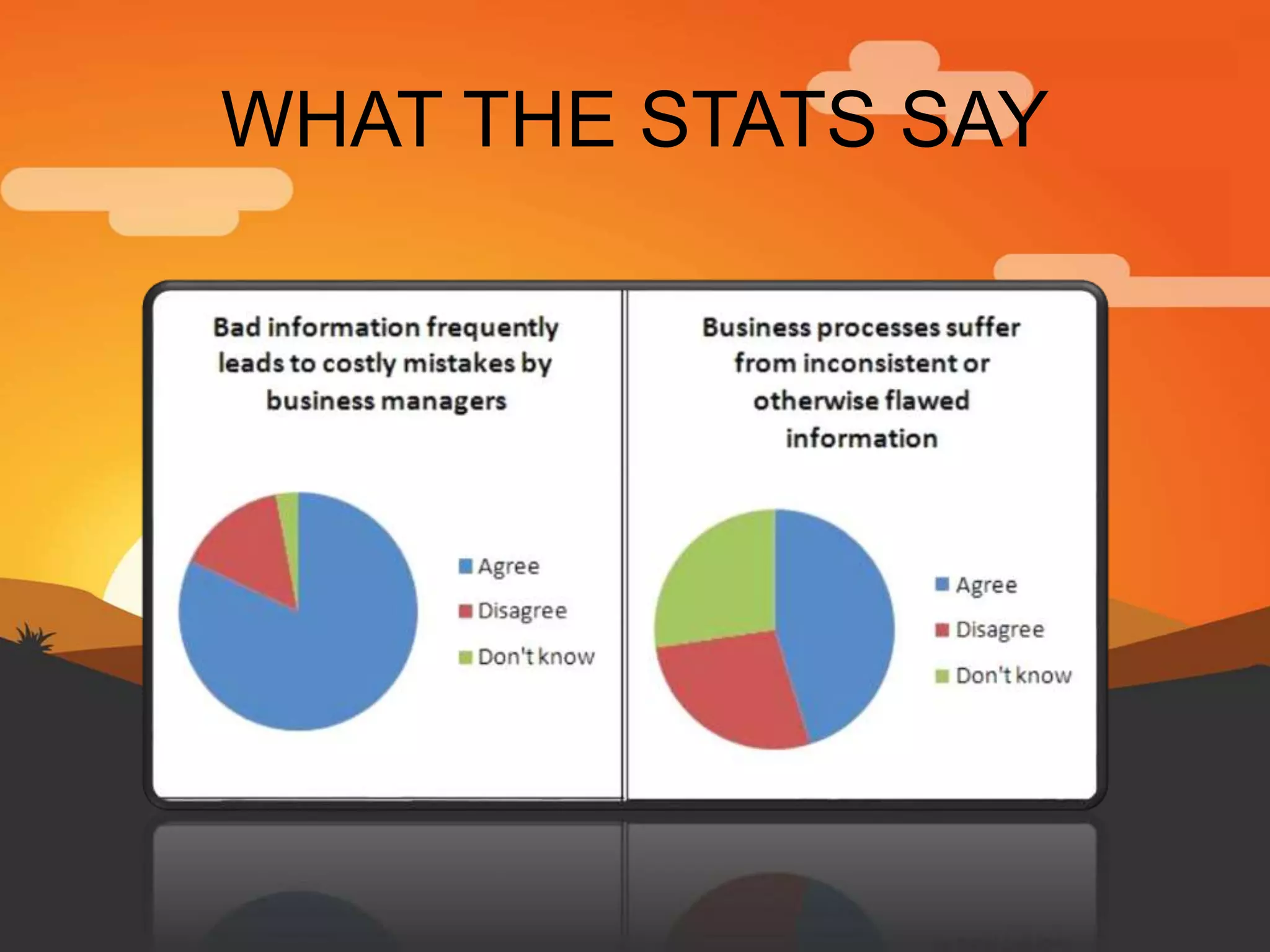
WHAT THE STATS SAY
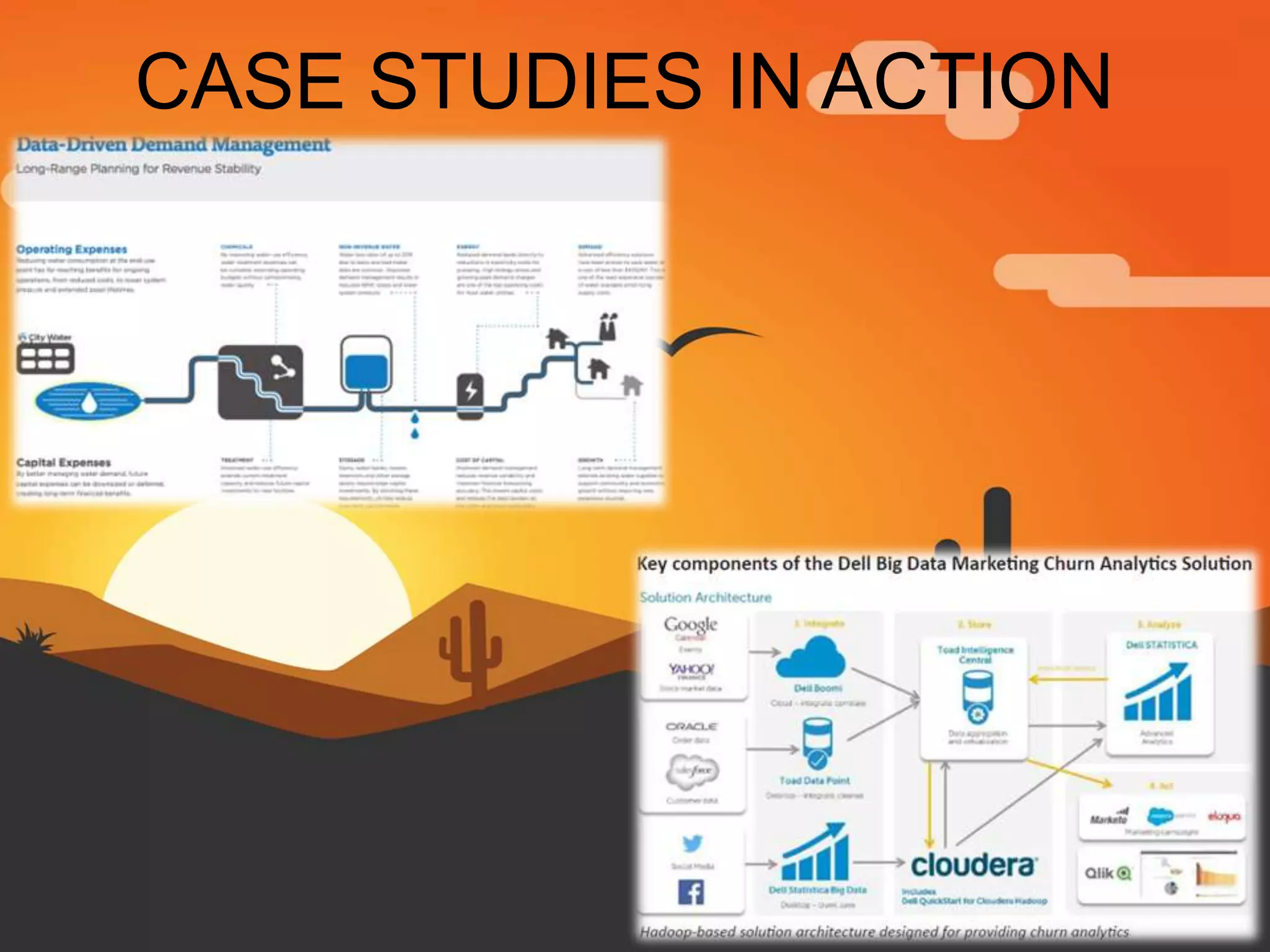
CASE STUDIES IN ACTION
A FINAL WORD FROM THOSE
WHO MADE THROUGH
• I lean on statistics like a drunken man leans on
a lamppost, only for support, not illumination.
• Statistics is the grammar of science.
• There are three types of lies -- lies, damn lies,
and statistics.
• If at first you don't succeed, try two more
times so that your failure is statistically
significant.

Known and unknown

  • 1.
    KNOWN AND UNKNOWN:THE STATISTICIAN’S GUIDE ON CROSSING A DESERT
  • 2.
    TAKE AWAYS ANDINSIGHTS 1 • Statistics is about us 2 • The new age of progress requires good numeracy skills 3 • People lack good numeracy skills caused by biases, environment and preconceived notions
  • 3.
    IMPORTANT INSIGHT #1 Being Aware ofData Not being aware of data Being blind to data unawareness
  • 4.
    SOCRATES USES HISWIT I don’t need to worry. I will cross the desert for I am wise. I know that I know nothing. Disputed Fact:-Philosophers don’t make good statisticians
  • 5.
  • 6.
    There are knownknowns. These are things we know that we know. There are known unknowns. That is to say, there are things that we know we don't know. But there are also unknown unknowns. There are things we don't know we don't know.
  • 8.
    IMPORTANT INSIGHT #2 •Grab attention by using symbols to show data ISOTYPES • People are poor at using intuition. They flee away from data INTUITION
  • 9.
    THE WHYS- RELEVANCE 1 •Managers can make mistakes estimating customers, employees and businesses. 2 • Good decision making requires good data which requires good understanding 3 • Managers may be unaware of their own statistical blindness
  • 10.
  • 11.
    RELEVANCE • More andmore businesses are becoming internet and computer conscious. Managers need to adapt. • India is an IT hub with a rapid technological expansion rate. Management no longer is one- dimensional.
  • 12.
    COMMON MISTAKES MADE •#1: Not using all the data available • #2: Not letting the data represent itself • #3: Not connecting people with the data • #4: Not knowing which data to use • #5: Not knowing how to interpret the data and results
  • 13.
  • 15.
  • 16.
    A FINAL WORDFROM THOSE WHO MADE THROUGH • I lean on statistics like a drunken man leans on a lamppost, only for support, not illumination. • Statistics is the grammar of science. • There are three types of lies -- lies, damn lies, and statistics. • If at first you don't succeed, try two more times so that your failure is statistically significant.