COM O APOIO DA COOPERAÇÃO PORTUGUESA
AUGUST 2015
KNOW MORE
At planºC August marks the closing of a phase. On the one hand,
in August occurs the third course of the EBAC in São Tomé and
Santo António, ending the first cycle of these actions, on the
other hand, in this month the design of PACA’s projects
continues being based in the results the communitarian
participatory budgeting and the preparation of the last round of
IAC courses begins, with the 4th action to be held in September in
Songo, Mozambique.
Thus, we give notice of what will be the development of these
three projects in this month.
More information is available at
http://www.planoc.com.pt/en/
2
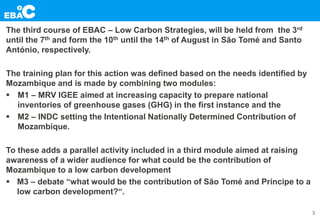
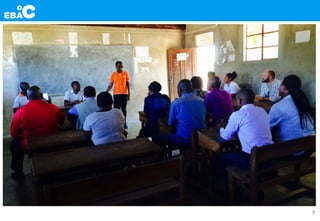
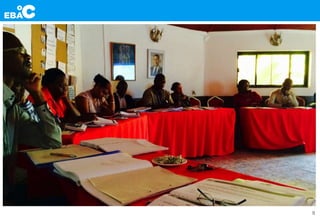
The third course of EBAC – Low Carbon Strategies, will be held from the 3rd
until the 7th and form the 10th until the 14th of August in São Tomé and Santo
António, respectively.
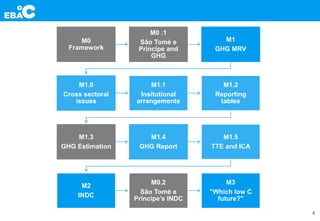
The training plan for this action was defined based on the needs identified by
Mozambique and is made by combining two modules:
 M1 – MRV IGEE aimed at increasing capacity to prepare national
inventories of greenhouse gases (GHG) in the first instance and the
 M2 – INDC setting the Intentional Nationally Determined Contribution of
Mozambique.
To these adds a parallel activity included in a third module aimed at raising
awareness of a wider audience for what could be the contribution of
Mozambique to a low carbon development
 M3 – debate “what would be the contribution of São Tomé and Príncipe to a
low carbon development?“.
3
4
M0
Framework
M0 .1
São Tomé e
Príncipe and
GHG
M1
GHG MRV
M1.0
Cross sectoral
issues
M1.1
Insitutional
arrangements
M1.2
Reporting
tables
M1.3
GHG Estimation
M1.4
GHG Report
M1.5
TTE and ICA
M2
INDC
M0.2
São Tomé e
Príncipe’s INDC
M3
”Which low C
future?"
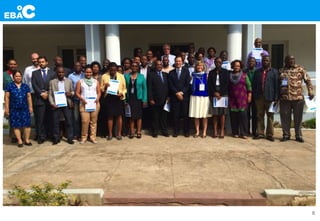
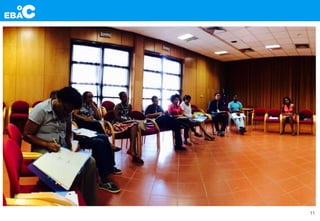
By now, two of these courses were held: the first in Maputo (from the 11th
until the 22nd of May) and the second in Cidade da Praia (from the 6th until the
17th of July).
These actions were very successful being acknowledged by the participants
its relevance in the timing in which the Intended Nationally Determined
Contributions (INDCs) are being defined and a even greater need to
mainstream and coordinate low carbon and resilient development among
local, sectoral and national plans is needed. is
The strengthened capacity can therefore contribute to ameliorate GHG
inventories and elaborate the INDCs proposals in order to limit the increase of
the average global temperature in 2ºC, being acknowledged the support that
Portugal and the Portuguese Carbon Fund has been given looking already to
October, the final date to submit the INDCs, and December, when the
Conference Of the Parties will meet in Paris and decide on our future.
5
6
7
8
9
10
11
12
13
14
15
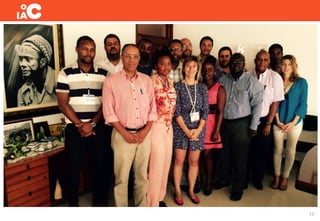
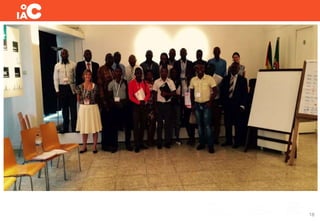
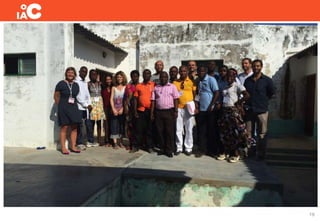
From the 14th until the 24th of September 2015 will take place the fourth course
of the project IAC – Integrating Adaptation in Cooperation, in Songo, Tete
Province, Mozambique.
The IAC project aims to respond to climate change impacts, contributing to
integrate the response to vulnerability with capacity building for integrating
adaptation into policies, plans and projects in Mozambique, Cape Verde and
Sao Tome and Principe. The project is funded by the Portuguese Carbon Fund
and support of the Portuguese Environment Agency and the Portuguese
Cooperation, running the CHAOS. As a partner also has the GIZ which shared
some of the materials and methodology.
The second cycle of courses will therefore start next September and will
feature three courses, two in Mozambique and one in Cape Verde.
16
17
18
19
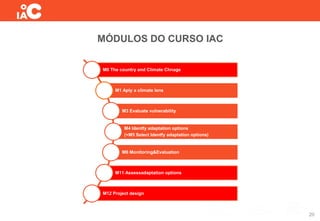
MÓDULOS DO CURSO IAC
20
M0 The country and Climate Chnage
M1 Aply a climate lens
M3 Evaluate vulnerability
M4 Identfy adaptation options
(+M5 Select Identfy adaptation options)
M6 Monitoring&Evaluation
M11 Assessadaptation options
M12 Project design
In PACA August marks continuation of the project’s tasks following up the
participatory budget and stakeholders’ consultation
• Over 1000 (one thousand) community representatives were consulted. It
resulted in:
• A project idea with measures for water management especially for
agricultural production of subsistence livelihoods in a drought or more
severe and frequent flooding context. It should also include
– Measures to prevent human-wildlife conflict
– Alternative sources of income as livestock breeding and agro-processing
– Distribution of inputs and the promotion of conservation agriculture
– Simple strengthening of early warning systems
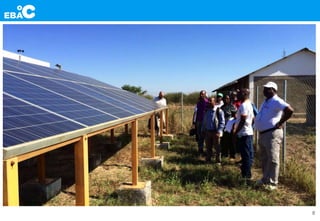
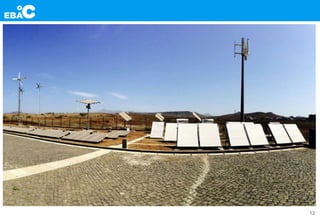
– Actions to promote the use of renewable energy sources and the dissemination
and advice on energy efficiency practices
– Communication and awareness campaign based on best practices to develop
and test communities
21
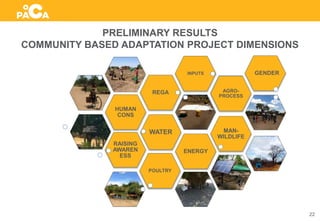
PRELIMINARY RESULTS
COMMUNITY BASED ADAPTATION PROJECT DIMENSIONS
POULTRY
WATER
HUMAN
CONS
REGA
INPUTS
MAN-
WILDLIFE
RAISING
AWAREN
ESS
AGRO-
PROCESS
GENDER
ENERGY
22

Know more 2015_august

  • 1.
    COM O APOIODA COOPERAÇÃO PORTUGUESA AUGUST 2015 KNOW MORE
  • 2.
    At planºC Augustmarks the closing of a phase. On the one hand, in August occurs the third course of the EBAC in São Tomé and Santo António, ending the first cycle of these actions, on the other hand, in this month the design of PACA’s projects continues being based in the results the communitarian participatory budgeting and the preparation of the last round of IAC courses begins, with the 4th action to be held in September in Songo, Mozambique. Thus, we give notice of what will be the development of these three projects in this month. More information is available at http://www.planoc.com.pt/en/ 2
  • 3.
    The third courseof EBAC – Low Carbon Strategies, will be held from the 3rd until the 7th and form the 10th until the 14th of August in São Tomé and Santo António, respectively. The training plan for this action was defined based on the needs identified by Mozambique and is made by combining two modules:  M1 – MRV IGEE aimed at increasing capacity to prepare national inventories of greenhouse gases (GHG) in the first instance and the  M2 – INDC setting the Intentional Nationally Determined Contribution of Mozambique. To these adds a parallel activity included in a third module aimed at raising awareness of a wider audience for what could be the contribution of Mozambique to a low carbon development  M3 – debate “what would be the contribution of São Tomé and Príncipe to a low carbon development?“. 3
  • 4.
    4 M0 Framework M0 .1 São Tomée Príncipe and GHG M1 GHG MRV M1.0 Cross sectoral issues M1.1 Insitutional arrangements M1.2 Reporting tables M1.3 GHG Estimation M1.4 GHG Report M1.5 TTE and ICA M2 INDC M0.2 São Tomé e Príncipe’s INDC M3 ”Which low C future?"
  • 5.
    By now, twoof these courses were held: the first in Maputo (from the 11th until the 22nd of May) and the second in Cidade da Praia (from the 6th until the 17th of July). These actions were very successful being acknowledged by the participants its relevance in the timing in which the Intended Nationally Determined Contributions (INDCs) are being defined and a even greater need to mainstream and coordinate low carbon and resilient development among local, sectoral and national plans is needed. is The strengthened capacity can therefore contribute to ameliorate GHG inventories and elaborate the INDCs proposals in order to limit the increase of the average global temperature in 2ºC, being acknowledged the support that Portugal and the Portuguese Carbon Fund has been given looking already to October, the final date to submit the INDCs, and December, when the Conference Of the Parties will meet in Paris and decide on our future. 5
  • 6.
  • 7.
  • 8.
  • 9.
  • 10.
  • 11.
  • 12.
  • 13.
  • 14.
  • 15.
  • 16.
    From the 14thuntil the 24th of September 2015 will take place the fourth course of the project IAC – Integrating Adaptation in Cooperation, in Songo, Tete Province, Mozambique. The IAC project aims to respond to climate change impacts, contributing to integrate the response to vulnerability with capacity building for integrating adaptation into policies, plans and projects in Mozambique, Cape Verde and Sao Tome and Principe. The project is funded by the Portuguese Carbon Fund and support of the Portuguese Environment Agency and the Portuguese Cooperation, running the CHAOS. As a partner also has the GIZ which shared some of the materials and methodology. The second cycle of courses will therefore start next September and will feature three courses, two in Mozambique and one in Cape Verde. 16
  • 17.
  • 18.
  • 19.
  • 20.
    MÓDULOS DO CURSOIAC 20 M0 The country and Climate Chnage M1 Aply a climate lens M3 Evaluate vulnerability M4 Identfy adaptation options (+M5 Select Identfy adaptation options) M6 Monitoring&Evaluation M11 Assessadaptation options M12 Project design
  • 21.
    In PACA Augustmarks continuation of the project’s tasks following up the participatory budget and stakeholders’ consultation • Over 1000 (one thousand) community representatives were consulted. It resulted in: • A project idea with measures for water management especially for agricultural production of subsistence livelihoods in a drought or more severe and frequent flooding context. It should also include – Measures to prevent human-wildlife conflict – Alternative sources of income as livestock breeding and agro-processing – Distribution of inputs and the promotion of conservation agriculture – Simple strengthening of early warning systems – Actions to promote the use of renewable energy sources and the dissemination and advice on energy efficiency practices – Communication and awareness campaign based on best practices to develop and test communities 21
  • 22.
    PRELIMINARY RESULTS COMMUNITY BASEDADAPTATION PROJECT DIMENSIONS POULTRY WATER HUMAN CONS REGA INPUTS MAN- WILDLIFE RAISING AWAREN ESS AGRO- PROCESS GENDER ENERGY 22