Competency Based
    Learning


      Toon Rekkers, 2012.
       t.rekkers@kw1c.nl
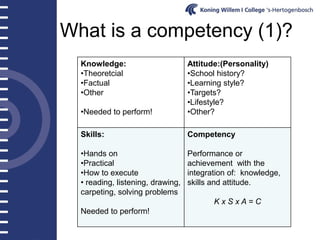
What is a competency (1)?
  Knowledge:                       Attitude:(Personality)
  •Theoretcial                     •School history?
  •Factual                         •Learning style?
  •Other                           •Targets?
                                   •Lifestyle?
  •Needed to perform!              •Other?

  Skills:                          Competency

  •Hands on                        Performance or
  •Practical                       achievement with the
  •How to execute                  integration of: knowledge,
  • reading, listening, drawing,   skills and attitude.
  carpeting, solving problems
                                          KxSxA=C
  Needed to perform!
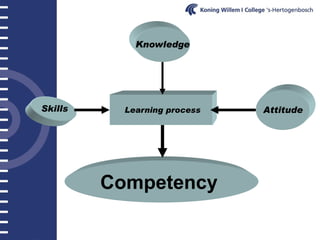
Knowledge


Skills     Learning process   Attitude


         Competency
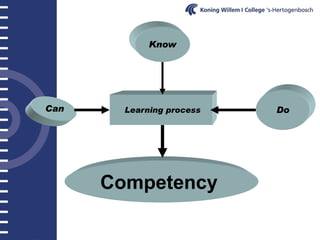
Know


Can     Learning process   Do


      Competency
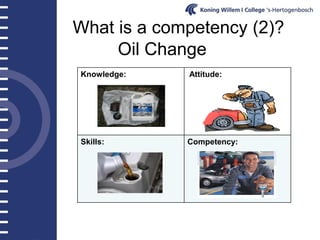
What is a competency (2)?
     Oil Change
Knowledge:   Attitude:


Skills:      Competency:
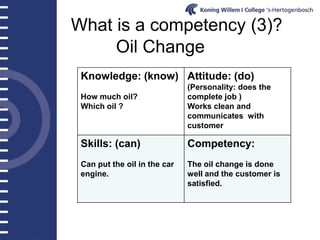
What is a competency (3)?
     Oil Change
 Knowledge: (know) Attitude: (do)
                              (Personality: does the
 How much oil?                complete job )
 Which oil ?                  Works clean and
                              communicates with
                              customer

 Skills: (can)                Competency:
 Can put the oil in the car   The oil change is done
 engine.                      well and the customer is
                              satisfied.
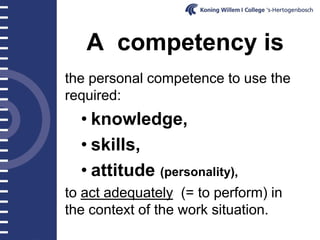
A competency is
the personal competence to use the
required:
  • knowledge,
  • skills,
  • attitude (personality),
to act adequately (= to perform) in
the context of the work situation.
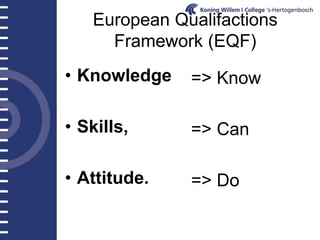
European Qualifactions
     Framework (EQF)
• Knowledge   => Know

• Skills,     => Can

• Attitude.   => Do
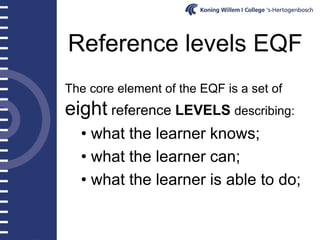
Reference levels EQF
The core element of the EQF is a set of
eight reference LEVELS describing:
  • what the learner knows;
  • what the learner can;
  • what the learner is able to do;
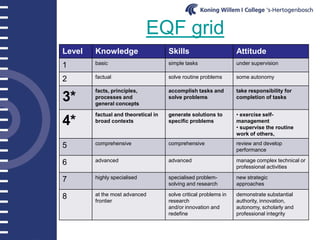
EQF grid
Level   Knowledge                    Skills                       Attitude
1       basic                        simple tasks                 under supervision


2       factual                      solve routine problems       some autonomy

        facts, principles,           accomplish tasks and         take responsibility for
3*      processes and
        general concepts
                                     solve problems               completion of tasks


        factual and theoretical in   generate solutions to        • exercise self-
4*      broad contexts               specific problems            management
                                                                  • supervise the routine
                                                                  work of others,

5       comprehensive                comprehensive                review and develop
                                                                  performance

6       advanced                     advanced                     manage complex technical or
                                                                  professional activities

7       highly specialised           specialised problem-         new strategic
                                     solving and research         approaches

8       at the most advanced         solve critical problems in   demonstrate substantial
        frontier                     research                     authority, innovation,
                                     and/or innovation and        autonomy, scholarly and
                                     redefine                     professional integrity
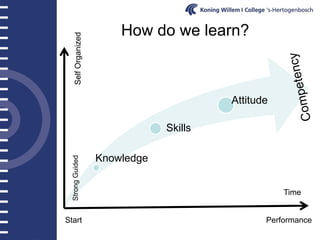
How do we learn?

     Self Organized

                                           Attitude

                                  Skills

                      Knowledge
  Strong Guided


                                                      Time


Start                                             Performance
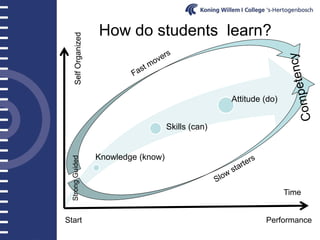
How do students learn?

     Self Organized

                                                        Attitude (do)


                                         Skills (can)


                      Knowledge (know)
  Strong Guided


                                                                        Time


Start                                                            Performance
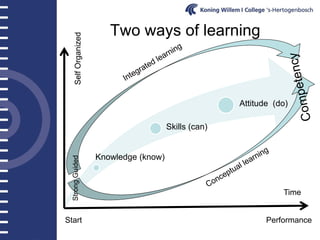
Two ways of learning

     Self Organized


                                                        Attitude (do)

                                         Skills (can)


                      Knowledge (know)
  Strong Guided


                                                                   Time


Start                                                          Performance
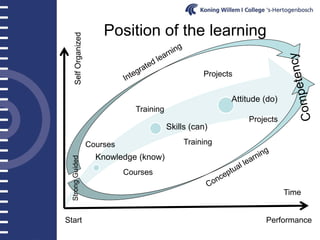
Position of the learning

     Self Organized                                    Projects


                                                              Attitude (do)
                                  Training
                                                                  Projects
                                             Skills (can)

                      Courses                     Training
                        Knowledge (know)
  Strong Guided


                                Courses

                                                                              Time


Start                                                                  Performance
Toon Rekkers, 2012.
 t.rekkers@kw1c.nl
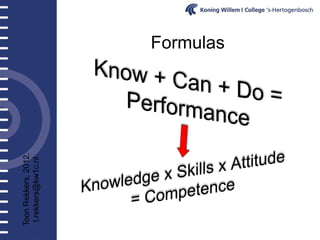
                      Formulas

Know Can Do = Competency

  • 1.
    Competency Based Learning Toon Rekkers, 2012. t.rekkers@kw1c.nl
  • 2.
    What is acompetency (1)? Knowledge: Attitude:(Personality) •Theoretcial •School history? •Factual •Learning style? •Other •Targets? •Lifestyle? •Needed to perform! •Other? Skills: Competency •Hands on Performance or •Practical achievement with the •How to execute integration of: knowledge, • reading, listening, drawing, skills and attitude. carpeting, solving problems KxSxA=C Needed to perform!
  • 3.
    Knowledge Skills Learning process Attitude Competency
  • 4.
    Know Can Learning process Do Competency
  • 5.
    What is acompetency (2)? Oil Change Knowledge: Attitude: Skills: Competency:
  • 6.
    What is acompetency (3)? Oil Change Knowledge: (know) Attitude: (do) (Personality: does the How much oil? complete job ) Which oil ? Works clean and communicates with customer Skills: (can) Competency: Can put the oil in the car The oil change is done engine. well and the customer is satisfied.
  • 7.
    A competency is thepersonal competence to use the required: • knowledge, • skills, • attitude (personality), to act adequately (= to perform) in the context of the work situation.
  • 8.
    European Qualifactions Framework (EQF) • Knowledge => Know • Skills, => Can • Attitude. => Do
  • 9.
    Reference levels EQF Thecore element of the EQF is a set of eight reference LEVELS describing: • what the learner knows; • what the learner can; • what the learner is able to do;
  • 10.
    EQF grid Level Knowledge Skills Attitude 1 basic simple tasks under supervision 2 factual solve routine problems some autonomy facts, principles, accomplish tasks and take responsibility for 3* processes and general concepts solve problems completion of tasks factual and theoretical in generate solutions to • exercise self- 4* broad contexts specific problems management • supervise the routine work of others, 5 comprehensive comprehensive review and develop performance 6 advanced advanced manage complex technical or professional activities 7 highly specialised specialised problem- new strategic solving and research approaches 8 at the most advanced solve critical problems in demonstrate substantial frontier research authority, innovation, and/or innovation and autonomy, scholarly and redefine professional integrity
  • 11.
    How do welearn? Self Organized Attitude Skills Knowledge Strong Guided Time Start Performance
  • 12.
    How do studentslearn? Self Organized Attitude (do) Skills (can) Knowledge (know) Strong Guided Time Start Performance
  • 13.
    Two ways oflearning Self Organized Attitude (do) Skills (can) Knowledge (know) Strong Guided Time Start Performance
  • 14.
    Position of thelearning Self Organized Projects Attitude (do) Training Projects Skills (can) Courses Training Knowledge (know) Strong Guided Courses Time Start Performance
  • 15.
    Toon Rekkers, 2012. t.rekkers@kw1c.nl Formulas