KITCHEN WASTE MANAGEMENT
Dinesh Bhatta
Asst. Professor, Agriculture and Forestry University
Department of Agribotany and conservation ecology
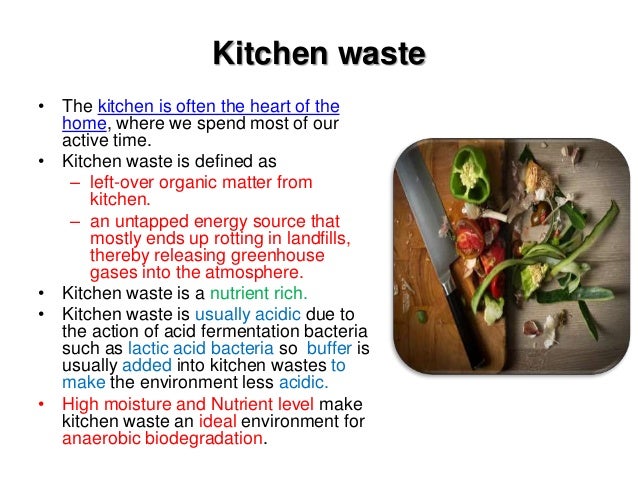
Kitchen waste
• The kitchen is often the heart of the
home, where we spend most of our
active time.
• Kitchen waste is defined as
– left-over organic matter from
kitchen.
– an untapped energy source that
mostly ends up rotting in landfills,
thereby releasing greenhouse
gases into the atmosphere.

• Kitchen waste is a nutrient rich.
• Kitchen waste is usually acidic due to
the action of acid fermentation bacteria
such as lactic acid bacteria so buffer is
usually added into kitchen wastes to
make the environment less acidic.
• High moisture and Nutrient level make
kitchen waste an ideal environment for
anaerobic biodegradation.
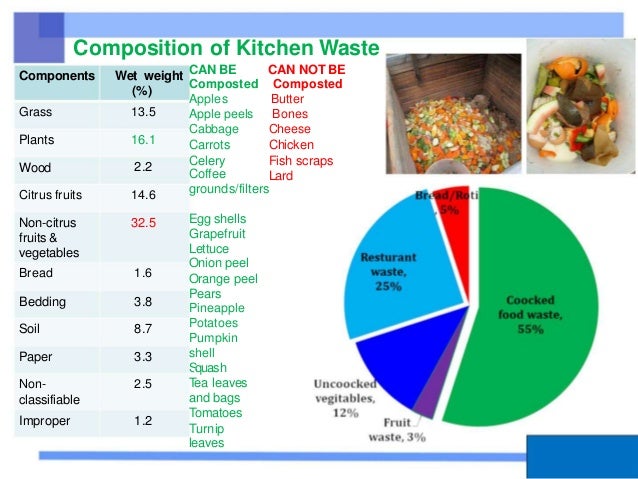
Composition of Kitchen Waste
CAN BE CAN NOT BE
Composted Composted
Apples Butter
Apple peels Bones
Components Wet weight
(%)
Grass 13.5
16.1
2.2
Cabbage
Carrots
Celery
Cheese
Chicken
Fish scraps
Lard
Plants
Wood Coffee
grounds/filters
Citrus fruits 14.6
32.5 Egg shells
Grapefruit
Lettuce
Non-citrus
fruits &
vegetables
Onion peel
Orange peel
Pears
Bread
Bedding
Soil
1.6
3.8
8.7
3.3
2.5
Pineapple
Potatoes
Pumpkin
shell
Paper
S
a
qr
ue
ashmany
Tea leaves
Non-
classifiable and bags
Tomatoes
Turnip
Improper 1.2
leaves
Global Statistics of kitchen waste
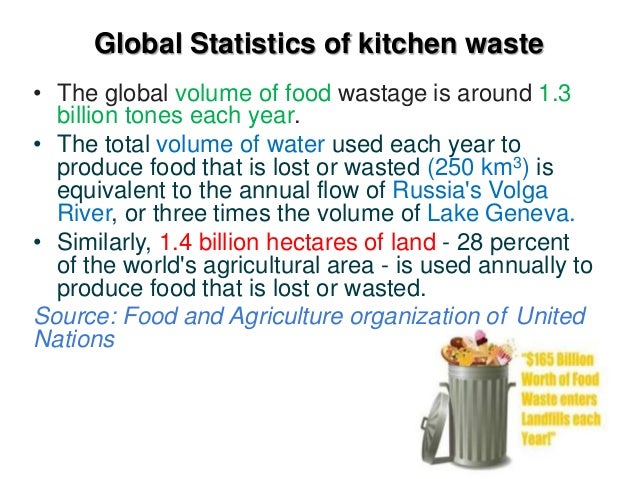
• The global volume of food wastage is around 1.3
billion tones each year.
• The total volume of water used each year to
produce food that is lost or wasted (250 km3) is
equivalent to the annual flow of Russia's Volga
River, or three times the volume of Lake Geneva.
• Similarly, 1.4 billion hectares of land - 28 percent
of the world's agricultural area - is used annually to
produce food that is lost or wasted.
Source: Food and Agriculture organization of United
Nations
Nepal's Statistic of kitchen waste
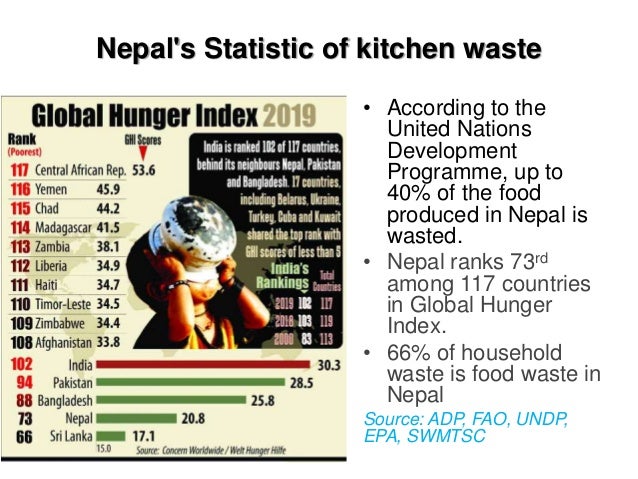
• According to the
United Nations
Development
Programme, up to
40% of the food
produced in Nepal is
wasted.
• Nepal ranks 73rd
among 117 countries
in Global Hunger
Index.
• 66% of household
waste is food waste in
Nepal
Source: ADP, FAO, UNDP,
EPA, SWMTSC
Hunger
We do have a lot of
choices...
But they don’t..
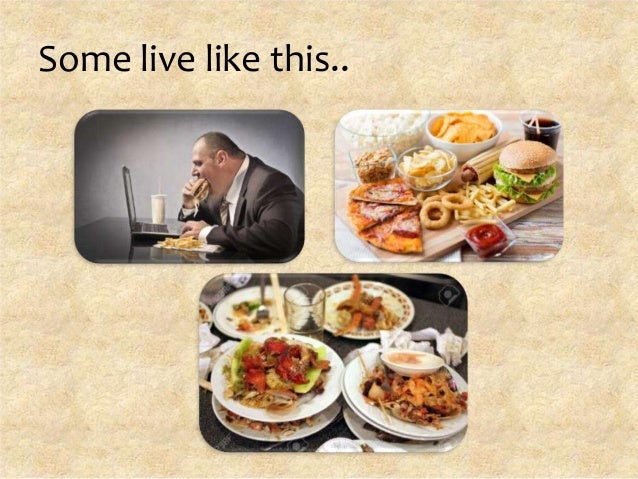
Some live like this..
..and some like this
SEE THE DIFFERENCE!!!!!
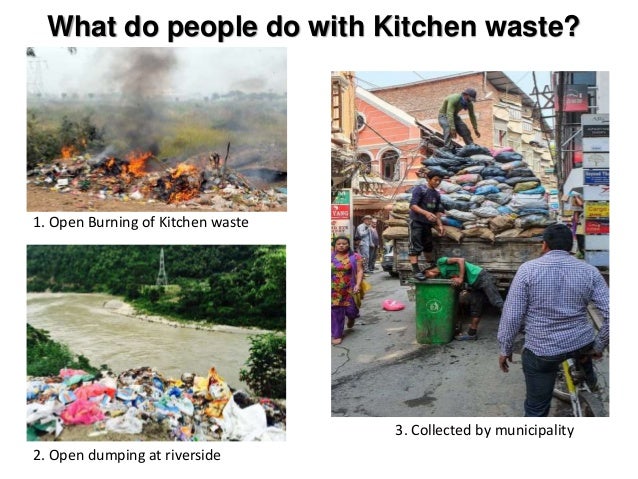
What do people do with Kitchen waste?
1. Open Burning of Kitchen waste
2. Open dumping at riverside
3. Collected by municipality
What can you do to manage kitchen
waste?
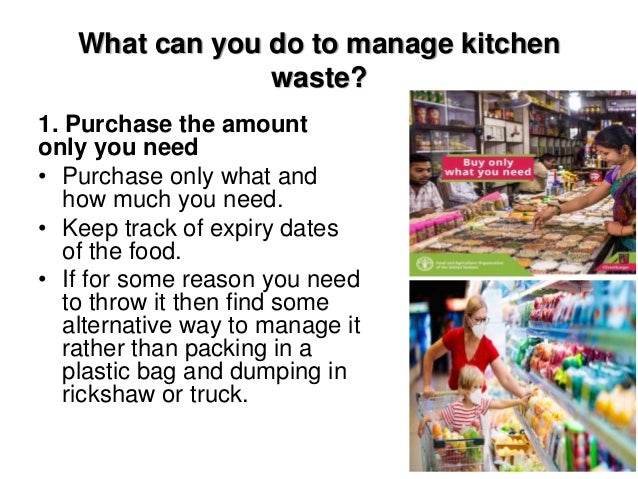
1. Purchase the amount
only you need
• Purchase only what and
how much you need.
• Keep track of expiry dates
of the food.
• If for some reason you need
to throw it then find some
alternative way to manage it
rather than packing in a
plastic bag and dumping in
rickshaw or truck.
What can you do to manage kitchen
waste?
2. Serve the only amount you need
• Start from a little portion of food
whether at home, at a party or any
other function.
• Do not serve much more than what you
can fit in your belly.
3. Give a way to the people in need
• You can always donate food before it
gets spoiled to different charity
organizations.
• But for this, you must be little aware of
the quality of food before it causes
serious issues.
• Find a convenient elderly or orphanage
care home to donate excess food.
What can you do to manage kitchen
waste?
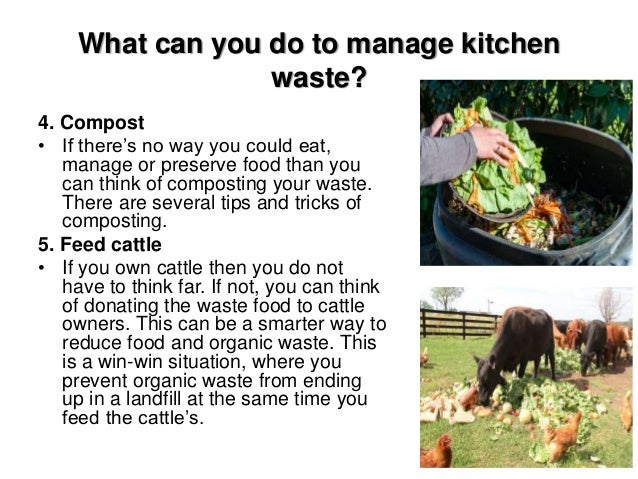
4. Compost
• If there’s no way you could eat,
manage or preserve food than you
can think of composting your waste.
There are several tips and tricks of
composting.
5. Feed cattle
• If you own cattle then you do not
have to think far. If not, you can think
of donating the waste food to cattle
owners. This can be a smarter way to
reduce food and organic waste. This
is a win-win situation, where you
prevent organic waste from ending
up in a landfill at the same time you
feed the cattle’s.
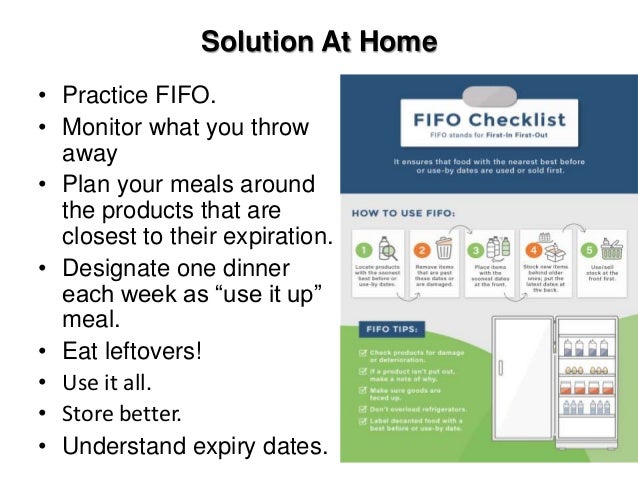
Solution At Home
• Practice FIFO.
• Monitor what you throw
away
• Plan your meals around
the products that are
closest to their expiration.
• Designate one dinner
each week as “use it up”
meal.
• Eat leftovers!
• Use it all.
• Store better.
• Understand expiry dates.
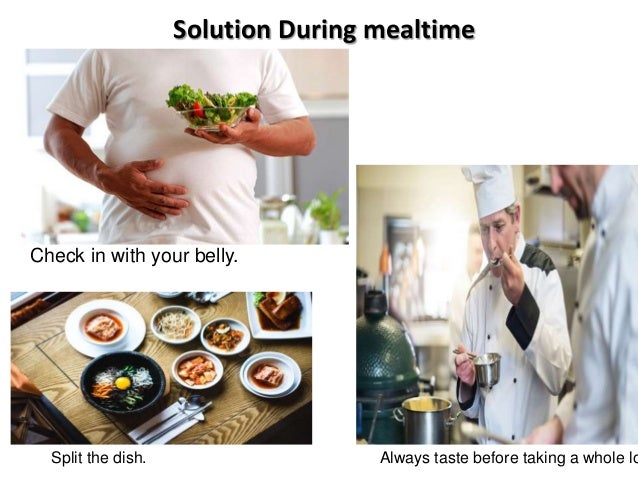
Solution During mealtime
Check in with your belly.
Split the dish. Always taste before taking a whole lo
Energy recovery from kitchen waste
1. Composting
a. Aerobic
b. Anaerobic
2. Vermicomposting
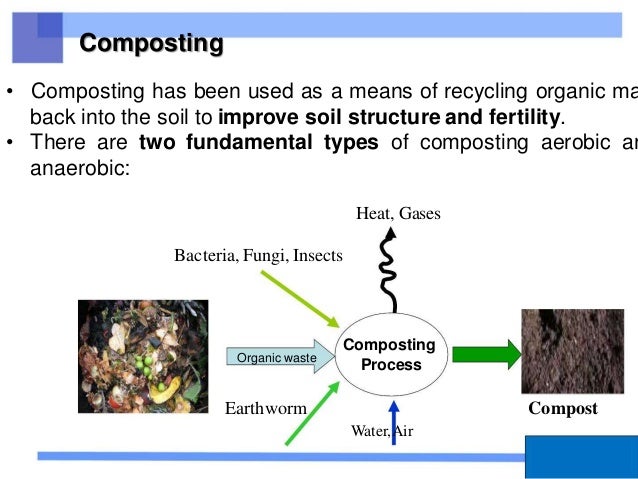
Composting
• Composting has been used as a means of recycling organic ma
back into the soil to improve soil structure and fertility.
• There are two fundamental types of composting aerobic an
anaerobic:
Heat, Gases
Bacteria, Fungi, Insects
Composting
Organic waste
Process
Earthworm Compost
Water,Air
CO2
Heat
Aerobic: Water
AerobicDigestion
Process
Organic
Matter
Compost
Anaerobic: Oxygen,Water
CO /CH /H S
2 4 2
Heat
Water
Anaerobic Digestion
Process
Organic
Matter Compost
Water
Vermicomposting Process
Earthworm
Biomass
CO2
Water
Organic
Matter
Vermicomposting
Process
Vermicompost
Oxygen, Water
Earthworm
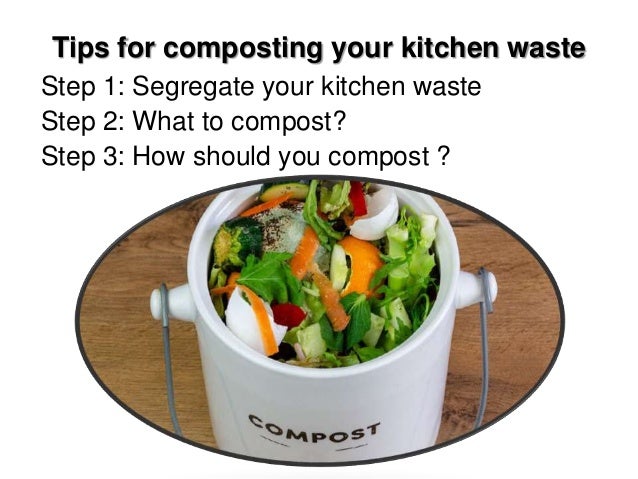
Tips for composting your kitchen waste
Step 1: Segregate your kitchen waste
Step 2: What to compost?
Step 3: How should you compost ?
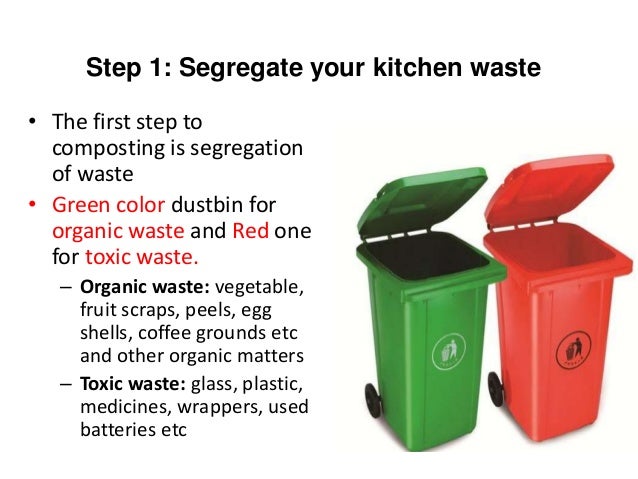
Step 1: Segregate your kitchen waste
• The first step to
composting is segregation
of waste
• Green color dustbin for
organic waste and Red one
for toxic waste.
– Organic waste: vegetable,
fruit scraps, peels, egg
shells, coffee grounds etc
and other organic matters
– Toxic waste: glass, plastic,
medicines, wrappers, used
batteries etc
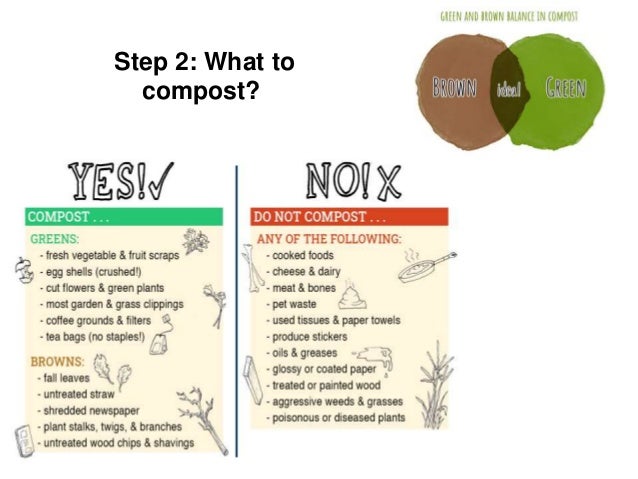
Step 2: What to
compost?
Step 3: How should you compost ?
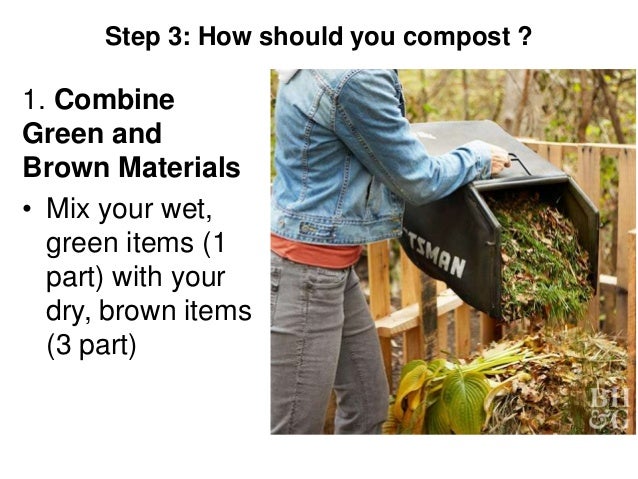
1. Combine
Green and
Brown Materials
• Mix your wet,
green items (1
part) with your
dry, brown items
(3 part)
Step 3: How should you compost ?
2. Water Your Pile
• Sprinkle water over
the pile regularly so
it has the
consistency of a
damp sponge.
• Don't add too much
water
• Monitor the
temperature of your
pile, Your compost
pile should feel
warm.
Step 3: How should you compost ?
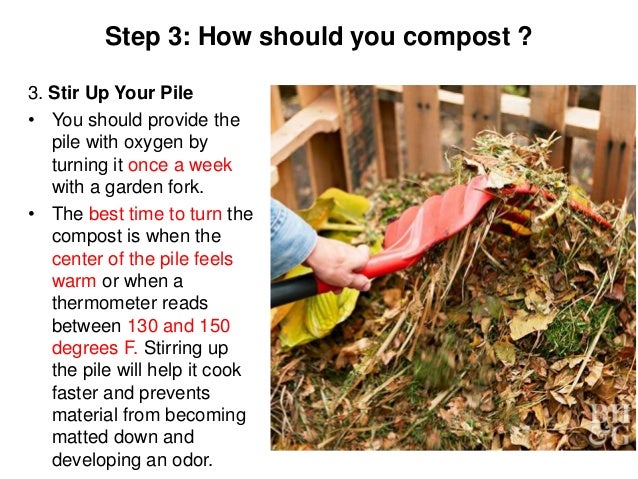
3. Stir Up Your Pile
• You should provide the
pile with oxygen by
turning it once a week
with a garden fork.
• The best time to turn the
compost is when the
center of the pile feels
warm or when a
thermometer reads
between 130 and 150
degrees F. Stirring up
the pile will help it cook
faster and prevents
material from becoming
matted down and
developing an odor.
Step 3: How should you compost ?
4. Feed Your Garden
• When the compost no
longer gives off heat
and becomes dry,
brown, and crumbly,
it's fully cooked
and ready to feed to
the garden.
Tips for faster decomposition
• The smaller the pieces, the faster the
decomposition.
• Add a little buttermilk or semi composted
material or even a little cow dung to start off
the decomposition process.
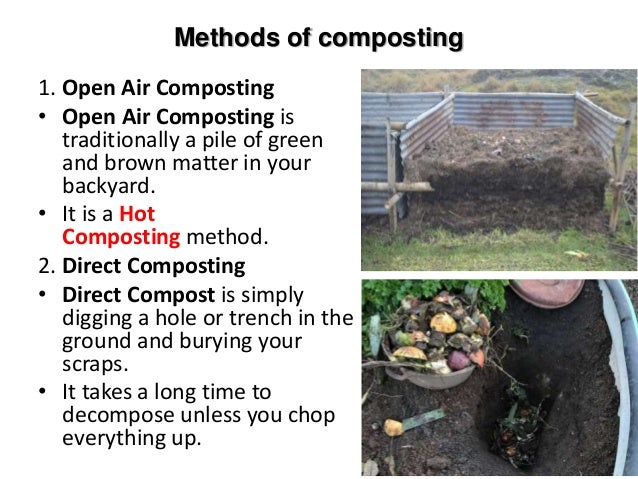
Methods of composting
1. Open Air Composting
• Open Air Composting is
traditionally a pile of green
and brown matter in your
backyard.
• It is a Hot
Composting method.
2. Direct Composting
• Direct Compost is simply
digging a hole or trench in the
ground and burying your
scraps.
• It takes a long time to
decompose unless you chop
everything up.
Methods of composting
3. Tumbler Composting
• Tumbler Composting comes in many
shapes and sizes of single to
double units that you may purchase
commercially from your local
hardware store.
4. Worm Farm Composting
• Worm Farm Composting is the most
common and preferred choice of
composting because of their
capabilities to grow worms, produce
compost and compost tea.
• Do not house them in metal
containers as copper leaches out,
which is toxic to your worms.
• They need to be kept out of the sun,
frost, and rain, and somewhere that’s
not too cold either.
Methods of composting
5. EMO Composting
• Effective Microorganisms is a
system generally used for indoor
composting
• The most common product using
EMO’s is the Bokashi
6. Combination Composting
• Combination Composting
or Compot Composting is a
combination method of open-air
composting, direct composting,
vermicomposting, and EMO
composting.
• You can compost ‘ALL’ your
kitchen waste and not just
‘some’ of it.
• It became ready in one year
Methods of composting
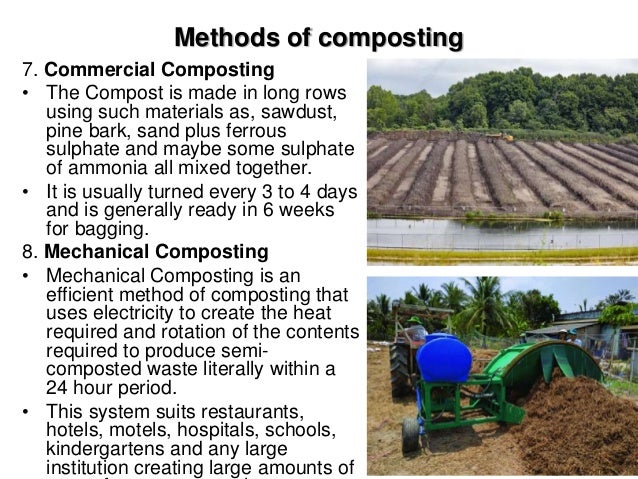
7. Commercial Composting
• The Compost is made in long rows
using such materials as, sawdust,
pine bark, sand plus ferrous
sulphate and maybe some sulphate
of ammonia all mixed together.
• It is usually turned every 3 to 4 days
and is generally ready in 6 weeks
for bagging.
8. Mechanical Composting
• Mechanical Composting is an
efficient method of composting that
uses electricity to create the heat
required and rotation of the contents
required to produce semi-
composted waste literally within a
24 hour period.
• This system suits restaurants,
hotels, motels, hospitals, schools,
kindergartens and any large
institution creating large amounts of
Issues & challenges in Kitchen waste
• Separate waste at source.
• Glass in the waste can result in injuries.
• Ensure proper C/N-ratio & chop waste in small
pieces.
• Ensure proper amount of water and air to avoid
smell.
• Moisture content maintained to 60% to 70%.
• Prepare and implement proper marketing
strategy (most compost projects fail because of
poor marketing)
• Difficult to degrade if dry.
• If dumped in to water bodies – consume the all
dissolved oxygen
• Regularly monitor composting process.
Problem caused by kitchen waste
• Squandering of resources like water land
energy labour capital
• Economic loss to people and country
• Generate hunger problem
• Environmental pollution
• Increased green house gas emission.
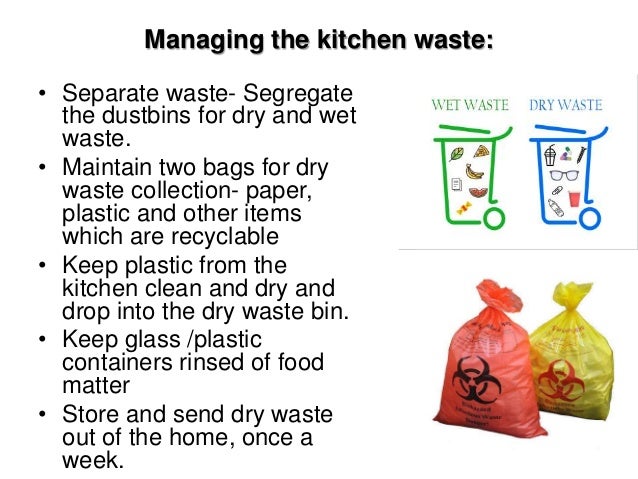
Managing the kitchen waste:
• Separate waste- Segregate
the dustbins for dry and wet
waste.
• Maintain two bags for dry
waste collection- paper,
plastic and other items
which are recyclable
• Keep plastic from the
kitchen clean and dry and
drop into the dry waste bin.
• Keep glass /plastic
containers rinsed of food
matter
• Store and send dry waste
out of the home, once a
week.
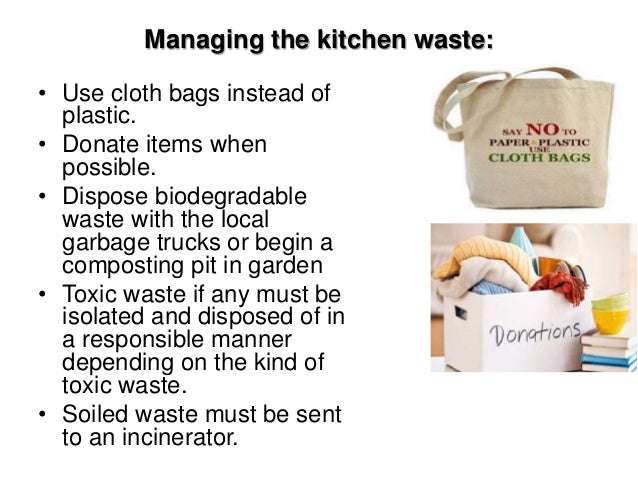
Managing the kitchen waste:
• Use cloth bags instead of
plastic.
• Donate items when
possible.
• Dispose biodegradable
waste with the local
garbage trucks or begin a
composting pit in garden
• Toxic waste if any must be
isolated and disposed of in
a responsible manner
depending on the kind of
toxic waste.
• Soiled waste must be sent
to an incinerator.
SDG and Kitchen Waste
• SDG 12.3: "By 2030,
halve per capita global
food waste at the
retail and consumer
levels and reduce food
losses along
production and supply
chains, including post-
harvest losses."
Simple Steps to STOP FOOD WASTAGE
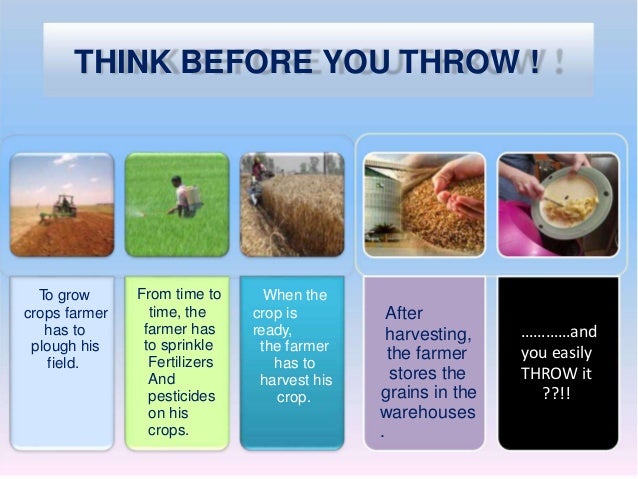
THINK BEFORE YOU THROW !
To grow
crops farmer
has to
plough his
field.
From time to
time, the
farmer has
to sprinkle
Fertilizers
And
pesticides
on his
crops.
When the
crop is
ready,
the farmer
has to
harvest his
crop.
After
harvesting,
the farmer
stores the
grains in the
warehouses
.
…………and
you easily
THROW it
??!!
“Buy less, use all, waste nothing.”

Kitchen waste management.pptx

  • 1.
    KITCHEN WASTE MANAGEMENT DineshBhatta Asst. Professor, Agriculture and Forestry University Department of Agribotany and conservation ecology
  • 2.
    Kitchen waste • Thekitchen is often the heart of the home, where we spend most of our active time. • Kitchen waste is defined as – left-over organic matter from kitchen. – an untapped energy source that mostly ends up rotting in landfills, thereby releasing greenhouse gases into the atmosphere. • Kitchen waste is a nutrient rich. • Kitchen waste is usually acidic due to the action of acid fermentation bacteria such as lactic acid bacteria so buffer is usually added into kitchen wastes to make the environment less acidic. • High moisture and Nutrient level make kitchen waste an ideal environment for anaerobic biodegradation.
  • 3.
    Composition of KitchenWaste CAN BE CAN NOT BE Composted Composted Apples Butter Apple peels Bones Components Wet weight (%) Grass 13.5 16.1 2.2 Cabbage Carrots Celery Cheese Chicken Fish scraps Lard Plants Wood Coffee grounds/filters Citrus fruits 14.6 32.5 Egg shells Grapefruit Lettuce Non-citrus fruits & vegetables Onion peel Orange peel Pears Bread Bedding Soil 1.6 3.8 8.7 3.3 2.5 Pineapple Potatoes Pumpkin shell Paper S a qr ue ashmany Tea leaves Non- classifiable and bags Tomatoes Turnip Improper 1.2 leaves
  • 4.
    Global Statistics ofkitchen waste • The global volume of food wastage is around 1.3 billion tones each year. • The total volume of water used each year to produce food that is lost or wasted (250 km3) is equivalent to the annual flow of Russia's Volga River, or three times the volume of Lake Geneva. • Similarly, 1.4 billion hectares of land - 28 percent of the world's agricultural area - is used annually to produce food that is lost or wasted. Source: Food and Agriculture organization of United Nations
  • 5.
    Nepal's Statistic ofkitchen waste • According to the United Nations Development Programme, up to 40% of the food produced in Nepal is wasted. • Nepal ranks 73rd among 117 countries in Global Hunger Index. • 66% of household waste is food waste in Nepal Source: ADP, FAO, UNDP, EPA, SWMTSC
  • 6.
    Hunger We do havea lot of choices... But they don’t..
  • 7.
  • 8.
  • 9.
  • 10.
    What do peopledo with Kitchen waste? 1. Open Burning of Kitchen waste 2. Open dumping at riverside 3. Collected by municipality
  • 11.
    What can youdo to manage kitchen waste? 1. Purchase the amount only you need • Purchase only what and how much you need. • Keep track of expiry dates of the food. • If for some reason you need to throw it then find some alternative way to manage it rather than packing in a plastic bag and dumping in rickshaw or truck.
  • 12.
    What can youdo to manage kitchen waste? 2. Serve the only amount you need • Start from a little portion of food whether at home, at a party or any other function. • Do not serve much more than what you can fit in your belly. 3. Give a way to the people in need • You can always donate food before it gets spoiled to different charity organizations. • But for this, you must be little aware of the quality of food before it causes serious issues. • Find a convenient elderly or orphanage care home to donate excess food.
  • 13.
    What can youdo to manage kitchen waste? 4. Compost • If there’s no way you could eat, manage or preserve food than you can think of composting your waste. There are several tips and tricks of composting. 5. Feed cattle • If you own cattle then you do not have to think far. If not, you can think of donating the waste food to cattle owners. This can be a smarter way to reduce food and organic waste. This is a win-win situation, where you prevent organic waste from ending up in a landfill at the same time you feed the cattle’s.
  • 14.
    Solution At Home •Practice FIFO. • Monitor what you throw away • Plan your meals around the products that are closest to their expiration. • Designate one dinner each week as “use it up” meal. • Eat leftovers! • Use it all. • Store better. • Understand expiry dates.
  • 15.
    Solution During mealtime Checkin with your belly. Split the dish. Always taste before taking a whole lo
  • 16.
    Energy recovery fromkitchen waste 1. Composting a. Aerobic b. Anaerobic 2. Vermicomposting
  • 17.
    Composting • Composting hasbeen used as a means of recycling organic ma back into the soil to improve soil structure and fertility. • There are two fundamental types of composting aerobic an anaerobic: Heat, Gases Bacteria, Fungi, Insects Composting Organic waste Process Earthworm Compost Water,Air
  • 18.
    CO2 Heat Aerobic: Water AerobicDigestion Process Organic Matter Compost Anaerobic: Oxygen,Water CO/CH /H S 2 4 2 Heat Water Anaerobic Digestion Process Organic Matter Compost Water
  • 19.
  • 20.
    Tips for compostingyour kitchen waste Step 1: Segregate your kitchen waste Step 2: What to compost? Step 3: How should you compost ?
  • 21.
    Step 1: Segregateyour kitchen waste • The first step to composting is segregation of waste • Green color dustbin for organic waste and Red one for toxic waste. – Organic waste: vegetable, fruit scraps, peels, egg shells, coffee grounds etc and other organic matters – Toxic waste: glass, plastic, medicines, wrappers, used batteries etc
  • 22.
    Step 2: Whatto compost?
  • 23.
    Step 3: Howshould you compost ? 1. Combine Green and Brown Materials • Mix your wet, green items (1 part) with your dry, brown items (3 part)
  • 24.
    Step 3: Howshould you compost ? 2. Water Your Pile • Sprinkle water over the pile regularly so it has the consistency of a damp sponge. • Don't add too much water • Monitor the temperature of your pile, Your compost pile should feel warm.
  • 25.
    Step 3: Howshould you compost ? 3. Stir Up Your Pile • You should provide the pile with oxygen by turning it once a week with a garden fork. • The best time to turn the compost is when the center of the pile feels warm or when a thermometer reads between 130 and 150 degrees F. Stirring up the pile will help it cook faster and prevents material from becoming matted down and developing an odor.
  • 26.
    Step 3: Howshould you compost ? 4. Feed Your Garden • When the compost no longer gives off heat and becomes dry, brown, and crumbly, it's fully cooked and ready to feed to the garden.
  • 27.
    Tips for fasterdecomposition • The smaller the pieces, the faster the decomposition. • Add a little buttermilk or semi composted material or even a little cow dung to start off the decomposition process.
  • 28.
    Methods of composting 1.Open Air Composting • Open Air Composting is traditionally a pile of green and brown matter in your backyard. • It is a Hot Composting method. 2. Direct Composting • Direct Compost is simply digging a hole or trench in the ground and burying your scraps. • It takes a long time to decompose unless you chop everything up.
  • 29.
    Methods of composting 3.Tumbler Composting • Tumbler Composting comes in many shapes and sizes of single to double units that you may purchase commercially from your local hardware store. 4. Worm Farm Composting • Worm Farm Composting is the most common and preferred choice of composting because of their capabilities to grow worms, produce compost and compost tea. • Do not house them in metal containers as copper leaches out, which is toxic to your worms. • They need to be kept out of the sun, frost, and rain, and somewhere that’s not too cold either.
  • 30.
    Methods of composting 5.EMO Composting • Effective Microorganisms is a system generally used for indoor composting • The most common product using EMO’s is the Bokashi 6. Combination Composting • Combination Composting or Compot Composting is a combination method of open-air composting, direct composting, vermicomposting, and EMO composting. • You can compost ‘ALL’ your kitchen waste and not just ‘some’ of it. • It became ready in one year
  • 31.
    Methods of composting 7.Commercial Composting • The Compost is made in long rows using such materials as, sawdust, pine bark, sand plus ferrous sulphate and maybe some sulphate of ammonia all mixed together. • It is usually turned every 3 to 4 days and is generally ready in 6 weeks for bagging. 8. Mechanical Composting • Mechanical Composting is an efficient method of composting that uses electricity to create the heat required and rotation of the contents required to produce semi- composted waste literally within a 24 hour period. • This system suits restaurants, hotels, motels, hospitals, schools, kindergartens and any large institution creating large amounts of
  • 32.
    Issues & challengesin Kitchen waste • Separate waste at source. • Glass in the waste can result in injuries. • Ensure proper C/N-ratio & chop waste in small pieces. • Ensure proper amount of water and air to avoid smell. • Moisture content maintained to 60% to 70%. • Prepare and implement proper marketing strategy (most compost projects fail because of poor marketing) • Difficult to degrade if dry. • If dumped in to water bodies – consume the all dissolved oxygen • Regularly monitor composting process.
  • 33.
    Problem caused bykitchen waste • Squandering of resources like water land energy labour capital • Economic loss to people and country • Generate hunger problem • Environmental pollution • Increased green house gas emission.
  • 34.
    Managing the kitchenwaste: • Separate waste- Segregate the dustbins for dry and wet waste. • Maintain two bags for dry waste collection- paper, plastic and other items which are recyclable • Keep plastic from the kitchen clean and dry and drop into the dry waste bin. • Keep glass /plastic containers rinsed of food matter • Store and send dry waste out of the home, once a week.
  • 35.
    Managing the kitchenwaste: • Use cloth bags instead of plastic. • Donate items when possible. • Dispose biodegradable waste with the local garbage trucks or begin a composting pit in garden • Toxic waste if any must be isolated and disposed of in a responsible manner depending on the kind of toxic waste. • Soiled waste must be sent to an incinerator.
  • 36.
    SDG and KitchenWaste • SDG 12.3: "By 2030, halve per capita global food waste at the retail and consumer levels and reduce food losses along production and supply chains, including post- harvest losses."
  • 37.
    Simple Steps toSTOP FOOD WASTAGE
  • 38.
    THINK BEFORE YOUTHROW ! To grow crops farmer has to plough his field. From time to time, the farmer has to sprinkle Fertilizers And pesticides on his crops. When the crop is ready, the farmer has to harvest his crop. After harvesting, the farmer stores the grains in the warehouses . …………and you easily THROW it ??!!
  • 39.
    “Buy less, useall, waste nothing.”