KINDS
OF
LETTERS
LETTERS
A letter is a written or typed message from one person to another.
Historically, letters were the only reliable means of
communications between two persons at different locations.
TYPES OF LETTERS
1. FORMAL LETTERS 2. INFORMAL LETTERS
3. ELECTRONIC MAIL
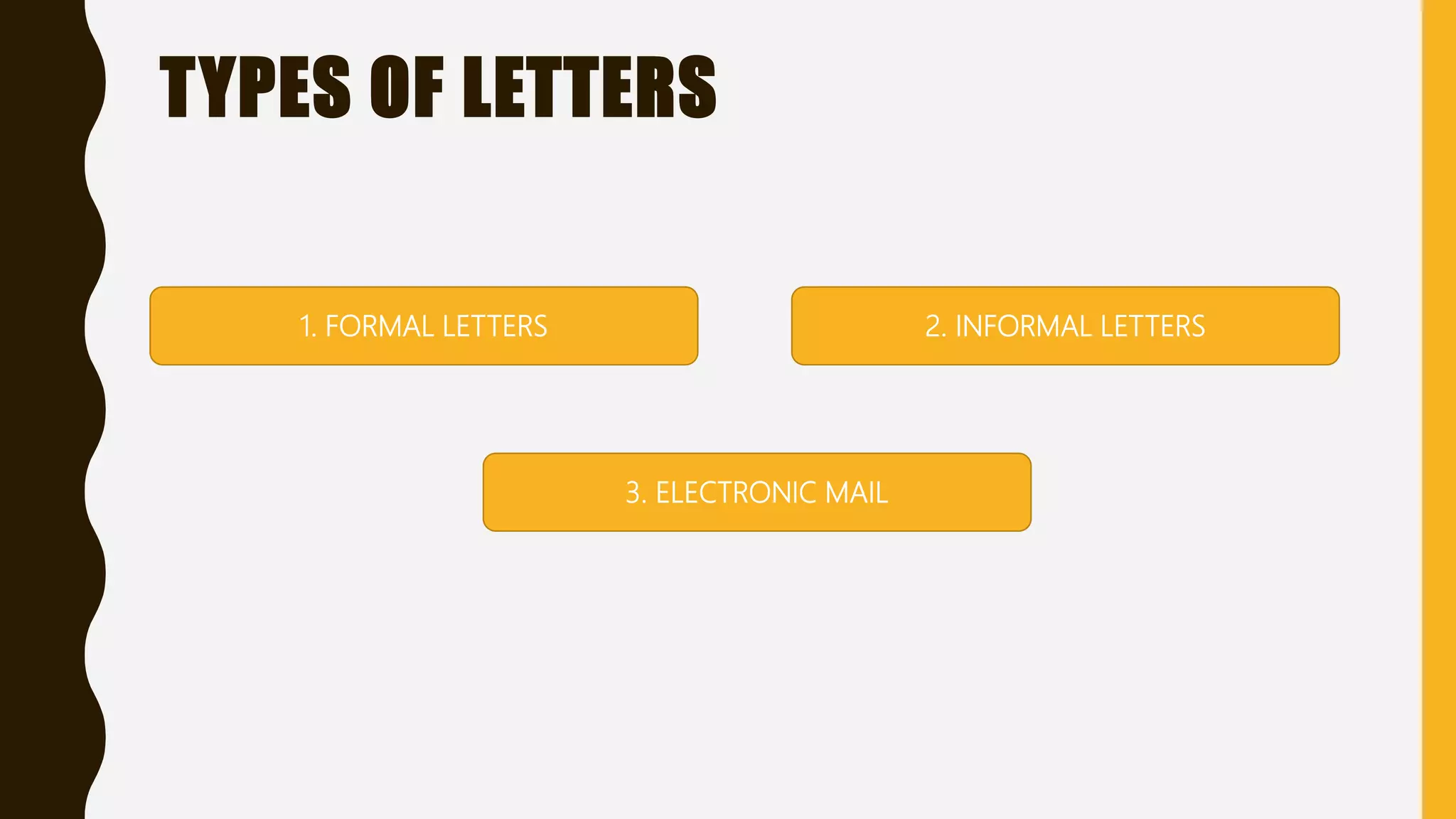
Formal Letters (official letters) : A formal letter is a letter written to a
business, a college, or any professional that are not considered friends or family.
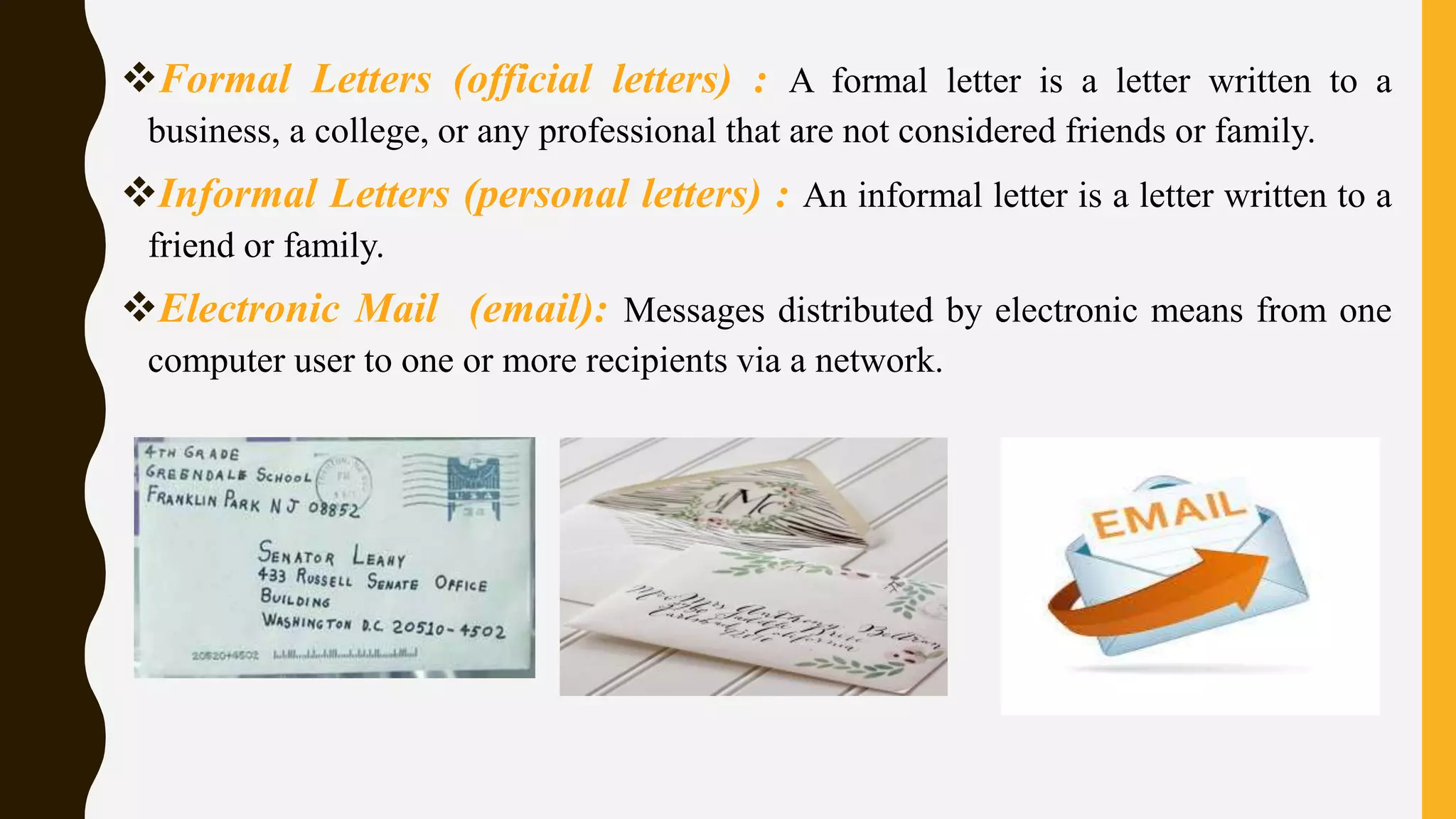
Informal Letters (personal letters) : An informal letter is a letter written to a
friend or family.
Electronic Mail (email): Messages distributed by electronic means from one
computer user to one or more recipients via a network.
TYPES OF FORMAL AND INFORMAL LETTERS
Cover Letters
Résumé
Follow-up-Letters
Accepting Job Offers
References
Apologies
Complaints
Invitations
Offering Condolences
Appreciation and Thank you
1. FORMAL LETTERS 2. INFORMAL LETTERS
STYLES OF LETTER WRITING
1. BLOCK STYLE 2. SEMI BLOCK STYLE
3. MODIFIED BLOCK STYLE
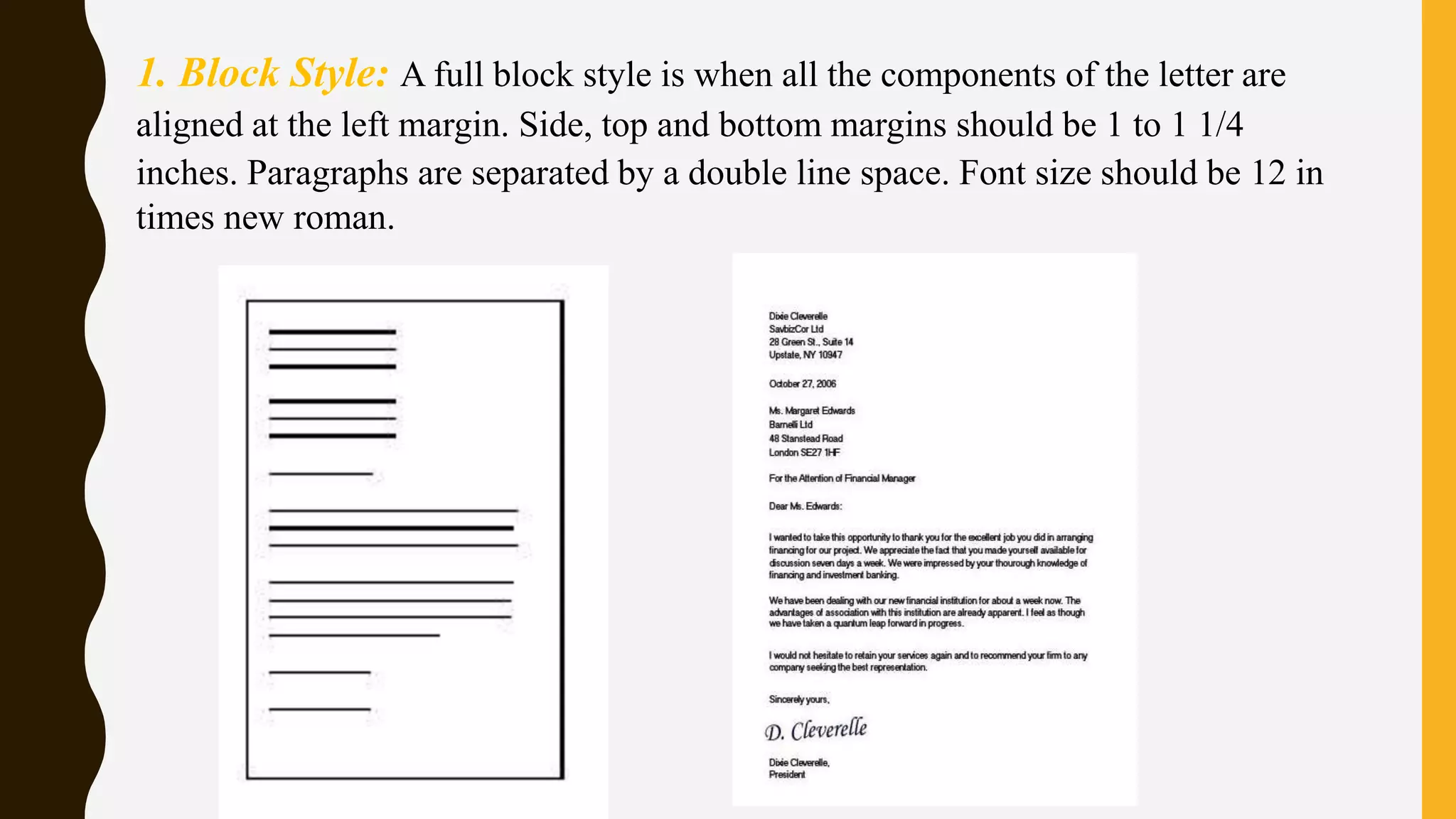
1. Block Style: A full block style is when all the components of the letter are
aligned at the left margin. Side, top and bottom margins should be 1 to 1 1/4
inches. Paragraphs are separated by a double line space. Font size should be 12 in
times new roman.
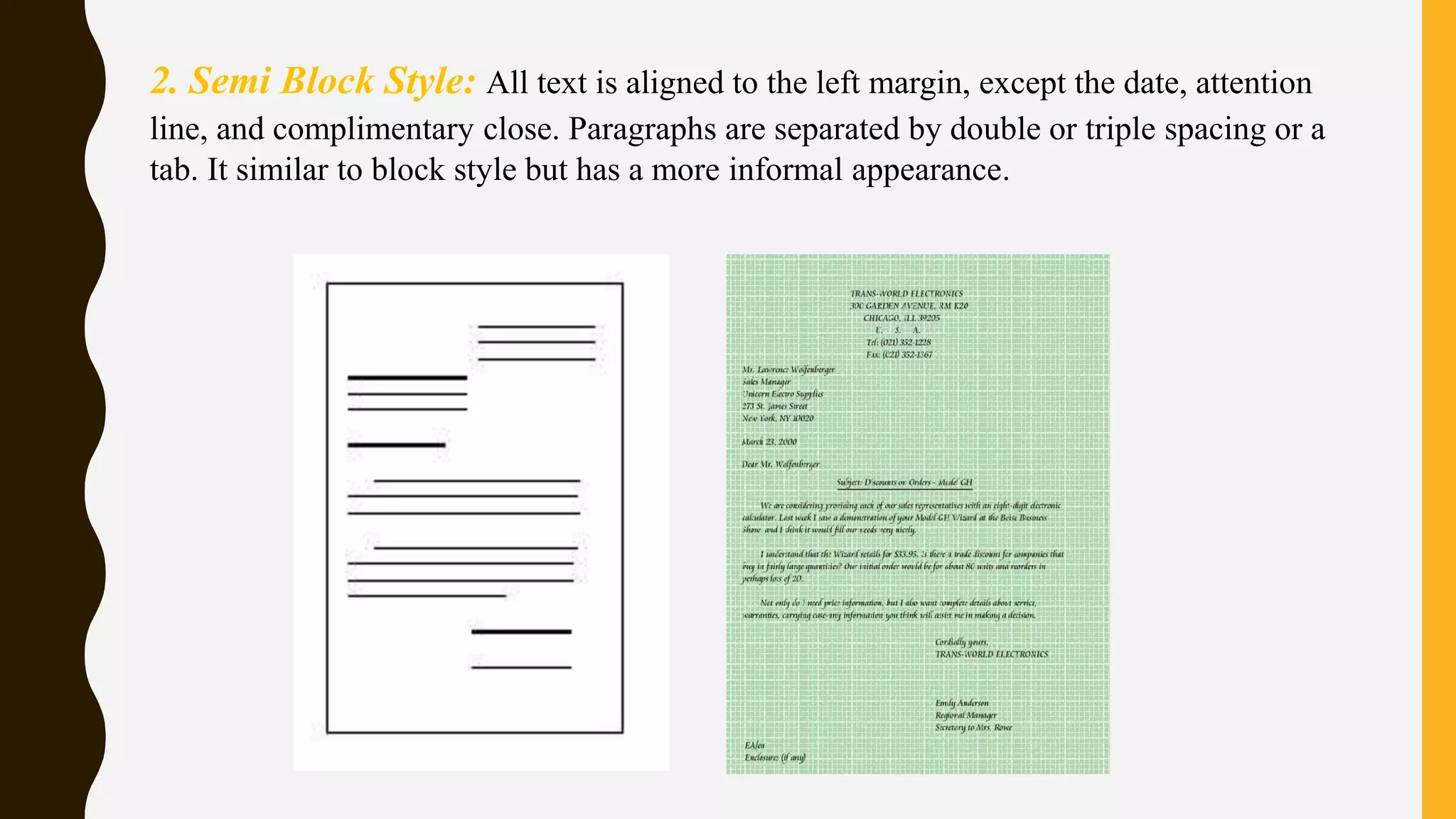
2. Semi Block Style: All text is aligned to the left margin, except the date, attention
line, and complimentary close. Paragraphs are separated by double or triple spacing or a
tab. It similar to block style but has a more informal appearance.
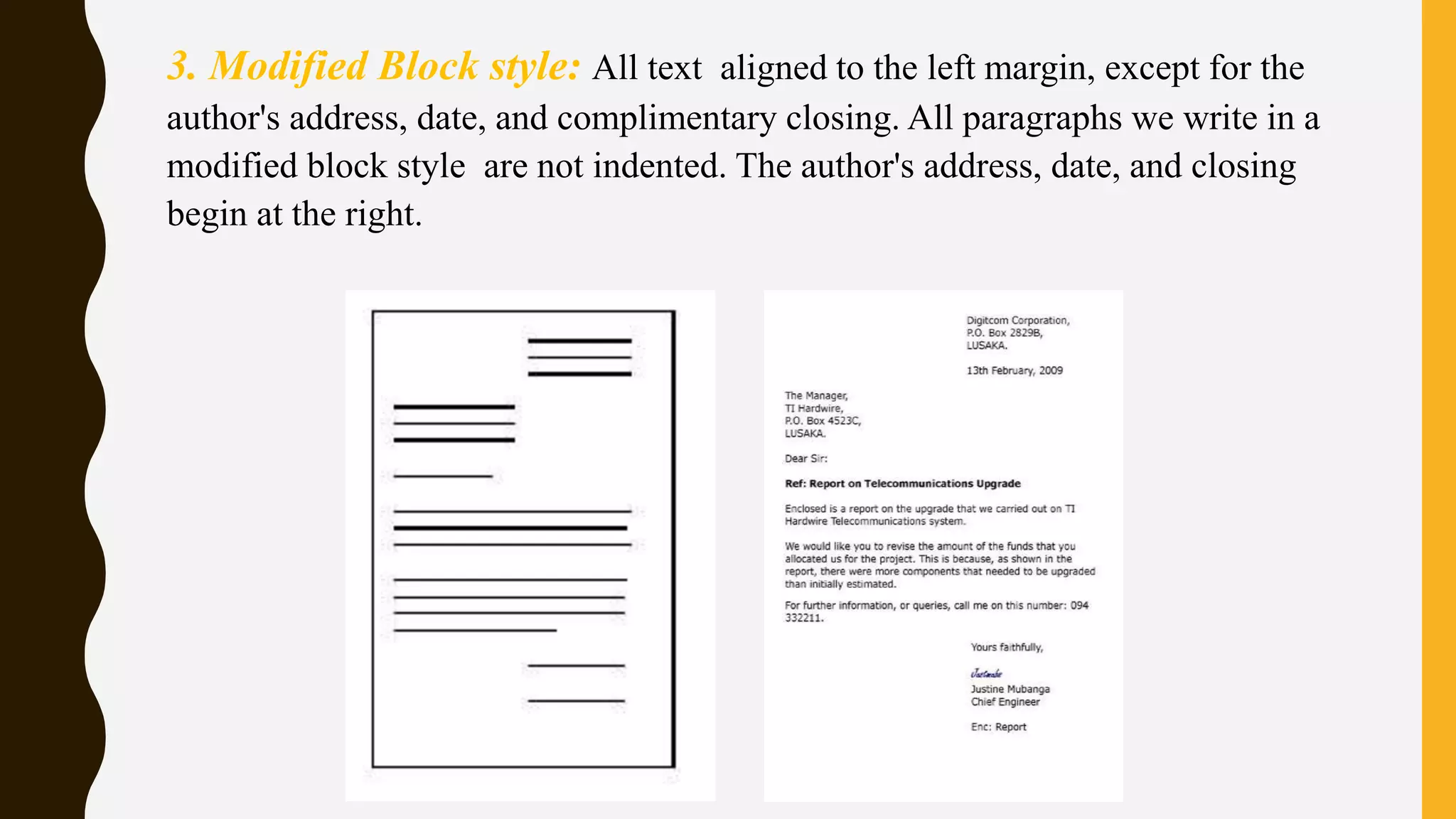
3. Modified Block style: All text aligned to the left margin, except for the
author's address, date, and complimentary closing. All paragraphs we write in a
modified block style are not indented. The author's address, date, and closing
begin at the right.
PARTS OF A LETTER
1. Letterhead
2. The date of the letter
3. The Inside Address
4. The Greeting / Salutation
5. Title
6. Introduction
7. The Body Paragraphs
8. The Complimentary Close
9. Signature and Writer’s identification
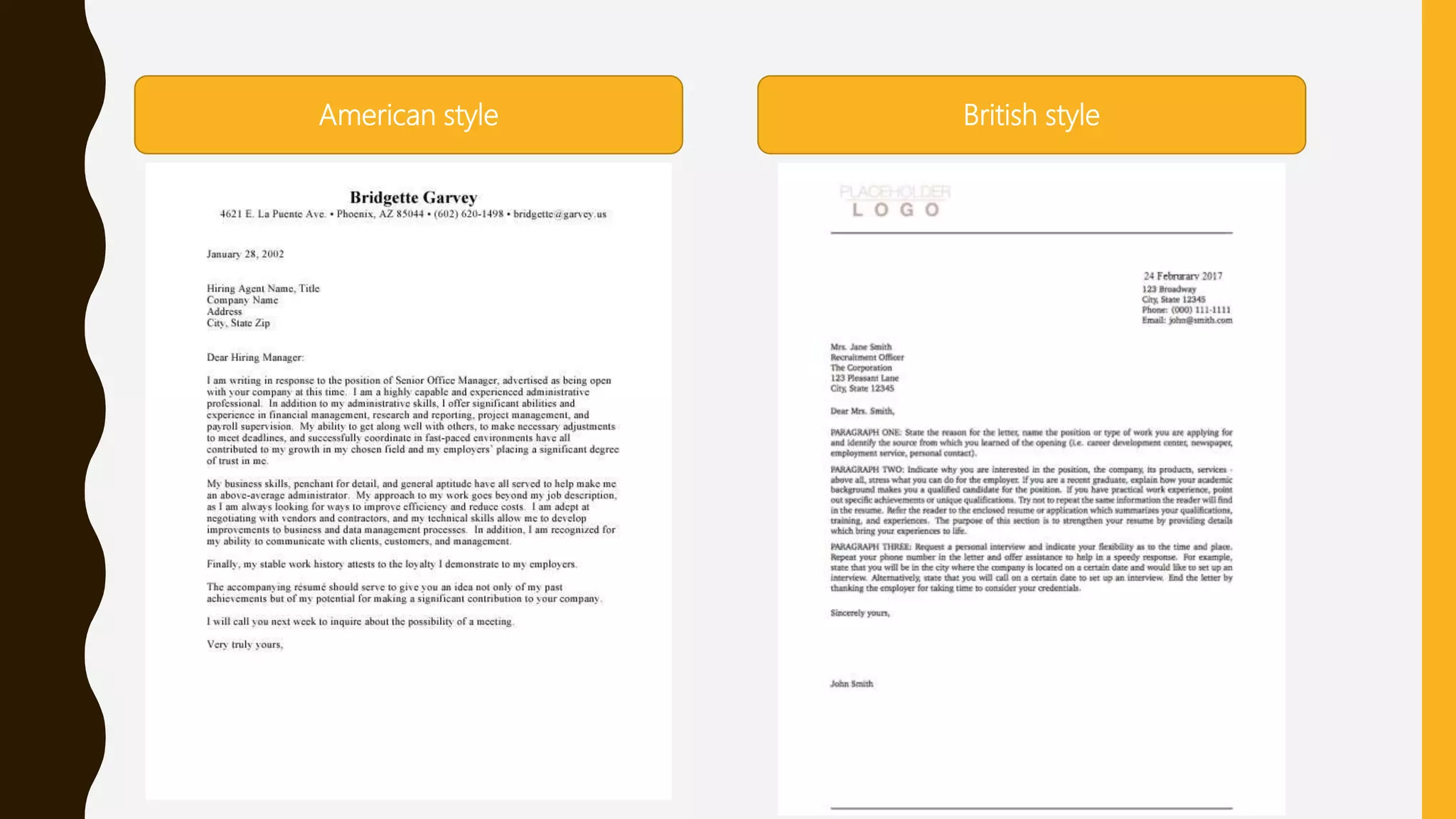
UK LETTERS AND US LETTERS
American Style British Style
Heading Aligned to the left Placed in the top right corner
(sometimes centred)
Date Using month-day-year
format (February 24, 2017),
aligned to the left two line
below the heading.
February 24, 2017
Using date-month-year
format (24 February 2017)
,placed directly (or blank 1
line) below the heading.
Salutation After the salutation there is
colon (:)
Dear Mr./Ms./Mrs.
After the salutation there is
coma (,)
Dear Mr./Ms./Mrs.
Complimentary close Sincerely,
Sincerely yours,
Yours truly,
Sincerely,
Yours sincerely,
Yours faithfully,
American style British style
DIFFERENCE BETWEEN LETTER AND
APPLICATION
LETTER
• A letter you write because you
are replying to someone or
letting someone know what is
happening.
• In formal letter you have to
mention the subject
• Writing a letter you can
explain your purpose in more
than one or two paragraphs.
APPLICATION
• An application is written to
apply for something.
• Application is not having a
subject.
• While writing an application
you summarize your purpose.
APPLICATION

ENGLISH CORRESPONDENCE KINDS OF LETTERS

  • 1.
  • 2.
    LETTERS A letter isa written or typed message from one person to another. Historically, letters were the only reliable means of communications between two persons at different locations.
  • 3.
    TYPES OF LETTERS 1.FORMAL LETTERS 2. INFORMAL LETTERS 3. ELECTRONIC MAIL
  • 4.
    Formal Letters (officialletters) : A formal letter is a letter written to a business, a college, or any professional that are not considered friends or family. Informal Letters (personal letters) : An informal letter is a letter written to a friend or family. Electronic Mail (email): Messages distributed by electronic means from one computer user to one or more recipients via a network.
  • 5.
    TYPES OF FORMALAND INFORMAL LETTERS Cover Letters Résumé Follow-up-Letters Accepting Job Offers References Apologies Complaints Invitations Offering Condolences Appreciation and Thank you 1. FORMAL LETTERS 2. INFORMAL LETTERS
  • 6.
    STYLES OF LETTERWRITING 1. BLOCK STYLE 2. SEMI BLOCK STYLE 3. MODIFIED BLOCK STYLE
  • 7.
    1. Block Style:A full block style is when all the components of the letter are aligned at the left margin. Side, top and bottom margins should be 1 to 1 1/4 inches. Paragraphs are separated by a double line space. Font size should be 12 in times new roman.
  • 8.
    2. Semi BlockStyle: All text is aligned to the left margin, except the date, attention line, and complimentary close. Paragraphs are separated by double or triple spacing or a tab. It similar to block style but has a more informal appearance.
  • 9.
    3. Modified Blockstyle: All text aligned to the left margin, except for the author's address, date, and complimentary closing. All paragraphs we write in a modified block style are not indented. The author's address, date, and closing begin at the right.
  • 10.
    PARTS OF ALETTER 1. Letterhead 2. The date of the letter 3. The Inside Address 4. The Greeting / Salutation 5. Title 6. Introduction 7. The Body Paragraphs 8. The Complimentary Close 9. Signature and Writer’s identification
  • 11.
    UK LETTERS ANDUS LETTERS American Style British Style Heading Aligned to the left Placed in the top right corner (sometimes centred) Date Using month-day-year format (February 24, 2017), aligned to the left two line below the heading. February 24, 2017 Using date-month-year format (24 February 2017) ,placed directly (or blank 1 line) below the heading. Salutation After the salutation there is colon (:) Dear Mr./Ms./Mrs. After the salutation there is coma (,) Dear Mr./Ms./Mrs. Complimentary close Sincerely, Sincerely yours, Yours truly, Sincerely, Yours sincerely, Yours faithfully,
  • 12.
  • 13.
    DIFFERENCE BETWEEN LETTERAND APPLICATION LETTER • A letter you write because you are replying to someone or letting someone know what is happening. • In formal letter you have to mention the subject • Writing a letter you can explain your purpose in more than one or two paragraphs. APPLICATION • An application is written to apply for something. • Application is not having a subject. • While writing an application you summarize your purpose.
  • 14.