Kindergarten
inside the
classroom
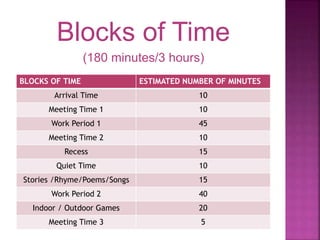
Blocks of Time
(180 minutes/3 hours)
BLOCKS OF TIME ESTIMATED NUMBER OF MINUTES
Arrival Time 10
Meeting Time 1 10
Work Period 1 45
Meeting Time 2 10
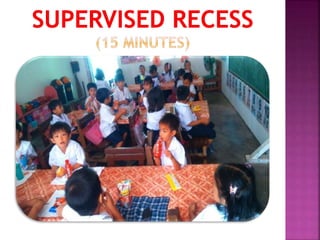
Recess 15
Quiet Time 10
Stories /Rhyme/Poems/Songs 15
Work Period 2 40
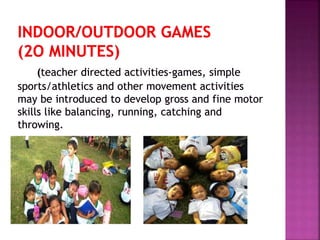
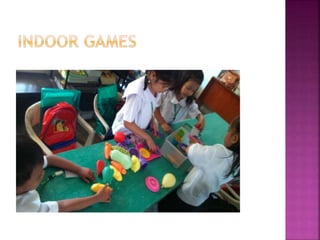
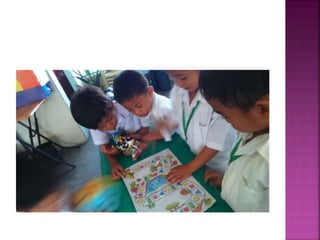
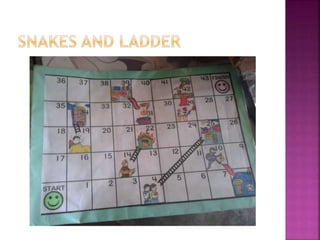
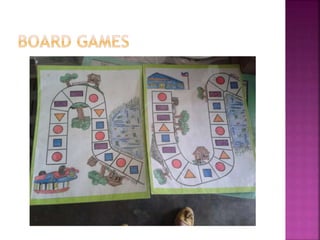
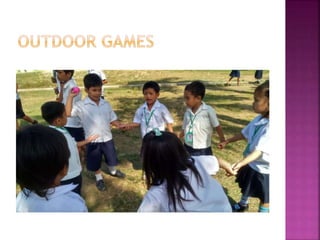
Indoor / Outdoor Games 20
Meeting Time 3 5
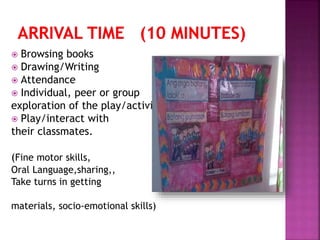
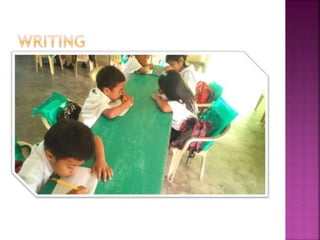
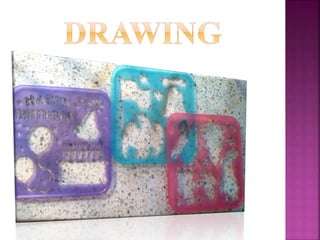
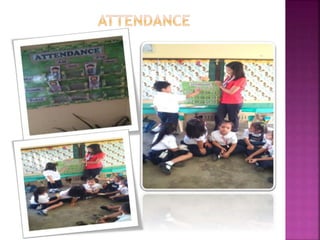
 Browsing books
 Drawing/Writing
 Attendance
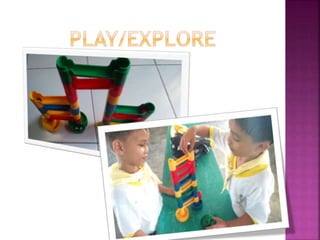
 Individual, peer or group
exploration of the play/activity areas
 Play/interact with
their classmates.
(Fine motor skills,
Oral Language,sharing,,
Take turns in getting
materials, socio-emotional skills)
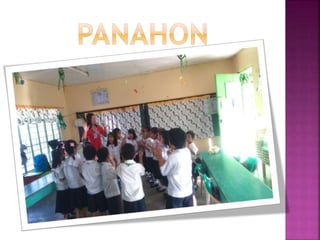
 Introduction of the message of the day
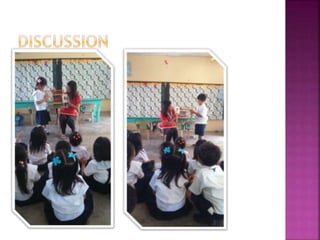
 Active discussion/oral language
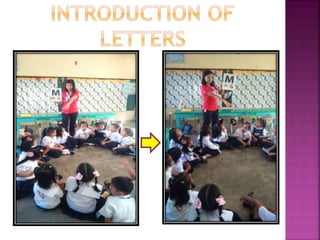
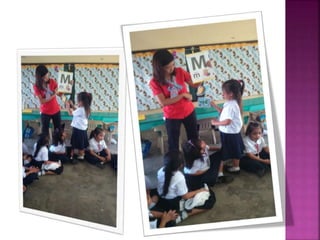
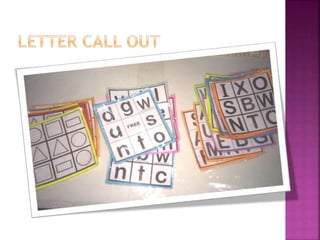
 Presenting of the letter and sound of the day
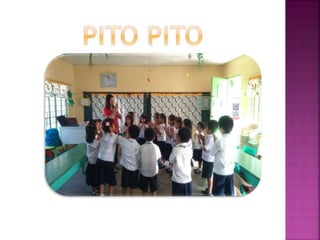
 Action song,prayer
 Teacher-led exercise
 Cleanliness Check
 Sharing time with classmates
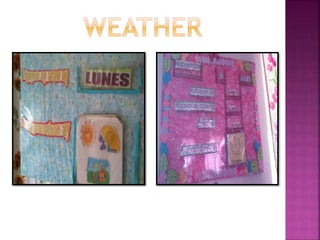
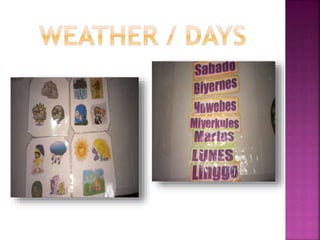
 Phonological awareness(dialogue, telling the
names of days, weather, etc.)
*Teacher Supervised-with the teacher(new concept
is introduced by the teacher)
*Independent Group Activities:(socio-emotional-
work in groups/collaborative work)
‱ Children work in pairs or small groups
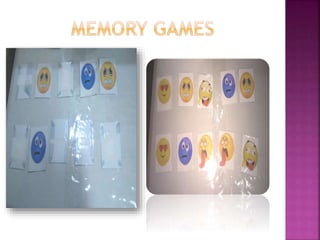
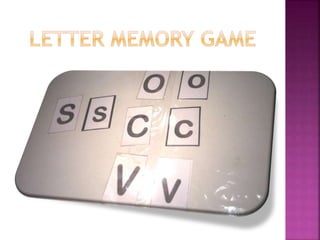
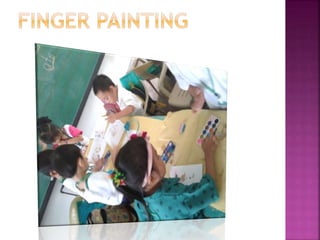
Memory games Finger Painting
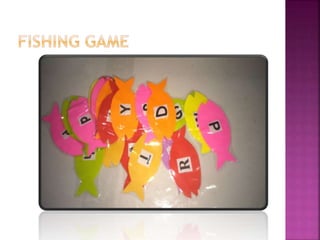
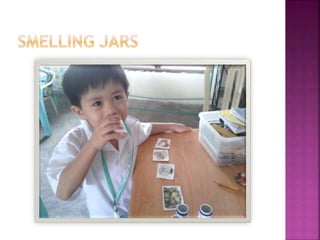
Fishing game Smelling jars
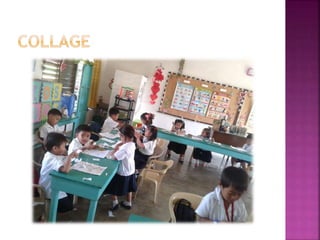
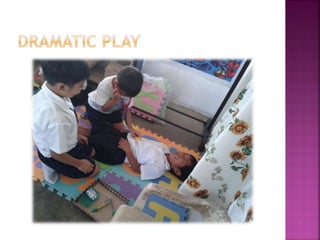
Collage Dramatic play
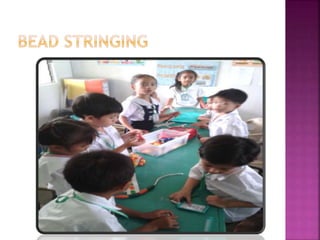
Bead stringing
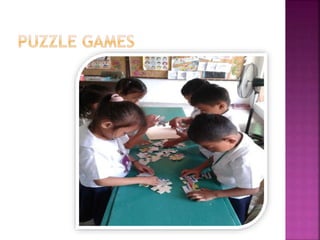
Puzzle
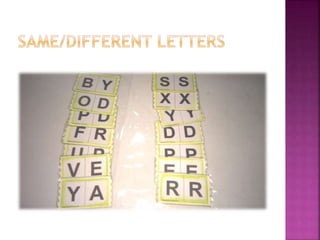
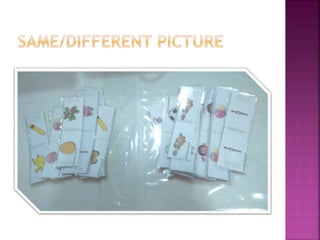
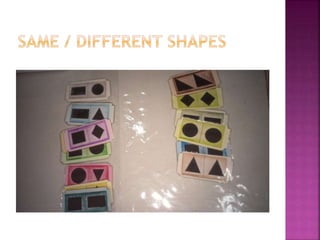
Same/Different
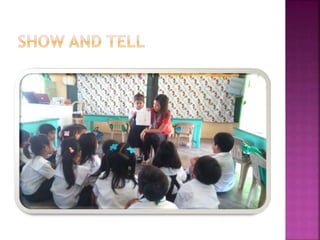
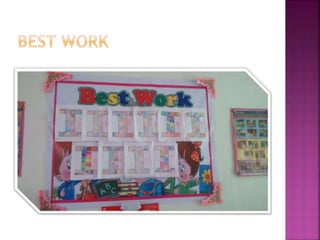
Show and tell of the child’s
work/outputs
(TS and independent activities from
work period 1)
- children prepare for washing of their
hands before eating snacks
- skills such as following instructions,
recalling of information are linked
Nourishing break for the learners
During this time, teacher
develops/integrates values (nutrition,
self-help skills, Proper etiquette for
eating, etc.)
Fine motor skills such as opening lids
and containers are facilitated
 Learning still exists/ facilitated
Children can rest and may engage in
quiet relaxing activities:
- reading, napping- sometimes
may be with soft music
 Reading stories using Big Books
 The story must be related to their experiences.
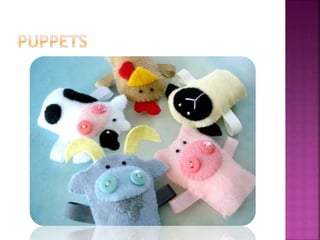
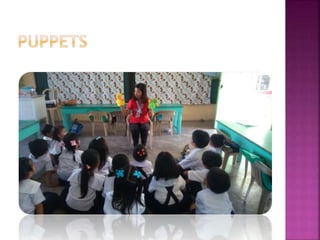
 You may also use some puppets
-a teacher-guided interactive real-aloud
activity for stories,rhymes,poems ( must be age-
and culturally-appropriate ones about the theme
-use contextualized stories/LM
ONE STORY, ONE WEEK
*Story plan will help the teachers on how to go
about it.
 unlocking of difficult words
 activate prior knowledge
 gives motive question/s for listening
 talk about the book itself (book orientation)
 listening standards
 Song
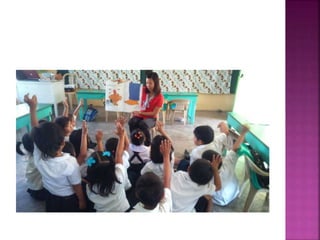
 Ask questions to find out if they are listening
 Don’t ask questions needing a long answer
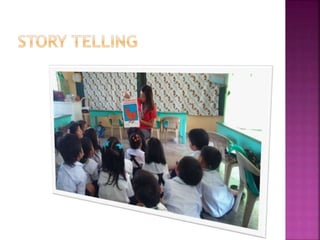
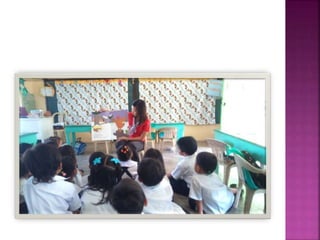
 The story is the focus during the Story Time
 The teacher facilitates the story
 Read aloud.The book should be facing the pupils
*Re-Read
- Modeled reading/read aloud
- Shared reading (Day 3)
- Guided Reading –help me tell the story(when
children already can decode)
- Independent Activity/Reading- Pupils re-tell
the story infront of the class
For wordless books, the teacher is challenged
to make a story based on the illustration.
Choose books related to the experience of
the children.
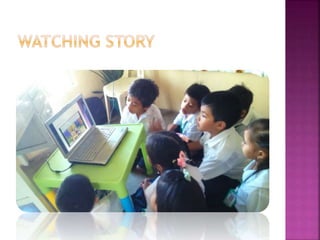
 Story books are preferred over video to
develop thinking skills and imagination of
pupils especially kinder. teacher has the
control to the book.
*video has everything (movement, music,
etc.)
 Always start with the motive questions
 3 questions at most
 Asks questions about the character/s,
sequence of event lessons, and inferences of
the learners from the story (for pupils to
experience pleasure)
 Independent Group Activities
 Teacher Supervised Activity
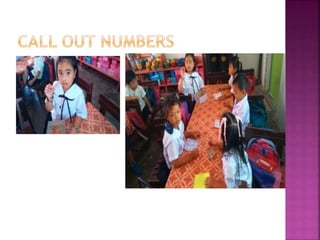
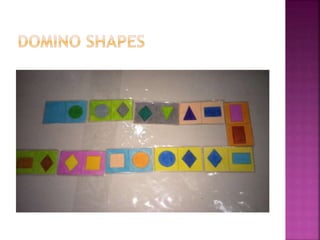
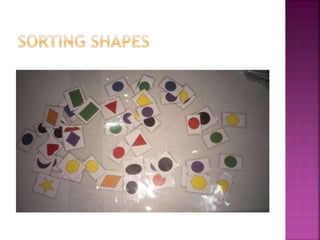
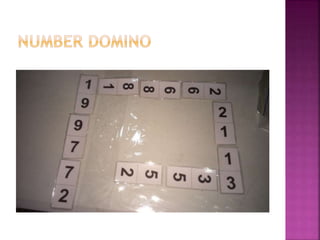
 More on mathematical activities/numeracy
focused skills
 Simple Recall/short summary ( Teacher
synthesizes the children’s learning
experiences)
 Sing and Dance
 Reminders
 Learning Extensions are also given during this
period
 Prayer
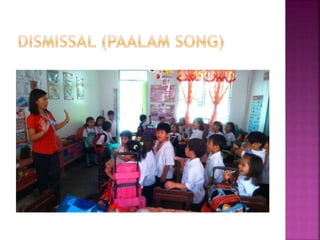
 Pamamaalam
 Maghanda Handa/packing time
Maraming
Salamat po!
SJR

KINDER-INSIDE-THE-CLASSROOM-editted.pptx

  • 1.
  • 2.
    Blocks of Time (180minutes/3 hours) BLOCKS OF TIME ESTIMATED NUMBER OF MINUTES Arrival Time 10 Meeting Time 1 10 Work Period 1 45 Meeting Time 2 10 Recess 15 Quiet Time 10 Stories /Rhyme/Poems/Songs 15 Work Period 2 40 Indoor / Outdoor Games 20 Meeting Time 3 5
  • 3.
     Browsing books Drawing/Writing  Attendance  Individual, peer or group exploration of the play/activity areas  Play/interact with their classmates. (Fine motor skills, Oral Language,sharing,, Take turns in getting materials, socio-emotional skills)
  • 9.
     Introduction ofthe message of the day  Active discussion/oral language  Presenting of the letter and sound of the day  Action song,prayer  Teacher-led exercise  Cleanliness Check  Sharing time with classmates  Phonological awareness(dialogue, telling the names of days, weather, etc.)
  • 16.
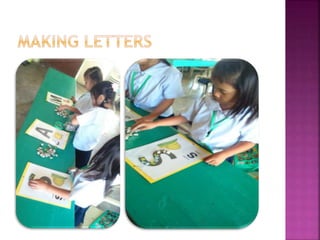
    *Teacher Supervised-with theteacher(new concept is introduced by the teacher) *Independent Group Activities:(socio-emotional- work in groups/collaborative work) ‱ Children work in pairs or small groups Memory games Finger Painting Fishing game Smelling jars Collage Dramatic play Bead stringing Puzzle Same/Different
  • 32.
    Show and tellof the child’s work/outputs (TS and independent activities from work period 1) - children prepare for washing of their hands before eating snacks - skills such as following instructions, recalling of information are linked
  • 37.
    Nourishing break forthe learners During this time, teacher develops/integrates values (nutrition, self-help skills, Proper etiquette for eating, etc.) Fine motor skills such as opening lids and containers are facilitated  Learning still exists/ facilitated
  • 38.
    Children can restand may engage in quiet relaxing activities: - reading, napping- sometimes may be with soft music
  • 39.
     Reading storiesusing Big Books  The story must be related to their experiences.  You may also use some puppets -a teacher-guided interactive real-aloud activity for stories,rhymes,poems ( must be age- and culturally-appropriate ones about the theme -use contextualized stories/LM ONE STORY, ONE WEEK *Story plan will help the teachers on how to go about it.
  • 40.
     unlocking ofdifficult words  activate prior knowledge  gives motive question/s for listening  talk about the book itself (book orientation)  listening standards  Song
  • 41.
     Ask questionsto find out if they are listening  Don’t ask questions needing a long answer  The story is the focus during the Story Time  The teacher facilitates the story  Read aloud.The book should be facing the pupils *Re-Read - Modeled reading/read aloud - Shared reading (Day 3) - Guided Reading –help me tell the story(when children already can decode) - Independent Activity/Reading- Pupils re-tell the story infront of the class
  • 42.
    For wordless books,the teacher is challenged to make a story based on the illustration. Choose books related to the experience of the children.  Story books are preferred over video to develop thinking skills and imagination of pupils especially kinder. teacher has the control to the book. *video has everything (movement, music, etc.)
  • 43.
     Always startwith the motive questions  3 questions at most  Asks questions about the character/s, sequence of event lessons, and inferences of the learners from the story (for pupils to experience pleasure)
  • 50.
     Independent GroupActivities  Teacher Supervised Activity  More on mathematical activities/numeracy focused skills
  • 72.
     Simple Recall/shortsummary ( Teacher synthesizes the children’s learning experiences)  Sing and Dance  Reminders  Learning Extensions are also given during this period  Prayer  Pamamaalam  Maghanda Handa/packing time
  • 74.