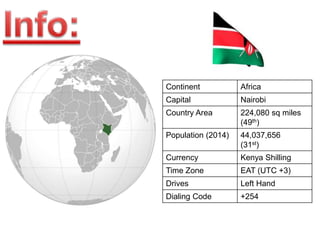
Continent Africa 
Capital Nairobi 
Country Area 224,080 sq miles 
(49th) 
Population (2014) 44,037,656 
(31st) 
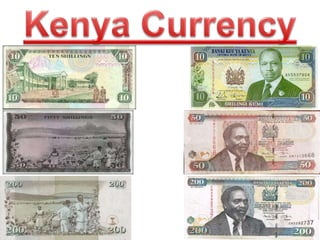
Currency Kenya Shilling 
Time Zone EAT (UTC +3) 
Drives Left Hand 
Dialing Code +254
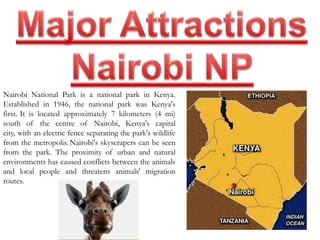
Nairobi National Park is a national park in Kenya. 
Established in 1946, the national park was Kenya's 
first. It is located approximately 7 kilometers (4 mi) 
south of the centre of Nairobi, Kenya's capital 
city, with an electric fence separating the park's wildlife 
from the metropolis. Nairobi's skyscrapers can be seen 
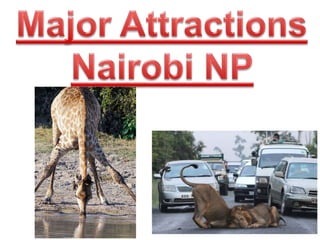
from the park. The proximity of urban and natural 
environments has caused conflicts between the animals 
and local people and threatens animals' migration 
routes.
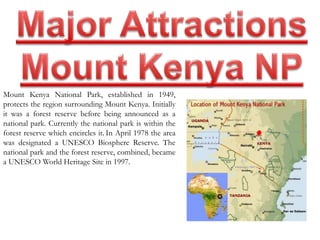
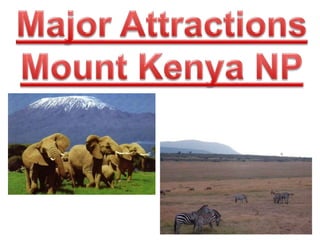
Mount Kenya National Park, established in 1949, 
protects the region surrounding Mount Kenya. Initially 
it was a forest reserve before being announced as a 
national park. Currently the national park is within the 
forest reserve which encircles it. In April 1978 the area 
was designated a UNESCO Biosphere Reserve. The 
national park and the forest reserve, combined, became 
a UNESCO World Heritage Site in 1997.
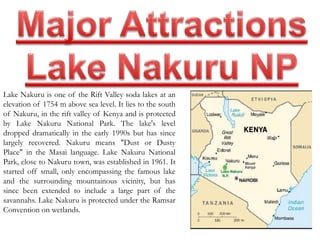
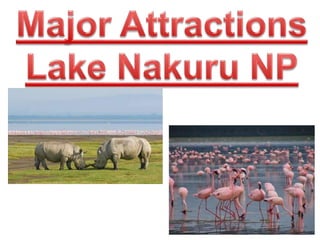
Lake Nakuru is one of the Rift Valley soda lakes at an 
elevation of 1754 m above sea level. It lies to the south 
of Nakuru, in the rift valley of Kenya and is protected 
by Lake Nakuru National Park. The lake's level 
dropped dramatically in the early 1990s but has since 
largely recovered. Nakuru means "Dust or Dusty 
Place" in the Masai language. Lake Nakuru National 
Park, close to Nakuru town, was established in 1961. It 
started off small, only encompassing the famous lake 
and the surrounding mountainous vicinity, but has 
since been extended to include a large part of the 
savannahs. Lake Nakuru is protected under the Ramsar 
Convention on wetlands.
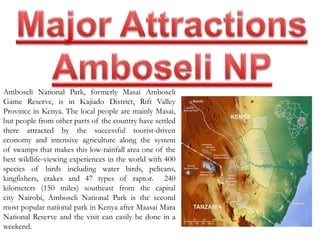
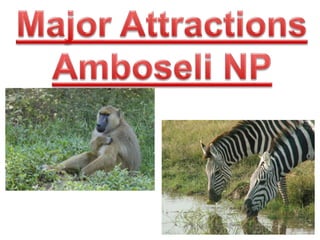
Amboseli National Park, formerly Masai Amboseli 
Game Reserve, is in Kajiado District, Rift Valley 
Province in Kenya. The local people are mainly Masai, 
but people from other parts of the country have settled 
there attracted by the successful tourist-driven 
economy and intensive agriculture along the system 
of swamps that makes this low-rainfall area one of the 
best wildlife-viewing experiences in the world with 400 
species of birds including water birds, pelicans, 
kingfishers, crakes and 47 types of raptor. 240 
kilometers (150 miles) southeast from the capital 
city Nairobi, Amboseli National Park is the second 
most popular national park in Kenya after Maasai Mara 
National Reserve and the visit can easily be done in a 
weekend.
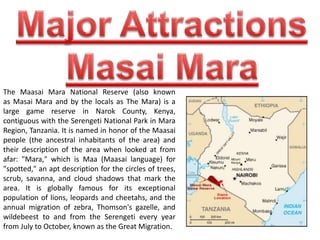
The Maasai Mara National Reserve (also known 
as Masai Mara and by the locals as The Mara) is a 
large game reserve in Narok County, Kenya, 
contiguous with the Serengeti National Park in Mara 
Region, Tanzania. It is named in honor of the Maasai 
people (the ancestral inhabitants of the area) and 
their description of the area when looked at from 
afar: "Mara," which is Maa (Maasai language) for 
"spotted," an apt description for the circles of trees, 
scrub, savanna, and cloud shadows that mark the 
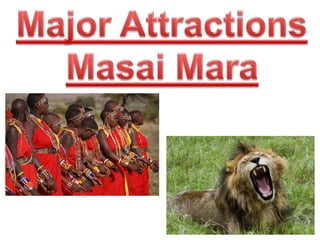
area. It is globally famous for its exceptional 
population of lions, leopards and cheetahs, and the 
annual migration of zebra, Thomson's gazelle, and 
wildebeest to and from the Serengeti every year 
from July to October, known as the Great Migration.
Kenya Tourism
Kenya Tourism
Kenya Tourism

Kenya Tourism

  • 2.
    Continent Africa CapitalNairobi Country Area 224,080 sq miles (49th) Population (2014) 44,037,656 (31st) Currency Kenya Shilling Time Zone EAT (UTC +3) Drives Left Hand Dialing Code +254
  • 8.
    Nairobi National Parkis a national park in Kenya. Established in 1946, the national park was Kenya's first. It is located approximately 7 kilometers (4 mi) south of the centre of Nairobi, Kenya's capital city, with an electric fence separating the park's wildlife from the metropolis. Nairobi's skyscrapers can be seen from the park. The proximity of urban and natural environments has caused conflicts between the animals and local people and threatens animals' migration routes.
  • 10.
    Mount Kenya NationalPark, established in 1949, protects the region surrounding Mount Kenya. Initially it was a forest reserve before being announced as a national park. Currently the national park is within the forest reserve which encircles it. In April 1978 the area was designated a UNESCO Biosphere Reserve. The national park and the forest reserve, combined, became a UNESCO World Heritage Site in 1997.
  • 12.
    Lake Nakuru isone of the Rift Valley soda lakes at an elevation of 1754 m above sea level. It lies to the south of Nakuru, in the rift valley of Kenya and is protected by Lake Nakuru National Park. The lake's level dropped dramatically in the early 1990s but has since largely recovered. Nakuru means "Dust or Dusty Place" in the Masai language. Lake Nakuru National Park, close to Nakuru town, was established in 1961. It started off small, only encompassing the famous lake and the surrounding mountainous vicinity, but has since been extended to include a large part of the savannahs. Lake Nakuru is protected under the Ramsar Convention on wetlands.
  • 14.
    Amboseli National Park,formerly Masai Amboseli Game Reserve, is in Kajiado District, Rift Valley Province in Kenya. The local people are mainly Masai, but people from other parts of the country have settled there attracted by the successful tourist-driven economy and intensive agriculture along the system of swamps that makes this low-rainfall area one of the best wildlife-viewing experiences in the world with 400 species of birds including water birds, pelicans, kingfishers, crakes and 47 types of raptor. 240 kilometers (150 miles) southeast from the capital city Nairobi, Amboseli National Park is the second most popular national park in Kenya after Maasai Mara National Reserve and the visit can easily be done in a weekend.
  • 16.
    The Maasai MaraNational Reserve (also known as Masai Mara and by the locals as The Mara) is a large game reserve in Narok County, Kenya, contiguous with the Serengeti National Park in Mara Region, Tanzania. It is named in honor of the Maasai people (the ancestral inhabitants of the area) and their description of the area when looked at from afar: "Mara," which is Maa (Maasai language) for "spotted," an apt description for the circles of trees, scrub, savanna, and cloud shadows that mark the area. It is globally famous for its exceptional population of lions, leopards and cheetahs, and the annual migration of zebra, Thomson's gazelle, and wildebeest to and from the Serengeti every year from July to October, known as the Great Migration.