The Art of Lemon’s
solution
  KDD Cup 2011 Track 2


                   Siwei Lai/ Rui Diao
                   Liang Xiang
Outline
   Problem Introduction
   Data Analytics
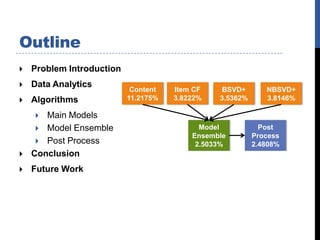
                            Content   Item CF    BSVD+       NBSVD+
   Algorithms             11.2175%   3.8222%   3.5362%      3.8146%

      Main Models
      Model Ensemble                       Model           Post
                                          Ensemble        Process
      Post Process                        2.5033%        2.4808%
   Conclusion
   Future Work
Problem Introduction
   Two Tracks
   Track 2
       Classification Problem
               Positive Samples : tracks users vote higher than 80
               Negative Samples : popular tracks users have not voted
       Data Set
               User voting data
               Taxonomy data
       Comments
               Similar to Top-N recommendation problem
               Using negative samples to prevent Harry Potter problem
Data Analytics
   User vote data may be ordered by time.
     Anchoring effect
     Vote on artists and then vote on their tracks
    This is main reason why we got 2nd position


                                http://justaguyinagarage.blogspot.com/2011/0
                                6/recommendation-system-competitions.html
Data Analytics
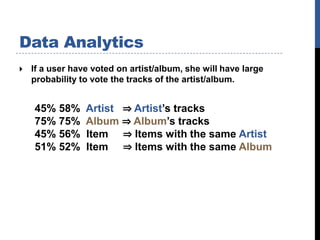
   If a user have voted on artist/album, she will have large
    probability to vote the tracks of the artist/album.


    45% 58%      Artist ⇒ Artist’s tracks
    75% 75%      Album ⇒ Album’s tracks
    45% 56%      Item ⇒ Items with the same Artist
    51% 52%      Item ⇒ Items with the same Album
Data Analytics
   User vote data may be ordered by time.
     Anchoring effect
     Vote on artists and then vote on their tracks


   If a user have voted on artist, she will have large
    probability to vote the tracks of the artist.
Algorithm: Main Models
   Content-based Model
   Item-based Collaborative Filtering Model
   Binary Latent Factor Model
   Neighborhood-based Binary SVD Model
Content-based Model
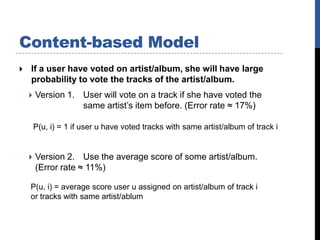
   If a user have voted on artist/album, she will have large
    probability to vote the tracks of the artist/album.
       Version 1. User will vote on a track if she have voted the
                   same artist’s item before. (Error rate ≈ 17%)

        P(u, i) = 1 if user u have voted tracks with same artist/album of track i


       Version 2. Use the average score of some artist/album.
        (Error rate ≈ 11%)

    P(u, i) = average score user u assigned on artist/album of track i
    or tracks with same artist/ablum
Item-based Collaborative
Filtering
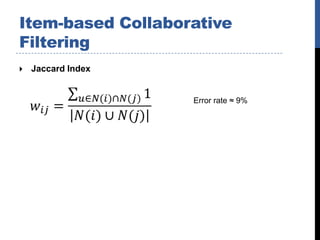
   Jaccard Index


                    Error rate ≈ 9%
Item-based Collaborative
Filtering
   Our Similarity
Item-based Collaborative
Filtering Model
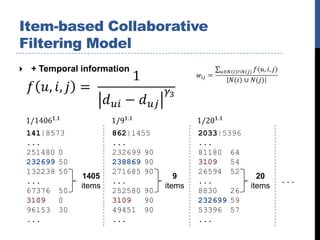
    + Temporal information


    141|8573            862|1455            2033|5396
    ...                 ...                 ...
    251480 0            232699 90           81180 64
    232699 50           238869 90           3109   54
    132238 50           271685 90           26594 52
                1405                   9                  20
    ...                 ...                 ...                 ...
                items               items               items
    67376 50            252580 90           8830   26
    3109   0            3109   90           232699 59
    96153 30            49451 90            53396 57
    ...                 ...                 ...
Item-based Collaborative
Filtering
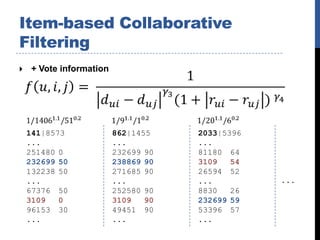
    + Vote information


    141|8573              862|1455    2033|5396
    ...                   ...         ...
    251480 0              232699 90   81180 64
    232699 50             238869 90   3109   54
    132238 50             271685 90   26594 52
    ...                   ...         ...         ...
    67376 50              252580 90   8830   26
    3109   0              3109   90   232699 59
    96153 30              49451 90    53396 57
    ...                   ...         ...
Item-based Collaborative
Filtering
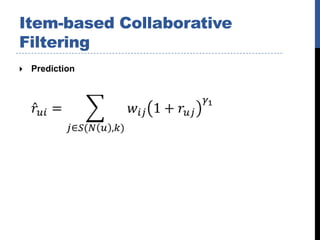
   Prediction
Item-based Collaborative
Filtering
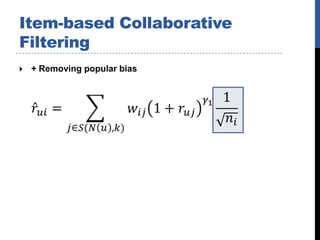
   + Removing popular bias
Item-based Collaborative
Filtering
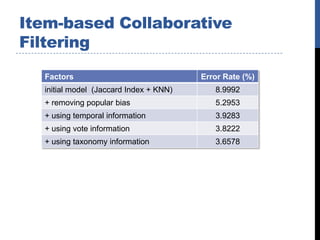
  Factors                               Error Rate (%)
  initial model (Jaccard Index + KNN)      8.9992
  + removing popular bias                  5.2953
  + using temporal information             3.9283
  + using vote information                 3.8222
  + using taxonomy information             3.6578
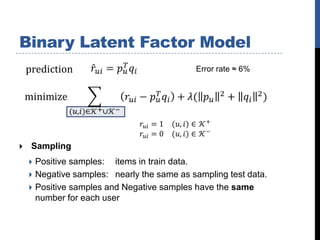
Binary Latent Factor Model
    prediction                              Error rate ≈ 6%


    Sampling
     Positive samples: items in train data.
     Negative samples: nearly the same as sampling test data.
     Positive samples and Negative samples have the same
      number for each user
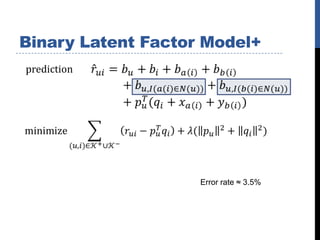
Binary Latent Factor Model+
prediction


                    Error rate ≈ 3.5%
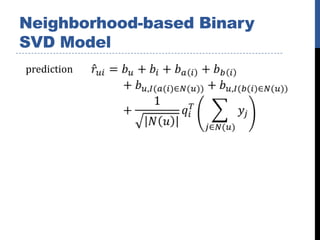
Neighborhood-based Binary
SVD Model
prediction
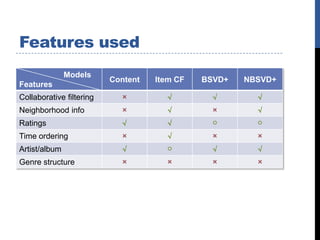
Features used
               Models
                          Content   Item CF   BSVD+   NBSVD+
Features
Collaborative filtering     ×         √         √       √
Neighborhood info           ×         √         ×       √
Ratings                     √         √         ○       ○
Time ordering               ×         √         ×       ×
Artist/album                √         ○         √       √
Genre structure             ×         ×         ×       ×
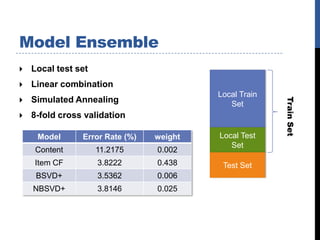
Model Ensemble
   Local test set
   Linear combination
                                          Local Train
   Simulated Annealing


                                                        Train Set
                                             Set
   8-fold cross validation

     Model      Error Rate (%)   weight   Local Test
                                             Set
    Content          11.2175     0.002
    Item CF          3.8222      0.438     Test Set
     BSVD+           3.5362      0.006
    NBSVD+           3.8146      0.025
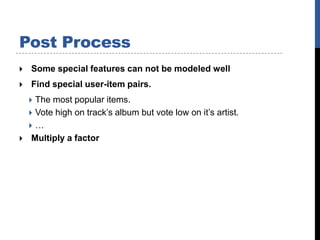
Post Process
   Some special features can not be modeled well
   Find special user-item pairs.
     The most popular items.
     Vote high on track’s album but vote low on it’s artist.
    …
    Multiply a factor
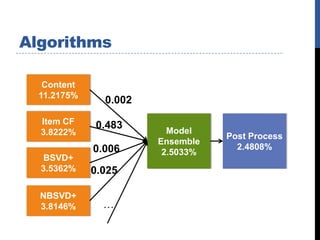
Algorithms

   Content
  11.2175%
               0.002
  Item CF    0.483
  3.8222%                Model
                                  Post Process
                       Ensemble
             0.006                  2.4808%
                        2.5033%
   BSVD+
  3.5362%    0.025

  NBSVD+
  3.8146%      …
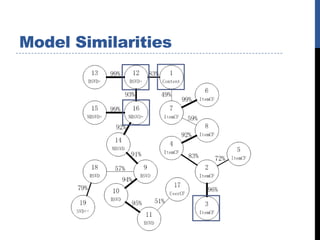
Model Similarities
Conclusion
   Data Analysis is very important
     User behavior data is ordered by time
     Artist/Album data can improve accuracy a lot
    Team members number and model numbers is very
     important
   Useful algorithms:
     Content-based
     Neighborhood-based
     Matrix Factorization
Future Work
   How to add temporal information into Binary SVD Model?
   Apply Binary SVD into real production
     How to make explanation
     How to make real-time on-line recommendation
Q&A


  Thanks!
  xlvector@gmail.com

Kddcup2011

  • 1.
    The Art ofLemon’s solution KDD Cup 2011 Track 2 Siwei Lai/ Rui Diao Liang Xiang
  • 2.
    Outline  Problem Introduction  Data Analytics Content Item CF BSVD+ NBSVD+  Algorithms 11.2175% 3.8222% 3.5362% 3.8146%  Main Models  Model Ensemble Model Post Ensemble Process  Post Process 2.5033% 2.4808%  Conclusion  Future Work
  • 3.
    Problem Introduction  Two Tracks  Track 2  Classification Problem  Positive Samples : tracks users vote higher than 80  Negative Samples : popular tracks users have not voted  Data Set  User voting data  Taxonomy data  Comments  Similar to Top-N recommendation problem  Using negative samples to prevent Harry Potter problem
  • 4.
    Data Analytics  User vote data may be ordered by time.  Anchoring effect  Vote on artists and then vote on their tracks  This is main reason why we got 2nd position http://justaguyinagarage.blogspot.com/2011/0 6/recommendation-system-competitions.html
  • 5.
    Data Analytics  If a user have voted on artist/album, she will have large probability to vote the tracks of the artist/album. 45% 58% Artist ⇒ Artist’s tracks 75% 75% Album ⇒ Album’s tracks 45% 56% Item ⇒ Items with the same Artist 51% 52% Item ⇒ Items with the same Album
  • 6.
    Data Analytics  User vote data may be ordered by time.  Anchoring effect  Vote on artists and then vote on their tracks  If a user have voted on artist, she will have large probability to vote the tracks of the artist.
  • 7.
    Algorithm: Main Models  Content-based Model  Item-based Collaborative Filtering Model  Binary Latent Factor Model  Neighborhood-based Binary SVD Model
  • 8.
    Content-based Model  If a user have voted on artist/album, she will have large probability to vote the tracks of the artist/album.  Version 1. User will vote on a track if she have voted the same artist’s item before. (Error rate ≈ 17%) P(u, i) = 1 if user u have voted tracks with same artist/album of track i  Version 2. Use the average score of some artist/album. (Error rate ≈ 11%) P(u, i) = average score user u assigned on artist/album of track i or tracks with same artist/ablum
  • 9.
    Item-based Collaborative Filtering  Jaccard Index Error rate ≈ 9%
  • 10.
  • 11.
    Item-based Collaborative Filtering Model  + Temporal information 141|8573 862|1455 2033|5396 ... ... ... 251480 0 232699 90 81180 64 232699 50 238869 90 3109 54 132238 50 271685 90 26594 52 1405 9 20 ... ... ... ... items items items 67376 50 252580 90 8830 26 3109 0 3109 90 232699 59 96153 30 49451 90 53396 57 ... ... ...
  • 12.
    Item-based Collaborative Filtering  + Vote information 141|8573 862|1455 2033|5396 ... ... ... 251480 0 232699 90 81180 64 232699 50 238869 90 3109 54 132238 50 271685 90 26594 52 ... ... ... ... 67376 50 252580 90 8830 26 3109 0 3109 90 232699 59 96153 30 49451 90 53396 57 ... ... ...
  • 13.
  • 14.
  • 15.
    Item-based Collaborative Filtering Factors Error Rate (%) initial model (Jaccard Index + KNN) 8.9992 + removing popular bias 5.2953 + using temporal information 3.9283 + using vote information 3.8222 + using taxonomy information 3.6578
  • 16.
    Binary Latent FactorModel prediction Error rate ≈ 6%  Sampling  Positive samples: items in train data.  Negative samples: nearly the same as sampling test data.  Positive samples and Negative samples have the same number for each user
  • 17.
    Binary Latent FactorModel+ prediction Error rate ≈ 3.5%
  • 18.
  • 19.
    Features used Models Content Item CF BSVD+ NBSVD+ Features Collaborative filtering × √ √ √ Neighborhood info × √ × √ Ratings √ √ ○ ○ Time ordering × √ × × Artist/album √ ○ √ √ Genre structure × × × ×
  • 20.
    Model Ensemble  Local test set  Linear combination Local Train  Simulated Annealing Train Set Set  8-fold cross validation Model Error Rate (%) weight Local Test Set Content 11.2175 0.002 Item CF 3.8222 0.438 Test Set BSVD+ 3.5362 0.006 NBSVD+ 3.8146 0.025
  • 21.
    Post Process  Some special features can not be modeled well  Find special user-item pairs.  The most popular items.  Vote high on track’s album but vote low on it’s artist. …  Multiply a factor
  • 22.
    Algorithms Content 11.2175% 0.002 Item CF 0.483 3.8222% Model Post Process Ensemble 0.006 2.4808% 2.5033% BSVD+ 3.5362% 0.025 NBSVD+ 3.8146% …
  • 23.
  • 24.
    Conclusion  Data Analysis is very important  User behavior data is ordered by time  Artist/Album data can improve accuracy a lot  Team members number and model numbers is very important  Useful algorithms:  Content-based  Neighborhood-based  Matrix Factorization
  • 25.
    Future Work  How to add temporal information into Binary SVD Model?  Apply Binary SVD into real production  How to make explanation  How to make real-time on-line recommendation
  • 26.
    Q&A Thanks! xlvector@gmail.com