Optimizing the Use of
Hospital Resources through
   Real-world, Real-time
   Information Systems
     Prof. Antoine Geissbühler, MD
      Geneva University Hospitals
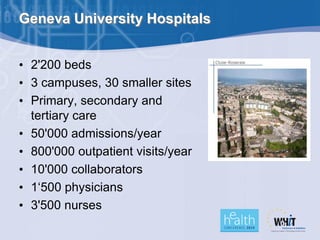
Geneva University Hospitals


• 2'200 beds
• 3 campuses, 30 smaller sites
• Primary, secondary and
  tertiary care
• 50'000 admissions/year
• 800'000 outpatient visits/year
• 10'000 collaborators
• 1‘500 physicians
• 3'500 nurses
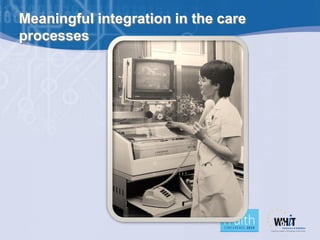
Meaningful integration in the care
processes
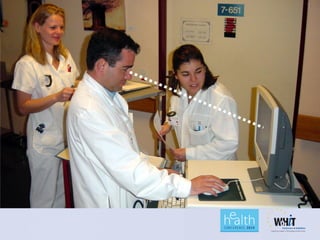
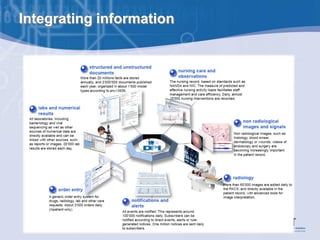
Integrating information
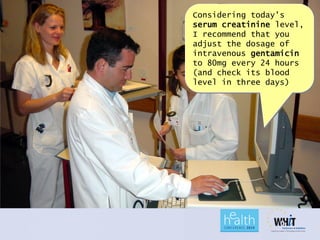
Considering today's
serum creatinine level,
I recommend that you
adjust the dosage of
intravenous gentamicin
to 80mg every 24 hours
(and check its blood
level in three days)
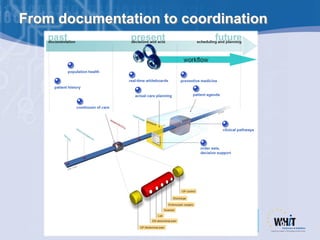
From documentation to coordination
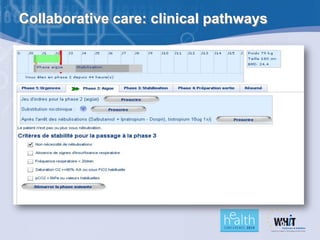
Collaborative care: clinical pathways
Shorter feedback loops


 Resources      Processes       Results

 People         Interventions   Costs
 Equipment      Medications     LOS
 Space          Tests           Satisfaction
                Care            Outcome


  Evaluation, feedback
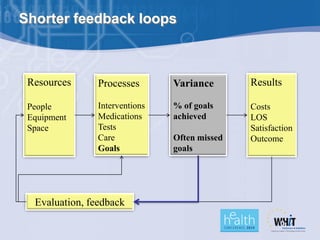
Shorter feedback loops


 Resources      Processes       Variance       Results

 People         Interventions   % of goals     Costs
 Equipment      Medications     achieved       LOS
 Space          Tests                          Satisfaction
                Care            Often missed   Outcome
                Goals           goals


  Evaluation, feedback
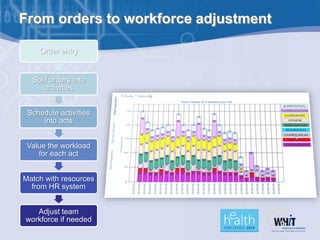
From orders to workforce adjustment

    Order entry


  Split orders into
     activities


 Schedule activities
     into acts


 Value the workload
    for each act


Match with resources
  from HR system


   Adjust team
workforce if needed
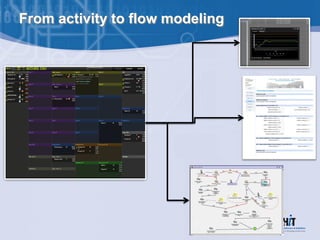
From activity to flow modeling
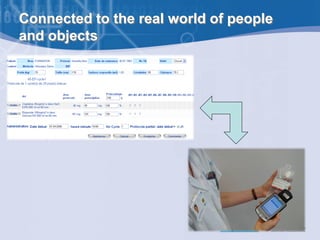
Connected to the real world of people
and objects
Real-world, real-time information

Challenges:

• Getting the information at its source, once
• Connecting the various information domains
  with semantic consistency
• Shorten feedback loops so that the link
  between actions and results is more likely
• Errors are photodegradable → transparency

Just-in-time Decision Support for Improving and Optimising Professional Practices

  • 1.
    Optimizing the Useof Hospital Resources through Real-world, Real-time Information Systems Prof. Antoine Geissbühler, MD Geneva University Hospitals
  • 2.
    Geneva University Hospitals •2'200 beds • 3 campuses, 30 smaller sites • Primary, secondary and tertiary care • 50'000 admissions/year • 800'000 outpatient visits/year • 10'000 collaborators • 1‘500 physicians • 3'500 nurses
  • 3.
    Meaningful integration inthe care processes
  • 5.
  • 6.
    Considering today's serum creatininelevel, I recommend that you adjust the dosage of intravenous gentamicin to 80mg every 24 hours (and check its blood level in three days)
  • 8.
  • 9.
  • 10.
    Shorter feedback loops Resources Processes Results People Interventions Costs Equipment Medications LOS Space Tests Satisfaction Care Outcome Evaluation, feedback
  • 11.
    Shorter feedback loops Resources Processes Variance Results People Interventions % of goals Costs Equipment Medications achieved LOS Space Tests Satisfaction Care Often missed Outcome Goals goals Evaluation, feedback
  • 12.
    From orders toworkforce adjustment Order entry Split orders into activities Schedule activities into acts Value the workload for each act Match with resources from HR system Adjust team workforce if needed
  • 13.
    From activity toflow modeling
  • 14.
    Connected to thereal world of people and objects
  • 15.
    Real-world, real-time information Challenges: •Getting the information at its source, once • Connecting the various information domains with semantic consistency • Shorten feedback loops so that the link between actions and results is more likely • Errors are photodegradable → transparency