Life in ancient Egypt was based on agriculture.
Wheat, fruits and vegetables were the principal
crops, although there was some pastoral farming of
cattle, sheep, or goats. During the annual flooding of the
Nile, farming was impossible. But after that, a rich soil
remained.
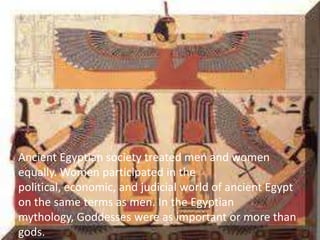
Ancient Egyptian society treated men and women
equally. Women participated in the
political, economic, and judicial world of ancient Egypt
on the same terms as men. In the Egyptian
mythology, Goddesses were as important or more than
gods.
Egyptians used a pictographic written language
“hieroglyphs” about 5000 years ago, and they continued
using them for more than 3500 years, until about 400 AD.
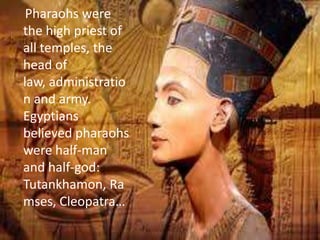
Pharaohs were
the high priest of
all temples, the
head of
law, administratio
n and army.
Egyptians
believed pharaohs
were half-man
and half-god:
Tutankhamon, Ra
mses, Cleopatra…
The ancient Egyptians built pyramids as tombs for
their pharahos and their queens. There are about
eighty pyramids known today from ancient Egyp.
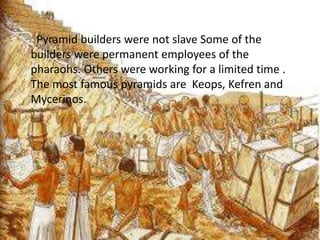
Pyramid builders were not slave Some of the
builders were permanent employees of the
pharaohs. Others were working for a limited time .
The most famous pyramids are Keops, Kefren and
Mycerinos.
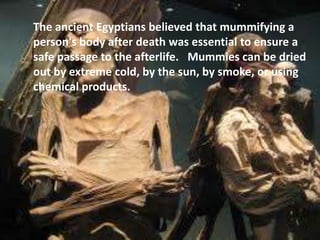
The ancient Egyptians believed that mummifying a
person's body after death was essential to ensure a
safe passage to the afterlife. Mummies can be dried
out by extreme cold, by the sun, by smoke, or using
chemical products.

Juan alcocer

  • 2.
    Life in ancientEgypt was based on agriculture. Wheat, fruits and vegetables were the principal crops, although there was some pastoral farming of cattle, sheep, or goats. During the annual flooding of the Nile, farming was impossible. But after that, a rich soil remained.
  • 3.
    Ancient Egyptian societytreated men and women equally. Women participated in the political, economic, and judicial world of ancient Egypt on the same terms as men. In the Egyptian mythology, Goddesses were as important or more than gods.
  • 4.
    Egyptians used apictographic written language “hieroglyphs” about 5000 years ago, and they continued using them for more than 3500 years, until about 400 AD.
  • 5.
    Pharaohs were the highpriest of all temples, the head of law, administratio n and army. Egyptians believed pharaohs were half-man and half-god: Tutankhamon, Ra mses, Cleopatra…
  • 6.
    The ancient Egyptiansbuilt pyramids as tombs for their pharahos and their queens. There are about eighty pyramids known today from ancient Egyp.
  • 7.
    Pyramid builders werenot slave Some of the builders were permanent employees of the pharaohs. Others were working for a limited time . The most famous pyramids are Keops, Kefren and Mycerinos.
  • 8.
    The ancient Egyptiansbelieved that mummifying a person's body after death was essential to ensure a safe passage to the afterlife. Mummies can be dried out by extreme cold, by the sun, by smoke, or using chemical products.