Introduction
Myocardial Infarction
• Necrosis of a region of the myocardium
secondary to prolonged ischemia.
• Patients who have had a myocardial infarction are at
heightened risk for recurrent ischemic events.
Introduction (cont.)
•Aspirin reduces the risk of ischemic events.
•Practice guidelines in the United states and Europe
currently recommend treatment with a P2Y12 receptor
antagonist for up to 1 year after a myocardial infarction.
Introduction (cont.)
Ticagrelor
• Potent, reversibly-binding, direct-acting P2Y12
receptor antagonist.
Introduction (cont.)
Ticagrelor
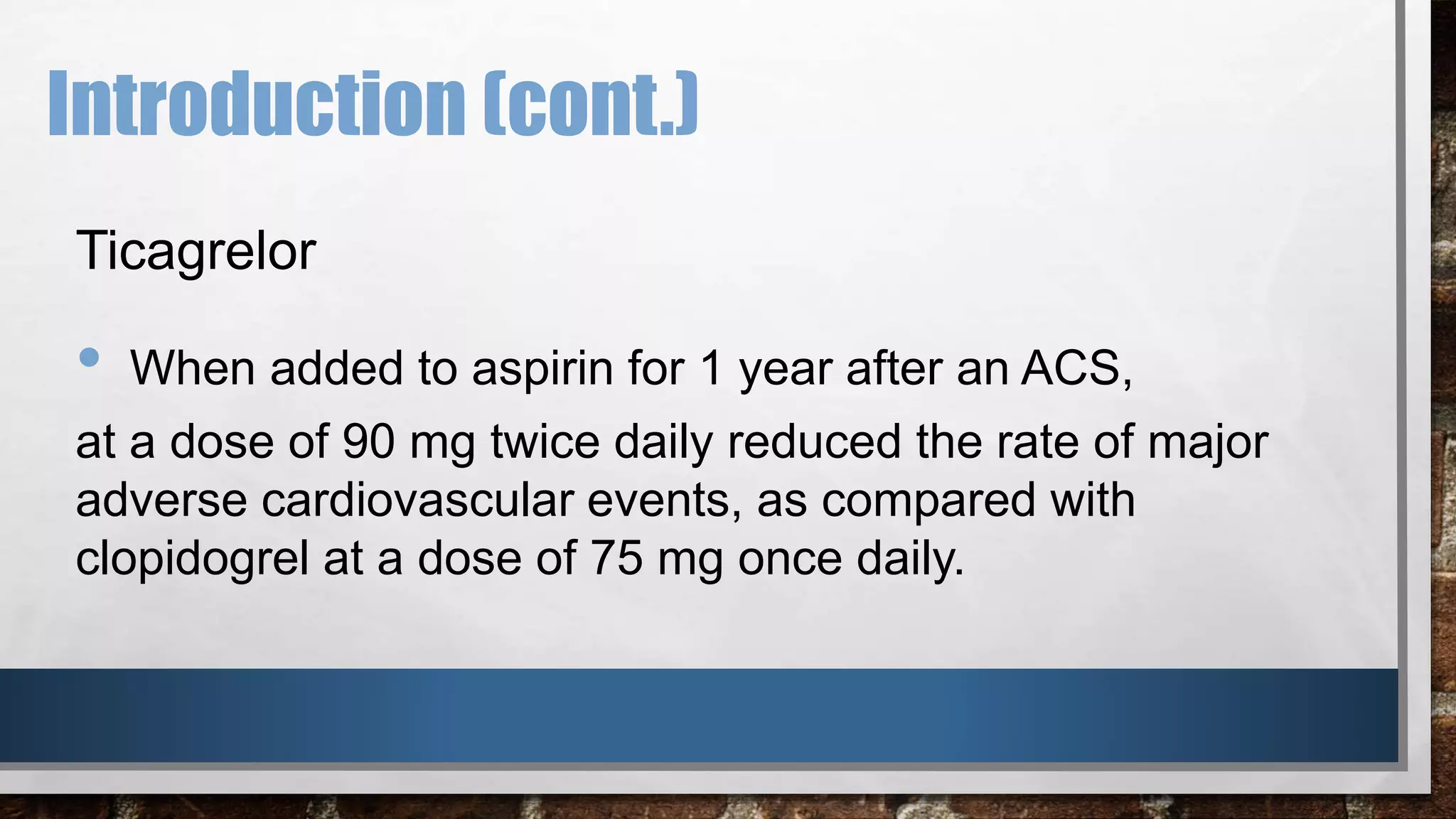
• When added to aspirin for 1 year after an ACS,
at a dose of 90 mg twice daily reduced the rate of major
adverse cardiovascular events, as compared with
clopidogrel at a dose of 75 mg once daily.
PEGASUS-TIMI 54
Prevention of Cardiovascular Events in Patients with
Prior Heart Attack Using Ticagrelor Compared to
Placebo on a background of Aspirin-Thrombolysis in
Myocardial Infarction.
PEGASUS-TIMI 54
Hypothesis
• The addition of ticagrelor to low-dose aspirin would
reduce the incidence of major adverse cardiovascular
events during long-term follow-up in patients with a
history of MI.
PEGASUS-TIMI 54
Evaluated two doses of ticagrelor therapy
90 mg twice daily.
60 mg twice daily.
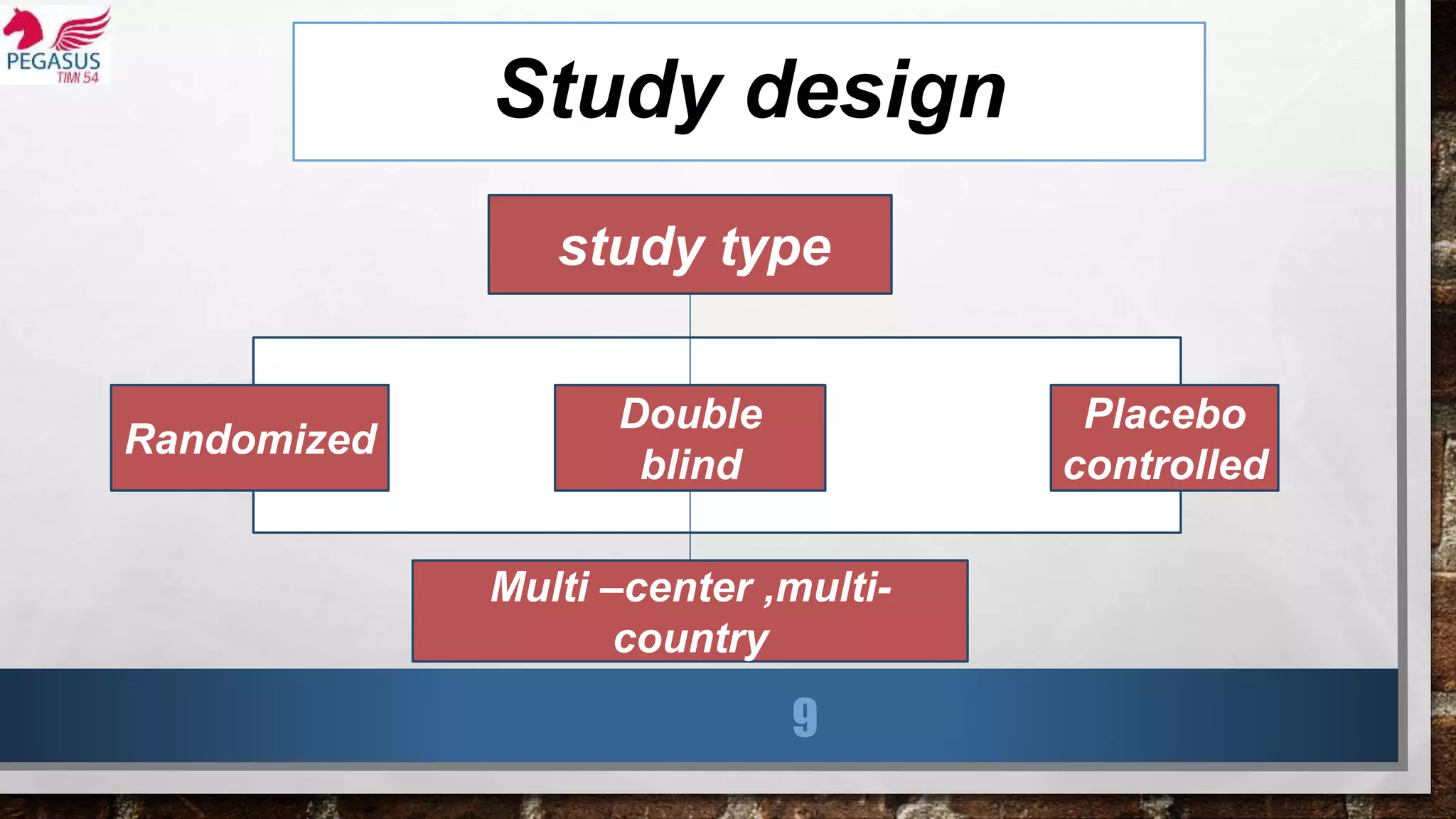
Study design
9
study type
Multi –center ,multi-
country
Randomized
Double
blind
Placebo
controlled
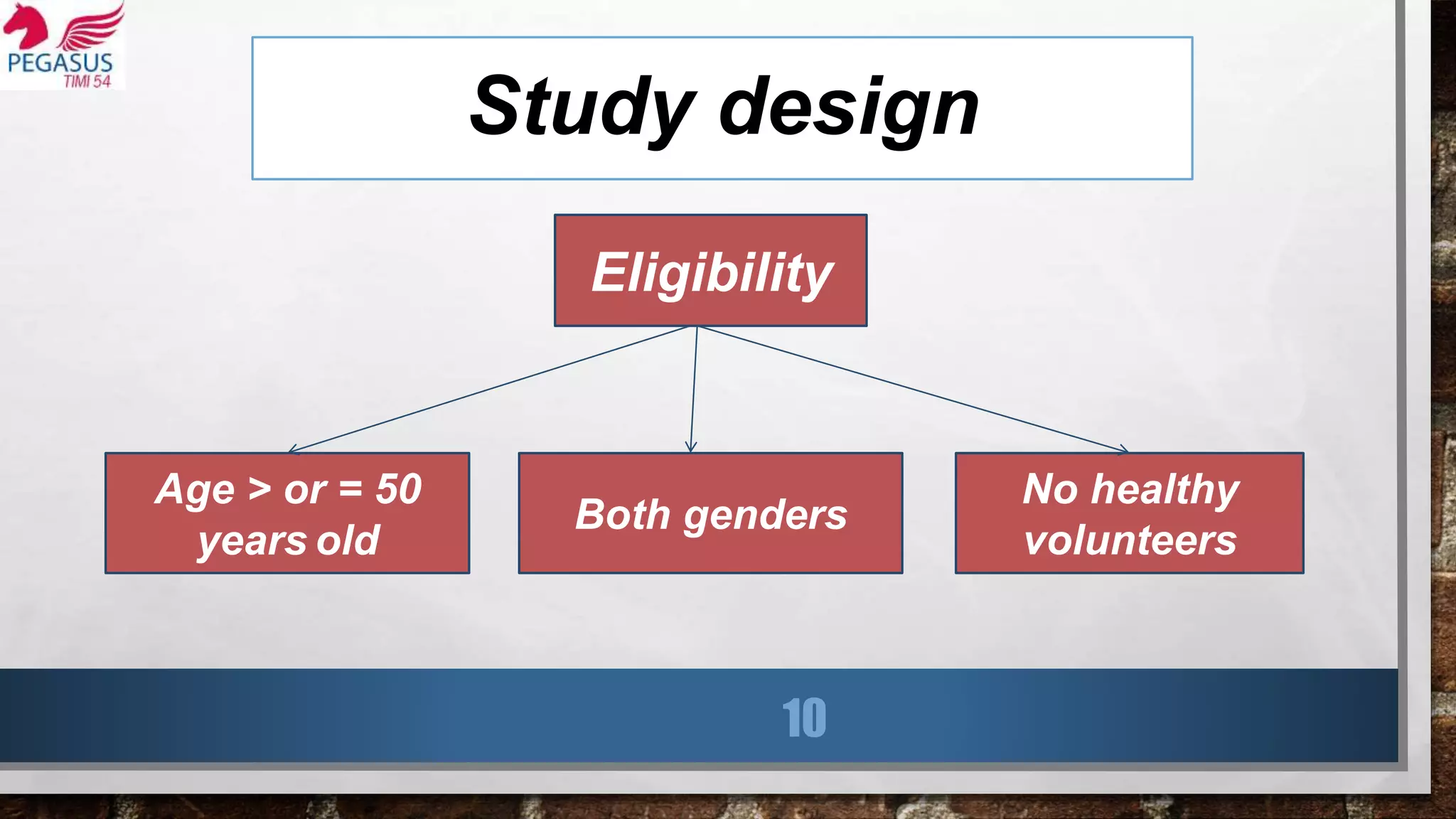
Study design
10
Eligibility
Age > or = 50
years old
Both genders
No healthy
volunteers
Study design
Inclusion criteria
•Patients with a spontaneous myocardial
Infarction 1 to 3 years before enrollment .
•50 years of age at least , had one of the following
additional high risk features .
11
Study design
Inclusion criteria (cont.)
12
High risk features
1-Age of 65 years or older
2-Diabetes Mellitus requiring medication
3-A second prior spontaneous myocardial infarction
Study design
Inclusion criteria (cont.)
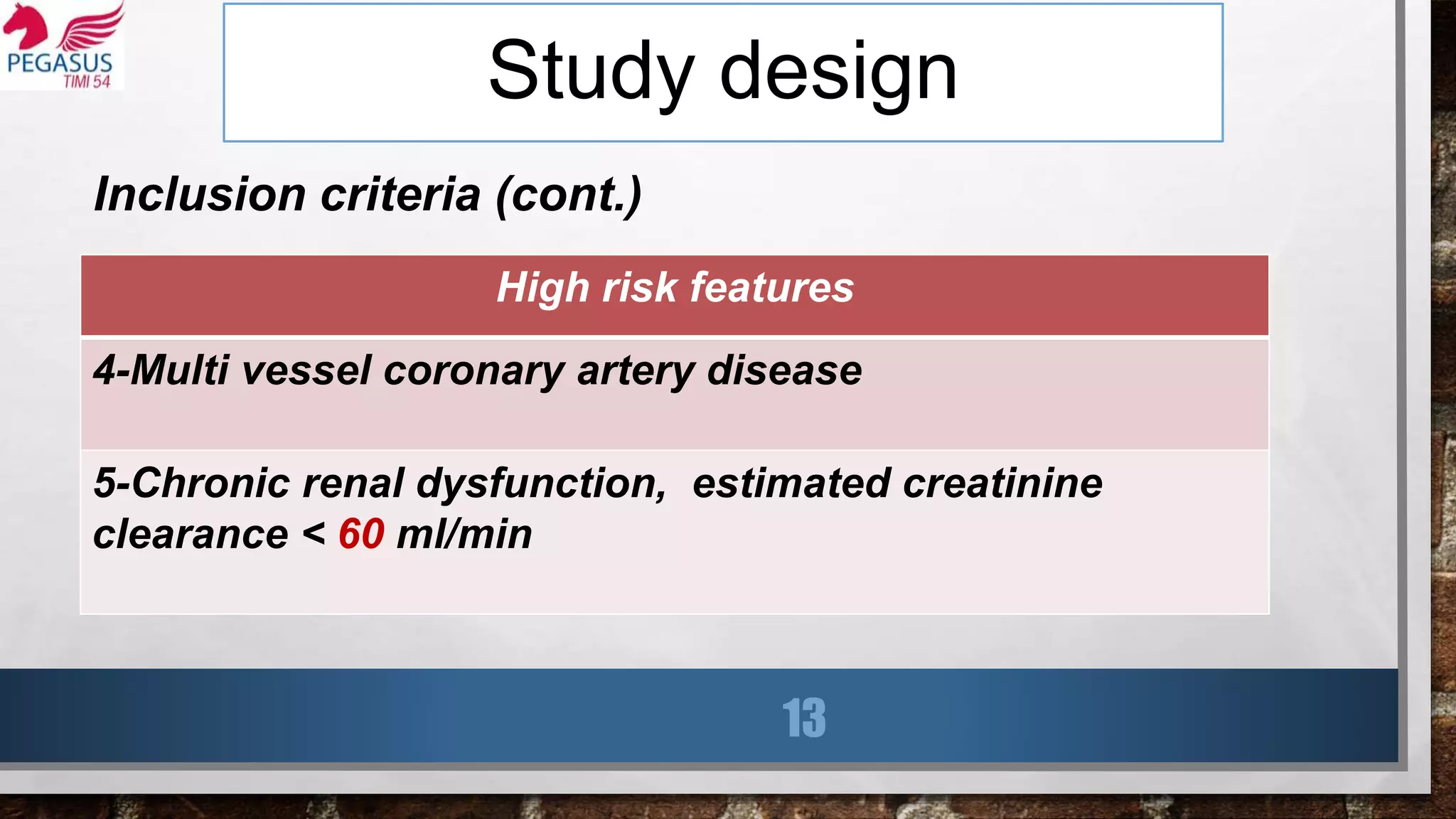
13
High risk features
4-Multi vessel coronary artery disease
5-Chronic renal dysfunction, estimated creatinine
clearance < 60 ml/min
Study design
Exclusion criteria
14
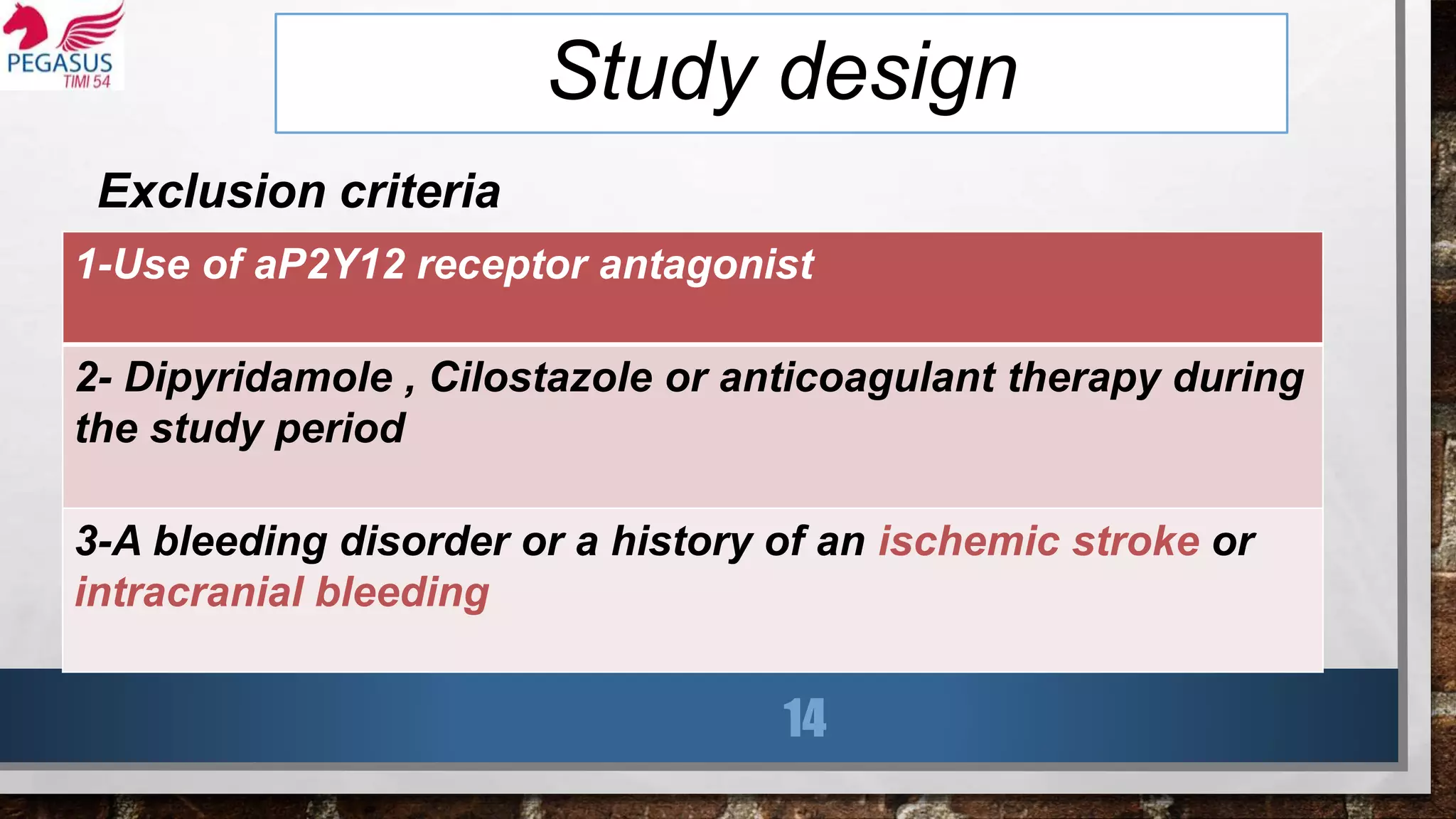
1-Use of aP2Y12 receptor antagonist
2- Dipyridamole , Cilostazole or anticoagulant therapy during
the study period
3-A bleeding disorder or a history of an ischemic stroke or
intracranial bleeding
Study design
Exclusion criteria (cont.)
15
4-A central nervous system tumor or an intracranial
vascular abnormality
5-Gastrointestinal bleeding within the previous 6 months
6-Major surgery within the previous 30 days
End points
Efficacy
•Primary: cardiovascular (CV) death, MI, or stroke
•Secondary: CV death; all-cause mortality
•Prespecified exploratory: substituting coronary for CV death; other
individual coronary and cerebrovascular ischemic outcomes;
pooling ticagrelor doses
16
End points (con.)
Safety
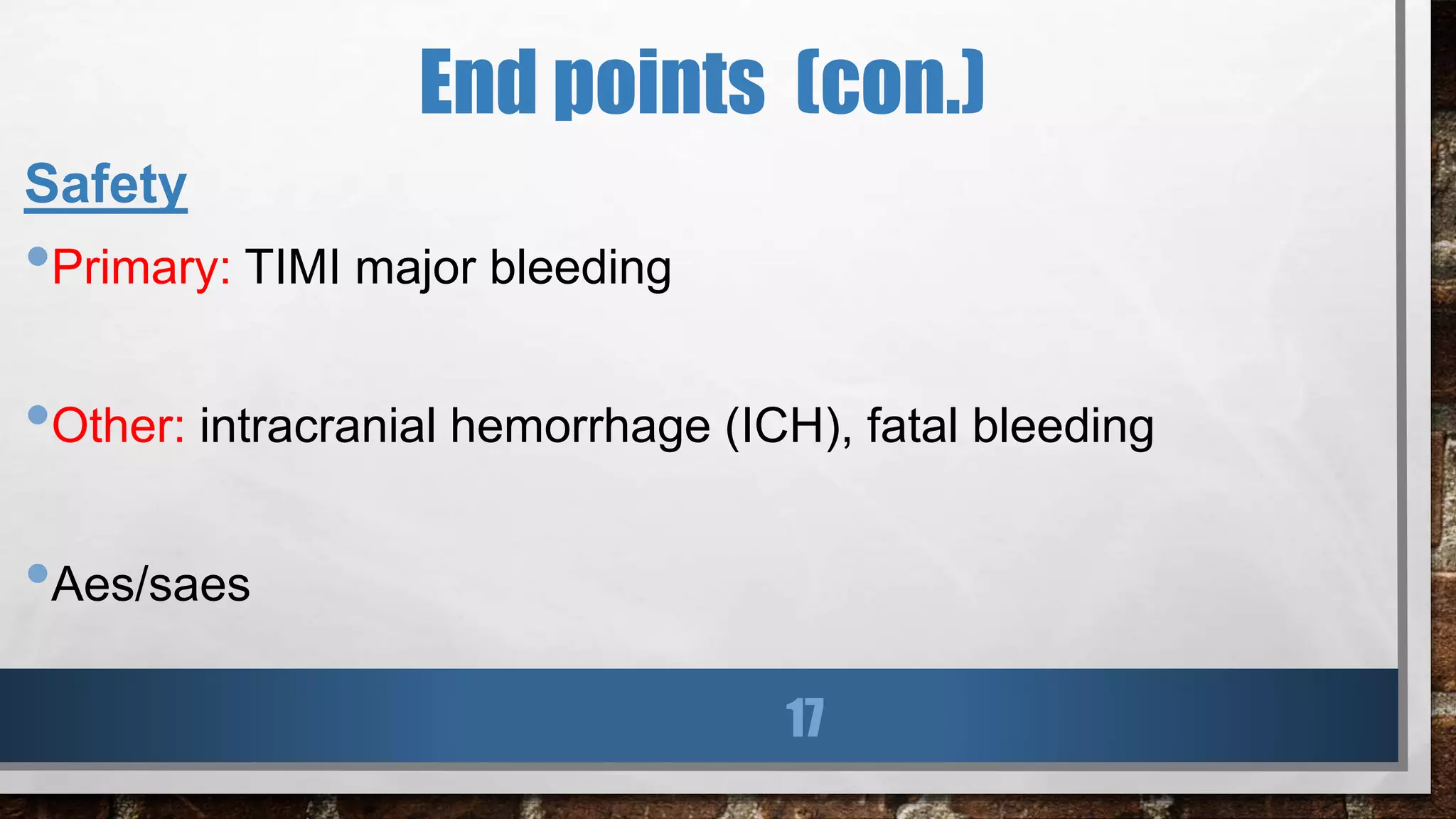
•Primary: TIMI major bleeding
•Other: intracranial hemorrhage (ICH), fatal bleeding
•Aes/saes
17
Randomization and study treatment
•Randomization performed with central computerized
telephone or web-based system
•Assignment was double-blinded ,double-dummy (ticagrelor
or clopidogrel)
RANDOMIZATION AND STUDY TREATMENT
(con.)
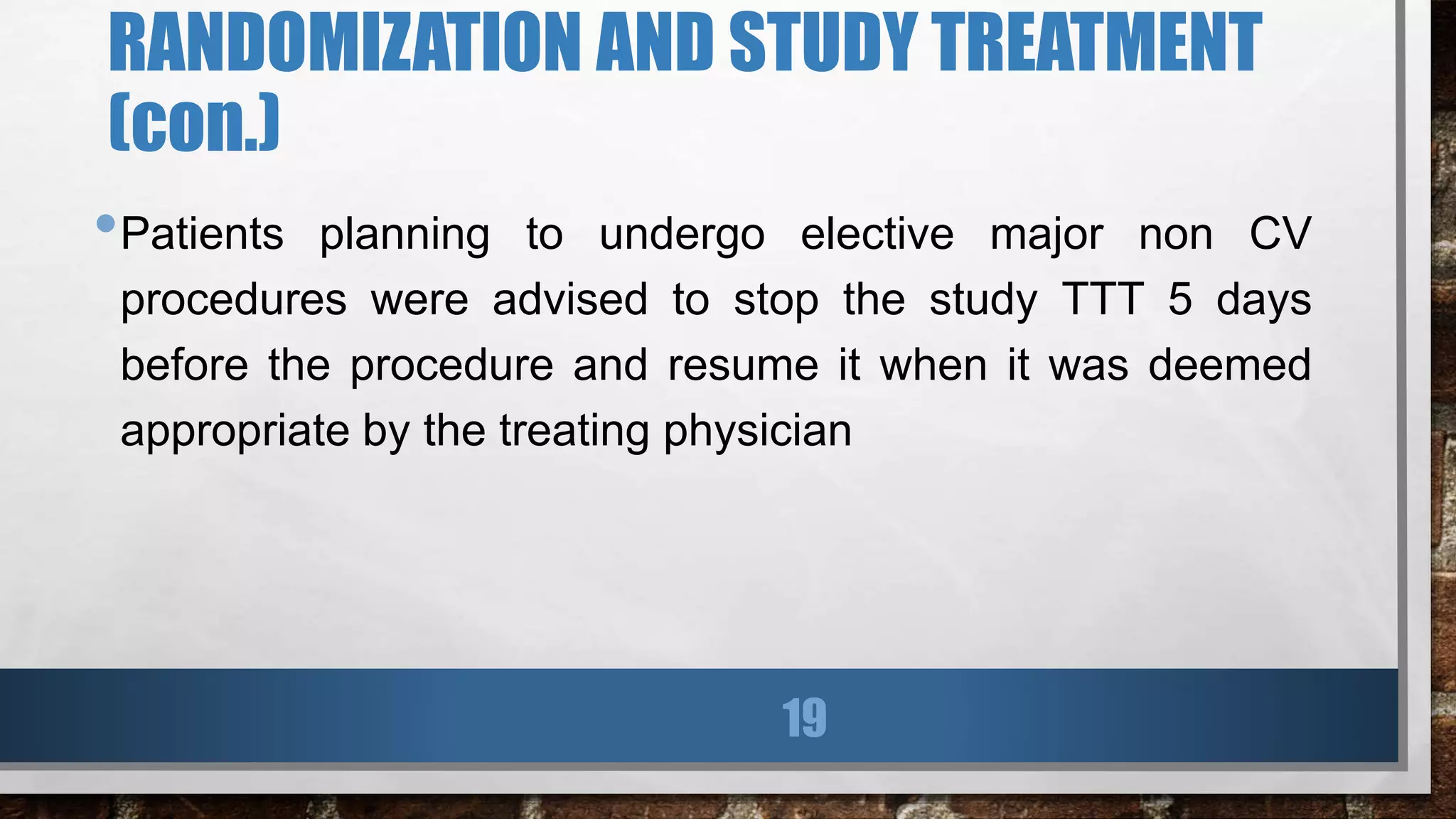
•Patients planning to undergo elective major non CV
procedures were advised to stop the study TTT 5 days
before the procedure and resume it when it was deemed
appropriate by the treating physician
19
Eligible patients were randomly assigned
Group 1 Group 2 Group 3
All the patients were to receive low-dose aspirin followed for a median of 33
months
Ticagrelor 90
mg twice
daily
Ticagrelor
60 mg twice
daily
Placebo twice
daily
• We estimated a total 1360 primary endpoint events in
order to provide the study with approximately
o 90% POWER to detect a 20% REDUCTION in
risk with the 90-MG DOSE of ticagrelor
o 83% POWER to detect a 19% REDUCTION in
risk with the 60-MG DOSE of ticagrelor
•The primary efficacy analysis
•Conducted on an intention-to-treat basis, with each dose
compared with placebo
•Safety analyses
oThese analyses included all the events occurring after
receipt of the first dose and within 7 days after receipt of the
last dose of study drug.
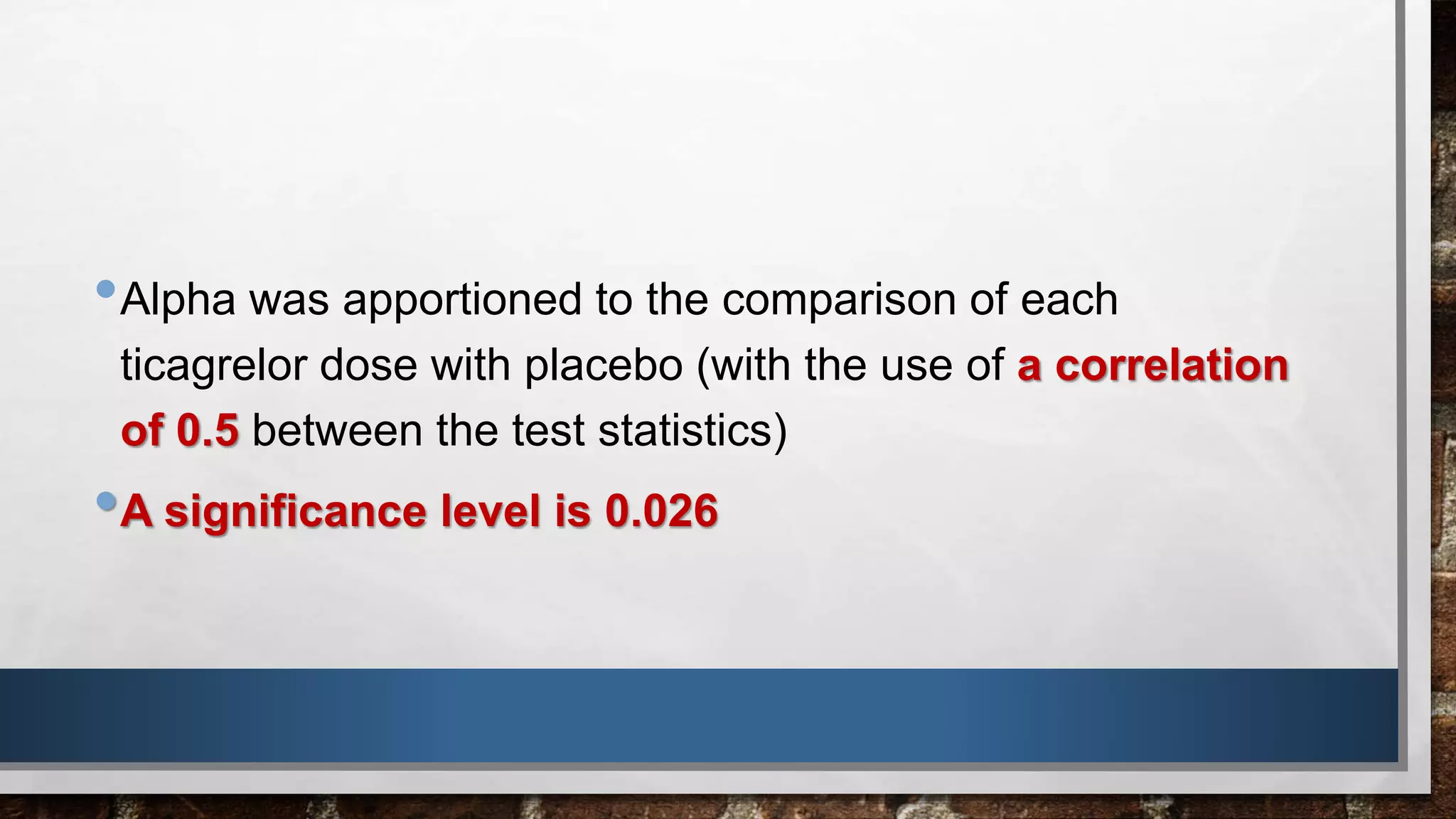
•Alpha was apportioned to the comparison of each
ticagrelor dose with placebo (with the use of a correlation
of 0.5 between the test statistics)
•A significance level is 0.026
•Event probabilities are expressed as kaplan–meier
estimates of cumulative incidence at 36 months.
•Hazard ratios and 95% confidence intervals were
generated with the use of a cox proportional-hazards
model.
Results
•Study patients
•Study drug
•Follow up
27
Results
•Study patients
•Total of 21,162 patients
• The median time from the qualifying myocardial
infarction to randomization was 1.7 years
•53.6% of the qualifying events were ST-segment
elevation myocardial infarctions.
28
Results
•Study patients
•A total of 83.0% of the patients had a history of
percutaneous coronary intervention, and 59.4% had
multivessel coronary artery disease.
•All the patients (99.9%) received aspirin, 75 mg and
100 mg in (97.3%) of patients.
29
Results
30
Results
31
Results
•Study drugs
•The proportions of patients in each group who
discontinued treatment prematurely over the duration
of the trial were:
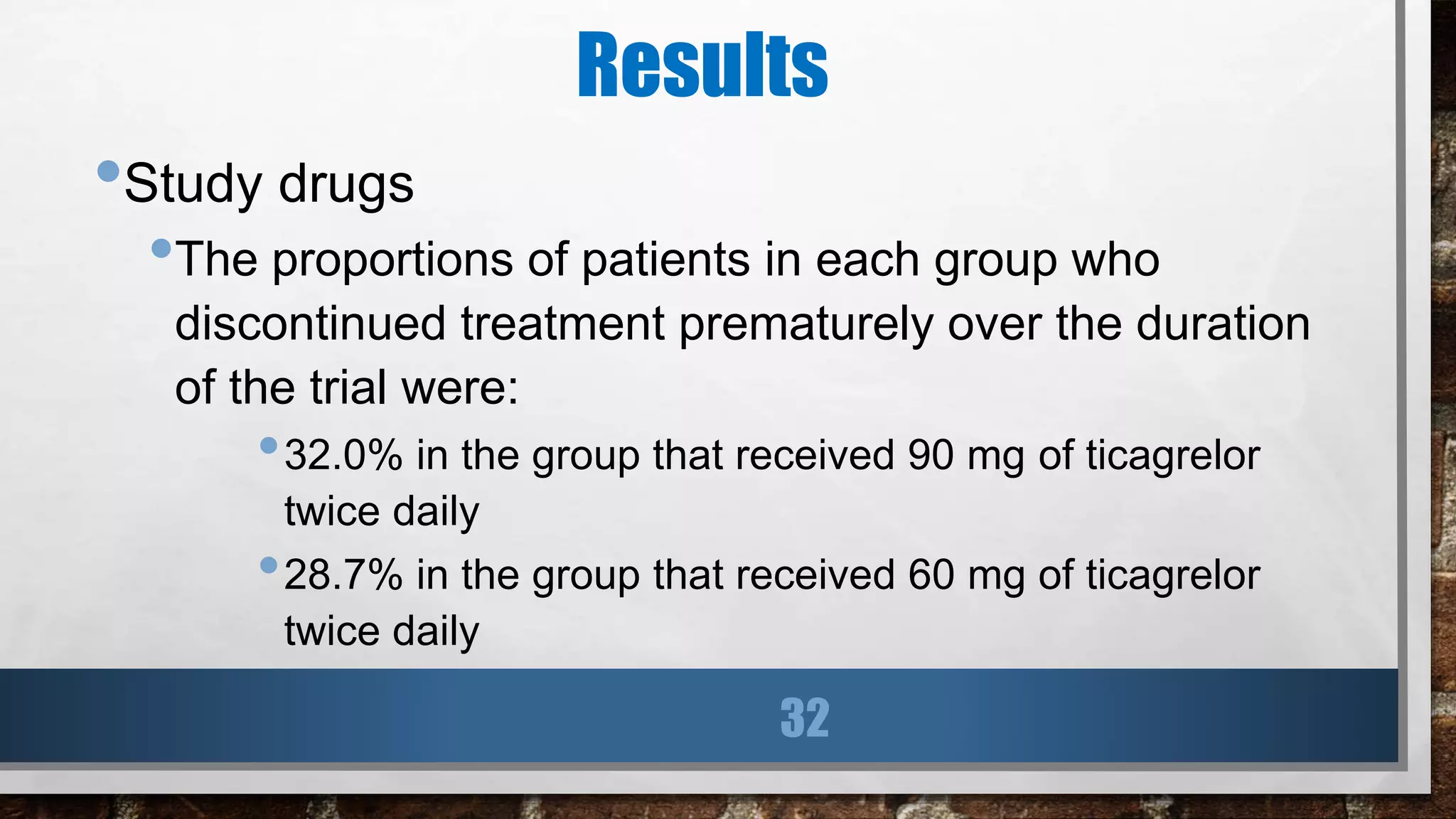
•32.0% in the group that received 90 mg of ticagrelor
twice daily
•28.7% in the group that received 60 mg of ticagrelor
twice daily
32
Results
•Study drugs
•The proportions of patients in each group who
discontinued treatment prematurely over the duration
of the trial were:
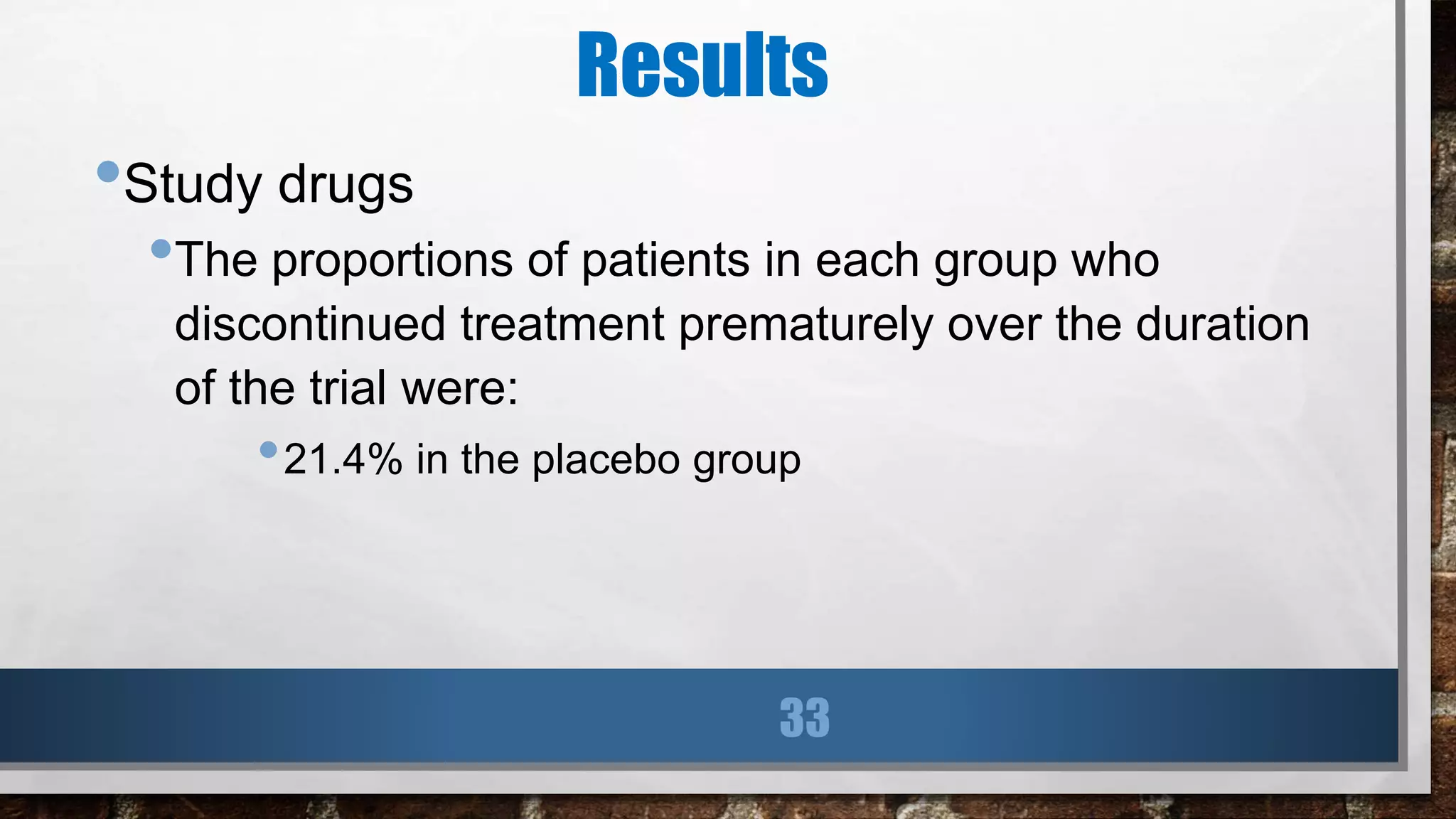
•21.4% in the placebo group
33
Results
•Study drugs
•The majority of premature discontinuations in the two
ticagrelor groups were due to adverse events
34
Results
•Study follow up
•The median duration of follow-up was 33 months
(interquartile range, 28 to 37)
•Resulting in 56,004 patient-years of follow-up
•Ascertainment of the primary end point was complete for
99.2% of the potential patient-years of follow-up
35
Results
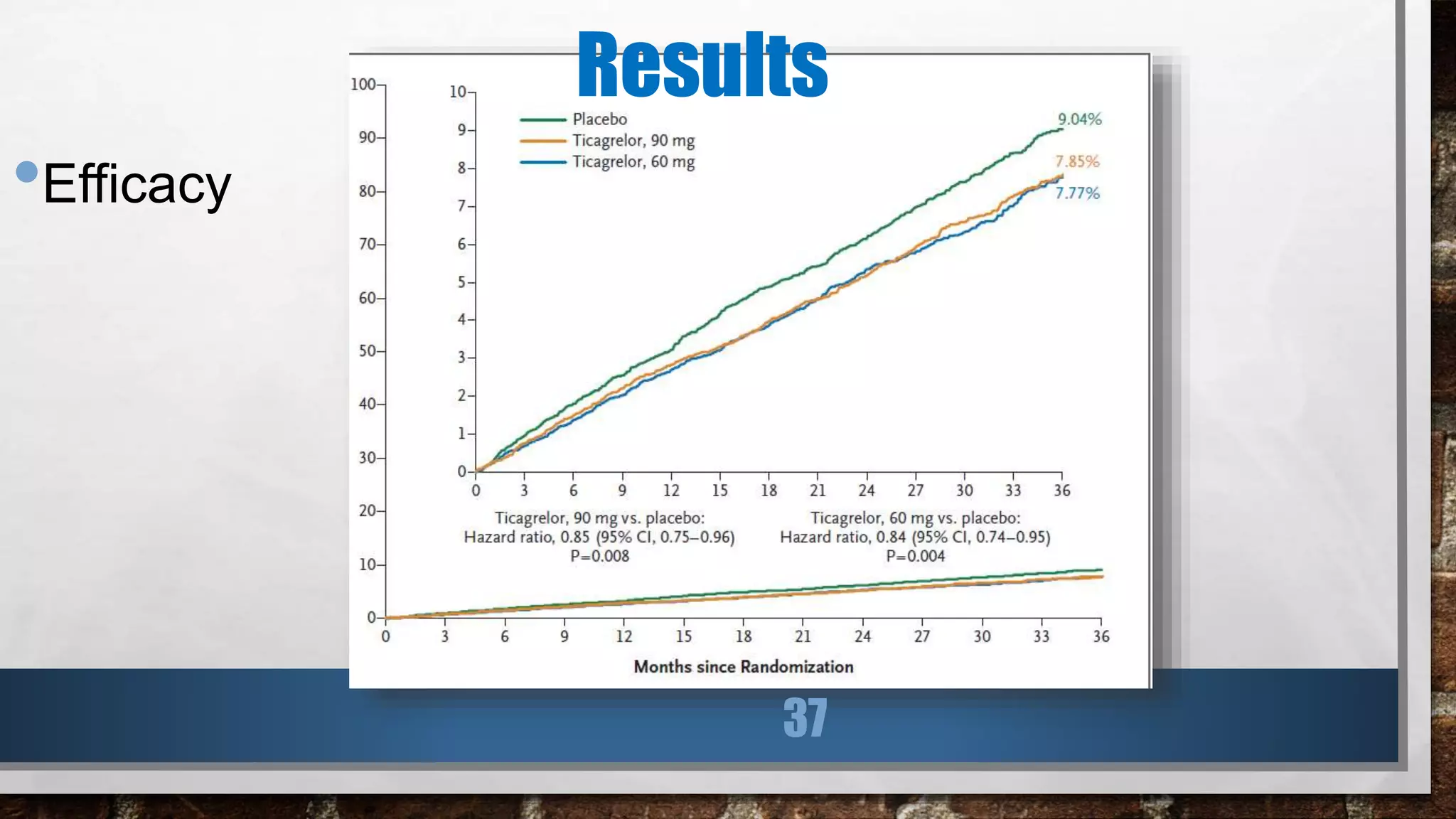
•Efficacy
•The two ticagrelor doses each significantly reduced
the rate of the primary composite end point of
•Cardiovascular death
•Myocardial infarction
•Stroke
36
Results
•Efficacy
37
38
Results
•Efficacy
Results
39
Safety
Bleeding
TIMI major bleeding
(primary safety end point)
TIMI minor bleeding
Bleeding requiring transfusion
Bleeding leading to study-drug
discontinuation
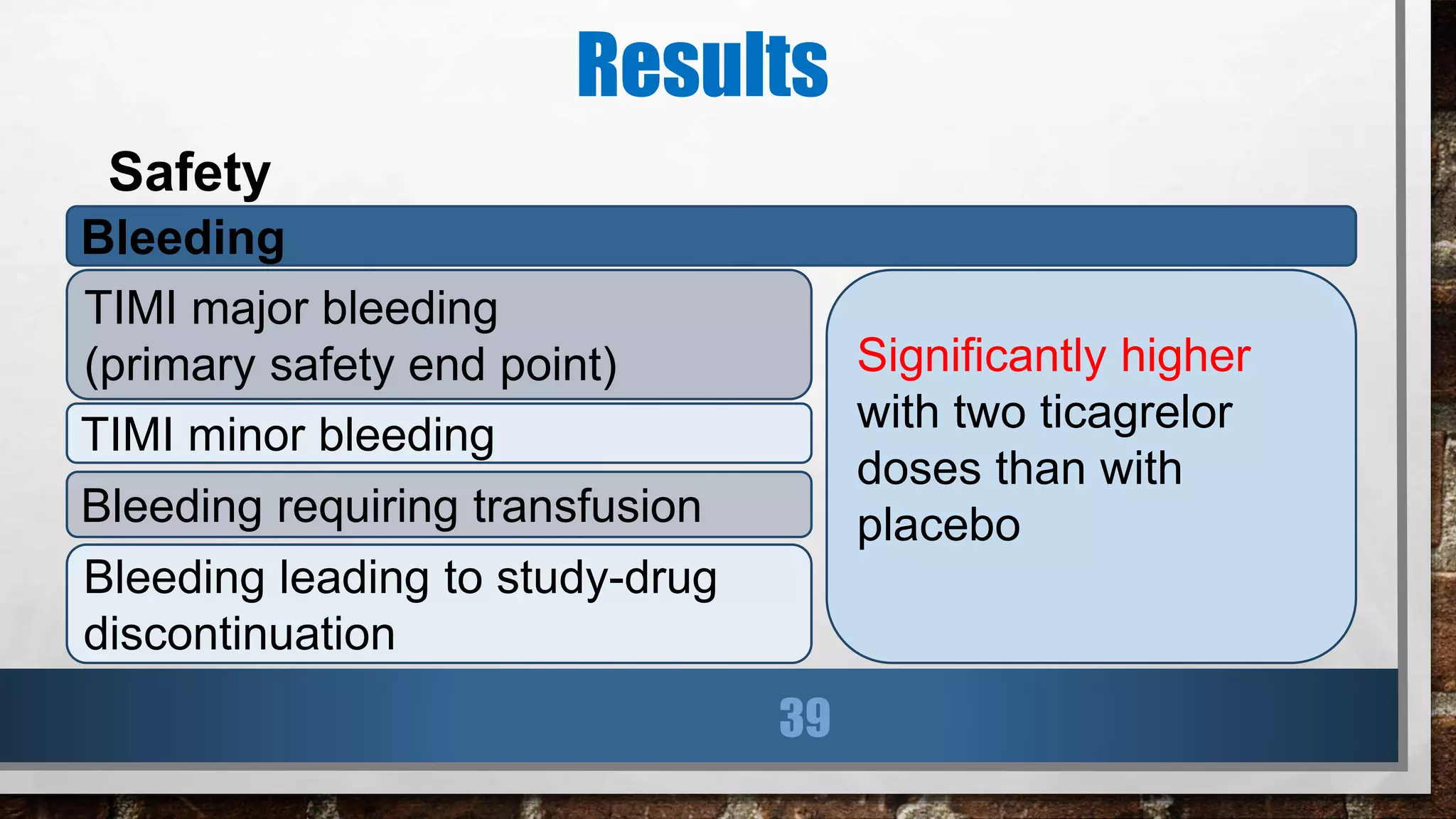
Significantly higher
with two ticagrelor
doses than with
placebo
Results
40
Safety
Bleeding
Fatal bleeding or nonfatal
intracranial hemorrhage
Did not differ significantly
between either ticagrelor
dose group and placebo
Results
41
Safety
Results
42
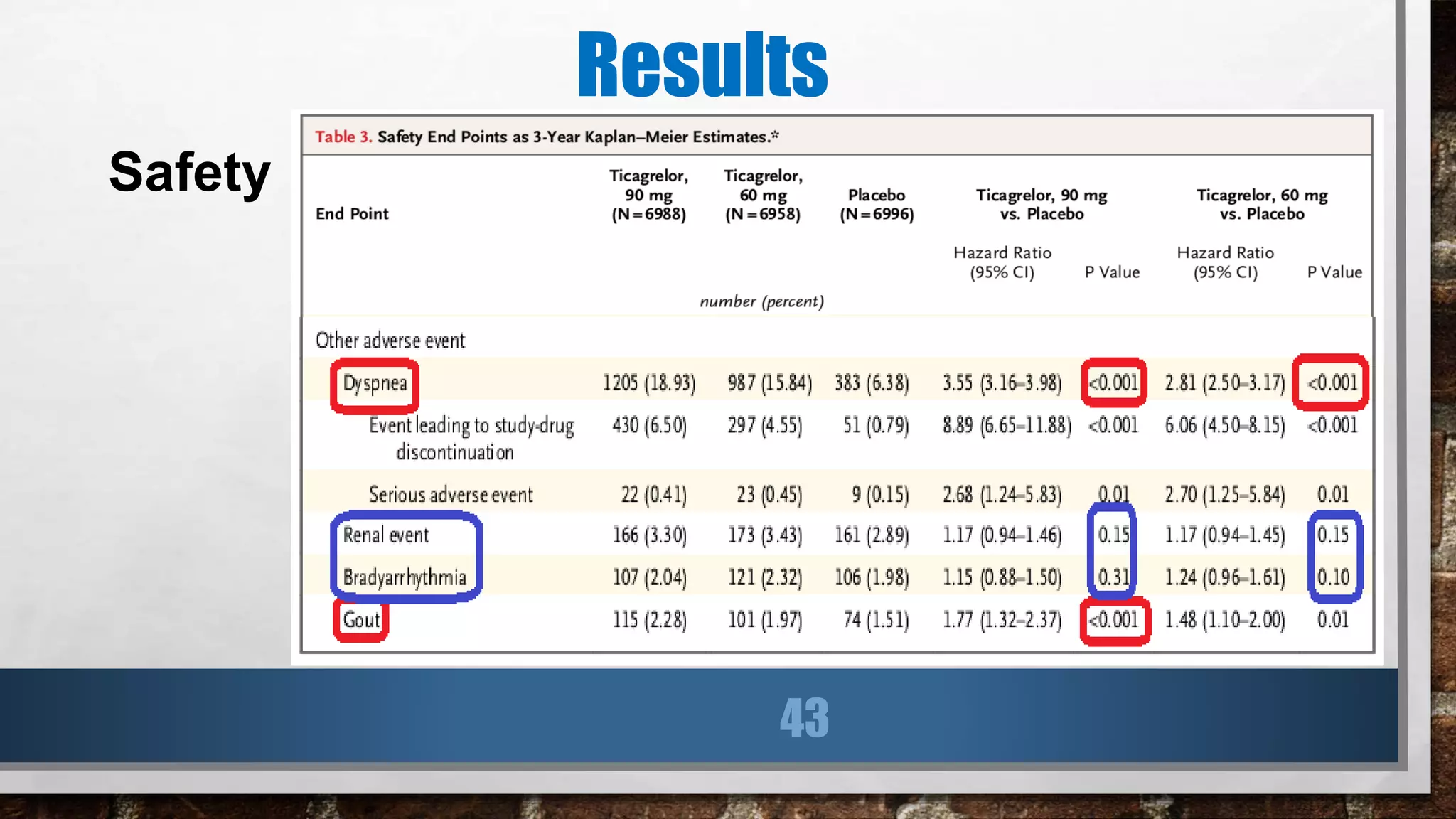
Safety
Other adverse event
Dyspnea
Renal event
Bradyarrhythmia
Gout
Significantly more frequent with
ticagrelor than with placebo
There were no notable differences
between either ticagrelor dose group
and placebo
Significantly more frequent with
ticagrelor than with placebo
Results
43
Safety
Discussion
• Efficacy
The results of the PEGASUS-TIMI 54 trial
provide prospectively defined evidence affirming
the hypothesis that long-term, intensive platelet
inhibition with ticagrelor reduces ischemic
events in patients with prior myocardial infarction.
44
Discussion
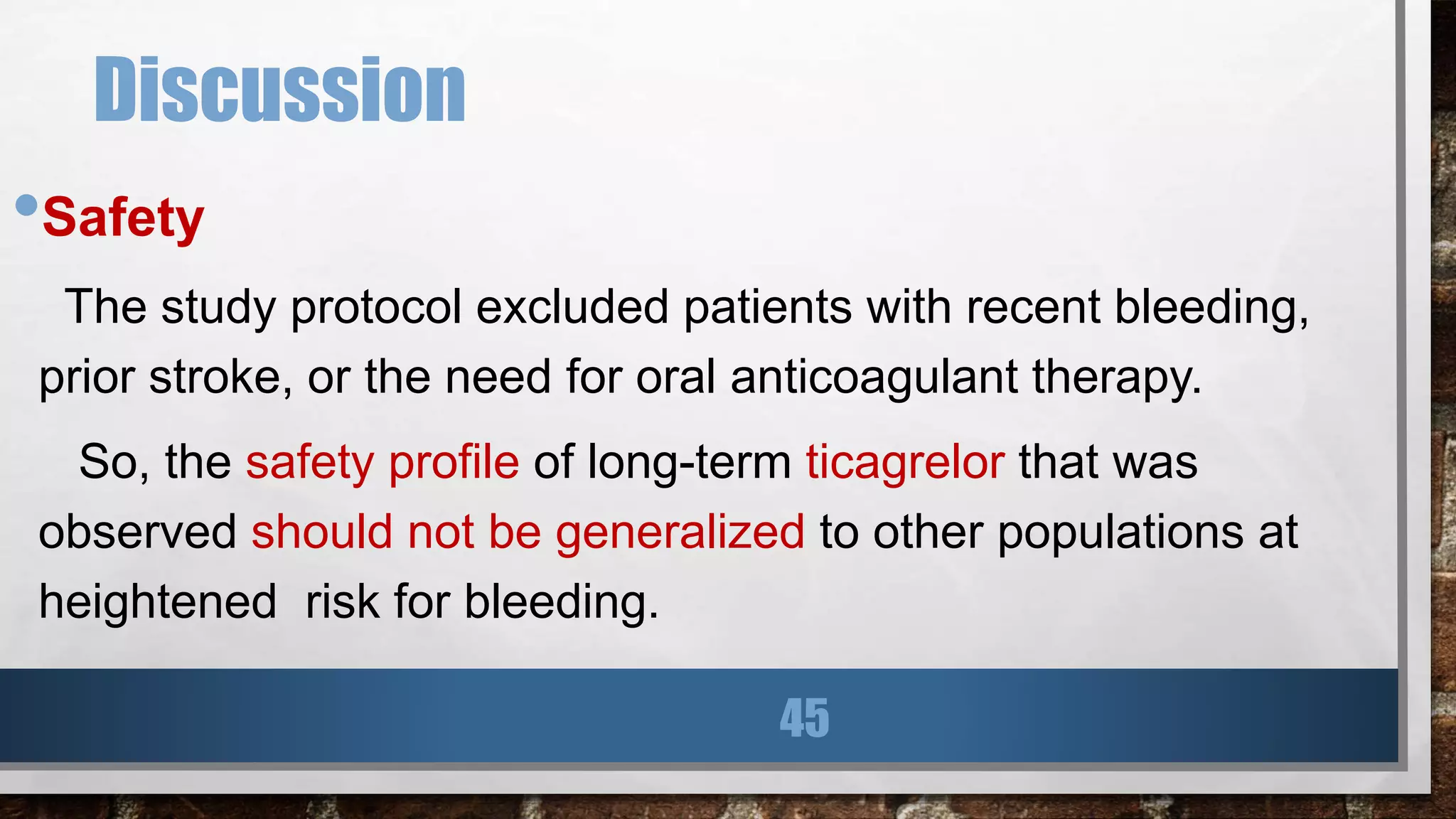
•Safety
The study protocol excluded patients with recent bleeding,
prior stroke, or the need for oral anticoagulant therapy.
So, the safety profile of long-term ticagrelor that was
observed should not be generalized to other populations at
heightened risk for bleeding.
45
Discussion
The rates of drug discontinuation because of dyspnea observed
with ticagrelor in this trial were higher than those observed in the
Study of Platelet Inhibition and Patient Outcomes (PLATO).
46
PEGASUS – TIMI 54 trialPLATO trial
Patients were stable , so
dyspnea was more surprising and
more likely to lead to drug
discontinuation .
Patients included were with acute
coronary syndromes , so dyspnea
is common with their acute illness.
Discussion
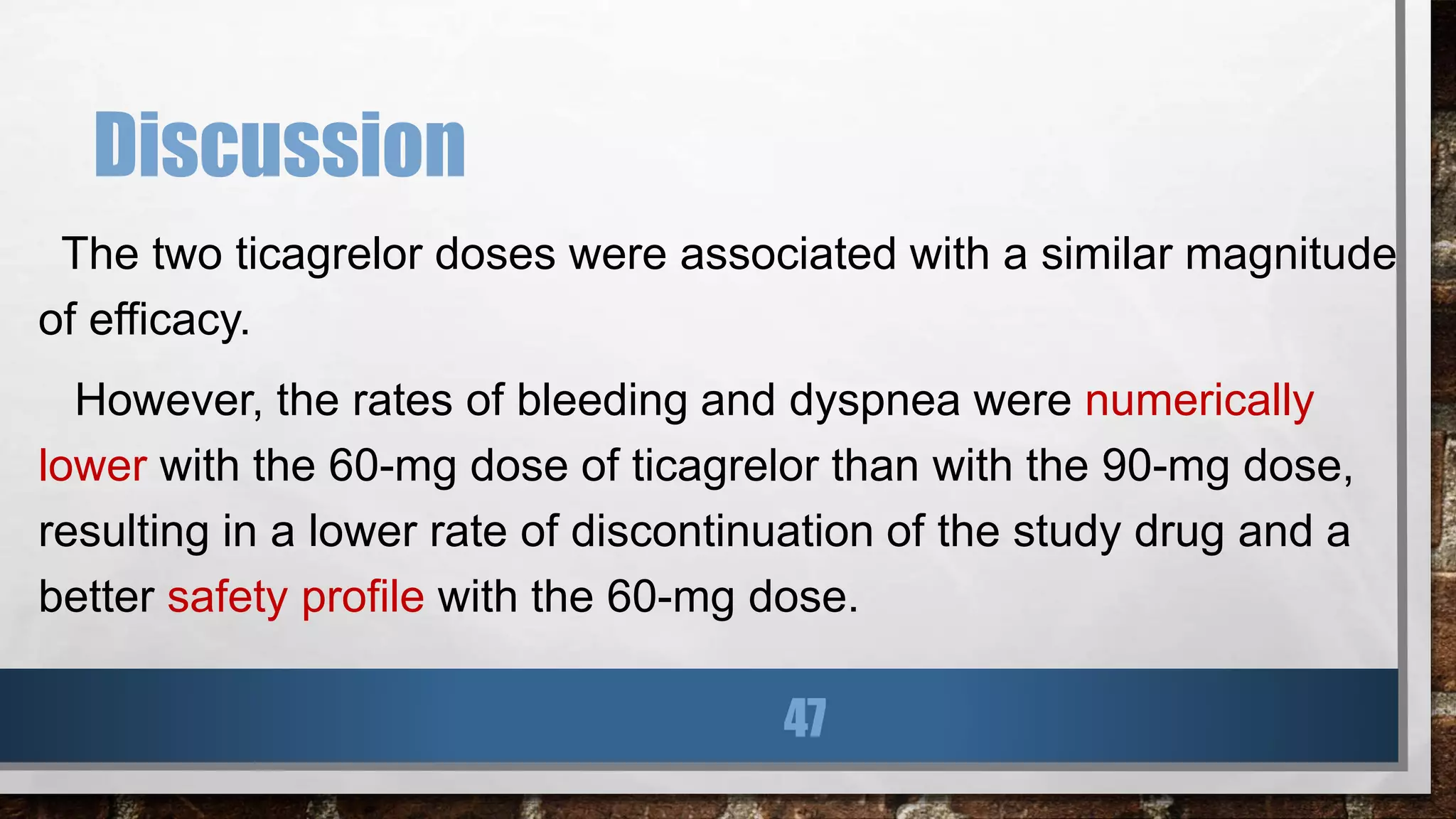
The two ticagrelor doses were associated with a similar magnitude
of efficacy.
However, the rates of bleeding and dyspnea were numerically
lower with the 60-mg dose of ticagrelor than with the 90-mg dose,
resulting in a lower rate of discontinuation of the study drug and a
better safety profile with the 60-mg dose.
47
Conclusion
The addition of ticagrelor, at a dose of 90 mg twice daily or 60
mg twice daily, to low-dose aspirin reduced the risk of
cardiovascular death, myocardial infarction, or stroke
and increased the risk of TIMI major bleeding among patients
who had had a myocardial infarction one to three years earlier.
48
Recommendation
The two ticagrelor doses were studied on a
background of low-dose aspirin, as is
recommended for patients with stable
ischemic heart disease .
49
50

Journal-Club-final-1

  • 2.
    Introduction Myocardial Infarction • Necrosisof a region of the myocardium secondary to prolonged ischemia. • Patients who have had a myocardial infarction are at heightened risk for recurrent ischemic events.
  • 3.
    Introduction (cont.) •Aspirin reducesthe risk of ischemic events. •Practice guidelines in the United states and Europe currently recommend treatment with a P2Y12 receptor antagonist for up to 1 year after a myocardial infarction.
  • 4.
    Introduction (cont.) Ticagrelor • Potent,reversibly-binding, direct-acting P2Y12 receptor antagonist.
  • 5.
    Introduction (cont.) Ticagrelor • Whenadded to aspirin for 1 year after an ACS, at a dose of 90 mg twice daily reduced the rate of major adverse cardiovascular events, as compared with clopidogrel at a dose of 75 mg once daily.
  • 6.
    PEGASUS-TIMI 54 Prevention ofCardiovascular Events in Patients with Prior Heart Attack Using Ticagrelor Compared to Placebo on a background of Aspirin-Thrombolysis in Myocardial Infarction.
  • 7.
    PEGASUS-TIMI 54 Hypothesis • Theaddition of ticagrelor to low-dose aspirin would reduce the incidence of major adverse cardiovascular events during long-term follow-up in patients with a history of MI.
  • 8.
    PEGASUS-TIMI 54 Evaluated twodoses of ticagrelor therapy 90 mg twice daily. 60 mg twice daily.
  • 9.
    Study design 9 study type Multi–center ,multi- country Randomized Double blind Placebo controlled
  • 10.
    Study design 10 Eligibility Age >or = 50 years old Both genders No healthy volunteers
  • 11.
    Study design Inclusion criteria •Patientswith a spontaneous myocardial Infarction 1 to 3 years before enrollment . •50 years of age at least , had one of the following additional high risk features . 11
  • 12.
    Study design Inclusion criteria(cont.) 12 High risk features 1-Age of 65 years or older 2-Diabetes Mellitus requiring medication 3-A second prior spontaneous myocardial infarction
  • 13.
    Study design Inclusion criteria(cont.) 13 High risk features 4-Multi vessel coronary artery disease 5-Chronic renal dysfunction, estimated creatinine clearance < 60 ml/min
  • 14.
    Study design Exclusion criteria 14 1-Useof aP2Y12 receptor antagonist 2- Dipyridamole , Cilostazole or anticoagulant therapy during the study period 3-A bleeding disorder or a history of an ischemic stroke or intracranial bleeding
  • 15.
    Study design Exclusion criteria(cont.) 15 4-A central nervous system tumor or an intracranial vascular abnormality 5-Gastrointestinal bleeding within the previous 6 months 6-Major surgery within the previous 30 days
  • 16.
    End points Efficacy •Primary: cardiovascular(CV) death, MI, or stroke •Secondary: CV death; all-cause mortality •Prespecified exploratory: substituting coronary for CV death; other individual coronary and cerebrovascular ischemic outcomes; pooling ticagrelor doses 16
  • 17.
    End points (con.) Safety •Primary:TIMI major bleeding •Other: intracranial hemorrhage (ICH), fatal bleeding •Aes/saes 17
  • 18.
    Randomization and studytreatment •Randomization performed with central computerized telephone or web-based system •Assignment was double-blinded ,double-dummy (ticagrelor or clopidogrel)
  • 19.
    RANDOMIZATION AND STUDYTREATMENT (con.) •Patients planning to undergo elective major non CV procedures were advised to stop the study TTT 5 days before the procedure and resume it when it was deemed appropriate by the treating physician 19
  • 20.
    Eligible patients wererandomly assigned Group 1 Group 2 Group 3 All the patients were to receive low-dose aspirin followed for a median of 33 months Ticagrelor 90 mg twice daily Ticagrelor 60 mg twice daily Placebo twice daily
  • 22.
    • We estimateda total 1360 primary endpoint events in order to provide the study with approximately o 90% POWER to detect a 20% REDUCTION in risk with the 90-MG DOSE of ticagrelor o 83% POWER to detect a 19% REDUCTION in risk with the 60-MG DOSE of ticagrelor
  • 23.
    •The primary efficacyanalysis •Conducted on an intention-to-treat basis, with each dose compared with placebo
  • 24.
    •Safety analyses oThese analysesincluded all the events occurring after receipt of the first dose and within 7 days after receipt of the last dose of study drug.
  • 25.
    •Alpha was apportionedto the comparison of each ticagrelor dose with placebo (with the use of a correlation of 0.5 between the test statistics) •A significance level is 0.026
  • 26.
    •Event probabilities areexpressed as kaplan–meier estimates of cumulative incidence at 36 months. •Hazard ratios and 95% confidence intervals were generated with the use of a cox proportional-hazards model.
  • 27.
  • 28.
    Results •Study patients •Total of21,162 patients • The median time from the qualifying myocardial infarction to randomization was 1.7 years •53.6% of the qualifying events were ST-segment elevation myocardial infarctions. 28
  • 29.
    Results •Study patients •A totalof 83.0% of the patients had a history of percutaneous coronary intervention, and 59.4% had multivessel coronary artery disease. •All the patients (99.9%) received aspirin, 75 mg and 100 mg in (97.3%) of patients. 29
  • 30.
  • 31.
  • 32.
    Results •Study drugs •The proportionsof patients in each group who discontinued treatment prematurely over the duration of the trial were: •32.0% in the group that received 90 mg of ticagrelor twice daily •28.7% in the group that received 60 mg of ticagrelor twice daily 32
  • 33.
    Results •Study drugs •The proportionsof patients in each group who discontinued treatment prematurely over the duration of the trial were: •21.4% in the placebo group 33
  • 34.
    Results •Study drugs •The majorityof premature discontinuations in the two ticagrelor groups were due to adverse events 34
  • 35.
    Results •Study follow up •Themedian duration of follow-up was 33 months (interquartile range, 28 to 37) •Resulting in 56,004 patient-years of follow-up •Ascertainment of the primary end point was complete for 99.2% of the potential patient-years of follow-up 35
  • 36.
    Results •Efficacy •The two ticagrelordoses each significantly reduced the rate of the primary composite end point of •Cardiovascular death •Myocardial infarction •Stroke 36
  • 37.
  • 38.
  • 39.
    Results 39 Safety Bleeding TIMI major bleeding (primarysafety end point) TIMI minor bleeding Bleeding requiring transfusion Bleeding leading to study-drug discontinuation Significantly higher with two ticagrelor doses than with placebo
  • 40.
    Results 40 Safety Bleeding Fatal bleeding ornonfatal intracranial hemorrhage Did not differ significantly between either ticagrelor dose group and placebo
  • 41.
  • 42.
    Results 42 Safety Other adverse event Dyspnea Renalevent Bradyarrhythmia Gout Significantly more frequent with ticagrelor than with placebo There were no notable differences between either ticagrelor dose group and placebo Significantly more frequent with ticagrelor than with placebo
  • 43.
  • 44.
    Discussion • Efficacy The resultsof the PEGASUS-TIMI 54 trial provide prospectively defined evidence affirming the hypothesis that long-term, intensive platelet inhibition with ticagrelor reduces ischemic events in patients with prior myocardial infarction. 44
  • 45.
    Discussion •Safety The study protocolexcluded patients with recent bleeding, prior stroke, or the need for oral anticoagulant therapy. So, the safety profile of long-term ticagrelor that was observed should not be generalized to other populations at heightened risk for bleeding. 45
  • 46.
    Discussion The rates ofdrug discontinuation because of dyspnea observed with ticagrelor in this trial were higher than those observed in the Study of Platelet Inhibition and Patient Outcomes (PLATO). 46 PEGASUS – TIMI 54 trialPLATO trial Patients were stable , so dyspnea was more surprising and more likely to lead to drug discontinuation . Patients included were with acute coronary syndromes , so dyspnea is common with their acute illness.
  • 47.
    Discussion The two ticagrelordoses were associated with a similar magnitude of efficacy. However, the rates of bleeding and dyspnea were numerically lower with the 60-mg dose of ticagrelor than with the 90-mg dose, resulting in a lower rate of discontinuation of the study drug and a better safety profile with the 60-mg dose. 47
  • 48.
    Conclusion The addition ofticagrelor, at a dose of 90 mg twice daily or 60 mg twice daily, to low-dose aspirin reduced the risk of cardiovascular death, myocardial infarction, or stroke and increased the risk of TIMI major bleeding among patients who had had a myocardial infarction one to three years earlier. 48
  • 49.
    Recommendation The two ticagrelordoses were studied on a background of low-dose aspirin, as is recommended for patients with stable ischemic heart disease . 49
  • 50.

Editor's Notes

  • #17 2ry:death from any cause
  • #18 Adverse Events (AEs), Serious Adverse Events (SAEs)
  • #19 Randomized: Each study subject is randomly assigned to receive either the study treatment or a placebo
  • #21 Minimum 16 months, maximum 47 months Aspirin 75-150 mgld