A Randomized Controlled Trial of Ceftriaxone
and Doxycycline, With or Without
Metronidazole, for the Treatment of Acute Pelvic
Inflammatory Disease
JOURNAL CLUB EVALUATION
PHARMD CANDIDATE
ZEINAB NOORMONAVAR
12212021
1
Pelvic Inflammatory Disease
2
Outline
At the end of the presentation we’ll be able to:
Recall the pathophysiology, diagnosis, symptoms, epidemiology, causes of PID
Identify the classification and pharmacological treatment modalities
Learn the different drugs used
Evaluate the journal and methodology used in this article and the results achieved
3
CENTERS FOR DISEASE CONTROL AND PREVENTION. (2021, NOVEMBER 9). PELVIC INFLAMMATORY DISEASE
(PID) - STI TREATMENT GUIDELINES. CENTERS FOR DISEASE CONTROL AND PREVENTION. RETRIEVED DECEMBER
20, 2021, FROM HTTPS://WWW.CDC.GOV/STD/TREATMENT-GUIDELINES/PID.HTM
4
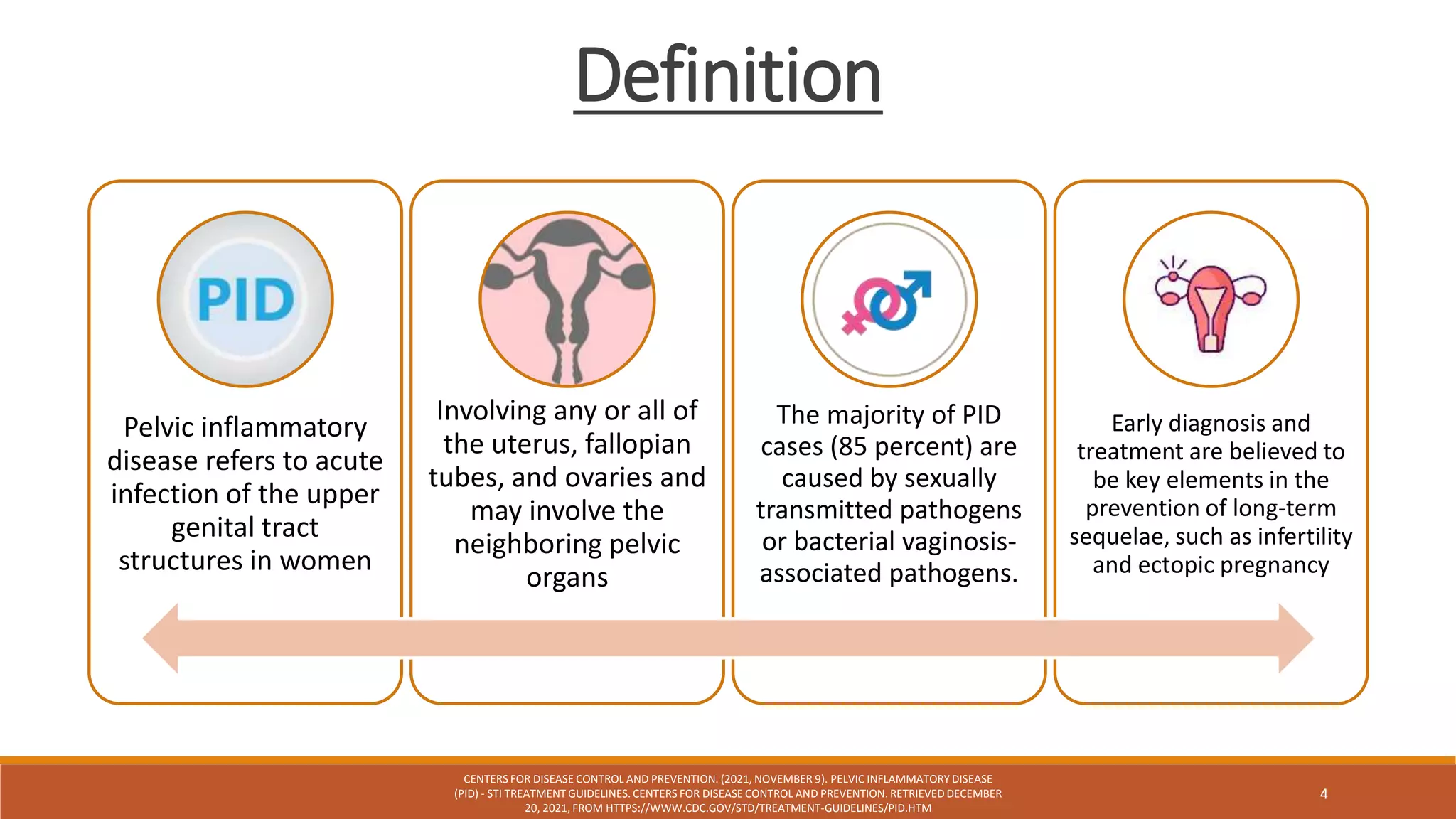
Definition
Pelvic inflammatory
disease refers to acute
infection of the upper
genital tract
structures in women
Involving any or all of
the uterus, fallopian
tubes, and ovaries and
may involve the
neighboring pelvic
organs
The majority of PID
cases (85 percent) are
caused by sexually
transmitted pathogens
or bacterial vaginosis-
associated pathogens.
Early diagnosis and
treatment are believed to
be key elements in the
prevention of long-term
sequelae, such as infertility
and ectopic pregnancy
5
SEXUALLY TRANSMITTED DISEASES. RADY CHILDREN'S HOSPITAL-SAN DIEGO. (N.D.). RETRIEVED
DECEMBER 20, 2021, FROM HTTPS://WWW.RCHSD.ORG/HEALTH-ARTICLES/PELVIC-
INFLAMMATORY-DISEASE-PID/
Pathology
Poly-microbial
Chlamydia
trachomatis
Neisseria
gonorrhea
Mycoplasma
genitalium
Anaerobic
bacteria
6
CENTERS FOR DISEASE CONTROL AND PREVENTION. (2021, NOVEMBER 9). PELVIC INFLAMMATORY DISEASE
(PID) - STI TREATMENT GUIDELINES. CENTERS FOR DISEASE CONTROL AND PREVENTION. RETRIEVED DECEMBER
20, 2021, FROM HTTPS://WWW.CDC.GOV/STD/TREATMENT-GUIDELINES/PID.HTM
7
Risk
factors
Sexual
active
female
Multiple
sexual
partner
≤25 years
Unprotect
ed relation
Instrumentation
of cervix
(Termination of
pregnancy /
IUD)
History of
PID
Complications
Ectopic
pregnancy
Infertility
TOA
UPTODATE. (N.D.). RETRIEVED DECEMBER 20, 2021, FROM HTTPS://WWW.UPTODATE.COM/CONTENTS/PELVIC-INFLAMMATORY-DISEASE-CLINICAL-MANIFESTATIONS-AND-
DIAGNOSIS?SEARCH=ACUTE+PELVIC+INFLAMMATORY+DISEASE&SOURCE=SEARCH_RESULT&SELECTEDTITLE=2~150&USAGE_TYPE=DEFAULT&DISPLAY_RANK=2#H854376435
Clinical Manifestation
Painful
intercourse
Heavy vaginal
discharge
with foul odor
Difficult &
painful
urination
Fever
Abnormal
uterine
bleeding
Lower
abdominal
and pelvic
pain
8
UPTODATE. (N.D.). RETRIEVED DECEMBER 20, 2021, FROM HTTPS://WWW.UPTODATE.COM/CONTENTS/PELVIC-INFLAMMATORY-DISEASE-CLINICAL-MANIFESTATIONS-AND-
DIAGNOSIS?SEARCH=ACUTE+PELVIC+INFLAMMATORY+DISEASE&SOURCE=SEARCH_RESULT&SELECTEDTITLE=2~150&USAGE_TYPE=DEFAULT&DISPLAY_RANK=2#H854376435
9
Diagnosis
• Presence of
abundant numbers
of WBCs
on saline microscop
y of vaginal
secretions
• Transvaginal
Ultrasound
• CT scan
• MRI
• CRP
• ESR
• Pregnancy test
• Nucleic acid
amplification
test (NAAT)
• Cervical
motion
tenderness
• Uterine
tenderness Physical
examination
Laboratory
findings
Microscopic
examination
Imaging
CENTERS FOR DISEASE CONTROL AND PREVENTION. (2021, NOVEMBER 9). PELVIC INFLAMMATORY DISEASE
(PID) - STI TREATMENT GUIDELINES. CENTERS FOR DISEASE CONTROL AND PREVENTION. RETRIEVED DECEMBER
20, 2021, FROM HTTPS://WWW.CDC.GOV/STD/TREATMENT-GUIDELINES/PID.HTM
Treatment
Hospitalized Patient:
 Ceftriaxone (1g IV QD) plus doxycycline (100
mg PO/IV BID) plus metronidazole (500 mg
PO/IV BID)
 Cefoxitin (2g IV QID) plus doxycycline (100 mg
PO/IV BID)
Cefotetan (2g IV BID) plus doxycycline (100 mg
PO/IV BID)
Out Patient:
 A single intramuscular dose of a long-acting
cephalosporin plus doxycycline (100 mg PO BID for
14 days) plus metronidazole (500 mg PO BID for 14
days)
---------------------------------------------------------
Alternative Therapy:
 Ampicillin – sulbactam (3g IV QID)
plus doxycycline (100 mg PO/IV BID)
 Clindamycin (900 mg IV TID) plus Gentamycin (LD:
2mg/kg IV/IM then MD: 1.5mg/kg TID or 3-
5mg/kg/day as a single dose)
10
CENTERS FOR DISEASE CONTROL AND PREVENTION. (2021, NOVEMBER 9). PELVIC INFLAMMATORY DISEASE
(PID) - STI TREATMENT GUIDELINES. CENTERS FOR DISEASE CONTROL AND PREVENTION. RETRIEVED DECEMBER
20, 2021, FROM HTTPS://WWW.CDC.GOV/STD/TREATMENT-GUIDELINES/PID.HTM
Counseling
11
Medication
adherence
Sexual activity Screening &
prevention
Management of
sex partner
CENTERS FOR DISEASE CONTROL AND PREVENTION. (2021, NOVEMBER 9). PELVIC INFLAMMATORY DISEASE
(PID) - STI TREATMENT GUIDELINES. CENTERS FOR DISEASE CONTROL AND PREVENTION. RETRIEVED DECEMBER
20, 2021, FROM HTTPS://WWW.CDC.GOV/STD/TREATMENT-GUIDELINES/PID.HTM
12
Journal Evaluation
13
 The Infectious Diseases Society of America (IDSA) is a community of over 12,000 physicians,
scientists and public health experts who specialize in infectious diseases.
 Is a peer-reviewed medical journal published by Oxford University Press covering research on
the pathogenesis, clinical investigation, medical microbiology, diagnosis, immune mechanisms,
and treatment of diseases caused by infectious agents
 IDSA was formed in 1963.
 Impact factor: 8.313 (2019)
 Frequency: Biweekly
 Ranking it 9th out of 148 journals in the category "Immunology", 2nd out of 78 journals in the
category "Infectious Diseases" and 9th out of 119 journals in the category "Microbiology".
 It includes articles on Antimicrobial resistance, Bioterrorism, Emerging infections, Food
safety, Hospital epidemiology, and HIV/AIDS.
JOURNALS & PUBLICATIONS LANDING. IDSA HOME. (N.D.). RETRIEVED DECEMBER 21, 2021,
FROM HTTPS://WWW.IDSOCIETY.ORG/JOURNALS--PUBLICATIONS/JOURNALS--PUBLICATIONS-
LANDING/
14
Consort Checklist
15
Consort Checklist (Cont’d)
16
Title Evaluation
Strengths Missing
To be
A randomized, double-blind,
placebo-controlled trial comparing
ceftriaxone 250 mg intramuscular
single dose and doxycycline for
14 days, with or without 14 days
of metronidazole in women with
acute PID.
17
Authors and Authors Evaluation
Harold C. Wiesenfeld
•Professor of Obstetrics, Gynecology and Reproductive Sciences.
•Certified by the American Board of Obstetrics and Gynecology.
•He practices at University of Pittsburgh Physicians, Department of Obstetrics and
Gynecology and is affiliated with UPMC Presbyterian, UPMC Mercy, and UPMC Magee-
Women Hospital.
Leslie A. Meyn
• Research Assistant Professor, Department of Obstetrics, Gynecology
and Reproductive Sciences in university of Pittsburgh
• MS in biostatistics and PhD in epidemiology
Sharon L. Hillier
• Professor of obstetrics, gynecology and reproductive sciences and of molecular genetics and
biochemistry at the University of Pittsburgh School of Medicine.
• Director of the Center of Excellence in Women’s Health at the Magee-Women Hospital of the University
of Pittsburgh Medical Center.
• main research interests focus on the role of normal vaginal bacteria and infections on pregnancy
complications and their part in genital infection and susceptibility to HIV.
 Most of the authors are
physicians specialized in
infectious & sexual transmitted
diseases along with gynecology.
 All authors have participated in
other studies and publications
related to obstetrics & infectious
disorder.
 Their information are easily
accessible to anyone.
 No affiliation with
pharmaceutical company.
 There are enough number of
statistician for the accuracy of
study
18
Funding Of Study
 This work was supported by the National Institutes of Health
19
20
Abstract Evaluation
The Rational behind study is clearly stated and is
similar to the one in the article.
• Study design and characteristic are mentioned.
• The number of patients included.
• Variables also are mentioned.
• Length of study is mentioned.
 Are similar to the one in article.
Primary, Secondary efficacy outcomes are
mentioned.
The result paralleled to the objective and the
same P-Value as well as the number of patients
included in trial.
 But Side Effects are not mentioned.
• Conclusion is the same as in the article.
• Clinical recommendation is mentioned.
21
Introduction Evaluation
Pelvic inflammatory
disease (PID) results
from ascension of
microorganisms from
the vagina or end
cervix to the
endometrium and
fallopian tubes.
Organisms
recognized to cause
PID and its sequelae
include Chlamydia
trachomatis and
Neisseria Gonorrhea,
Mycoplasma
genitalium.
Mycoplasma
genitalium has been
associated with
endometritis but its
association with
infertility is less
certain.
Facultative and anaerobic
microbes associated with
vaginal dysbiosis have been
associated with
endometrial and tubal
infections and are
recovered from the upper
genital tract at higher
frequency than
C. trachomatis or
N. gonorrhea.
The Centers for Disease
Control and Prevention
(CDC) recommends a
single intramuscular
dose of a
cephalosporin in
combination with oral
doxycycline for the
outpatient treatment
of PID
22
Rationale and Objective
Despite the frequent recovery of anaerobic organisms in women with acute PID, the
need for antimicrobial therapy with broader anaerobic coverage is unknown.
This uncertainty is reflected in the CDC guidelines that list metronidazole as an
optional addition to ceftriaxone and doxycycline, while the European guidelines
recommend the addition of metronidazole.
A recent systematic review and meta-analysis of acute PID treatment did not show
clear evidence for the use of nitroimidazoles, although none of the studies in the
analysis involved the current CDC recommended regimen of ceftriaxone and
doxycycline.
In addition to the uncertainty whether the addition of metronidazole improves
treatment outcomes, there are concerns about the tolerability of metronidazole as
part of a 3-drug combination.
To determine whether metronidazole should be incorporated in the first-line
recommended PID treatment regimen, we compared a single dose of ceftriaxone and
14 days of doxycycline to the same regimen with the addition of 14 days of
metronidazole in women diagnosed with acute PID.
23
Ethical Consideration
 This study mentioned about IRB approval.
its stated that:
Study Design
24
Permuted
block design
Size: 2,4,6
1:1
Placebo-
Control trial
Double
blinded
Randomized
Insure balance over
time in each group
with any change
during the study.
25
Inclusion
criteria
Women age 15 –
40 years
Pelvic or lower
abdominal pain
Presence of
cervical motion
tenderness
Uterine or
adnexal
tenderness on
pelvic
examination
26
Exclusion
criteria
Pregnant
women
Systemic or
vaginal
antibiotic
within 7 days
ago
Allergy to
Cephalosporin,
doxycycline or
Metronidazole
Patient
requiring
inpatient
treatment
Uterine
procedure or
miscarriage
within 6
weeks ago
Hysterectomy
Menopause
27
Primary Outcome
Clinical improvement at the 3-day
follow-up visit
Reduction in the clinical tenderness
score
Secondary Outcome
Presence of anaerobic organisms
in the endometrium at 30 days
following treatment
Clinical cure at 30 days (> 70%
improvement in the clinical
tenderness score)
Absence of fever (<38)
28
Statistical Analysis
Data presentation: Tabulated
• Race
• Current smoker
• Ever pregnant
• History of STD
• Current use of IUD
• New male sexual partner in last 30 days
• Pelvic pain duration
Categorical data
(presented by %)
• Age
• Pelvic pain severity
• Clinical tenderness score
Continues data
(presented by means ±SD)
29
Statistical Analysis (Cont’d)
Categorical
Data
• Fisher exact test
• Mann – Whitney U test
Continuous
Data
• Student’s T test
Data analyses were conducted using SPSS statistical software, release 26.0
To asses pain severity and tenderness, the Visual Analogue Scale is used.
30
Method
Screened
Excluded
Enrolled
(ITT
population)
Ceftriaxone/Doxycycline
+
Metronidazole
Per protocol
population 3-day
evaluation
30-day
evaluation
Lost to follow up
Withdrawn
Loss to follow up
Withdrawn
Failed/ Inpatient tx
No return for 3 days
evaluation
Ceftriaxone/Doxycycline
+
Placebo
Per protocol
population 3-day
evaluation
30-day
evaluation
Lost to follow up
Withdrawn
Loss to follow up
No return for 3-
day evaluation
Vaginal & cervical swab obtained
31
Trial Regimen
At enrollment, a history and
physical examination were
performed by trained study
clinicians
All women received
combination antibiotic
therapy of a single
intramuscular 250-mg dose of
ceftriaxone and doxycycline
100 mg orally twice daily for
14 days
All participants were
randomized, in 1:1 fashion, to
also receive metronidazole
500 mg orally twice daily or
matching placebo for 14 day
With equal frequency to the
2 treatment arms using a
permuted block design with
random block sizes of 2, 4,
and 6.
The research staff was
blinded to treatment
allocation. Doxycycline,
metronidazole, and placebo
were distributed in blister
cards.
Women were instructed to
inform their partner(s) to seek
evaluation and presumptive
STD treatment.
32
Trial Regimen (Cont’d)
Microbiology
A Gram stain was prepared from a vaginal swab sample and interpreted for
bacterial vaginosis. A score of 7 or greater indicated bacterial vaginosis.
Another vaginal swab was assayed for Trichomonas vaginalis by
transcription-mediated assay (TMA, Hologic, San Diego, California).
Endocervical swabs and endometrial tissue were analyzed for
C. trachomatis and N. gonorrhea by TMA and for Mycoplasma genitalium
by TMA using analyte-specific reagents supplied by Hologic, Inc.
The endometrial aspirate was transported in anaerobic transport medium
and culture cultivation was performed for facultative and anaerobic
microorganisms as previously described.
 No clinical improvement
 No toleration to study medication
 Pregnant at the follow up visit
 Need of hospitalization
 No return for 3-day evaluation
 Lost to follow up for any reason
33
Reasons Of Discontinuation
34
Study flow
Screened
249
Excluded
16
Enrolled
(ITT population)
233
Ceftriaxone/Doxycycline
+
Metronidazole
116
Per protocol
population 3-day
evaluation
104
30-day
evaluation
98
Lost to follow up: 8
Withdrawn: 2
Loss to follow up: 4
Withdrawn : 1
Failed/ Inpatient tx: 1
No return for 3 days
evaluation: 4
Ceftriaxone/Doxycycline
+
Placebo
117
Per protocol
population 3-day
evaluation
104
30-day
evaluation
100
Lost to follow up: 5
Withdrawn: 4
Loss to follow up: 8
No return for 3-
day evaluation: 5
Vaginal & cervical swab obtained
Not meet inclusion criteria: 5
Pregnant: 2
Uterine procedure/ miscarriage
(<60days): 1
Unable for endometrial biopsy: 3
Unable to abstain from Alcohol: 1
Other infectious disease: 2
Unable to swallow pill: 1
Investigators decision: 1
From November 2010 through January 2015
The median age of the participants was 23 years
The median age of women randomized to
metronidazole was slightly higher than the
median age of women in the placebo
regimen (24 vs 22 years)
Race
Black: 59%
White: 28%
At enrollment, the
clinical presentations
were similar between
the 2 treatment
groups
35
Patient Characteristics
 The characteristics of the patients and
therapies for PID were well balanced
between the trial groups at baseline.
 According to the numbers, the
characteristics are somehow close,
so we can conclude that: There is no
significant difference that will
interfere with the results.
36
Primary Efficacy Outcomes
Primary efficacy
outcome
Clinical
improvement (ITT)
Clinical
improvement (PP)
Pelvic pain
Standard +
Metronidazole
96 patients (82.8%) 96 patients (92.3%) 40 patients (38.5%)
Standard + Placebo 94 patients (80.3%) 94 patients (90.4%) 39 patient (37.5%)
P-value 0.74 > 0.05 →
There is no
significant result
0.81 > 0.05 →
There is no
significant result
> 0.99 > 0.05 →
There is no
significant result
The proportion of women
reporting pelvic pain and the
severity of pain were similar
between the 2 study groups.
Overall, 91.3% of the participants who
returned for evaluation had clinical
improvement.
Clinical improvement was similar in the
women receiving metronidazole and
those randomized to placebo, both in
the per protocol and intent-to-treat
analyses.
37
Secondary Efficacy Outcomes
Secondary efficacy
outcome
Clinical cure Pelvic pain Pelvic tenderness
Standard +
Metronidazole
87 patients (96.7%) 8 patients (8.9%) 8 patients (8.9%)
Standard + Placebo 85 patients (90.4%) 11 patients (11.7%) 19 patient (20.2%)
P-value 0.13 > 0.05 → There
is no significant
result
0.63 > 0.05 → There
is no significant
result
0.037 < 0.05 →
There is significant
result
79% women continued on
study medication and
returned for the final
assessment at a median
31 days from enrollment.
Improvement in pelvic pain was
similar between the 2 treatment
groups. Pelvic organ tenderness,
however, was still present in 20%
of women who did not receive
metronidazole, compared to 9%
of women randomized to
metronidazole (P < .05)
The clinical cure rates were similar in women randomized to metronidazole compared to
women in the placebo-containing treatment arm (97% vs 90%, P = .38)
38
Secondary Efficacy Outcomes (Cont’d)
Secondary efficacy
outcome
Anaerobic gram
negative rods
Anaerobic gram
positive cocci
Standard +
Metronidazole
Before: 10.3%
After: 4.8 %
Before: 9.5%
After: 7.1 %
Standard + Placebo Before: 8.5%
After: 12.2 %
Before: 10.3%
After: 11.1 %
P-value 0.11 > 0.05 → There is
no significant result
0.44 > 0.05 → There is
no significant result
Culture cultivation of the endometrial aspirate was
available from 174 women at the 30-day follow-up visit.
Treatment with metronidazole were less likely to have
recovery of anaerobic gram-negative rods or anaerobic
gram-positive cocci from the endometrium following
treatment compared to women who received placebo.
Following treatment, none of the participants
randomized to metronidazole tested positive for
C. trachomatis or N. gonorrhea in the endometrium.
39
 Adverse events were reported by 104 women
(89.7%) assigned to metronidazole and 94 women
(80.3%) in the placebo group (P = .07).
 GI SE (N/V/D) were frequently reported but were
similar in the 2 groups.
 Vulvovaginal candidiasis was more common among
women receiving metronidazole (15.5% vs 6.0%,
P = .02)
 Serious adverse events occurred in 7 women (6.0%)
in the metronidazole group and 5 women (4.3%)
receiving placebo.
40
Discussion
In this randomized, double-blind, placebo-
controlled trial of PID treatment, women
receiving oral metronidazole in addition to
ceftriaxone and doxycycline had fewer
endometrial anaerobic organisms and
reduced cervical M. genitalium at 1 month
after treatment than women treated with
ceftriaxone and doxycycline alone.
Our study demonstrated that enhancing
the anaerobic coverage of the CDC-
recommended outpatient PID regimen was
associated with significantly fewer
anaerobic organisms in the endometrium
after treatment
While our study was not designed to
determine whether the presence of
anaerobic organisms following treatment
is associated with longer-term
reproductive complications such as
infertility and ectopic pregnancy
Early clinical response was similar with
either PID treatment regimen, fewer
women treated with metronidazole had
pelvic tenderness at 1 month
Despite concerns for tolerability of
metronidazole and its impact on
adherence with a 2-week oral antibiotic
regimen, adverse effects and medication
adherence were similar in each treatment
group.
Same GI SE but higher risk for vulvovaginal
candidiasis for those receiving
Metronidazole.
These data suggest that the addition of
metronidazole may be needed to
effectively eradicate anaerobic pathogens
from the upper genital tract of women
with PID.
41
Authors Name Objective Result
 A Piyadigamage
 J Wilson
 Ji Hyeon Baek
 Eun Young Heo
 Hye Jin Shi
In the United Kingdom many genitourinary
medicine clinics use oral doxycycline and
metronidazole to treat pelvic inflammatory
disease (PID).
A retrospective case note review of PID
treatment at our department in 2000 showed
that the clinical cure rate (CCR) was only 55%
with oral doxycycline and metronidazole for 2
weeks.
We therefore added ceftriaxone 250 mg
intramuscularly to the doxycycline and
metronidazole for treating PID.
We have repeated the review and compared
the results with those from 2000.
• Women receiving ceftriaxone, doxycycline,
and metronidazole had a CCR of 72%.
• In 2000 the CCR for women receiving only
doxycycline and metronidazole was 55%.
• There were only 8% non-responders in
2002 compared with 18% in 2000.
• Comparing CCR and non-response rate, in
2002 there was a significant improvement
in cure rate, OR 3.01 (95% CI 1.28 to 7.47)
p = 0.009. Using an intent to treat analysis
and including the defaulters as treatment
failures there was still a significant
improvement in cure rate, OR 2.03 (95% CI
1.18 to 3.50) p = 0.009.
42
Limitations Of Study
The diagnosis of PID was based
on minimal CDC criteria and was
not confirmed by laparoscopy.
We were unable to evaluate
long-term reproductive
outcomes including recurrent
PID, infertility, and ectopic
pregnancy.
Cultivation-based techniques
were used for the identification
of anaerobic and facultative
organisms in the endometrium
rather than nucleic acid–based
amplification.
• This approach was taken because of
the limited availability of endometrial
tissue and the relative sensitivity of
cultivation from normally sterile sites
when appropriate anaerobic
techniques are employed.
43
Strengths Of Study
Mentioning
the study
limitations
The rate of use
of guideline-
based
pharmacologic
therapy was
high and was
maintained
throughout
the trial.
The authors
were
reputable and
had previous
related
articles.
End points
were parallel
to the
objective.
Correlation
with other
studies.
Conclusion
 The microbiologic etiology of PID commonly involves anaerobic organisms, a single dose of a
cephalosporin with oral doxycycline provides limited anaerobic activity.
 Outcomes of PID treatment have historically centered on treating N. gonorrhea and
C. trachomatis and the resolution of clinical signs and symptoms.
 This study demonstrates that the addition of metronidazole to ceftriaxone and doxycycline is
associated with significantly less frequent recovery of anaerobic organisms from the upper
genital tract, decreased M. genitalium, and improved clinical response compared to ceftriaxone
and doxycycline.
 This study supports the routine use of metronidazole with ceftriaxone and doxycycline for the
treatment of women with acute PID and should inform the formulation of future treatment
guidelines.
44
45
References Evaluation
 15 references were used.
 Ranged from 1979 to 2019
 All references are related the to topic
discussed.
 Most of the references are from 2019
 All references are accessible.
 The authors did not mention them-
selves in the references leaving the
chances for any other point of view.
46
Other Related Article
Objective
To evaluate the in vitro antibiotic susceptibility of facultative and anaerobic bacteria from the endometrium of women having symptomatic PID
and/or histologically confirmed endometritis against ceftriaxone, clindamycin, doxycycline, metronidazole and moxifloxacin.
Method
The Anaerobes and Clearance of Endometritis (ACE) cohort was comprised of symptomatic women with clinically diagnosed PID, according to
CDC criteria, who participated in a clinical trial comparing antibiotic regimens with or without metronidazole for PID treatment. The T-cell
Response Against Chlamydia (TRAC) cohort was comprised of asymptomatic women at high risk for STI.
Result
Prevotella species, which accounted for 56 (16%) of the 342 endometrial isolates, was the primary group of anaerobic bacteria where resistance
to ceftriaxone and doxycycline was observed. Eleven (20%) of the Prevotella isolates were resistant to both antibiotics but were susceptible to
metronidazole.
Treatment of uncomplicated PID with moxifloxacin or ofloxacin plus metronidazole in a comparison study where there was no clinical difference
between the two treatments, but no cultures of the endometrium were performed.
14 days of moxifloxacin versus 14 days of ofloxacin plus metronidazole was associated with fewer adverse events in a randomized study although
anaerobic bacteria.
In 84% of women, all isolates were susceptible to ceftriaxone whereas the remaining 17 women had at least one isolate resistant to this drug. In
65% of women, all isolates were susceptible to doxycycline; and in 93% of women, all isolates were susceptible to a combination of ceftriaxone
and doxycycline. The remaining 7 women had at least one isolate, all of which were Prevotella species, resistant to this combination of
antibiotics. Moxifloxacin alone provided activity against all endometrial isolates for 78% of women but when combined with ceftriaxone, full
coverage was provided against these isolates.
Conclusion
Anaerobes are recovered from the upper genital tract of women having signs and symptoms of PID.
Prevotella species, found in half of women with PID, are not covered by ceftriaxone/doxycycline.
Moxifloxacin plus ceftriaxone has in vitro activity against all PID pathogens isolated in this cohort.
Susceptibility of Endometrial Isolates Recovered from Women with Clinical Pelvic Inflammatory Disease or Histological Endometritis to
Antimicrobial Agents
HTTPS://WWW.NCBI.NLM.NIH.GOV/PMC/ARTICLES/PMC6559736/
47
For more information:
Zeinab Noormonavar
11630890@students.liu.edu.lb
Other Related Articles
https://pubmed.ncbi.nlm.nih.gov/18445635/
Failure of cefoxitin and doxycycline to eradicate
endometrial Mycoplasma genitalium and the
consequence for clinical cure of pelvic inflammatory
disease.
https://pubmed.ncbi.nlm.nih.gov/28436019/
Antibiotic therapy for pelvic inflammatory disease

Jornal Club Evaluation (PID).pptx

  • 1.
    A Randomized ControlledTrial of Ceftriaxone and Doxycycline, With or Without Metronidazole, for the Treatment of Acute Pelvic Inflammatory Disease JOURNAL CLUB EVALUATION PHARMD CANDIDATE ZEINAB NOORMONAVAR 12212021 1
  • 2.
  • 3.
    Outline At the endof the presentation we’ll be able to: Recall the pathophysiology, diagnosis, symptoms, epidemiology, causes of PID Identify the classification and pharmacological treatment modalities Learn the different drugs used Evaluate the journal and methodology used in this article and the results achieved 3
  • 4.
    CENTERS FOR DISEASECONTROL AND PREVENTION. (2021, NOVEMBER 9). PELVIC INFLAMMATORY DISEASE (PID) - STI TREATMENT GUIDELINES. CENTERS FOR DISEASE CONTROL AND PREVENTION. RETRIEVED DECEMBER 20, 2021, FROM HTTPS://WWW.CDC.GOV/STD/TREATMENT-GUIDELINES/PID.HTM 4 Definition Pelvic inflammatory disease refers to acute infection of the upper genital tract structures in women Involving any or all of the uterus, fallopian tubes, and ovaries and may involve the neighboring pelvic organs The majority of PID cases (85 percent) are caused by sexually transmitted pathogens or bacterial vaginosis- associated pathogens. Early diagnosis and treatment are believed to be key elements in the prevention of long-term sequelae, such as infertility and ectopic pregnancy
  • 5.
    5 SEXUALLY TRANSMITTED DISEASES.RADY CHILDREN'S HOSPITAL-SAN DIEGO. (N.D.). RETRIEVED DECEMBER 20, 2021, FROM HTTPS://WWW.RCHSD.ORG/HEALTH-ARTICLES/PELVIC- INFLAMMATORY-DISEASE-PID/
  • 6.
    Pathology Poly-microbial Chlamydia trachomatis Neisseria gonorrhea Mycoplasma genitalium Anaerobic bacteria 6 CENTERS FOR DISEASECONTROL AND PREVENTION. (2021, NOVEMBER 9). PELVIC INFLAMMATORY DISEASE (PID) - STI TREATMENT GUIDELINES. CENTERS FOR DISEASE CONTROL AND PREVENTION. RETRIEVED DECEMBER 20, 2021, FROM HTTPS://WWW.CDC.GOV/STD/TREATMENT-GUIDELINES/PID.HTM
  • 7.
    7 Risk factors Sexual active female Multiple sexual partner ≤25 years Unprotect ed relation Instrumentation ofcervix (Termination of pregnancy / IUD) History of PID Complications Ectopic pregnancy Infertility TOA UPTODATE. (N.D.). RETRIEVED DECEMBER 20, 2021, FROM HTTPS://WWW.UPTODATE.COM/CONTENTS/PELVIC-INFLAMMATORY-DISEASE-CLINICAL-MANIFESTATIONS-AND- DIAGNOSIS?SEARCH=ACUTE+PELVIC+INFLAMMATORY+DISEASE&AMP;SOURCE=SEARCH_RESULT&AMP;SELECTEDTITLE=2~150&AMP;USAGE_TYPE=DEFAULT&AMP;DISPLAY_RANK=2#H854376435
  • 8.
    Clinical Manifestation Painful intercourse Heavy vaginal discharge withfoul odor Difficult & painful urination Fever Abnormal uterine bleeding Lower abdominal and pelvic pain 8 UPTODATE. (N.D.). RETRIEVED DECEMBER 20, 2021, FROM HTTPS://WWW.UPTODATE.COM/CONTENTS/PELVIC-INFLAMMATORY-DISEASE-CLINICAL-MANIFESTATIONS-AND- DIAGNOSIS?SEARCH=ACUTE+PELVIC+INFLAMMATORY+DISEASE&AMP;SOURCE=SEARCH_RESULT&AMP;SELECTEDTITLE=2~150&AMP;USAGE_TYPE=DEFAULT&AMP;DISPLAY_RANK=2#H854376435
  • 9.
    9 Diagnosis • Presence of abundantnumbers of WBCs on saline microscop y of vaginal secretions • Transvaginal Ultrasound • CT scan • MRI • CRP • ESR • Pregnancy test • Nucleic acid amplification test (NAAT) • Cervical motion tenderness • Uterine tenderness Physical examination Laboratory findings Microscopic examination Imaging CENTERS FOR DISEASE CONTROL AND PREVENTION. (2021, NOVEMBER 9). PELVIC INFLAMMATORY DISEASE (PID) - STI TREATMENT GUIDELINES. CENTERS FOR DISEASE CONTROL AND PREVENTION. RETRIEVED DECEMBER 20, 2021, FROM HTTPS://WWW.CDC.GOV/STD/TREATMENT-GUIDELINES/PID.HTM
  • 10.
    Treatment Hospitalized Patient:  Ceftriaxone(1g IV QD) plus doxycycline (100 mg PO/IV BID) plus metronidazole (500 mg PO/IV BID)  Cefoxitin (2g IV QID) plus doxycycline (100 mg PO/IV BID) Cefotetan (2g IV BID) plus doxycycline (100 mg PO/IV BID) Out Patient:  A single intramuscular dose of a long-acting cephalosporin plus doxycycline (100 mg PO BID for 14 days) plus metronidazole (500 mg PO BID for 14 days) --------------------------------------------------------- Alternative Therapy:  Ampicillin – sulbactam (3g IV QID) plus doxycycline (100 mg PO/IV BID)  Clindamycin (900 mg IV TID) plus Gentamycin (LD: 2mg/kg IV/IM then MD: 1.5mg/kg TID or 3- 5mg/kg/day as a single dose) 10 CENTERS FOR DISEASE CONTROL AND PREVENTION. (2021, NOVEMBER 9). PELVIC INFLAMMATORY DISEASE (PID) - STI TREATMENT GUIDELINES. CENTERS FOR DISEASE CONTROL AND PREVENTION. RETRIEVED DECEMBER 20, 2021, FROM HTTPS://WWW.CDC.GOV/STD/TREATMENT-GUIDELINES/PID.HTM
  • 11.
    Counseling 11 Medication adherence Sexual activity Screening& prevention Management of sex partner CENTERS FOR DISEASE CONTROL AND PREVENTION. (2021, NOVEMBER 9). PELVIC INFLAMMATORY DISEASE (PID) - STI TREATMENT GUIDELINES. CENTERS FOR DISEASE CONTROL AND PREVENTION. RETRIEVED DECEMBER 20, 2021, FROM HTTPS://WWW.CDC.GOV/STD/TREATMENT-GUIDELINES/PID.HTM
  • 12.
  • 13.
    Journal Evaluation 13  TheInfectious Diseases Society of America (IDSA) is a community of over 12,000 physicians, scientists and public health experts who specialize in infectious diseases.  Is a peer-reviewed medical journal published by Oxford University Press covering research on the pathogenesis, clinical investigation, medical microbiology, diagnosis, immune mechanisms, and treatment of diseases caused by infectious agents  IDSA was formed in 1963.  Impact factor: 8.313 (2019)  Frequency: Biweekly  Ranking it 9th out of 148 journals in the category "Immunology", 2nd out of 78 journals in the category "Infectious Diseases" and 9th out of 119 journals in the category "Microbiology".  It includes articles on Antimicrobial resistance, Bioterrorism, Emerging infections, Food safety, Hospital epidemiology, and HIV/AIDS. JOURNALS &AMP; PUBLICATIONS LANDING. IDSA HOME. (N.D.). RETRIEVED DECEMBER 21, 2021, FROM HTTPS://WWW.IDSOCIETY.ORG/JOURNALS--PUBLICATIONS/JOURNALS--PUBLICATIONS- LANDING/
  • 14.
  • 15.
  • 16.
    16 Title Evaluation Strengths Missing Tobe A randomized, double-blind, placebo-controlled trial comparing ceftriaxone 250 mg intramuscular single dose and doxycycline for 14 days, with or without 14 days of metronidazole in women with acute PID.
  • 17.
    17 Authors and AuthorsEvaluation Harold C. Wiesenfeld •Professor of Obstetrics, Gynecology and Reproductive Sciences. •Certified by the American Board of Obstetrics and Gynecology. •He practices at University of Pittsburgh Physicians, Department of Obstetrics and Gynecology and is affiliated with UPMC Presbyterian, UPMC Mercy, and UPMC Magee- Women Hospital. Leslie A. Meyn • Research Assistant Professor, Department of Obstetrics, Gynecology and Reproductive Sciences in university of Pittsburgh • MS in biostatistics and PhD in epidemiology Sharon L. Hillier • Professor of obstetrics, gynecology and reproductive sciences and of molecular genetics and biochemistry at the University of Pittsburgh School of Medicine. • Director of the Center of Excellence in Women’s Health at the Magee-Women Hospital of the University of Pittsburgh Medical Center. • main research interests focus on the role of normal vaginal bacteria and infections on pregnancy complications and their part in genital infection and susceptibility to HIV.  Most of the authors are physicians specialized in infectious & sexual transmitted diseases along with gynecology.  All authors have participated in other studies and publications related to obstetrics & infectious disorder.  Their information are easily accessible to anyone.  No affiliation with pharmaceutical company.  There are enough number of statistician for the accuracy of study
  • 18.
    18 Funding Of Study This work was supported by the National Institutes of Health
  • 19.
  • 20.
    20 Abstract Evaluation The Rationalbehind study is clearly stated and is similar to the one in the article. • Study design and characteristic are mentioned. • The number of patients included. • Variables also are mentioned. • Length of study is mentioned.  Are similar to the one in article. Primary, Secondary efficacy outcomes are mentioned. The result paralleled to the objective and the same P-Value as well as the number of patients included in trial.  But Side Effects are not mentioned. • Conclusion is the same as in the article. • Clinical recommendation is mentioned.
  • 21.
    21 Introduction Evaluation Pelvic inflammatory disease(PID) results from ascension of microorganisms from the vagina or end cervix to the endometrium and fallopian tubes. Organisms recognized to cause PID and its sequelae include Chlamydia trachomatis and Neisseria Gonorrhea, Mycoplasma genitalium. Mycoplasma genitalium has been associated with endometritis but its association with infertility is less certain. Facultative and anaerobic microbes associated with vaginal dysbiosis have been associated with endometrial and tubal infections and are recovered from the upper genital tract at higher frequency than C. trachomatis or N. gonorrhea. The Centers for Disease Control and Prevention (CDC) recommends a single intramuscular dose of a cephalosporin in combination with oral doxycycline for the outpatient treatment of PID
  • 22.
    22 Rationale and Objective Despitethe frequent recovery of anaerobic organisms in women with acute PID, the need for antimicrobial therapy with broader anaerobic coverage is unknown. This uncertainty is reflected in the CDC guidelines that list metronidazole as an optional addition to ceftriaxone and doxycycline, while the European guidelines recommend the addition of metronidazole. A recent systematic review and meta-analysis of acute PID treatment did not show clear evidence for the use of nitroimidazoles, although none of the studies in the analysis involved the current CDC recommended regimen of ceftriaxone and doxycycline. In addition to the uncertainty whether the addition of metronidazole improves treatment outcomes, there are concerns about the tolerability of metronidazole as part of a 3-drug combination. To determine whether metronidazole should be incorporated in the first-line recommended PID treatment regimen, we compared a single dose of ceftriaxone and 14 days of doxycycline to the same regimen with the addition of 14 days of metronidazole in women diagnosed with acute PID.
  • 23.
    23 Ethical Consideration  Thisstudy mentioned about IRB approval. its stated that:
  • 24.
    Study Design 24 Permuted block design Size:2,4,6 1:1 Placebo- Control trial Double blinded Randomized Insure balance over time in each group with any change during the study.
  • 25.
    25 Inclusion criteria Women age 15– 40 years Pelvic or lower abdominal pain Presence of cervical motion tenderness Uterine or adnexal tenderness on pelvic examination
  • 26.
    26 Exclusion criteria Pregnant women Systemic or vaginal antibiotic within 7days ago Allergy to Cephalosporin, doxycycline or Metronidazole Patient requiring inpatient treatment Uterine procedure or miscarriage within 6 weeks ago Hysterectomy Menopause
  • 27.
    27 Primary Outcome Clinical improvementat the 3-day follow-up visit Reduction in the clinical tenderness score Secondary Outcome Presence of anaerobic organisms in the endometrium at 30 days following treatment Clinical cure at 30 days (> 70% improvement in the clinical tenderness score) Absence of fever (<38)
  • 28.
    28 Statistical Analysis Data presentation:Tabulated • Race • Current smoker • Ever pregnant • History of STD • Current use of IUD • New male sexual partner in last 30 days • Pelvic pain duration Categorical data (presented by %) • Age • Pelvic pain severity • Clinical tenderness score Continues data (presented by means ±SD)
  • 29.
    29 Statistical Analysis (Cont’d) Categorical Data •Fisher exact test • Mann – Whitney U test Continuous Data • Student’s T test Data analyses were conducted using SPSS statistical software, release 26.0 To asses pain severity and tenderness, the Visual Analogue Scale is used.
  • 30.
    30 Method Screened Excluded Enrolled (ITT population) Ceftriaxone/Doxycycline + Metronidazole Per protocol population 3-day evaluation 30-day evaluation Lostto follow up Withdrawn Loss to follow up Withdrawn Failed/ Inpatient tx No return for 3 days evaluation Ceftriaxone/Doxycycline + Placebo Per protocol population 3-day evaluation 30-day evaluation Lost to follow up Withdrawn Loss to follow up No return for 3- day evaluation Vaginal & cervical swab obtained
  • 31.
    31 Trial Regimen At enrollment,a history and physical examination were performed by trained study clinicians All women received combination antibiotic therapy of a single intramuscular 250-mg dose of ceftriaxone and doxycycline 100 mg orally twice daily for 14 days All participants were randomized, in 1:1 fashion, to also receive metronidazole 500 mg orally twice daily or matching placebo for 14 day With equal frequency to the 2 treatment arms using a permuted block design with random block sizes of 2, 4, and 6. The research staff was blinded to treatment allocation. Doxycycline, metronidazole, and placebo were distributed in blister cards. Women were instructed to inform their partner(s) to seek evaluation and presumptive STD treatment.
  • 32.
    32 Trial Regimen (Cont’d) Microbiology AGram stain was prepared from a vaginal swab sample and interpreted for bacterial vaginosis. A score of 7 or greater indicated bacterial vaginosis. Another vaginal swab was assayed for Trichomonas vaginalis by transcription-mediated assay (TMA, Hologic, San Diego, California). Endocervical swabs and endometrial tissue were analyzed for C. trachomatis and N. gonorrhea by TMA and for Mycoplasma genitalium by TMA using analyte-specific reagents supplied by Hologic, Inc. The endometrial aspirate was transported in anaerobic transport medium and culture cultivation was performed for facultative and anaerobic microorganisms as previously described.
  • 33.
     No clinicalimprovement  No toleration to study medication  Pregnant at the follow up visit  Need of hospitalization  No return for 3-day evaluation  Lost to follow up for any reason 33 Reasons Of Discontinuation
  • 34.
    34 Study flow Screened 249 Excluded 16 Enrolled (ITT population) 233 Ceftriaxone/Doxycycline + Metronidazole 116 Perprotocol population 3-day evaluation 104 30-day evaluation 98 Lost to follow up: 8 Withdrawn: 2 Loss to follow up: 4 Withdrawn : 1 Failed/ Inpatient tx: 1 No return for 3 days evaluation: 4 Ceftriaxone/Doxycycline + Placebo 117 Per protocol population 3-day evaluation 104 30-day evaluation 100 Lost to follow up: 5 Withdrawn: 4 Loss to follow up: 8 No return for 3- day evaluation: 5 Vaginal & cervical swab obtained Not meet inclusion criteria: 5 Pregnant: 2 Uterine procedure/ miscarriage (<60days): 1 Unable for endometrial biopsy: 3 Unable to abstain from Alcohol: 1 Other infectious disease: 2 Unable to swallow pill: 1 Investigators decision: 1 From November 2010 through January 2015 The median age of the participants was 23 years The median age of women randomized to metronidazole was slightly higher than the median age of women in the placebo regimen (24 vs 22 years) Race Black: 59% White: 28% At enrollment, the clinical presentations were similar between the 2 treatment groups
  • 35.
    35 Patient Characteristics  Thecharacteristics of the patients and therapies for PID were well balanced between the trial groups at baseline.  According to the numbers, the characteristics are somehow close, so we can conclude that: There is no significant difference that will interfere with the results.
  • 36.
    36 Primary Efficacy Outcomes Primaryefficacy outcome Clinical improvement (ITT) Clinical improvement (PP) Pelvic pain Standard + Metronidazole 96 patients (82.8%) 96 patients (92.3%) 40 patients (38.5%) Standard + Placebo 94 patients (80.3%) 94 patients (90.4%) 39 patient (37.5%) P-value 0.74 > 0.05 → There is no significant result 0.81 > 0.05 → There is no significant result > 0.99 > 0.05 → There is no significant result The proportion of women reporting pelvic pain and the severity of pain were similar between the 2 study groups. Overall, 91.3% of the participants who returned for evaluation had clinical improvement. Clinical improvement was similar in the women receiving metronidazole and those randomized to placebo, both in the per protocol and intent-to-treat analyses.
  • 37.
    37 Secondary Efficacy Outcomes Secondaryefficacy outcome Clinical cure Pelvic pain Pelvic tenderness Standard + Metronidazole 87 patients (96.7%) 8 patients (8.9%) 8 patients (8.9%) Standard + Placebo 85 patients (90.4%) 11 patients (11.7%) 19 patient (20.2%) P-value 0.13 > 0.05 → There is no significant result 0.63 > 0.05 → There is no significant result 0.037 < 0.05 → There is significant result 79% women continued on study medication and returned for the final assessment at a median 31 days from enrollment. Improvement in pelvic pain was similar between the 2 treatment groups. Pelvic organ tenderness, however, was still present in 20% of women who did not receive metronidazole, compared to 9% of women randomized to metronidazole (P < .05) The clinical cure rates were similar in women randomized to metronidazole compared to women in the placebo-containing treatment arm (97% vs 90%, P = .38)
  • 38.
    38 Secondary Efficacy Outcomes(Cont’d) Secondary efficacy outcome Anaerobic gram negative rods Anaerobic gram positive cocci Standard + Metronidazole Before: 10.3% After: 4.8 % Before: 9.5% After: 7.1 % Standard + Placebo Before: 8.5% After: 12.2 % Before: 10.3% After: 11.1 % P-value 0.11 > 0.05 → There is no significant result 0.44 > 0.05 → There is no significant result Culture cultivation of the endometrial aspirate was available from 174 women at the 30-day follow-up visit. Treatment with metronidazole were less likely to have recovery of anaerobic gram-negative rods or anaerobic gram-positive cocci from the endometrium following treatment compared to women who received placebo. Following treatment, none of the participants randomized to metronidazole tested positive for C. trachomatis or N. gonorrhea in the endometrium.
  • 39.
    39  Adverse eventswere reported by 104 women (89.7%) assigned to metronidazole and 94 women (80.3%) in the placebo group (P = .07).  GI SE (N/V/D) were frequently reported but were similar in the 2 groups.  Vulvovaginal candidiasis was more common among women receiving metronidazole (15.5% vs 6.0%, P = .02)  Serious adverse events occurred in 7 women (6.0%) in the metronidazole group and 5 women (4.3%) receiving placebo.
  • 40.
    40 Discussion In this randomized,double-blind, placebo- controlled trial of PID treatment, women receiving oral metronidazole in addition to ceftriaxone and doxycycline had fewer endometrial anaerobic organisms and reduced cervical M. genitalium at 1 month after treatment than women treated with ceftriaxone and doxycycline alone. Our study demonstrated that enhancing the anaerobic coverage of the CDC- recommended outpatient PID regimen was associated with significantly fewer anaerobic organisms in the endometrium after treatment While our study was not designed to determine whether the presence of anaerobic organisms following treatment is associated with longer-term reproductive complications such as infertility and ectopic pregnancy Early clinical response was similar with either PID treatment regimen, fewer women treated with metronidazole had pelvic tenderness at 1 month Despite concerns for tolerability of metronidazole and its impact on adherence with a 2-week oral antibiotic regimen, adverse effects and medication adherence were similar in each treatment group. Same GI SE but higher risk for vulvovaginal candidiasis for those receiving Metronidazole. These data suggest that the addition of metronidazole may be needed to effectively eradicate anaerobic pathogens from the upper genital tract of women with PID.
  • 41.
    41 Authors Name ObjectiveResult  A Piyadigamage  J Wilson  Ji Hyeon Baek  Eun Young Heo  Hye Jin Shi In the United Kingdom many genitourinary medicine clinics use oral doxycycline and metronidazole to treat pelvic inflammatory disease (PID). A retrospective case note review of PID treatment at our department in 2000 showed that the clinical cure rate (CCR) was only 55% with oral doxycycline and metronidazole for 2 weeks. We therefore added ceftriaxone 250 mg intramuscularly to the doxycycline and metronidazole for treating PID. We have repeated the review and compared the results with those from 2000. • Women receiving ceftriaxone, doxycycline, and metronidazole had a CCR of 72%. • In 2000 the CCR for women receiving only doxycycline and metronidazole was 55%. • There were only 8% non-responders in 2002 compared with 18% in 2000. • Comparing CCR and non-response rate, in 2002 there was a significant improvement in cure rate, OR 3.01 (95% CI 1.28 to 7.47) p = 0.009. Using an intent to treat analysis and including the defaulters as treatment failures there was still a significant improvement in cure rate, OR 2.03 (95% CI 1.18 to 3.50) p = 0.009.
  • 42.
    42 Limitations Of Study Thediagnosis of PID was based on minimal CDC criteria and was not confirmed by laparoscopy. We were unable to evaluate long-term reproductive outcomes including recurrent PID, infertility, and ectopic pregnancy. Cultivation-based techniques were used for the identification of anaerobic and facultative organisms in the endometrium rather than nucleic acid–based amplification. • This approach was taken because of the limited availability of endometrial tissue and the relative sensitivity of cultivation from normally sterile sites when appropriate anaerobic techniques are employed.
  • 43.
    43 Strengths Of Study Mentioning thestudy limitations The rate of use of guideline- based pharmacologic therapy was high and was maintained throughout the trial. The authors were reputable and had previous related articles. End points were parallel to the objective. Correlation with other studies.
  • 44.
    Conclusion  The microbiologicetiology of PID commonly involves anaerobic organisms, a single dose of a cephalosporin with oral doxycycline provides limited anaerobic activity.  Outcomes of PID treatment have historically centered on treating N. gonorrhea and C. trachomatis and the resolution of clinical signs and symptoms.  This study demonstrates that the addition of metronidazole to ceftriaxone and doxycycline is associated with significantly less frequent recovery of anaerobic organisms from the upper genital tract, decreased M. genitalium, and improved clinical response compared to ceftriaxone and doxycycline.  This study supports the routine use of metronidazole with ceftriaxone and doxycycline for the treatment of women with acute PID and should inform the formulation of future treatment guidelines. 44
  • 45.
    45 References Evaluation  15references were used.  Ranged from 1979 to 2019  All references are related the to topic discussed.  Most of the references are from 2019  All references are accessible.  The authors did not mention them- selves in the references leaving the chances for any other point of view.
  • 46.
    46 Other Related Article Objective Toevaluate the in vitro antibiotic susceptibility of facultative and anaerobic bacteria from the endometrium of women having symptomatic PID and/or histologically confirmed endometritis against ceftriaxone, clindamycin, doxycycline, metronidazole and moxifloxacin. Method The Anaerobes and Clearance of Endometritis (ACE) cohort was comprised of symptomatic women with clinically diagnosed PID, according to CDC criteria, who participated in a clinical trial comparing antibiotic regimens with or without metronidazole for PID treatment. The T-cell Response Against Chlamydia (TRAC) cohort was comprised of asymptomatic women at high risk for STI. Result Prevotella species, which accounted for 56 (16%) of the 342 endometrial isolates, was the primary group of anaerobic bacteria where resistance to ceftriaxone and doxycycline was observed. Eleven (20%) of the Prevotella isolates were resistant to both antibiotics but were susceptible to metronidazole. Treatment of uncomplicated PID with moxifloxacin or ofloxacin plus metronidazole in a comparison study where there was no clinical difference between the two treatments, but no cultures of the endometrium were performed. 14 days of moxifloxacin versus 14 days of ofloxacin plus metronidazole was associated with fewer adverse events in a randomized study although anaerobic bacteria. In 84% of women, all isolates were susceptible to ceftriaxone whereas the remaining 17 women had at least one isolate resistant to this drug. In 65% of women, all isolates were susceptible to doxycycline; and in 93% of women, all isolates were susceptible to a combination of ceftriaxone and doxycycline. The remaining 7 women had at least one isolate, all of which were Prevotella species, resistant to this combination of antibiotics. Moxifloxacin alone provided activity against all endometrial isolates for 78% of women but when combined with ceftriaxone, full coverage was provided against these isolates. Conclusion Anaerobes are recovered from the upper genital tract of women having signs and symptoms of PID. Prevotella species, found in half of women with PID, are not covered by ceftriaxone/doxycycline. Moxifloxacin plus ceftriaxone has in vitro activity against all PID pathogens isolated in this cohort. Susceptibility of Endometrial Isolates Recovered from Women with Clinical Pelvic Inflammatory Disease or Histological Endometritis to Antimicrobial Agents HTTPS://WWW.NCBI.NLM.NIH.GOV/PMC/ARTICLES/PMC6559736/
  • 47.
    47 For more information: ZeinabNoormonavar 11630890@students.liu.edu.lb Other Related Articles https://pubmed.ncbi.nlm.nih.gov/18445635/ Failure of cefoxitin and doxycycline to eradicate endometrial Mycoplasma genitalium and the consequence for clinical cure of pelvic inflammatory disease. https://pubmed.ncbi.nlm.nih.gov/28436019/ Antibiotic therapy for pelvic inflammatory disease