Welcome
              To
Hashemite Kingdom Of Jordan
         Presented By
LT.COL Ibrahim al shawabkeh
      Royal navy force
1987 Joined the Jordanian Armed forces.

1991 MTC college, B Sc in communicatin Engineering.

1992 Royal Military Academy – Jordan.
1995 Marine Engineering Course – Germany.

1998 radar maintenance course UK.

2000 project engineer in KADDB for 4 years.

2003 International Maritime Officers Course – USCG.

2005 M Sc in Computer in Engineering – Jordan.
2006 S.O.S   Course – Jordan.
National Flag
       Geography
         Climate
          History
 People, language and
          religious
Education & health care
   Communications &
       Transportation
   Economy & tourism
     Culture & sport
      Government
          Military
 The Jordan U S Relation
      Current issue
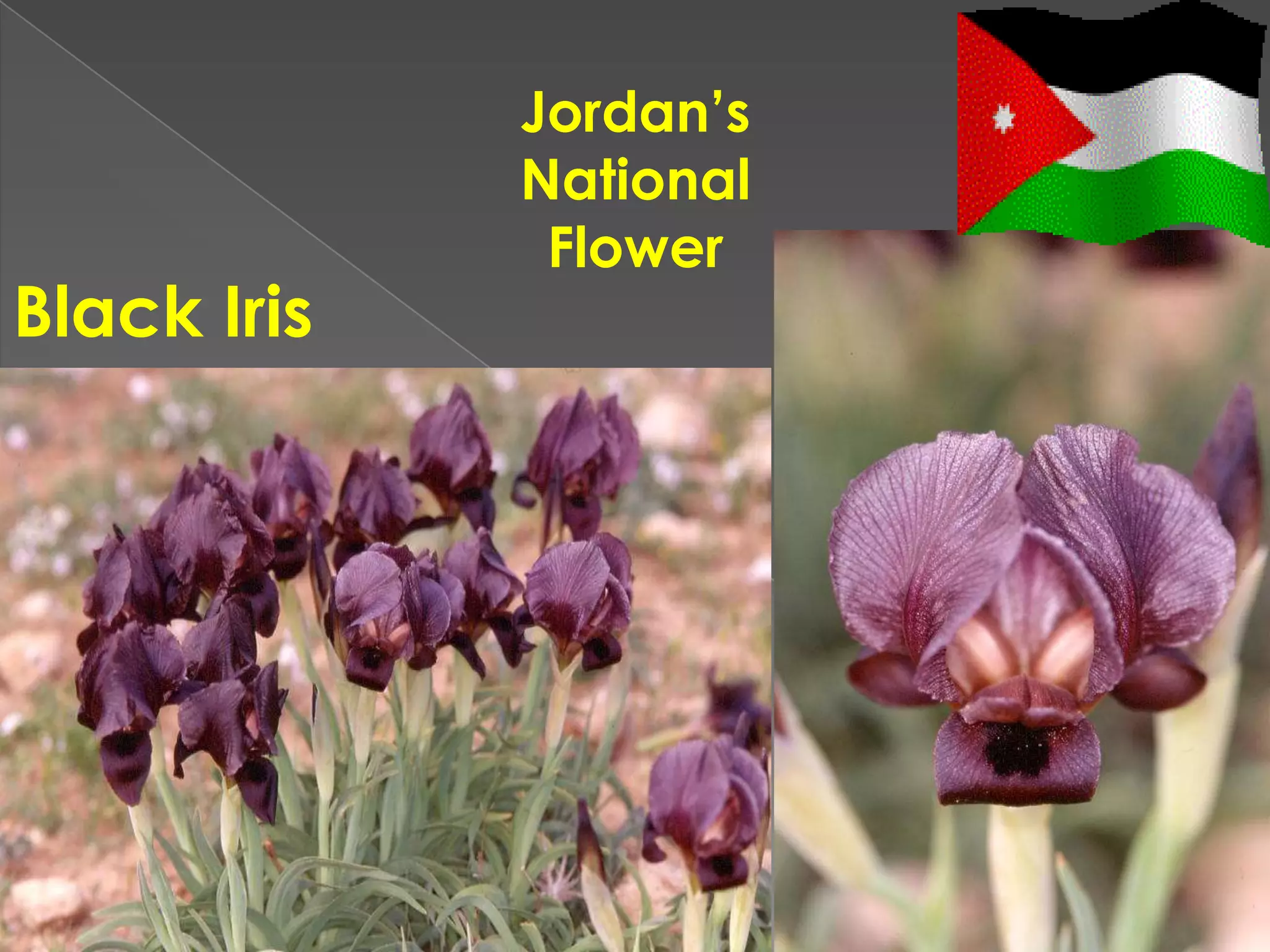
Jordan’s
             National
              Flower
Black Iris
Sinai Rose finch
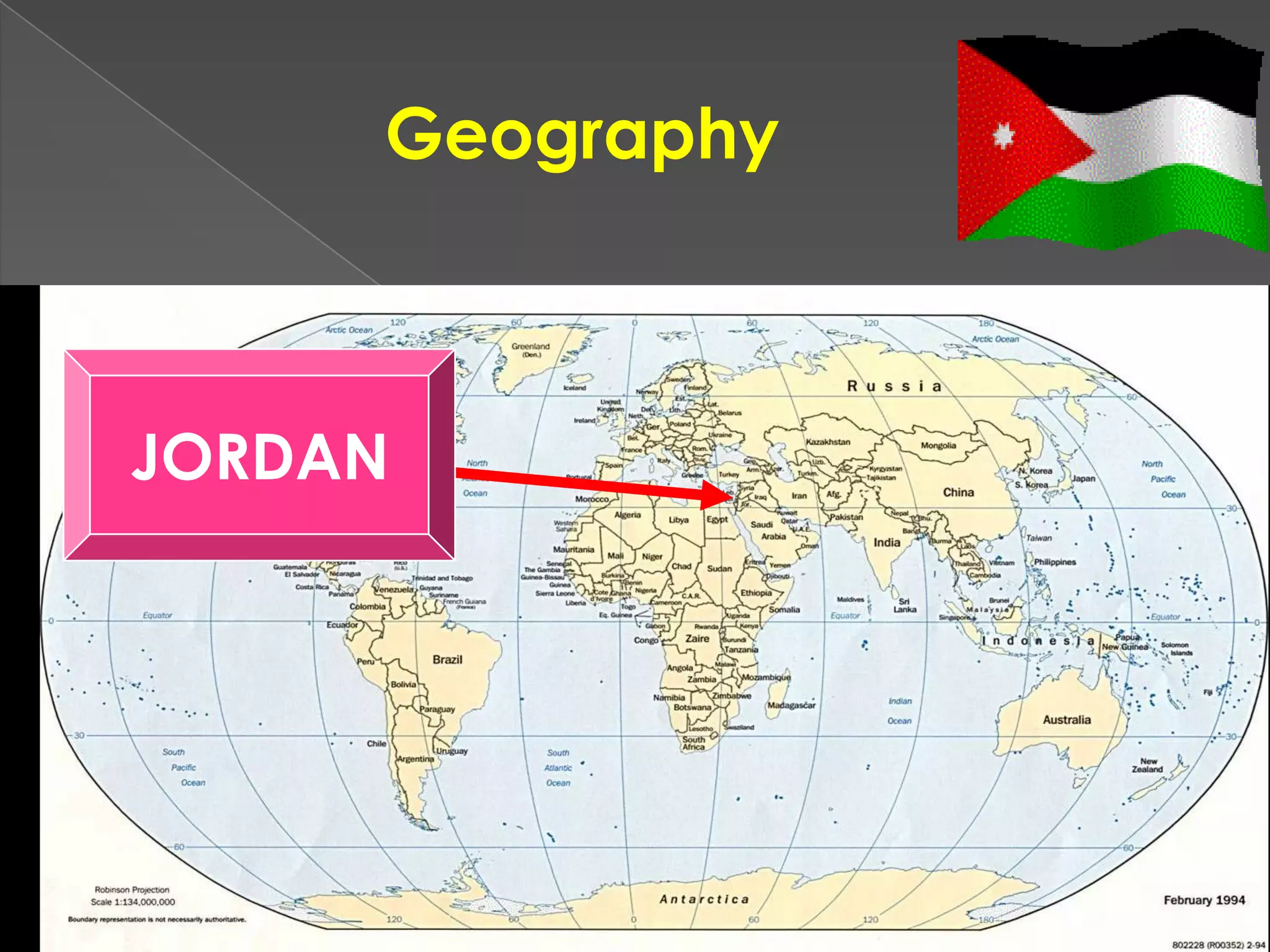
Geography


JORDAN
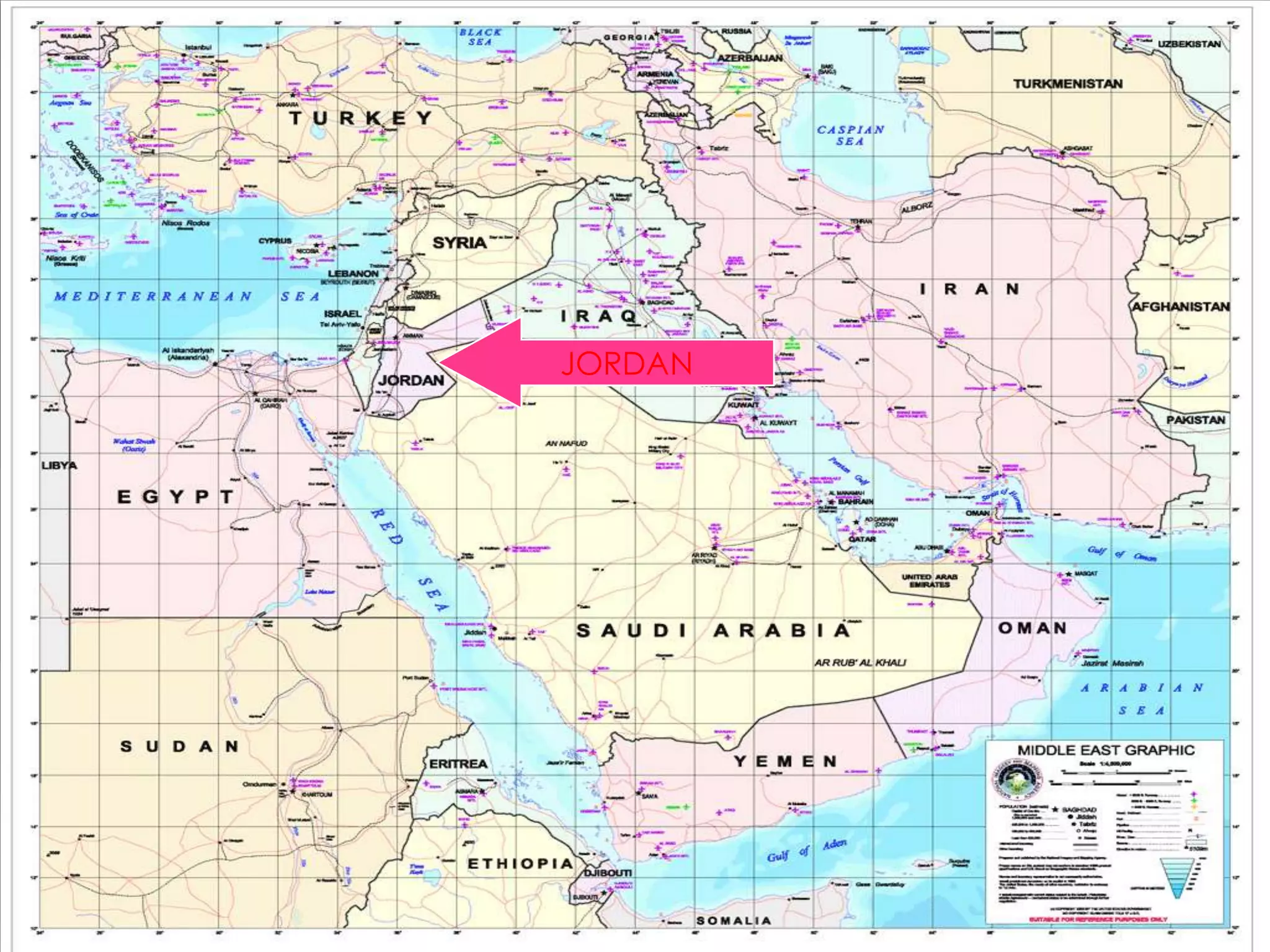
JORDAN
Area: total: 92,300 sq km
Water: 329 sq km
Land: 91,971 sq km
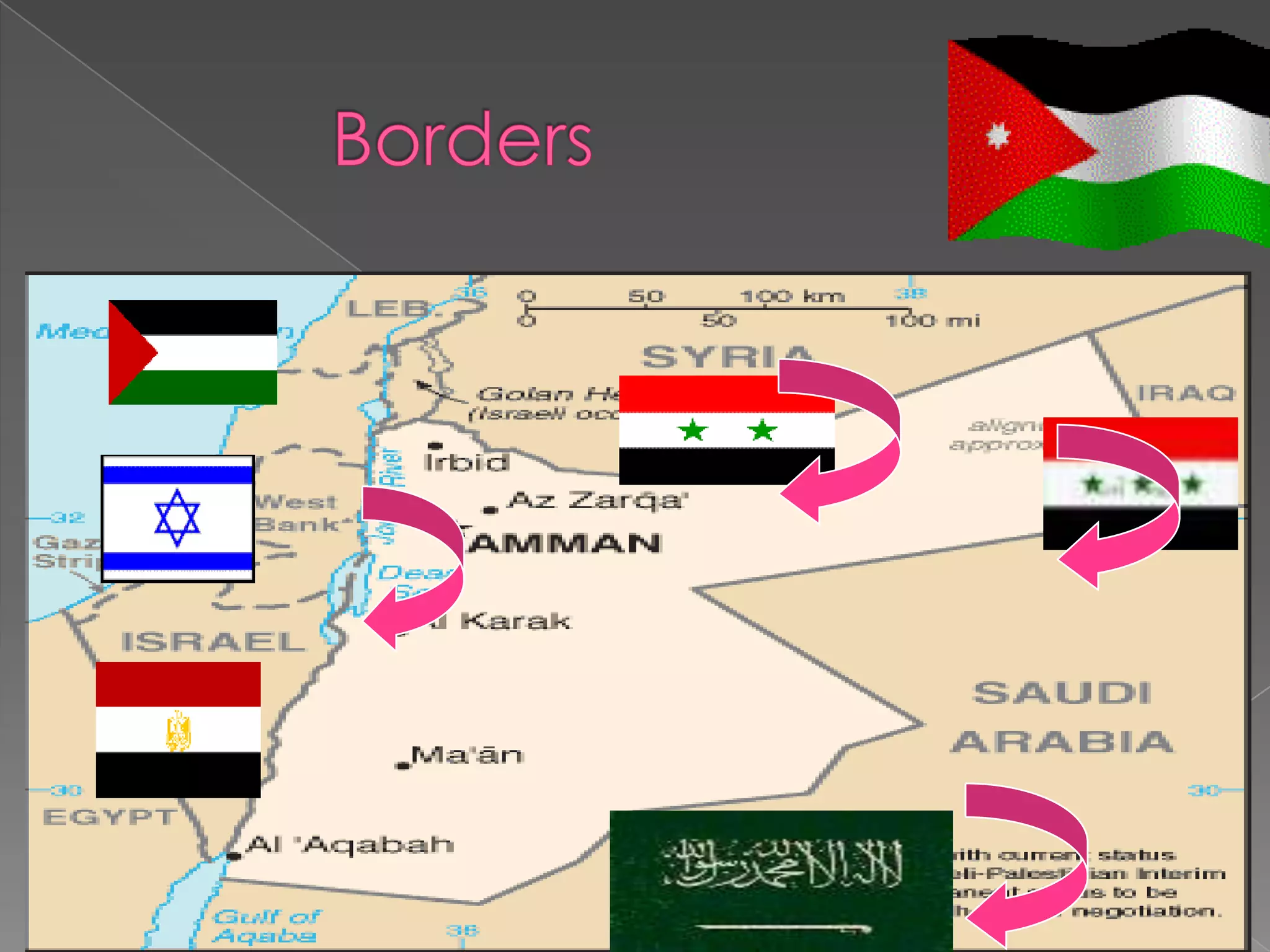
Land boundaries: total: 1,635 km

Coastline: 26 km

Territorial Sea: 3 NM
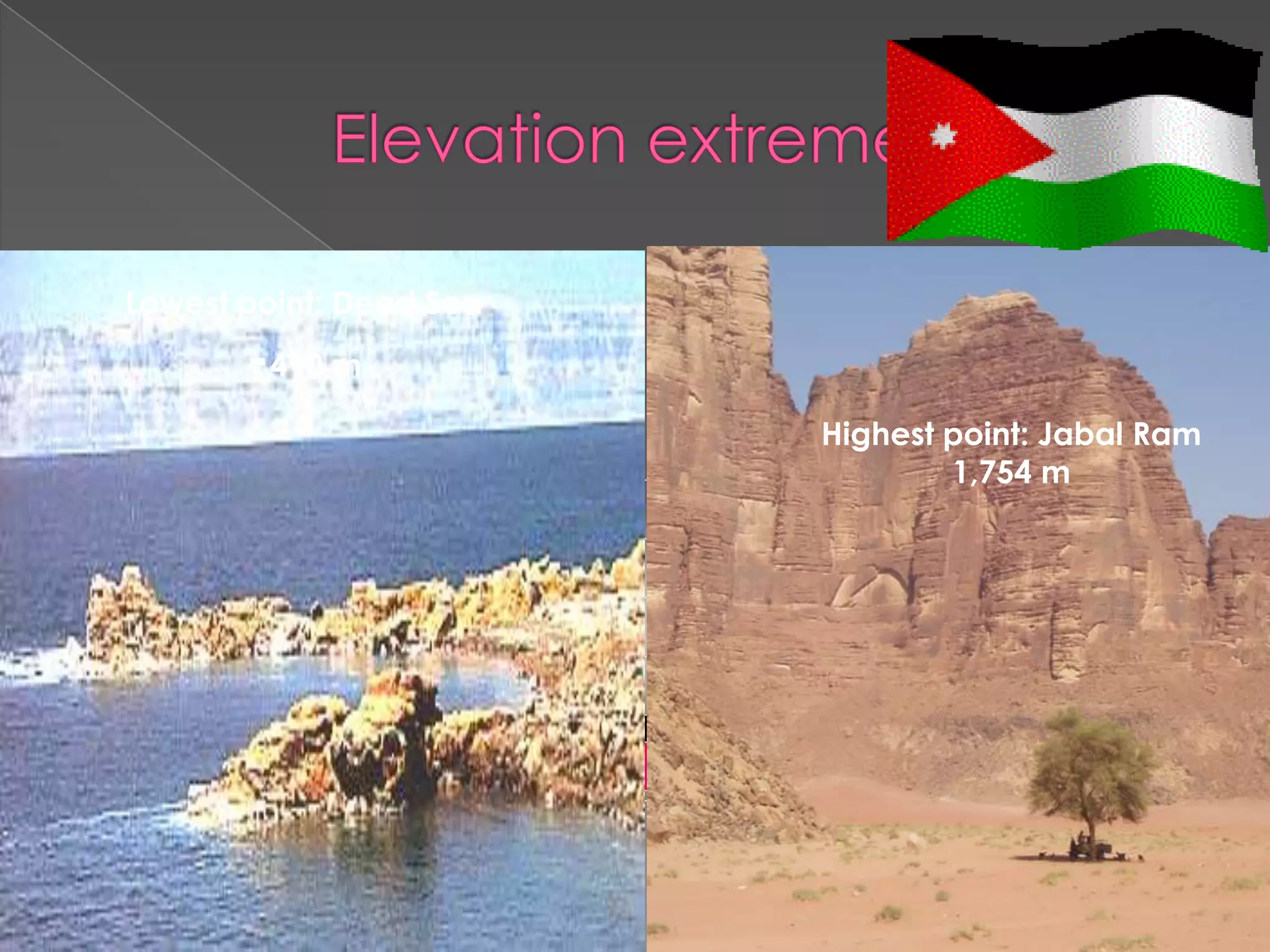
Lowest point: Dead Sea
       -410 m
                                     Highest point: Jabal Ram
                                             1,754 m
           2000

           1500

           1000
                                         Highest
            500                          Lowest

              0

           -500
                         Elevation
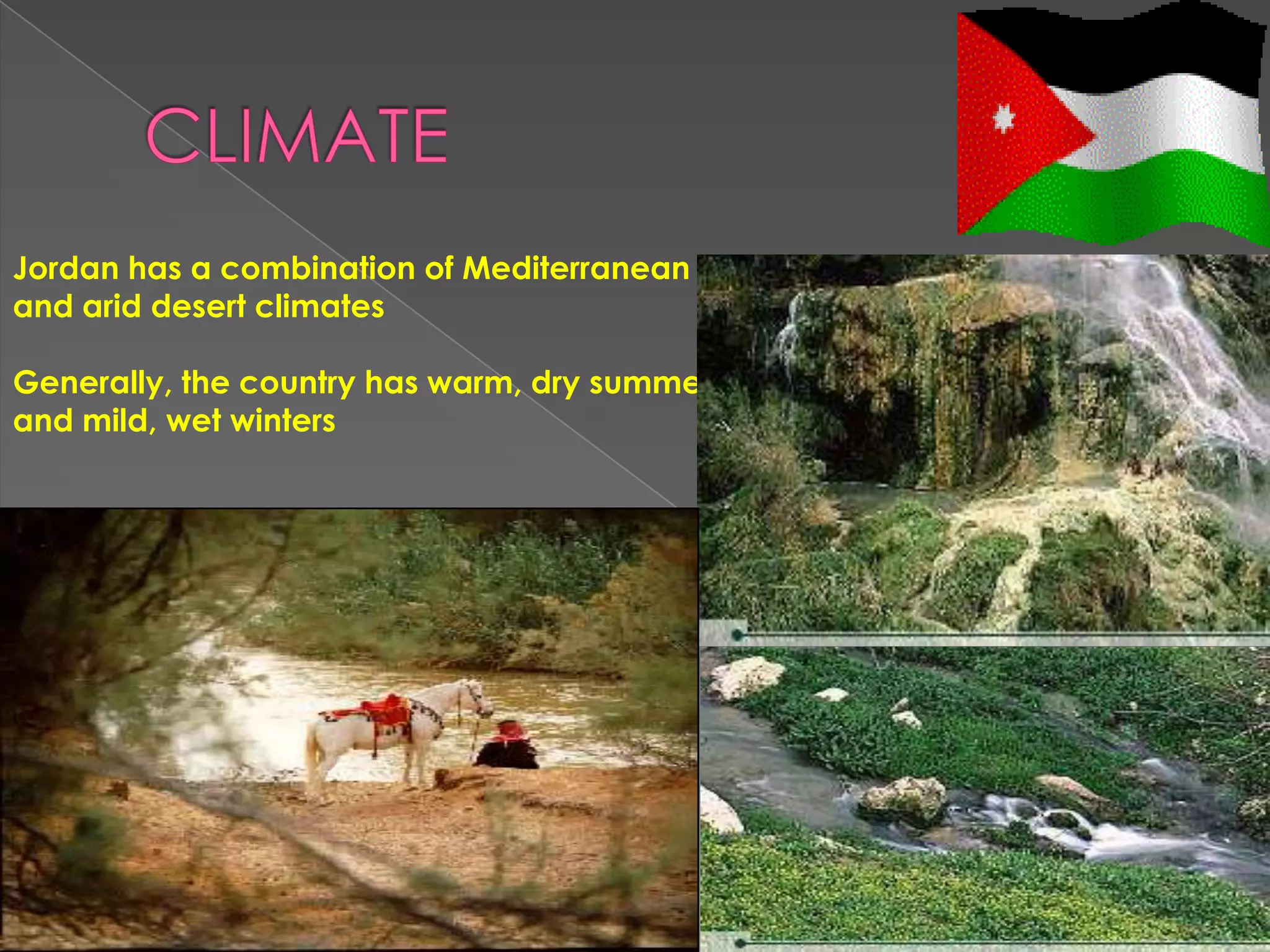
Jordan has a combination of Mediterranean
and arid desert climates

Generally, the country has warm, dry summers
and mild, wet winters
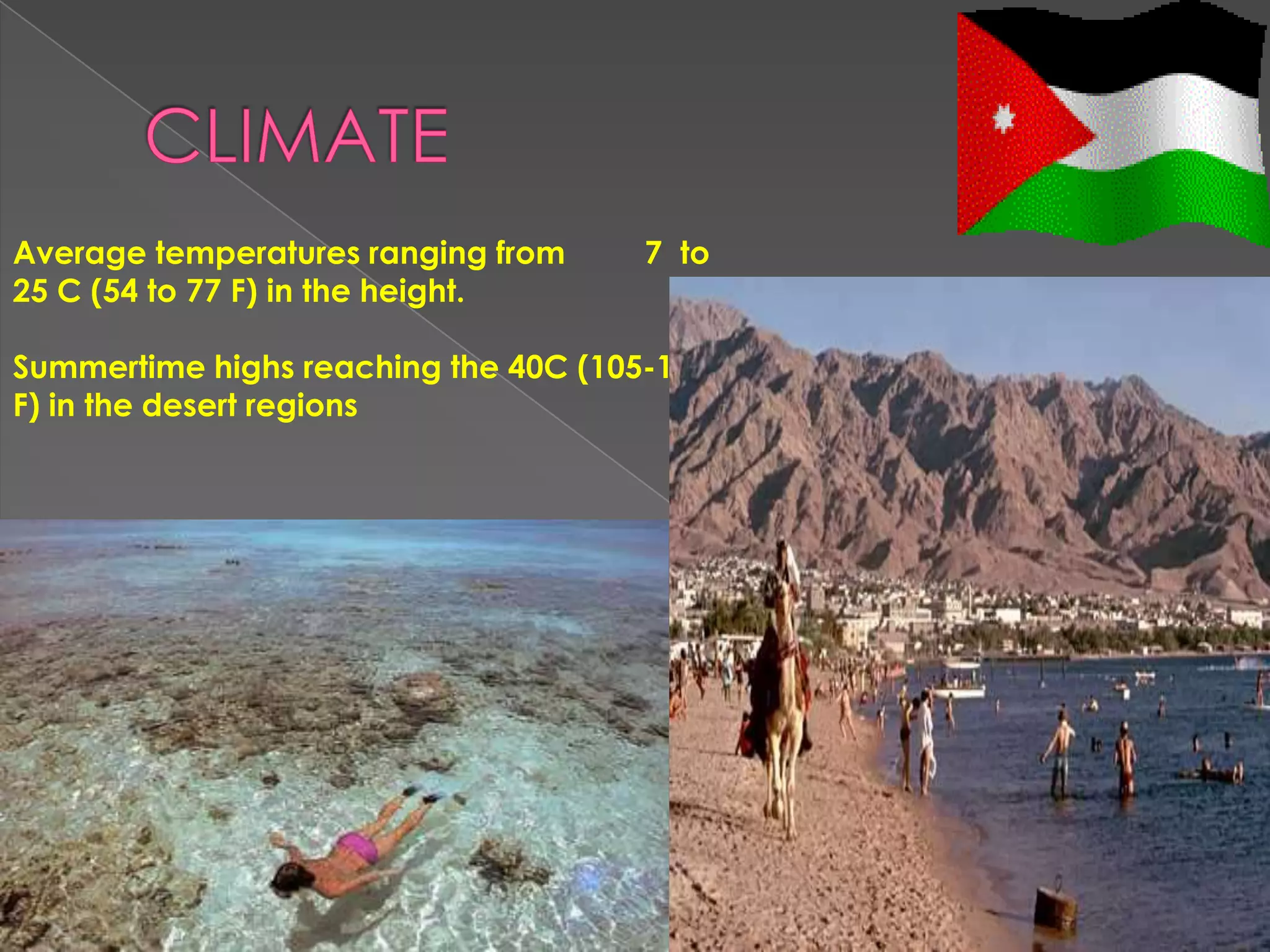
Average temperatures ranging from     7 to
25 C (54 to 77 F) in the height.
Summertime highs reaching the 40C (105-115
F) in the desert regions
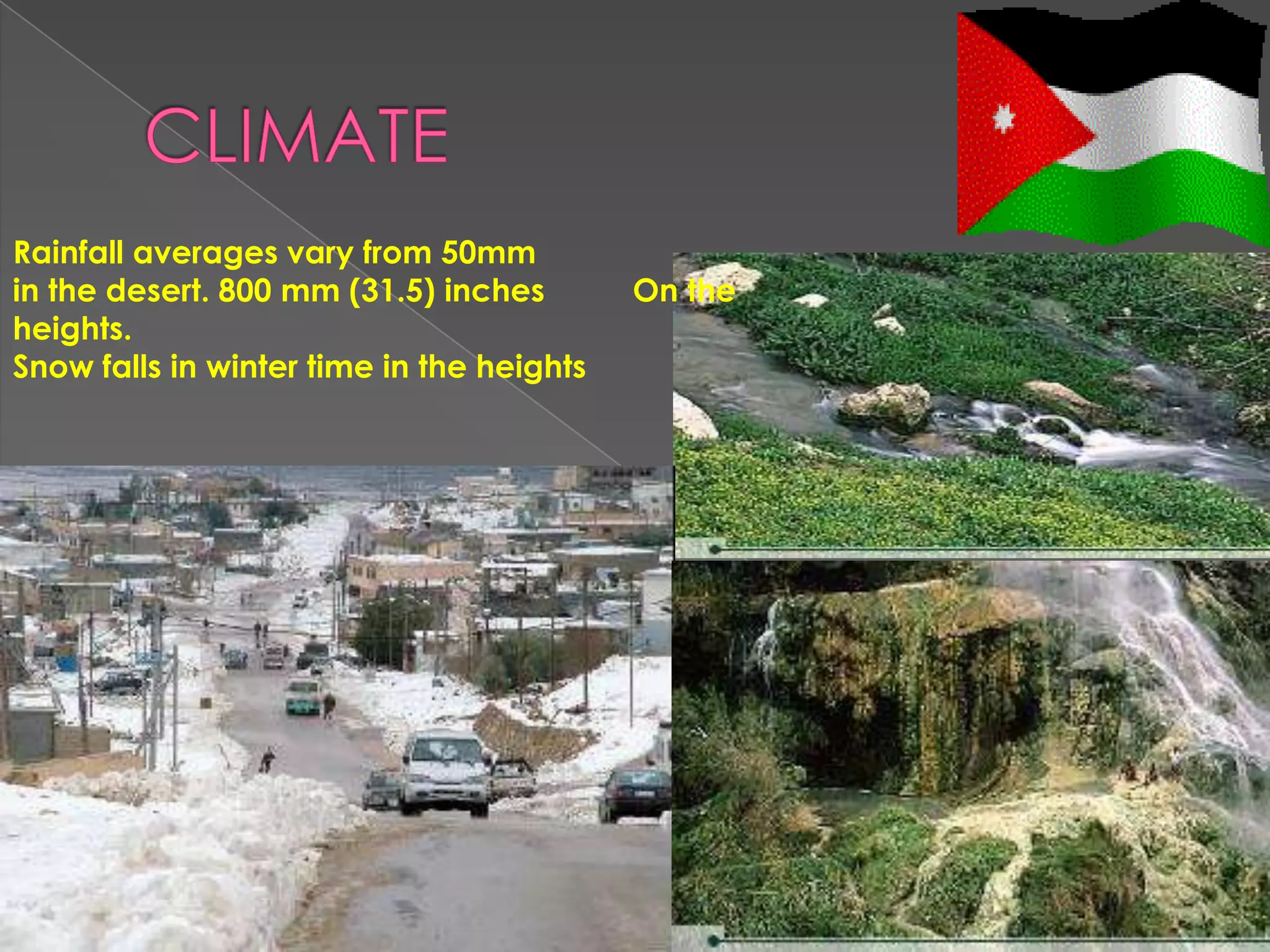
Rainfall averages vary from 50mm
in the desert. 800 mm (31.5) inches        On the
heights.
Snow falls in winter time in the heights
The region of present-day Jordan roughly

   corresponds to the biblical lands of
                 Ammon,

       Bashan, Edom and Moab
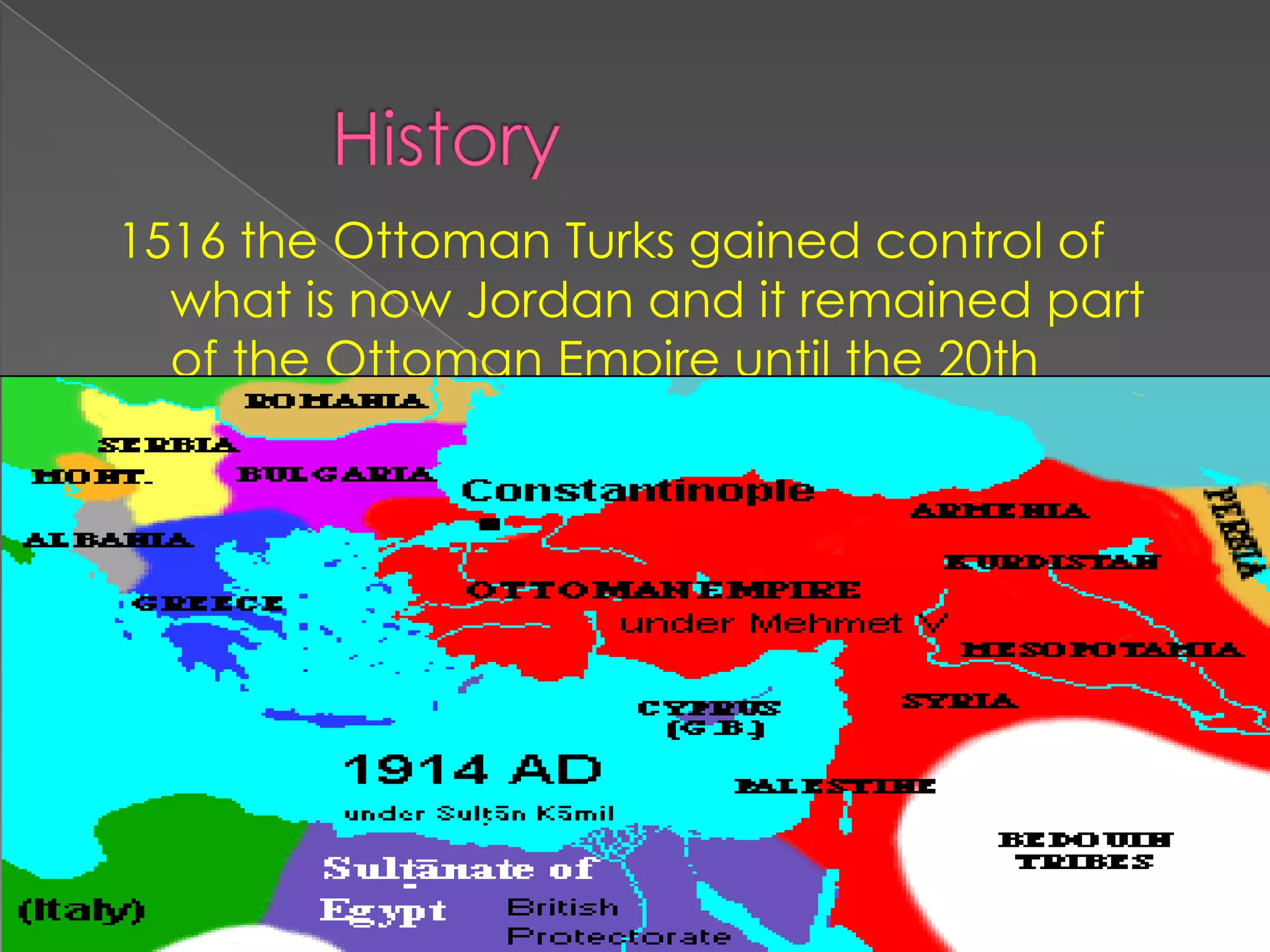
1516 the Ottoman Turks gained control of
  what is now Jordan and it remained part
  of the Ottoman Empire until the 20th
  cent
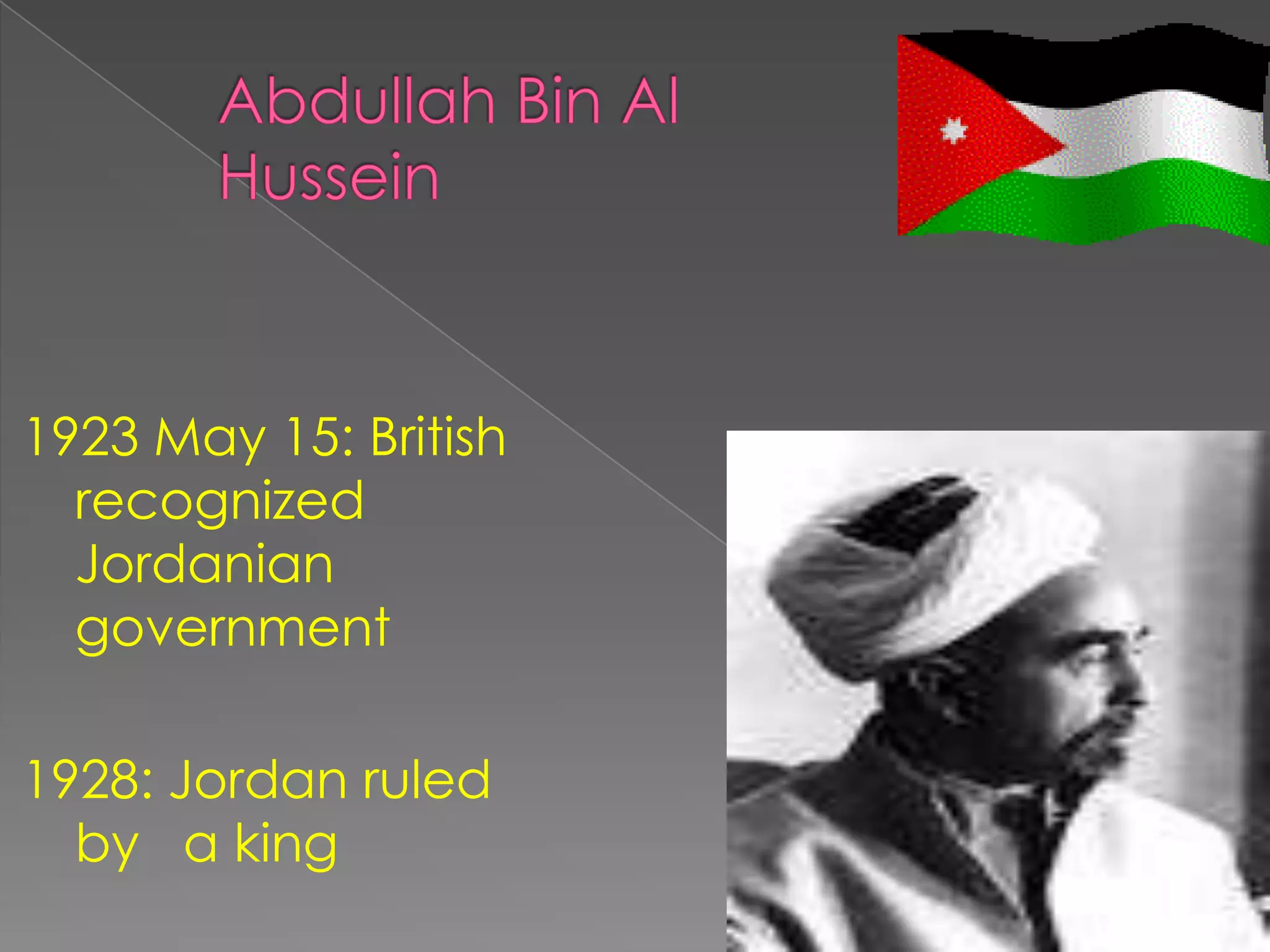
1923 May 15: British
  recognized
  Jordanian
  government

1928: Jordan ruled
  by a king
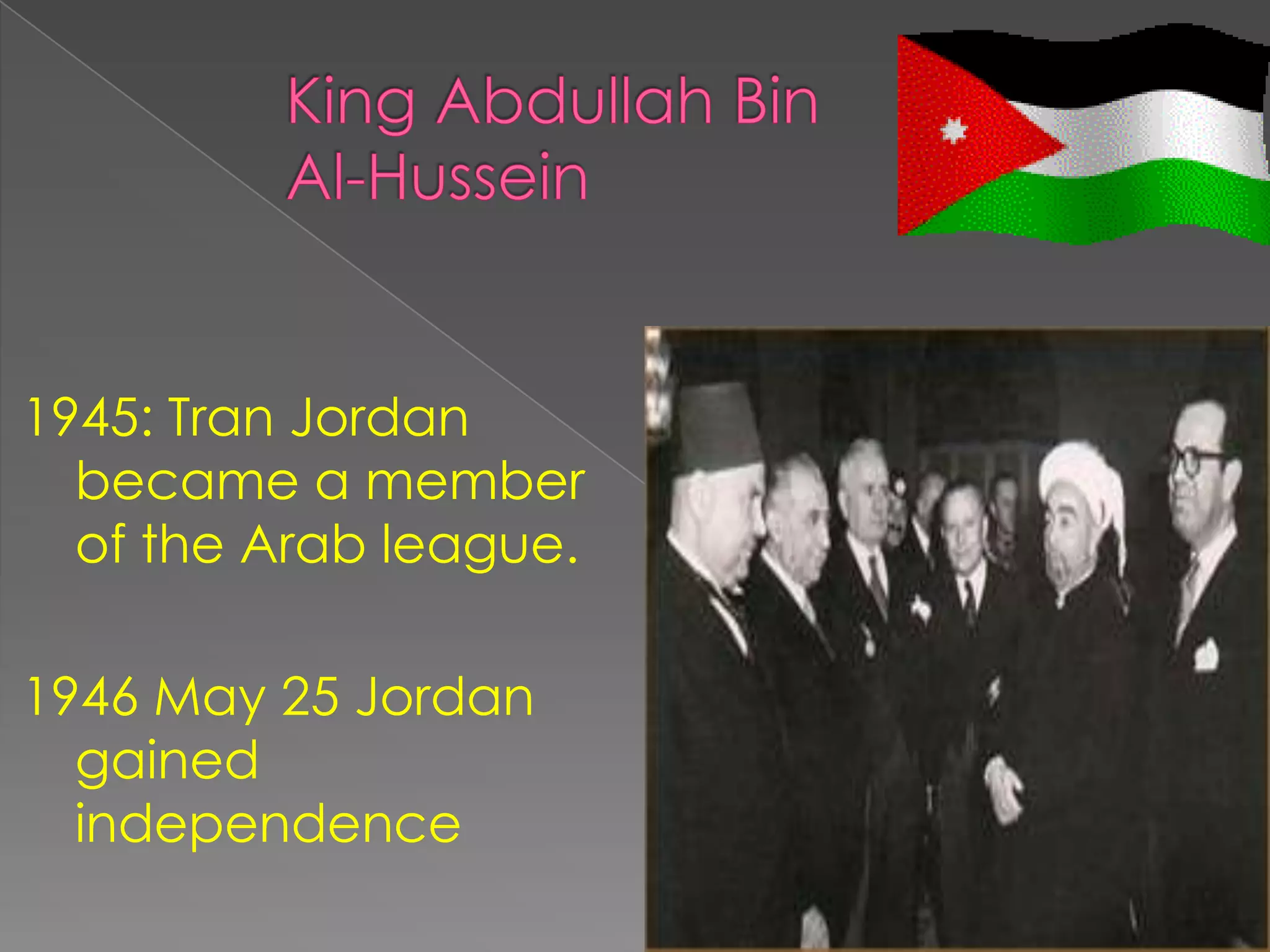
1945: Tran Jordan
  became a member
  of the Arab league.

1946 May 25 Jordan
  gained
  independence
1948: Arabs Israel War
1949: April the country's name was changed
to Hashemite Kingdom of Jordan
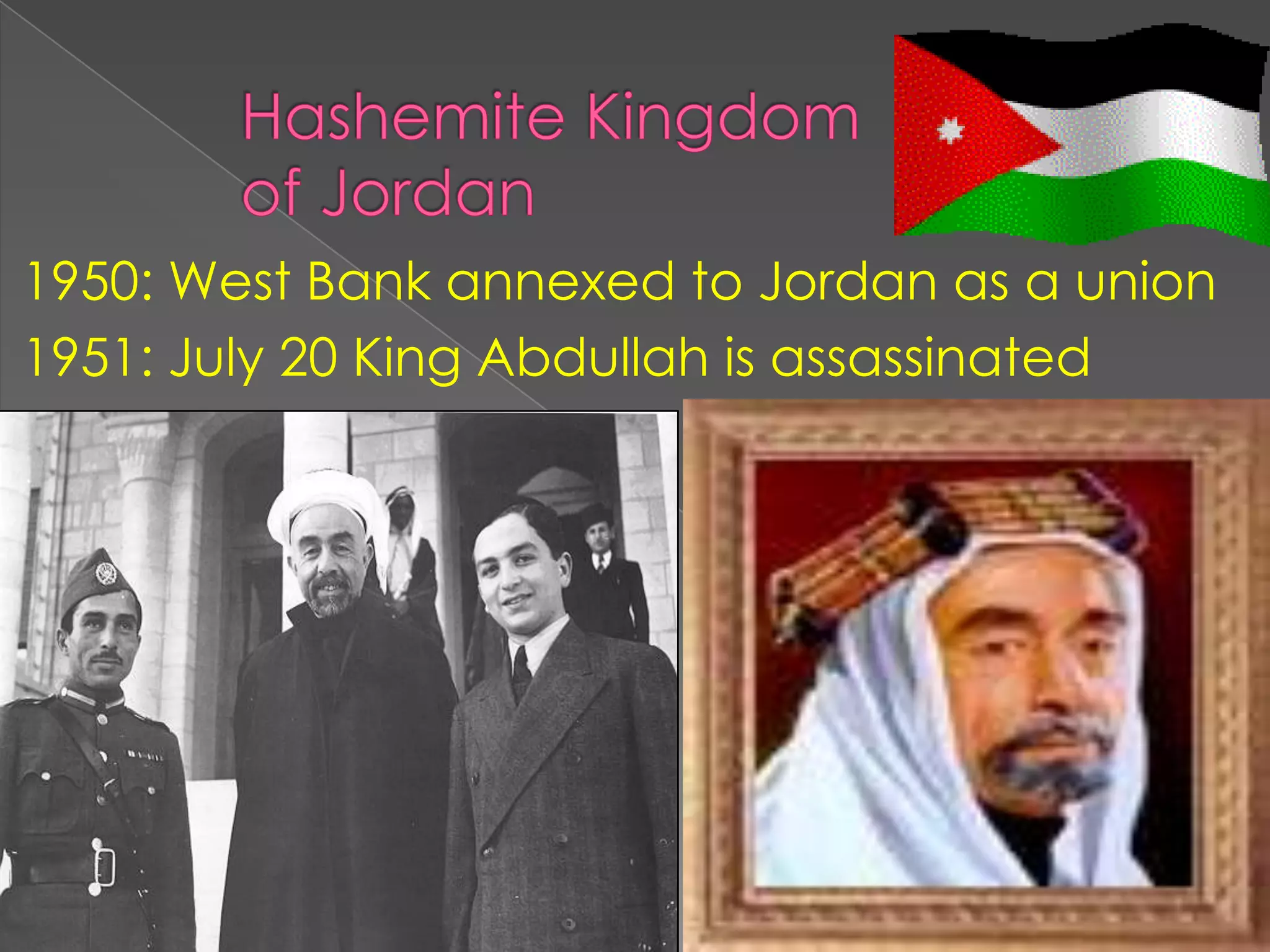
1950: West Bank annexed to Jordan as a union
1951: July 20 King Abdullah is assassinated
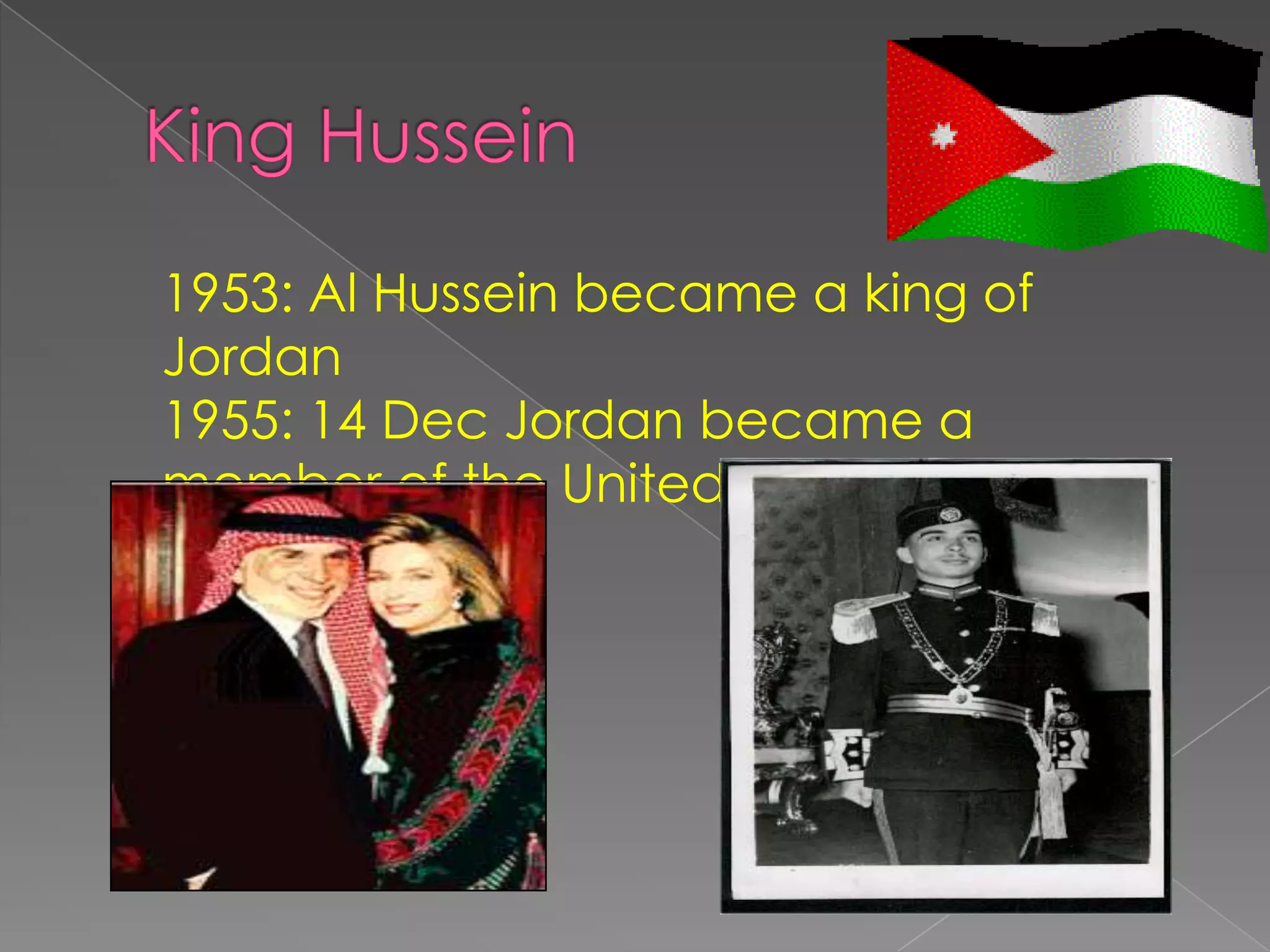
1953: Al Hussein became a king of
Jordan
1955: 14 Dec Jordan became a
member of the United Nations
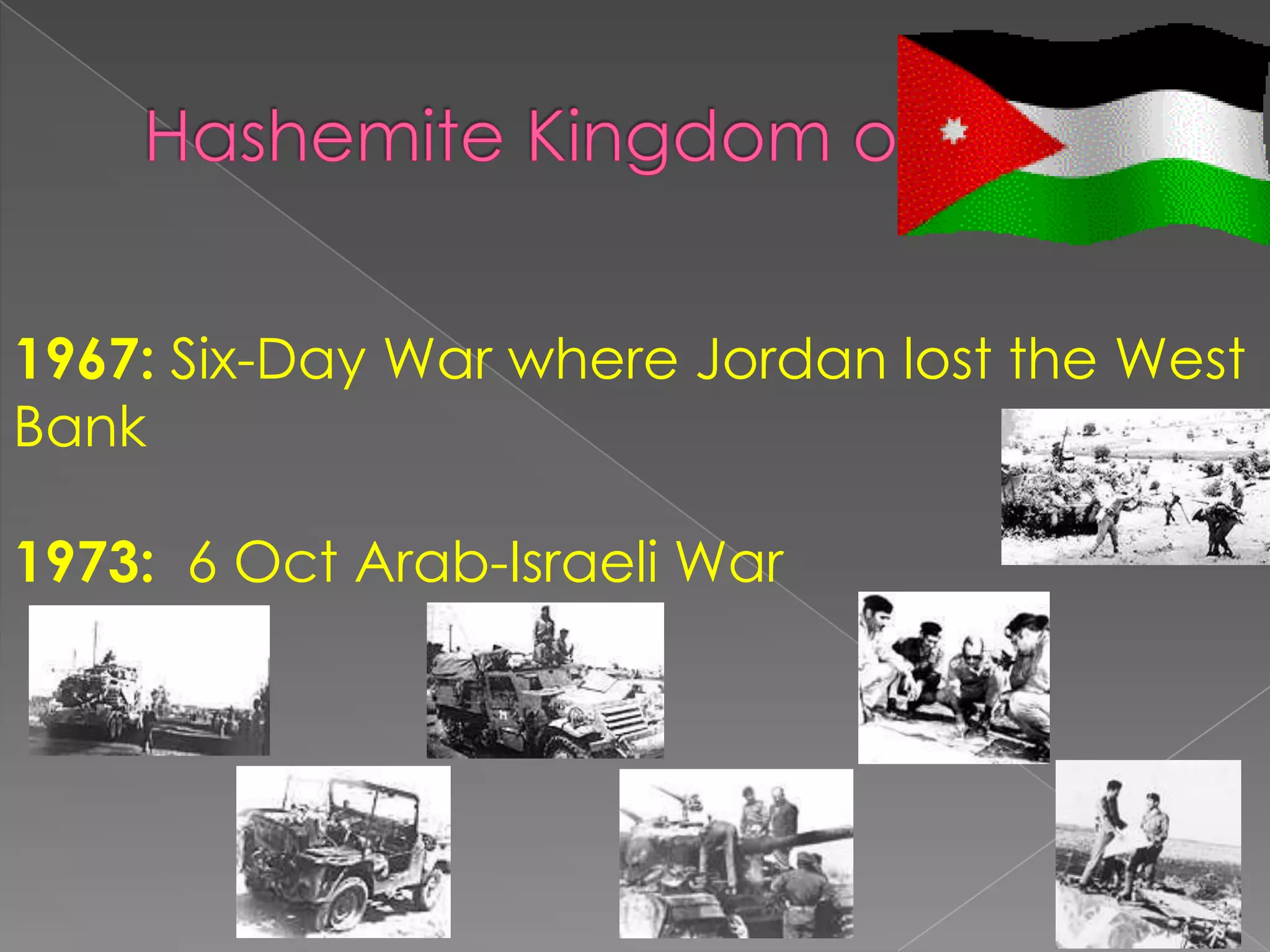
1967: Six-Day War where Jordan lost the West
Bank

1973: 6 Oct Arab-Israeli War
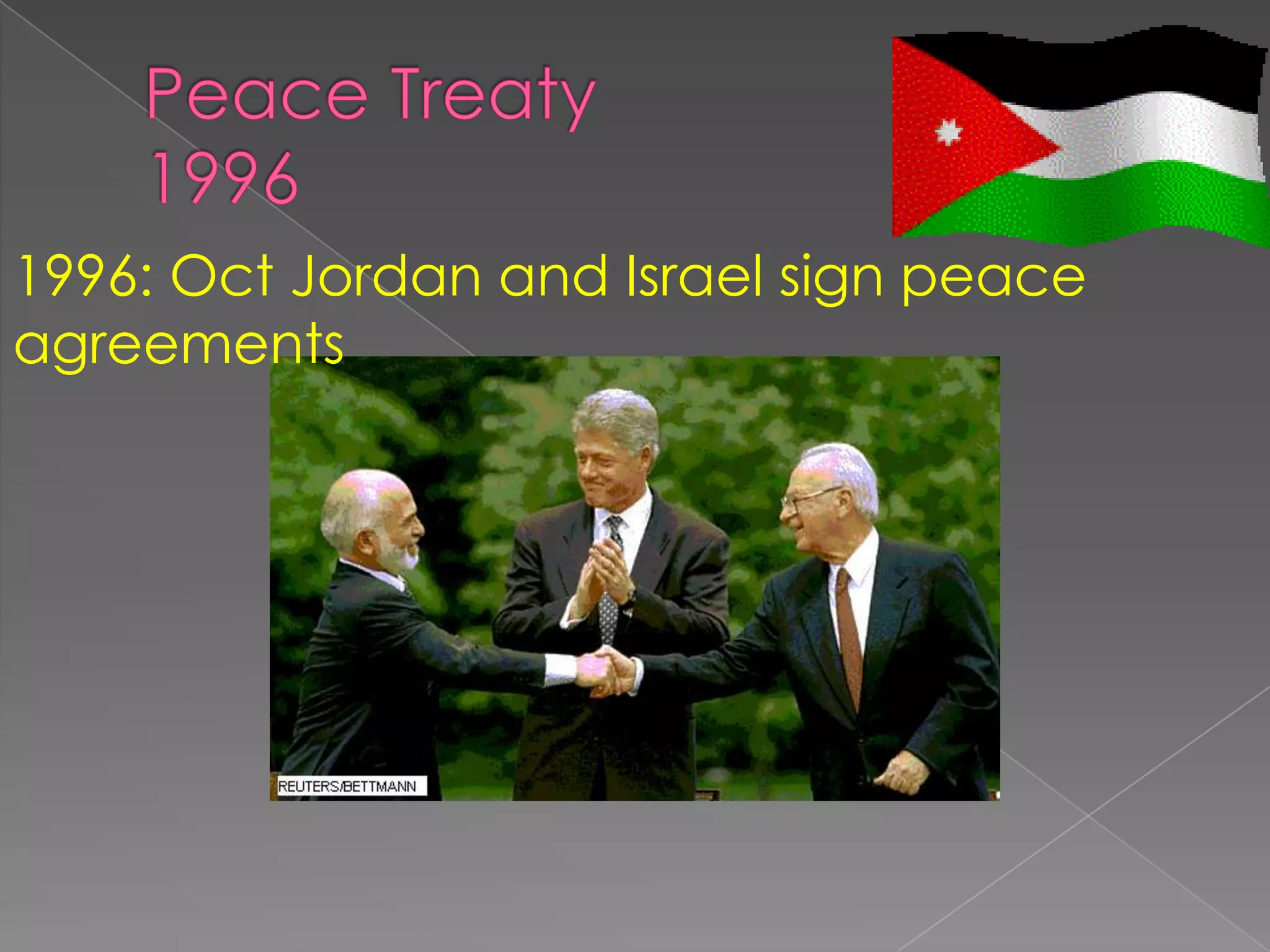
1996: Oct Jordan and Israel sign peace
agreements
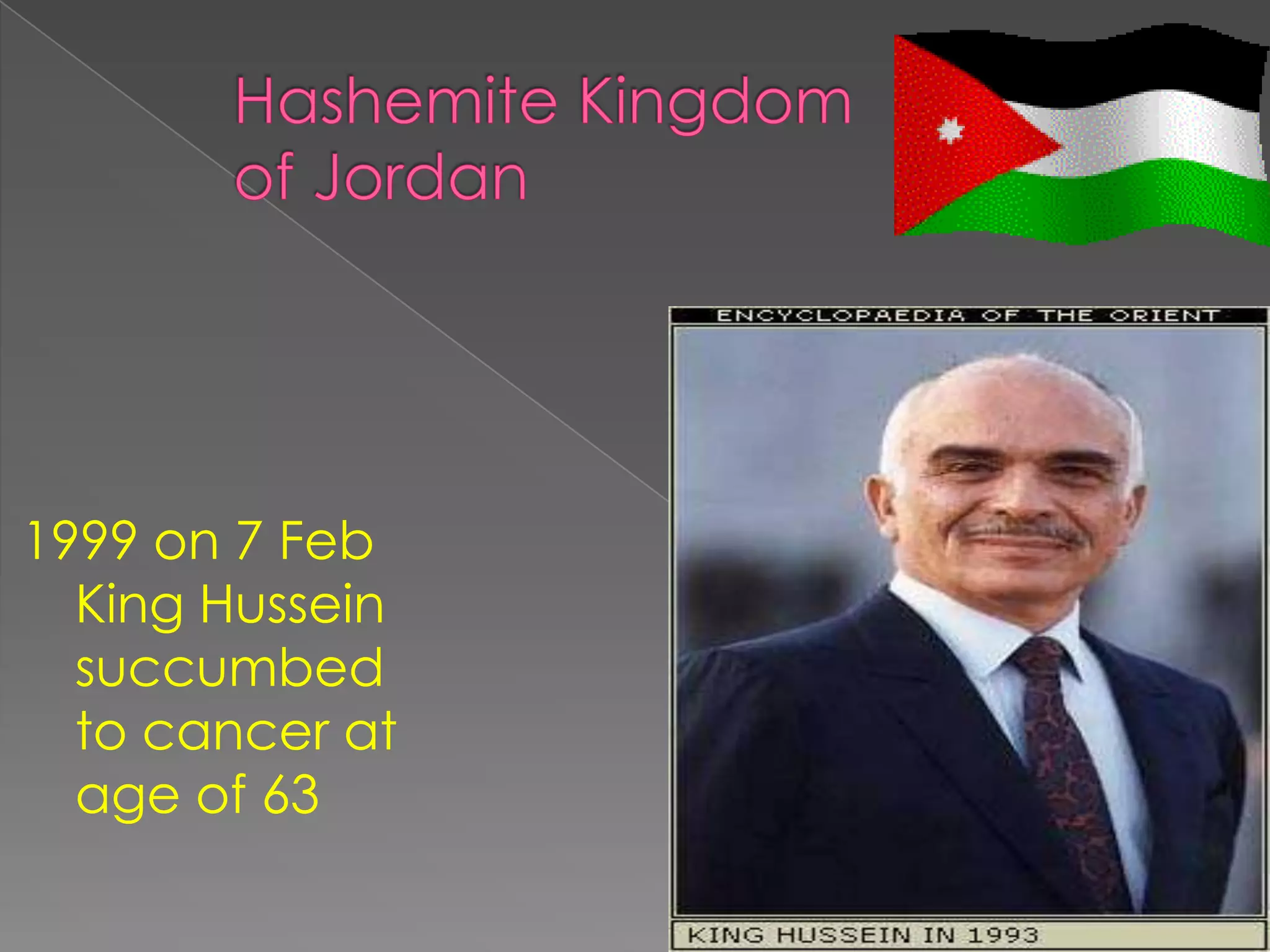
1999 on 7 Feb
  King Hussein
  succumbed
  to cancer at
  age of 63
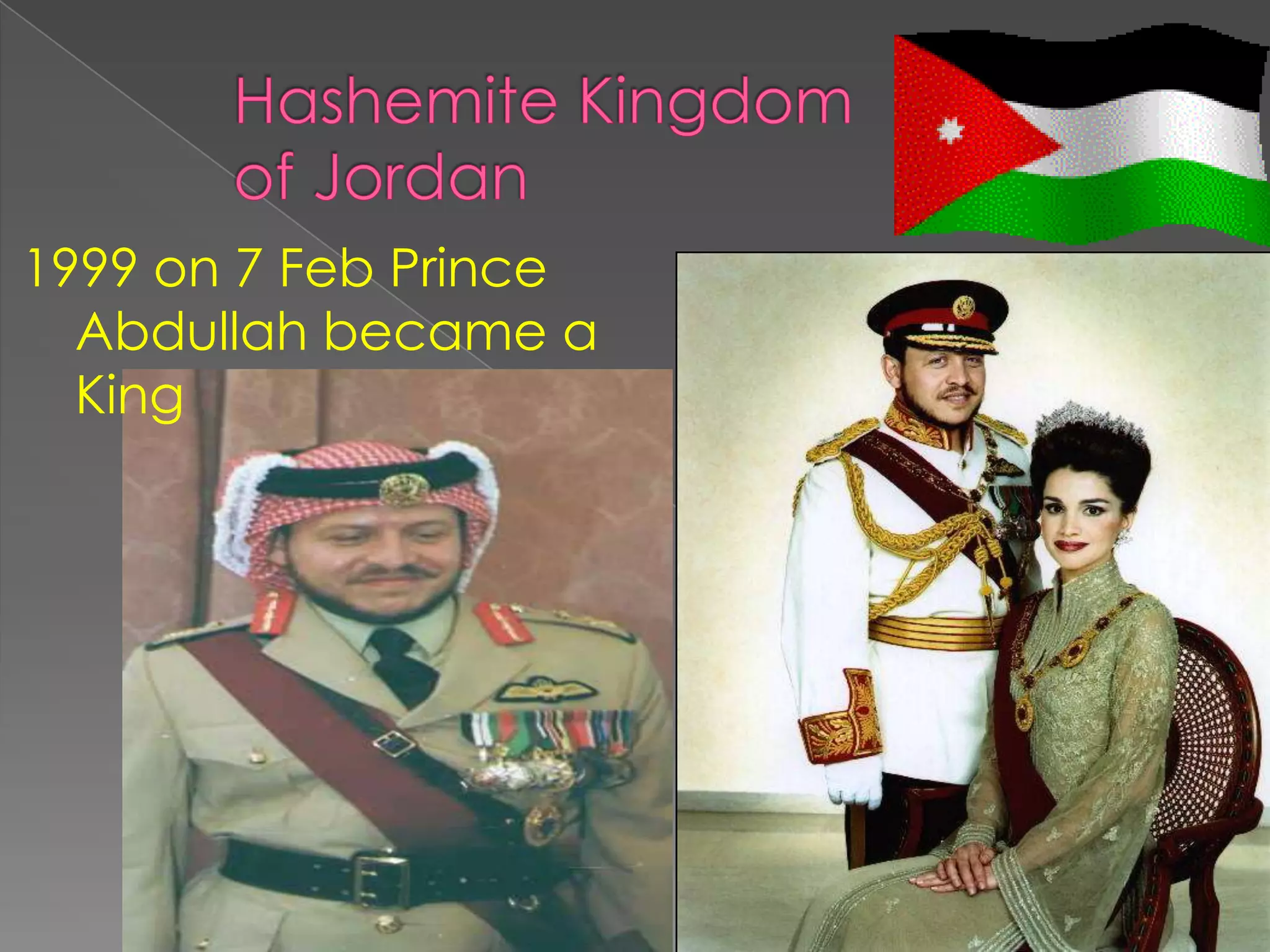
1999 on 7 Feb Prince
  Abdullah became a
  King
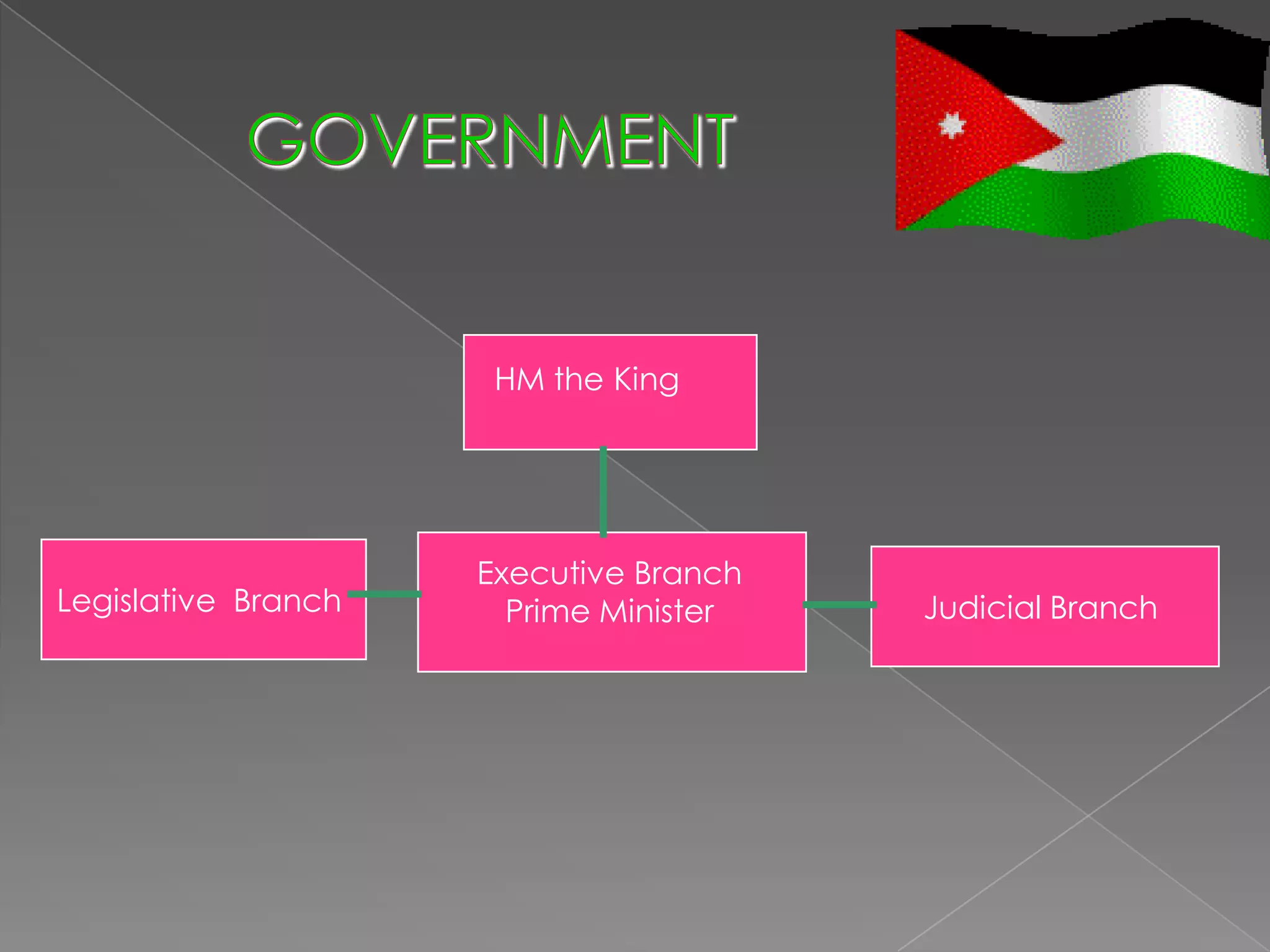
HM the King
                      HM the King


                     Executive Branch
Legislative Branch     Prime Minister   Judicial Branch
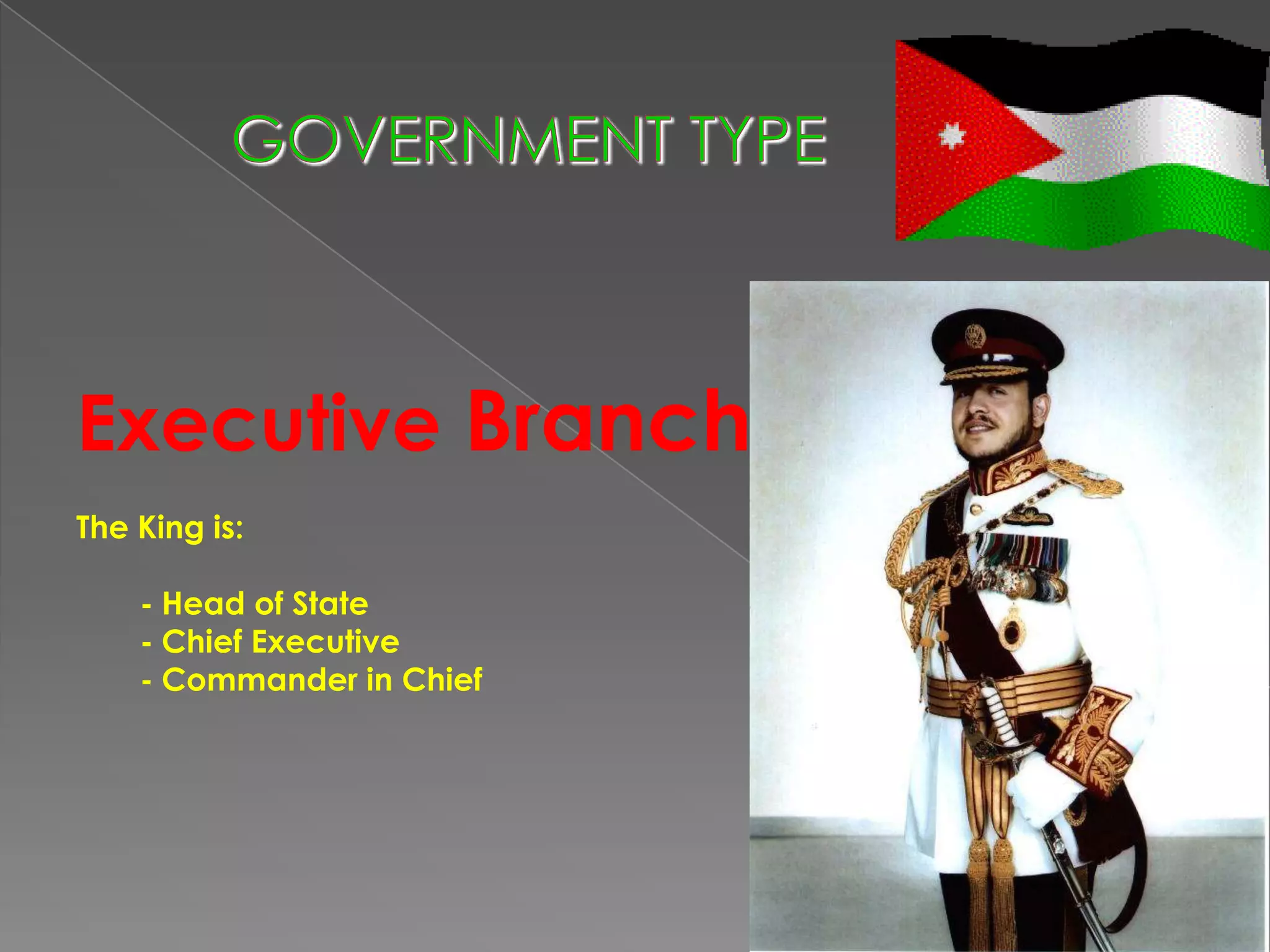
Executive Branch
The King is:

    - Head of State
    - Chief Executive
    - Commander in Chief
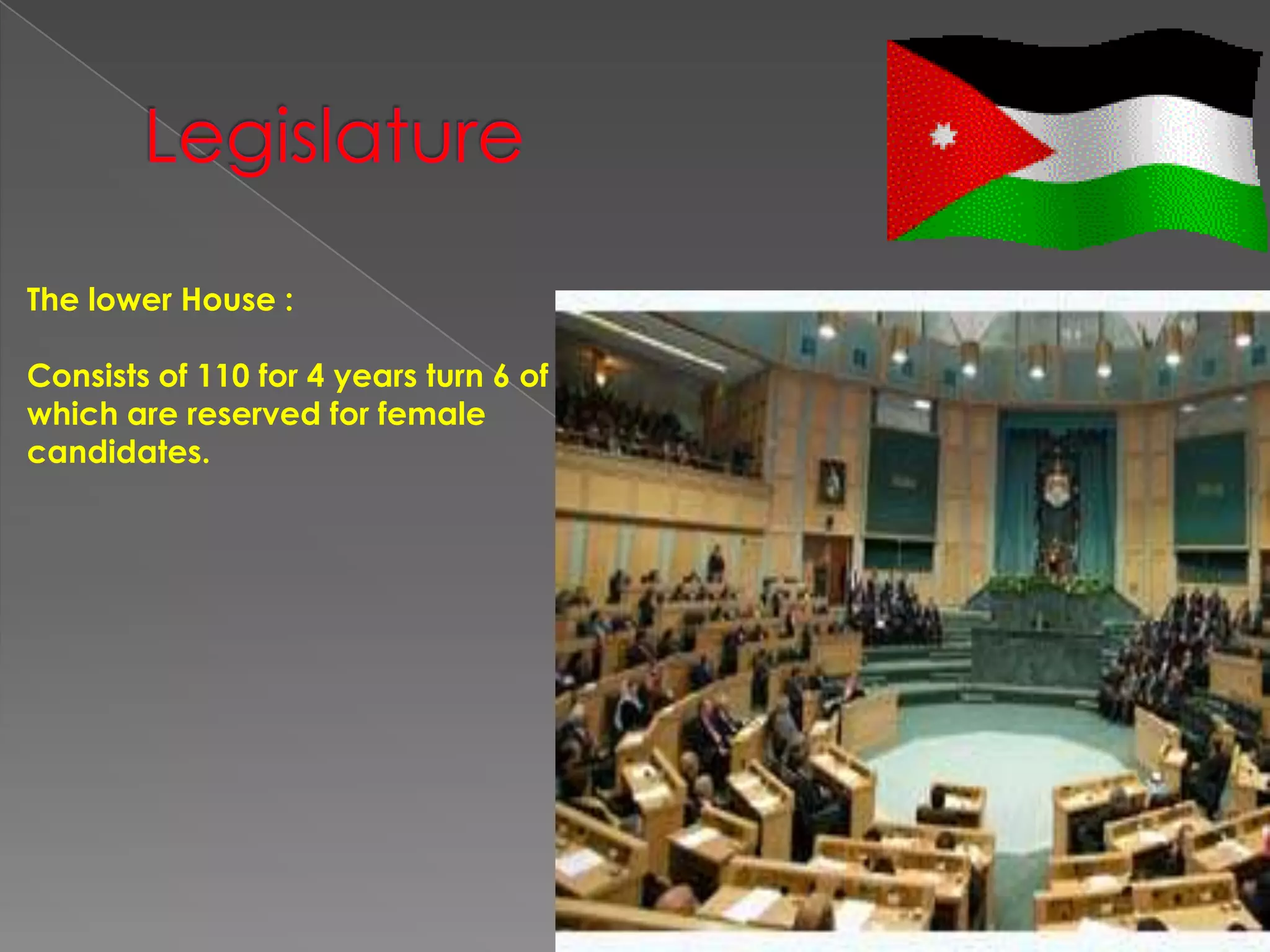
The lower House :

Consists of 110 for 4 years turn 6 of
which are reserved for female
candidates.
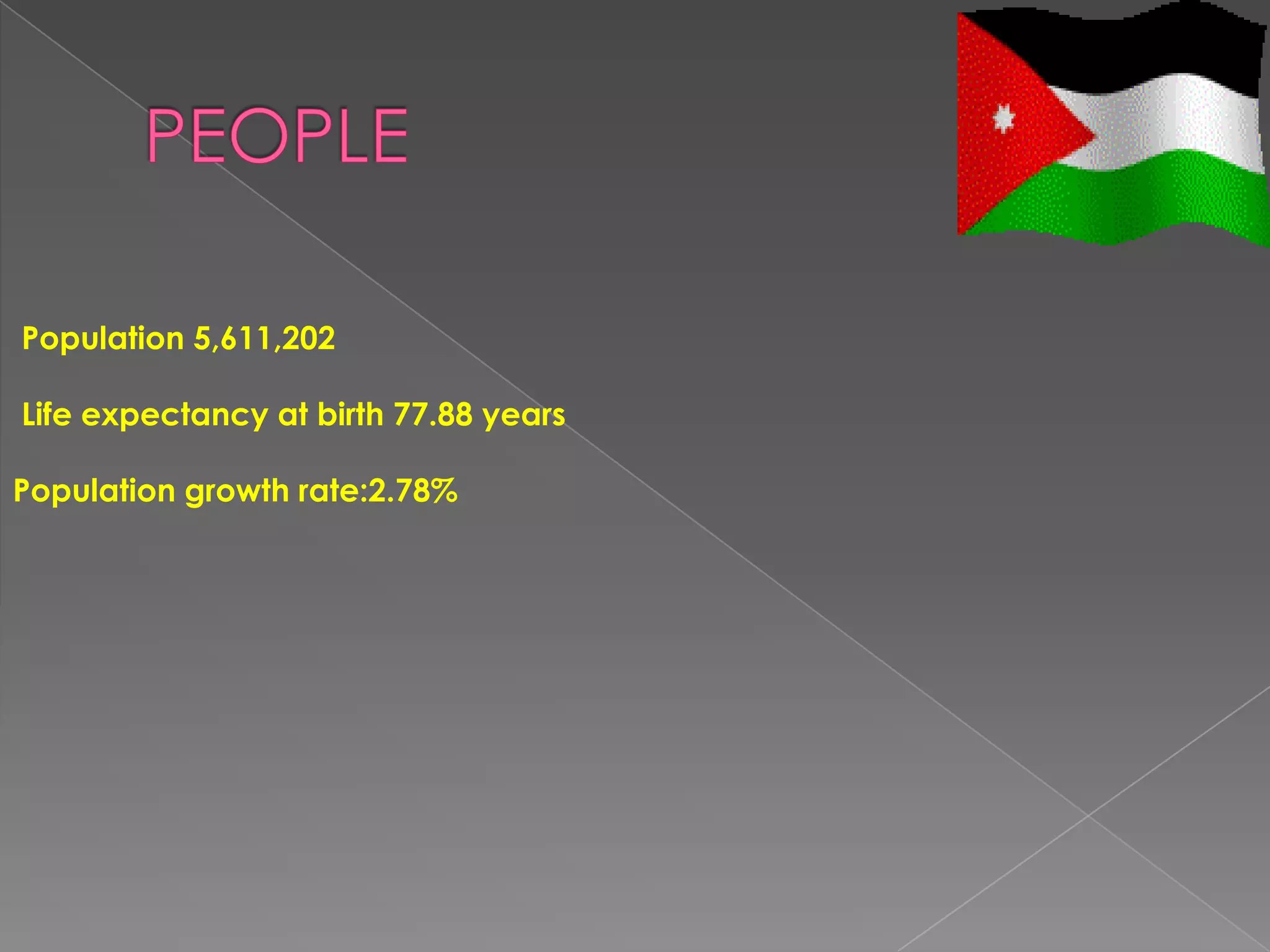
Jordan is divided into 12 administrative
  districts, or governorates
Population 5,611,202

Life expectancy at birth 77.88 years

Population growth rate:2.78%
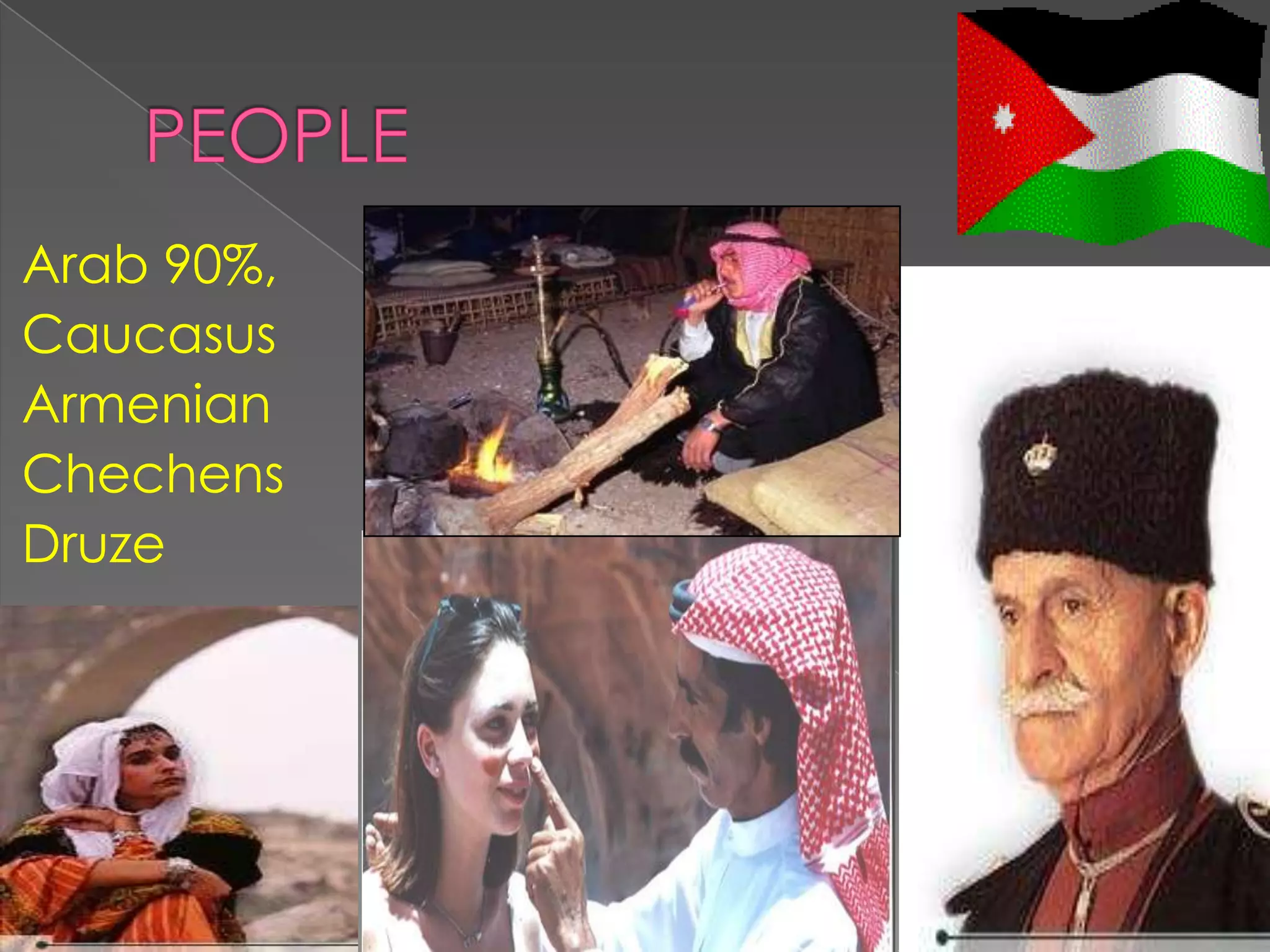
Arab 90%,
Caucasus
Armenian
Chechens
Druze
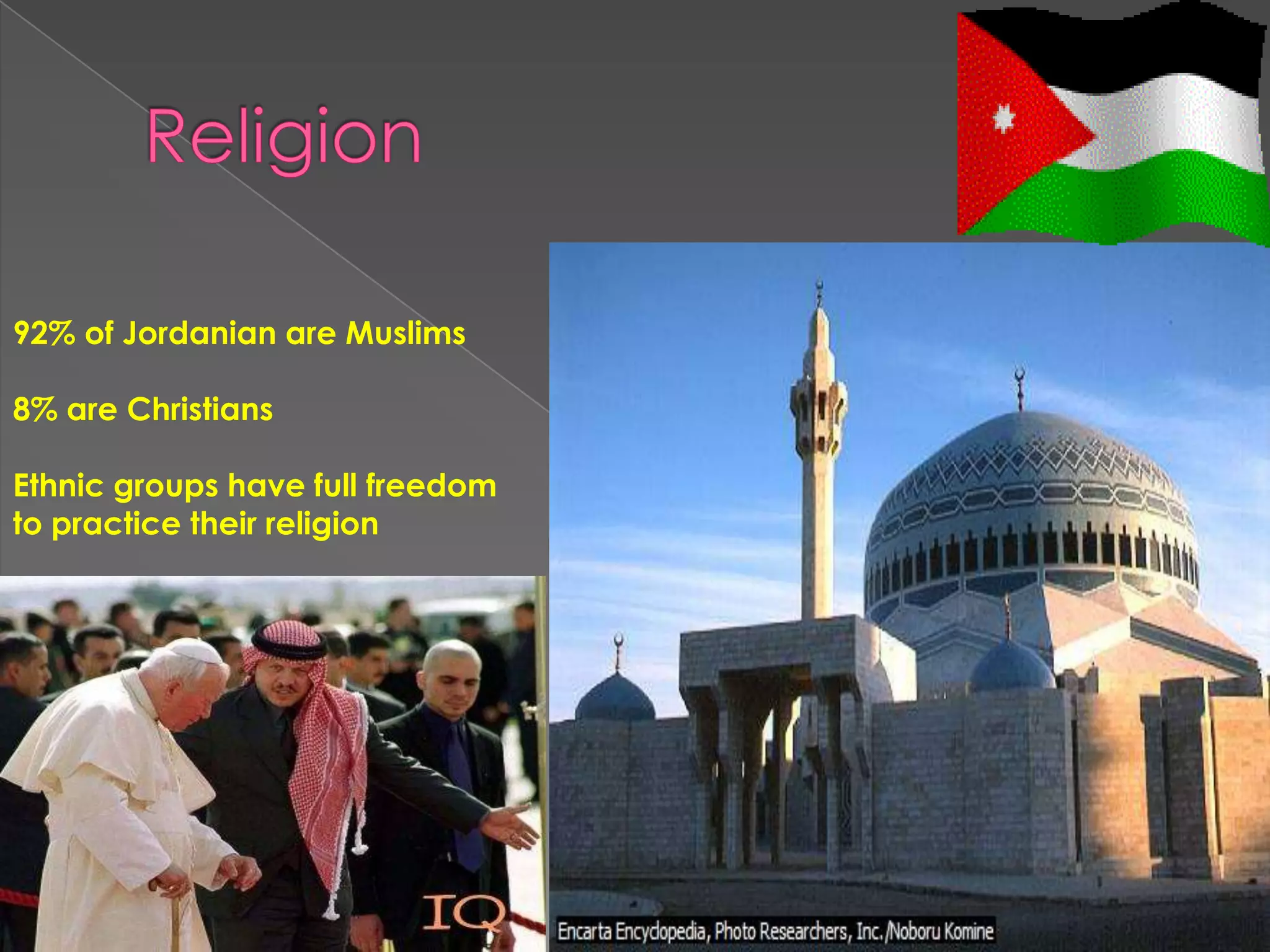
92% of Jordanian are Muslims

8% are Christians

Ethnic groups have full freedom
to practice their religion
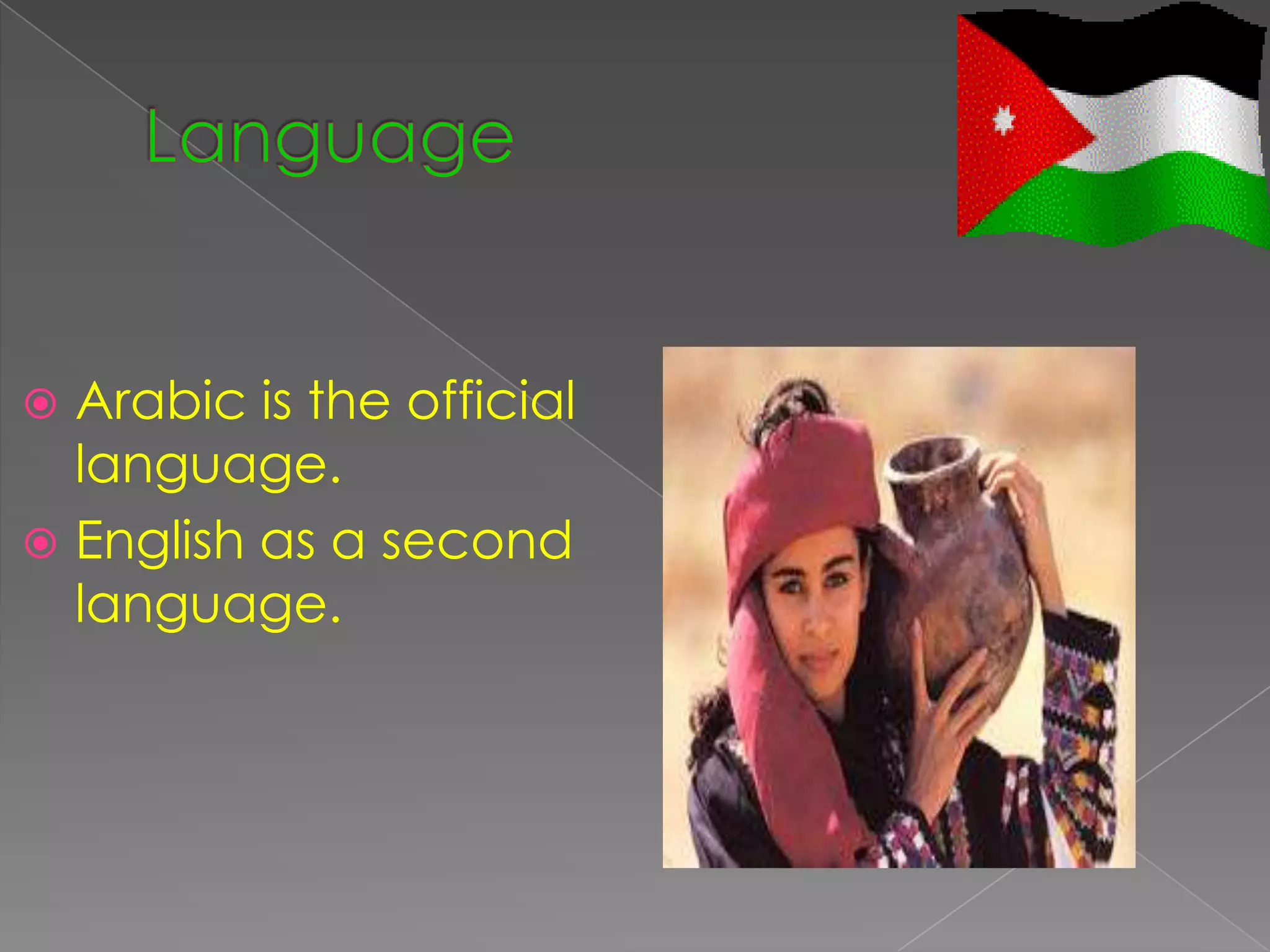
 Arabic is the official
  language.
 English as a second
  language.
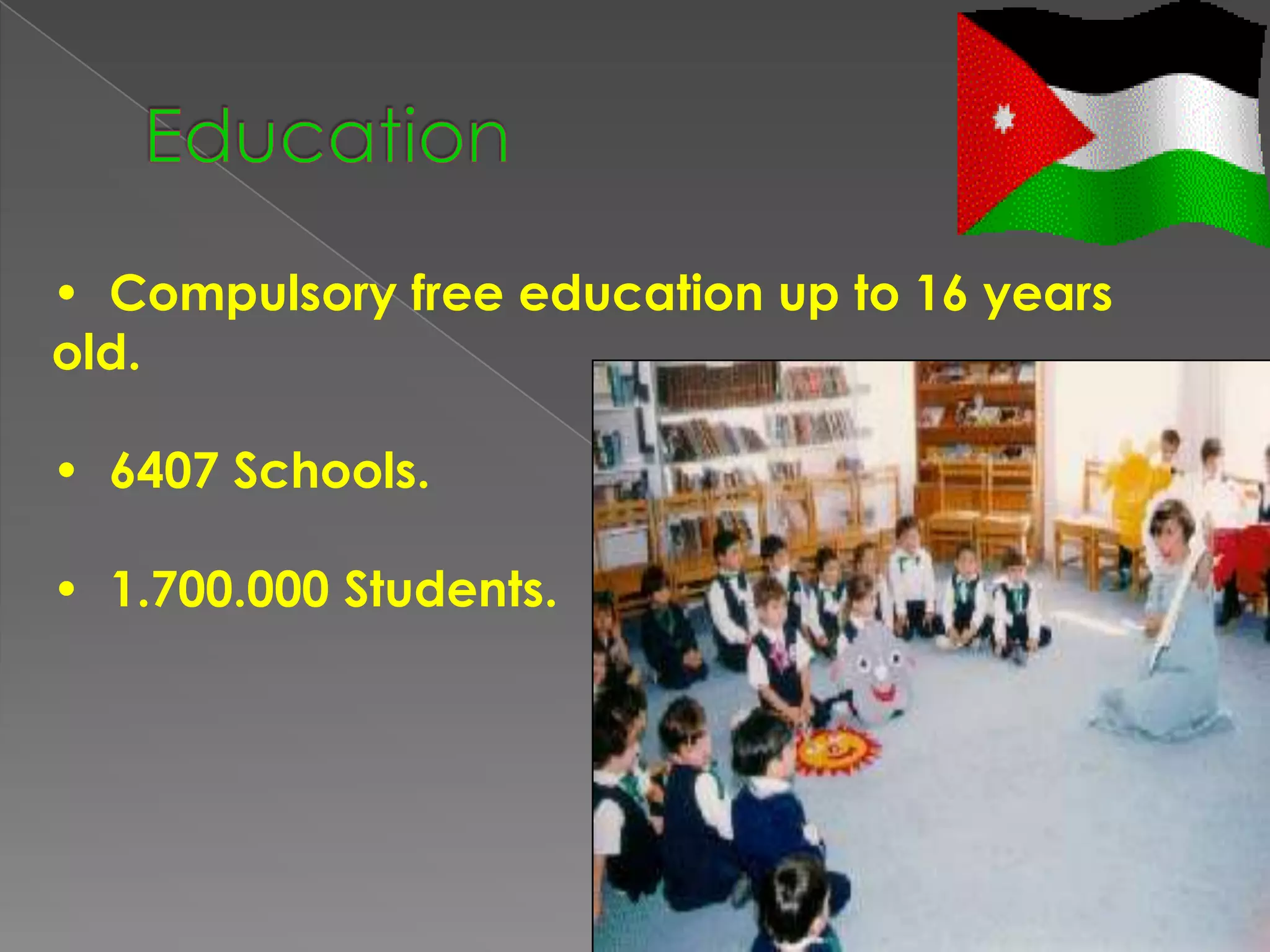
• Compulsory free education up to 16 years
old.

• 6407 Schools.

• 1.700.000 Students.
Universities:
 11 public universities
 14 Private universities
 Literacy Rate: 86.6% total.
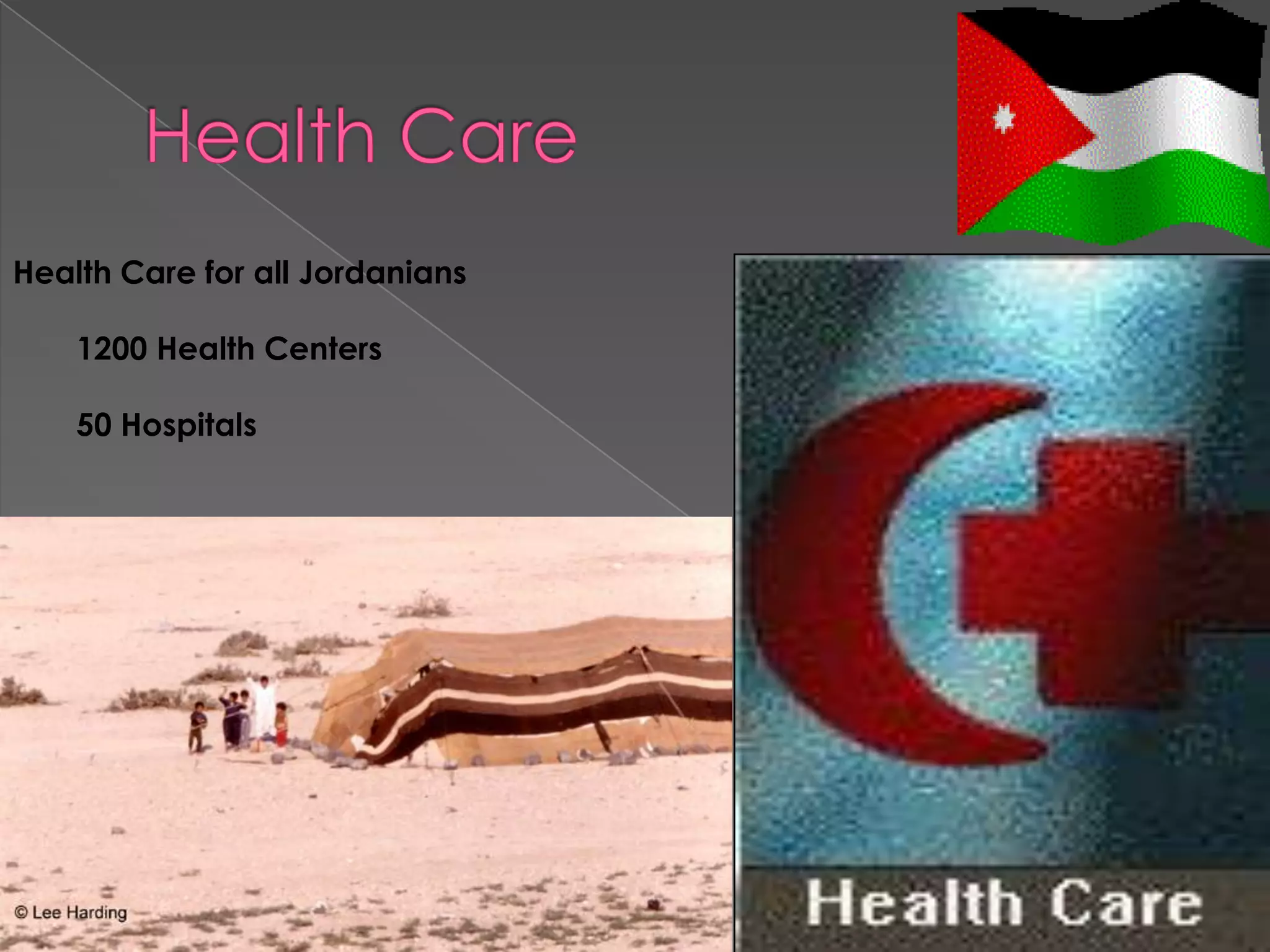
Health Care for all Jordanians

    1200 Health Centers

    50 Hospitals
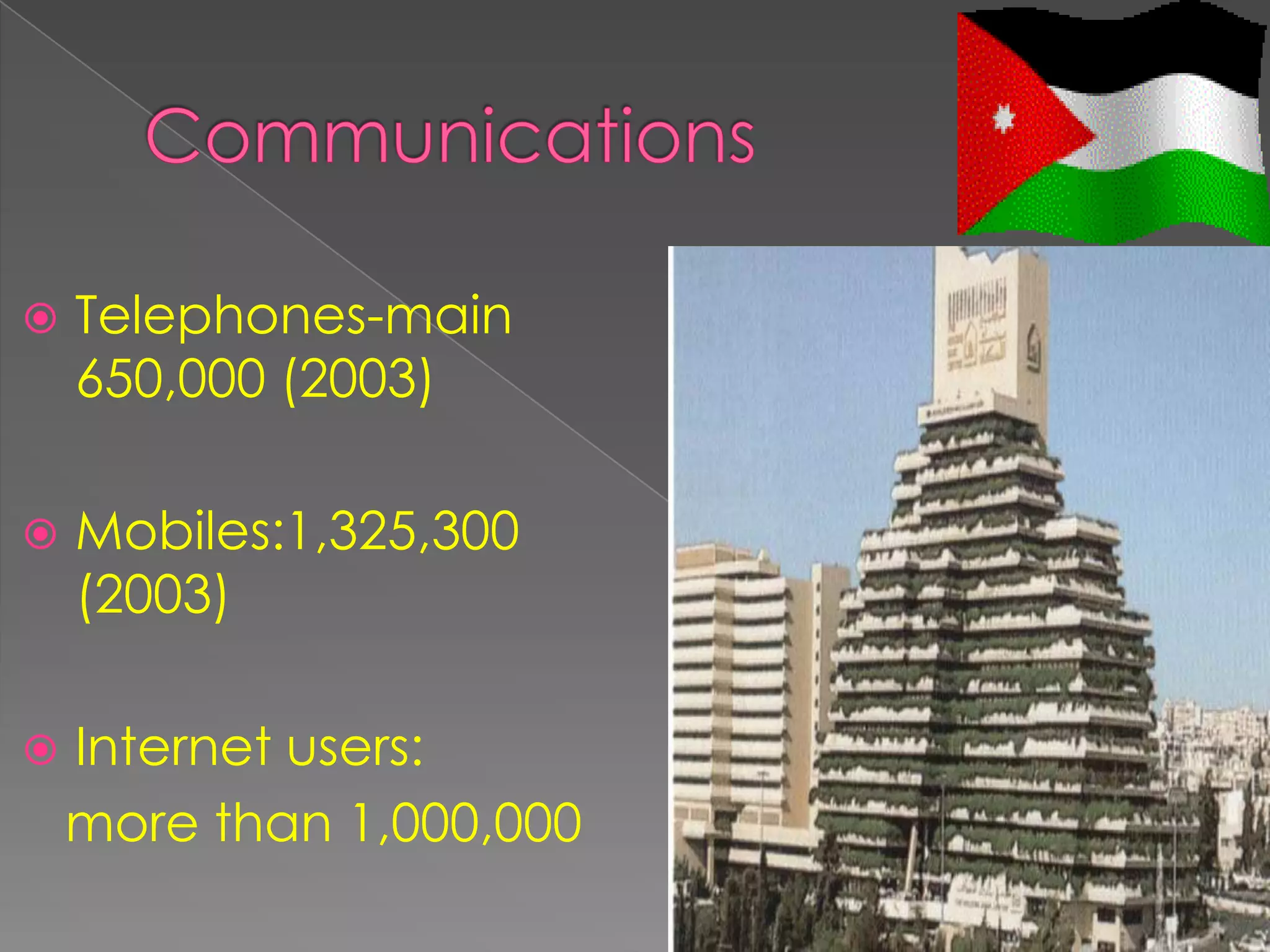
   Telephones-main
    650,000 (2003)

   Mobiles:1,325,300
    (2003)

   Internet users:
    more than 1,000,000
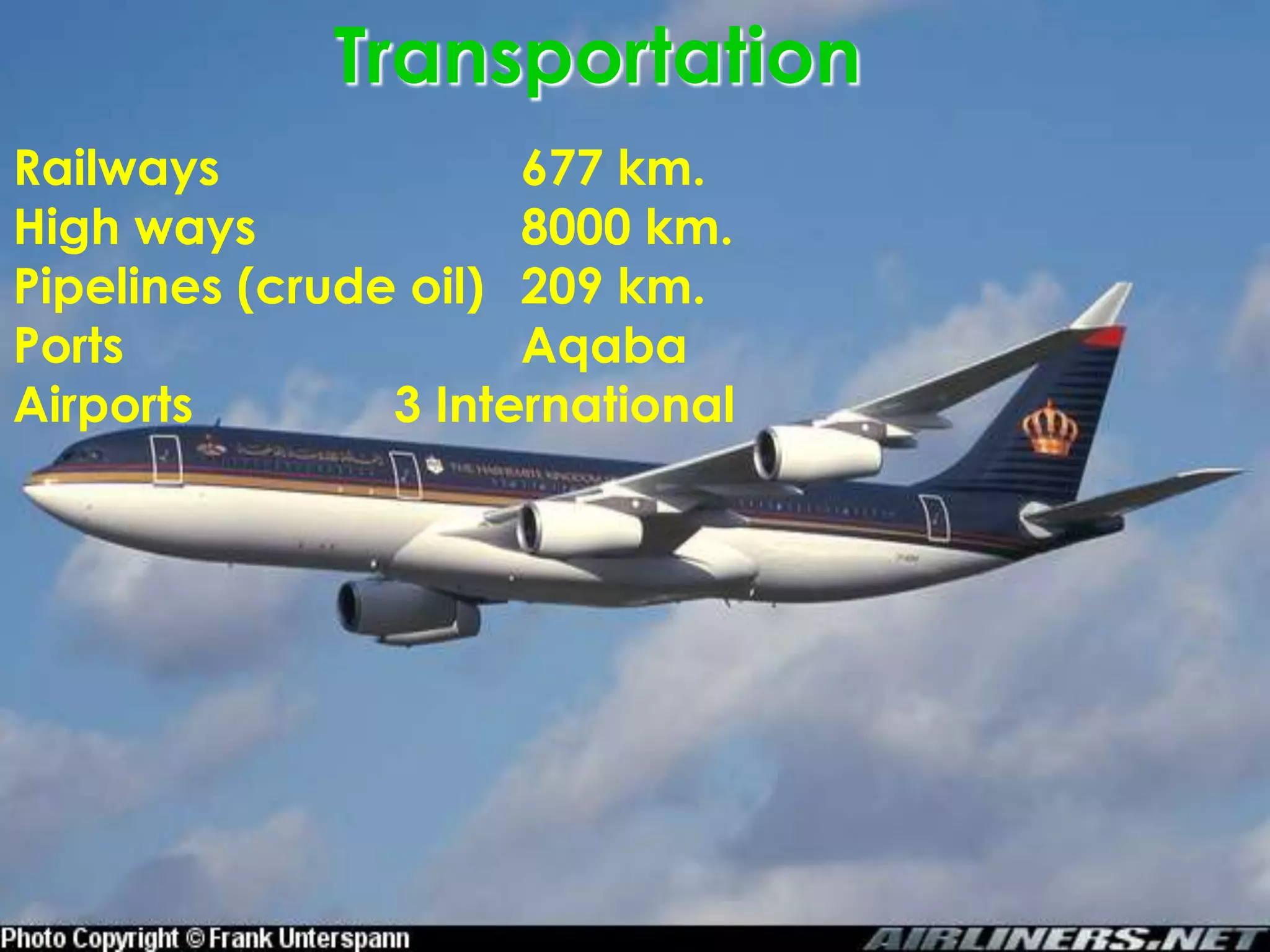
Transportation
Railways              677 km.
High ways             8000 km.
Pipelines (crude oil) 209 km.
Ports                 Aqaba
Airports        3 International
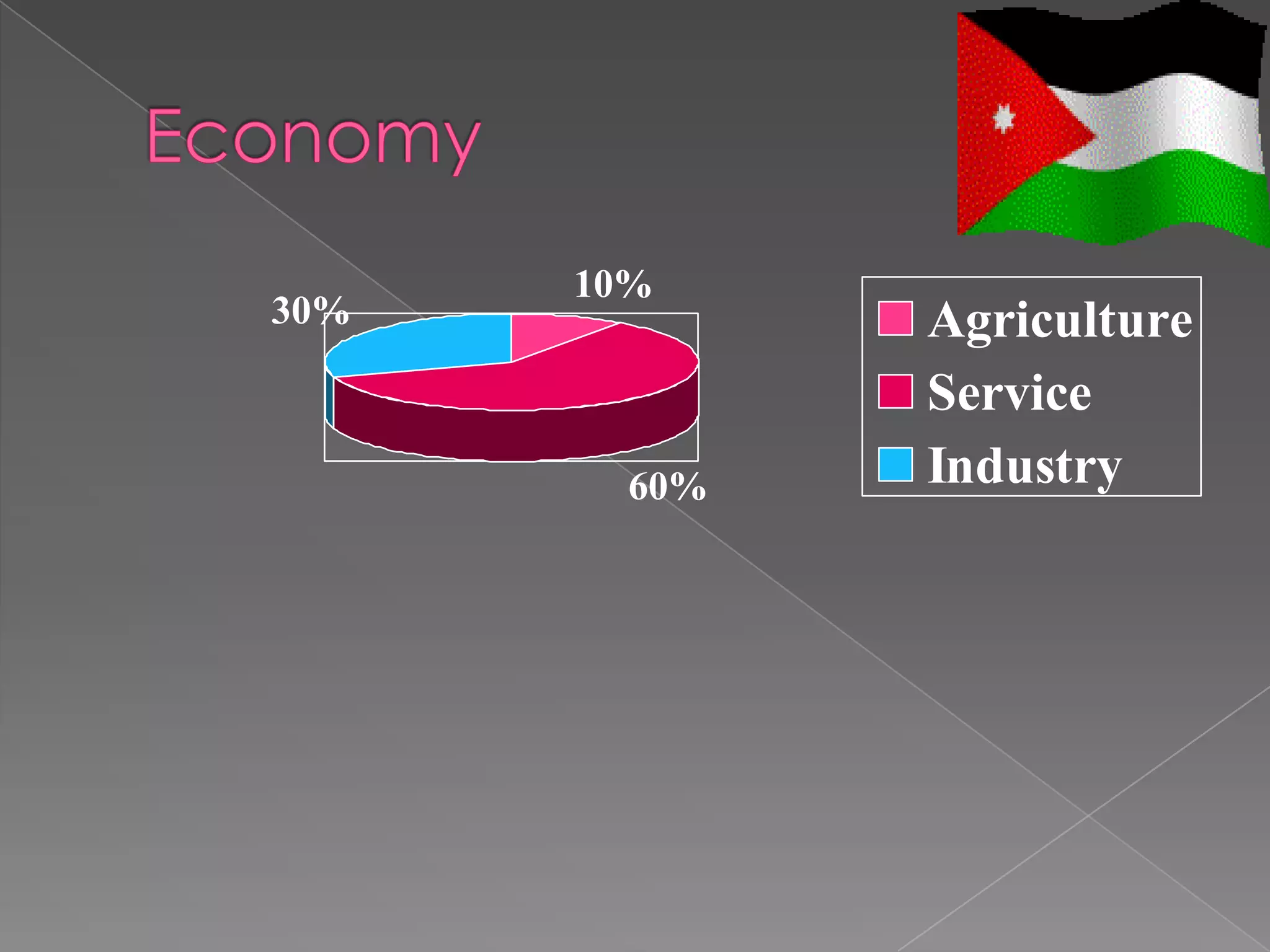
10%
30%           Agriculture
              Service
        60%   Industry
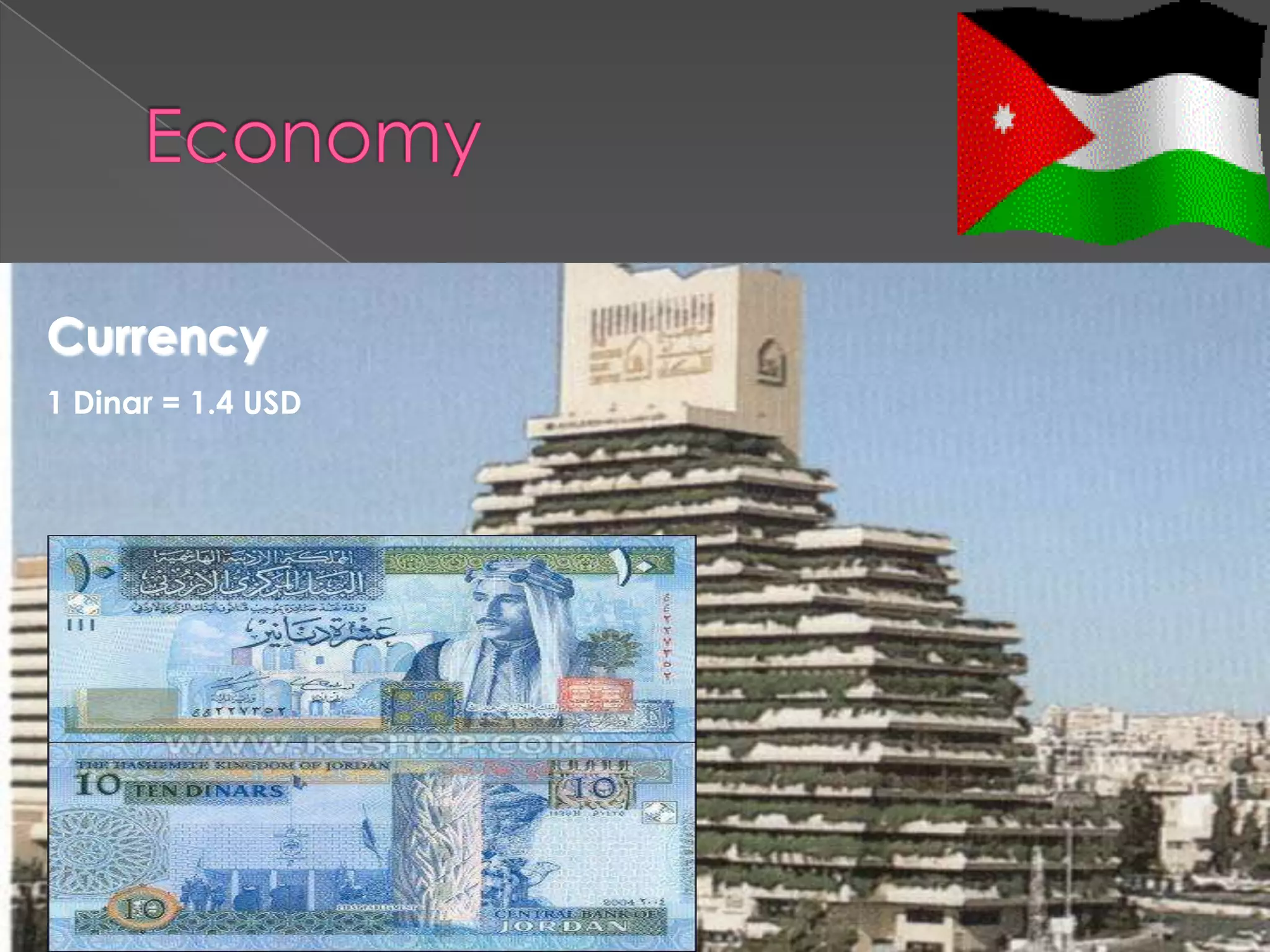
Currency
1 Dinar = 1.4 USD
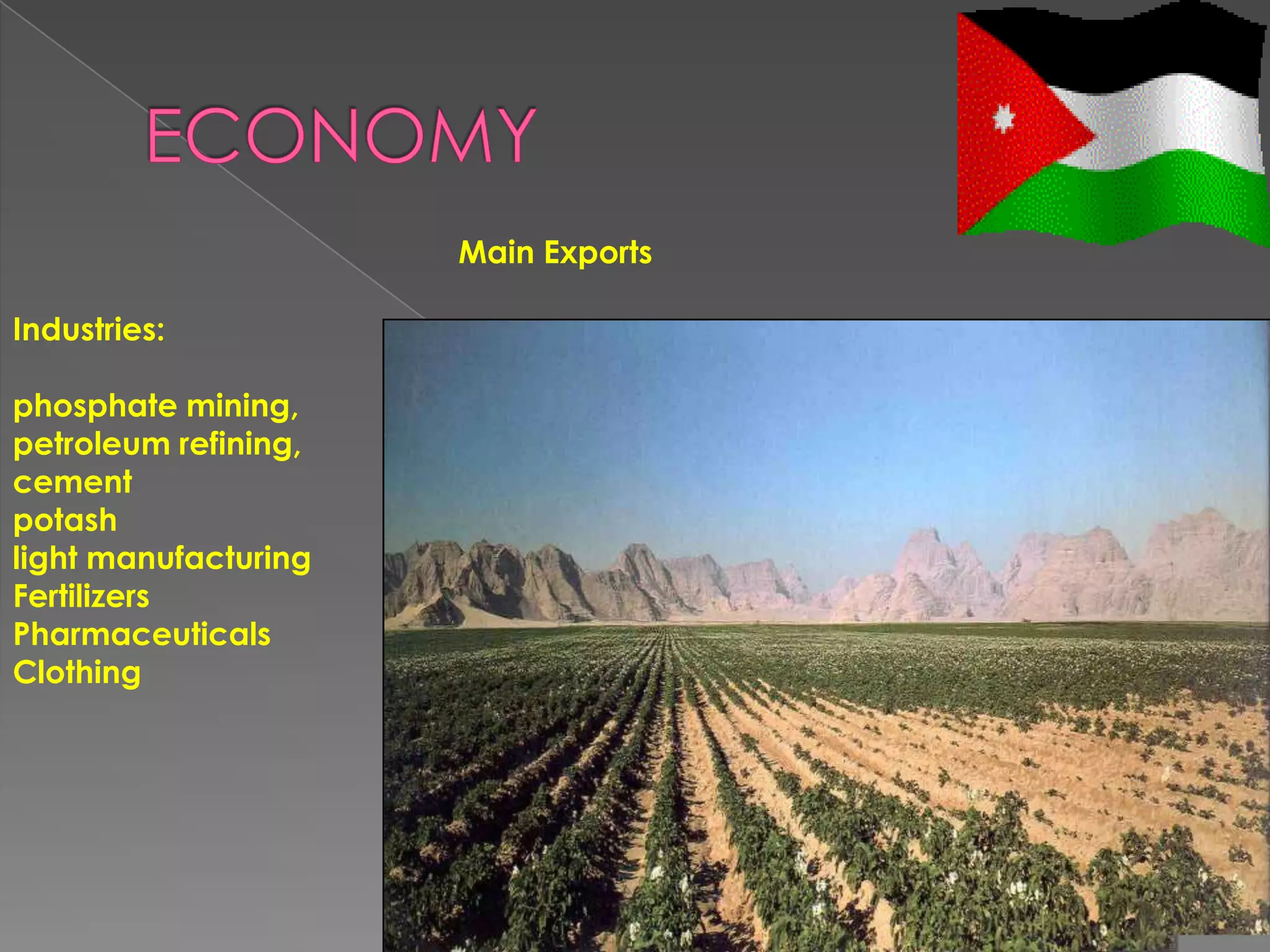
Main Exports

Industries:

phosphate mining,
petroleum refining,
cement
potash
light manufacturing
Fertilizers
Pharmaceuticals
Clothing
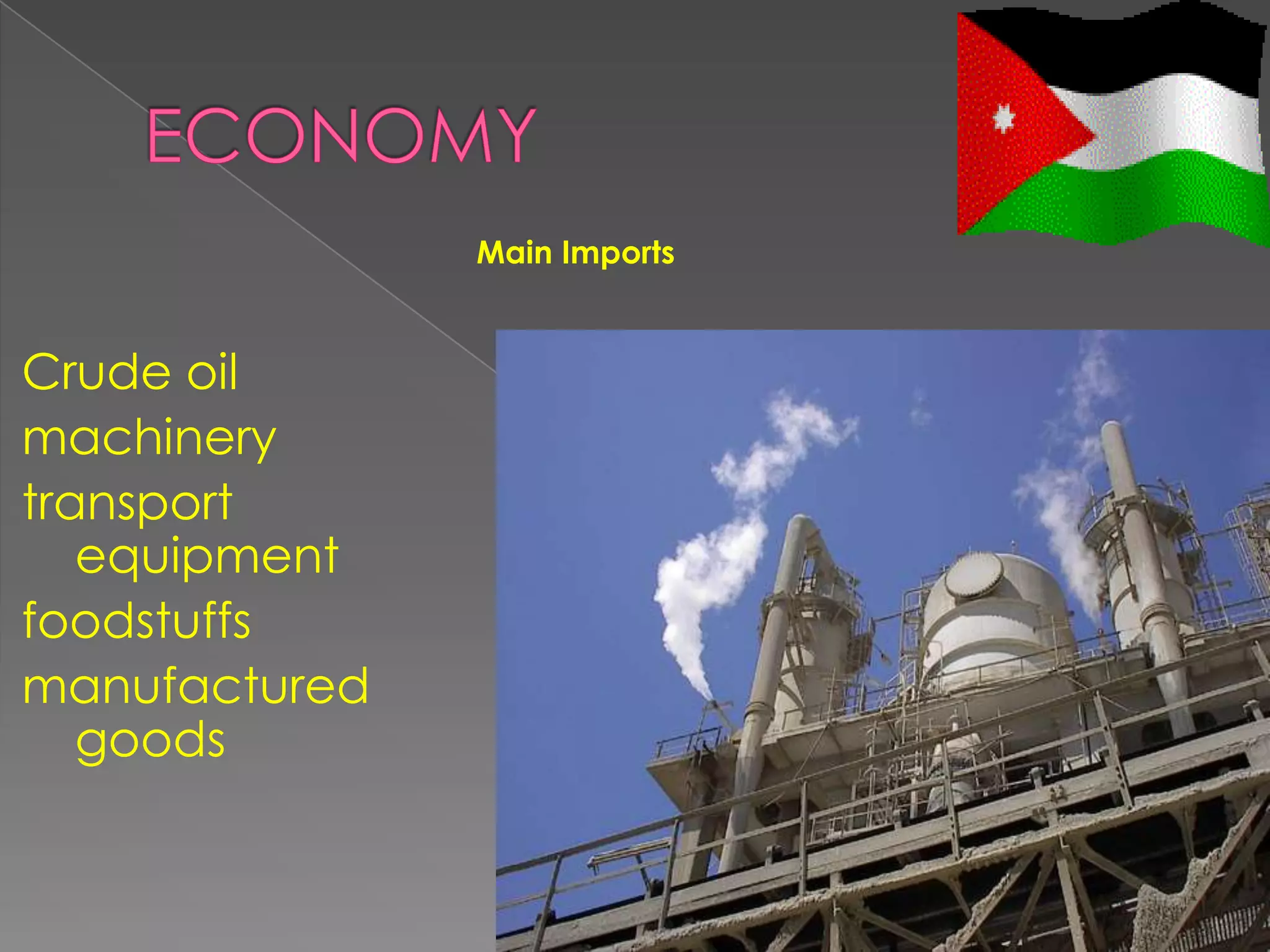
Main Exports


Agricultural:

wheat
barley
citrus
tomatoes
melons
olives
sheep
goats
poultry
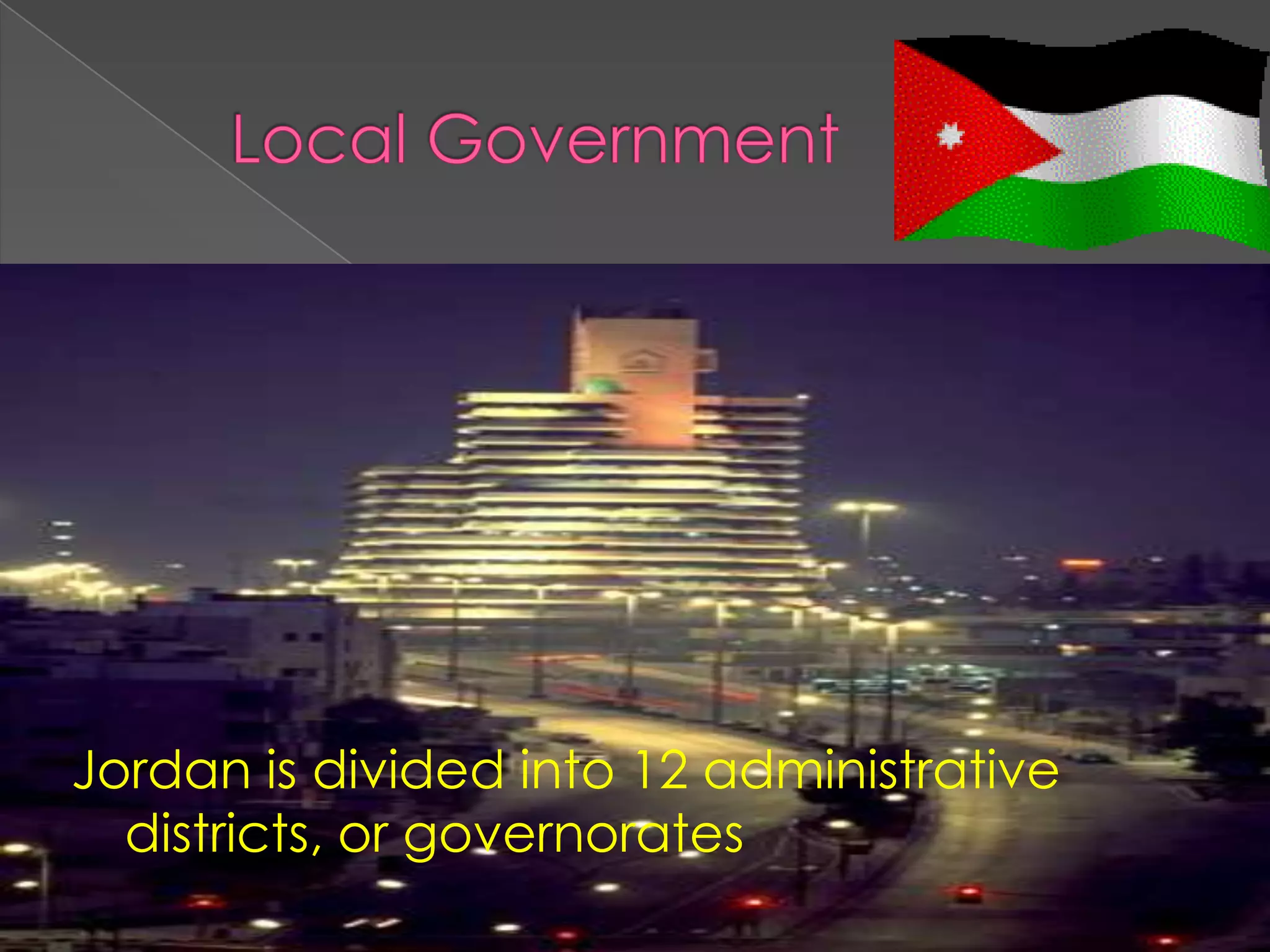
Main Imports


Crude oil
machinery
transport
   equipment
foodstuffs
manufactured
   goods

Jordan course unit 1