Our Oceans and
Climate Change
John Bullard
Regional Administrator Greater
Atlantic Regional Fisheries Office
One of our goals is to help fishing communities catch as much
fish as they can, while still managing fishery so that there will
be enough for future generations.
One of our goals is to help fishing communities catch as much
fish as they can, while still managing fishery so that there will
be enough for future generations.
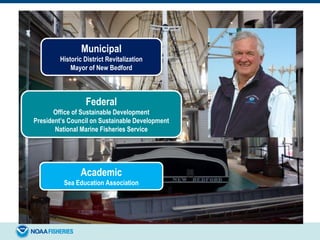
Municipal
Historic District Revitalization
Mayor of New Bedford
Federal
Office of Sustainable Development
President’s Council on Sustainable Development
National Marine Fisheries Service
Academic
Sea Education Association
Source: Northeast Fisheries Science Center and NOAA
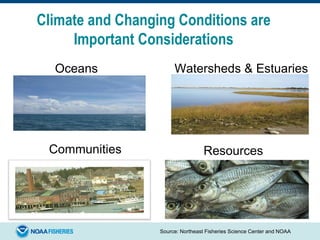
Watersheds & EstuariesOceans
ResourcesCommunities
Climate and Changing Conditions are
Important Considerations
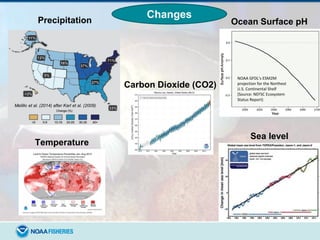
Changes
Sea level
Temperature
Carbon Dioxide (CO2)
Precipitation
Melillo et al. (2014) after Karl et al. (2009)
NOAA GFDL's ESM2M
projection for the Northest
U.S. Continental Shelf
(Source: NEFSC Ecosystem
Status Report)
Ocean Surface pH
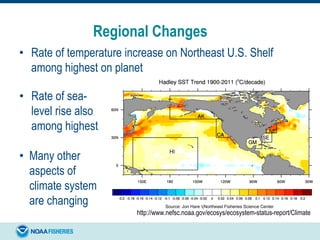
Regional Changes
• Rate of temperature increase on Northeast U.S. Shelf
among highest on planet
• Rate of sea-
level rise also
among highest
• Many other
aspects of
climate system
are changing
http://www.nefsc.noaa.gov/ecosys/ecosystem-status-report/Climate
Source: Jon Hare (Northeast Fisheries Science Center)
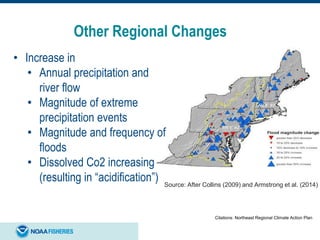
Other Regional Changes
• Increase in
• Annual precipitation and
river flow
• Magnitude of extreme
precipitation events
• Magnitude and frequency of
floods
• Dissolved Co2 increasing
(resulting in “acidification”)
Citations: Northeast Regional Climate Action Plan)
Source: After Collins (2009) and Armstrong et al. (2014)
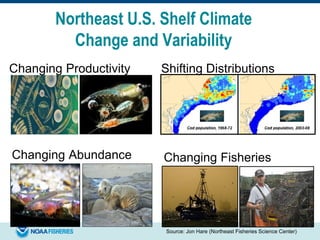
Source: Jon Hare (Northeast Fisheries Science Center)
Shifting DistributionsChanging Productivity
Changing FisheriesChanging Abundance
Northeast U.S. Shelf Climate
Change and Variability
Ocean & Northern Quahogs
Atlantic Salmon
Bay Scallop
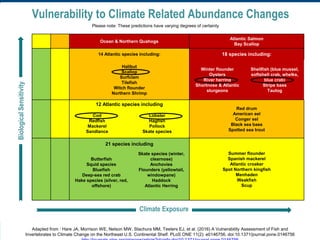
14 Atlantic species including: 18 species including:
Halibut
Scallop
Surfclam
Tilefish
Witch flounder
Northern Shrimp
Winter flounder
Oysters
River herring
Shortnose & Atlantic
sturgeons
Shellfish (blue mussel,
softshell crab, whelks,
blue crab)
Stripe bass
Tautog
12 Atlantic species including
Red drum
American eel
Conger eel
Black sea bass
Spotted sea trout
Cod
Redfish
Mackerel
Sandlance
Lobster
Hagfish
Pollock
Skate species
21 species including
Summer flounder
Spanish mackerel
Atlantic croaker
Spot Northern kingfish
Menhaden
Weakfish
Scup
Butterfish
Squid species
Bluefish
Deep-sea red crab
Hake species (silver, red,
offshore)
Skate species (winter,
clearnose)
Anchovies
Flounders (yellowtail,
windowpane)
Haddock
Atlantic Herring
Vulnerability to Climate Related Abundance Changes
Climate Exposure
BiologicalSensitivity
Please note: These predictions have varying degrees of certainty
Adapted from : Hare JA, Morrison WE, Nelson MW, Stachura MM, Teeters EJ, et al. (2016) A Vulnerability Assessment of Fish and
Invertebrates to Climate Change on the Northeast U.S. Continental Shelf. PLoS ONE 11(2): e0146756. doi:10.1371/journal.pone.0146756
Photo: NEFSC/NOAA
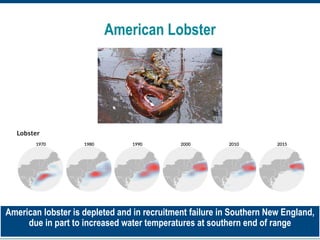
American lobster is depleted and in recruitment failure in Southern New England,
due in part to increased water temperatures at southern end of range
American Lobster
Source: NOAA and NEFSC
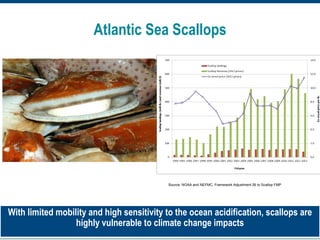
Atlantic Sea Scallops
With limited mobility and high sensitivity to the ocean acidification, scallops are
highly vulnerable to climate change impacts
Source: NOAA and NEFMC, Framework Adjustment 26 to Scallop FMP
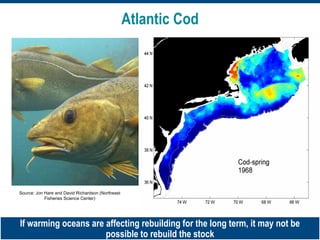
Atlantic Cod
Source: Jon Hare and David Richardson (Northeast
Fisheries Science Center)
If warming oceans are affecting rebuilding for the long term, it may not be
possible to rebuild the stock
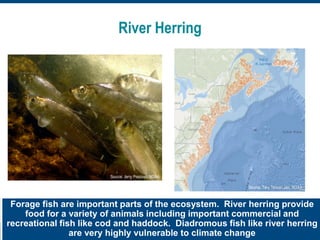
River Herring
U.S. Department of Commerce | National Oceanic and Atmospheric Administration | NOAA Fisheries | Page 13
Source: Jerry Prezioso, NOAA
Forage fish are important parts of the ecosystem. River herring provide
food for a variety of animals including important commercial and
recreational fish like cod and haddock. Diadromous fish like river herring
are very highly vulnerable to climate change
Source: Tara Trinko-Lake, NOAA
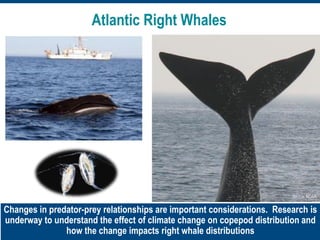
Changes in predator-prey relationships are important considerations. Research is
underway to understand the effect of climate change on copepod distribution and
how the change impacts right whale distributions
Atlantic Right Whales
Source: NOAA
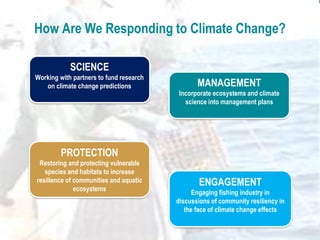
How Are We Responding to Climate Change?
SCIENCE
Working with partners to fund research
on climate change predictions MANAGEMENT
Incorporate ecosystems and climate
science into management plans
PROTECTION
Restoring and protecting vulnerable
species and habitats to increase
resilience of communities and aquatic
ecosystems
ENGAGEMENT
Engaging fishing industry in
discussions of community resiliency in
the face of climate change effects
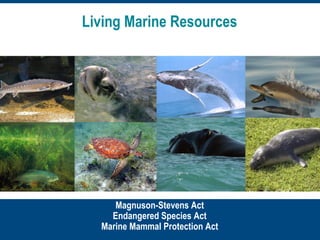
Endangered Species Act & Marine Mammal Protection ActMagnuson-Stevens Act
Endangered Species Act
Marine Mammal Protection Act
Living Marine Resources
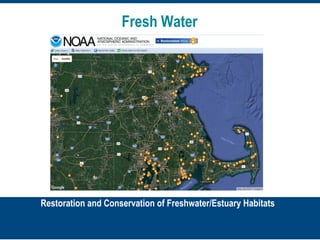
Fresh Water
Restoration and Conservation of Freshwater/Estuary Habitats
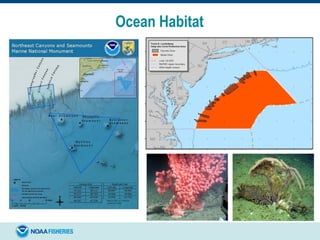
Ocean Habitat
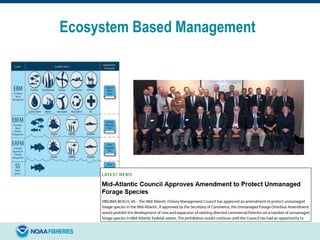
Ecosystem Based Management
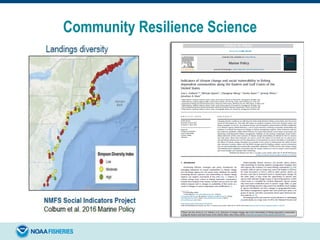
Community Resilience Science
Lisa Colburn -NEFSC
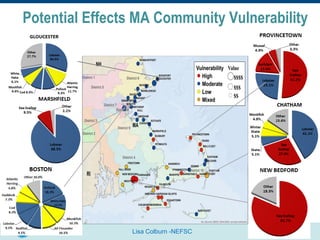
Potential Effects MA Community Vulnerability
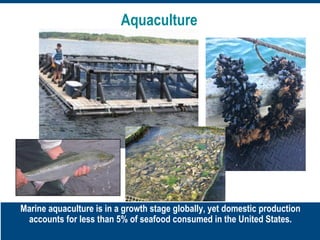
Marine aquaculture is in a growth stage globally, yet domestic production
accounts for less than 5% of seafood consumed in the United States.
Aquaculture
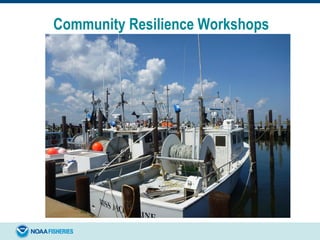
Community Resilience Workshops

John bullard mas 2017

  • 1.
    Our Oceans and ClimateChange John Bullard Regional Administrator Greater Atlantic Regional Fisheries Office
  • 2.
    One of ourgoals is to help fishing communities catch as much fish as they can, while still managing fishery so that there will be enough for future generations. One of our goals is to help fishing communities catch as much fish as they can, while still managing fishery so that there will be enough for future generations.
  • 3.
    Municipal Historic District Revitalization Mayorof New Bedford Federal Office of Sustainable Development President’s Council on Sustainable Development National Marine Fisheries Service Academic Sea Education Association
  • 4.
    Source: Northeast FisheriesScience Center and NOAA Watersheds & EstuariesOceans ResourcesCommunities Climate and Changing Conditions are Important Considerations
  • 5.
    Changes Sea level Temperature Carbon Dioxide(CO2) Precipitation Melillo et al. (2014) after Karl et al. (2009) NOAA GFDL's ESM2M projection for the Northest U.S. Continental Shelf (Source: NEFSC Ecosystem Status Report) Ocean Surface pH
  • 6.
    Regional Changes • Rateof temperature increase on Northeast U.S. Shelf among highest on planet • Rate of sea- level rise also among highest • Many other aspects of climate system are changing http://www.nefsc.noaa.gov/ecosys/ecosystem-status-report/Climate Source: Jon Hare (Northeast Fisheries Science Center)
  • 7.
    Other Regional Changes •Increase in • Annual precipitation and river flow • Magnitude of extreme precipitation events • Magnitude and frequency of floods • Dissolved Co2 increasing (resulting in “acidification”) Citations: Northeast Regional Climate Action Plan) Source: After Collins (2009) and Armstrong et al. (2014)
  • 8.
    Source: Jon Hare(Northeast Fisheries Science Center) Shifting DistributionsChanging Productivity Changing FisheriesChanging Abundance Northeast U.S. Shelf Climate Change and Variability
  • 9.
    Ocean & NorthernQuahogs Atlantic Salmon Bay Scallop 14 Atlantic species including: 18 species including: Halibut Scallop Surfclam Tilefish Witch flounder Northern Shrimp Winter flounder Oysters River herring Shortnose & Atlantic sturgeons Shellfish (blue mussel, softshell crab, whelks, blue crab) Stripe bass Tautog 12 Atlantic species including Red drum American eel Conger eel Black sea bass Spotted sea trout Cod Redfish Mackerel Sandlance Lobster Hagfish Pollock Skate species 21 species including Summer flounder Spanish mackerel Atlantic croaker Spot Northern kingfish Menhaden Weakfish Scup Butterfish Squid species Bluefish Deep-sea red crab Hake species (silver, red, offshore) Skate species (winter, clearnose) Anchovies Flounders (yellowtail, windowpane) Haddock Atlantic Herring Vulnerability to Climate Related Abundance Changes Climate Exposure BiologicalSensitivity Please note: These predictions have varying degrees of certainty Adapted from : Hare JA, Morrison WE, Nelson MW, Stachura MM, Teeters EJ, et al. (2016) A Vulnerability Assessment of Fish and Invertebrates to Climate Change on the Northeast U.S. Continental Shelf. PLoS ONE 11(2): e0146756. doi:10.1371/journal.pone.0146756
  • 10.
    Photo: NEFSC/NOAA American lobsteris depleted and in recruitment failure in Southern New England, due in part to increased water temperatures at southern end of range American Lobster Source: NOAA and NEFSC
  • 11.
    Atlantic Sea Scallops Withlimited mobility and high sensitivity to the ocean acidification, scallops are highly vulnerable to climate change impacts Source: NOAA and NEFMC, Framework Adjustment 26 to Scallop FMP
  • 12.
    Atlantic Cod Source: JonHare and David Richardson (Northeast Fisheries Science Center) If warming oceans are affecting rebuilding for the long term, it may not be possible to rebuild the stock
  • 13.
    River Herring U.S. Departmentof Commerce | National Oceanic and Atmospheric Administration | NOAA Fisheries | Page 13 Source: Jerry Prezioso, NOAA Forage fish are important parts of the ecosystem. River herring provide food for a variety of animals including important commercial and recreational fish like cod and haddock. Diadromous fish like river herring are very highly vulnerable to climate change Source: Tara Trinko-Lake, NOAA
  • 14.
    Changes in predator-preyrelationships are important considerations. Research is underway to understand the effect of climate change on copepod distribution and how the change impacts right whale distributions Atlantic Right Whales Source: NOAA
  • 15.
    How Are WeResponding to Climate Change? SCIENCE Working with partners to fund research on climate change predictions MANAGEMENT Incorporate ecosystems and climate science into management plans PROTECTION Restoring and protecting vulnerable species and habitats to increase resilience of communities and aquatic ecosystems ENGAGEMENT Engaging fishing industry in discussions of community resiliency in the face of climate change effects
  • 16.
    Endangered Species Act& Marine Mammal Protection ActMagnuson-Stevens Act Endangered Species Act Marine Mammal Protection Act Living Marine Resources
  • 17.
    Fresh Water Restoration andConservation of Freshwater/Estuary Habitats
  • 18.
  • 19.
  • 20.
  • 21.
    Lisa Colburn -NEFSC PotentialEffects MA Community Vulnerability
  • 22.
    Marine aquaculture isin a growth stage globally, yet domestic production accounts for less than 5% of seafood consumed in the United States. Aquaculture
  • 23.