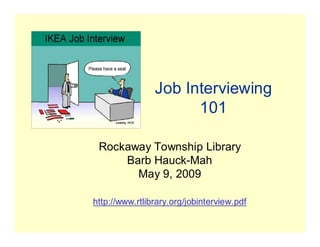
Job Interviewing
101
Rockaway Township Library
Barb Hauck-Mah
May 9, 2009
http://www.rtlibrary.org/jobinterview.pdf
2
Workshop Objectives
You will learn how to
• Prepare for a job interview
• Present a positive image
• Persuade with answers that tell stories
• Persuade with engaging questions
• Persuade with timely follow-up
3
Congratulations!
In this program, you will learn the 4 P’s of
successful job interviewing:
1. Preparation
2. Presentation
3. Persuasion
4. Practice
4
Identify your Selling Points
Why the Pre-workshop worksheet?
To identify key job-related skills
These are your Interview Talking Points
-Describe what you did
-Describe the results
-Describe what you learned
-Link learning to job you want
5
Do Research Before the Interview on
• Yourself online
• The company
• Your interviewers
• The type of interview to expect
• Directions to the interview
6
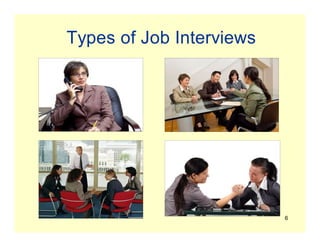
Types of Job Interviews
7
Interview Types by Purpose
Screening
• Face to Face
- One-on-one
- Group
• Telephone
• Video
• Electronic
Selection/Hiring
• One-on-one
• Panel
• Group
• Sequential
• Serial
Informational
8
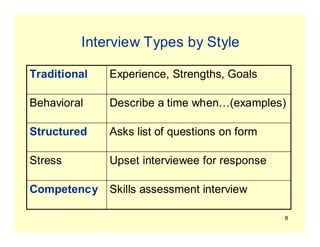
Interview Types by Style
Skills assessment interviewCompetency
Upset interviewee for responseStress
Asks list of questions on formStructured
Describe a time when…(examples)Behavioral
Experience, Strengths, GoalsTraditional
9
Dress to Impress
• First impressions are key
(Roger Ailes)
• Classic business attire
• Dress one level up
• Head to toe checklist
Activity: Select best and worst-dressed applicants
10
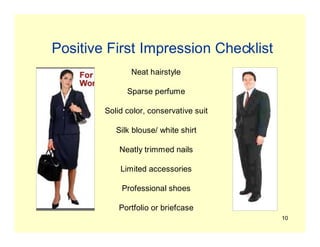
Positive First Impression Checklist
Neat hairstyle
Sparse perfume
Solid color, conservative suit
Silk blouse/ white shirt
Neatly trimmed nails
Limited accessories
Professional shoes
Portfolio or briefcase
11
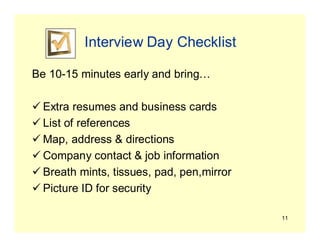
Interview Day Checklist
Be 10-15 minutes early and bring…
 Extra resumes and business cards
 List of references
 Map, address & directions
 Company contact & job information
 Breath mints, tissues, pad, pen,mirror
 Picture ID for security
12
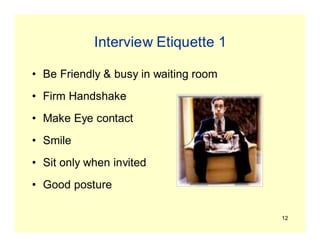
Interview Etiquette 1
• Be Friendly & busy in waiting room
• Firm Handshake
• Make Eye contact
• Smile
• Sit only when invited
• Good posture
13
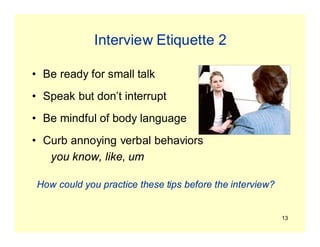
Interview Etiquette 2
• Be ready for small talk
• Speak but don’t interrupt
• Be mindful of body language
• Curb annoying verbal behaviors
you know, like, um
How could you practice these tips before the interview?
14
Interview Structure
• Icebreakers: Opening chat to build rapport
• Exchange information
• Questions for the interviewer
• Close
• Next Steps
15
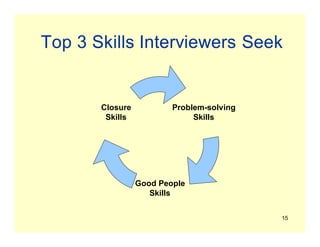
Top 3 Skills Interviewers Seek
Problem-solving
Skills
Good People
Skills
Closure
Skills
16
Using the Prove-It Technique
1. What you did (your story)
2. Quantify the results
3. What you learned (link to today)
Activity: Select an example from your
Pre-workshop “Job related skills” sheet
17
Basic Rules for Answering Questions
 Listen and answer only what’s asked
 Be honest, positive, and brief
 Answer in complete sentences
 Translate skills into stories & soundbites
 Rehearse talking points but don’t memorize
18
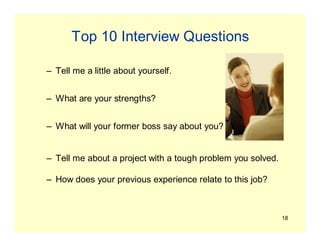
Top 10 Interview Questions
– Tell me a little about yourself.
– What are your strengths?
– What will your former boss say about you?
– Tell me about a project with a tough problem you solved.
– How does your previous experience relate to this job?
19
Top 10 Interview Questions
– Why do you want to leave your current job?
– Why do you want to work here?
– What are your plans for the future?
– Why should we hire you?
– Why did you select this type of work?
Activity: Practice in pairs, ask and answer a question
20
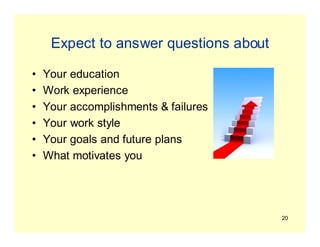
Expect to answer questions about
• Your education
• Work experience
• Your accomplishments & failures
• Your work style
• Your goals and future plans
• What motivates you
21
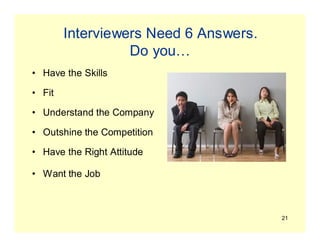
Interviewers Need 6 Answers.
Do you…
• Have the Skills
• Fit
• Understand the Company
• Outshine the Competition
• Have the Right Attitude
• Want the Job
22
What are your Weaknesses?
• Share a negative that’s also a positive
(workaholic, perfectionist)
• Describe a negative for which you’ve improved
(saying no, setting priorities)
• Present a negative interviewer already knows
(limited work experience)
• Discuss a negative unrelated to this job
(dislike bookkeeping)
23
What are Illegal Questions?
• Questions concerning marital status, sexual
preferences, ethnic origin, health status or
family plans
• If the answer to a question could be used
to discriminate against you on grounds other
than your ability to perform in the role- can’t ask.
24
Handling Illegal Questions
• Ask how the question relates to the job
• Answer the question
• Answer around the question:
Respond but don’t answer the illegal part
• Refuse to answer
Point out it’s an illegal question
25
Resume Red Flags
Gaps, Fired, Criminal Record, Job Hopper
Give the reason the behavior happened
Indicate why you will not do it again
Explain what you have learned from experience
26
Why Were You Fired?
• Tell the truth
• Avoid negative comments about the employer
• Explain what you learned
• Provide evidence you’ve eliminated
the problem that caused the termination
Activity : Practice asking & answering a
red flag question
27
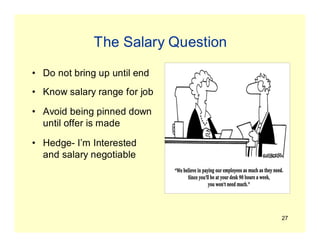
The Salary Question
• Do not bring up until end
• Know salary range for job
• Avoid being pinned down
until offer is made
• Hedge- I’m Interested
and salary negotiable
28
Questions for the Interviewer
Goal: Ask informed questions to impress
Good to engage interviewer-they’ll like you for it
Ask about the company
about the job
about the work environment
Activity: Check questions on handout and pick
three you’ll try in an interview
29
How to Close the Interview
• Express clear interest in the job
• Recap your great fit with the job
• Ask for the job
• Ask when a decision will be made
• Ask if you can follow up on (name date)
30
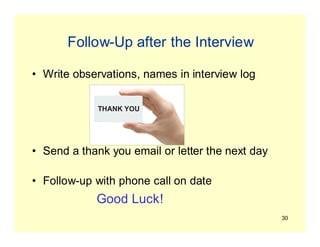
Follow-Up after the Interview
• Write observations, names in interview log
• Send a thank you email or letter the next day
• Follow-up with phone call on date
Good Luck!

Job interviewing 101

  • 1.
    Job Interviewing 101 Rockaway TownshipLibrary Barb Hauck-Mah May 9, 2009 http://www.rtlibrary.org/jobinterview.pdf
  • 2.
    2 Workshop Objectives You willlearn how to • Prepare for a job interview • Present a positive image • Persuade with answers that tell stories • Persuade with engaging questions • Persuade with timely follow-up
  • 3.
    3 Congratulations! In this program,you will learn the 4 P’s of successful job interviewing: 1. Preparation 2. Presentation 3. Persuasion 4. Practice
  • 4.
    4 Identify your SellingPoints Why the Pre-workshop worksheet? To identify key job-related skills These are your Interview Talking Points -Describe what you did -Describe the results -Describe what you learned -Link learning to job you want
  • 5.
    5 Do Research Beforethe Interview on • Yourself online • The company • Your interviewers • The type of interview to expect • Directions to the interview
  • 6.
    6 Types of JobInterviews
  • 7.
    7 Interview Types byPurpose Screening • Face to Face - One-on-one - Group • Telephone • Video • Electronic Selection/Hiring • One-on-one • Panel • Group • Sequential • Serial Informational
  • 8.
    8 Interview Types byStyle Skills assessment interviewCompetency Upset interviewee for responseStress Asks list of questions on formStructured Describe a time when…(examples)Behavioral Experience, Strengths, GoalsTraditional
  • 9.
    9 Dress to Impress •First impressions are key (Roger Ailes) • Classic business attire • Dress one level up • Head to toe checklist Activity: Select best and worst-dressed applicants
  • 10.
    10 Positive First ImpressionChecklist Neat hairstyle Sparse perfume Solid color, conservative suit Silk blouse/ white shirt Neatly trimmed nails Limited accessories Professional shoes Portfolio or briefcase
  • 11.
    11 Interview Day Checklist Be10-15 minutes early and bring…  Extra resumes and business cards  List of references  Map, address & directions  Company contact & job information  Breath mints, tissues, pad, pen,mirror  Picture ID for security
  • 12.
    12 Interview Etiquette 1 •Be Friendly & busy in waiting room • Firm Handshake • Make Eye contact • Smile • Sit only when invited • Good posture
  • 13.
    13 Interview Etiquette 2 •Be ready for small talk • Speak but don’t interrupt • Be mindful of body language • Curb annoying verbal behaviors you know, like, um How could you practice these tips before the interview?
  • 14.
    14 Interview Structure • Icebreakers:Opening chat to build rapport • Exchange information • Questions for the interviewer • Close • Next Steps
  • 15.
    15 Top 3 SkillsInterviewers Seek Problem-solving Skills Good People Skills Closure Skills
  • 16.
    16 Using the Prove-ItTechnique 1. What you did (your story) 2. Quantify the results 3. What you learned (link to today) Activity: Select an example from your Pre-workshop “Job related skills” sheet
  • 17.
    17 Basic Rules forAnswering Questions  Listen and answer only what’s asked  Be honest, positive, and brief  Answer in complete sentences  Translate skills into stories & soundbites  Rehearse talking points but don’t memorize
  • 18.
    18 Top 10 InterviewQuestions – Tell me a little about yourself. – What are your strengths? – What will your former boss say about you? – Tell me about a project with a tough problem you solved. – How does your previous experience relate to this job?
  • 19.
    19 Top 10 InterviewQuestions – Why do you want to leave your current job? – Why do you want to work here? – What are your plans for the future? – Why should we hire you? – Why did you select this type of work? Activity: Practice in pairs, ask and answer a question
  • 20.
    20 Expect to answerquestions about • Your education • Work experience • Your accomplishments & failures • Your work style • Your goals and future plans • What motivates you
  • 21.
    21 Interviewers Need 6Answers. Do you… • Have the Skills • Fit • Understand the Company • Outshine the Competition • Have the Right Attitude • Want the Job
  • 22.
    22 What are yourWeaknesses? • Share a negative that’s also a positive (workaholic, perfectionist) • Describe a negative for which you’ve improved (saying no, setting priorities) • Present a negative interviewer already knows (limited work experience) • Discuss a negative unrelated to this job (dislike bookkeeping)
  • 23.
    23 What are IllegalQuestions? • Questions concerning marital status, sexual preferences, ethnic origin, health status or family plans • If the answer to a question could be used to discriminate against you on grounds other than your ability to perform in the role- can’t ask.
  • 24.
    24 Handling Illegal Questions •Ask how the question relates to the job • Answer the question • Answer around the question: Respond but don’t answer the illegal part • Refuse to answer Point out it’s an illegal question
  • 25.
    25 Resume Red Flags Gaps,Fired, Criminal Record, Job Hopper Give the reason the behavior happened Indicate why you will not do it again Explain what you have learned from experience
  • 26.
    26 Why Were YouFired? • Tell the truth • Avoid negative comments about the employer • Explain what you learned • Provide evidence you’ve eliminated the problem that caused the termination Activity : Practice asking & answering a red flag question
  • 27.
    27 The Salary Question •Do not bring up until end • Know salary range for job • Avoid being pinned down until offer is made • Hedge- I’m Interested and salary negotiable
  • 28.
    28 Questions for theInterviewer Goal: Ask informed questions to impress Good to engage interviewer-they’ll like you for it Ask about the company about the job about the work environment Activity: Check questions on handout and pick three you’ll try in an interview
  • 29.
    29 How to Closethe Interview • Express clear interest in the job • Recap your great fit with the job • Ask for the job • Ask when a decision will be made • Ask if you can follow up on (name date)
  • 30.
    30 Follow-Up after theInterview • Write observations, names in interview log • Send a thank you email or letter the next day • Follow-up with phone call on date Good Luck!