J Bras Pneumol. 2011;37(5):7-12
Extracorporeal membrane oxygenation in severe hypoxemia:
time for reappraisal?*
Oxigenação extracorpórea por membrana na hipoxemia grave:
hora de revermos nossos conceitos?*
Luciano Cesar Pontes Azevedo, Marcelo Park, Eduardo Leite Vieira Costa,
Edzângela Vasconcelos Santos, Adriana Hirota, Leandro Utino Taniguchi,
Guilherme de Paula Pinto Schettino, Marcelo Brito Passos Amato,
Carlos Roberto Ribeiro Carvalho
Abstract
In 2009, during the influenza A (H1N1) epidemic, there were many reported cases of pulmonary infection with
severe hypoxemia that was refractory to the ventilatory strategies and rescue therapies commonly used to treat
patients with severe acute respiratory distress syndrome. Many of those cases were treated with extracorporeal
membrane oxygenation (ECMO), which renewed international interest in the technique. The Extracorporeal
Support Study Group was created in order to practice ECMO and to employ it in the treatment of patients with
severe hypoxemia. In this article, we discuss the indications for using ECMO and report the case of a patient with
refractory hypoxemia who was successfully treated with ECMO.
Keywords: Respiratory Insufficiency; Intensive Care Units; Extracorporeal Membrane Oxygenation.
Resumo
Em 2009, muitos casos de infecção pulmonar com hipoxemia grave refratária às estratégias ventilatórias
habitualmente utilizadas e às manobras de resgate para a síndrome do desconforto respiratório agudo foram
relatados durante a epidemia por influenza A (H1N1). Em muitos desses pacientes, o uso de extracorporeal
membrane oxygenation (ECMO, oxigenação extracorpórea por membrana) foi necessário, fato que fez reacender
o interesse na ECMO globalmente. O Grupo De Estudos em Suporte Extracorpóreo foi criado visando a aprender
a técnica e a utilizar ECMO no tratamento de pacientes com hipoxemia grave. Neste artigo, são discutidas as
indicações de ECMO e é relatado o caso de uma paciente com hipoxemia refratária que foi tratada através de ECMO
de forma bem sucedida.
Descritores: Insuficiência Respiratória; Unidades de Terapia Intensiva; Circulação Extracorpórea com Oxigenador
de Membrana.
* Study carried out by the Extracorporeal Support Study Group of the Intensive Care Unit of the Department of Clinical Emergencies,
University of São Paulo School of Medicine Hospital das Clínicas; in the Intensive Care Unit of the Sírio-Libanês Hospital; and in the
Respiratory Intensive Care Unit of the University of São Paulo School of Medicine Hospital das Clínicas, São Paulo, Brazil.
Correspondence to: Grupo de Estudos em Suporte Respiratório Extracorpóreo. Unidade de Terapia Intensiva, Disciplina de Emergências
Clinicas, Hospital das Clínicas da Faculdade de Medicina da Universidade de São Paulo, Avenida Enéas de Carvalho Aguiar, 155,
CEP 05403-900, São Paulo, SP, Brasil.
Tel. 55 3069-7221. E-mail: mpark@uol.com.br
Financial support: This study received financial support from MAQUET do Brasil.
Submitted: 6 June 2011. Accepted, after review: 30 August 2011.
Introduction
From an epidemiological standpoint, the
year 2009 was marked by the novel influenza
A (H1N1) virus epidemic,(1)
and the respiratory
syndrome caused by the virus reached pandemic
levels in mid-2009.(2)
Mortality from influenza
A (H1N1) infection was reported to be as high
as 23% at that time.(3)
The leading cause of
death in patients with acute respiratory distress
syndrome (ARDS) due to infection with the
influenza A (H1N1) virus is respiratory failure
that is refractory to conventional mechanical
ventilation.(4)
The Australian and New Zealand
Intensive Care Society reported that, between
June and August of 2009, 201 patients with
ARDS due to influenza A (H1N1) virus infection
required mechanical ventilation; of those 201,
68 (34%) required extracorporeal membrane
oxygenation (ECMO) for refractory hypoxemia.(5)
Special Article
8	 Azevedo LCP, Park M, Costa ELV, Santos EV, Hirota A, Taniguchi LU et al.
J Bras Pneumol. 2011;37(5):7-12
(12)
Enthusiasm for ECMO then began to wane.
This was due to the apparent lack of benefits
and, first and foremost, to the high incidence
of complications, such as bleeding, extremity
ischemia, hemolysis, and inflammatory response
activation. However, in recent years, the
development of new membranes and heparin-
coated systems that are more biocompatible has
greatly reduced the need for anticoagulation,
reducing the incidence of bleeding disorders
and ECMO-induced inflammatory response.
Likewise, the development of next-generation
centrifugal pumps reduced the incidence of
ECMO-associated hemolysis.(13)
A change in the paradigm for ECMO use
was recently brought about by the use of ECMO
during the influenza A (H1N1) epidemic and,
first and foremost, by the publication of an
important study conducted in Great Britain(14)
and involving patients with ARDS. That study
compared the use of a protective ventilatory
strategy involving low tidal volume and low
airway pressure with that of venovenous ECMO
and lung rest (positive end-expiratory pressure
of 10-15 cmH2
O; peak airway pressure of
20-25 cmH2
O; RR of 10 breaths/min; and FiO2
of 0.3). In the group of patients treated with
ECMO, 63% survived with good functional
capacity for six months, compared with 47%
in the group of patients treated with the
conventional protective ventilatory strategy.(14)
In that study, the patients who were randomly
selected for ECMO treatment were transferred
to the Glenfield Hospital, in Leicester, England,
which is the only center that provided ECMO.
Many patients with refractory hypoxemia
due to influenza A (H1N1) infection have been
treated with ECMO, which has renewed interest
in this life support technique. At facilities
specializing in neonatal, pediatric, or adult
care, ECMO is used in patients with respiratory
failure, as well as in those with heart failure.
The ECMO technique facilitates gas exchange,
allowing the lungs to “rest” until the patient
has recovered from the pathological process and
minimizing the potentially deleterious effects
of ventilator-induced lung injury. Therefore,
ECMO can be considered the definitive rescue
therapy for patients with refractory hypoxemia,
given that pulmonary gas exchange can be
unnecessary during ECMO use. The technique
consists of removing blood by means of a
pump (either a centrifugal pump or a peristaltic
pump) and circulating it through an artificial
lung (Figure 1). To that end, the technique
that is most commonly used is the venovenous
technique, by which venous blood is removed,
oxygenated, and returned to the venous system
of the patient, thus providing oxygenation.(6)
Venoarterial access can also be used. In that case,
blood is removed from the venous circulation
and returned to the aorta, thus improving
cardiac output and gas exchange.
Cardiorespiratory support with ECMO has
been described since 1869,(7,8)
although the first
case of an ARDS patient whose survival was
attributed to ECMO was reported in 1971.(9)
The
first clinical study that compared conventional
mechanical ventilation with venoarterial
ECMO involved 90 patients with ARDS and
was published in 1979, and the mortality
rate was reported to be above 90% in both
groups. In the ECMO group, common adverse
events included bleeding, thromboembolic
events, and hemolysis.(10)
A study conducted
in 1986 described a venovenous CO2
removal
technique that allowed the use of mechanical
ventilation with lower airway pressures and
minus the adverse events associated with arterial
cannulation. In that study, the mortality rate for
patients with ARDS was reported to be 49%.
(11)
In a randomized study published in 1994
and involving 40 patients with ARDS, the CO2
removal technique was compared with pressure-
controlled ventilation; the technique was found
to have no beneficial effects on mortality or on
the incidence of bleeding in the ECMO group.
Figure 1 - Extracorporeal membrane oxygenation
system. Note the membrane for gas exchange, the
centrifugal pump, and the console, which regulates
the blood flow.
Extracorporeal membrane oxygenation in severe hypoxemia: time for reappraisal?
J Bras Pneumol. 2011;37(5):7-12
9
Clinical case
A 14-year-old female patient with a history
of systemic lupus erythematosus had been
admitted to the ICU of the HC-FMUSP Institute
for Children one month prior with a profile of
respiratory distress and fever. She had previously
received pulse therapy with methylprednisolone
and cyclophosphamide for disease control.
During her ICU stay, her pulmonary function
worsened, and multidrug-resistant Acinetobacter
baumannii was isolated from her tracheal
secretion. After three days, her clinical status
worsened significantly. She presented with acute
kidney injury, severe hypoxemia, and septic
shock, for which she was treated with high doses
of noradrenaline (0.8 µg • kg−1
• min−1
). Despite
the use of alveolar recruitment maneuvers and
paralysis with neuromuscular blocking agents,
ventilation did not improve. The Extracorporeal
Respiratory Support Group of the HC-FMUSP
Clinical Emergency and Respiratory ICUs was
brought in to determine whether the use of
ECMO was feasible. The ventilation and gas
exchange parameters before ECMO initiation are
described in Table 1. Despite a high inspiratory
pressure and positive end-expiratory pressure,
the patient presented with severe hypoxemia
before ECMO initiation, as evidenced by a PaO2
/
FiO2
ratio of 40.
The use of venovenous ECMO was
recommended, the right femoral and left jugular
veins were cannulated with 20-F catheters,
and ECMO was started. After having been
stabilized, the patient (with the ECMO system
still in operation) was transported by ambulance
to the general ICU of the HC-FMUSP. Her
(14)
Finally, also in 2009, a study conducted in
Australia and New Zealand evaluated 68 patients
with severe respiratory failure due to influenza A
(H1N1) infection and treated with ECMO. Of the
68 patients, 63 were treated with venovenous
ECMO. The mean PaO2
of patients at the
initiation of ECMO was 55 mmHg, with an FiO2
of 100%, and in-hospital survival was 79%.(5)
In 2010, with the objective of practicing
the ECMO technique and using it routinely
in patients with refractory hypoxemia, the
Extracorporeal Support Study Group was
created. The study group comprises health care
professionals in the Clinical Emergency and
Respiratory ICUs of the Hospital das Clínicas
da Faculdade de Medicina da Universidade de
São Paulo (HC-FMUSP, University of São Paulo
School of Medicine Hospital das Clínicas),
located in the city of São Paulo, Brazil, as well
as health care professionals in the ICU of the
Sírio-Libanês Hospital ICU, also in São Paulo.
The physicians, nurses, and physical therapists
working in those ICUs initially practiced the
ECMO techniques by conducting experimental
studies in pigs, with the objective of learning
how to assemble the system, perform vascular
cannulation, provide support to patients with
severe ARDS, and manage ECMO-related
complications. In Chart 1, we describe the
principal criteria used by our study group in
order to recommend the clinical use of ECMO.
In 2011, following the training period, we
began to use ECMO in clinical settings. Below,
we describe the case of a patient who presented
with severe refractory hypoxemia and was
treated with ECMO.
Chart 1 - Criteria for the use of extracorporeal membrane oxygenation.
Mandatory criteria
Tracheal intubation and mechanical ventilation
Acute onset lung disease
Bilateral pulmonary infiltrate
PaO2
/FiO2
ratio < 200 with positive end-expiratory pressure ≥ 10 cmH2
O
Reversible lung injury
Complementary criteria (at least one must be met)
PaO2
/FIO2
ratio ≤ 50 with an FiO2
= 1, for at least 1 h, with or without the use of rescue therapies (alveolar
recruitment, inhaled NO, and prone position)
Hypercapnia with pH remaining ≤ 7.20 using an RR ≥ 35 breaths/min (whenever possible), a tidal volume =
4-6 mL/kg, and a plateau pressure ≤ 30 cmH2
O
Murray lung injury score > 3, with worsening of the clinical status
PaO2
/FiO2
ratio ≤ 50 with an FiO2
≥ 0.8 for at least 3 h, despite the use of rescue therapies
10	 Azevedo LCP, Park M, Costa ELV, Santos EV, Hirota A, Taniguchi LU et al.
J Bras Pneumol. 2011;37(5):7-12
with an FiO2
of 60%. For the first five days,
the patient developed severe hypoxemia
whenever the extracorporeal support was
reduced. On the sixth day, after a satisfactory
autonomy test result, ECMO was discontinued,
and the ventilatory support was progressively
reduced. On the eighth day, the patient was
Simplified Acute Physiology Score 3 before
ICU admission was 79, and her Sequential
Organ Failure Assessment score was 15,
demonstrating the severity of her clinical status
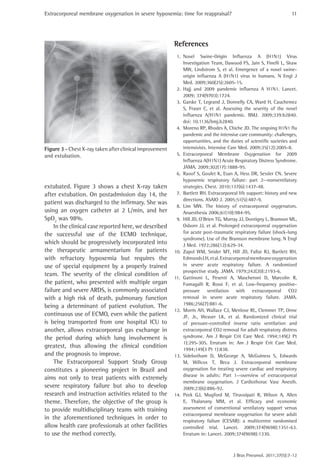
and the high risk of death. Figure 2 shows a
chest X-ray taken immediately after ECMO
initiation. A large quantity of blood in the
tracheal aspirate, together with the decreased
hemoglobin concentrations and bleeding
disorder (Table 1), was suggestive of a diagnosis
of alveolar hemorrhage. Support with ECMO
was maintained for six days, during which the
patient received polymyxin and intravenous
immunoglobulin for the treatment of pneumonia
and the underlying disease, respectively. During
that period, the patient required dialysis with
continuous hemofiltration, and she was weaned
from the noradrenaline. Because of her bleeding
disorder, we chose to maintain the patient on
ECMO without anticoagulation. No ECMO-
related complications occurred. The patient
presented with hypertensive pneumothorax in
the left lung and therefore underwent pigtail
catheter drainage (Figure 3).
During ECMO use, we performed daily
autonomy tests, which consisted of attempts
at maintaining gas exchange without ECMO
for 1 h at the same pressures and frequencies,
Table 1 - Hemodynamic, respiratory, and biochemical data during extracorporeal membrane oxygenation.
Variable Pre-ECMO Day 1 Day 2 Day 3 Day 4 Day 5 Day 6
HR, bpm - 141 124 129 116 130 134
MAP, mmHg - 105 105 109 107 100 94
SpO2
, % 85 97 95 95 98 99 100
Mean ECMO blood flow, L/min - 5.4 5.1 5.1 5.2 5.6 4.7
Mean ECMO oxygen flow, L/min - 4.0 3.0 2.0 1.0 0.7 0.6
Mode of ventilation PC PS PS PS PS PS PS
RR, breaths/min 22 32 34 41 22 27 21
Tidal volume, mL 310 200 220 350 400 350 600
Plateau pressure, cmH2
O 46 22 20 20 20 20 20
FiO2
100 30 30 30 30 30 30
PEEP, cmH2
O 23 15 15 15 15 15 15
pH 7.51 7.39 7.39 7.42 7.48 7.34 7.29
pO2
, mmHg 40.8 68.0 50.0 45.7 50.0 83.0 85.0
pCO2
, mmHg 35 45 44 42 50 51 42
Base excess, mEq/L 5.6 1.5 1.6 2.1 11.9 10.6 6.0
SaO2
, % 81 93 85 82 88 95 95
Lactate, mg/dL 17 10 10 11 19 13 14
Hemoglobin, g/dL - 7.6 5.6 6.4 6.8 7.2 7.9
Platelets, cells/mm3
- 43,000 68,000 70,000 55,000 48,000 112,000
ECMO: extracorporeal membrane oxygenation; MAP: mean arterial pressure; PC: pressure-controlled; PS: pressure support;
PEEP: positive end-expiratory pressure; pO2
: oxygen tension; pCO2
: carbon dioxide tension.
Figure 2 - Chest X-ray taken during extracorporeal
membrane oxygenation use and showing the cannulas
inserted into the inferior vena cava, through which
blood is removed, and into the jugular vein, through
which blood is returned to the patient. ECMO:
extracorporeal membrane oxygenation.
Extracorporeal membrane oxygenation in severe hypoxemia: time for reappraisal?
J Bras Pneumol. 2011;37(5):7-12
11
References
1.	 Novel Swine-Origin Influenza A (H1N1) Virus
Investigation Team, Dawood FS, Jain S, Finelli L, Shaw
MW, Lindstrom S, et al. Emergence of a novel swine-
origin influenza A (H1N1) virus in humans. N Engl J
Med. 2009;360(25):2605-15.
2.	 Hajj and 2009 pandemic influenza A H1N1. Lancet.
2009; 374(9703):1724.
3.	 Garske T, Legrand J, Donnelly CA, Ward H, Cauchemez
S, Fraser C, et al. Assessing the severity of the novel
influenza A/H1N1 pandemic. BMJ. 2009;339:b2840.
doi: 10.1136/bmj.b2840.
4.	 Moreno RP, Rhodes A, Chiche JD. The ongoing H1N1 flu
pandemic and the intensive care community: challenges,
opportunities, and the duties of scientific societies and
intensivists. Intensive Care Med. 2009;35(12):2005-8.
5.	 Extracorporeal Membrane Oxygenation for 2009
Influenza A(H1N1) Acute Respiratory Distress Syndrome.
JAMA. 2009;302(17):1888-95.
6.	 Raoof S, Goulet K, Esan A, Hess DR, Sessler CN. Severe
hypoxemic respiratory failure: part 2--nonventilatory
strategies. Chest. 2010;137(6):1437-48.
7.	 Bartlett RH. Extracorporeal life support: history and new
directions. ASAIO J. 2005;51(5):487-9.
8.	 Lim MW. The history of extracorporeal oxygenators.
Anaesthesia 2006;61(10):984-95.
9.	 Hill JD, O’Brien TG, Murray JJ, Dontigny L, Bramson ML,
Osborn JJ, et al. Prolonged extracorporeal oxygenation
for acute post-traumatic respiratory failure (shock-lung
syndrome). Use of the Bramson membrane lung. N Engl
J Med. 1972;286(12):629-34.
10.	 Zapol WM, Snider MT, Hill JD, Fallat RJ, Bartlett RH,
EdmundsLH, et al.Extracorporealmembraneoxygenation
in severe acute respiratory failure. A randomized
prospective study. JAMA. 1979;242(20):2193-6.
11.	 Gattinoni L, Pesenti A, Mascheroni D, Marcolin R,
Fumagalli R, Rossi F, et al. Low-frequency positive-
pressure ventilation with extracorporeal CO2
removal in severe acute respiratory failure. JAMA.
1986;256(7):881-6.
12.	 Morris AH, Wallace CJ, Menlove RL, Clemmer TP, Orme
JF, Jr., Weaver LK, et al. Randomized clinical trial
of pressure-controlled inverse ratio ventilation and
extracorporeal CO2 removal for adult respiratory distress
syndrome. Am J Respir Crit Care Med. 1994;149(2 Pt
1):295-305. Erratum in: Am J Respir Crit Care Med.
1994;149(3 Pt 1):838.
13.	 Sidebotham D, McGeorge A, McGuiness S, Edwards
M, Willcox T, Beca J. Extracorporeal membrane
oxygenation for treating severe cardiac and respiratory
disease in adults: Part 1--overview of extracorporeal
membrane oxygenation. J Cardiothorac Vasc Anesth.
2009;23(6):886-92.
14.	 Peek GJ, Mugford M, Tiruvoipati R, Wilson A, Allen
E, Thalanany MM, et al. Efficacy and economic
assessment of conventional ventilatory support versus
extracorporeal membrane oxygenation for severe adult
respiratory failure (CESAR): a multicentre randomised
controlled trial. Lancet. 2009;374(9698):1351-63.
Erratum in: Lancet. 2009;374(9698):1330.
extubated. Figure 3 shows a chest X-ray taken
after extubation. On postadmission day 14, the
patient was discharged to the infirmary. She was
using an oxygen catheter at 2 L/min, and her
SpO2
was 98%.
In the clinical case reported here, we described
the successful use of the ECMO technique,
which should be progressively incorporated into
the therapeutic armamentarium for patients
with refractory hypoxemia but requires the
use of special equipment by a properly trained
team. The severity of the clinical condition of
the patient, who presented with multiple organ
failure and severe ARDS, is commonly associated
with a high risk of death, pulmonary function
being a determinant of patient evolution. The
continuous use of ECMO, even while the patient
is being transported from one hospital ICU to
another, allows extracorporeal gas exchange in
the period during which lung involvement is
greatest, thus allowing the clinical condition
and the prognosis to improve.
The Extracorporeal Support Study Group
constitutes a pioneering project in Brazil and
aims not only to treat patients with extremely
severe respiratory failure but also to develop
research and instruction activities related to the
theme. Therefore, the objective of the group is
to provide multidisciplinary teams with training
in the aforementioned techniques in order to
allow health care professionals at other facilities
to use the method correctly.
Figure 3 - Chest X-ray taken after clinical improvement
and extubation.
12	 Azevedo LCP, Park M, Costa ELV, Santos EV, Hirota A, Taniguchi LU et al.
J Bras Pneumol. 2011;37(5):7-12
Sobre os autores
Luciano Cesar Pontes Azevedo
Attending Physician. Sírio-Libanês Hospital, São Paulo, Brazil.
Marcelo Park
Attending Physician. Sírio-Libanês Hospital and University of São Paulo School of Medicine Hospital das Clínicas, São Paulo, Brazil.
Eduardo Leite Vieira Costa
Attending Physician. Sírio-Libanês Hospital and University of São Paulo School of Medicine Hospital das Clínicas, São Paulo, Brazil.
Edzângela Vasconcelos Santos
Head Nurse. University of São Paulo School of Medicine Hospital das Clínicas, São Paulo, Brazil.
Adriana Hirota
Attending Physician. University of São Paulo School of Medicine Hospital das Clínicas, São Paulo, Brazil.
Leandro Utino Taniguchi
Attending Physician. University of São Paulo School of Medicine Hospital das Clínicas, São Paulo, Brazil.
Guilherme de Paula Pinto Schettino
Physician-Manager. Sírio-Libanês Hospital, São Paulo, Brazil.
Marcelo Brito Passos Amato
Chief Physician. University of São Paulo School of Medicine Hospital das Clínicas, São Paulo, Brazil.
Carlos Roberto Ribeiro Carvalho
Supervising Physician. University of São Paulo School of Medicine Hospital das Clínicas, São Paulo, Brazil.

Jbp

  • 1.
    J Bras Pneumol.2011;37(5):7-12 Extracorporeal membrane oxygenation in severe hypoxemia: time for reappraisal?* Oxigenação extracorpórea por membrana na hipoxemia grave: hora de revermos nossos conceitos?* Luciano Cesar Pontes Azevedo, Marcelo Park, Eduardo Leite Vieira Costa, Edzângela Vasconcelos Santos, Adriana Hirota, Leandro Utino Taniguchi, Guilherme de Paula Pinto Schettino, Marcelo Brito Passos Amato, Carlos Roberto Ribeiro Carvalho Abstract In 2009, during the influenza A (H1N1) epidemic, there were many reported cases of pulmonary infection with severe hypoxemia that was refractory to the ventilatory strategies and rescue therapies commonly used to treat patients with severe acute respiratory distress syndrome. Many of those cases were treated with extracorporeal membrane oxygenation (ECMO), which renewed international interest in the technique. The Extracorporeal Support Study Group was created in order to practice ECMO and to employ it in the treatment of patients with severe hypoxemia. In this article, we discuss the indications for using ECMO and report the case of a patient with refractory hypoxemia who was successfully treated with ECMO. Keywords: Respiratory Insufficiency; Intensive Care Units; Extracorporeal Membrane Oxygenation. Resumo Em 2009, muitos casos de infecção pulmonar com hipoxemia grave refratária às estratégias ventilatórias habitualmente utilizadas e às manobras de resgate para a síndrome do desconforto respiratório agudo foram relatados durante a epidemia por influenza A (H1N1). Em muitos desses pacientes, o uso de extracorporeal membrane oxygenation (ECMO, oxigenação extracorpórea por membrana) foi necessário, fato que fez reacender o interesse na ECMO globalmente. O Grupo De Estudos em Suporte Extracorpóreo foi criado visando a aprender a técnica e a utilizar ECMO no tratamento de pacientes com hipoxemia grave. Neste artigo, são discutidas as indicações de ECMO e é relatado o caso de uma paciente com hipoxemia refratária que foi tratada através de ECMO de forma bem sucedida. Descritores: Insuficiência Respiratória; Unidades de Terapia Intensiva; Circulação Extracorpórea com Oxigenador de Membrana. * Study carried out by the Extracorporeal Support Study Group of the Intensive Care Unit of the Department of Clinical Emergencies, University of São Paulo School of Medicine Hospital das Clínicas; in the Intensive Care Unit of the Sírio-Libanês Hospital; and in the Respiratory Intensive Care Unit of the University of São Paulo School of Medicine Hospital das Clínicas, São Paulo, Brazil. Correspondence to: Grupo de Estudos em Suporte Respiratório Extracorpóreo. Unidade de Terapia Intensiva, Disciplina de Emergências Clinicas, Hospital das Clínicas da Faculdade de Medicina da Universidade de São Paulo, Avenida Enéas de Carvalho Aguiar, 155, CEP 05403-900, São Paulo, SP, Brasil. Tel. 55 3069-7221. E-mail: mpark@uol.com.br Financial support: This study received financial support from MAQUET do Brasil. Submitted: 6 June 2011. Accepted, after review: 30 August 2011. Introduction From an epidemiological standpoint, the year 2009 was marked by the novel influenza A (H1N1) virus epidemic,(1) and the respiratory syndrome caused by the virus reached pandemic levels in mid-2009.(2) Mortality from influenza A (H1N1) infection was reported to be as high as 23% at that time.(3) The leading cause of death in patients with acute respiratory distress syndrome (ARDS) due to infection with the influenza A (H1N1) virus is respiratory failure that is refractory to conventional mechanical ventilation.(4) The Australian and New Zealand Intensive Care Society reported that, between June and August of 2009, 201 patients with ARDS due to influenza A (H1N1) virus infection required mechanical ventilation; of those 201, 68 (34%) required extracorporeal membrane oxygenation (ECMO) for refractory hypoxemia.(5) Special Article
  • 2.
    8 Azevedo LCP,Park M, Costa ELV, Santos EV, Hirota A, Taniguchi LU et al. J Bras Pneumol. 2011;37(5):7-12 (12) Enthusiasm for ECMO then began to wane. This was due to the apparent lack of benefits and, first and foremost, to the high incidence of complications, such as bleeding, extremity ischemia, hemolysis, and inflammatory response activation. However, in recent years, the development of new membranes and heparin- coated systems that are more biocompatible has greatly reduced the need for anticoagulation, reducing the incidence of bleeding disorders and ECMO-induced inflammatory response. Likewise, the development of next-generation centrifugal pumps reduced the incidence of ECMO-associated hemolysis.(13) A change in the paradigm for ECMO use was recently brought about by the use of ECMO during the influenza A (H1N1) epidemic and, first and foremost, by the publication of an important study conducted in Great Britain(14) and involving patients with ARDS. That study compared the use of a protective ventilatory strategy involving low tidal volume and low airway pressure with that of venovenous ECMO and lung rest (positive end-expiratory pressure of 10-15 cmH2 O; peak airway pressure of 20-25 cmH2 O; RR of 10 breaths/min; and FiO2 of 0.3). In the group of patients treated with ECMO, 63% survived with good functional capacity for six months, compared with 47% in the group of patients treated with the conventional protective ventilatory strategy.(14) In that study, the patients who were randomly selected for ECMO treatment were transferred to the Glenfield Hospital, in Leicester, England, which is the only center that provided ECMO. Many patients with refractory hypoxemia due to influenza A (H1N1) infection have been treated with ECMO, which has renewed interest in this life support technique. At facilities specializing in neonatal, pediatric, or adult care, ECMO is used in patients with respiratory failure, as well as in those with heart failure. The ECMO technique facilitates gas exchange, allowing the lungs to “rest” until the patient has recovered from the pathological process and minimizing the potentially deleterious effects of ventilator-induced lung injury. Therefore, ECMO can be considered the definitive rescue therapy for patients with refractory hypoxemia, given that pulmonary gas exchange can be unnecessary during ECMO use. The technique consists of removing blood by means of a pump (either a centrifugal pump or a peristaltic pump) and circulating it through an artificial lung (Figure 1). To that end, the technique that is most commonly used is the venovenous technique, by which venous blood is removed, oxygenated, and returned to the venous system of the patient, thus providing oxygenation.(6) Venoarterial access can also be used. In that case, blood is removed from the venous circulation and returned to the aorta, thus improving cardiac output and gas exchange. Cardiorespiratory support with ECMO has been described since 1869,(7,8) although the first case of an ARDS patient whose survival was attributed to ECMO was reported in 1971.(9) The first clinical study that compared conventional mechanical ventilation with venoarterial ECMO involved 90 patients with ARDS and was published in 1979, and the mortality rate was reported to be above 90% in both groups. In the ECMO group, common adverse events included bleeding, thromboembolic events, and hemolysis.(10) A study conducted in 1986 described a venovenous CO2 removal technique that allowed the use of mechanical ventilation with lower airway pressures and minus the adverse events associated with arterial cannulation. In that study, the mortality rate for patients with ARDS was reported to be 49%. (11) In a randomized study published in 1994 and involving 40 patients with ARDS, the CO2 removal technique was compared with pressure- controlled ventilation; the technique was found to have no beneficial effects on mortality or on the incidence of bleeding in the ECMO group. Figure 1 - Extracorporeal membrane oxygenation system. Note the membrane for gas exchange, the centrifugal pump, and the console, which regulates the blood flow.
  • 3.
    Extracorporeal membrane oxygenationin severe hypoxemia: time for reappraisal? J Bras Pneumol. 2011;37(5):7-12 9 Clinical case A 14-year-old female patient with a history of systemic lupus erythematosus had been admitted to the ICU of the HC-FMUSP Institute for Children one month prior with a profile of respiratory distress and fever. She had previously received pulse therapy with methylprednisolone and cyclophosphamide for disease control. During her ICU stay, her pulmonary function worsened, and multidrug-resistant Acinetobacter baumannii was isolated from her tracheal secretion. After three days, her clinical status worsened significantly. She presented with acute kidney injury, severe hypoxemia, and septic shock, for which she was treated with high doses of noradrenaline (0.8 µg • kg−1 • min−1 ). Despite the use of alveolar recruitment maneuvers and paralysis with neuromuscular blocking agents, ventilation did not improve. The Extracorporeal Respiratory Support Group of the HC-FMUSP Clinical Emergency and Respiratory ICUs was brought in to determine whether the use of ECMO was feasible. The ventilation and gas exchange parameters before ECMO initiation are described in Table 1. Despite a high inspiratory pressure and positive end-expiratory pressure, the patient presented with severe hypoxemia before ECMO initiation, as evidenced by a PaO2 / FiO2 ratio of 40. The use of venovenous ECMO was recommended, the right femoral and left jugular veins were cannulated with 20-F catheters, and ECMO was started. After having been stabilized, the patient (with the ECMO system still in operation) was transported by ambulance to the general ICU of the HC-FMUSP. Her (14) Finally, also in 2009, a study conducted in Australia and New Zealand evaluated 68 patients with severe respiratory failure due to influenza A (H1N1) infection and treated with ECMO. Of the 68 patients, 63 were treated with venovenous ECMO. The mean PaO2 of patients at the initiation of ECMO was 55 mmHg, with an FiO2 of 100%, and in-hospital survival was 79%.(5) In 2010, with the objective of practicing the ECMO technique and using it routinely in patients with refractory hypoxemia, the Extracorporeal Support Study Group was created. The study group comprises health care professionals in the Clinical Emergency and Respiratory ICUs of the Hospital das Clínicas da Faculdade de Medicina da Universidade de São Paulo (HC-FMUSP, University of São Paulo School of Medicine Hospital das Clínicas), located in the city of São Paulo, Brazil, as well as health care professionals in the ICU of the Sírio-Libanês Hospital ICU, also in São Paulo. The physicians, nurses, and physical therapists working in those ICUs initially practiced the ECMO techniques by conducting experimental studies in pigs, with the objective of learning how to assemble the system, perform vascular cannulation, provide support to patients with severe ARDS, and manage ECMO-related complications. In Chart 1, we describe the principal criteria used by our study group in order to recommend the clinical use of ECMO. In 2011, following the training period, we began to use ECMO in clinical settings. Below, we describe the case of a patient who presented with severe refractory hypoxemia and was treated with ECMO. Chart 1 - Criteria for the use of extracorporeal membrane oxygenation. Mandatory criteria Tracheal intubation and mechanical ventilation Acute onset lung disease Bilateral pulmonary infiltrate PaO2 /FiO2 ratio < 200 with positive end-expiratory pressure ≥ 10 cmH2 O Reversible lung injury Complementary criteria (at least one must be met) PaO2 /FIO2 ratio ≤ 50 with an FiO2 = 1, for at least 1 h, with or without the use of rescue therapies (alveolar recruitment, inhaled NO, and prone position) Hypercapnia with pH remaining ≤ 7.20 using an RR ≥ 35 breaths/min (whenever possible), a tidal volume = 4-6 mL/kg, and a plateau pressure ≤ 30 cmH2 O Murray lung injury score > 3, with worsening of the clinical status PaO2 /FiO2 ratio ≤ 50 with an FiO2 ≥ 0.8 for at least 3 h, despite the use of rescue therapies
  • 4.
    10 Azevedo LCP,Park M, Costa ELV, Santos EV, Hirota A, Taniguchi LU et al. J Bras Pneumol. 2011;37(5):7-12 with an FiO2 of 60%. For the first five days, the patient developed severe hypoxemia whenever the extracorporeal support was reduced. On the sixth day, after a satisfactory autonomy test result, ECMO was discontinued, and the ventilatory support was progressively reduced. On the eighth day, the patient was Simplified Acute Physiology Score 3 before ICU admission was 79, and her Sequential Organ Failure Assessment score was 15, demonstrating the severity of her clinical status and the high risk of death. Figure 2 shows a chest X-ray taken immediately after ECMO initiation. A large quantity of blood in the tracheal aspirate, together with the decreased hemoglobin concentrations and bleeding disorder (Table 1), was suggestive of a diagnosis of alveolar hemorrhage. Support with ECMO was maintained for six days, during which the patient received polymyxin and intravenous immunoglobulin for the treatment of pneumonia and the underlying disease, respectively. During that period, the patient required dialysis with continuous hemofiltration, and she was weaned from the noradrenaline. Because of her bleeding disorder, we chose to maintain the patient on ECMO without anticoagulation. No ECMO- related complications occurred. The patient presented with hypertensive pneumothorax in the left lung and therefore underwent pigtail catheter drainage (Figure 3). During ECMO use, we performed daily autonomy tests, which consisted of attempts at maintaining gas exchange without ECMO for 1 h at the same pressures and frequencies, Table 1 - Hemodynamic, respiratory, and biochemical data during extracorporeal membrane oxygenation. Variable Pre-ECMO Day 1 Day 2 Day 3 Day 4 Day 5 Day 6 HR, bpm - 141 124 129 116 130 134 MAP, mmHg - 105 105 109 107 100 94 SpO2 , % 85 97 95 95 98 99 100 Mean ECMO blood flow, L/min - 5.4 5.1 5.1 5.2 5.6 4.7 Mean ECMO oxygen flow, L/min - 4.0 3.0 2.0 1.0 0.7 0.6 Mode of ventilation PC PS PS PS PS PS PS RR, breaths/min 22 32 34 41 22 27 21 Tidal volume, mL 310 200 220 350 400 350 600 Plateau pressure, cmH2 O 46 22 20 20 20 20 20 FiO2 100 30 30 30 30 30 30 PEEP, cmH2 O 23 15 15 15 15 15 15 pH 7.51 7.39 7.39 7.42 7.48 7.34 7.29 pO2 , mmHg 40.8 68.0 50.0 45.7 50.0 83.0 85.0 pCO2 , mmHg 35 45 44 42 50 51 42 Base excess, mEq/L 5.6 1.5 1.6 2.1 11.9 10.6 6.0 SaO2 , % 81 93 85 82 88 95 95 Lactate, mg/dL 17 10 10 11 19 13 14 Hemoglobin, g/dL - 7.6 5.6 6.4 6.8 7.2 7.9 Platelets, cells/mm3 - 43,000 68,000 70,000 55,000 48,000 112,000 ECMO: extracorporeal membrane oxygenation; MAP: mean arterial pressure; PC: pressure-controlled; PS: pressure support; PEEP: positive end-expiratory pressure; pO2 : oxygen tension; pCO2 : carbon dioxide tension. Figure 2 - Chest X-ray taken during extracorporeal membrane oxygenation use and showing the cannulas inserted into the inferior vena cava, through which blood is removed, and into the jugular vein, through which blood is returned to the patient. ECMO: extracorporeal membrane oxygenation.
  • 5.
    Extracorporeal membrane oxygenationin severe hypoxemia: time for reappraisal? J Bras Pneumol. 2011;37(5):7-12 11 References 1. Novel Swine-Origin Influenza A (H1N1) Virus Investigation Team, Dawood FS, Jain S, Finelli L, Shaw MW, Lindstrom S, et al. Emergence of a novel swine- origin influenza A (H1N1) virus in humans. N Engl J Med. 2009;360(25):2605-15. 2. Hajj and 2009 pandemic influenza A H1N1. Lancet. 2009; 374(9703):1724. 3. Garske T, Legrand J, Donnelly CA, Ward H, Cauchemez S, Fraser C, et al. Assessing the severity of the novel influenza A/H1N1 pandemic. BMJ. 2009;339:b2840. doi: 10.1136/bmj.b2840. 4. Moreno RP, Rhodes A, Chiche JD. The ongoing H1N1 flu pandemic and the intensive care community: challenges, opportunities, and the duties of scientific societies and intensivists. Intensive Care Med. 2009;35(12):2005-8. 5. Extracorporeal Membrane Oxygenation for 2009 Influenza A(H1N1) Acute Respiratory Distress Syndrome. JAMA. 2009;302(17):1888-95. 6. Raoof S, Goulet K, Esan A, Hess DR, Sessler CN. Severe hypoxemic respiratory failure: part 2--nonventilatory strategies. Chest. 2010;137(6):1437-48. 7. Bartlett RH. Extracorporeal life support: history and new directions. ASAIO J. 2005;51(5):487-9. 8. Lim MW. The history of extracorporeal oxygenators. Anaesthesia 2006;61(10):984-95. 9. Hill JD, O’Brien TG, Murray JJ, Dontigny L, Bramson ML, Osborn JJ, et al. Prolonged extracorporeal oxygenation for acute post-traumatic respiratory failure (shock-lung syndrome). Use of the Bramson membrane lung. N Engl J Med. 1972;286(12):629-34. 10. Zapol WM, Snider MT, Hill JD, Fallat RJ, Bartlett RH, EdmundsLH, et al.Extracorporealmembraneoxygenation in severe acute respiratory failure. A randomized prospective study. JAMA. 1979;242(20):2193-6. 11. Gattinoni L, Pesenti A, Mascheroni D, Marcolin R, Fumagalli R, Rossi F, et al. Low-frequency positive- pressure ventilation with extracorporeal CO2 removal in severe acute respiratory failure. JAMA. 1986;256(7):881-6. 12. Morris AH, Wallace CJ, Menlove RL, Clemmer TP, Orme JF, Jr., Weaver LK, et al. Randomized clinical trial of pressure-controlled inverse ratio ventilation and extracorporeal CO2 removal for adult respiratory distress syndrome. Am J Respir Crit Care Med. 1994;149(2 Pt 1):295-305. Erratum in: Am J Respir Crit Care Med. 1994;149(3 Pt 1):838. 13. Sidebotham D, McGeorge A, McGuiness S, Edwards M, Willcox T, Beca J. Extracorporeal membrane oxygenation for treating severe cardiac and respiratory disease in adults: Part 1--overview of extracorporeal membrane oxygenation. J Cardiothorac Vasc Anesth. 2009;23(6):886-92. 14. Peek GJ, Mugford M, Tiruvoipati R, Wilson A, Allen E, Thalanany MM, et al. Efficacy and economic assessment of conventional ventilatory support versus extracorporeal membrane oxygenation for severe adult respiratory failure (CESAR): a multicentre randomised controlled trial. Lancet. 2009;374(9698):1351-63. Erratum in: Lancet. 2009;374(9698):1330. extubated. Figure 3 shows a chest X-ray taken after extubation. On postadmission day 14, the patient was discharged to the infirmary. She was using an oxygen catheter at 2 L/min, and her SpO2 was 98%. In the clinical case reported here, we described the successful use of the ECMO technique, which should be progressively incorporated into the therapeutic armamentarium for patients with refractory hypoxemia but requires the use of special equipment by a properly trained team. The severity of the clinical condition of the patient, who presented with multiple organ failure and severe ARDS, is commonly associated with a high risk of death, pulmonary function being a determinant of patient evolution. The continuous use of ECMO, even while the patient is being transported from one hospital ICU to another, allows extracorporeal gas exchange in the period during which lung involvement is greatest, thus allowing the clinical condition and the prognosis to improve. The Extracorporeal Support Study Group constitutes a pioneering project in Brazil and aims not only to treat patients with extremely severe respiratory failure but also to develop research and instruction activities related to the theme. Therefore, the objective of the group is to provide multidisciplinary teams with training in the aforementioned techniques in order to allow health care professionals at other facilities to use the method correctly. Figure 3 - Chest X-ray taken after clinical improvement and extubation.
  • 6.
    12 Azevedo LCP,Park M, Costa ELV, Santos EV, Hirota A, Taniguchi LU et al. J Bras Pneumol. 2011;37(5):7-12 Sobre os autores Luciano Cesar Pontes Azevedo Attending Physician. Sírio-Libanês Hospital, São Paulo, Brazil. Marcelo Park Attending Physician. Sírio-Libanês Hospital and University of São Paulo School of Medicine Hospital das Clínicas, São Paulo, Brazil. Eduardo Leite Vieira Costa Attending Physician. Sírio-Libanês Hospital and University of São Paulo School of Medicine Hospital das Clínicas, São Paulo, Brazil. Edzângela Vasconcelos Santos Head Nurse. University of São Paulo School of Medicine Hospital das Clínicas, São Paulo, Brazil. Adriana Hirota Attending Physician. University of São Paulo School of Medicine Hospital das Clínicas, São Paulo, Brazil. Leandro Utino Taniguchi Attending Physician. University of São Paulo School of Medicine Hospital das Clínicas, São Paulo, Brazil. Guilherme de Paula Pinto Schettino Physician-Manager. Sírio-Libanês Hospital, São Paulo, Brazil. Marcelo Brito Passos Amato Chief Physician. University of São Paulo School of Medicine Hospital das Clínicas, São Paulo, Brazil. Carlos Roberto Ribeiro Carvalho Supervising Physician. University of São Paulo School of Medicine Hospital das Clínicas, São Paulo, Brazil.