IS-A vs HAS-A Relationship
• Is-A and Has-A Relationship shows how classes or
objects are related to each in a Object oriented
design.
• Is-A relationship is based on inheritance and
interface implementation. ‘IS-A’ is way of saying
“this thing is a type of that thing” .It shows whether
a class should be inherited by other class or not.
House IS-A building, dog IS-A animal etc.
• HAS-A relationship is based on class rather than
inheritance. It shows whether a class should contain
object of other class or not.
e.g. Building HAS-A bathroom
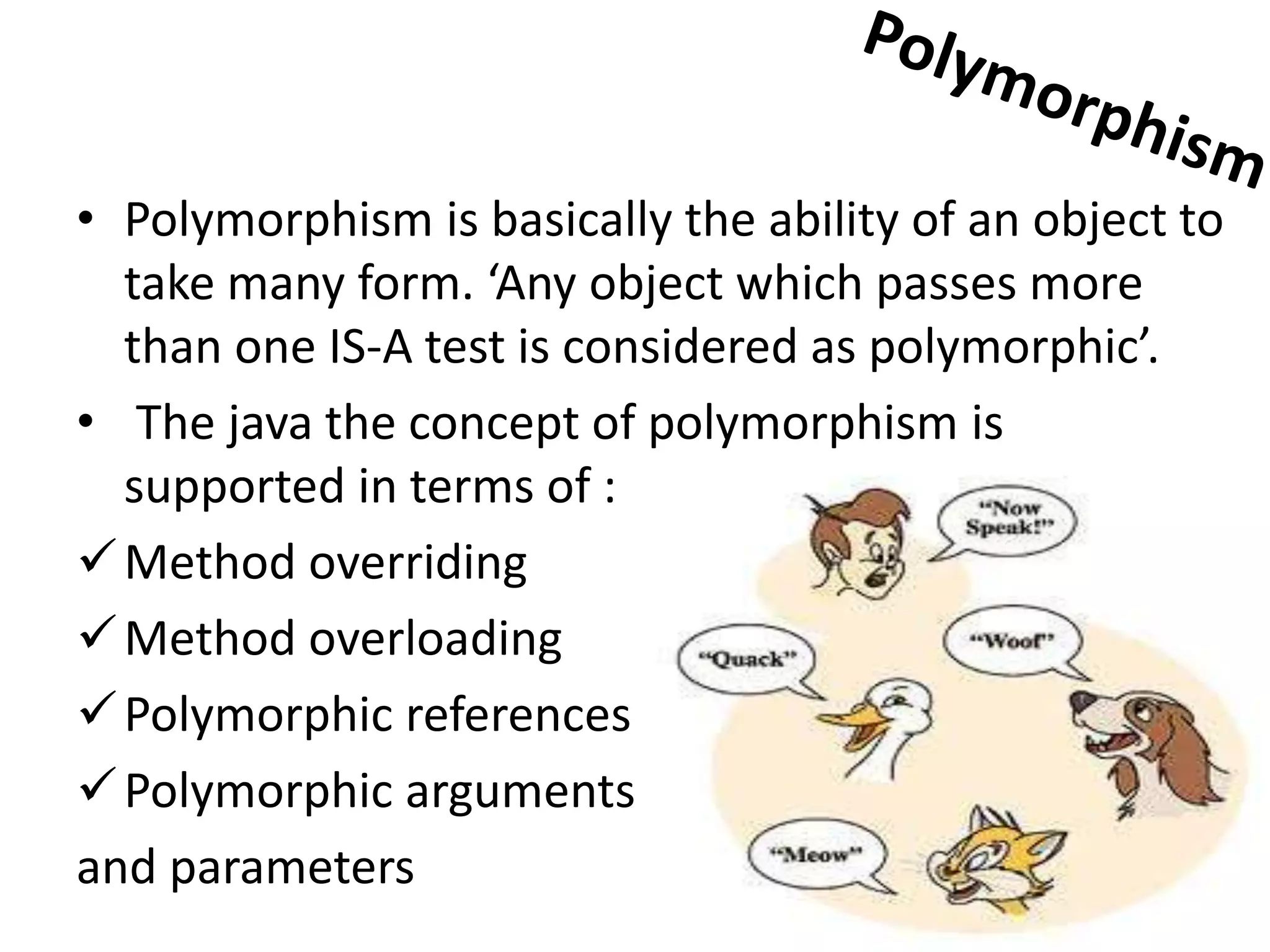
• Polymorphism is basically the ability of an object to
take many form. ‘Any object which passes more
than one IS-A test is considered as polymorphic’.
• The java the concept of polymorphism is
supported in terms of :
Method overriding
Method overloading
Polymorphic references
Polymorphic arguments
and parameters
Polymorphic references and Array
• The most common use of polymorphism is that reference of
superclass can be used to refer objects of subclass.
• In polymorphic array reference of superclass can refer any
object of subclasses:
• public class Test {
• public static void main(String[] args)
• {
• Animal[] a = new Animal[4];
• a[0] = new Cat();
• a[1] = new Dog();
• a[2]= new Duck();
• a[3] = new Snake();
• for(int i=0; i<a.length; i++)
• {
• a[i].sound();}
Polymorphic arguments and Parameters
• Polymorphic Parameter:
Polymorphic parameters are nothing but the parameter of type
“superclass”.
e.g. If we have a method which contain polymorphic parameters then in
arguments we can pass objects of any subclass type.
• Polymorphic Arguments:
Polymorphic arguments are the arguments of type “subclass”.
• public void go(Animal a)
• {
• a.sound();
• } // in class Animal
• public static void main(String[] args)
• {
• Animal a = new Animal();
• Cat c = new Cat();
• Dog d = new Dog();
• a.go(d);
• }
Data Abstraction and Abstract Class
• Abstraction is a design concept on which we only
declare functionality but doesn't define it because
we don't know about them at design point.
• Abstract Keyword :
This is a special keyword which is used as a non-
access modifiers with classes and methods.
• Abstract Keyword with class:
If ‘abstract’ keyword is used with a class, then no
one can instantiate that class and these classes are
known as ‘abstract classes’.
• Abstract Keyword with method:
If ‘abstract’ keyword is used with method, then it
must be overridden in first concrete class????
Abstract Class Vs Concrete Class
• The classes which cannot be instantiated are
known as Abstract class.
• Concrete class are those classes which can be
intantiated
Abstract Methods and it’s properties
• The abstract Method is that method which
doesn’t contains any body and must be
overridden in first concrete class.
• Properties:
Abstract method should always use the keyword
‘abstract’ and in declaration it must be without
body.
The class of abstract method must be an abstract
class. Abstract method cannot be declare in a
concrete class.
The abstract method must be overridden by first
concrete class which extends the abstract class.
Class-Object
• The class Object is mother of all classes in java.
• Any class which doesn’t extends any other class,
implicitly extends class Object.
• Hence every class in java which extends other
class is polymorphic, i.e. every class in java “IS-A
type of Object”.
e.g.
Public class Test{}
Means
Public class Test extends Object{}
Important Method of Class - Object
• equals() method:
This method checks the equality of two objects, whether
they are equal or not
Animal a = new Cat();
Animal b = new Dog();  a.equals(b);
• getClass() method:
This method returns the real class name of it’s
corresponding object.
e.g. b.getClass();
• hashCode()
This method finds the hashCode of a object
e.g. b.hashCode();
• toString():
This method returns the string representation of an object
Class of reference variable
• During the call of method of an object, the
compiler searches the method in class of
reference variable and not in the actual class of
the object.
• public static void main(String[] args)
• {
• Object o = new Animal();
• o.eat();
• }
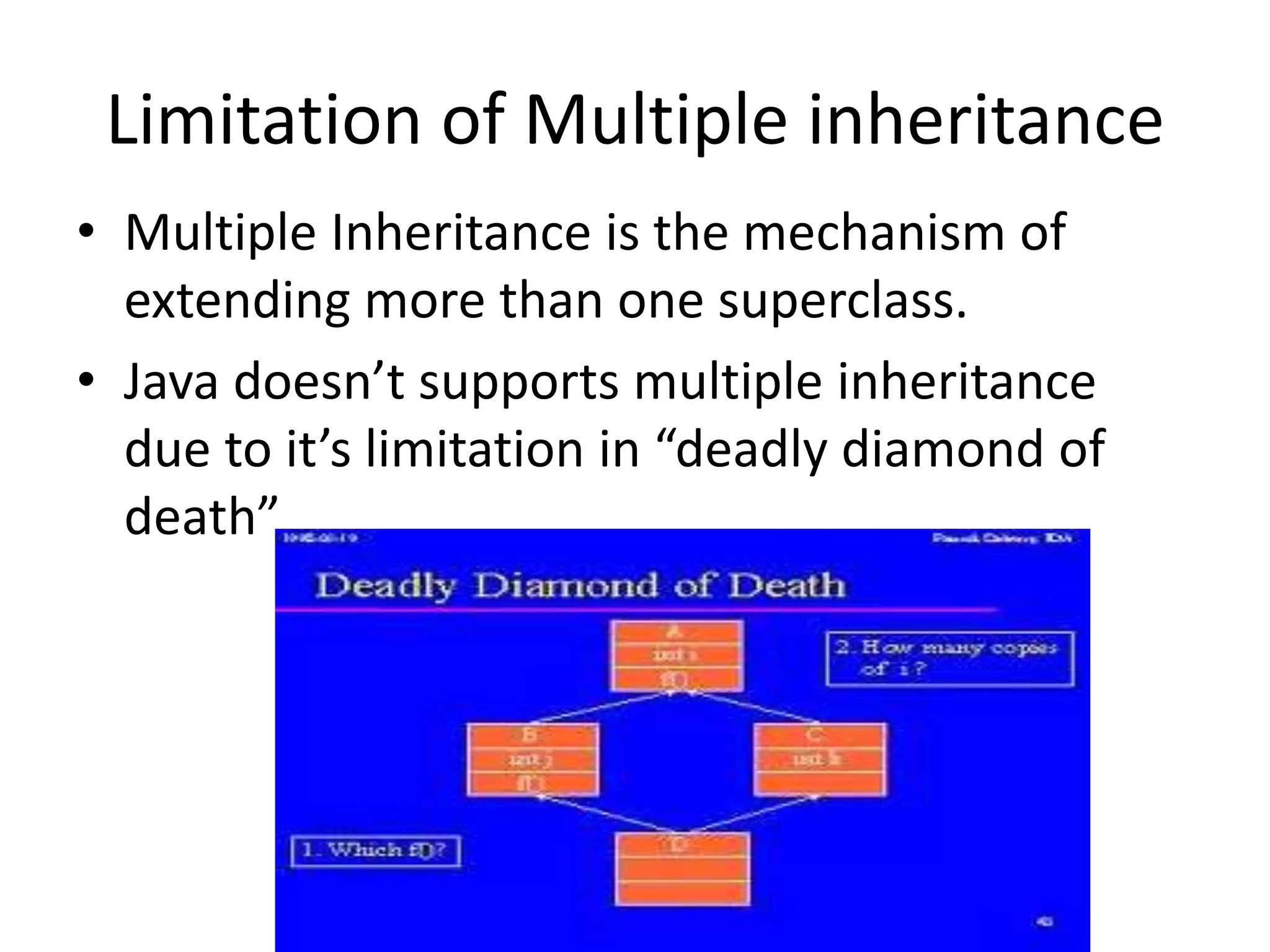
Limitation of Multiple inheritance
• Multiple Inheritance is the mechanism of
extending more than one superclass.
• Java doesn’t supports multiple inheritance
due to it’s limitation in “deadly diamond of
death”
Solution of DDoD in java - Interfaces
• In java the alternative of multiple inheritance is
INTERFACES
• INTERFACES are nothing but the pure abstract
class which can be implement by any other
class along with extending other classes

Java Lecture5.pptx

  • 1.
    IS-A vs HAS-ARelationship • Is-A and Has-A Relationship shows how classes or objects are related to each in a Object oriented design. • Is-A relationship is based on inheritance and interface implementation. ‘IS-A’ is way of saying “this thing is a type of that thing” .It shows whether a class should be inherited by other class or not. House IS-A building, dog IS-A animal etc. • HAS-A relationship is based on class rather than inheritance. It shows whether a class should contain object of other class or not. e.g. Building HAS-A bathroom
  • 2.
    • Polymorphism isbasically the ability of an object to take many form. ‘Any object which passes more than one IS-A test is considered as polymorphic’. • The java the concept of polymorphism is supported in terms of : Method overriding Method overloading Polymorphic references Polymorphic arguments and parameters
  • 3.
    Polymorphic references andArray • The most common use of polymorphism is that reference of superclass can be used to refer objects of subclass. • In polymorphic array reference of superclass can refer any object of subclasses: • public class Test { • public static void main(String[] args) • { • Animal[] a = new Animal[4]; • a[0] = new Cat(); • a[1] = new Dog(); • a[2]= new Duck(); • a[3] = new Snake(); • for(int i=0; i<a.length; i++) • { • a[i].sound();}
  • 4.
    Polymorphic arguments andParameters • Polymorphic Parameter: Polymorphic parameters are nothing but the parameter of type “superclass”. e.g. If we have a method which contain polymorphic parameters then in arguments we can pass objects of any subclass type. • Polymorphic Arguments: Polymorphic arguments are the arguments of type “subclass”. • public void go(Animal a) • { • a.sound(); • } // in class Animal • public static void main(String[] args) • { • Animal a = new Animal(); • Cat c = new Cat(); • Dog d = new Dog(); • a.go(d); • }
  • 5.
    Data Abstraction andAbstract Class • Abstraction is a design concept on which we only declare functionality but doesn't define it because we don't know about them at design point. • Abstract Keyword : This is a special keyword which is used as a non- access modifiers with classes and methods. • Abstract Keyword with class: If ‘abstract’ keyword is used with a class, then no one can instantiate that class and these classes are known as ‘abstract classes’. • Abstract Keyword with method: If ‘abstract’ keyword is used with method, then it must be overridden in first concrete class????
  • 6.
    Abstract Class VsConcrete Class • The classes which cannot be instantiated are known as Abstract class. • Concrete class are those classes which can be intantiated
  • 7.
    Abstract Methods andit’s properties • The abstract Method is that method which doesn’t contains any body and must be overridden in first concrete class. • Properties: Abstract method should always use the keyword ‘abstract’ and in declaration it must be without body. The class of abstract method must be an abstract class. Abstract method cannot be declare in a concrete class. The abstract method must be overridden by first concrete class which extends the abstract class.
  • 8.
    Class-Object • The classObject is mother of all classes in java. • Any class which doesn’t extends any other class, implicitly extends class Object. • Hence every class in java which extends other class is polymorphic, i.e. every class in java “IS-A type of Object”. e.g. Public class Test{} Means Public class Test extends Object{}
  • 9.
    Important Method ofClass - Object • equals() method: This method checks the equality of two objects, whether they are equal or not Animal a = new Cat(); Animal b = new Dog();  a.equals(b); • getClass() method: This method returns the real class name of it’s corresponding object. e.g. b.getClass(); • hashCode() This method finds the hashCode of a object e.g. b.hashCode(); • toString(): This method returns the string representation of an object
  • 10.
    Class of referencevariable • During the call of method of an object, the compiler searches the method in class of reference variable and not in the actual class of the object. • public static void main(String[] args) • { • Object o = new Animal(); • o.eat(); • }
  • 11.
    Limitation of Multipleinheritance • Multiple Inheritance is the mechanism of extending more than one superclass. • Java doesn’t supports multiple inheritance due to it’s limitation in “deadly diamond of death”
  • 12.
    Solution of DDoDin java - Interfaces • In java the alternative of multiple inheritance is INTERFACES • INTERFACES are nothing but the pure abstract class which can be implement by any other class along with extending other classes