13-05-2013Rajavel DRajavel D
Java
Summer Internship – 2013
(Indian Institute of Technology Bombay)
Java
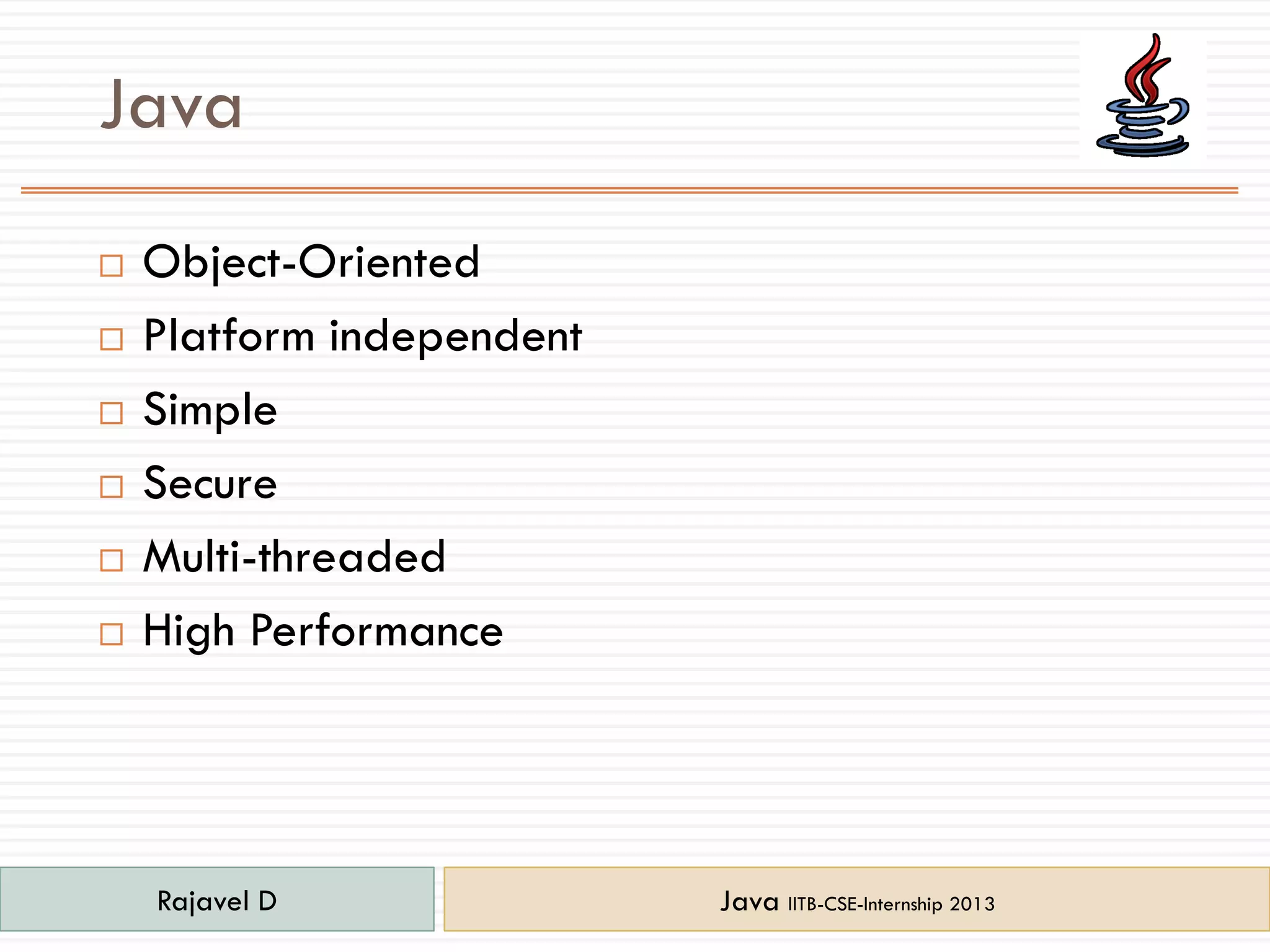
 Object-Oriented
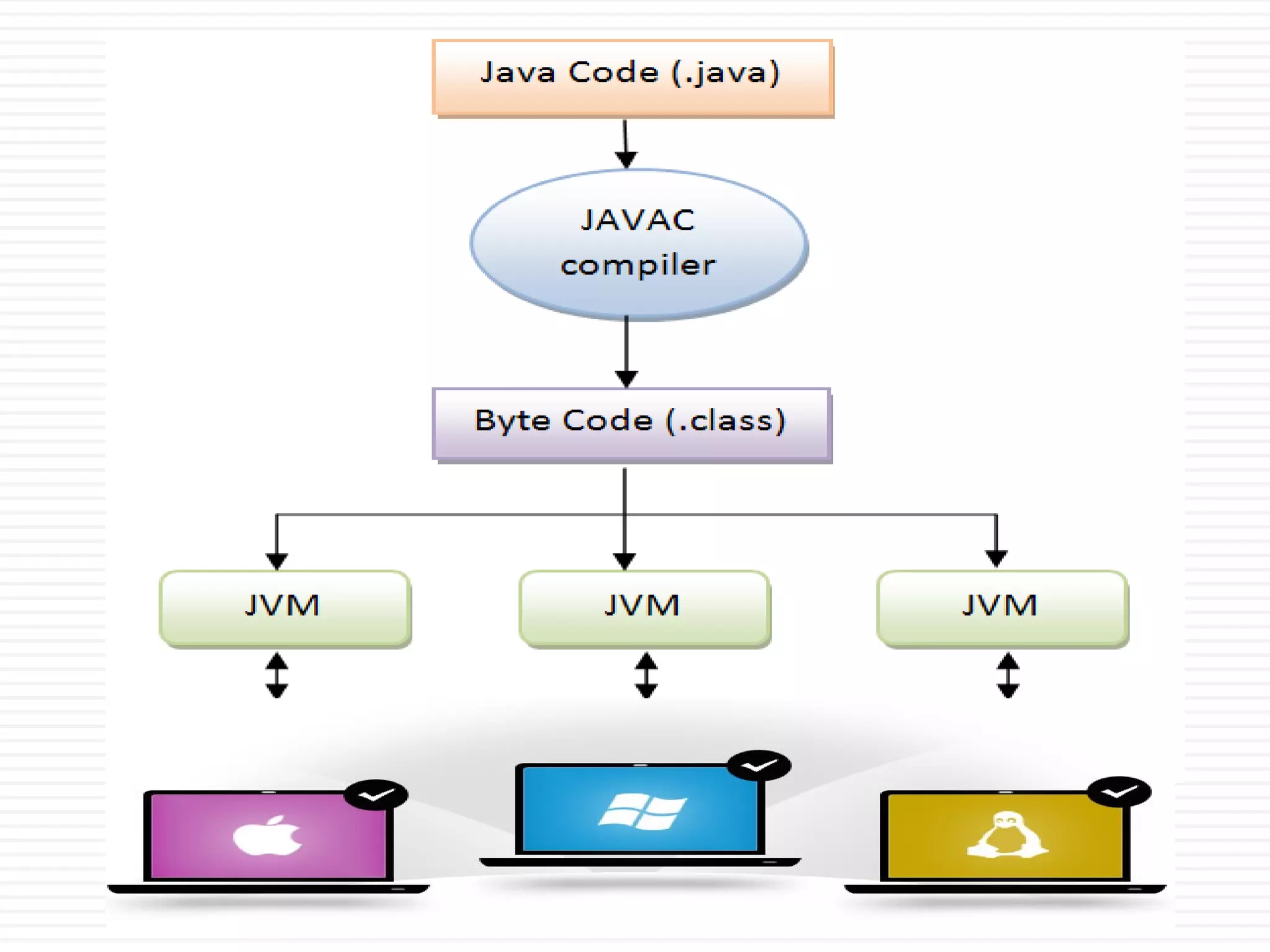
 Platform independent
 Simple
 Secure
 Multi-threaded
 High Performance
Rajavel D Java IITB-CSE-Internship 2013
Basic terms
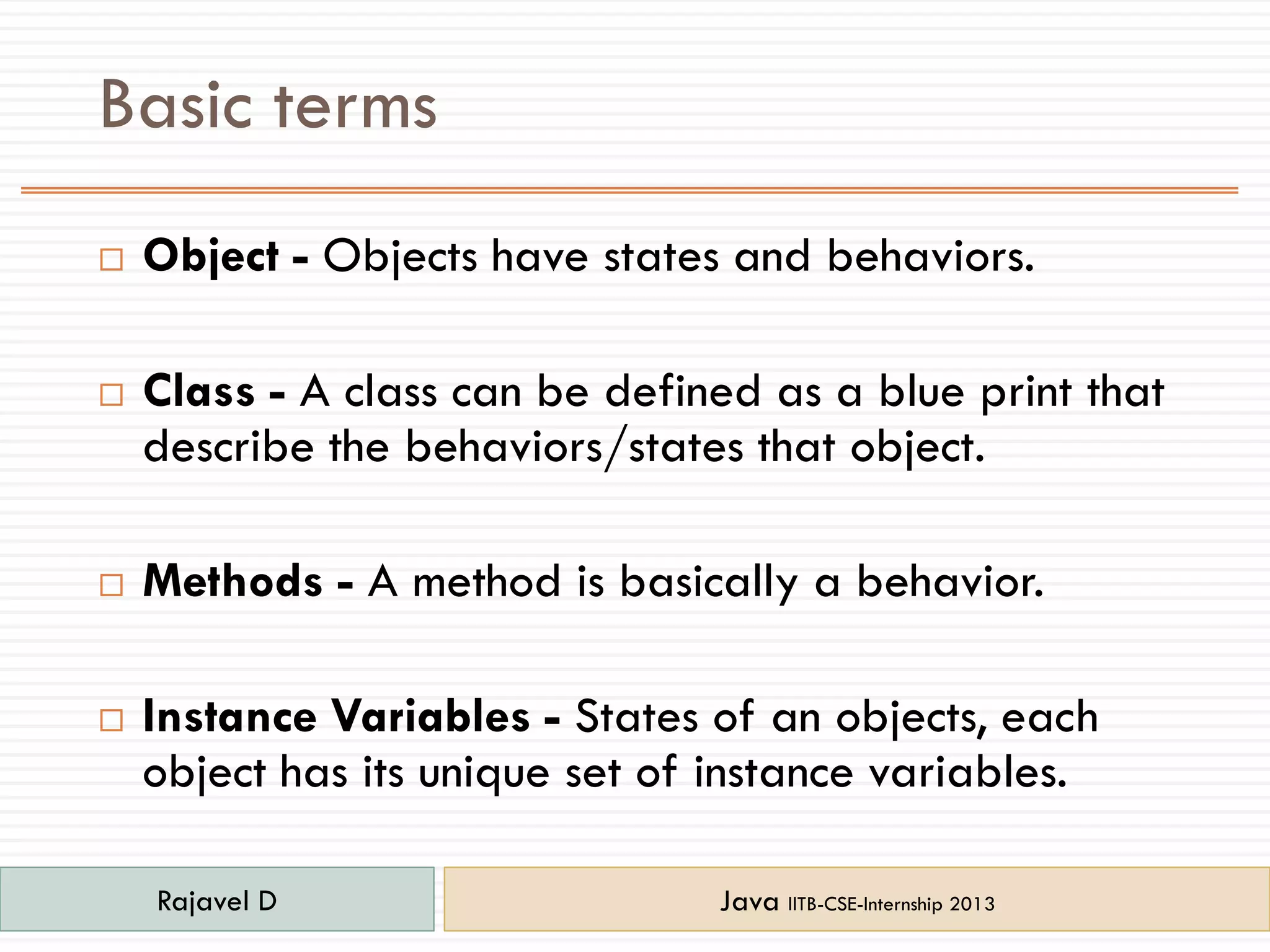
 Object - Objects have states and behaviors.
 Class - A class can be defined as a blue print that
describe the behaviors/states that object.
 Methods - A method is basically a behavior.
 Instance Variables - States of an objects, each
object has its unique set of instance variables.
Rajavel D Java IITB-CSE-Internship 2013
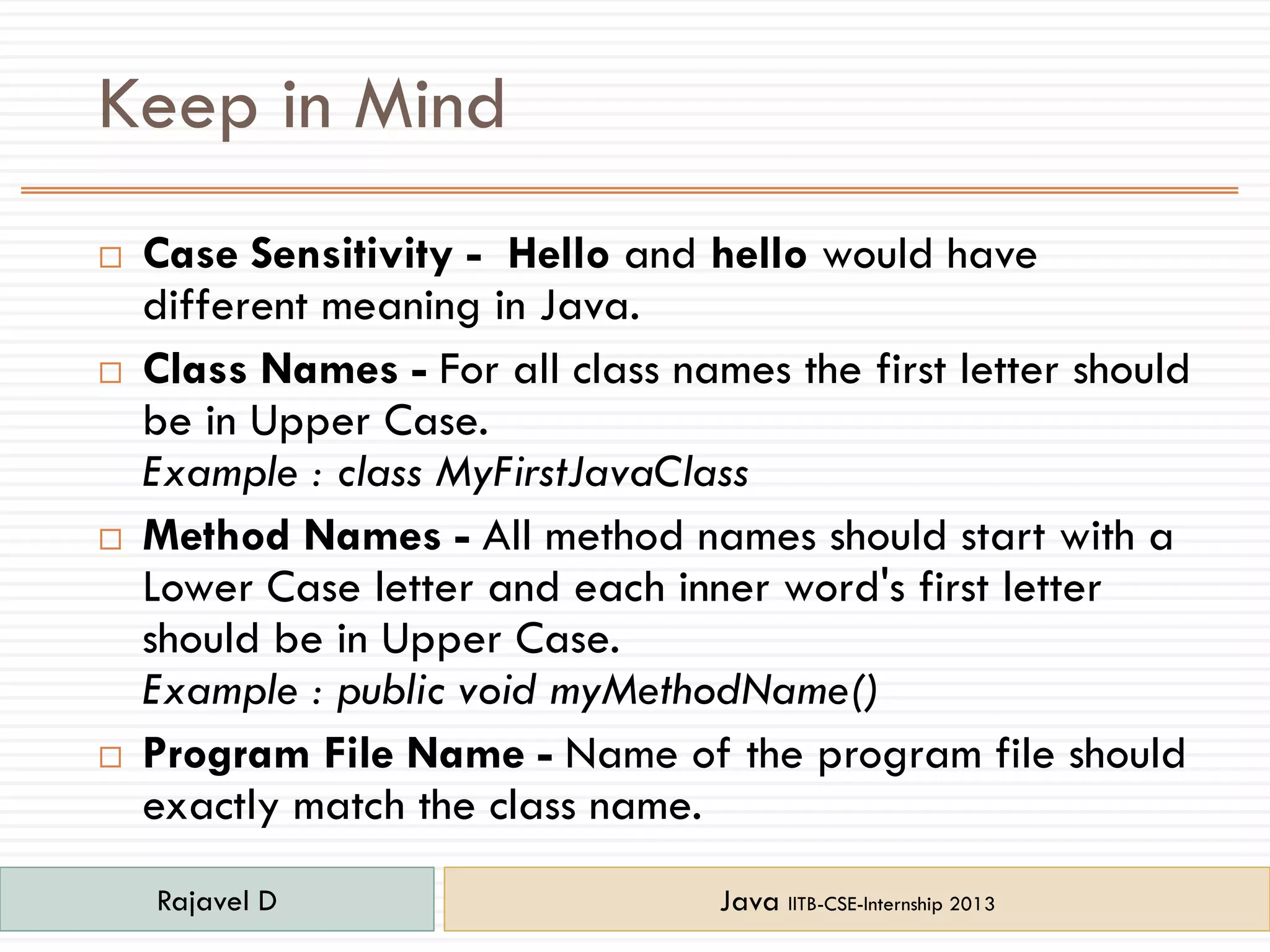
Keep in Mind
 Case Sensitivity - Hello and hello would have
different meaning in Java.
 Class Names - For all class names the first letter should
be in Upper Case.
Example : class MyFirstJavaClass
 Method Names - All method names should start with a
Lower Case letter and each inner word's first letter
should be in Upper Case.
Example : public void myMethodName()
 Program File Name - Name of the program file should
exactly match the class name.
Rajavel D Java IITB-CSE-Internship 2013
Simple Program
class HelloWorldApp {
public static void main(String[] args) {
HelloWorldApp hello = new HelloWorldApp();
hello.sayHello();
}
public void sayHello(){
System.out.println(“Hello”);
}
}
O/P : Hello
Rajavel D Java IITB-CSE-Internship 2013
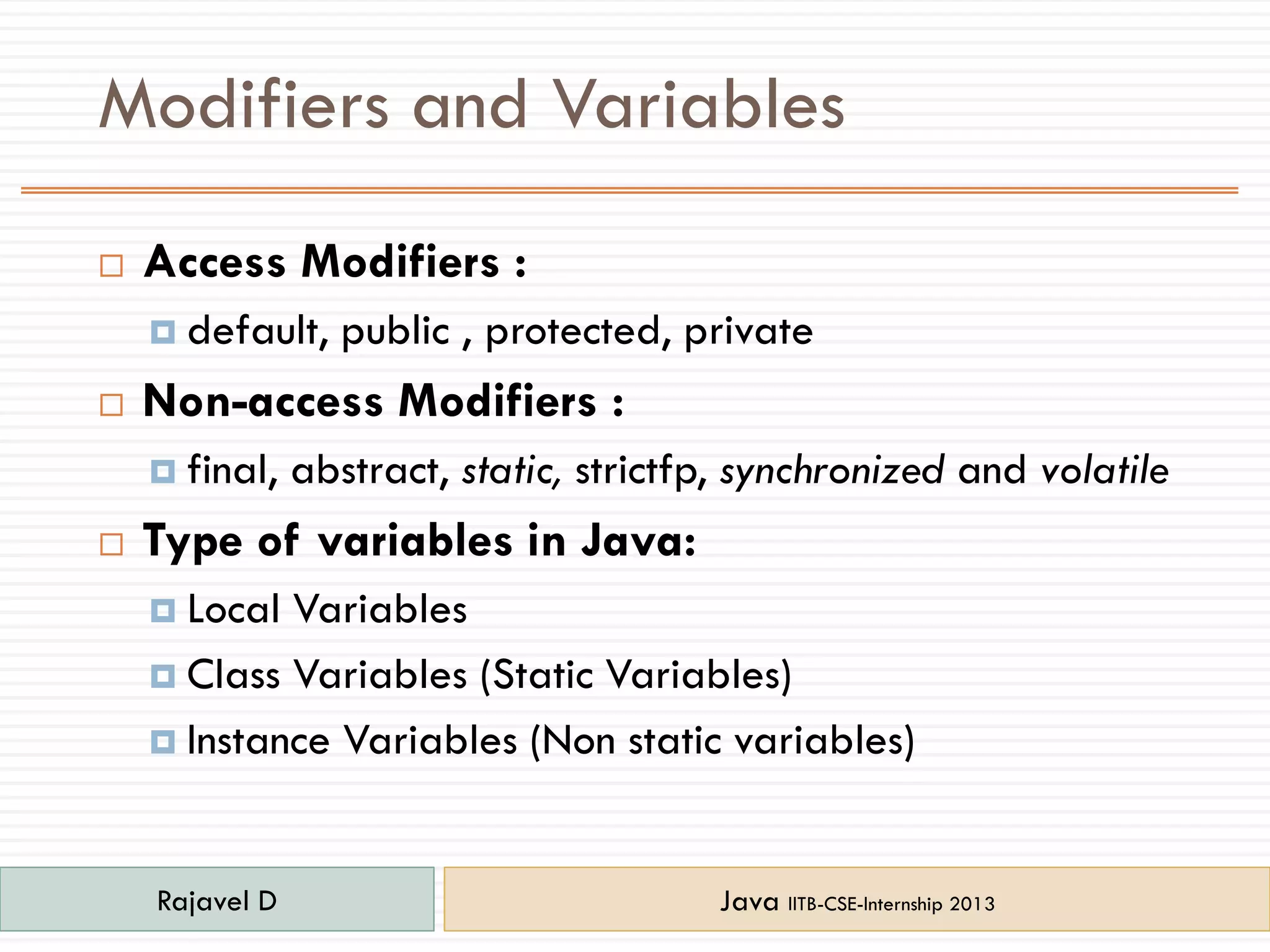
Modifiers and Variables
 Access Modifiers :
 default, public , protected, private
 Non-access Modifiers :
 final, abstract, static, strictfp, synchronized and volatile
 Type of variables in Java:
 Local Variables
 Class Variables (Static Variables)
 Instance Variables (Non static variables)
Rajavel D Java IITB-CSE-Internship 2013
public static void main ?
 java program processing starts from the main()
method.
 Public ?
 Static?
 Void?
Rajavel D Java IITB-CSE-Internship 2013
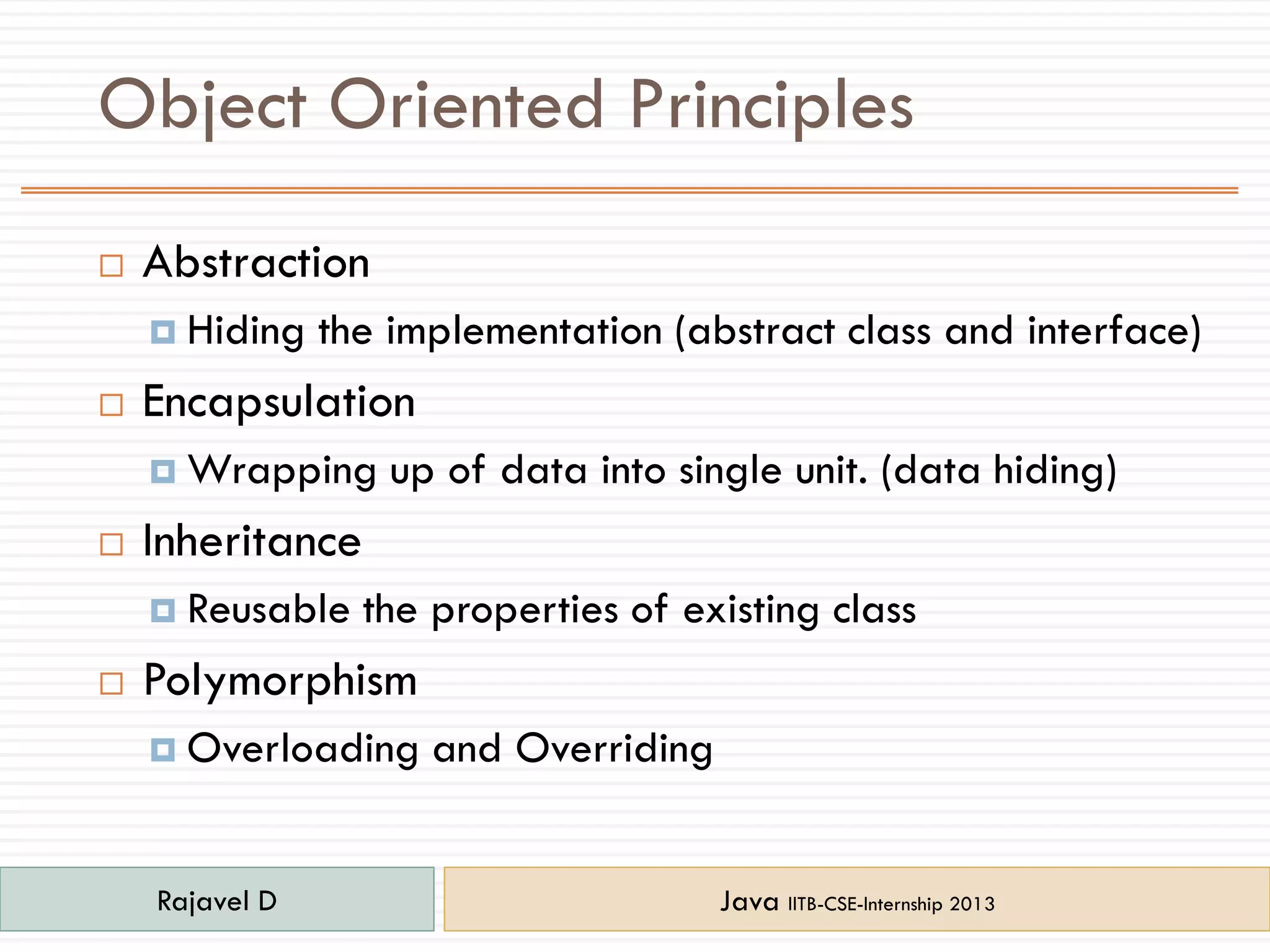
Object Oriented Principles
 Abstraction
 Hiding the implementation (abstract class and interface)
 Encapsulation
 Wrapping up of data into single unit. (data hiding)
 Inheritance
 Reusable the properties of existing class
 Polymorphism
 Overloading and Overriding
Rajavel D Java IITB-CSE-Internship 2013
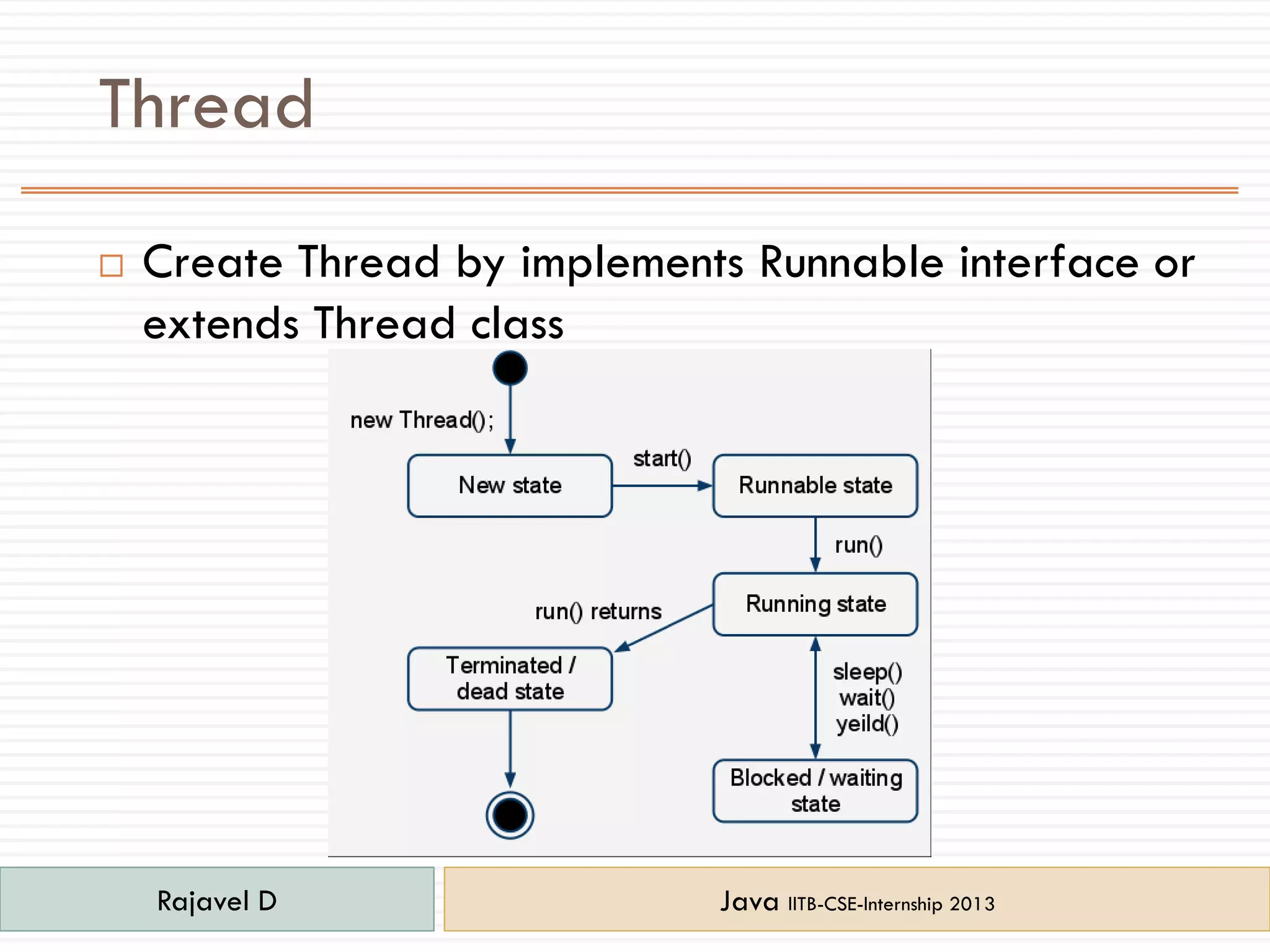
Thread
 Create Thread by implements Runnable interface or
extends Thread class
Rajavel D Java IITB-CSE-Internship 2013
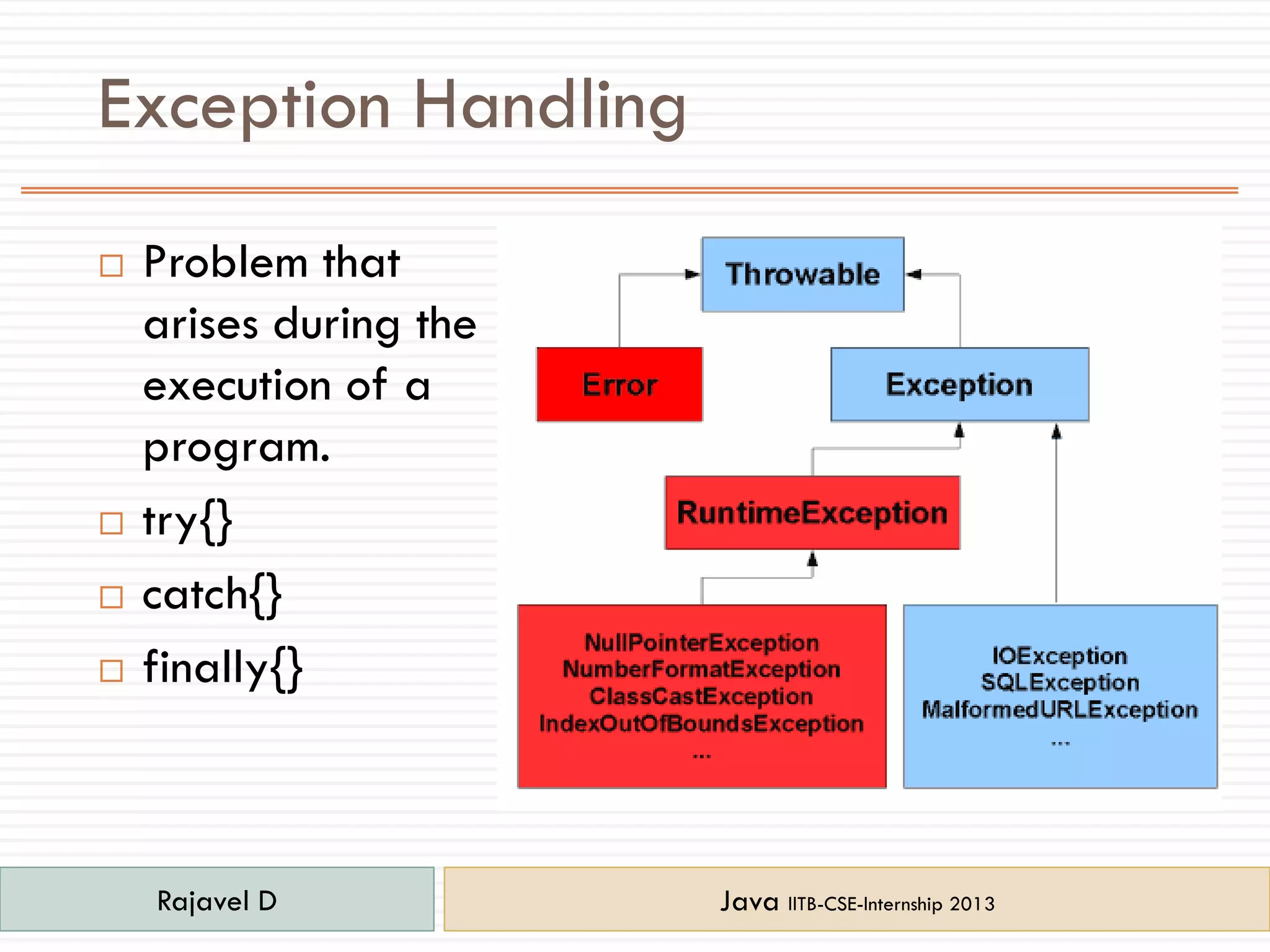
Exception Handling
 Problem that
arises during the
execution of a
program.
 try{}
 catch{}
 finally{}
Rajavel D Java IITB-CSE-Internship 2013
Some important concepts
 Constructor
 Package
 Multithreading
 Synchronized
 This keyword
 finally
Rajavel D Java IITB-CSE-Internship 2013
Any Doubts ???
Rajavel D Java IITB-CSE-Internship 2013
References
 http://download.oracle.com/javase/tutorial/
 http://www.tutorialspoint.com/java
 www.java2s.com/Tutorial/Java/CatalogJava.h
tm
Rajavel D Java IITB-CSE-Internship 2013

Java

  • 1.
    13-05-2013Rajavel DRajavel D Java SummerInternship – 2013 (Indian Institute of Technology Bombay)
  • 2.
    Java  Object-Oriented  Platformindependent  Simple  Secure  Multi-threaded  High Performance Rajavel D Java IITB-CSE-Internship 2013
  • 4.
    Basic terms  Object- Objects have states and behaviors.  Class - A class can be defined as a blue print that describe the behaviors/states that object.  Methods - A method is basically a behavior.  Instance Variables - States of an objects, each object has its unique set of instance variables. Rajavel D Java IITB-CSE-Internship 2013
  • 5.
    Keep in Mind Case Sensitivity - Hello and hello would have different meaning in Java.  Class Names - For all class names the first letter should be in Upper Case. Example : class MyFirstJavaClass  Method Names - All method names should start with a Lower Case letter and each inner word's first letter should be in Upper Case. Example : public void myMethodName()  Program File Name - Name of the program file should exactly match the class name. Rajavel D Java IITB-CSE-Internship 2013
  • 6.
    Simple Program class HelloWorldApp{ public static void main(String[] args) { HelloWorldApp hello = new HelloWorldApp(); hello.sayHello(); } public void sayHello(){ System.out.println(“Hello”); } } O/P : Hello Rajavel D Java IITB-CSE-Internship 2013
  • 7.
    Modifiers and Variables Access Modifiers :  default, public , protected, private  Non-access Modifiers :  final, abstract, static, strictfp, synchronized and volatile  Type of variables in Java:  Local Variables  Class Variables (Static Variables)  Instance Variables (Non static variables) Rajavel D Java IITB-CSE-Internship 2013
  • 8.
    public static voidmain ?  java program processing starts from the main() method.  Public ?  Static?  Void? Rajavel D Java IITB-CSE-Internship 2013
  • 9.
    Object Oriented Principles Abstraction  Hiding the implementation (abstract class and interface)  Encapsulation  Wrapping up of data into single unit. (data hiding)  Inheritance  Reusable the properties of existing class  Polymorphism  Overloading and Overriding Rajavel D Java IITB-CSE-Internship 2013
  • 10.
    Thread  Create Threadby implements Runnable interface or extends Thread class Rajavel D Java IITB-CSE-Internship 2013
  • 11.
    Exception Handling  Problemthat arises during the execution of a program.  try{}  catch{}  finally{} Rajavel D Java IITB-CSE-Internship 2013
  • 12.
    Some important concepts Constructor  Package  Multithreading  Synchronized  This keyword  finally Rajavel D Java IITB-CSE-Internship 2013
  • 13.
    Any Doubts ??? RajavelD Java IITB-CSE-Internship 2013
  • 14.
    References  http://download.oracle.com/javase/tutorial/  http://www.tutorialspoint.com/java www.java2s.com/Tutorial/Java/CatalogJava.h tm Rajavel D Java IITB-CSE-Internship 2013